seamus dubhghaill

Promoting Irish Culture and History from Little Rock, Arkansas, USA


Leave a comment

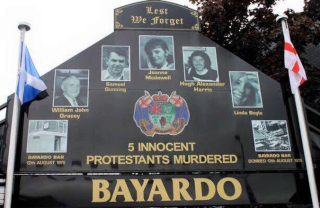
The Bayardo Bar Attack

bayardo-bar-attack

The Bayardo Bar attack takes place on August 13, 1975, in Belfast as a unit of the Provisional Irish Republican Army (IRA), led by Brendan McFarlane, launch a bombing and shooting attack on a pub on Aberdeen Street, in the loyalist Shankill Road area of the city.

By 1975, the conflict in Northern Ireland known as “the Troubles” is more than six years old. On February 10, 1975, the Provisional IRA and the British government enter into a truce and restart negotiations. There is a rise in sectarian killings during the truce, which ‘officially’ lasts until early 1976. The truce, however, is interrupted in the early hours of July 31, 1975, by the Miami Showband killings at Buskhill outside Newry, County Down.

Two weeks later, on August 13, 1975, the Bayardo Bar is crowded with people of all ages. Shortly before closing time a stolen green Audi automobile, containing a three-man unit of the IRA’s Belfast Brigade, pulls up outside. It is driven by the unit’s leader Brendan “Bik” McFarlane, a 24-year-old volunteer from Ardoyne. Volunteers Seamus Clarke and Peter “Skeet” Hamilton get out and approach the pub’s side entrance on Aberdeen Street. One of them immediately opens fire with an ArmaLite, instantly killing doorman William Gracey and his brother-in-law Samuel Gunning, with whom he had been chatting outside. The other volunteer then enters the pub, where patrons are drinking and singing, and drops a duffel bag containing a ten-pound bomb at the entrance. Both men make their getaway back to the waiting car. As panicked customers run to the toilets for safety, the bomb explodes and brings down a section of the old brick-and-plaster building upon them. The bodies of civilian Joanne McDowell and UVF member Hugh Harris are later found beneath the rubble of fallen masonry. Seventeen-year-old civilian Linda Boyle is pulled out alive but dies of her injuries at the hospital on August 21. Over 50 people are injured in the attack.

A Belfast Telegraph article later claims that, as the IRA unit drives away down Agnes Street, they fire into a crowd of women and children queuing at a taxi rank although there are no fatalities. Within 20 minutes of the blast, the IRA unit is arrested after their car is stopped at a roadblock. The ArmaLite that had been used to kill Gracey and Gunning is found inside the car along with spent bullet casings and fingerprints belonging to the three IRA men.

The IRA does not initially claim responsibility, however, IRA members later state that the Bayardo was attacked because it was a pub where Ulster Volunteer Force (UVF) members met and planned terrorist assaults against nationalists. The pub is in the UVF-dominated middle Shankill Road area, and the Ulster Banner is displayed from its upper windows. A former IRA prisoner claims that fellow inmate Lenny Murphy told him he had left the Bayardo ten minutes before the attack and that the Brigade Staff had just finished holding a meeting there.

Loyalists, especially the UVF, respond with another wave of sectarian attacks against Catholics. Two days after the pub attack, a loyalist car bomb explodes without warning on the Falls Road, injuring 35 people. On 22 August, the UVF launches a gun and bomb attack on McGleenan’s Bar in Armagh. The attack is strikingly similar to that at Bayardo. One gunman opens fire while another plants the bomb, the explosion causing the building to collapse. Three Catholic civilians are killed and several more are wounded. That same night, another bomb wrecks a Catholic-owned pub in nearby Blackwatertown, although there are no injuries.

In May 1976, Brendan McFarlane, Seamus Clarke, and Peter Hamilton are convicted in a non-jury Diplock court and sentenced to life imprisonment inside the HM Prison Maze for carrying out the Bayardo murders. In 1983 McFarlane leads the Maze Prison escape, a mass break-out of 38 republican prisoners, including Clarke and Hamilton.

Leave a comment

Death of John Holland, Irish Engineer

john-philip-holland

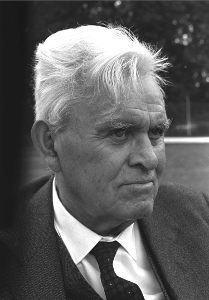
John Philip Holland, Irish engineer who develops the first submarine to be formally commissioned by the U.S. Navy, and the first Royal Navy submarine, HMS Holland 1, dies in Newark, New Jersey on August 12, 1914.

Holland, the second of four siblings, all boys, is born on February 24, 1841 in a coastguard cottage in Liscannor, County Clare, where his father, John Philip Holland, Sr., is a member of the British Coastguard Service. His mother, a native Irish speaker from Liscannor, Máire Ní Scannláin, is John Holland’s second wife. His first wife, Anne Foley Holland, believed to be a native of Kilkee, dies in 1835. The area is heavily Irish-speaking and Holland learns English properly only when he attends the local English-speaking St. Macreehy’s National School, and from 1858, in the Christian Brothers in Ennistymon.

Holland joins the Irish Christian Brothers in Limerick and teaches in CBS Sexton Street in Limerick and many other centres in the country, including North Monastery CBS in Cork, St. Joseph’s CBS in Drogheda, and as the first Mathematics teacher in Coláiste Rís in Dundalk. Due to ill health, he leaves the Christian Brothers in 1873 and emigrates to the United States. Initially working for an engineering firm, he returns to teaching again for an additional six years in St. John’s Catholic school in Paterson, New Jersey.

While a teacher in Cork, Holland reads an account of the battle between the ironclads USS Monitor and USS Merrimack in the Battle of Hampton Roads during the American Civil War. He realizes that the best way to attack such ships would be through an attack beneath the waterline. He draws a design, but when he attempts to obtain funding, he is turned away. After his arrival in the United States, Holland slips and falls on an icy Boston street and breaks a leg. While recuperating from the injury in a hospital, he uses his time to refine his submarine designs and is encouraged by a priest, Isaac Whelan.

In 1875, his first submarine designs are submitted for consideration by the U.S. Navy, but are turned down as unworkable. The Fenians, however, continue to fund Holland’s research and development expenses at a level that allows him to resign from his teaching post. In 1881, Fenian Ram is launched, but soon after, Holland and the Fenians part company on bad terms over the issue of payment within the Fenian organization, and between the Fenians and Holland. The submarine is now preserved at Paterson Museum in New Jersey.

Holland continues to improve his designs and works on several experimental boats, prior to his successful efforts with a privately built type, launched on May 17, 1897. This is the first submarine having power to run submerged for any considerable distance, and the first to combine electric motors for submerged travel and gasoline engines for use on the surface. The submarine is purchased by the U.S. Navy on April 11, 1900, after rigorous tests and is commissioned on October 12, 1900 as USS Holland (SS-1). Six more of her type are ordered and built at the Crescent Shipyard in Elizabeth, New Jersey. The company that emerges from under these developments is called The Electric Boat Company, founded on February 7, 1899. Isaac Leopold Rice becomes the company’s first President with Elihu B. Frost acting as vice president and chief financial officer. The company eventually evolves into the major defense contractor General Dynamics.

The USS Holland design is also adopted by others, including the Royal Navy in developing the Holland-class submarine. The Imperial Japanese Navy employs a modified version of the basic design for their first five submarines, although these submarines are at least 10 feet longer at about 63 feet. These submarines are also developed at the Fore River Ship and Engine Company in Quincy, Massachusetts. Holland also designs the Holland II and Holland III prototypes. The Royal Navy ‘Holland 1’ is on display at the Submarine Museum in Gosport, England.

After spending 56 of his 73 years working with submersibles, John Philip Holland dies on August 12, 1914 in Newark, New Jersey. He is interred at the Holy Sepulchre Cemetery in Totowa, New Jersey.


Leave a comment

Birth of Dan Breen, IRA Volunteer & Fianna Fáil Politician

Irish republican Dan Breen (1967)

Daniel “Dan” Breen, volunteer in the Irish Republican Army (IRA) during the Irish War of Independence and the Irish Civil War, is born in Grange, Donohill parish, County Tipperary, on August 11, 1894. In later years, he is a Fianna Fáil politician.

Breen’s father dies when he is six, leaving the family very poor. He is educated locally before becoming a plasterer and later a linesman on the Great Southern Railways.

Breen is sworn into the Irish Republican Brotherhood in 1912 and the Irish Volunteers in 1914. On January 21, 1919, the day the First Dáil meets in Dublin, Breen takes part in the Soloheadbeg Ambush. The ambush party of eight men, led by Seán Treacy, attacks two Royal Irish Constabulary (RIC) men who are escorting explosives to a quarry. The two policemen, James McDonnell and Patrick O’Connell, are fatally shot during the incident. The ambush is considered to be the first incident of the Irish War of Independence.

During the conflict, the British put a £1,000 price on Breen’s head, which is later increased to £10,000. He quickly establishes himself as a leader within the Irish Republican Army. He is known for his courage. On May 13, 1919 he helps rescue his comrade Seán Hogan at gunpoint from a heavily guarded train at Knocklong station in County Limerick. Breen, who is wounded, remembers how the battalion is “vehemently denounced as a cold-blooded assassins” and roundly condemned by the Catholic Church. After the fight, Treacy, Séumas Robinson, and Breen meet Michael Collins in Dublin, where they are told to make themselves scarce although they do not necessarily agree.

Breen and Sean Treacy shoot their way out through a British military cordon in the northern suburb of Drumcondra (Fernside). They escape, only for Treacy to be killed the next day. Breen is shot at least four times, twice in the lung.

The British reaction is to make Tipperary a “Special Military Area,” with curfews and travel permits. Volunteer GHQ authorises entrerprising attacks on barracks. The British policy forces Breen and Treacy to retreat to Dublin. They join Michael Collins’ Squad of assassins, later known as the Dublin Guard, and Dublin becomes the centre of the war.

Breen is present in December 1919 at the ambush in Ashtown beside Phoenix Park in Dublin where Martin Savage is killed while trying to assassinate the Lord Lieutenant of Ireland, Viscount John French. The IRA hides behind hedges and a dungheap as the convoy of vehicles drives past. They have been instructed to ignore the first car but this contains their target, Lord French. Their roadblock fails as a policeman removes the horse and cart intended to stop the car.

Breen utterly rejects the Anglo-Irish Treaty, which makes him, like many others, angry and embittered. In the June 1922 elections Breen is nominated as a candidate by both the pro- and anti-Treaty sides, but is not elected.

Breen is elected to Dáil Éireann at the 1923 general election as a Republican anti-Treaty Teachta Dála (TD) for the Tipperary constituency. Following the Anglo-Irish Treaty, Breen joins the Anti-Treaty IRA in the civil war, fighting against those of his former comrades in arms who support the Treaty. He is arrested by the National Army of the Irish Free State and interned at Limerick Prison. He spends two months there before going on hunger strike for six days followed by a thirst strike of six days, prompting his release.

Breen writes a best-selling account of his guerrilla days, My Fight for Irish Freedom, in 1924. He represents Tipperary from the fourth Dáil in 1923 as a Republican with Éamon de Valera and Frank Aiken. He is defeated in the June 1927 Irish general election and travels to the United States where he opens a prohibition speakeasy. In 1932 he returns to Ireland and regains his seat as a member of Fianna Fáil in the Dáil at that year’s general election. During World War II he is said to hold largely pro-Axis views. He represents his Tipperary constituency without a break until his retirement at the 1965 election.

Breen dies in Dublin on December 27, 1969 and is buried in Donohill, near his birthplace. His funeral is the largest seen in west Tipperary since that of his close friend and comrade-in-arms Seán Treacy at Kilfeacle in October 1920. An estimated attendance of 10,000 mourners assemble in the tiny hamlet, giving ample testimony to the esteem in which he was held.

Breen is the subject of a 2007 biography Dan Breen and the IRA by Joe Ambrose.


Leave a comment

Birth of Irish American Painter William Harnett

william-michael-harnett

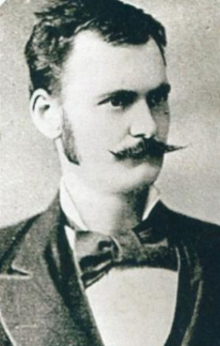
William Michael Harnett, Irish American painter known for his trompe-l’œil still lifes of ordinary objects, is born in Clonakilty, County Cork on August 10, 1848, during the time of the Great Famine.

Shortly after his birth Harnett’s family emigrates to the United States, settling in Philadelphia. Becoming a United States citizen in 1868, he makes a living as a young man by engraving designs on table silver, while also taking night classes at the Pennsylvania Academy of the Fine Arts and later, in New York City, at Cooper Union and at the National Academy of Design. His first known oil painting, a still life, dates from 1874.

The style of trompe-l’œil painting that Harnett develops is distinctive and inspired many imitators, but it is not without precedent. A number of Dutch Golden Age painters, Pieter Claesz for instance, had specialized in tabletop still life of astonishing verisimilitude. Raphaelle Peale, working in Philadelphia in the early 19th century, pioneers the form in America. What sets Harnett’s work apart, besides his enormous skill, is his interest in depicting objects not usually made the subject of a painting.

Harnett paints musical instruments, hanging game, and tankards, but also paints the unconventional Golden Horseshoe (1886), a single rusted horseshoe shown nailed to a board. He paints a casual jumble of second-hand books set on top of a crate, Job Lot, Cheap (1878), as well as firearms and even paper currency. His works sell well, but they are more likely to be found hanging in a tavern or a business office than in a museum, as they did not conform to contemporary notions of high art.

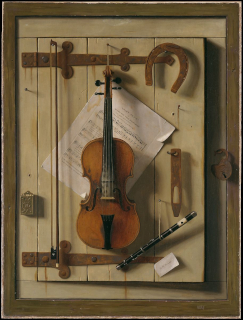
still-life-violin-and-music

Harnett spent the years 1880–1886 in Europe, staying in Munich from 1881 until early 1885. His best-known paintings, the four versions of After the Hunt, are painted between 1883 and 1885. Each is an imposing composition of hunting equipment and dead game, hanging on a door with ornate hinges at the right and keyhole plate at the left. These paintings, like the horseshoe or currency depictions mentioned earlier, are especially effective as trompe-l’œil because the objects occupy a shallow space, meaning that the illusion is not spoiled by parallax shift if the viewer moves.

Overall, Harnett’s work is most comparable to that of the slightly younger John F. Peto. The two artists know each other, and a comparison can be made between two paintings featuring violins. Harnett’s Music and Good Luck from 1888 shows the violin hanging upright on a door with ornate hinges and with a slightly torn piece of sheet music behind it. The elements are arranged in a stable, deliberate manner. Peto’s 1890 painting shows the violin hanging askew, as well as chipped and worn, with one broken string. The sheet music is dog-eared and torn around the edges and placed haphazardly behind the instrument. The hinges are less ornate, and one is broken. Harnett’s objects show signs of use but are well preserved, while Peto’s more humble objects are nearly used up.

Crippling rheumatism plagues Harnett in his last years, reducing the number but not the quality of his paintings. He dies in New York City on October 29, 1892. Other artists who paint similar compositions in Harnett’s wake include his contemporary John Haberle and successors such as Otis Kaye and Jefferson David Chalfant.

Harnett’s work is in collections in the Albright-Knox Art Gallery (Buffalo, New York), the Amon Carter Museum of American Art (Fort Worth, Texas), the Dallas Museum of Art, the Art Institute of Chicago, the Brooklyn Museum, the Carnegie Museum of Art (Pittsburgh, Pennsylvania), the Cincinnati Art Museum, the Cleveland Museum of Art, the Detroit Institute of Arts, the Fine Arts Museums of San Francisco, Harvard Art Museums, the High Museum of Art (Atlanta, Georgia), the Honolulu Museum of Art, the Joslyn Art Museum (Omaha, Nebraska), the Los Angeles County Museum of Art, the Metropolitan Museum of Art (New York, New York), the National Gallery of Art (Washington D.C.), the National Gallery of Canada (Ottawa, Ontario), the Philadelphia Museum of Art, the San Diego Museum of Art, Thyssen-Bornemisza Museum (Madrid, Spain), the Toledo Museum of Art (Toledo, Ohio), the Wadsworth Atheneum (Hartford, Connecticut), and the Wichita Art Museum (Wichita, Kansas) among others.

(Pictured: Music and Good Luck, oil on canvas by William Michael Harnett, 1888, Metropolitan Museum of Art)


Leave a comment

Operation Demetrius

long-kesh-internment-camp

Operation Demetrius, a British Army operation in Northern Ireland begins on August 9, 1971, during the Troubles. The operation involves the mass arrest and internment (imprisonment without trial) of 342 people suspected of being involved with the Irish Republican Army (IRA), which is waging a campaign for a united Ireland against the British state.

Operation Demetrius, proposed by the Government of Northern Ireland and approved by the Government of the United Kingdom, begins throughout Northern Ireland in the early morning hours of Monday, August 9 and progresses in two parts:

  1. Arrest and movement of the detainees to one of three regional holding centers: Girdwood Barracks in Belfast, Abercorn Barracks in Ballykinler, County Down, or HM Prison Magilligan near Limavady, County Londonderry.
  2. The process of identification and questioning, leading either to release of the detainee or movement into detention at HM Prison Crumlin Road or aboard HMS Maidstone, a prison ship in Belfast Harbour.

The operation sparks four days of violence in which 20 civilians, two IRA members and two British soldiers are killed. All of those arrested are Irish nationalists, the vast majority of them Catholic. Due to faulty intelligence, many have no links with the IRA. Ulster loyalist paramilitaries are also carrying out acts of violence, which are mainly directed against Catholics and Irish nationalists, but no loyalists are included in the sweep.

The introduction of internment, the way the arrests are carried out, and the abuse of those arrested, lead to mass protests and a sharp increase in violence. Amid the violence, about 7,000 people flee or are forced out of their homes. The interrogation techniques used on some of the internees are described by the European Commission of Human Rights in 1976 as torture, but the superior court, the European Court of Human Rights (ECHR), rules on appeal in 1978 that, although the techniques are “inhuman and degrading”, they do not, in this instance, constitute torture. It is later revealed that the British government had withheld information from the ECHR and that the policy had been authorized by British government ministers. In December 2014, in light of the new evidence, the Irish government asks the ECHR to revise its 1978 judgement. The ECHR declines the request in 2018.

The backlash against internment contributes to the decision of the British Government under Prime Minister Edward Heath to suspend the Northern Ireland Government and replace it with direct rule from Westminster, under the authority of a British Secretary of State for Northern Ireland. This takes place in 1972.

Following the suspension of the Northern Ireland Government and Parliament, internment is continued by the direct rule administration until December 5, 1975. During this time 1,981 people are interned, 1,874 are nationalist while 107 are loyalist. The first loyalist internees are detained in February 1973.

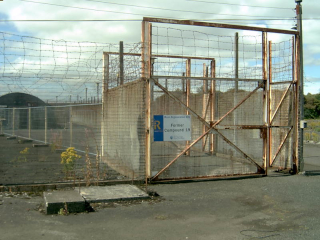
(Pictured: The entrance to Compound 19, one of the sections of Long Kesh internment camp)


2 Comments

Birth of Irish Footballer Billy Behan

billy-behan

William “Billy” Behan, Irish footballer who plays as a goalkeeper for Shelbourne F.C., Shamrock Rovers F.C. and Manchester United F.C. during the 1930s, is born on August 8, 1911, in Dublin.

Behan makes his Rovers debut on February 8, 1931, in a 5–1 win over Bray Unknowns F.C. at Glenmalure Park. In his first season, he wins the FAI Cup. He signs with Manchester United in September 1933, along with fellow Irishman David Byrne, becoming the first players from the south of Ireland to play for the club in over a decade.

Behan makes his United debut in a Football League Second Division home game against Bury F.C. on March 3, 1934. The following July, he briefly returns to Shelbourne before again returning to the Rovers. Over the next two seasons, he wins another FAI Cup and a League of Ireland Shield. His last game for the Rovers is on August 23, 1936, in a Shield win over Drumcondra F.C..

After his retirement as a player, Behan becomes a respected referee and is in charge of the 1943 FAI Cup Final. He then manages Drumcondra F.C. in the 1950s where he wins the FAI Cup again.

Behan subsequently becomes United’s chief scout in the Republic of Ireland and is credited with discovering, among others, Johnny Carey, Billy Whelan, Tony Dunne, Don Givens, Kevin Moran and Paul McGrath. He also serves as vice chairman of the Dalkey-based Leinster Senior League team, Dalkey United, and it is through this association that he discovers McGrath.

Behan’s father, William Sr., is one of the founder members of Shamrock Rovers. His brothers John and Paddy also play for the Rovers. His son William junior keeps goal for the Rovers side also for a time. His second cousin is Bob Fullam.

Behan’s grandson, Philip Behan, is the former Head of International Football at the Football Association of Ireland and is now a UEFA and FIFA agent organising friendly international matches and tournaments around the world.

Billy Behan dies on November 12, 1991, at the age of 80.


Leave a comment

Premiere of “O’Neil of the Glen”

o-neil-of-the-glen

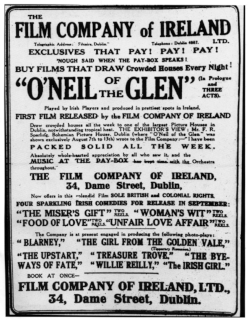
O’Neil of the Glen, the first production released by the Film Company of Ireland (FCOI), premieres at Dublin’s Bohemian Picture Theatre on August 7, 1916. The film is adapted by W.J. Lysaght from a book by the acclaimed Irish novelist, Mrs. M. T. Pender. The film is a romantic tale which features two well-known Abbey Theatre members, as well as a host of rising stars.

Formed in March 1916 by James Mark Sullivan and Henry Fitzgibbon, the FCOI becomes the most important indigenous fiction film producer of the 1910s.

On 29 June, FCOI announces a “trial exhibition,” or what would now be called a test screening, of their first completed production, O’Neil of the Glen, at Dublin’s Carlton Cinema. Addressing a lunch for the press at the Gresham Hotel following the screening, Fitzgibbon claims that FCOI “had started an industry which would eventually be a source of great revenue in Ireland.” For his part, Sullivan argues that the film showed that Irish productions – taking advantage of Irish “imagination, ideals, and artistic temperament and beautiful scenery” – could compete with those anywhere.

The Bohemian is one of Dublin’s biggest and most luxurious cinemas, and Frederick A. Sparling’s commitment to a run that is twice the usual three days “speaks well for the film and the undoubted drawing powers such a production will have for Irish audiences.” In the event, Sparling also includes an unplanned Sunday show to take advantage of the phenomenal level of interest.

In the following weeks and months, O’Neil of the Glen is exhibited around the country. Following substantial runs in Dublin and Belfast it is announced for a three-day runs at Galway’s Victoria Cinema Theatre on September 11-13 and Cork’s Coliseum Theatre on September 14-16.


Leave a comment

Passport Requests Increase Following UK Brexit Vote

irish-passport

According to statistics released by the Department of Foreign Affairs on August 6, 2016, in the first full month since the United Kingdom‘s decision to leave the European Union, applications for Irish passports from people living in Great Britain increase by 73% and by 63% from those in Northern Ireland over the same period the previous year.

In July 2015 there are 4,242 applications submitted by people in Great Britain compared to 7,321 in July 2016. Meanwhile 6,638 passport requests are submitted from Northern Ireland.

Within in a day of the Brexit vote there is a surge in online interest in Irish passports and moving to Ireland. While the UK as a whole vote to leave the EU in the referendum, Northern Ireland votes to remain by a majority of 56 percent to 44 percent. The Department of Foreign Affairs says there is “an increase in queries in respect of entitlements to Irish passports” the very next day. The year-on-year figures for January show a 20 percent increase in applications prior to the vote.

Google Trends says UK searches for “getting an Irish passport” jump more than 100% after the Brexit result comes through. And while the data analysts do not reveal the exact number of searches for information on the Republic of Ireland‘s citizenship rules, they say most interest is shown in Northern Ireland with the normally unionist heartland of Holywood, County Down, taking top spot.

Sinn Féin repeatedly says that Northern Ireland must not be “dragged out of Europe.” Up to this point the British government dismisses calls from its representatives and others for a border poll in Irish unity.


Leave a comment

Birth of Gay Byrne, Radio & Television Presenter

CREATOR: gd-jpeg v1.0 (using IJG JPEG v80), quality = 90

Gabriel Mary “Gay” Byrne, veteran Irish presenter of radio and television for several decades and affectionately known as Uncle Gay, Gaybo or Uncle Gaybo, is born in Rialto, Dublin on August 5, 1934. His most known role is as the first host of The Late Late Show over a 37-year period spanning 1962 until 1999.

Byrne attends Rialto National School and a number of other schools for short periods. Subsequently, he is educated by the Irish Christian Brothers at Synge Street CBS.

When he is young, Byrne is inspired by the broadcaster Eamonn Andrews, who has a successful career on British television. In 1958 he moves over to broadcasting when he becomes a presenter on Radio Éireann. He also works with Granada Television and the BBC in England. At Granada, Byrne becomes the first person to introduce the Beatles on television when they make their small screen debut on local news programme People and Places. In 1961, Telefís Éireann, later Radio Telefís Éireann and now Raidió Teilifís Éireann, is established. Byrne works exclusively for the new Irish service after 1969. He introduced many popular programmes, with his most popular and successful programme being The Late Late Show.

On July 5, 1962, the first episode of The Late Late Show is aired on Irish television. Originally the show is scheduled as an eight-week summer filler. The programme, which is still broadcast, has become the world’s second longest running chat show. The show has much to do in shaping the new Ireland that emerges from the 1960s. Byrne presents his last edition of The Late Late Show on May 21, 1999, where he is presented with a Harley-Davidson motorcycle by Bono and Larry Mullen, Jr. Pat Kenny succeeds him as presenter in September 1999.

From 1973 until 1998, Byrne also presents The Gay Byrne Hour, later The Gay Byrne Show when it expands to two hours, on RTÉ Radio 1 each weekday morning.

Byrne does not completely retire in 1999 and continues to feature occasionally on radio and television after leaving The Late Late Show and The Gay Byrne Show, presenting several other programmes, including Who Wants to Be a Millionaire?, The Meaning of Life and For One Night Only on RTÉ One and Sunday Serenade/Sunday with Gay Byrne on RTÉ lyric fm. He launches Joe Duffy‘s autobiography Just Joe in Harry’s Bar in October 2011.

In 1988, Byrne is presented an honorary doctorate in literature from Trinity College, Dublin. In 2006 he is elected Chairman of Ireland’s Road Safety Authority, a public body given the task of improving road safety in the Republic of Ireland. Since retiring he has become the “Elder Lemon of Irish broadcasting.”

On a November 21, 2016 live radio broadcast Byrne reveals that he is to begin treatment for prostate cancer and that the cancer may have also spread to his lower back. He tells listeners he will be taking a break of just one week before returning to work, however, he continues to recover from treatment and he has not yet been back on air.


Leave a comment

Birth of Thomas Brodrick, Politician

CREATOR: gd-jpeg v1.0 (using IJG JPEG v80), quality = 60

Thomas Brodrick, Irish politician who sits in the Irish House of Commons between 1692 and 1727 and in the British House of Commons from 1713 to 1727 and leads the inquiry into the “South Sea Bubble,” is born in Midleton, County Cork on August 4, 1654.

Brodrick is the eldest son of Sir St. John Brodrick and his wife Alice Clayton, daughter of Laurence Clayton of Mallow, County Cork. He is brother of Alan Brodrick, 1st Viscount Midleton. He is admitted at Trinity Hall, Cambridge and also at Middle Temple in 1670. He marries Anne Piggott, daughter of Alexander Piggott of Innishannon and they have one son Laurence, who is appointed Register of Deeds and Conveyances in Ireland in 1735.

Broderick sits in the Irish House of Commons for Midleton from 1692 to 1693, for County Cork from 1695 to 1699 and again from 1703 to 1713, and for Midleton again from 1715 to 1727. He is appointed to the Privy Council of Ireland on May 10, 1695. He is removed on July 17, 1711, but reappointed on September 30, 1714.

Broderick has contacts with Whig politicians in England and is appointed comptroller of the salt in 1706 and joint comptroller of army accounts from 1708 to 1711. He is elected as Member of Parliament (MP) for Stockbridge at the 1713 general election and again at the 1715 general election. At the 1722 general election, he is elected as MP for Guildford. He does not stand in the 1727 general election.

Thomas Brodrick dies on October 3, 1730, at Wandsworth where he is buried.