seamus dubhghaill

Promoting Irish Culture and History from Little Rock, Arkansas, USA


Leave a comment

Birth of Jeremiah Joseph “Ginger” O’Connell, Irish Revolutionary

Jeremiah Joseph “Ginger” O’Connell, Irish revolutionary, active in the Irish War of Independence, and later a senior officer in the Defence Forces, is born in Ballina, County Mayo, on December 21, 1887.

O’Connell is born to Jeremiah Ambrose and Winifred O’Connell. He is nicknamed “Ginger” because of his red hair. His father is a national school inspector, so the family lives in Sligo, Derry, Longford and Belfast, and he attends a succession of primary schools. He studies at University College Dublin (UCD) where he receives a BA and a first-class MA. He is a member of the Literary and Historical Society at UCD and has an interest in boxing.

O’Connell is living in Cavan with his father, his sister Mary Margaret, his brother John Aloysius and two servants, Mary Burke and Rose Anne O’Reilly, at the time of the 1911 census, when he is 23. He is working as a Solicitor’s Apprentice, can read and write as well as speak both English and Irish, and is single. His mother is not living as it is recorded that his father is a widower.

O’Connell spends some time in the United States Army, serving with the 69th New York Infantry Regiment between 1912 and 1914. He returns to Ireland in 1914 and joins the Irish Volunteers, becoming Chief of Inspection in 1915. He travels the country organising volunteer corps, as well as contributing to the Irish Volunteer’s journal and delivering lectures on military tactics to both the Volunteers and Fianna Éireann. He also delivers a series of lectures about the famous Irish battles to the Gaelic League in Dublin. He is not a member of the Irish Republican Brotherhood (IRB) as he believes that soldiers should not be a part of secret societies.

At the time the 1916 Easter Rising, O’Connell is operating in Dublin under instruction from Joseph Plunkett. He is dispatched to Cork by Eoin MacNeill to try to prevent the Rising. Following the Rising, he is arrested and held in Frongoch internment camp from April to July 1916. In 1918 he is again arrested and interned, spending time in Wandsworth Prison with Arthur Griffith for the alleged involvement in the fabricated German Plot.

During the Irish War of Independence, O’Connell is a member of the Irish Republican Army (IRA) headquarters staff, as Assistant Director of Training and, after the killing of Dick McKee in 1920, as Director of Training. He coordinates, and is the principal lecturer, for a training course for military officers. The course is run clandestinely in the premises of the Topographical Society on Gardiner Street in Dublin. A sympathetic doorkeeper allows the group in at night when the society is not present. Topics delivered by O’Connell include tactics, ordinance and engineering.

In the IRA split after Dáil Éireann ratifies the Anglo-Irish Treaty, O’Connell takes the pro-Treaty side. He is made Deputy Chief of Staff in the National Army. On June 26, 1922, he is kidnapped by anti-treaty forces in reprisal for the arrest of an anti-treaty officer. His kidnapping is a precipitating factor in the formal outbreak of the Irish Civil War, when government pro-treaty forces two days later attack anti-treaty forces occupying the Four Courts. He survives the fighting and spends the rest of the civil war as General Officer Commanding the Curragh Command.

Following the Irish Civil War, the National Army is reorganised, and as part of that O’Connell is demoted from general to colonel. He subsequently holds a variety of positions: chief lecturer in the army school of instruction (1924–1929); director of no. 2 (intelligence) bureau (1929–1932); OC Irish Army Equitation School (March–June 1932); quartermaster-general (1932–1935) and director of the military archives (1935–1944). He also publishes articles on Irish and foreign military history and tactics in his time as a military historian. He marries Gertrude McGilligan, and they have two children together – one son and one daughter.

O’Connell dies of a heart attack at the age of 56 on February 19, 1944.


Leave a comment

Opening of the Volta Electric Theatre in Dublin

Under the managership of the writer James Joyce, Ireland’s first cinematographic theatre, the Volta Electric Theatre (later renamed the Lyceum Picture Theatre), opens at 45 Mary Street in Dublin on December 20, 1909. The site has since been demolished and is occupied today by a department store.

In the early 1900s, demand for moving pictures is fierce and cinemas are springing up all over the world. After visiting Trieste, Joyce is determined to bring a cinema to Ireland. After receiving the backing of his Italian friends, he sets up the Cinematograph Volta on Mary Street. It opens its doors on December 20, 1909. The opening night features an eclectic program, with the comedy Deviled Crab, the mystery Bewitched Castle, La Pourponièrre, The First Paris Orphanage, and The Tragedy of Beatrice Cency. A popular actor is Charlie Chaplin.

Joyce soon becomes disillusioned with the venture, as the cinema mainly shows films from Europe and Italy, which are largely shunned by Dubliners at the time. After seven months, Joyce withdraws his involvement and the cinema is sold to the British Provincial Cinema Company. The cinema remains open until 1919.

In 1921, it is reopened as the Lyceum Picture Theatre following alterations which increase seating from 420 to 600. In the 1940s, Capitol and Allied Theatres Ltd. acquires the cinema. However, it closes its doors for the last time in 1948. Although it survives almost 40 years, the cinema is rarely successful.

Penneys, a fast fashion retailer and subsidiary of the British food processing and retail company Associated British Foods, purchases the building along with adjacent shops and builds a department store on the demolished site. For many years the site of Ireland’s first cinema is unknown to many as there is no plaque to commemorate it. However, on June 12, 2007, a plaque is unveiled on the original site marking the significance of 45 Mary Street.

A connection between the name and cinema in Ireland still remains. Volta is a streaming service for mainly Irish content.


Leave a comment

Birth of Thomas Andrews, Chemist & Physicist

Thomas Andrews FRS FRSE, chemist and physicist who does important work on phase transitions between gases and liquids, is born in Belfast on December 19, 1813. He is a longtime professor of chemistry at Queen’s University Belfast.

Andrews’ father is a linen merchant. He attends the Belfast Academy and the Royal Belfast Academical Institution, where at the latter of which he studies mathematics under James Thomson. In 1828 he goes to the University of Glasgow to study chemistry under Professor Thomas Thomson, then studies at Trinity College, Dublin, where he gains distinction in classics as well as in science. Finally, at University of Edinburgh in 1835, he is awarded a doctorate in medicine.

Andrews begins a successful medical practice in his native Belfast in 1835, also giving instruction in chemistry at the Academical Institution. In 1842, he marries Jane Hardie Walker (1818–1899). They have six children, including the geologist Mary Andrews. In 1845 he is appointed vice-president of the newly established Queen’s University Belfast, and professor of chemistry there. He holds these two offices until his retirement in 1879 at age 66.

Andrews first becomes known as a scientific investigator with his work on the heat developed in chemical actions, for which the Royal Society awards him a Royal Medal in 1844. Another important investigation, undertaken in collaboration with Peter Guthrie Tait, is devoted to ozone.

Andrews’ reputation mainly rests on his work with liquefaction of gases. In the 1860s he carries out a very complete inquiry into the gas laws, expressing the relations of pressure, temperature, and volume in carbon dioxide. In particular, he establishes the concepts of critical temperature and critical pressure, showing that a substance passes from vapor to liquid state without any breach of continuity.

In Andrews’ experiments on phase transitions, he shows that carbon dioxide may be carried from any of the states we usually call liquid to any of those we usually call gas, without losing homogeneity. The mathematical physicist Josiah Willard Gibbs cites these results in support of the Gibbs free energy equation. They also set off a race among researchers to liquify various other gases. In 1877-78 Louis Paul Cailletet is the first to liquefy oxygen.

Andrews dies in Belfast on November 26, 1885, and is buried in the Borough Cemetery in the city.


Leave a comment

Birth of Pádraig McKearney, Provisional Irish Republican Army Volunteer

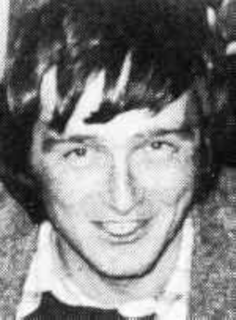
Pádraig Oliver McKearney, a Provisional Irish Republican Army (IRA) paramilitary volunteer, is born on December 18, 1954.

McKearney is raised in Moy, County Tyrone, Northern Ireland, in a staunchly Irish republican family. Both his grandfathers had fought in the Irish Republican Army during the Irish War of Independence, his maternal grandfather in south County Roscommon and his paternal grandfather in east County Tyrone. He is educated at local Catholic schools in Collegeland, County Armagh, and Moy, and later goes to St. Patrick’s Academy, Dungannon.

McKearney joins the Provisional IRA and is first arrested in 1972 on charges of blowing up the post office in Moy. He spends six weeks on remand but is released due to insufficient evidence. In December 1973 he is arrested again and later sentenced to seven years for possession of a rifle. He is imprisoned in Long Kesh Detention Centre and later in Magilligan Prison. During this time, a younger brother, Seán, also an IRA paramilitary, is killed on May 13, 1974. He is released in 1977 but is sentenced to 14 years in August 1980 after being caught by the British Army with a loaded Sten gun along with fellow IRA member Gerard O’Callaghan. That same year an older brother, Tommy McKearney, who had been sentenced to life imprisonment for the murder of an off-duty Ulster Defence Regiment (UDR) soldier who worked as a postman in 1977, nearly dies on hunger strike after refusing food for 53 days. Another brother, Kevin, and an uncle, Jack McKearney, are both murdered by Loyalist paramilitaries in revenge attacks upon the family.

On September 25, 1983, McKearney takes part in the Maze Prison escape along with 37 other prisoners. At the beginning of 1984 he rejoins IRA activity in his native East Tyrone with the Provisional IRA East Tyrone Brigade. He advocates the commencement of the “third phase” of the armed struggle, the ‘strategic defensive,’ in which the Royal Ulster Constabulary (RUC), Ulster Defence Regiment and British Army would be denied all support in selected areas following repeated attacks on their bases. In 1985 Patrick Kelly becomes commander of the Provisional IRA East Tyrone Brigade, and it is under his leadership that this strategy is pursued. Remote Royal Ulster Constabulary bases are attacked and destroyed, and building contractors who try to repair them are targeted and sometimes murdered, as occurs with the attack on the Ballygawley barracks in December 1985, which results in the death of two policemen, and The Birches police station in August 1986.

McKearney is shot dead by the British Army on May 8, 1987, during an IRA attack that he is taking part in upon Loughgall police station, which also claims the lives of seven other IRA members. His body is buried at his hometown of Moy.


Leave a comment

Birth of Richard Barrett, Irish Republican Army Volunteer

Richard Barrett, commonly called Dick Barrett, a prominent Irish Republican Army (IRA) volunteer, is born on December 17, 1889, in Knockacullen (Hollyhill), Ballineen, County Cork. He fights in the Irish War of Independence and on the Anti-Treaty side in the Irish Civil War, during which he is captured and later executed on December 8, 1922.

Barrett is the son of Richard Barrett, farmer, and Ellen Barrett (née Henigan). Educated at Knocks and Knockskagh national schools, he enters the De La Salle College, Waterford, where he trains to be a teacher. Obtaining a first-class diploma, he first teaches at Ballinamult, County Waterford but then returns to Cork in early 1914 to take up a position at the St. Patrick’s Industrial School, Upton. Within months he is appointed principal of Gurrane National School. Devoted to the Irish language and honorary secretary of Knockavilla GAA club, he does much to popularise both movements in the southern and western districts of Cork. He appears to have been a member of the Cork Young Ireland Society.

From 1917, inspired by the Easter Rising, Barrett takes a prominent part in the organisation and operation of the Irish Volunteers and Irish Republican Brotherhood (IRB). By this time, he is also involved with Sinn Féin, in which role he attends the ardfheis at the Mansion House in October 1917 and the convention of the Irish Volunteers at Croke Park immediately afterwards.

Through planning and participating in raids and gunrunning episodes, Barrett comes into close contact with many GHQ staff during the Irish War of Independence, thereby ensuring his own rapid promotion. He is an active Irish Republican Army (IRA) brigade staff officer and occasionally acts as commandant of the West Cork III Brigade. He also organises fundraising activities for the purchase of weapons and for comrades on the run. In July 1920, following the arrest of the Cork III Brigade commander Tom Hales and quartermaster Pat Harte, he is appointed its quartermaster. He is arrested on March 22, 1921, and imprisoned in Cork jail, later being sent to Spike Island, County Cork.

As one of the senior officers held in Spike Island, Barrett is involved in many of the incidents that occur during his time there. After the truce is declared on July 11, 1921, some prisoners go on hunger strike, but he calls it off after a number of days on instructions from outside as a decision had been made that able-bodied men are more important to the cause. In November, Barrett escapes by rowboat alongside Moss (Maurice) Twomey, Henry O’Mahoney, Tom Crofts, Bill Quirke, Dick Eddy and Paddy Buckley.

Following the Irish War of Independence, Barrett supports the Anti-Treaty IRA‘s refusal to submit to the authority of Dáil Éireann (civil government of the Irish Republic declared in 1919). He is opposed to the Anglo-Irish Treaty and calls for the total elimination of English influence in Ireland. In April 1922, under the command of Rory O’Connor, he, along with 200 other hardline anti-treaty men, take over the Four Courts building in the centre of Dublin in defiance of the new Irish government. They want to provoke British troops, who are still in the country, into attacking them. They hope this will restart the war with Britain and reunite the IRA against their common enemy. Michael Collins tries desperately to persuade O’Connor and his men to vacate the building. However, on June 28, 1922, after the Four Courts garrison had kidnapped J. J. O’Connell, a general in the new National Army, Collins’s soldiers shell the Four Courts with British artillery to spark off what becomes known as the Battle of Dublin. O’Connor surrenders following two days of fighting, and Barrett, with most of his comrades, is arrested and held in Mountjoy Gaol. This incident marks the official outbreak of the Irish Civil War, as fighting escalates around the country between pro- and anti-treaty factions.

After the death of Michael Collins in an ambush, a period of tit-for-tat revenge killings ensues. The government implements martial law and enacts the necessary legislation to set up military courts. In November, the government begins to execute Anti-Treaty prisoners, including Erskine Childers. In response, Liam Lynch, the Anti-Treaty Chief of Staff, gives an order that any member of the Dáil who had voted for the ‘murder legislation’ is to be shot on sight.

On December 7, 1922, Teachta Dála (TD) Sean Hales is killed by anti-Treaty IRA men as he leaves the Dáil. Another TD, Pádraic Ó Máille, is also shot and badly wounded in the incident. An emergency cabinet meeting is allegedly held the next day to discuss the assassination of Hales. It is proposed that four prominent members of the Anti-Treaty side currently held as prisoners be executed as a reprisal and deterrent. The names put forward were Barrett, O’Connor, Liam Mellows and Joe McKelvey. It is alleged that the four are chosen to represent each of the four provinces – Munster, Connacht, Leinster and Ulster respectively, but none of the four is actually from Connacht. The executions are ordered by Minister for Justice Kevin O’Higgins. At 2:00 AM on the morning of December 8, 1922, Barrett is awoken along with the other three and informed that they are all to be executed at 8:00 that morning.

Ironies stack one upon the other. Barrett is a member of the same IRA brigade as Hales during the Anglo-Irish War, and they were childhood friends. O’Connor had been best man at O’Higgins’ wedding a year earlier. The rest of Sean Hales’ family remains staunchly anti-Treaty, and publicly denounces the executions. In reprisal for O’Higgins’ role in the executions, the Anti-Treaty IRA kills his father and burns his family home in Stradbally, County Laois. O’Higgins himself dies by an assassin’s hand on July 10, 1927.

The executions stun Ireland, but in terms of halting the Anti-Treaty assassination policy, they have the desired effect. The Free State government continues to execute enemy prisoners, and 77 official executions take place by the end of the war.

Barrett is now buried in his home county, Cork, following exhumation and reinternment by a later government. A monument is erected by old comrades of the West Cork Brigade, the First Southern Division, IRA, and of the Four Courts, Dublin, garrison in 1922 which is unveiled on December 13, 1952, by the Tánaiste Seán Lemass.

A poem about the execution is written by County Galway clergyman Pádraig de Brún.


Leave a comment

The Kilcommon Ambush

On the morning of the December 16, 1920 during the Irish War of Independence, an eight man Royal Irish Constabulary (RIC) foot patrol under the command of Sergeant Thomas Bray, leaves the barracks at Kilcommon Cross, County Tipperary, to retrieve mail from the Post Office in Kilcommon village, a mile away.

As they approach the crest of a hill on the narrow road between the Cross and the village, approximately twenty men of the Irish Republican Army (IRA) 1st Tipperary Brigade open fire on them. The object of the attack is apparently quite simple – to kill members of the police, and in particular Sergeant Bray.

The ambush, although triggered early, is successful, with the deaths of four of the constables and the serious wounding of one other. The remaining three policemen are able to take cover and return to the barracks, including the Sergeant. Two RIC rifles are lost and there are no casualties on the IRA side.

The dead constables are Patrick Joseph Halford (27) of Meath, Ernest Frederick Harden (21) of Essex, Albert Holman Palmer (24) of Surrey, and Arthur Smith (22) of London. Constable Alfred Edwin Bundy of Gloucestershire is seriously wounded and requires hospital care. He is pensioned out early, in June 1921, as a result of his injuries.

There is some suggestion that the local IRA units are not at all keen on an ambush in their area, for fear of retribution. The brigade commanders push ahead with it however, and the inevitable ‘unofficial reprisals’ are carried out, with the killing of some livestock and the burning of some dwellings, including the home of one of the IRA volunteers.

The total strength in Kilcommon RIC Barracks at this time was around 16 police. Most of them are British recruits – Black and Tans – and under the control of only one Sergeant. Immediately after the ambush a further six men are drafted in as replacements.

Two of the eight police involved in the incident that day remain to be identified. But present in Kilcommon barracks during the period are two constables who are later to have careers in the Palestine Gendarmerie, Arthur Charles Howard and Arthur Fisher. Fisher becomes an officer in the Arab Section of the Palestine Gendarmerie and later the Transjordan Frontier Force (TJFF).

(From: “The Kilcommon Ambush, 16 December 1920” by Peter Mc, The Royal Irish Constabulary Forum, irishconstabulary.com | Pictured: The vicinity of the ambush site)


Leave a comment

Fermanagh County Council Pledges Allegiance to Dáil Éireann

Fermanagh County Council pledges allegiance to Dáil Éireann on December 15, 1921. After the meeting the Royal Irish Constabulary (RIC) takes over the council chamber.

Fermanagh County Council is the authority responsible for local government in County Fermanagh, Northern Ireland, between 1899 and 1973. It is originally based at the Enniskillen Courthouse, but moves to County Buildings in East Bridge Street, Enniskillen, in 1960.

Fermanagh County Council is formed under orders issued in accordance with the Local Government (Ireland) Act 1898 which comes into effect on April 18, 1899. Elections are held using proportional representation until 1922 when it is abolished in favour of first-past-the-post voting. On December 15, 1921, shortly before the partition of Ireland and transfer of power from the Dublin Castle administration, Fermanagh County Council passes a resolution on a 13–10 majority not to recognise the newly formed Parliament of Northern Ireland and pledges their allegiance to the unrecognised republican Second Dáil of the self-proclaimed Irish Republic in Southern Ireland before the ratification of the Anglo-Irish Treaty. The resolution states, “We, the County Council of Fermanagh, in view of the expressed desire of a large majority of people in this county, do not recognise the partition parliament in Belfast and do hereby direct our Secretary to hold no further communications with either Belfast or British Local Government Departments, and we pledge our allegiance to Dáil Éireann.” In response, the Royal Irish Constabulary evict them from their council offices and confiscate official documents. As a result, the council is temporarily dissolved. The council are replaced by Commissioners appointed by Sir Dawson Bates.

The council is reformed by the time of the 1924 Northern Ireland local elections. As a protest against the abolition of proportional representation nationalist parties boycott the election, allowing unionist parties to take control of the council uncontested. Due to the abolition of proportional representation and gerrymandering, the council always has a unionist majority of councillors elected up until abolition. In 1967, the Government of Northern Ireland passes the County Fermanagh (Transfer of Functions) Order 1967. This makes Fermanagh County Council amalgamate with the smaller Enniskillen Borough Council and the rural district councils in Enniskillen, Irvinestown and Lisnaskea to turn Fermanagh County Council into a unitary authority.

In 1969, the Fermanagh Civil Rights Association publishes a booklet criticising the council and accusing them of favouring the Protestant community over the Catholic community. Some of the accusations include that the council deliberately hires Protestants for skilled local government and school jobs and that they propose to build a new village for Catholics in a gerrymandered district that already has a Catholic majority. The council is abolished in accordance with the Local Government Act (Northern Ireland) 1972 on October 1, 1973 and replaced by Fermanagh District Council.

(Pictured: Coat of arms of Fermanagh County Council, Northern Ireland)


Leave a comment

Death of Stage & Film Actor Peter Seamus O’Toole

Peter Seamus O’Toole, British stage and film actor of Irish descent, dies on December 14, 2013, at Wellington Hospital in St. John’s Wood, London, at the age of 81.

O’Toole is born on August 2, 1932, in Leeds, Yorkshire, England. Some sources give his birthplace as Connemara, County Galway. Records from the General Register Office in Leeds confirm that O’Toole is born in the north England town in 1932. He is educated at the Royal Academy of Dramatic Art in London. He is a reporter for the Yorkshire Evening Post in his teens and makes his amateur stage debut at Leeds Civic Theatre. After serving two years in the Royal Navy, he acts with the Bristol Old Vic Company from 1955 to 1958 and makes his London debut as Peter Shirley in George Bernard Shaw’s Major Barbara (1956). He appears with the Shakespeare Memorial Company at Stratford-upon-Avon, Warwickshire, England, in 1960 in highly praised performances as Shylock in The Merchant of Venice and as Petruchio in The Taming of the Shrew, and he plays the lead in Hamlet for the inaugural production of the Royal National Theatre in London in 1963. A prominent film star by this point in his career, he continues to appear on stages throughout the world to great acclaim. He is named associate director of the Old Vic in 1980.

O’Toole makes his motion picture debut in Kidnapped in 1960 and two years later becomes an international star for his portrayal of T.E. Lawrence in David Lean’s epic Lawrence of Arabia (1962). In 1964 he plays Henry II of England in Becket, and he has the title role in Lord Jim (1965). He appears as Henry II again in The Lion in Winter (1968), a film notable for the witty verbal sparring matches between O’Toole and costar Katharine Hepburn. The Ruling Class (1972), a controversial black comedy that has become a cult classic, casts O’Toole as a schizophrenic English earl with a messiah complex.

Personal problems contribute to a decline in his popularity during the 1970s, but he makes a strong comeback in the early 1980s with three well-received efforts. He portrays a duplicitous and domineering movie director in The Stunt Man (1980), and his performance as the Roman commander Lucius Flavius Silva in the acclaimed television miniseries Masada (1981) is hailed as one of the finest of his career. His most popular vehicle during this period is My Favorite Year (1982), an affectionate satire on the early days of television, in which he plays Alan Swann, a faded Errol Flynn-type swashbuckling screen star with a penchant for tippling and troublemaking.

O’Toole subsequently maintains his status with fine performances in such films as the Oscar-winning The Last Emperor (1987), the cult favourite Wings of Fame (1989), and Fairy Tale: A True Story (1997), in which he portrays Sir Arthur Conan Doyle. Notable screen roles in the 21st century included King Priam in the historical epic Troy (2004), an aging romantic in Venus (2006), the voice of a haughty food critic in the animated Ratatouille (2007), and a priest in the historical drama For Greater Glory (2012). In addition, in 2008 he portrays Pope Paul III in the TV series The Tudors.

In 1992 O’Toole publishes a lively memoir, Loitering with Intent: The Child. A second volume, Loitering with Intent: The Apprentice, appears in 1996. He is nominated for an Academy Award eight times — for Lawrence of Arabia, Becket, The Lion in Winter, Goodbye, Mr. Chips (1969), The Ruling Class, The Stunt Man, My Favorite Year, and Venus — but never wins. In 2003 he is awarded an honorary Oscar. He receives an Emmy Award for his performance as Bishop Pierre Cauchon in the television miniseries Joan of Arc (1999).

O’Toole dies on December 14, 2013, at Wellington Hospital in St. John’s Wood, London, at the age of 81. His funeral is held at Golders Green Crematorium in London on December 21, 2013, where his body is cremated in a wicker coffin. His ashes are planned to be taken to Connemara, Ireland. They are kept at the residence of the President of Ireland, Áras an Uachtaráin, by President Michael D. Higgins, an old friend of O’Toole. His family has stated their intention to fulfill his wishes and take his ashes to the west of Ireland.


Leave a comment

The Derryard Checkpoint Attack

The Provisional Irish Republican Army (IRA) attacks a British Army permanent vehicle checkpoint complex manned by the King’s Own Scottish Borderers (KOSB) near the Northern IrelandRepublic of Ireland border at Derryard, north of Rosslea, County Fermanagh, on December 13, 1989.

According to journalist Ed Moloney, the IRA Army Council, suspecting a great deal of infiltration by double agents at the grassroots level of the IRA, decide to form an experimental flying column (rather than the usual active service unit) to mount a large-scale operation against a permanent vehicle checkpoint along the border. It hopes that this will prevent any information leak that might result in another fiasco like the Loughgall Ambush of 1987.

Moloney maintains that the planning is in the charge of Thomas Murphy, alleged leader of the South Armagh Brigade, and that the raid is to be led by East Tyrone Brigade member Michael “Pete” Ryan. Journalist Ian Bruce instead claims that the IRA unit is led by an Irish citizen who had served in the Parachute Regiment, citing intelligence sources. The column is made up of about 20 experienced IRA volunteers from throughout Northern Ireland, eleven of whom are to carry out the attack itself. Bruce reports that IRA members from County Monaghan, supported by local Fermanagh militants, carry out the raid.

The target is a permanent vehicle checkpoint at Derryard. Described as a “mini base,” it includes an accommodation block and defensive sangars. It is manned by eight soldiers of the 1st Battalion, King’s Own Scottish Borderers and a Royal Ulster Constabulary (RUC) officer. The eleven IRA members are driven to the checkpoint in the back of a makeshift Bedford armoured dumper truck. They are armed with 7.62mm AK-47s, 5.56mm ArmaLite AR-18s, two 12.7mm DShK heavy machine-guns, RPG-7s, different kinds of grenades, and a LPO-50 flamethrower. The heavy machine guns and the flamethrower are mounted on a tripod on the lorry bed. To assure widespread destruction, the column plan to detonate a van bomb after the initial assault.

The attack takes place shortly after 4:00 PM. IRA members seal off roads leading to the checkpoint in an attempt to prevent civilians from getting caught up in the attack. The truck is driven from the border and halted at the checkpoint. As Private James Houston begins to check the back of the truck, the IRA open fire with assault rifles and throw grenades into the compound. Two RPG-7s are fired at the observation sangar while the flamethrower stream is directed at the command sangar. Heavy shooting continues as the truck reverses and smashes through the gates of the compound. At least three IRA volunteers dismount inside the checkpoint and spray the portacabins with gunfire and the flamethrower’s fire stream, while throwing grenades and nail bombs. The defenders are forced to seek shelter in sangars, from where they fire into their own base. A farmer some distance away sees an orange ball of flames and hears gunfire ‘raking the fields.’ As the truck drives out of the now wrecked compound, a red transit van loaded with a 400-lb. (182 kg) bomb is driven inside and set to detonate once the IRA unit has made its escape. However, only the booster charge explodes.

The attack is finally repulsed by a four-men Borderers section from the checkpoint that is patrolling nearby, with the support of a Westland Wessex helicopter. The patrol fires more than 100 rounds at the IRA unit. The Wessex receives gunfire and is forced to take evasive action. The IRA column, at risk of being surrounded, flee toward the border in the armoured truck. It is found abandoned at the border with a 460-lb. (210 kg) bomb on board.

Two soldiers are killed in the attack: Private James Houston (22) from England and Lance-Corporal Michael Patterson (21) from Scotland. Corporal Whitelaw is badly wounded by shrapnel and later airlifted for treatment. Another soldier suffers minor injuries.

There is outrage in Westminster and among unionists, as a supposedly well-defended border post has been overrun by the IRA and two soldiers killed. On the other hand, according to Moloney, there is also some disappointment among republicans. Despite the positive propaganda effect, the quick and strong reaction from the outpost’s defenders convince some high-ranking IRA members that the Army Council has been infiltrated by a mole.

KOSB officers and security sources believe that the IRA unit involved was not locally recruited, putting the blame instead on IRA members from Clogher, County Tyrone and South Monaghan in the Republic. The same sources say that the attack was executed “in true backside-or-bust Para style.”

After the action of Derryard, the British Army in Northern ireland are issued the French designed Luchaire 40mm rifle grenade, fitted on the muzzle of the SA80 rifle. This gives the troops a lightweight armour piercing capability to deal with the threat imposed by improvised armoured vehicles. Permanent checkpoints along the border are also fitted with general-purpose machine guns. From 1990 until the end of the IRA campaign in 1997, there are a number of further bloodless, small-scale attacks against permanent vehicle checkpoints along this part of the border using automatic weapons, particularly in County Fermanagh and against a military outpost at Aughnacloy, County Tyrone.

Two soldiers, Corporal Robert Duncan and Lance Corporal Ian Harvey, are bestowed the Distinguished Conduct Medal (DCM), while Lance-Corporal Patterson receives a posthumous mention in dispatches for his actions during the attack. The checkpoint is dismantled in March 1991, as part of a major border security re-arrangement codenamed Operation Mutilate.

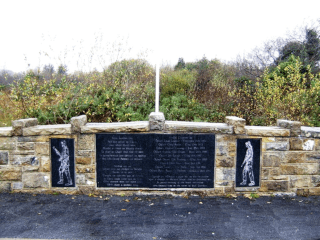
(Pictured: Republican memorial at Carragunt bridge, on the border between Northern Ireland and the Republic, often crossed by Provisional IRA forces during the Troubles to attack British targets inside County Fermanagh)


Leave a comment

Death of James McNeill, Second Governor-General of the Irish Free State

James McNeill, Irish politician and diplomat who serves as first High Commissioner to London and second Governor-General of the Irish Free State, dies on December 12, 1938.

One of five children born to Archibald McNeill, a Roman Catholic working class “baker, sailor and merchant,” and his wife, Rosetta (née McAuley) McNeill, McNeill is the brother of nationalist leader Eoin MacNeill. He serves as a high-ranking member of the Indian Civil Service in Calcutta.

Although unconnected with the Easter Rising in 1916, McNeill is arrested and jailed by the British Dublin Castle administration. On release, he is elected to Dublin County Council, becoming its chairman. He serves as a member of the committee under Michael Collins, the chairman of the Provisional Government, that drafts the Constitution of the Irish Free State. He is subsequently appointed as High Commissioner from Ireland to the United Kingdom.

When the first Governor-General of the Irish Free State, Tim Healy, retires in December 1927, McNeill is proposed as his replacement by the Irish government of W. T. Cosgrave and duly appointed by King George V as Governor-General of the Irish Free State.

In office, McNeill clashes with the King’s Private Secretary when he insists on following the constitutional advice of his Irish ministers, rather than that of the Palace, in procedures relating to the receipt of Letters of Credence accrediting ambassadors to the King in Ireland. He also refuses to attend ceremonies in Trinity College, Dublin, when some elements in the college try to ensure that the old British national anthem God Save the King is played, rather than the new Irish anthem, Amhrán na bhFiann.

When Éamon de Valera is nominated as President of the Executive Council of the Irish Free State in 1932, McNeill opts to travel to Leinster House, the parliament buildings, to appoint de Valera, rather than to require that he go to the Viceregal Lodge, the Governor-General’s residence and the former seat of British Lords Lieutenant, to avoid embarrassing de Valera, who is a republican.

However, McNeill’s tact is not reciprocated by de Valera’s government, and some of its ministers seek to humiliate him as the King’s representative by withdrawing the Irish Army‘s band from playing at functions he attends and demanding he withdraw invitations to visitors to meet him. In one notorious incident in April, two ministers, Seán T. O’Kelly (a future President of Ireland) and Frank Aiken, publicly walk out of a diplomatic function when McNeill, there as the guest of the French ambassador, arrives. In a fury, McNeill writes to de Valera demanding an apology for this treatment. When none is forthcoming, apart from an ambiguous message from de Valera that could be interpreted as partially blaming McNeill for attending functions at which ministers would be present, he publishes his correspondence with de Valera, even though de Valera had formally advised him not to do so. De Valera then demands that George V dismiss him.

The King engineers a compromise, whereby de Valera withdraws his dismissal request and McNeill, who is due to retire at the end of 1932, will push forward his retirement date by a month or so. McNeill, at the King’s request, resigns on November 1, 1932.

In June 1932 John Charles McQuaid, President of Blackrock College hosts an extravagant garden party to welcome Papal Legate Lorenzo Lauri, who had arrived in Ireland to represent Pope Pius XI at the 31st International Eucharistic Congress. While de Valera maintains a very high profile at the event, McQuaid, at de Valera’s request, goes to great lengths to avoid MacNeill to the extent possible.

McNeill dies on December 12, 1938, at the age of 69 in London. His widow Josephine is appointed Minister to the Hague by Seán MacBride, Minister for External Affairs in the coalition government of 1948.