seamus dubhghaill

Promoting Irish Culture and History from Little Rock, Arkansas, USA


Leave a comment

Birth of Andrew Kettle, Agrarian Reformer & Nationalist Politician

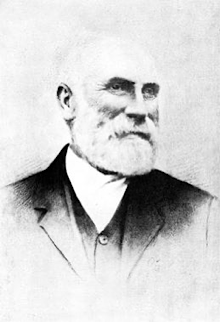
Andrew Joseph Kettle, a leading Irish nationalist politician, progressive farmer, agrarian agitator and founding member of the Irish National Land League, is born on September 26, 1833, in Drynam House, Swords, County Dublin.

Kettle is one among six children of Thomas Kettle, a prosperous farmer, and his wife, Alice (née Kavanagh). His maternal grandmother, Mary O’Brien, had smuggled arms to United Irishmen in the district in 1798, while her future husband, Billy Kavanagh, had been a senior figure in the movement. He is educated at Ireland’s most prestigious Catholic boarding schoolClongowes Wood College. His education is cut short when he is called to help full-time on the farm. Though an autodidact and always a forceful writer, he is beset later by an exaggerated sense of his “defective education and want of talking powers.” Fascinated by politics, he enjoys the repeal excitement of 1841–44 and in his late teens speaks once or twice at Tenant Right League meetings in Swords. Through the 1850s and most of the 1860s he sets about expanding the family farm into a composite of fertile holdings in Swords, St. Margaret’s, Artane, and Malahide (c.150 acres). Getting on well with the Russell-Cruise family of Swords, his first landlords, he benefits from a favourable leasehold arrangement on their demesne in the early 1860s. The farm is mostly in tillage, though Kettle also raises some fat cattle and Clydesdale horses, which he eventually sells to Guinness’s.

Kettle first enters politics in 1867, when he disagrees with John Paul Byrne of Dublin Corporation in public and in print over the right of graziers to state aid during an outbreak of cattle distemper. In 1868, he joins an agricultural reform group initiated by Isaac Butt. He becomes friendly with Butt and later claims to have converted him to support tenant-right. His memoirs, which are somewhat egocentric, contain a number of such questionable claims. It is, however, the case that he habitually writes up, for his own use, cogent summaries of the direction of current political tendencies, which sometimes become useful confidential briefs for Butt and later Charles Stewart Parnell. He is among the published list of subscribers to the Home Rule League in July 1870.

In 1872, disappointed by the Landlord and Tenant (Ireland) Act 1870, Kettle organises a Tenants’ Defence Association (TDA) in north County Dublin, soon sensing the need for a central body to coordinate the grievances of similar groups around the country. The Dublin TDA effectively acts as this central body, under his guidance as honorary secretary. At the 1874 United Kingdom general election in Ireland, the Dublin TDA decides to challenge the electoral control of certain corporation interests in County Dublin. Kettle secures the cautious approval of Cardinal Paul Cullen for any candidate supporting the principle of denominational education. He is also one of a deputation to ask Parnell to fight the constituency, which the latter loses. He becomes closely acquainted with Parnell, who frequently attends Dublin TDA meetings after his election for Meath in April 1875.

Taking a sombre view of the threat of famine in the west of Ireland after evidence of crop failure appears in early summer 1879, Kettle calls a conference of TDA delegates at the European Hotel in Bolton Street, Dublin, in late May. After a heated debate in which a proposal for a rent strike is greatly modified, Parnell comes to seek Kettle’s advice on whether to become involved in the evolving land agitation in County Mayo. Kettle urges him to go to the Westport meeting set for June 8, 1879, and claims later to have stressed in passing that “if you keep in the open you can scarcely go too far or be too extreme on the land question.” If the incident is correctly recounted, this is a most important statement, which virtually defines Parnell’s oratorical strategy throughout the land war. In October 1879, Kettle agrees to merge the TDA with a new Irish National Land League, set up at a meeting in the Imperial Hotel, Dublin, chaired by Kettle. As honorary secretary of the Land League, Kettle frankly admits that he is able to attend meetings without “the necessity of working.” His attendance is, however, among the most regular of all League officers, with him taking part in 73 of 107 meetings scheduled between December 1879 and October 1881.

In March 1880, Kettle disputes Michael Davitt‘s reluctance to use League funds in the general election. He canvasses vigorously together with Parnell in Kildare, Carlow, and Wicklow and is later pressed by his party leader into standing for election in County Cork, though aware that the local tenant movement has already prepared their own candidates. His association with Parnell antagonises the catholic hierarchy in Munster, who issues a condemnation of his candidacy. The hurly-burly of this election creates the persistent impression that Kettle is anti-clerical in politics, and he is defeated by 151 votes.

On a train journey to Ballinasloe in early April 1880, Kettle confides to Parnell his idea that land purchase can be facilitated by the recovery of tax allegedly charged in excess on Ireland by the British government since the act of union. At League meetings in June and July 1880, he advances his “catastrophist” plan: to cease attempts to prevent the development of an irresistible crisis among the Irish smallholding population, by diverting the application of League funds from general relief solely to the aid of evicted tenants, who might be temporarily housed “encamped like gypsies and the land lying idle,” in the belief that the British government will thereby be compelled to introduce radical remedial legislation. Smallholders do not have enough faith in either League or parliamentary politicians to listen.

At a meeting of the League executive in London and in Paris, before and after Davitt’s arrest on February 3, 1881, Kettle presents his plan that the parliamentary party should, if faced with coercive legislation, withdraw from Westminster, “concentrate” in Ireland, and call a general rent strike. Republicans on the League executive continually find themselves embarrassed by Kettle’s radical calls to action motivated solely by the project of agrarian reform. Parnell is later supposed to have lamented party failure to execute the plan at this juncture.

Kettle is arrested in June 1881 for calling for a collective refusal of rent. After two weeks in Naas jail he is transferred to Kilmainham Gaol, where in October he is, with some misgivings, one of the signatories to the No Rent Manifesto. Discharged from Kilmainham in late December 1881 owing to poor health, he returns principally to work on the family farm for most of the 1880s, though he claims to have formulated a draft solution for the plight of the agricultural labourer and “pushed it through” in correspondence with Parnell. He reemerges in 1890 to defend Parnell after the divorce scandal breaks. Attempting to establish a new ”centre” party independent of extreme Catholic and Protestant interests, he stands for election as a Parnellite at the 1891 County Carlow by-election, where he is comprehensively beaten, having endured weeks of insinuating harangues by Tim Healy, and raucous mob insults to the din of tin kettles bashed by women and children at meetings around the county. He is intermittently involved in County Dublin politics in the 1890s and 1900s and maintains a brusque correspondence on matters of the day in the national press.

Kettle dies on September 22, 1916, at his residence, St. Margaret’s, County Dublin, anguished by the death on September 9 of his brilliant son, Tom Kettle, near the village of Ginchy during the Battle of the Somme. He is buried at St. Colmcille’s cemetery, Swords.

Kettle marries Margaret McCourt, daughter of Laurence McCourt of Newtown, St. Margaret’s, County Dublin, farmer and agricultural commodity factor. They have five sons and six daughters.


Leave a comment

Birth of Raymond Crotty, Economist, Writer, Academic & Farmer

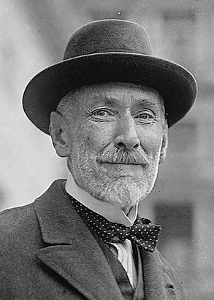
Raymond Dominick Crotty, economist, writer, academic and farmer who is known for his opposition to Ireland’s membership of the European Union, is born in Kilkenny, County Kilkenny on January 22, 1925.

Crotty grows up in Kilkenny and, while a student at St. Kieran’s College, Kilkenny, he begins breeding pigs in his spare time. Rather than move on to university, he pursues his interest in agriculture by going to work for a farmer relative in 1942. A year later he undertakes a 12-month course at the Albert Agricultural College in Glasnevin, Dublin. In 1945, he purchases a 204-acre farm in Dunbell, not far from Kilkenny, and spends the next two decades putting into practice his developing knowledge of agricultural production.

In 1956, while still a farmer, Crotty enrolls as a distance-learning student at the University of London, obtaining a BSc (Econ.) degree in 1959. He spends two further years studying for a MSc (Econ.) degree at the London School of Economics. In 1961, he obtains a post as lecturer in Agricultural Economics at University of Wales, Aberystwyth. During the 1960s, he sells his farm and becomes an economic adviser to various development agencies, including the World Bank. His work brings him to various parts of the developing world, including Latin America, India, and Africa. In 1976, he receives a fellowship at the University of Sussex. In 1982, he becomes a lecturer in statistics at Trinity College, Dublin.

Crotty’s knowledge and experience of agricultural economics shapes his attitude to Ireland’s participation in the European Economic Community. His years as a farmer teaches him that Irish agriculture is structured so as to discourage efficient use of the land.

Crotty grows to believe that agricultural efficiency can best be achieved by the imposition of an annual land tax. This would allow taxes on inputs and outputs to be removed or reduced and would encourage only those prepared to maximise the potential of their land to remain in farming. In putting forward this proposal, he is reflecting the influence of American economist Henry George, who held that land owned by private individuals should be subject to a tax on the land because of the advantage bestowed on the owner. He believes that Irish agriculture would be damaged if Ireland joined the European Economic Community (EEC) as, instead of becoming more efficient, farmers would grow to depend on external subsidies under the Common Agricultural Policy (CAP).

Furthermore, Crotty maintains that Ireland’s status as an ex-colony makes it unsuited for membership of a bloc of nations that include former colonial powers. In 1962, in the early stages of the public debate on whether Ireland should join the EEC, he expresses his concerns about the possible loss of Ireland’s national identity within what he termed a “European super state.”

In 1972, Crotty joins Trinity College academic Anthony Coughlan in opposing Ireland’s accession to the EEC. Over the next twenty years he campaigns against further integration of Ireland into the EEC, most notably during the attempts to ratify the Single European Act in the mid-1980s. He stands for election in the 1989 European Parliament election as a candidate in the Dublin constituency. He receives 25,525 votes (5.69% of the valid votes cast), not enough to elect him. In 1992, he once again allies himself with Coughlan in urging Irish voters to reject the Maastricht Treaty in the referendum held on June 18.

Despite failing to win majority support for his views in elections and referendums, Crotty continues until the end of his life his campaign against Ireland’s membership of the European Union.

Crotty is a prolific writer, producing books, pamphlets, articles, and letters on subjects such as economics, history, and Ireland’s involvement with Europe. His final work, When Histories Collide: The Development and Impact of Individualistic Capitalism, is edited by his son Raymond and published posthumously in 2001. It is an economic history of mankind from the earliest stages of human development to the present day. Reviewing it on behalf of the American Sociological Association, Professor Michael Mann of University of California, Los Angeles (UCLA) describes it as “an extraordinary book by an extraordinary man” and “a must-read.”

Raymond Crotty dies at St. Vincent’s Hospital, Dublin, at the age of 68, on January 1, 1994, and is buried in Tulla Cemetery outside Kilkenny.


Leave a comment

Birth of William Massey, New Zealand Prime Minister

william-ferguson-massey

William Ferguson Massey, New Zealand statesman, Prime Minister from 1912 to 1925, and founder of the Reform Party, is born in Limavady, County Derry in what is now Northern Ireland on March 26, 1856. He is a lifelong spokesman for agrarian interests and opponent of left-wing movements. His Reform Party ministries include leadership of the country during World War I.

The Massey family arrives in New Zealand on October 21, 1862, on board the Indian Empire as Nonconformist settlers, although William remains in Ireland for an additional eight years to complete his education. After arriving on December 10, 1870, on the City of Auckland, he works as a farmhand for some years before acquiring his own farm in Mangere, south Auckland, in 1876.

While managing his own farm, Massey assumes leadership in farmers’ organizations. He enters Parliament in 1894 as a conservative and from 1894 to 1912 is a leader of the conservative opposition to the Liberal ministries. He becomes prime minister in 1912 and promptly signs legislation enabling freeholders to buy their land at its original value. The first years of his ministry see labour strikes by miners in Waihi in 1912 and wharf workers in Wellington in 1913. His harsh repression of them give impetus to the formation of the Labour Party in 1916. He also improves federal administration by putting civil service positions under a nonpolitical commission.

A coalition with the Liberal Party led by Sir Joseph Ward enables Massey to continue his ministry in 1915. He participates in the Imperial War Cabinet (1917–18) and signs the Treaty of Versailles at the Paris Peace Conference of 1919, making New Zealand a founding member of the League of Nations. He opposes separate sovereign status for dominions within the British Commonwealth.

Following the war, farmers are troubled by depressed prices resulting from the sharply reduced British demand for their products, and they also face inflation in land prices, aggravated by increased demand for land by returning servicemen. Massey responds to these problems by establishing the Meat Control Board (1922) and the Dairy Export Control Board (1923), but rural and urban unrest resulting from rising prices continue to mount in the final years of his ministry.

In 1924 cancer forced Massey to relinquish many of his official duties, and he dies on May 10, 1925, at Wellington, New Zealand. The Massey Memorial is erected as his mausoleum in Wellington, paid for mostly by public subscription. Massey University is named after him, the name chosen because the university had a focus on agricultural science, matching Massey’s own farming background.


Leave a comment

The Dublin Society Renamed Royal Dublin Society

royal-dublin-society

The Dublin Society for Improving Husbandry, Manufactures and Other Useful Arts, which is originally founded on June 25, 1731, becomes the Royal Dublin Society on June 19, 1820.

The society is founded by members of the Dublin Philosophical Society, chiefly Thomas Prior. On July 1, 1731, at the second meeting of the Society, the designation “and Sciences” is added to the end of its name. The Society’s broad agenda is to stimulate economic activity and aid the creation of employment in Ireland. For the first few years of its existence, the Dublin Society concentrates on tillage technology, land reclamation, forestry, the production of dyestuffs, flax cultivation and other agricultural areas.

In 1738, following the publication of his pamphlet entitled Reflections and Resolutions Proper for the Gentlemen of Ireland, Samuel Madden initiates a grant or “premium” scheme to create incentives for improvements in Irish agricultural and arts. He proposes that a fund of £500 be raised for this purpose and he personally contributes £130. By 1740 the premium scheme has raised £900 and is adjudicated upon the following January and awarded to enterprises in earthenware, cotton, leatherwork, flax, surveying, as well as a number of painters and sculptors.

In 1761 the Irish Parliament votes for £12,000 to be given to the Dublin Society for the promotion of agriculture, forestry, arts and manufactures. This funding is used to increase the amount of premiums distributed by the Dublin Society. Further funds are given by Parliament to the Dublin Society on a sporadic basis until 1784 when an annual parliamentary vote of £5,000 is put in place and remains so until the dissolution of Grattan’s Parliament in 1800.

The “Royal” prefix is adopted in 1820 when George IV becomes Society patron.

The society purchases Leinster House, home of the Duke of Leinster, in 1815 and founds a natural history museum there. The society acquires its current premises at Ballsbridge in 1879 and has since increased from the original fifteen to forty acres. The premises consist of a number of exhibition halls, a stadium, meeting rooms, bars, restaurants, and RDS Simmonscourt Pavilion, a multi-purpose venue.

The Boyle Medal, named after Robert Boyle (1627–1691), is inaugurated in 1899 and is awarded jointly by the RDS and The Irish Times for scientific research of exceptional merit in Ireland. As of 2014 the medal has been awarded to 39 scientists.


Leave a comment

Opening of the Jack Lynch Tunnel

jack-lynch-tunnel

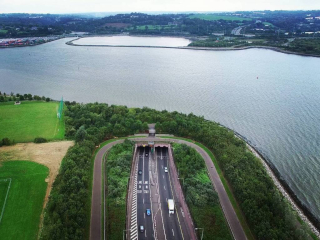
The Jack Lynch Tunnel, described as the most challenging civil engineering project in the history of the state, is unveiled on May 21, 1999 by Taoiseach Bertie Ahern at the entrance of the tunnel in Mahon, County Cork.

The Jack Lynch Tunnel is an immersed tube tunnel and an integral part of the N40 southern ring road of Cork. It is named after former Taoiseach Jack Lynch, a native of Cork. Construction involves the excavation of a large casting basin where the tunnel elements or pieces are constructed. After construction of elements is complete, the casting basin is filled with water and joined to the adjacent River Lee, each element is floated out and sunk into position into a carefully dredged river bed.

The tunnel takes the road under the River Lee. North of the tunnel, the ring-road joins the M8 motorway to Dublin and N8 road to the city centre, with the N25 road commencing east to Waterford. The tunnel is completed in May 1999, and carries nearly 40,000 vehicles per day as of 2005. This number rises further as the N40 ring-road’s upgrades progress, with the opening of the Kinsale Road Roundabout flyover in 2006 and subsequent upgrades to the Sarsfield Road and Bandon Road Roundabouts. Traffic in 2015 is 63,000 vehicles a day up from 59,000 in 2013.

The tunnel has two cells, each with two traffic lanes and two footpaths, and a central bore for use in an emergency only. Pedestrians and cyclists are expressly forbidden from using the tunnel. The exclusion of cyclists has been somewhat controversial as the feeder road is a dual-carriageway and so is open to cyclists, but the by-law is applied because of space limitations and the obvious danger of cyclists in an enclosed tunnel.


Leave a comment

Death of Sir Horace Curzon Plunkett

Sir Horace Curzon Plunkett, Anglo-Irish agricultural reformer, pioneer of agricultural cooperatives, Unionist Member of Parliament (MP), supporter of Home Rule, Irish Senator and author, dies in Weybridge, Surrey, England on March 26, 1932.

Plunkett, the third son of Admiral the 16th Baron of Dunsany, of Dunsany Castle, Dunsany, near Dunshaughlin, County Meath, and the Honourable Anne Constance Dutton, daughter of John Dutton, 2nd Baron Sherborne, is born on October 24, 1854. He is educated at Eton College and University College, Oxford, of which he becomes an honorary fellow in 1909.

Threatened by lung trouble in 1879, Plunkett goes to the United States and spends ten years as a cattle rancher in the Bighorn Mountains of Wyoming. He returns to Ireland in 1889 and devotes himself to the agricultural cooperative movement, first organizing creameries and then, in 1894, the Irish Agricultural Organisation Society, a forerunner of similar societies in England, Wales, and Scotland. A moderate Unionist member of Parliament for South County Dublin from 1892 to 1900, he becomes vice president (1899–1907) of the new Department of Agriculture and Technical Instruction for Ireland, which he has been instrumental in creating.

Plunkett’s later experience convinces him of the need for the independence of an Ireland without partition inside the Commonwealth, and he fights strongly for this goal, as chairman of the Irish Convention (1917–18) and, in 1919, as founder of the Irish Dominion League and of the Plunkett Foundation for Cooperative Studies, an agricultural research and information centre. He is appointed to the first Senate of the Irish Free State (1922–23). His house in Dublin is bombed and burned during in the Irish Civil War and he lives in England thereafter. In 1924 the Plunkett Foundation also moves to England. In 1924 he presides over a conference in London on agricultural co-operation in the British Commonwealth and in 1925 he visits South Africa to help the movement there.

Plunkett is made a Fellow of the Royal Society in 1902 and Knight Commander of the Royal Victorian Order in 1903. His writings include Ireland in the New Century (1904) and The Rural Life Problem of the United States (1910).

Sir Horace Plunkett dies at Weybridge, Surrey, England on March 26, 1932.


4 Comments

Birth of John Pitt Kennedy, Engineer & Agricultural Reformer

john-pitt-kennedy-gravesite

Lieutenant-Colonel John Pitt Kennedy, British military engineer, agricultural reformer and civil servant, is born at Carndonagh, County Donegal on May 8, 1796.

Kennedy is educated at Foyle College, Derry, and the Royal Military Academy, Woolwich, becoming lieutenant in the Royal Engineers in 1815. Four years afterwards, he is sent to Malta, and thence to Corfu. He superintends the construction of a canal at Lefkada in 1820, serves next under Sir Charles James Napier at Cephalonia building lighthouses, roads, and quays, and is sub-inspector of militia in the Ionian Islands (1828–31).

During a period in India Kennedy meets Sir Charles James Napier and when he returns to Ireland he sets up agricultural schools designed to improve the economy of the country. One is at Cloghan near Ballybofey, and another at Eglinton near Derry. He becomes a farm manager and marries Anna, daughter of Sir Charles Styles, who owns large estates around Ballybofey, in 1838. Kennedy′s methods of improving the condition of the agricultural classes are indicated by the title of his work, Instruct; Employ; Don’t Hang Them: or Ireland Tranquilized without Soldiers and Enriched without English Capital (1835). He writes several others of similar nature, and as inspector general for Irish education (1837), as secretary to the Devon Commission (1843), and to the Famine Relief Committee (1845), his labours are unceasing in behalf of his native land.

Kennedy returns to the army in 1849 as military secretary to Sir Charles Napier and accompanies him to India, where he builds the military road named after him and extending from Kalka via Shimla to Kunawur and Tibet. He publishes British Home and Colonial Empire (1865–69), as well as a number of technical works relating to his Indian career. He also serves as District Grandmaster of Bengal.

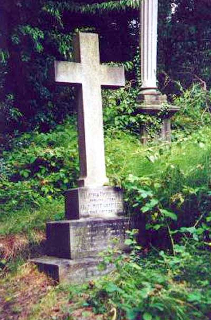
John Pitt Kennedy dies in 1879 and is buried in Highgate Cemetery (East) in Highgate, London Borough of Camden, Greater London, England.

(Pictured: John Pitt Kennedy gravesite in Highgate Cemetery, London)


Leave a comment

Birth of Sir Horace Curzon Plunkett

Sir Horace Curzon Plunkett, Anglo-Irish agricultural reformer, pioneer of agricultural cooperatives, Unionist Member of Parliament (MP), supporter of Home Rule, Irish Senator and author, is born on October 24, 1854.

Plunkett is the third son of Admiral the 16th Baron of Dunsany, of Dunsany Castle, Dunsany, near Dunshaughlin, County Meath, and the Honourable Anne Constance Dutton, daughter of John Dutton, 2nd Baron Sherborne. He is educated at Eton College and University College, Oxford, of which he becomes an honorary fellow in 1909.

Threatened by lung trouble in 1879, Plunkett goes to the United States and spends ten years as a cattle rancher in the Bighorn Mountains of Wyoming. He returns to Ireland in 1889 and devotes himself to the agricultural cooperative movement, first organizing creameries and then, in 1894, the Irish Agricultural Organisation Society, a forerunner of similar societies in England, Wales, and Scotland. A moderate Unionist member of Parliament for South County Dublin from 1892 to 1900, he becomes vice president (1899–1907) of the new Department of Agriculture and Technical Instruction for Ireland, which he has been instrumental in creating.

Plunkett’s later experience convinces him of the need for the independence of an Ireland without partition inside the Commonwealth, and he fights strongly for this goal, as chairman of the Irish Convention (1917–18) and, in 1919, as founder of the Irish Dominion League and of the Plunkett Foundation for Cooperative Studies, an agricultural research and information centre. He is appointed to the first Senate of the Irish Free State (1922–23). His house in Dublin is bombed and burned during in the Irish Civil War and he lives in England thereafter. In 1924 the Plunkett Foundation also moves to England. In 1924 he presides over a conference in London on agricultural co-operation in the British Commonwealth and in 1925 he visits South Africa to help the movement there.

Plunkett is made a Fellow of the Royal Society in 1902 and Knight Commander of the Royal Victorian Order in 1903. His writings include Ireland in the New Century (1904) and The Rural Life Problem of the United States (1910).

Sir Horace Plunkett dies at Weybridge, Surrey, England on March 26, 1932.