seamus dubhghaill

Promoting Irish Culture and History from Little Rock, Arkansas, USA


Leave a comment

Fifth Amendment of the Constitution of Ireland

constitution-of-ireland-2

The Fifth Amendment of the Constitution of Ireland, which is effected by the Fifth Amendment of the Constitution Act, 1972, is approved by referendum on December 7, 1972, and signed into law on January 5, 1973.

The amendment deletes the entirety of Article 44.1.2 which allowed the State to recognise the special position of the Holy Catholic Apostolic and Roman Church as the guardian of the Faith professed by the great majority of the citizens.

Also deleted by the amendment is Article 44.1.3 which allowed the State to also recognise the Church of Ireland, the Presbyterian Church in Ireland, the Methodist Church in Ireland, the Religious Society of Friends in Ireland, as well as the Jewish Congregations and the other religious denominations existing in Ireland at the date of the coming into operation of this Constitution.

In drafting the Irish constitution in 1936 and 1937, Éamon de Valera and his advisers choose to reflect what has been a contemporary willingness by constitution drafters and lawmakers in Europe to mention and in some ways recognise religion in explicit detail. This contrasts with many 1920s constitutions, notably the Constitution of the Irish Free State of 1922, which, following the secularism of the initial period following World War I, simply prohibits any discrimination based on religion or avoids religious issues entirely.

De Valera, his advisers, and the men who put words to de Valera’s concepts for the constitution face conflicting demands in his drafting of the article on religion. In contemporary terms, the Amendment marks a defeat for conservative Catholics and Pope Pius XI explicitly withholds his approval from it.

Though perceived in retrospect as a sectarian article, Article 44 is praised in 1937 by leaders of Irish Protestant churches, notably the Church of Ireland Archbishop of Dublin, and by Jewish groups. Conservative Catholics condemn it as “liberal.”

When the contents of Article 44 are put to Pope Pius XI by Cardinal Eugenio Pacelli, then Cardinal Secretary of State, later Pope Pius XII, the pope states in diplomatic language, “We do not approve, nor do we not disapprove – we will remain silent.” It is said that the Vatican is privately more appreciative of the constitution, and Pius XII later praises it.

The Fifth Amendment is introduced by the Fianna Fáil government of Jack Lynch and supported by every other major political party. The Catholic Church does not voice any objection to the amendment, but it is opposed by some conservative Catholics. Some leading members of the Church of Ireland and the Jewish Community say during the campaign that while they appreciate the Article’s recognition of their existence in 1937, it is no longer needed in the 1970s and has lost its usefulness.

The referendum on the amendment occurs on the same day as the referendum on the Fourth Amendment which lowers the voting age to eighteen. The Fifth Amendment is approved by 721,003 (84.4%) in favour and 133,430 (15.6%) against.

Having completed its passage through the Oireachtas and been adopted by the people, it is enacted by being signed into constitutional law by the President of Ireland, the man who had drafted the original article, Éamon de Valera.

1 Comment

Establishment of the Irish Free State

free-state-executive-council

The Irish Free State (Irish: Saorstát Éireann), an independent state established under the Anglo-Irish Treaty of December 1921, comes into being on December 6, 1922. The treaty ends the three-year Irish War of Independence between the forces of the self-proclaimed Irish Republic, the Irish Republican Army (IRA), and British Crown forces.

The Free State is established as a Dominion of the British Commonwealth of Nations. For one day, it encompasses all thirty-two counties of Ireland. Northern Ireland, which is comprised of the six northernmost counties, exercises its right under the Treaty to opt out of the new state on December 7.

The Free State government consists of the Governor-General, the representative of the king, and the Executive Council, which replaces both the revolutionary Dáil Government and the Provisional Government set up under the Treaty. W. T. Cosgrave, who had led both of these governments since August 1922, becomes the first President of the Executive Council. The legislature consists of Dáil Éireann, the lower house, and Seanad Éireann, also known as the Senate. Members of the Dáil are required to take an Oath of Allegiance, swearing fidelity to the king. The oath is a key issue for opponents of the Treaty, who refuse to take the oath and therefore do not take their seats. Pro-Treaty members, who form Cumann na nGaedheal in 1923, hold an effective majority in the Dáil from 1922 to 1927, and thereafter rule as a minority government until 1932.

In the first months of the Free State, the Irish Civil War is waged between the newly established National Army and the anti-Treaty IRA, who refuse to recognise the state. The Civil War ends in victory for the government forces, with the anti-Treaty forces dumping its arms in May 1923. The anti-Treaty political party, Sinn Féin, refuses to take its seats in the Dáil, leaving the relatively small Labour Party as the only opposition party. In 1926, when Sinn Féin president Éamon de Valera fails to have this policy reversed, he resigns from Sinn Féin and founds Fianna Fáil. Fianna Fáil enters the Dáil following the 1927 general election, and enters government after the Irish general election of 1932, when it becomes the largest party.

De Valera abolishes the Oath of Allegiance and embarks on an economic war with Britain. In 1937 he drafts a new constitution, which is passed by a referendum in July of that year. The Free State comes to an end with the coming into force of the new constitution on December 29, 1937. Under the new constitution the Irish state is named Ireland.

(Pictured: The Executive Council of the Irish Free State, October 1928)


1 Comment

Birth of Marcus Daly, “Copper King” of Butte, MT

marcus-daly

Marcus Daly, Irish-born American businessman known as one of the three “Copper Kings” of Butte, Montana, is born in Ballyjamesduff, County Cavan, on December 5, 1841.

Daly emigrates from Ireland to the United States as a young boy, arriving in New York City. He sells newspapers and works his way to California in time to join the gold rush in what is to become Virginia City, Nevada, and the fabulously rich silver diggings now known as the Comstock Lode, in 1860.

Daly gains experience in the mines of the Comstock under the direction of John William Mackay and James Graham Fair. While working in the mines of Virginia City, Daly meets and befriends George Hearst, father of William Randolph Hearst, and Lloyd Tevis, co-owners of the Ophir Mining Company. In 1872, Daly recommends purchase by the Hearst group of the Ontario silver mine, near Park City, Utah. In ten years, the Ontario produces $17 million and pays $6,250,000 in dividends.

Their business friendship extends for many years and helps establish the Anaconda Copper Mine in Butte, Montana. Daly originally comes to Butte in August 1876 to look at a mine, the Alice, as an agent for the Walker Bros. of Salt Lake City. The Walkers purchase the mine, install Daly as superintendent, and award him a fractional share of the mine.

Daly notices, while working underground in the Alice, that there are significant deposits of copper ore. He gains access into several other mines in the area and concludes that the hill is full of copper ore. He envisions an ore body several thousand feet deep, some veins of almost pure copper, and hundreds of millions of dollars. He urges his employers, the Walker Bros., to purchase the Anaconda and when they refrain, Daly purchases it himself. Daly finds his fortune on the Anaconda Copper Mine in Butte, after selling his small share of the Alice Mine for $30,000.

The Anaconda began as a silver mine, but Daly’s purchase is for the copper, found to be one of the largest deposits known at the time. However, he lacks the money to develop it, so he turned to Hearst, Haggin and Tevis. The first couple hundred feet within the mine are rich in silver, and took a few years to exhaust. By that time, Butte’s other silver mines are also playing out, so Daly closes the Anaconda, St. Lawrence, and Neversweat. Prices on surrounding properties drop and Daly purchases them. Then he re-opens the Anaconda. Due to Thomas Edison‘s development of the light bulb the world would need copper which is a very excellent conductor of electricity. Butte has copper, hundreds of thousands of tons of it, waiting to be taken from the ground.

He builds a smelter to handle the ore, and by the late 1880s, has become a millionaire several times over, and owner of the Anaconda Mining and Reduction Company. Daly owns a railroad, the Butte, Anaconda and Pacific Railroad, to haul ore from his mines to his smelter in Anaconda, a city he founds. He owns lumber interests in the Bitterroot Valley and a mansion and prized stables in the same valley, south of Missoula.

In 1894, Daly spearheads an energetic but unsuccessful campaign to have Anaconda designated as Montana’s state capital, but loses out to Helena. Daly is active in Montana politics throughout the 1890s, because of his opposition and intense rivalry with fellow copper king, and future U.S. Senator, William A. Clark. He attempts to keep Clark out of office by lavishly supporting his opponents.

Daly invests some of his money in horse breeding at his Bitterroot Stock Farm located near Hamilton, and is the owner/breeder of Scottish Chieftain, the only horse bred in Montana to ever win the Belmont Stakes.

In 1891, Daly becomes the owner of Tammany, said to be one of the world’s fastest racehorses in 1893. He also arranges the breeding of the great Sysonby, ranked number 30 in the top 100 U.S. thoroughbred champions of the 20th Century by The Blood-Horse magazine. However, Daly dies in New York City on November 12, 1900, before the horse is born.

Following his death, New York’s Madison Square Garden hosts a dispersal sale for the Bitterroot thoroughbred studs on January 31, 1901. One hundred eighty-five horses are sold for $405,525.


Leave a comment

The McGurk’s Bar Bombing

mcgurks-bombing

The Ulster Volunteer Force (UVF) explodes a bomb at McGurk’s Bar, an Irish Catholic-owned pub in Belfast, on December 4, 1971, killing fifteen Catholic civilians including two children and wounding seventeen others. This is the highest death toll from a single incident in Belfast during the Troubles. The bombing sparks a series of tit-for-tat bombings and shootings by loyalists and republicans, which help make 1972 the bloodiest year of the conflict.

On the evening of Saturday, December 4, 1971, a four-man UVF team meets in the Shankill area of Belfast and are ordered to bomb a pub on North Queen Street. According to the only convicted bomber, Robert Campbell, they are told not to return until the job is done. Campbell says that their target had not been McGurk’s, but another pub nearby. It is believed this is a pub called The Gem, which is allegedly linked to the Official Irish Republican Army (IRA). The 50-pound bomb is disguised as a brown parcel, which they place in a car and drive to their target. Campbell says they stop near The Gem at about 7:30 p.m. but are unable to gain access to it because there are security guards outside. After waiting for almost an hour, they drive a short distance to McGurk’s. At about 8:45 PM, one of them places the bomb in the porch entrance on Great George’s Street and rushes back to the car. It explodes just moments after they drive off. Campbell implies that McGurk’s had been chosen only because it was “the nearest Catholic pub.”

The blast causes the building to collapse. Bystanders immediately rush to free the dead and wounded from the rubble. Firefighters, paramedics, police, and soldiers are quickly on the scene. Fifteen Catholic civilians are killed, including two children, and an additional seventeen are wounded. The rescue effort lasts many hours.

Within two hours of the blast, a sectarian clash erupts nearby at the New LodgeTiger’s Bay interface. The British Army and Royal Ulster Constabulary (RUC) move in, and a gun battle develops. A British Army officer, Major Jeremy Snow, is shot by the IRA on New Lodge Road and dies of his wounds on December 8. Two RUC officers and five civilians are also wounded by gunfire. Eventually, five companies of troops are sent into the district, and they search almost 50 houses.

Meanwhile, the UVF team has driven to a nearby pickup point where they dump their car. They walk to the area of St. Anne’s Cathedral and are picked up by another car. They are driven back to the Shankill area and meet the man who had ordered the attack in an Orange Hall, telling him that “the job has been done.”

Among those killed are Philomena and Maria McGurk, wife and 12-year-old daughter of pub owner Patrick McGurk. Patrick and his three sons are seriously injured. Shortly after the attack, McGurk appears on television calling for no retaliation, “It doesn’t matter who planted the bomb. What’s done can’t be undone. I’ve been trying to keep bitterness out of it.”

In March 1976, the RUC receives intelligence that links UVF member Robert Campbell and four others to the McGurk’s bombing. Campbell is arrested on July 27, 1977, and held at Castlereagh RUC base. He admits his part in the bombing but refuses to name the others.

On July 29, 1977, Campbell is charged with 15 counts of murder and 17 counts of attempted murder. On September 6, 1978, he pleads guilty to all charges and receives life imprisonment with “a recommendation to serve no less than 20 years,” in part for a separate conviction for the murder of a Protestant delivery driver in 1976. He is the only person to have been charged for the bombing. He eventually serves fifteen years in prison and is released on September 9, 1993.


Leave a comment

Birth of Kate O’Brien, Novelist and Playwright

kate-obrien

Kathleen Mary Louise “Kate” O’Brien, novelist and playwright, is born in Limerick, County Limerick, on December 3, 1897. She becomes best known for her 1934 novel The Ante-Room, her 1941 novel The Land of Spices, and the 1946 novel That Lady.

Following the death of her mother when she is five, O’Brien becomes a boarder at Laurel Hill Convent. She graduates in English and French from the newly established University College Dublin, and then moves to London, where she works as a teacher for a year.

In 1922–23, she works as a governess in the Basque Country, in the north of Spain, where she begins to write fiction. Upon her return to England, O’Brien works at the Manchester Guardian. After the success of her play Distinguished Villa in 1926, she takes to full-time writing and is awarded both the 1931 James Tait Black Memorial Prize and the Hawthornden Prize for her debut novel Without My Cloak.

Many of her books deal with issues of female agency and sexuality in ways that are new and radical at the time. Her 1936 novel, Mary Lavelle, is banned in Ireland and Spain, while The Land of Spices is banned in Ireland upon publication. In addition to novels, she writes plays, film scripts, short stories, essays, copious journalism, two biographical studies, and two very personal travelogues.

Throughout her life, O’Brien feels a particular affinity with Spain. While her experiences in the Basque Country inspire Mary Lavelle, she also writes a life of the Spanish mystic Teresa of Ávila, and she uses the relationship between the Spanish king Philip II and Maria de Mendoza to write the anti-fascist novel That Lady.

O’Brien writes a political travelogue, Farewell Spain, to gather support for the leftist cause in the Spanish Civil War, and it is believed that she is close to anarchism in the 1930s. A feminist, her novels promote gender equality and are mostly protagonised by young women yearning for independence. With several of her books including positive gay/lesbian characters, O’Brien’s determination to encourage a greater understanding of sexual diversity makes her a pioneer in gay literary representation. She is very critical of conservatism in Ireland, and by spearheading a challenge to the Irish Censorship Act, she helps bring to an end the cultural restrictions of the 1930s and 1940s in the country. She lives much of her life in England and died in Faversham, near Canterbury, on August 13, 1974.

The Glucksman Library at the University of Limerick holds an important collection of O’Brien’s writings. The Limerick Literary Festival in honour of Kate O’Brien, formerly the Kate O’Brien Weekend, takes place in Limerick every year, attracting academic and non-academic audiences.


Leave a comment

The Good Friday Agreement Comes Into Operation

good-friday-agreement-signing

The Good Friday Agreement, a major political development in the Northern Ireland peace process, comes into operation on December 2, 1999, as the British and Irish governments formally notify each other that all the necessary arrangements are in place.

The notification ceremony takes place at Iveagh House, St. Stephen’s Green, headquarters of the Department of Foreign Affairs and Trade, at a joint signing by Minister for Foreign Affairs and Trade David Andrews and Secretary of State for Northern Ireland Peter Mandelson.

Northern Ireland‘s present devolved system of government is based on the agreement. The agreement also creates a number of institutions between Northern Ireland and the Republic of Ireland, and between the Republic of Ireland and the United Kingdom.

The agreement is made up of two inter-related documents, both agreed upon in Belfast on Good Friday, April 10, 1998. The first is a multi-party agreement by most of Northern Ireland’s political parties. The second is an international agreement between the British and Irish governments, known as the British-Irish Agreement.

The agreement sets out a complex series of provisions, or strands, relating to a number of areas:

Strand 1 addresses the status and system of government of Northern Ireland within the United Kingdom and establishes two major institutions – the Northern Ireland Assembly and the Northern Ireland Executive.

Strand 2 addresses the relationship between Northern Ireland and the Republic of Ireland and the institutions to be created between them – the North/South Ministerial Council, the North/South Inter-Parliamentary Association, and the North/South Consultative Forum.

Strand 3 addresses the relationship between the Republic of Ireland and the United Kingdom and institutions to be created between Ireland and Great Britain – the British/Irish Intergovernmental Conference, the British-Irish Council, and an expanded British-Irish Parliamentary Assembly.

Issues relating to sovereignty, civil and cultural rights, decommissioning of weapons, justice, and policing are central to the agreement.

The agreement is approved by voters across the island of Ireland in two referendums held on May 22, 1998. In Northern Ireland, voters are asked whether they support the multi-party agreement. In the Republic of Ireland, voters are asked whether they will allow the state to sign the agreement and allow necessary constitutional changes to facilitate it. The people of both jurisdictions need to approve the agreement in order to give effect to it.

The Good Friday Agreement comes into force on December 2, 1999. The Democratic Unionist Party (DUP) is the only major political group in Northern Ireland to oppose the Good Friday Agreement.

(Pictured: British Prime Minister Tony Blair and Irish Taoiseach Bertie Ahern sign the Good Friday Agreement)


Leave a comment

Enactment of Poyning’s Law

poynings-law-enacted

Poynings’ Law, also known as the Statute of Drogheda, an Act of the Parliament of Ireland which provides that the parliament cannot meet until its proposed legislation has been approved by both Ireland’s Lord Deputy and Privy Council and by England’s monarch and Privy Council, is enacted on December 1, 1494.

Poynings’ Parliament is called by Sir Edward Poynings in his capacity as Lord Deputy of Ireland, appointed by King Henry VII of England in his capacity as Lord of Ireland. Coming in the aftermath of the divisive Wars of the Roses, Poynings’ intention is to make Ireland once again obedient to the English monarchy. Assembling the Parliament on December 1, 1494, he declares that the Parliament of Ireland is thereafter to be placed under the authority of the Parliament of England. This marks the beginning of Tudor direct rule in Ireland, although Henry VII is still forced to rely on Old English nobles (such as Gerald FitzGerald, 8th Earl of Kildare, despite his support for Lambert Simnel) as his deputies in Ireland through the intervening years.

The working of Poynings’ Law takes place in several steps. The first step is for the lieutenant governor and the Irish council, or Irish executive, to decide that a parliament is needed, usually for the purpose of raising funds. At this point the council and lieutenant write drafts of legislation to be proposed to the king and his council. After this has been completed, the lieutenant and council, according to the act, are required to certify the request for parliament “under the great seal of that land [Ireland],” and then forward it to England for approval. Once the request arrives in England, it is reviewed by the King and his council, and a formal licence approving the request for parliament and the draft bills are returned to Ireland. Once the licence is received in Ireland, the governor summons parliament and the bills are passed.

The two important aspects of the procedure presented by Poynings’ Law are transmission and certification. Both of these requirements place limits on various parties within the law-making process in Ireland. The combination of these processes creates a situation where bills can be sent, along with the request for parliament, and the king can amend and remove such bills as he wishes, however he cannot add new bills himself.

Furthermore, the two processes make it impossible for the Irish to add more bills or amendments to a request, after the initial licence request has been granted. This means that any additional bills or amendments that they wish to pass in parliament have to be re-sent along with an entirely new request for parliament. Clearly this creates severe inefficiencies in the legislative process and thus gives the executive in Ireland as well as the Crown an interest in relaxing procedure.

Poynings’ Law is a major rallying point for later groups seeking self-government for Ireland, particularly the Confederate Catholics in the 1640s and Henry Grattan‘s Patriot Party in the late 18th century, who consistently seek a repeal of Poynings’ Law. The Act remains in place until the Constitution of 1782 gives the Irish parliament legislative independence. The Acts of Union 1800 render most of the Constitution of 1782 and Poynings’ Law moot. Poynings’ Law is formally repealed as obsolete by the Statute Law Revision (Ireland) Act 1878.


Leave a comment

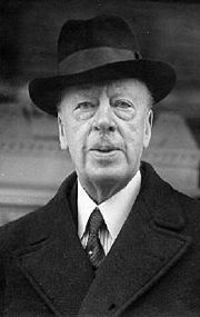
Birth of James Hamilton, First Governor of Northern Ireland

james-hamilton

James Albert Edward Hamilton, 3rd Duke of Abercorn, is born in Hamilton Place, Piccadilly, London, on November 30, 1869. Styled Marquess of Hamilton between 1885 and 1913, he is a British peer and Unionist politician. He serves as the first Governor of Northern Ireland, a post he holds between 1922 and 1945. He is a great-grandfather of Diana, Princess of Wales.

Hamilton is the eldest son of James Hamilton, 2nd Duke of Abercorn, and godson of the Prince of Wales. His mother, Lady Mary Anna, is the fourth daughter of Richard Curzon-Howe, 1st Earl Howe. He is educated at Eton College and subsequently serves first in the Royal Inniskilling Fusiliers until 1892 when he joins the 1st Life Guards. He is later transferred as major to the North Irish Horse.

In early 1901 he accompanies his father on a special diplomatic mission to announce the accession of King Edward to the governments of Denmark, Sweden and Norway, Russia, Germany, and Saxony.

In the 1900 general election, Hamilton stands successfully as Unionist candidate for Londonderry City, and three years later he becomes Treasurer of the Household, a post he holds until the fall of Arthur Balfour‘s Conservative administration in 1905. After serving for a time as an Opposition whip, Hamilton succeeds his father as third Duke of Abercorn in 1913. In 1922, he is appointed governor of the newly created Northern Ireland. He also serves as Lord Lieutenant of Tyrone from 1917 until his death, having previously been a Deputy Lieutenant for County Donegal. Abercorn proves a popular royal representative in Northern Ireland and is reappointed to the post in 1928 after completing his first term of office. In 1931, he declines the offer of the governor generalship of Canada, and three years later he is again reappointed governor for a third term. He remains in this capacity until his resignation in July 1945.

Abercorn is made the last non-royal Knight of the Most Illustrious Order of Saint Patrick in 1922. In 1928 he becomes a Knight of the Most Noble Order of the Garter and is also the recipient of an honorary degree from the Queen’s University Belfast. He receives the Royal Victorian Chain in 1945, the same year he is sworn of the Privy Council.

Abercorn marries Lady Rosalind Cecilia Caroline Bingham, only daughter of Charles Bingham, 4th Earl of Lucan and his wife Lady Cecilia Catherine Gordon-Lennox at St. Paul’s Church, Knightsbridge, on November 1, 1894. They have three daughters and two sons.

Abercorn dies at his London home on September 12, 1953, and is buried at Baronscourt in County Tyrone.


Leave a comment

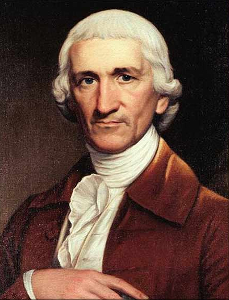
Birth of Charles Thomson, American Revolution Patriot

charles-thomson

Charles Thomson, Patriot leader in Philadelphia during the American Revolution and the secretary of the Continental Congress (1774–1789) throughout its existence, is born in Gorteade townland, Maghera parish, County Derry, on November 29, 1729.

After the death of his mother in 1739, Thomson’s father emigrates to the British colonies in America with Charles and two or three brothers. The father dies at sea, and the penniless boys are separated in America. Charles is cared for by a blacksmith in New Castle, Delaware, and is educated in New London, Pennsylvania. In 1750 he becomes a tutor in Latin at the Philadelphia Academy.

During the French and Indian War, Thomson is an opponent of the Pennsylvania proprietorsAmerican Indian policies. He serves as secretary at the Treaty of Easton (1758) and writes An Enquiry into the Causes of the Alienation of the Delaware and Shawanese Indians from the British Interest (1759), which blames the war on the proprietors. He is allied with Benjamin Franklin, the leader of the anti-proprietary party, but the two men part politically during the Stamp Act crisis in 1765. Thomson becomes a leader of Philadelphia’s Sons of Liberty. He is married to the sister of Benjamin Harrison V, another signer, as delegate, of the Declaration of Independence.

Thomson is a leader in the revolutionary crisis of the early 1770s. John Adams calls him the “Samuel Adams of Philadelphia.” Thomson serves as the secretary of the Continental Congress through its entirety. Through those 15 years, the Congress sees many delegates come and go, but Thomson’s dedication to recording the debates and decisions provides continuity. Along with John Hancock, president of the Congress, Thomson’s name appears on the first published version of the Declaration of Independence in July 1776.

Thomson’s role as secretary to Congress is not limited to clerical duties. According to biographer Boyd Schlenther, Thomson “took a direct role in the conduct of foreign affairs.” Fred S. Rolater has suggested that Charles Thomson was essentially the “Prime Minister of the United States.” Thomson is also noted for designing, with William Barton, the Great Seal of the United States. The Great Seal plays a prominent role in the January 14, 1784, ratification of the Treaty of Paris (1783). Britain’s representatives in Paris initially dispute the placement of the Great Seal and Congressional President Thomas Mifflin‘s signature, until mollified by Benjamin Franklin.

But Thomson’s service is not without its critics. James Searle, a close friend of John Adams, and a delegate, begins a cane fight on the floor of Congress against Thomson over a claim that he was misquoted in the “Minutes” that results in both men being slashed in the face. Such brawls on the floor are not uncommon, and many of them are promoted by argument over Thomson’s recordings. Political disagreements prevent Thomson from getting a position in the new government created by the United States Constitution. Thomson resigns as secretary of Congress in July 1789 and hands over the Great Seal, bringing an end to the Continental Congress.

Thomson spends his final years at Harriton House in Bryn Mawr, Pennsylvania, working on a translation of the Bible. He also publishes a synopsis of the four evangelists in 1815. In retirement, Thomson also pursues his interests in agricultural science and beekeeping. Charles Thomson dies on August 16, 1824, in Lower Merion Township, Pennsylvania. He is buried at Laurel Hill Cemetery in Philadelphia.


2 Comments

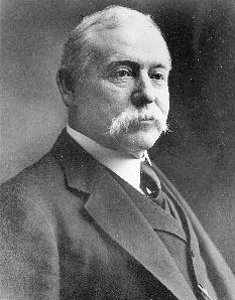
Birth of Cardinal Patrick Joseph O’Donnell

patrick-joseph-odonnell

Patrick Joseph O’Donnell, Cardinal of the Roman Catholic Church, is born in Glenties, County Donegal, on November 28, 1856. He serves as Archbishop of Armagh from 1924 until his death and is elevated to the cardinalate in 1925.

O’Donnell, son of Daniel O’Donnell, a farmer, and his wife, Mary (née Breslin), is one of nine children in a family that claim descent from the O’Donnells of Tyrconnell. He is educated in the High School, Letterkenny, the Catholic University, Dublin, and St. Patrick’s Pontifical University, Maynooth. He is ordained to the priesthood on June 29, 1880. In that same year he is appointed to the staff of St. Patrick’s College, Maynooth, holding the chairs of Dogmatic and Moral Theology. In 1884 he becomes dean of the revived post-graduate Dunboyne Institute and in 1885 is awarded his STD. From his desk in Maynooth he pours out a continuous stream of articles on moral theology and canon law.

O’Donnell becomes Bishop of Raphoe on February 26, 1888, and is consecrated by Cardinal Michael Logue on April 3 in Letterkenny. With superior qualities of mind and body, he is a benign figure who is yet gifted with sharp political acumen. He has the most distinguished episcopate, locally and nationally. He undertakes and completes prodigious building projects including a superbly sited neo-gothic cathedral, St. Eunan’s Diocesan College, and the Presentation Monastery and Loreto schools and an extension to Loreto Convent, all in Letterkenny.

He is appointed coadjutor Archbishop of Armagh on January 14, 1922, and succeeds Cardinal Logue on November 19, 1924. On December 14, 1925, Pope Pius XI makes O’Donnell a Cardinal.

O’Donnell takes an active part in the social, political, and economic life of Ireland. A staunch activist for social justice, as Bishop of Raphoe, he is a member of the first Committee of the Irish Agricultural Organisation Society, founded by Sir Horace Plunkett. In 1918, when representing the nationalist’s side at the Irish Convention, he opposes John Redmond‘s amendment intended to bring about unanimity on All-Ireland Home Rule.

Cardinal O’Donnell dies on October 22, 1927, in Carlingford, County Louth. The St. Connell’s Museum in his hometown of Glenties has a display about his life.