seamus dubhghaill

Promoting Irish Culture and History from Little Rock, Arkansas, USA


Leave a comment

Assassination of Senator Billy Fox

senator-billy-fox

Billy Fox, Protestant Irish politician and a Fine Gael member of Dáil Éireann from 1969 to 1973, and of Seanad Éireann from 1973 until his death, is assassinated on March 12, 1974, by Irish Republican Army (IRA) gunmen who are carrying out a raid on his girlfriend’s farmhouse. Five members of the Provisional IRA are convicted of involvement in his murder.

Late on the night of Monday, March 11, 1974, about a dozen gunmen arrive at the home of Fox’s girlfriend, Marjorie Coulson. She lives there with her parents and brother, and Fox regularly visits on Monday evenings. The farmhouse is in the rural townland of Tircooney in County Monaghan, near the border with Northern Ireland. The gunmen search the farmhouse and demand the occupants hand over weapons. Shortly after midnight, as this is taking place, Fox drives down the laneway and is stopped by some of the gunmen who are outside. He runs but is shot and killed by a single gunshot through the upper torso. The gunmen then order everyone out of the house, set it on fire, and escape.

The next day, the Ulster Freedom Fighters claim that it had killed Fox because he had links to the Provisional IRA. The IRA issues a statement saying that it is not involved. However, shortly after the shooting, five men from County Monaghan are charged with Fox’s murder and IRA membership. They are convicted in May 1974 and sentenced to penal servitude for life. One of those convicted tells the court they had raided the farm because they received a tip-off that Ulster Volunteer Force (UVF) weapons were being stored there. He says there was an agreement that no shots were to be fired. His understanding is that Fox had taken some of the men by surprise and they had shot to wound, not recognizing him.

It is reported that the tip-off had come from another local family and was the result of a grudge. IRA members are already suspicious that the UVF is receiving local help, following an incident in November 1973. Loyalist gunmen had bombed a house at nearby Legnakelly and shot one of the occupants, a republican activist. In its statement on Fox’s killing, the IRA says, “We have repeatedly drawn attention to the murderous acts of a group of former B Specials from County Fermanagh…led by serving officers of the British Army.” The author, Tim Pat Coogan, however, suggests that members of the Official IRA are responsible for killing Fox.

The Seanad adjourns for a week as a mark of respect. About 500 people attend Fox’s funeral at Aughnamullen, including Taoiseach Liam Cosgrave and the Irish president, Erskine Childers. Fox is the first member of the Oireachtas to be killed since Minister for Justice Kevin O’Higgins by the anti-Treaty Irish Republican Army in 1927. When John Bruton first becomes a Teachta Dála (TD) in 1969 he shares an office with Fox. He says that he is still angry at the murder. The RTÉ documentary Rumours from Monaghan report in detail on the circumstances of Fox’s killing. Because Fox is a Protestant, some suggest that the motive for the killing was sectarian.

One of those convicted for Fox’s killing, Sean Kinsella, later escapes from Portlaoise Prison. He is later convicted of arms offences and attempted murder in England. He is released by the Irish government under the Good Friday Agreement.

The Senator Billy Fox Memorial Park in Aughnamullen is named in his memory.

Leave a comment

The Selton Hill Ambush

selton-hill-ambush-memorial

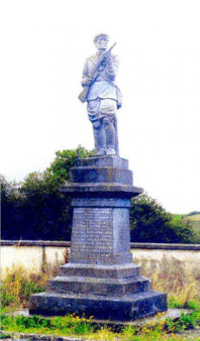
The Selton Hill Ambush takes place on March 11, 1921, during the Irish War of Independence. An Irish Republican Army (IRA) flying column is ambushed by members of the Royal Irish Constabulary (RIC) Auxiliary Division at Selton Hill, County Leitrim. Six IRA officers of the Leitrim Brigade are killed.

Seán Connolly is an IRA activist from County Longford, but he is also used by IRA GHQ to organise the surrounding areas of County Roscommon and County Leitrim. When Michael Collins orders Connolly into the county, he warns that it is “the most treacherous county in Ireland.” As Connolly is running a training camp at Selton Hill in early 1921, his position is given to the RIC. The RIC District Inspector, Thomas Gore-Hickman, has been alerted to Connolly’s position by a local doctor who had served in the British Army. The doctor had reportedly been told of the training camp by a local member of the Orange Order.

The events at Selton Hill take place one week after the Sheemore ambush, in which British troops from the Bedfordshire and Hertfordshire Regiment, based in Boyle suffer several casualties and at least one fatality. On March 11, at Selton Hill, a large force of RIC and Auxiliaires, based in Mohill and troops from the Bedfordshire and Hertfordshire Regiment surround and then attack the IRA camp. Six IRA volunteers are killed. The RIC suffers no losses. The IRA dead are Sean Connolly, Seamus Wrynne, Joseph O’Beirne, John Reilly, Joseph Reilly, and Capt. M.E. Baxter.

Ernie O’Malley later claims the volunteers’ bodies are “taken to Mohill by soldiers who shouted, “fresh meat!” as they were driving through the town.” He is also quoted as saying, “Men from the Bedfordshire Regiment were seen by a badly wounded IRA officer, Bernie Sweeney who survived, to use rifle butts on the skulls of two wounded men.” He also states that the location of the column was given to the local District Inspector of the RIC by a doctor who had been in the British Army, who received the information by a local Orangeman. The IRA officer who survives is Bernie Sweeney, from Ballinamore, who survives by hiding in a drain, where the cold water prevents him from bleeding to death. He is rescued and hidden from the Black and Tans and Auxiliaries by locals.

The IRA learn their position had been given away by the doctor and the Orangeman. The latter is later killed by the IRA. The doctor escapes to England and later dies in an accident.

The border country of the north midlands often proves to be a treacherous place for IRA training camps. On May 8, 1921, a camp of Belfast IRA volunteers based in the Lappanduff hills in neighbouring County Cavan, is also surprised. One volunteer is killed, thirteen captured, and arms and ammunition are seized by the British forces.

(Pictured: Selton Hill Ambush Memorial, south of the village of Fenagh, County Leitrim)


Leave a comment

The Bombing of Nelson’s Pillar

nelsons-pillar-bombing

A powerful explosion destroys the upper portion of Nelson’s Pillar in Dublin in the early morning hours of March 8, 1966, bringing Nelson’s statue crashing to the ground amid hundreds of tons of rubble. All that is left of the Pillar is a 70-foot-high jagged stump. The pillar is seen by many as an anachronistic monument to English occupation of Ireland, especially as 1966 is the 50th anniversary of the 1916 Easter Rising.

Nelson’s Pillar is a large granite column capped by a statue of Horatio Nelson, built in the centre of what is then Sackville Street (later renamed O’Connell Street) in Dublin. It is completed in 1809 when Ireland is part of the United Kingdom. Its remnants are later destroyed by the Irish Army.

The decision to build the monument is taken by Dublin Corporation in the euphoria following Nelson’s victory at the Battle of Trafalgar in 1805. The original design by William Wilkins is greatly modified by Francis Johnston, on grounds of cost. The statue is sculpted by Thomas Kirk. From its opening on October 29, 1809, the Pillar is a popular tourist attraction, but provokes aesthetic and political controversy from the outset. A prominent city centre monument honouring an Englishman rankles as Irish nationalist sentiment grows, and throughout the 19th century there are calls for it to be removed or replaced with a memorial to an Irish hero.

During the Easter Rising in 1916 an attempt is made to blow up the pillar, but the explosives fail to ignite due to dampness. It remains in the city as most of Ireland becomes the Irish Free State in 1922, and the Republic of Ireland in 1949. The chief legal barrier to its removal is the trust created at the Pillar’s inception, the terms of which gave the trustees a duty in perpetuity to preserve the monument. Successive Irish governments fail to deliver legislation overriding the trust. Although influential literary figures such as James Joyce, William Butler Yeats and Oliver St. John Gogarty defend the Pillar on historical and cultural grounds, pressure for its removal intensifies in the years preceding the 50th anniversary of the Rising, and its sudden demise is, on the whole, well received by the public. Although it is widely believed that the action is the work of the Irish Republican Army (IRA), the police are unable to identify any of those responsible.

After years of debate and numerous proposals, the site is occupied in 2003 by the Spire of Dublin, a slim needle-like structure rising almost three times the height of the Pillar. In 2000 a former republican activist gives a radio interview in which he admits planting the explosives in 1966, but after questioning him the Gardaí decides not to take action. Relics of the Pillar are found in Dublin museums and appear as decorative stonework elsewhere, and its memory is preserved in numerous works of Irish literature.


4 Comments

Murder of Frank Shawe-Taylor

castle-taylor-ardrahan

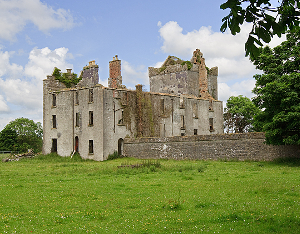
Frank Shawe-Taylor, Irish land agent and ex-High Sheriff of County Galway, is shot and killed in an Irish Republican Army (IRA) ambush on March 3, 1920, during the Irish War of Independence. Shawe-Taylor is a member of the Taylor family of Castle Taylor, Ardrahan, County Galway. He is related to Lady Gregory and Captain John Shawe-Taylor. He serves as High Sheriff of County Galway in 1915.

Land disputes in Ireland had been a contentious issue for much of the 19th century, with tenants of landlords insisting on fixity of tenure, which later grows into a demand to own their own land. In addition, The Wyndham Land Act of 1903 enables the transfer of about 9 million acres, up to 1914, from landlords to tenants. However, tenure and ownership of land is still a live issue on the eve of the Irish War of Independence.

Shawe-Taylor is a land agent to a local landlord and is himself a tenant. Early in January 1920, a group of local IRA soldiers, including Mick Kelly, Bill Freaney and Larry Lardner, approach Shawe-Taylor on behalf of some local people who are requesting a road to travel to Mass. While Shawe-Taylor himself is amenable to their demands, his landlord refuses them outright and makes this known via Shawe-Taylor.

On March 3, 1920, Shawe-Taylor and his driver, Barrett, are making their way to Galway to attend the fair. At 6:00 AM the coach reaches Egan’s Pub, Coshla, where they find the road blocked. The donkey cart of a local, Johnny Kelly, has been stolen and placed across the road. From behind the wall, at least two shooters fire at Barrett and Shawe-Taylor, wounding Barrett and killing Shawe-Taylor. This results in a huge security presence in the area, which in turn leads to more unrest with the locals. This increases with the arrival of the Black and Tans, whose irregular methods result in shootings, assaults, rapes and deaths. Moorpark House is placed under Royal Irish Constabulary protection out of fear of further killings.

Other people who subsequently die as a result of the unrest in Galway include Ellen Quinn, a pregnant mother of six and a tenant of Lady Gregory, Fr. Michael Griffin, Tom Egan and brothers Patrick and Harry Loughnane. In addition, there are numerous incidents of violence, many of which are recorded with horror by Lady Gregory in her journal, who remarks that “the country has gone wild since the killing of Frank Shawe-Taylor.”

No one is ever tried for Frank Shawe-Taylor’s killing, though the identities of those involved are known to some locals at the time. His widow eventually sells their property and, with her young children, moves to England.

Shawe-Taylor is buried in St. Mary’s graveyard, Athenry. The music critic, Desmond Shawe-Taylor (1907–1995) and British racing driver Brian Shawe-Taylor (1915–1999) are his sons. His grandson is Desmond Shawe-Taylor, Surveyor of the Queen’s Pictures since 2005.

(Pictured: Castle Taylor, near to Ardrahan and Caranavoodaun, Galway, Ireland | Photo © Mike Searle (cc-by-sa/2.0))


Leave a comment

Birth of Short Story Writer Seán Ó Faoláin

sean-ofaolain

Seán Proinsias Ó Faoláin, Irish short story writer, is born as John Francis Whelan on February 22, 1900, in Cork, County Cork.

Ó Faoláin is educated at the Presentation Brothers Secondary School in Cork. He comes under the influence of Daniel Corkery, joining the Cork Dramatic Society and increasing his knowledge of the Irish language, which he had begun in school. Shortly after entering University College Cork, he joins the Irish Volunteers and fights in the Irish War of Independence. During the Irish Civil War, he serves as Censor for The Cork Examiner and as publicity director for the Irish Republican Army (IRA). After the Republican loss, he receives M.A. degrees from the National University of Ireland and from Harvard University where he studies for three years. He is a Commonwealth Fellow from 1926 to 1928 and is a Harvard Fellow from 1928 to 1929.

Ó Faoláin writes his first stories in the 1920s, eventually completing 90 stories over a period of 60 years. From 1929 to 1933 he lectures at the Catholic college, St. Mary’s College, at Strawberry Hill in Twickenham, England, during which period he writes his first two books. His first book, Midsummer Night Madness, is published in 1932. It is a collection of stories partly based on his Civil War experiences. He afterwards returns to his native Ireland. He publishes novels, short stories, biographies, travel books, translations, and literary criticism – including one of the rare full-length studies of the short story, The Short Story (1948). He also writes a cultural history, The Irish, in 1947.

Ó Faoláin serves as director of the Arts Council of Ireland from 1956 to 1959, and from 1940 to 1990 is a founder member and editor of the Irish literary periodical The Bell. The list of contributors to The Bell include many of Ireland’s foremost writers, among them Patrick Kavanagh, Patrick Swift, Flann O’Brien, Frank O’Connor and Brendan Behan. His Collected Stories are published in 1983. He is elected Saoi of Aosdána in 1986.

Seán Proinsias Ó Faoláin dies after a short illness on April 20, 1991, in the Dublin nursing home where he had lived for two years.


2 Comments

Deportation of Joe Doherty

joseph-doherty

Joe Doherty, a volunteer in the Belfast Brigade of the Provisional Irish Republican Army (IRA) who escapes during his 1981 trial for killing a member of the Special Air Service (SAS) in 1980, is arrested in the United States in 1983 and is deported to Northern Ireland by the U.S. government on February 19, 1992. A first season episode of Law & Order entitled “The Troubles” is based on his case.

The trial of Doherty and the other members of their four-man active service unit nicknamed the “M60 gang” begins in early May 1981, on charges including three counts of murder. On June 10, Doherty and seven other prisoners, including Angelo Fusco and the other members of the IRA unit, take a prison officer hostage at gunpoint in Crumlin Road Gaol and ultimately escape in waiting cars. Two days after the escape, Doherty is convicted in absentia and sentenced to life imprisonment with a minimum recommended term of thirty years.

Doherty escapes across the border into the Republic of Ireland, and then travels to the United States on a false passport. He lives with an American girlfriend in Brooklyn and New Jersey, working on construction sites and as a bartender at Clancy’s Bar in Manhattan, where he is arrested by the FBI on June 28, 1983. He is imprisoned in the Metropolitan Correctional Center in Manhattan, and a legal battle ensues with the British government seeking to extradite him back to Northern Ireland. Doherty claims he is immune from extradition as the killing of Royal Irish Constabulary Captain Herbert Westmacott was a political act. In 1985 federal judge John E. Sprizzo rules Doherty cannot be extradited as the killing is a “political offense.” Doherty’s legal battle continues as the United States Department of Justice then attempts to deport him for entering the country illegally.

Doherty remains in custody at the Metropolitan Correctional Center and attempts to claim political asylum, and on June 15, 1988, Attorney General Edwin Meese overturns an earlier ruling by the Federal Board of Immigration Appeals that Doherty can be deported to the Republic of Ireland and orders his deportation to Northern Ireland. In February 1989 new Attorney General Dick Thornburgh chooses not to support the decision made by his predecessor and asks lawyers for Doherty and the Immigration and Naturalization Service to submit arguments for a review of the decision and Doherty’s claim for asylum. By this time Doherty’s case is a cause célèbre with his sympathisers including over 130 Congressmen and a son of then President of the United States George H. W. Bush. In 1990 a street corner near the Metropolitan Correctional Center is named after him.

In August 1991, Doherty is transferred to a federal prison in Lewisburg, Pennsylvania, and on January 16, 1992, the Supreme Court of the United States overturns a 1990 Federal Appeals Court ruling by a 5-to-3 decision, paving the way for his deportation. On February 19, 1992, Doherty is deported to Northern Ireland, despite pleas to delay the deportation from members of Congress, Mayor of New York City David Dinkins, and the Cardinal Archbishop of New York, John Joseph O’Connor.

Doherty is returned to Crumlin Road Gaol before being transferred to HM Prison Maze. He is released from prison on November 6, 1998, under the terms of the Good Friday Agreement. After his release Doherty becomes a community worker specialising in helping disadvantaged young people. In 2006, he appears in the BBC television show Facing the Truth opposite the relatives of a soldier killed in the Warrenpoint ambush.


Leave a comment

Death of Denis “Dinny” Lacey

dinny-lacey

Denis “Dinny” Lacey, Irish Republican Army (IRA) officer during the Irish War of Independence and anti-Treaty IRA officer during the Irish Civil War, dies at Glen of Aherlow, County Tipperary on February 18, 1923.

Lacey is born on May 31, 1889 in the village of Attybrick, near Annacarty, County Tipperary. He joins the Irish Volunteers in 1913 and is sworn into the secretive Irish Republican Brotherhood (IRB) in 1914. He is introduced to the IRB by Seán Treacy. During the War of Independence (1919–1921) he is selected to command an IRA flying column of the 3rd Tipperary Brigade, in September 1920. The flying column mounts two successful ambushes of British forces – killing six British soldiers at Thomastown near Golden, and four Royal Irish Constabulary (RIC) men at Lisnagaul in the Glen of Aherlow.

In April 1921, following another ambush of British troops near Clogheen, he captures RIC inspector Gilbert Potter, whom he later executes in reprisal of the British hanging of republican prisoners.

In December 1921, Lacey’s unit splits over the Anglo-Irish Treaty. He opposes the Treaty and most of his men follow suit. He takes over command of the 3rd Tipperary Brigade as Séamus Robinson is appointed to commanded the anti-Treaty IRA’s Second Southern Division. In the ensuing civil war (June 1922-May 1923), he organises guerrilla activity in the Tipperary area against Pro-Treaty Irish Free State forces.

Denis Lacey is killed in an action against Free State troops at Ballydavid, near Bansha in the Glen of Aherlow on February 18, 1923. He is 33 years old at the time of his death. Over 1,000 Free State troops drawn from Cahir, Cashel, Clonmel, and Tipperary, under the command of General John T. Prout, with the intention of breaking up Lacey’s guerrilla unit, converge on the Glen where he and four other men from his column are billeted. Lacey and one of his men are killed and others are captured. Two National Army soldiers are killed in the action.

A memorial in Annacarty commemorates Lacey’s war service and subsequent death in action.


1 Comment

Palmerstown House Burned by the IRA

palmerstown-house

Palmerstown House in Johnstown, County Kildare, the home of Dermot Bourke, 7th Earl of Mayo, is burned and destroyed by the Irish Republican Army (IRA) on January 29, 1923.

The destruction of country houses in Ireland is a phenomenon of the Irish revolutionary period (1919–1923), which sees at least 275 country houses deliberately burned down, blown up, or otherwise destroyed by the Irish Republican Army.

The vast majority of the houses, known in Ireland as Big Houses, belong to the Anglo-Irish aristocracy of the Protestant Ascendancy. The houses of some Roman Catholic unionists, suspected informers, and members or supporters of the new Irish Free State government are also targeted. Although the practice by the IRA of destroying country houses begins in the Irish War of Independence, most of the buildings are destroyed during the Irish Civil War (1922–23).

Attacks are planned and organised, and generally focused on Irish peers who have sat in the House of Lords, members of the Senate of the Irish Free State and former Irish Unionist Party politicians. The assault on the “Big Houses” is part of a wider campaign against Free State supporters as a reprisal for the executions policy of the Government.

At least 76 country houses are destroyed in the War of Independence as thirty “Big Houses” are burned in 1920 and another 46 in the first half of 1921, mostly in the conflict’s Munster heartland which includes counties Cork, Kerry, Tipperary, Clare and Limerick. It is believed that 199 country houses are destroyed during the Irish Civil War. Some houses are destroyed in the fighting of the early months of the war, but the campaign against them begins in earnest in late 1922.

In most cases, no one is injured during the destruction of the house. It is recorded that in several cases, members of the IRA help the targeted family to remove their possessions from the house before it is destroyed. When Dermot Bourke’s house is attacked on January 29, 1923, he describes the IRA guerrillas as being “excessively polite” and apologetic. Nonetheless, there are incidents of violence and deaths in such attacks. The Church of Ireland Gazette records numerous instances of Unionists and Loyalists being shot, burned out or otherwise forced from their homes during the early 1920s.

Today, most of the targeted buildings are in ruins or have been demolished. Some have been restored by their owners, albeit often smaller in size, or have been rebuilt and are now used for other purposes.


Leave a comment

Murder of IRA Paramilitary Eamon Collins

eamon-collins

Eamon Collins, a Provisional Irish Republican Army paramilitary in the late 1970s and early 1980s, is beaten and stabbed to death near his home in Newry, County Down on January 27, 1999.

Collins grows up in a middle-class Irish family in Camlough, a small, staunchly Irish republican town in County Armagh. After completing his schooling, he works for a time in the Ministry of Defence in a clerical capacity in London before studying law at Queen’s University Belfast, where he becomes influenced by Marxist political ideology. He eventually drops out of university and, after working in a pub for a period, joins Her Majesty’s Customs & Excise Service, serving in Newry, and goes on to use this internal position within the administrative machinery of the British Government to support IRA operations against Crown Forces personnel.

Collins joins the Provisional IRA during the blanket protest by Long Kesh inmates in the late 1970s and he becomes involved in street demonstrations. He joins the South Down Brigade of the IRA, based around Newry, and is appointed its intelligence officer.

Collins becomes noted within IRA circles for his hard-line views on the continuance of armed campaign and later joins its Internal Security Unit. Around this time, he has a confrontation with Gerry Adams at the funeral of an IRA man killed in a failed bombing over how to deal with the funeral’s policing, where he accuses Adams a being a “Stick.”

Despite his militarist convictions at this time Collins finds the psychological strain caused by his involvement in the terrorist war increasingly difficult to address. His belief in the martial discipline of the IRA’s campaign is seriously undermined by the March 11, 1982, assassination of Norman Hanna, a 28-year-old Newry man, in front of his wife and young daughter. His uneasy state is further augmented by being arrested on two occasions under anti-terrorism laws, the second including a week of detention and intense interrogation.

Collins subsequently states that the strain of the interrogation merely exacerbates increasing doubts that he has already possessed about the moral justification of the IRA’s terrorist paramilitary campaign and his actions within it. These doubts are made worse by the organization’s senior leadership quietly deciding in the early 1980s that the war has failed and now slowly manoeuvering the movement away from a military campaign to allow its political wing, Sinn Féin, to pursue its purposes by another means in what would become the Northern Ireland peace process.

In 1987, after being charged with several counts of murder and attempted murder, Collins is acquitted as the statement in which he admits to involvement in these acts is ruled legally inadmissible by the court. On release from prison, he spends several weeks being counter-interrogated by the IRA’s Internal Security Unit, after which he is exiled by the organization from Ulster, being warned that if he is found north of Drogheda after a certain date he will be executed.

After his exile Collins moves to Dublin and squats for a while in a deserted flat in the impoverished Ballymun area of the city. After several years in Dublin, he subsequently moves to Edinburgh, Scotland for a period, where he runs a youth centre.

In 1995 Collins returns to Newry, a district known for the militancy of its communal support of the IRA, with numerous IRA members in its midst. The IRA order exiling him from Ulster has not been lifted, but with a formal ceasefire from the organization and renunciations of violence by all the paramilitary organizations in the province, he deems it safe to move back in with his wife and children who had never left the town.

Rather than maintaining a low-profile Collins decides to take a prominent role in the ongoing transition of Ulster’s post-war society, using his personal history as a platform in the media to analyze the adverse effects of terrorism. In May 1998 he gives evidence against leading republican Thomas “Slab” Murphy in a libel case Murphy has brought against The Sunday Times, over a 1985 article naming him as the IRA’s Northern Commander. Murphy denies IRA membership, but Collins takes the witness stand against him and testifies that from personal experience he knew that Murphy had been a key military leader in the organization. Murphy subsequently loses the libel case and sustains substantial financial losses in consequence. Collins and his family receive numerous threats after the trial.

Collins is beaten and stabbed to death by one or more unidentified assailants early in the morning of January 27, 1999, while walking his dogs near the Barcroft Park Estate in Newry along a quiet stretch of country lane at Doran’s Hill. His body also bears marks of having been struck by a car moving at speed. The subsequent police investigation and Coroner’s Inquest comment upon the extremity of weaponed violence to Collins’ head and face used during the attack.

Rumoured reasons behind the murder are that he had returned to Ulster in breach of the IRA’s banning order, and further he had detailed IRA activities and publicly criticized in the media a multiplicity of Irish terrorist paramilitary splinter groups that had appeared after the IRA’s 1994 ceasefire, and that he had testified in court against Murphy.

After a traditional Irish wake, with a closed coffin necessitated by the condition of his face, and a funeral service at St. Catherine’s Church in Newry, Collins’ body is buried at the town’s Monkshill Cemetery, not far from the grave of Albert White, a Catholic former Royal Ulster Constabulary Inspector, whose assassination he had helped to organize in 1982.


Leave a comment

The Downing Street Declaration

major-and-reynoldsTaoiseach of the Republic of Ireland, Albert Reynolds, and Prime Minister of the United Kingdom, John Major, sign the Downing Street Declaration (DSD) on December 15, 1993, at the British Prime Minister’s office in 10 Downing Street. The joint declaration stipulates that, if the Irish Republican Army (IRA) stops its campaign for three months, Sinn Féin will be allowed to join all-party talks.

The declaration affirms both the right of the people of Ireland to self-determination, and that Northern Ireland will be transferred to the Republic of Ireland from the United Kingdom only if a majority of its population is in favour of such a move. It also includes, as part of the prospective of the so-called “Irish dimension,” the principle of consent that the people of the island of Ireland, have the exclusive right to solve the issues between North and South by mutual consent.

The latter statement, which later becomes one of the points of the Good Friday Agreement, is key to produce a positive change of attitude by the republicans towards a negotiated settlement. The joint declaration also pledges the governments to seek a peaceful constitutional settlement, and promises that parties linked with paramilitaries, such as Sinn Féin, can take part in the talks, so long as they abandon violence.

The declaration, after a meeting between Sinn Féin President Gerry Adams and American congressman Bruce Morrison, which is followed by a joint statement issued by Adams and John Hume, is considered sufficient by the Provisional Irish Republican Army to announce a ceasefire on August 31, 1994 which is then followed on October 13 by an announcement of a ceasefire from the Combined Loyalist Military Command.

(Pictured: (L to R) John Major, Prime Minister of the United Kingdom, and Albert Reynolds, Taoiseach of the Republic of Ireland)