seamus dubhghaill

Promoting Irish Culture and History from Little Rock, Arkansas, USA


Leave a comment

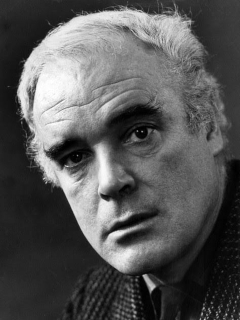
Terence O’Neill Becomes Fourth Prime Minister of Northern Ireland

File source: http://en.wikipedia.org/wiki/File:Captain_Terence_O%27Neill.jpg

Terence O’Neill becomes the fourth Prime Minister of Northern Ireland on March 25, 1963, following the resignation of Basil Brooke, 1st Viscount Brookeborough. He plays a significant role in the first year of the Troubles, trying unsuccessfully to stem growing sectarian violence.

O’Neill is born on September 10, 1914, at 29 Ennismore Gardens, Hyde Park, London, the son of Captain Arthur O’Neill of Shane’s Castle, Randalstown, the first member of parliament (MP) to be killed in action in World War I five months later. He is educated in the English public school system at West Downs SchoolWinchester and Eton College, spending his summer holidays at the family estate in Ulster. He is later commissioned in the British Army, rising to the rank of captain and serving with the Irish Guards in World War II. He is wounded in 1944 and opts to resettle permanently in Northern Ireland.

In 1946, O’Neill is elected to the Parliament of Northern Ireland, representing the Unionist stronghold of Bannside. He remains in the parliament at Stormont for almost 25 years. He becomes Northern Ireland’s Minister of Home Affairs in April 1956, Minister of Finance in September 1956 and Prime Minister in March 1963.

As Prime Minister, O’Neill introduces economic reforms to stimulate industrial growth and employment, with mixed results. He also tries narrowing the divide between Protestants and Catholics. He does this with important gestures, like visiting Catholic schools and expressing condolences on the death of Pope John XXIII.

O’Neill also seeks better relations with the Republic of Ireland, and in January 1965 invites Taoiseach Seán Lemass to Belfast. Catholics and moderate Unionists welcome this reconciliation but many conservative Loyalists, like Ian Paisley, condemn it as treachery.

When the civil rights movement erupts in the late 1960s, O’Neill offers a package of reforms and concessions, including changes to the allocation of housing. These proposals, however, anger staunch Unionists and fail to satisfy many Republicans.

In December 1969, O’Neill appears on Northern Ireland television and makes an impassioned plea for unity, warning that “Ulster stands at the crossroads.” His government is reelected in February 1969, though O’Neill himself is almost voted out of his own seat.

With the situation worsening, O’Neill is further embarrassed by Loyalist attempts to sabotage Belfast’s water supply. Fast losing the confidence of his own party, he resigns the prime ministership in April 1969. He remains in the parliament until January 1970.

O’Neill is made Baron O’Neill of the Maine and spends the last decade of his life in Britain’s House of Lords. He dies of cancer on June 12, 1990.


Leave a comment

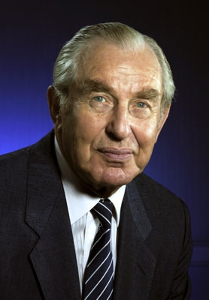
Chaim Herzog Elected President of Israel

chaim-herzog

Chaim Herzog, Israeli politician, general, lawyer, and author, is elected the sixth President of Israel on March 22, 1983. He serves from 1983 to 1993.

Herzog is born in Cliftonpark Avenue in Belfast on September 17, 1918. He is raised predominantly in Dublin, the son of Ireland’s Chief Rabbi Yitzhak HaLevi Herzog and his wife Sara. Herzog’s father, a fluent speaker of the Irish language, is known as “the Sinn Féin Rabbi” for his support of the First Dáil and the Irish Republican cause during the Irish War of Independence. Herzog studies at Wesley College, Dublin, and is involved with the Federation of Zionist Youth and Habonim Dror, the Labour-Zionist movement, during his teenage years.

The family emigrates to Mandatory Palestine in 1935 and Herzog serves in the Jewish paramilitary group Haganah during the 1936–1939 Arab revolt. He goes on to earn a degree in law at University College London, and then qualifies as a barrister at Lincoln’s Inn.

Herzog joins the British Army during World War II, operating primarily in Germany as a tank commander in the Armoured Corps. There, he is given his lifelong nickname of “Vivian” because the British could not pronounce the name, “Chaim.” A Jewish soldier had volunteered that “Vivian” is the English equivalent of “Chaim.”

Herzog returns to Palestine after the war and, following the end of the British Mandate and Israel’s Declaration of Independence in 1948, operates in the Battles of Latrun during the 1948 Arab–Israeli War. He retires from the Israel Defence Forces in 1962 with the rank of Major-General.

After leaving the army, Herzog opens a private law practice. He returns to public life when the Six-Day War breaks out in 1967, serving as a military commentator for Kol Israel radio news. Following the capture of the West Bank, he is appointed Military Governor of East Jerusalem, and Judea and Samaria.

In 1972 Herzog is a co-founder of Herzog, Fox & Ne’eman, which becomes one of Israel’s largest law firms. Between 1975 and 1978 he serves as Israel’s Permanent Representative to the United Nations, in which capacity he repudiates UN General Assembly Resolution 3379, the “Zionism is Racism” resolution, and symbolically tears it up before the assembly.

Herzog enters politics in the 1981 elections, winning a Knesset seat as a member of the Alignment. Two years later, in March 1983, he is elected to the largely ceremonial role of President. He serves two five-year terms before retiring in 1993. He dies on April 17, 1997, and is buried on Mount Herzl, Jerusalem. His son, Isaac Herzog, led the Israeli Labour Party and the parliamentary Opposition in the Knesset from 2013 until 2018.


Leave a comment

Birth of Charlotte Milligan Fox, Composer & Music Collector

charlotte-milligan-fox

Charlotte Milligan Fox, Irish composer and music collector, is born on March 17, 1864 in Omagh, County Tyrone in what is now Northern Ireland.

Milligan is the eldest of eleven children born to Methodist parents Seaton Milligan (1837–1916) and Charlotte Burns (1842–1916), with nine surviving including Alice Milligan and Edith Wheeler. All nine children enroll at Methodist College Belfast which provides a privileged and exceptional education. She studies classical piano and composition at the Royal College of Music in London and the Conservatoires of Frankfurt and Milan. Following her marriage to Charles Eliot Fox in 1892, she settles in London.

In 1904 Fox co-founds with Alfred Perceval Graves the Irish Folk Song Society, an offshoot of the Folk-Song Society formed in 1898. Its aim is to collect and publish Irish airs and ballads, in addition to holding lectures and concerts on the subject. She acts as the society’s honorary secretary. The rules of the Society are collected in volume 4 of the Journal of the Irish Folk Song Society. The subscription is 5 shillings payable every January and committee meetings are held at the Rooms of the Irish Literary Society in London.

Fox is a musician in her own right and tours Ireland collecting folk songs and airs. She undertakes a series of tours of County Antrim between 1909 and 1910 with her sisters Edith Wheeler and Alice Milligan. The sisters record and transcribe songs by Irish singers, then publish articles and musical scores in The Journal of Irish Folk Song.

In 1910 Fox visits the east coast of the United States where the New York branch of the Irish Folk Song Society is formed. “The Bardic Recital” is produced on March 16 at the National Theatre in Washington, D.C. She collects and arranges the music for the play.

Fox rediscovers Edward Bunting‘s papers, and under the provision of her will they come to Queen’s University Belfast in 1916. From these papers she writes The Annals of the Irish Harpers. The publication of The Annals of the Irish Harpers stimulates a revival of interest in both the Irish harp and Edward Bunting. Alice Milligan nurses her sister prior to Fox’s death in London on March 25, 1916. An obituary of Charlotte Milligan Fox is in The Irish Booklover (1916). The Journal of the Irish Folk Song Society (1917) has a poem in remembrance of Charlotte Milligan Fox. The same issue has a memoir of Fox by Alice Milligan and an appreciation of Fox by Alfred Perceval Graves.

During 2010 and 2011, the Ulster History Circle mounts plaques for famous Ulster figures. Charlotte Milligan Fox and Alice Milligan have a plaque mounted on Omagh Library, 1 Spillar’s Place, Omagh, County Tyrone.


Leave a comment

The Launch of the SS Canberra

ss-canberra

The SS Canberra, an ocean liner in the P&O fleet which later operates on cruises, is launched in Belfast, Northern Ireland on March 16, 1960. She is built at the Harland & Wolff shipyard in Belfast at a cost of £17,000,000.

The ship is named on March 17, 1958, after the federal capital of Australia, Canberra. Her launch is sponsored by Dame Pattie Menzies, GBE, wife of the then Prime Minister of Australia, Robert Menzies. She enters service in May 1961 and begins her maiden voyage in June.

At the end of 1972 she is withdrawn and refitted to carry 1,500 single class passengers on cruises. Unusually, this transition from an early life as a purpose-built ocean liner to a long and successful career in cruising, occurs without any major external alterations, and with only minimal internal and mechanical changes over the years.

On April 2, 1982, Argentina invades the Falkland Islands, which initiates the Falklands War. At the time, SS Canberra is cruising in the Mediterranean Sea. The next day, her captain, Dennis Scott-Masson, receives a message asking his time of arrival at Gibraltar, which is not on his itinerary. When he calls at Gibraltar, he learns that the Ministry of Defence had requisitioned SS Canberra for use as a troopship. SS Canberra sails to Southampton, Hampshire, where she is quickly refitted, sailing on April 9 for the South Atlantic.

SS Canberra anchors in San Carlos Water on May 21 as part of the landings by British forces to retake the islands. Although her size and white colour make her an unmissable target for the Argentine Air Force, the liner is not badly hit in the landings as the Argentine pilots tend to attack the Royal Navy frigates and destroyers instead of the supply and troop ships. After the war, Argentine pilots claim they were told not to hit SS Canberra, as they mistook her for a hospital ship.

SS Canberra then sails to South Georgia island, where 3,000 troops are transferred from Queen Elizabeth 2. They are landed at San Carlos on June 2. When the war ends, SS Canberra is used as a cartel to repatriate captured Argentine soldiers, landing them at Puerto Madryn, before returning to Southampton to a rapturous welcome on July 11.

After a lengthy refit, SS Canberra returns to civilian service as a cruise ship. Her role in the Falklands War makes her very popular with the British public, and ticket sales after her return are elevated for many years as a result. Age and high running costs eventually catch up with her though, as she has much higher fuel consumption than most modern cruise ships. Although Premier Cruise Line makes a bid for the old ship, P&O had already decided that they do not want SS Canberra to operate under a different flag.

SS Canberra is withdrawn from P&O service in September 1997 and sold to ship breakers for scrapping on October 10, 1997, leaving for Gadani ship-breaking yard in Pakistan on October 31, 1997. Her deep draft means that she cannot be beached as far as most ships, and due to her solid construction, the scrapping process takes nearly a year instead of the estimated three months, being totally scrapped by the end of 1998.

The SS Canberra appears in the 1971 James Bond film Diamonds Are Forever as the liner where Mr. Wint and Mr. Kidd try to kill Bond. In 1997, singer/songwriter Gerard Kenny releases the single “Farewell Canberra” which is specially composed for the final voyage.


Leave a comment

Birth of Irish Nationalist Bobby Sands

Robert Gerard Sands, commonly known as Bobby Sands, Irish nationalist and member of the Provisional Irish Republican Army, is born on March 9, 1954, at Abbots Cross, NewtownabbeyCounty Antrim, outside Belfast.

Sands is the oldest of four children born to John and Rosaleen Sands, and the couple’s first son. Sands grows up in Belfast under the cloud of nationalist and loyalist divisions. At an early age, Sands’s life is affected by the sharp divisions that shape Northern Ireland. At the age of ten, he is forced to move with his family out of their neighborhood due to repeated intimidation by loyalists.

“I was only a working-class boy from a Nationalist ghetto,” Sands later writes about his childhood. “But it is repression that creates the revolutionary spirit of freedom.” Loyalist intimidation proves to be a theme throughout Sands’ life. At the age of 18, he is forced out of his job as an apprentice car builder. Not long afterwards, he and his family have to move again, as a result of political trouble.

The steady number of conflicts pushes Sands to join the republican movement in 1972. His ties to the movement soon capture the attention of the authorities, and later that year, he is arrested and charged with possessing firearms in his house. He spends the next three years of his life in prison. Upon his release, Sands immediately returns to the Republican Movement. He signs on as a community activist in Belfast’s rough Twinbrook area, quickly becoming a popular go-to person for a range of issues affecting the neighborhood.

In late 1976, authorities arrest Sands again, this time in connection with the bombing of Balmoral Furniture Company and an ensuing gun battle. After weathering a brutal interrogation and then a court proceeding that offers up questionable evidence connecting Sands and three others to the attack, a judge sentences Sands to 14 years in prison at the Long Kesh Detention Centre, a facility used to house Republican prisoners from 1971 until 2000, located just outside of Belfast.

As a prisoner, Sands’s stature only grows. He pushes hard for prison reforms, confronting authorities, and for his outspoken ways he is frequently given solitary confinement sentences. Sands contention is that he and others like him, who are serving prison sentences, are actually prisoners of war, not criminals as the British government insists.

Beginning on March 1, 1981, Sands leads nine other Republican prisoners in the H-Block section of the Maze prison on a hunger strike that lasts until death. Their demands range from allowing prisoners to wear their own clothes to permitting visits and mail, all of which are central in improving the inmates’ way of life.

Unable to move authorities to give in to his requests, and unwilling himself to end his hunger strike, Sands’s health begins to deteriorate. During the first seventeen days of the strike alone, he loses 16 pounds. A hero among his fellow nationalists, Sands is elected as a Member of Parliament (MP) for Fermanagh and South Tyrone while in prison. Sands becomes the youngest MP at the time. However, he dies less than one month later without ever having taken his seat in the House of Commons.

Only days after slipping into a coma, on the morning of May 5, 1981, Sands dies from malnutrition due to starvation. He is 27 years old and has refused to eat for 66 days. He becomes so fragile over his final weeks that he spends his final days on a waterbed to protect his deteriorating and fragile body. At time of his death, Sands is married to Geraldine Noade, with whom he has one son, Gerard.

The announcement of Sands’s death prompts several days of rioting in nationalist areas of Northern Ireland. Over 100,000 people line the route of Sands’s funeral. He is buried in the ‘New Republican Plot’ alongside 76 others. Their graves are maintained by the National Graves Association, Belfast.

While loyalists dismiss Sands’s death, others are quick to recognize its significance. Over the next seven months, nine other IRA supporters die on hunger strike. Eventually, the British government gives proper political recognition to the prisoners, many of them earning their release under the 1998 Good Friday Agreement.

Bobby Sands’ final days are depicted in the 2008 Steve McQueen film Hunger, with actor Michael Fassbender portraying Sands.


Leave a comment

Birth of Mairéad Farrell, Provisional IRA Member

mairead-farrell

Mairéad Farrell, member of the Provisional Irish Republican Army (IRA), is born in Belfast on March 3, 1957. She is shot dead by the British Army in Gibraltar on March 6, 1988.

Farrell is born into a middle-class family with no link to militant Irish republicanism other than a grandfather who had been interned during the Irish War for Independence. She is educated at Rathmore Grammar School, Belfast. At the age of 14 she is recruited into the Provisional IRA by Bobby Storey. After leaving school at the age of 18, she is hired as a clerical worker for an insurance broker’s office.

On March 1, 1976, the British government revokes Special Category Status for prisoners convicted from this date under anti-terrorism legislation. In response, the IRA instigates a wave of bombings and shootings across Northern Ireland and younger members such as Farrell are asked to participate. On April 5, 1976, along with Kieran Doherty and Sean McDermott, she attempts to plant a bomb at the Conway Hotel in Dunmurry, as that hotel had often been used by British soldiers on temporary duty in Northern Ireland. She is arrested by Royal Ulster Constabulary (RUC) officers within an hour of planting the bomb. McDermott, her boyfriend, is shot dead by a RUC reservist at a nearby housing estate.

At her trial, Farrell refuses to recognise the court as it is an institution of the British state. She is sentenced to fourteen years in prison for explosives offences, firearms offences, and belonging to an illegal organisation.

When Farrell arrives at Armagh Prison, she refuses to wear a prison uniform in protest at the designation of republican prisoners as criminals and becomes the official Officer Commanding of the female IRA prisoners. After 13 months, she, along with Mary Doyle and Mairead Nugent, begin a hunger strike to coincide with the one already taking place in Long Kesh Prison. It ends on December 19, a day after the men’s strike. In March 1981 the prisoners’ rights campaign is focused on the hunger strike being undertaken by Bobby Sands, leader of IRA prisoners in the H-Blocks. She was one of the H-Block/Armagh prisoners to stand for election in the Republic of Ireland in the 1981 Irish general election, standing in Cork North-Central and polling 2,751 votes (6.05%).[17]

Upon her release from prison in October 1986, Farrell enrolls at Queen’s University, Belfast for a course in Political Science and Economics. However, she drops out to re-engage in IRA activity. The IRA sends her with Seán Savage and Daniel McCann to the British overseas territory of Gibraltar to plant a car bomb in a heavily populated town area. The target is the band and guard of the 1st Battalion of the Royal Anglian Regiment during a weekly ceremonial changing of the guard in front of Governors’ residence, on March 8, 1988. According to interrogated IRA members, Gibraltar is selected as a target because it is a British possession that is in dispute, and that it is an area with lighter security measures than had become endemic at British military installations elsewhere due to the IRA’s campaign.

The British Government’s domestic intelligence service MI5 becomes aware of their plan and a detachment from the British Army is specifically deployed to Gibraltar to intercept the IRA team and prevent the attack. Farrell, Savage and McCann are confronted by plainclothes soldiers from the Special Air Service regiment while they are engaged in a reconnaissance in Gibraltar pending the delivery of the car bomb. Farrell is shot three times in the back and once in the face. Her two accomplices are also killed in an operation code-named Operation Flavius by the British Government. Some witnesses to the shooting state that Farrell and McCann were shot while attempting to surrender, and while lying wounded on the ground. The three IRA members are all found afterwards to be unarmed.

Keys to a hire car found in Farrell’s handbag lead the Spanish Police to the discovery across the border in Spain of five packages totaling 84 kg of Semtex explosive in a car which the IRA team intended to subsequently drive into Gibraltar for the attack. These packages have four separate detonators attached. Around this is packed 200 rounds of ammunition as shrapnel. There are two timers but they were not primed or connected.

At the funeral of the ‘Gibraltar Three’ on March 16, three mourners are killed in a gun and grenade attack by loyalist paramilitary Michael Stone in the Milltown Cemetery attack.


Leave a comment

Claire McCollum Proposes to Alastair Clarke

claire-mccollum

Claire McCollum, newsreader at Downtown Radio in Newtownards, County Down, Northern Ireland, makes headlines herself on February 29, 2000 when she proposes on air to Dungannon and Ulster rugby star Alastair Clarke and he accepts.

McCollum is born on June 5, 1974 in Carrickfergus, County Antrim. An MA graduate at the University of Dundee, she begins her career in broadcasting with Macmillan Media in 1997. She also works as a researcher for CNN and as a newsreader on Downtown Radio.

McCollum joins UTV in March 2000. As well as presenting and reporting for UTV Sport, she has also presented UTV News bulletins and Sport on Sunday.

In February 2009, McCollum announces she is leaving UTV as part of a voluntary redundancy scheme at the station. In an interview with a regional newspaper, she announces her intention to become a freelance broadcast journalist.

Following her departure from UTV, McCollum builds up her portfolio with BBC Northern Ireland. She becomes synonymous with many of Northern Ireland television’s highest profile events. She co-hosts BBC Proms in the Park at Titanic Slipways, the Olympic flame arriving at Belfast City Hall and the Clipper Homecoming in Derry.

McCollum also presents and reports on two series of the popular BBC Northern Ireland consumer programme In Your Corner and covers many major sporting events including the North West 200, Commonwealth Games in Manchester, Northern Ireland’s Football World Cup qualifiers, Tennis Legends in Belfast and the Belfast International Horse Show. She is also a regular presenter on Balmoral Agricultural Show and Children In Need programmes and hosts the second glittering ‘Celebrity Strictly Come Dancing’ extravaganza for Children in Need.

McCollum and Clarke have two children and reside in her hometown of Newtownabbey, County Antrim.


Leave a comment

Lord Randolph Churchill’s Speech at Ulster Hall

Generated by IIPImage

Conservative Party politician Lord Randolph Churchill, father of Winston Churchill, gives what many consider one of the single most destructive speeches in Irish history, inciting militant loyalists at Ulster Hall in Belfast on February 22, 1886.

The Conservative Party in Ulster launches an anti-Home Rule campaign in February 1886. It joins with the Orange Order to organise a huge political rally which is addressed by Lord Churchill.

Protestants in Ulster are very concerned about the prospect of Irish Home Rule. They fear that an Irish parliament will put rural agricultural interests before the needs of the industrial North-East. They believe a Dublin parliament will introduce tariffs which will damage industries in the north. They also fear that they will be discriminated against because of their religion, outnumbered in a Dublin parliament by Catholic representatives.

Churchill has shown disdain for Ulster Unionists up until this time, in private at least, telling Lord Salisbury, “these foul Ulster Tories have always ruined our party,” but as 1886 begins he sees an opportunity to exploit their fears for political gain. He decides that should Prime Minister William Gladstone “went for Home Rule (for Ireland), the Orange Card would be the one to play. Please God may it turn out the ace of trumps and not the two.” This quote leads one to believe he has few real convictions regarding the issue.

“Ulster will fight, and Ulster will be right,” Lord Churchill proclaims to a crowd before he even arrives at Ulster Hall.

Lord Churchill gives a rousing speech at the rally. During his speech, he plays on Protestant fears of Dublin “Catholic” rule and encourages Ulster Protestants to organize against Home Rule, so it does not come upon them “as a thief in the night.” As a result, the Ulster Protestants begin to form paramilitary drilling units.

Churchill achieves a short-term political gain by his playing of the Orange Card, but his most lasting legacy is the unfounded fear of Irish Catholics that he helps to implant in the minds of Ulster Protestants, a tragedy for both traditions on the island. Those fears remain evident over a century later.


Leave a comment

Birth of James Thomson, Engineer & Physicist

james-thomson

James Thomson, engineer and physicist whose reputation is substantial though overshadowed by that of his younger brother William Thomson (Lord Kelvin), is born in Belfast on February 16, 1822.

Thomson spends much of his youth in Glasgow. His father James is professor of mathematics at the University of Glasgow from 1832 onward. He attends Glasgow University from a young age and graduates in 1839 with high honors in his late teens. After graduation, he serves brief apprenticeships with practical engineers in several domains. He then gives a considerable amount of his time to theoretical and mathematical engineering studies, often in collaboration with his brother, during his twenties in Glasgow. In his late twenties he enters into private practice as a professional engineer with special expertise in water transport. In 1855, he is appointed professor of civil engineering at Queen’s University Belfast. He remains there until 1873, when he accepts the Regius professorship of Civil Engineering and Mechanics at the University of Glasgow in which he is successor to the influential William Rankine. He serves in this position until he resigns with failing eyesight in 1889.

In 1875 Thomson is elected a Fellow of the Royal Society of Edinburgh. His proposers are his younger brother William, Peter Guthrie Tait, Alexander Crum Brown and John Hutton Balfour. He is elected a Fellow of the Royal Society of London in June 1877. He serves as President of the Institution of Engineers and Shipbuilders in Scotland from 1884 to 1886.

Thomson dies of cholera in Glasgow on May 8, 1892. He is buried on the northern slopes of the Glasgow Necropolis overlooking Glasgow Cathedral. One obituary describes Thomson as “a man of singular purity of mind and simplicity of character,” whose “gentle kindness and unfailing courtesy will be long remembered.”

Thomson is known for his work on the improvement of water wheels, water pumps and turbines. He is also known for his innovations in the analysis of regelation, i.e., the effect of pressure on the freezing point of water, and his studies in glaciology including glacial motion, where he extends the work of James David Forbes. He studies the experimental work of his colleague Thomas Andrews concerning the continuity of the liquid and gaseous states of matter, and strengthens understanding of it by applying his strong knowledge of thermodynamics. He derives a simplified form of the Clapeyron equation for the solid-liquid phase boundary. He proposes the term triple point to describe the conditions for which solid, liquid and vapour states are all in equilibrium.

Thomson also makes contributions in the realm of fluid dynamics of rivers. It is claimed that the term torque is introduced into English scientific literature by Thomson in 1884.


13 Comments

Death of Robert Curtis, First Fatality of The Troubles

robert-curtisRobert George Curtis, officially the first military fatality during the Troubles in Northern Ireland, is killed by the Provisional Irish Republican Army (IRA) on February 6, 1971, becoming the first British soldier to die in the line of duty in Ireland since 1921. The gunman responsible is believed to be Provisional IRA member Billy Reid, who is killed later that year in a gunfight. A total of 705 British soldiers are killed during the Troubles.

156 (Inkerman) Battery, 94 Locating Regiment, Royal Artillery is deployed to Northern Ireland on January 5, 1971 under the command of the 32nd Regiment Royal Artillery. During the first week of February 1971, there is major violence in many Irish republican areas of Belfast when the British Army launches a series of searches for IRA arms. Rioting in the republican area of the New Lodge escalates and reinforcements are summoned. 156 Battery is ordered into the area. Because mobs of rioters are threatening the bordering unionist Tiger’s Bay area, the Battery is deployed along the interface to block them.

A large crowd gathers at the junction of New Lodge Road and Lepper Street. A troop of soldiers from 156 Battery, including Gunner Rob Curtis, are deployed to disperse the crowd. As the troops move to the junction they are attacked with a barrage of stones and bottles by the mob and deploy in “riot-formation” with shields as protection. Subsequently, a nail bomb is thrown at the troops. In the aftermath of the blast the crowd splits allowing a gunman to fire a long burst of automatic fire from a Sterling submachine gun, probably from the base of Templar House. The crowd then reforms, allowing the gunman to escape. Gunner Curtis is hit by a ricochet which passes through the shoulder opening of his flak jacket, penetrating his heart. He dies almost instantly. Four other troop members are wounded, one seriously.

Curtis is, at the time of his death, 20 years old and married for just over a year. His wife is expecting their first child and had just informed him in a letter that he was to become a father. He is laid to rest in West Road Cemetery, Newcastle upon Tyne, England. He is the first officially recognised fatality that the army suffers as a direct result of IRA actions. Unofficially 21 other military personnel died or were killed before his death. On the morning after his death Sir James Chichester-Clark, then Prime Minister of Northern Ireland, announces that “Northern Ireland is at war with the Irish Republican Army Provisionals.”

Some sources claim the shots were fired from a Thompson submachine gun, but some eyewitnesses are sure that it was a Sterling submachine gun that was fired. Curtis’s wife is later compensated to the sum of £6500 together with £1500 for her daughter. His daughter is married wearing her father’s wedding ring and later names her son Robert in honour of his grandfather.