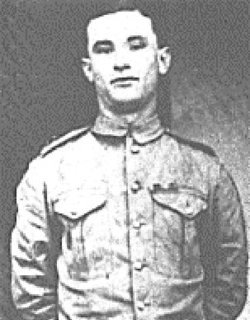
On June 28, 1920, Joseph Hawes leads a company of the Connaught Rangers stationed at Jalandhar on the plains of the Punjab lay down their arms and refuse to perform their military duties as a protest against the activities of the Black and Tans, officially the Royal Irish Constabulary Special Reserve in Ireland. On the following day, the mutineers send two emissaries to a company of Connaught Rangers stationed at Salon, about twenty miles away in the foothills of the Himalayas. The soldiers there take up the protest as well and, like their counterparts at Jalandhar, fly the Irish tricolour, wear Sinn Féin rosettes on their British Army uniforms and sing rebel songs.
The protests are initially peaceful, but on the evening of July 1 around thirty members of the company at Salon, armed with bayonets, attempt to recapture their rifles from the company magazine. The soldiers on guard open fire, killing two men and wounding another. The incident effectively brings the mutiny to an end and the mutineers at both Jalandhar and Salon are placed under armed guard.
Sixty-one men are convicted by court-martial for their role in the mutiny. Fourteen are sentenced to death by firing squad, but the only soldier whose capital sentence is carried out is Private James Joseph Daly of Tyrellspass, County Westmeath. Daly is considered the leader of the mutiny at Salon and the man responsible for the failed attack on the magazine. On the morning of November 2, 1920, at the age of 22, he is executed in Dagshai prison in northern India.
The Connaught Rangers do not survive much longer than Daly. In 1922 the regiment is disbanded after the signing of the Anglo-Irish Treaty that creates the Irish Free State. In 1970, James Daly’s body is brought home and buried at Tyrellspass. Among those in the guard of honor at the reinterment ceremony are five of Daley’s fellow mutineers – Joseph Hawes, James Gorman, Eugene Egan, Patrick Hynes, and William Coote.
In 1790 Russell resumes his military career as a junior officer in the 64th Regiment of Foot and is posted to Belfast. The French Revolution in 1789 is warmly greeted in Belfast as are its ideals of liberty, equality, and fraternity. With his keen mind and radical ideas, Russell soon becomes a confidante of Henry Joy McCracken, James Hope, Samuel Neilson and others who are to play a prominent role in the United Irish movement. With them he develops ideas of parliamentary reform, to include the bulk of the people, and Catholic emancipation.
Russell leaves the army in July 1791 and attends a convention of the Whig Club in Belfast to mark Bastille Day. The convention is addressed by William Drennan, who proposes a brotherhood promoting separation from England and co-operation with the increasingly radical Cisalpine Club in the pursuit of political and social reforms. However, Russell notes the lack of trust between Dissenters and Catholics which is due to fears that Catholic radicalism can be bought off by religious concessions. Informing Wolfe Tone of his observations, within weeks leads to Wolfe Tone’s publication of Argument on Behalf of the Catholics of Ireland to address these suspicions. The pamphlet is extremely well received and provides the impetus for the founding of the Society of United Irishmen in Belfast on October 18, 1791.
Pressure from Dublin Castle later forces the United Irish movement to become a clandestine organisation as the would-be revolutionaries seek to continue their slow progress towards challenging the occupying British.
In 1795 Russell, Andrew Henderson, Henry Joy McCracken and Samuel Neilson lead a band of United Irishmen to the top of Cavehill overlooking the town of Belfast where they swear an oath “never to desist in our effort until we have subverted the authority of England over our country and asserted her independence” prior to Wolfe Tone’s exile to the United States. The event is noted in Dublin Castle although there is no immediate move to disband or arrest the members of the United Irishmen.
In 1796, Russell publishes an ambitious and far-sighted document, Letter to the People of Ireland, which lays out his vision of social and economic reform for the Irish nation. In addition to his stance on religious freedom, he makes clear his anti-slavery views in the Northern Star on March 17, 1792.
Russell takes an active part in organising the Society of United Irishmen becoming the United Irish commander in County Down. However, the outbreak of the French Revolution in 1793 leads to an ongoing campaign against the United Irishmen and in 1796 he is arrested and imprisoned as a “state prisoner” in Dublin. In March 1799 he and the other state prisoners are transferred to Fort George in Scotland, an extensive fortress some miles north of Inverness built in the wake of the failed Jacobite rebellion of 1745-46. He is released on condition of exile to Hamburg in June 1802 following a brief cessation in the war with France.
Not content to sit things out in Hamburg, Russell soon makes his way to Paris where he meets Robert Emmet who is planning another insurrection pending the French renewal of the war against England. He agrees to return to Ireland in March 1803 to organise the North in conjunction with James Hope. However, he meets with little success as much of the north is subdued following the suppression of the Irish Rebellion of 1798 and displays little appetite for a renewed outbreak. Finally, finding some support in the vicinity of Loughinisland, he prepares to take to the field on July 23, 1803, the date set by Emmett.
However, the plan is badly thought out and quickly collapses, forcing Russell to flee to Dublin before a shot is fired in anger. He manages to hide for a number of weeks, but Dublin is a hard place in which to hide in the days following the failure of Emmett’s rebellion as the shocked authorities have launched a massive campaign of raids and arrests in an effort to finally eradicate the United Irishmen.
Thomas Russell is promptly arrested and sent to Downpatrick Gaol where he is executed by hanging then beheaded on October 21, 1803.
The Treaty of Limerick, which actually consists of two treaties, is signed on October 3, 1691, ending the Williamite War in Ireland between the Jacobites and the supporters of William III of England, widely known as William of Orange. Reputedly they are signed on the Treaty Stone, an irregular block of limestone which once served as a mounting block for horses. This stone is now displayed on a pedestal in Limerick, put there to prevent souvenir hunters from taking pieces of it. Because of the treaty, Limerick is sometimes known as the Treaty City.
After his victory at the Battle of the Boyne in July 1690, William III issues the Declaration of Finglas which offers a pardon to Jacobite soldiers but excludes their senior officers from its provisions. This encourages the Jacobite leaders to continue fighting and they win a major victory during the 1691 Siege of Limerick. However, defeats the following year at the Battle of Aughrim and the second siege of Limerick leave the Williamites victorious. Nonetheless the terms they offer to Jacobite leaders at Limerick are considerably more generous than those a year earlier at Finglas.
One treaty, the Military Articles, deals with the treatment of the disbanded Jacobite army. This treaty contains twenty-nine articles. Under the treaty, Jacobite soldiers in formed regiments have the option to leave with their arms and flags for France to continue serving under James II of England in the Irish Brigade. Some 14,000 Jacobites choose this option. Individual soldiers wanting to join the French, Spanish or Austrian armies also emigrate in what becomes known as the Flight of the Wild Geese. The Jacobite soldiers also have the option of joining the Williamite army. One thousand soldiers chose this option. The Jacobite soldiers thirdly have the option of returning home which some 2,000 soldiers choose.
The second treaty, the Civil Articles, which contains thirteen articles, protects the rights of the defeated Jacobite landed gentry who choose to remain in Ireland, most of whom are Catholics. Their property is not to be confiscated so long as they swear allegiance to William III and Mary II, and Catholic noblemen are to be allowed to bear arms. William requires peace in Ireland and is allied to the Papacy in 1691 within the League of Augsburg.
It is often thought that the Treaty of Limerick is the only treaty between Jacobites and Williamites. A similar treaty had been signed on the surrender of Galway on July 22, 1691, but without the strict loyalty oath required under the Treaty of Limerick. The Galway garrison had been organised by the mostly Catholic landed gentry of counties Galway and Mayo, who benefited from their property guarantees in the following century.
(Pictured: The Treaty Stone on which the Treaty of Limerick may have been signed)
Keating studies drawing at the Limerick Technical School before a scholarship arranged by William Orpen allows him to go study at the Metropolitan School of Art in Dublin at the age of twenty. Over the next few years, he spends two weeks or so during the late summer on the Aran Islands and his many portraits of island people depict them as rugged heroic figures.
In 1914 he wins the RDS Taylor award with a painting titled The Reconciliation. The prize includes £50.00 which allows him to go to London to work as Orpen’s studio assistant in 1915. In late 1915 or early 1916, he returns to Ireland where he documents the Irish War of Independence and the subsequent Irish Civil War. Examples include Men of the South (1921–22) which shows a group of Irish Republican Army (IRA) men ready to ambush a military vehicle and An Allegory (first exhibited in 1924), in which the two opposing sides in the Irish Civil War are seen to bury the tri-colour covered coffin amid the roots of an ancient tree. The painting includes a self-portrait of the artist.
Keating is elected an Associate of the Royal Hibernian Academy (RHA) in 1918, and a full member in 1923. One of the cardinal achievements of the Irish Free State in the 1920s is the building, in partnership with Siemens, of a hydro-electric power generator at Ardnacrusha, near Limerick. Between 1926 and 1927, at his own volition, he produces a considerable number of paintings related to this scheme. He exhibits several examples of the paintings in the RHA exhibitions in 1927 and 1928. Most of the paintings are now in the collection of ESB Group.
In 1936 group of prominent Limerick politicians, artists and patrons establish the first Limerick City Collection of Art from various donations and bequests. Keating is part of this artist-led initiative to form a municipal art gallery in Limerick similar to those already in Dublin and Cork. The collection is formed primarily out of donations and bequests. As a pivotal member of the committee, Keating himself donates many works to the collection which is first exhibited as a municipal collection in the Savoy Cinema, Limerick City on November 23, 1937. It is not until 1948 that an extension to the rear of Limerick Free Library and Museum becomes the home to the City Collection as the Limerick Free Art Gallery. In 1985 the Library and Museum are transferred to larger buildings.
In 1939 Keating is commissioned to paint a mural for the Irish pavilion at the New York World’s Fair. He is President of the RHA from 1950 to 1962, and shows at the annual exhibition for 61 years from 1914. Although he is an intellectual painter in the sense that he consciously sets out to explore the visual identity of the Irish nation, and his paintings show a very idealised realism, he fears that the modern movement will bring back a decline in artistic standards. Throughout his career, he exhibits nearly 300 works at the RHA and also shows at the Oireachtas.
Seán Keating dies on December 21, 1977 at the Adelaide Hospital in Dublin and is buried at Cruagh Cemetery, Rathfarnham. The 1978 RHA Exhibition features a small memorial collection of his work.
Posthumous exhibitions of his work are mounted by The Grafton Gallery, Dublin (1986) and the Electricity Supply Board (1987). Sean Keating – The Pilgrim Soul, a documentary presented and written by his son Justin Keating, airs on RTÉ in 1996.
(Pictured: Photograph of Keating’s “An Allegory” painted between 1922 and 1924. The painting represents Keating’s own disillusionment and loss of idealism resulting from the outbreak of the Irish Civil War. The only figure of the group addressing the observer is a self-portrait of the artist.)
On September 5, 1798, Teeling clears the way for the advancing Irish-French army by single handedly disabling a British gunner post during the Battle of Collooney in Sligo when he breaks from the French ranks and gallops towards Union Rock. He is armed with a pistol and shoots the cannon’s marksman and captures the cannon. The French and Irish advance and the British, after losing the cannon position, retreat towards their barracks at Sligo, leaving 60 dead and 100 prisoners.
During the Battle of Ballinamuck at Longford, Teeling and approximately 500 other Irishmen are captured along with their French allies. The French troops are treated as prisoners of war and later returned to France, however the Irish troops are executed by the British.
Teeling is court-martialled by Britain as an Irish rebel and for committing treason. To positively identify him, the authorities enlist William Coulson, a damask manufacturer from Lisburn, who identifies him as a son of Luke Teeling, a linen merchant who lived in Chapel Hill, Lisburn. Bartholomew Teeling is hanged at Arbour Hill Prison in Dublin on September 24, 1798.
In 1898, the centenary year of the battle, a statue of Teeling is erected in Carricknagat. One of the main streets in Sligo, which accommodates the Sligo Courthouse and main Garda Síochána barracks, is later named Teeling Street also in honour of Bartholomew Teeling.
The Irish Brigade of the Union Army fights in the Battle of Antietam, one of the most famous battles of the American Civil War, on September 17, 1862. The battle has the sad distinction of being the bloodiest single day of fighting in America’s bloodiest war. Combined casualties at the Battle of Antietam are 26,134. Few regiments suffered more than the Irish Brigade.
The Irish Brigade is the brainchild of their commanding officer Thomas Francis Meagher. The former Young Ireland rebel, creator of the Irish Tricolor of green, white and orange, escaped political prisoner, lawyer, newspaper editor and politician forms the brigade with the twin objectives of gaining respect for the Irish by their patriotism for their adopted country and developing a nucleus for a future fight for Ireland’s freedom. The Brigade is formed of the almost exclusively Irish American69th, 63rd and 88th New York and the “honorary Irish” of the 29th Massachusetts. The regiments of the Irish Brigade had already earned a formidable reputation as a crack unit, having distinguished themselves in every battle of the earlier Seven Days Battles. It is small wonder, many in the Brigade’s ranks had already distinguished themselves in the Mexican-American War or in fighting with the Papal forces in Italy against Giuseppe Garibaldi.
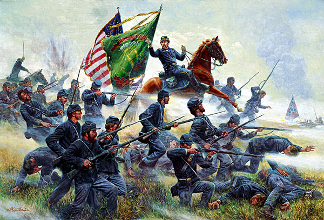
The Union Army is already heavily engaged, when the Irish Brigade is ordered to advance through an open field to take an area of high ground. Subjected to accurate Confederate rifle fire as they cross the field, the Brigade marches on in disciplined order, the National and the famed Green Regimental Colors (flags) fluttering overhead. When they encounter a fence across their line of march, eighty volunteers rush forward to knock it down, rather than see the whole Brigade slowed by the obstacle and exposed to fire. Over half of these volunteers are killed. Seeing the Irish continue to press forward, the Confederates fall back as the Irish advance up the hill.
What no one on the Union side knows is that on the other side of the hill is a farmer’s dirt road that years of rain has eroded into a ditch five feet below the surrounding ground level. The sunken road is a perfect rifle pit and is filled with Colonel John Brown Gordon’s Georgians. As the Irish crest the hill, they are met with a volley that decimates the Brigade, including killing or wounding every single standard-bearer. Seeing the flags fall from across the field, an aide to Union General George B. McClellan exclaims, “The battles lost, the Irish are fleeing!” only for McClellan to respond, “No, the flags are raised again, they are advancing.” Eight successive standard-bearers of the 69th New York alone fall that day as men pick up the flags from fallen comrades. Captain Patrick Clooney, though wounded himself, snatches up the colors from the 88th’s fallen standard-bearer only to be killed by multiple shots, the Green Flag wrapping around him like a shroud befitting a hero. Another standard-bearer, the staff of his Irish Brigade flag snapped in two by a rifle shot, drapes the flag over his shoulder like a sash and continues to move forward, personifying the Gaelic phrase on the flag he is carrying “Riamh Nar Dhruid O Spairn lann”, “Who never retreated from the clash of spears.”
The fire of the Confederates is so intense that the Irish Brigade cannot advance, but they do not flee either. Despite the failure of promised reinforcements that never materialize, the Brigade pours “Buck and Ball” (a 69-caliber ball and three 30 caliber buckshot) into the enemy at 300 paces, turning the “Sunken Road” into “Bloody Lane.” When their ammunition is depleted, the remnants of the Brigade, with drill ground precision, form and march back to the Union lines. The Irish Brigade never “ran” from the enemy. Another Union unit takes the “Bloody Lane,” but most credit the punishment that the Irish Brigade inflicted on the enemy, at a terrible cost to themselves, with making it possible. The New York Regiments take over 50% casualties. The Irish Brigade is now no bigger than a single regiment. As the depleted ranks of the 88th march passed, Union Major GeneralIsrael Bush Richardson salutes as it passes with the words “Bravo 88th, I shall never forget you!”
During the course of the War, the Irish Brigade suffers over 4,000 casualties, more men than the Brigade ever had at any one time. The Fighting 69th loses more men than any other New York regiment. The Battle of Antietam is remembered as the Union victory that allows President Abraham Lincoln to issue the Emancipation Proclamation, which frees the slaves in the Confederate states. It is all too often forgotten that this emancipation was secured in no small part with the blood of Irish immigrants, immigrants who were denied civil rights in their own country and faced discrimination in their adopted county before and after the Civil War.
In thinking of the Civil War, all Americans should remember the words of a defeated Confederate Officer to his Union counterpart at Appomattox, “You only won as you had more Irish than we did.”
(Credit: “The Irish Brigade at Antietam” by Neil F. Cosgrove, October 17, 2009)
In the summer of 1647, Murrough O’Brien, 6th Baron Inchiquin, the Irish Protestant commander of the Protestant army of Cork, commences a campaign against the Irish Catholic strongholds in Munster. The counties of Limerick and Clare are raided, and he soon turns his attention to the bountiful eastern counties of Munster. In early September, his forces quickly take the Cahir Castle in Tipperary. This strong castle is well positioned to become a base for the Cork Protestant army, and it is used to raid and devastate the surrounding countryside. The Munster army under Lord Taaffe does not make any serious effort to oppose Inchiquin, probably the result of the political scheming of Donough MacCarty, 2nd Viscount Muskerry and other powerful Irish lords who hope to keep the Munster army intact for their own ends. As such, Inchiquin is allowed to make a major push towards the town and ecclesiastical centre of Cashel.
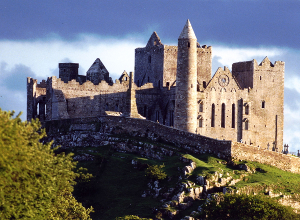
Inchiquin has already launched two minor raids against Cashel, and he now has the opportunity to launch a major assault. The Parliamentarian forces first storm nearby Roche Castle, putting fifty warders to the sword. This attack terrifies the local inhabitants of the region, some of whom flee to hiding places, while hundreds of others flee promptly to the Rock of Cashel, a stronger place than the town itself. Lord Taaffe has placed six companies in the fortified churchyard that sits upon the rock, and considers the place defensible, though he himself does not stay to put it to the test, leaving command to the Governor Lieutenant-Colonel Butler.
Arriving with his army at the Rock, Inchiquin calls for surrender within an hour. The defenders of the churchyard offer to negotiate but that is refused, and on the afternoon of September 15 the assault commences. The Parliamentarians are first reminded of earlier atrocities against Protestants, and then begin to deploy. The attack is led by around 150 dismounted horse officers with the remainder of the infantry following. Troops of horse ride along the flanks of the advancing force to encourage the infantry. The Irish soldiers attempt to drive off the attackers with pikes while the civilians inside hurl rocks down from the walls. In turn the attackers hurl firebrands into the compound, setting some of the buildings inside on fire. Although many are wounded, the Parliamentarians gradually fight their way over the walls, pushing the garrison into the church.
Initially, the Irish defenders manage to protect the Church, holding off the attackers trying to get through the doors, but the Parliamentarians then place numerous ladders against the many windows in the church and swarm the building. For another half an hour fighting rages inside the church, until the depleted defenders retreat up the bell tower. Only sixty soldiers of the garrison remain at this point, and they thus accept a call to surrender. However, after they have descended the tower and thrown their swords away, all are killed.
In the end all the soldiers and most of the civilians on the Rock are killed by the attackers. The Bishop and Mayor of Cashel along with a few others survive by taking shelter in a secret hiding place. Apart from these a few women are spared, after being stripped of their clothes, and a small number of wealthy civilians are taken prisoner, but these are the exceptions. Overall, close to 1,000 are killed, amongst them Lieutenant-Colonel Butler and catholic scholar Theobald Stapleton. The bodies in the churchyard are described by a witness as being five or six deep.
The slaughter is followed by extensive looting. There is much of value inside, for apart from pictures, chalices and vestments of the church, many of the slain civilians had also brought their valuables with them. The sword and ceremonial mace of the mayor of Cashel, as well as the coach of the bishop are captured. The plunder is accompanied by acts of iconoclasm, with statues smashed and pictures defaced. The deserted town of Cashel is also torched.
The atrocity at Cashel causes a deep impact in Ireland, as it is the worst single atrocity committed in Ireland since the start of fighting in 1641. Previously, the most infamous massacre amongst the Catholic population is that at Timolin in 1643, when 200 civilians are killed by James Butler, 1st Duke of Ormond‘s English Royalist army, but many more than this are killed at Cashel, and the Rock of Cashel is one of the chief holy places of Ireland. The slaughter of the garrison at Cashel and the subsequent devastation of Catholic held Munster earns Inchiquin the Irish nickname, Murchadh na Dóiteáin or “Murrough of the Burnings.”
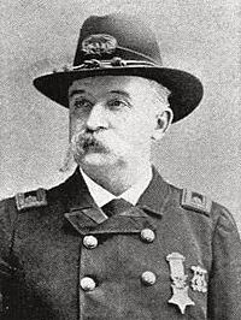
O’Bannon enters the Marine Corps on January 18, 1801. As a first lieutenant assigned to the USS Argus, he commands a detachment of seven Marines and two Navymidshipmen in diplomatic Consul General William Eaton‘s small army during the Tripoli campaign of the First Barbary War. In the combined operations with the United States Navy, he leads the successful attack at the Battle of Derna, a coastal town in eastern modern Libya on April 27, 1805, giving the Marines’ Hymn its line “to the shores of Tripoli.”
Lieutenant O’Bannon becomes the first man to raise a United States flag over foreign soil in time of war. O’Bannon’s superior, William Eaton, a former Army officer, had raised the American flag several months earlier while traveling on the Nile River from Alexandria to Cairo, but it had not been in a time of war. According to Marine Corps legend, Prince Hamet Karamanli is so impressed with O’Bannon’s bravery during the attempt to restore him to his throne as the Bey of Tripoli that he gives O’Bannon a sword as a gesture of respect. This sword becomes the model for the Mameluke sword, adopted in 1825 for Marine Corps officers, which is part of the formal uniform today.
O’Bannon resigns from the Marine Corps on March 6, 1807. He moves to Logan County, Kentucky, making his home in Russellville. He serves in the Kentucky Legislature in 1812, 1817, and 1820–21, and in the Kentucky State Senate from 1824 to 1826.
Sometime before 1826, O’Bannon marries Matilda Heard, daughter of Major James Heard and Nancy Morgan, a daughter of American Revolutionary War general Daniel Morgan, commander at the Battle of Cowpens in South Carolina in 1781.
Presley O’Bannon dies at age 74 on September 12, 1850, in Pleasureville, Kentucky, where his daughter and nephew live. In 1919, his remains are moved to the Frankfort Cemetery on East Main Street in the state capital of Frankfort, Kentucky.
(Pictured: Oil painting of Lieutenant Presley Neville O’Bannon, USMC, by Colonel Donald L. Dickson, USMCR, from the Official Photograph Album Collection (COLL/2246) at the Archives Branch, Marine Corps History Division)
Edward Bruce lands in Larne, in modern-day County Antrim, on May 26, 1315. In early June, Donall Ó Néill of Tyrone and some twelve fellow northern Kings and lords meet Bruce at Carrickfergus and swear fealty to him as King of Ireland. Bruce holds the town of Carrickfergus but is unable to take Carrickfergus Castle. His army continues to spread south, through the Moyry Pass to take Dundalk.
Outside the town of Dundalk, Bruce encounters an army led by John FitzThomas FitzGerald, 4th Lord of Offaly, his son-in-law Edmund Butler, Earl of Carrick and Maurice FitzGerald, 4th Baron Desmond. The Scottish push them back towards Dundalk and on June 29 lay waste to the town and its inhabitants.
By July 22 Edmund Butler, the Justiciar in Dublin, assembles an army from Munster and Leinster to join Richard Óg de Burgh, 2nd Earl of Ulster, to fight Bruce. De Burgh refuses to let the government troops into Ulster, fearing widespread damage to his land. Bruce is able to exploit their dispute and defeat them separately.
Bruce slowly retreats north, drawing de Burgh in pursuit. Bruce and his O’Neill allies sack Coleraine, destroying the bridge over the River Bann to delay pursuit. Edward sends word to Fedlim Ó Conchobair that he will support his position as king in Connacht if he withdraws. He sends the same message to rival claimant Ruaidri mac Cathal Ua Conchobair. Cathal immediately returns home, raises a rebellion and declares himself king. De Burgh’s Connacht allies under Felim then follow as Felim leaves to defend his throne. Bruce’s force then crosses the River Bann in boats and attacks. The Earl of Ulster withdraws to Connor.
The armies meet in Connor on September 10, 1315. The superior force of Bruce and his Irish allies defeat the depleted Ulster forces. The capture of Connor permits Bruce to re-supply his army for the coming winter from the stores the Earl of Ulster had assembled at Connor. Earl’s cousin, William de Burgh, is captured, as well as, other lords and their heirs. Most of his army retreats to Carrickfergus Castle, which the pursuing Scots put under siege. The Earl of Ulster manages to return to Connacht.
The government forces under Butler do not engage Bruce, allowing him to consolidate his hold in Ulster. His occupation of Ulster encourages risings in Meath and Connacht, further weakening de Burgh. Despite this, and another Scottish/Irish victory at the Battle of Skerries, the campaign is to be defeated at the Battle of Faughart.
(Pictured: Grave of King Edward Bruce, Faughart, County Louth)





 seamus dubhghaill