seamus dubhghaill

Promoting Irish Culture and History from Little Rock, Arkansas, USA


Leave a comment

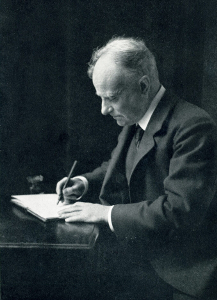
Birth of Brian Coffey, Poet & Publisher

Brian Coffey, Irish poet and publisher, is born in Dún LaoghaireCounty Dublin on June 8, 1905. His work is informed by his Catholicism and by his background in science and philosophy, and his connection to surrealism. For these reasons, he is seen as being closer to an intellectual European Catholic tradition than to mainstream Irish Catholic culture.

Coffey attends the Mount St. Benedict boarding school in GoreyCounty Wexford from 1917 to 1919 and then Clongowes Wood College, in ClaneCounty Kildare from 1919 until 1922. In 1923, he goes to France to study for the Bachelor’s degree in Classical Studies at the Institution St. Vincent, SenlisOise. While still at college, Coffey begins writing poetry. He publishes his first poems in University College Dublin‘s The National Student under the pseudonym Coeuvre.

In the early 1930s, Coffey moves to Paris where he studies Physical Chemistry under Jean Baptiste Perrin, who won the Nobel Prize for Physics in 1926. He completes these studies in 1933, and his Three Poems is printed in Paris by Jeanette Monnier that same year. In 1934 he enters the Institut Catholique de Paris to work with the noted French philosopher Jacques Maritain, taking his licentiate examination in 1936. He then moves to London for a time and contributes reviews and a poem to T.S. Eliot‘s The Criterion magazine. He returns to Paris in 1937 as an exchange student to work on his doctoral thesis on the idea of order in the work of Thomas Aquinas. In 1938, Coffey’s second volume of poetry, Third Person, is published by George Reavey‘s Europa Press.

During the war, Coffey teaches in schools in London and Yorkshire, leaving his young family in Dublin. After the war, he returns to Paris and completes his doctoral thesis. The family then moves so that Coffey can take up a teaching post at the Jesuit Saint Louis University.

By the early 1950s, Coffey becomes uncomfortable for a number of reasons, including the nature of his work, his distance from Ireland and the pressures that inevitably come to bear on an academic who has previously associated with well-known left-wing writers in Paris. For these reasons, he resigns in 1952.

In 1952, Coffey returns to live in London and, from 1973, Southampton. He begins again to publish his poetry and translations, mainly of French poetry. The first work in English to appear after this period of silence is Missouri Sequence, apparently begun in St. Louis but first appearing in the University Review, later known as the Irish University Review, in 1962.

Over the next decade or so, he publishes regularly in the University Review. He also sets up his own publishing enterprise, Advent Press, which publishes work by himself and by younger writers he wants to support.

Brian Coffey dies at the age of 89 on April 14, 1995, and is buried in Southampton, England.

Leave a comment

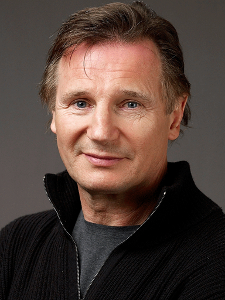
Birth of Actor Liam Neeson

Actor Liam John Neeson is born on June 7, 1952, in BallymenaCounty Antrim. Raised as a Roman Catholic, Neeson is named Liam after the local priest. He says growing up as a Catholic in a predominately Protestant town made him cautious. At age nine, he begins boxing lessons at the All-Saints Youth Club and later becomes Ulster’s amateur senior boxing champion.

Neeson first steps on stage at age eleven after his English teacher offers him the lead role in a school play, which he accepts because the girl he is attracted to is starring in it. He continues to act in school productions over the following years.

Neeson’s interest in acting and decision to become an actor is also influenced by minister Ian Paisley, into whose Free Presbyterian church Neeson would sneak. Neeson says of Paisley, “He had a magnificent presence, and it was incredible to watch him just Bible-thumping away… it was acting, but it was also great acting and stirring too.”

In 1971, Neeson is enrolled as a physics and computer science student at Queen’s University BelfastNorthern Ireland, before leaving to work for the Guinness Brewery. At Queen’s, he discovers a talent for football and is spotted by Seán Thomas at Bohemian F.C. There is a club trial in Dublin and Neeson plays one game as a substitute against Shamrock Rovers F.C. but is not offered a contract.

In 1976, Neeson joins the Lyric Players’ Theatre in Belfast for two years. He then acts in the Arthurian film, Excalibur (1981), alongside Helen Mirren. Between 1982 and 1987, he stars in five films, most notably alongside Mel Gibson and Anthony Hopkins in The Bounty (1984) and Robert De Niro and Jeremy Irons in The Mission (1986). He lands a leading role alongside Patrick Swayze in Next of Kin (1989).

Neeson rises to prominence when he stars in the title role in Steven Spielberg‘s 1993 Oscar winner Schindler’s List. He has since starred in other successful films, including the title role in the historical biopic Michael Collins (1996), the film adaptation of Victor Hugo‘s 1862 novel Les Misérables (1998), Star Wars: Episode I – The Phantom Menace as Qui-Gon Jinn (1999), the biographical drama Kinsey (2004), the superhero film Batman Begins as Ra’s al Ghul (2005), the action thriller series Taken (2008–2014), the fantasy adventure film Clash of the Titans (2010) as Zeus, the fantasy films in The Chronicles of Narnia series (2005–2010) as Aslan, and the thriller-survival film The Grey (2011). In 2016 he narrates the RTÉ One three-part documentary on the Easter Rising1916.

Neeson has been nominated for a number of awards, including an Academy Award for Best Actor, a BAFTA Award for Best Actor in a Leading Role and three Golden Globe Awards for Best Actor in a Motion Picture DramaEmpire magazine ranks Neeson among both the “100 Sexiest Stars in Film History” and “The Top 100 Movie Stars of All Time.”


Leave a comment

First Priests Ordained at St. Patrick’s College, Maynooth

The ordination of the first priests at St. Patrick’s College, Maynooth takes place on June 6, 1800. The college is the “National Seminary for Ireland” and a Pontifical university located in the village of Maynooth, fifteen miles from Dublin.

The college is established on June 5, 1795, as The Royal College of St. Patrick, by act of the Parliament of Ireland, to provide “for the better education of persons professing the popish or Roman Catholic religion.” The College in Maynooth is originally established to provide a university education for Catholic lay and ecclesiastical students and is based in Riverstown House on the south campus from 1802. With the opening of Clongowes Wood College in 1814, the lay college is closed and the college functions solely as a Catholic seminary for almost 150 years.

The college is particularly intended to provide for the education of Catholic priests in Ireland, who until this Act have to go to the continent for training. The added value in this is the reduction of the number of priests returning from training in revolutionary France, with whom Great Britain is at war, thus hindering potential revolution. The value to the government is proved by the condemnation by the Catholic Church hierarchy of the Irish Rebellion of 1798 and later support for the Act of Union.

In 1800, John Butler, 12th Baron Dunboyne, dies and leaves a substantial fortune to the College. Butler had been a Roman Catholic, and Bishop of Cork, who had embraced Protestantism in order to marry and guarantee the succession to his hereditary title. However, there are no children to his marriage, and it is alleged that he had been reconciled to the Catholic Church at his death. Were this the case, a Penal law demands that the will is invalid, and his wealth will pass to his family. Much litigation follows before a negotiated settlement in 1808 that leads to the establishment of a Dunboyne scholarship fund.

The land is donated by William FitzGerald, 2nd Duke of Leinster, who has argued in favour of Catholic emancipation in the Irish House of Lords. He lives nearby at Carton House and also at Leinster House. The building work is paid for by the British Government and parliament continues to give it an annual grant until the Irish Church Act 1869. When this law is passed the College receives a capital sum of £369,000. The trustees invest 75% of this in mortgages to Irish landowners at a yield of 4.25% or 4.75% per annum. This is considered a secure investment at the time but agitation for land reform and the depression of the 1870s erodes this security. The largest single mortgage is granted to the Earl of Granard. Accumulated losses on these transactions reached £35,000 by 1906.

The first building to go up on the site is designed by, and named after, John Stoyte. Stoyte House, which can still be seen from the entrance to the old campus, is a well-known building to Maynooth students and stands very close to the very historic Maynooth Castle. Over the next 15 years, the site at Maynooth undergoes rapid construction so as to cater to the influx of new students, and the buildings which now border St. Joseph’s Square are completed by 1824.

The Rev. Laurence F. Renehan (1797–1857), a noted antiquarian, church historian, and cleric, serves as president of St. Patrick’s from 1845 until 1857. Under Renehan, many of the college’s most important buildings are constructed by Augustus Pugin.

In 2015–16 there are approximately 80 men studying for the priesthood at Maynooth, 60 resident seminarians and approximately 20 non-residents.


Leave a comment

Birth of James Connolly, Republican & Socialist Leader

James ConnollyIrish republican and socialist leader, is born to Irish-born parents in the Cowgate area of EdinburghScotland, on June 5, 1868. He spoke with a Scottish accent throughout his life.

Connolly has an education up to the age of about ten in the local Catholic primary school. He then leaves and works in labouring jobs. Due to economic difficulties, he joins the British Army at age 14, falsifying his age and giving his name as Reid. He serves in Ireland with the 2nd Battalion of the Royal Scots Regiment for nearly seven years, during a turbulent period in rural areas known as the Land War.

Connolly develops a deep hatred for the British Army that lasts his entire life. Upon hearing that his regiment is being transferred to India, he deserts. He meets a young woman by the name of Lillie Reynolds, and they marry in April 1890, settling in Edinburgh. There, Connolly begins to get involved in the Scottish Socialist Federation, but with a young family to support, he needs a way to provide for them. He briefly establishes a cobbler‘s shop in 1895, but this fails after a few months.

By 1892 Connolly is involved in the Scottish Socialist Federation, acting as its secretary from 1895. During this time, he becomes involved with the Independent Labour Party which Keir Hardie had formed in 1893.

Connolly and his family move to Dublin, where he takes up the position of full-time secretary for the Dublin Socialist Club. At his instigation, the club quickly evolved into the Irish Socialist Republican Party (ISRP). The ISRP is regarded by many Irish historians as a party of pivotal importance in the early history of Irish socialism and republicanism.

While active as a socialist in Great Britain, Connolly is the founding editor of The Socialist newspaper and is among the founders of the Socialist Labour Party which splits from the Social Democratic Federation in 1903.

A combination of frustration with the progress of the ISRP and economic necessity causes Connolly to emigrate to the United States in September 1903. While in America he was a member of the Socialist Labor Party of America (1906), the Socialist Party of America (1909) and the Industrial Workers of the World, and founded the Irish Socialist Federation in New York City, 1907.

On his return to Ireland in 1910 he is right-hand man to fellow-syndicalist James Larkin in the Irish Transport and General Workers Union. In 1913, in response to the Great Dublin Lockout, he, along with an ex-British officer, Jack White, found the Irish Citizen Army (ICA), an armed and well-trained body of labour men whose aim is to defend workers and strikers, particularly from the frequent brutality of the Dublin Metropolitan Police. He also founds the Irish Labour Party as the political wing of the Irish Trade Union Congress in 1912 and is a member of its National Executive.

When the Easter Rising begins on April 24, 1916, Connolly is Commandant of the Dublin Brigade. As the Dublin Brigade has the most substantial role in the rising, he is de facto commander-in-chief. His leadership in the Easter Rising is considered formidable. Michael Collins says of Connolly that he “would have followed him through hell.”

Connolly is sentenced to death by firing squad for his part in the rising. On May 12, 1916, he is taken by military ambulance to Royal Hospital Kilmainham, across the road from Kilmainham Gaol, and from there taken to the gaol, where he is to be executed.

Connolly has been so badly injured from the fighting that he is unable to stand before the firing squad. He is carried to a prison courtyard on a stretcher. Instead of being marched to the same spot where the others had been executed, at the far end of the execution yard, he is tied to a chair and then shot.

His body, along with those of the other leaders, is put in a mass grave without a coffin. The executions of the rebel leaders deeply anger the majority of the Irish population, most of whom had shown no support during the rebellion. It is Connolly’s execution that causes the most controversy. The executions are not well received, even throughout Britain, and draw unwanted attention from the United States, which the British Government is seeking to bring into the war in Europe. Prime Minister H. H. Asquith orders that no more executions are to take place, an exception being that of Roger Casement as he has not yet been tried.


Leave a comment

The Siege of Limerick

Henry IretonOliver Cromwell’s son-in-law, lays siege to Limerick city on June 4, 1651. During the Irish Confederate Wars, Limerick is one of the last fortified cities held by an alliance of Irish Confederate Catholics and English Royalists against the forces of the Parliament of England.

By 1650, the Irish Confederates and their English Royalist allies have been driven out of eastern Ireland by the Cromwellian conquest of Ireland. They occupy a defensive position behind the River Shannon, of which Limerick is the southern stronghold. Oliver Cromwell himself leaves Ireland in May 1650, delegating his command of the English Parliamentarian forces to Henry Ireton. Ireton moves his forces north from Munster to besiege Limerick in October of that year. However, the weather is increasingly wet and cold and Ireton is forced to abandon the siege before the onset of winter.

Ireton returns on June 4, 1651 with 8,000 men, 28 siege artillery pieces and 4 mortars. He summons Hugh Dubh O’Neill, the Irish commander of Limerick to surrender, but is refused. The siege is on.

Limerick in 1651 is split into two sections, English town and Irish town, which are separated by the Abbey River. English town, which contains the citadel of King John’s Castle, is encircled by water, the Abbey River on three sides and the River Shannon on the other, in what is known as King’s Island. Thomond bridge is only one bridge onto the island and is fortified with bastioned earthworks. Irish town is more vulnerable, but is also more heavily fortified. Its medieval walls have been buttressed by 20 feet of earth, making it difficult to knock a breach in them. In addition, Irish town has a series of bastions along its walls, mounted with cannon which cover its approaches. The biggest of these bastions are at St. John’s Gate and Mungret gate. The garrison of the city is 2,000 strong and composed mainly of veterans from the Confederate’s Ulster army, commanded by Hugh Dubh O’Neill, who had distinguished themselves at the siege of Clonmel the previous year.

Because Limerick is very well fortified, Ireton does not risk an assault on its walls. Instead he secures the approaches to the city, cuts off its supplies and builds artillery earthworks to bombard the defenders. His troops take the fort at Thomond bridge, but the Irish destroy the bridge itself, denying the Parliamentarians land access to English town. Ireton then tries an amphibious attack on the city, a storming party attacking the city in small boats. They are initially successful, but O’Neill’s men counterattack and beat them off.

After this attack fails, Ireton resolves to starve the city into submission and builds two forts known as Ireton’s fort and Cromwell’s fort on nearby Singland Hill. An Irish attempt to relieve the city from the south is routed at the battle of Knocknaclashy. O’Neill’s only hope is now to hold out until bad weather and hunger force Ireton to raise the siege. To this end, O’Neill tries to send the town’s old men, women and children out of the city so that his supplies will last a little longer. However, Ireton’s men kill forty of these civilians and send the rest back into Limerick.

O’Neill comes under pressure from the town’s mayor and civilian population to surrender. The town’s garrison and civilians suffer terribly from hunger and disease, especially an outbreak of plague. In addition, Ireton finds a weak point in the defences of Irish town, and knocks a breach in them, opening the prospect of an all out assault.

Eventually in October 1651, six months after the siege started, part of Limerick’s garrison mutinies and turns some cannon inwards, threatening to fire on O’Neill’s men unless they surrender. Hugh Dubh O’Neill surrenders Limerick on October 27. The inhabitants lives and property are respected, but they are warned that they could be evicted in the future. The garrison is allowed to march to Galway, which is still holding out, but has to leave their weapons behind.

The lives of the civilian and military leaders of Limerick are excepted from the terms of surrender. A Catholic Bishop Terence Albert O’Brien, an Alderman and the English Royalist officer Colonel Fennell are hanged. O’Neill is also sentenced to death, but is reprieved by the Parliamentarian commander Edmund Ludlow and imprisoned instead in London. Former mayor Dominic Fanning is drawn, quartered, and decapitated, with his head mounted over St. John’s Gate.

Over 2,000 English Parliamentary soldiers die at Limerick, mostly from disease. Among them is Henry Ireton, who dies a month after the fall of the city. About 700 of the Irish garrison and an estimated 5,000 citizens die.

(Pictured: The Treaty Stone on which the treaty of Limerick may have been signed in 1691)


Leave a comment

Death of Barry Edward O’Meara, Physician to Napoleon

Barry Edward O’Meara, Irish surgeon and founding member of the Reform Club, dies in London on June 3, 1836.

Born in Ireland, O’Meara joins the British navy in 1808, after he has been dismissed from the army for assisting in a duel. In July 1815 he is serving on the HMS Bellerophon when Napoleon surrenders on board.

His knowledge of Italian impresses Napoleon and he requests O’Meara’s services on St. Helena. O’Meara remains on St. Helena as Napoleon’s personal physician until 1818, when his refusal to spy on the Emperor for the British governor of the island causes him to be dismissed from that post.

On his return to London, O’Meara publishes Napoleon in Exile, or A Voice From St. Helena (1822) a book which charges Sir Hudson Lowe with mistreating the former emperor and created no small sensation on its appearance. Less known are his secret letters he sends clandestinely from St. Helena to a clerk at the Admiralty in London. These letters shed a unique light on Napoleon’s state of mind as a captive and the causes of his complaints against Sir Hudson Lowe and the British government.

O’Meara is also the physician who performs the very first medical operation on Napoleon by extracting a wisdom tooth in the autumn of 1817.

O’Meara also becomes involved in politics, helping to found the Reform Club. O’Meara dies on June 3, 1836, from complications after catching a cold while attending one of Daniel O’Connell‘s political rallies.


1 Comment

Birth of Michael James O’Hehir, Commentator & Journalist

michael-james-ohehirMichael James O’Hehir, hurling, Gaelic football and horse racing commentator and journalist, is born on June 2, 1920, in Glasnevin, County Dublin. Between 1938 and 1985 his enthusiasm and a memorable turn of phrase endears him to many. He is credited with being the “Voice of the Gaelic Athletic Association.”

His father, Jim O’Hehir, is active in Gaelic games, having trained his native county to win the 1914 All-Ireland Senior Hurling Championship title in hurling. He subsequently trains the Leitrim football team that secures the Connacht Senior Football Championship title in 1927 and he also serves as an official with the Dublin Junior Board.

O’Hehir is educated at St. Patrick’s National School in Drumcondra before later attending the O’Connell School. He later studies electrical engineering at University College Dublin, however, he abandons his studies after just one year to pursue a full-time career in broadcasting.

At the age of eighteen O’Hehir writes to Radio Éireann asking to do a test commentary. He is accepted and is asked to do a five-minute microphone test for a National Football League game between Wexford and Louth. His microphone test impresses the director of broadcasting so much that he is invited to commentate on the entire second half of the match.

Two months later, in August 1938, O’Hehir makes his first broadcast – the All-Ireland football semi-final between Monaghan and Galway. The following year he covers his first hurling final – the famous “thunder and lightning final” between Cork and Kilkenny.

By the mid-1940s O’Hehir is recognised as one of Ireland’s leading sports broadcasters. In 1947 he faces his most challenging broadcast to date when he has to commentate on the All-Ireland Football Final from the Polo Grounds in New York City with over 1,000,000 people listening to the broadcast back in Ireland.

In 1944 O’Hehir joins the staff of Independent Newspapers as a sports sub-editor, before beginning a seventeen-year career as racing correspondent in 1947.

In 1961 Ireland’s first national television station, Telefís Éireann, is founded and O’Hehir is appointed head of sports programmes. In addition to his new role O’Hehir continues to keep up a hectic schedule of commentaries.

O’Hehir’s skills do not just confine him to sports broadcasting and, in November 1963, he faces his toughest broadcast. By coincidence he is on holidays with his wife Molly in New York City when U.S. President John F. Kennedy is assassinated. O’Hehir is asked by Telefís Éireann to provide the commentary for the funeral. The live five-hour broadcast proves a huge challenge for him, as he has had no association with political or current affairs broadcasting up to that point and lacks the resources available to more established television stations. O’Hehir’s commentary, however, wins widespread acclaim in Ireland and shows a different side of his nature.

In August 1985 O’Hehir is preparing to commentate on the All-Ireland hurling final between Offaly and Galway. It would be a special occasion as it would mark his 100th commentary on an All-Ireland final. Two weeks before the game he suffers a stroke which leaves him in a wheelchair and with some speaking difficulties. This denies him the chance to reach the century milestone. He hopes to return to broadcasting one day to complete his 100th final, however, this never happens.

In 1987, the centenary All-Ireland football final takes place Croke Park. The biggest cheer of the day is reserved for O’Hehir when he is pushed onto the field in a wheelchair by his son Peter. Nobody expects the standing ovation and the huge outpouring of emotion from the thousands of fans present and from O’Hehir himself.

Over the next few years O’Hehir withdraws from public life. He returns briefly in 1996 when his autobiography, My Life and Times, is published. Michael O’Hehir dies in Dublin on November 24, 1996.


Leave a comment

Birth of Illustrator Hugh Thomson

Hugh Thomsonillustrator, is born on Kingsgate Street, ColeraineCounty Londonderry on June 1, 1860. He is best known for his pen-and-ink illustrations of works by authors such as Jane AustenCharles Dickens, and J. M. Barrie.

Thomson is born to tea merchant John Thomson (1822–1894) and shopkeeper Catherine (née Andrews). He is the eldest of their three surviving children. Although he has no formal artistic training, as a young boy he often fills his schoolbooks with drawings of horses, dogs, and ships. He attends Coleraine Model School, but leaves at the age of fourteen to work as a clerk at E. Gribbon & Sons, Linen Manufacturers. Several years later his artistic talents are discovered, and in 1877 he is hired by printing and publishing company Marcus Ward & Co.

On December 29, 1884 Thomson marries Jessie Naismith Miller in Belfast. Soon afterwards they move back to London for Thomson’s career. They have one son together, John, born in 1886.

In 1911, he and his family move to Sidcup, hoping to improve their “ever delicate health.” Thomson’s correspondence reflects the fact that he misses being close to the National Gallery and the museums where he usually compiles research for his illustrations. During World War I, demand for Thomson’s work decreases to a few propaganda pamphlets and some commissions from friends. By 1917, Thomson has fallen on financial hardship and he has to take a job with the Board of Trade, where he works until 1919.

Hugh Thomson dies of heart disease at his home at 8 Patten Road in Wandsworth Common, London, on May 7, 1920.


1 Comment

Death of Arkle, the Greatest Irish Steeplechaser

Arkle, the greatest Irish steeplechaser of all time, dies at the early age of thirteen on May 31, 1970. A bay gelding by Archive out of Bright Cherry, Arkle is the grandson of the unbeaten flat racehorse and prepotent sire Nearco.

Arkle is born at Ballymacoll StudCounty Meath, by Mrs. Mary Alison Baker of Malahow House, near NaulCounty Dublin. He is named after the mountain Arkle in SutherlandScotland that borders the Duchess of Westminster’s Sutherland estate. Owned by Anne Grosvenor, Duchess of Westminster, he is trained by Tom Dreaper at Greenogue, Kilsallaghan in County Meath, and ridden during his steeplechasing career by Pat Taaffe.

At 212, his Timeform rating is the highest ever awarded to a steeplechaser. Only Flyingbolt, also trained by Dreaper, has a rating anywhere near his at 210. Next on their ratings are Sprinter Sacre on 192 and then Kauto Star and Mill House on 191. Despite his career being cut short by injury, Arkle wins three Cheltenham Gold Cups, the Blue Riband of steeplechasing, and a host of other top prizes.

In December 1966, Arkle races in the King George VI Chase at Kempton Park Racecourse but strikes the guard rail with a hoof when jumping the open ditch, which results in a fractured pedal bone. Despite this injury, he completes the race and finishes second. He is in plaster for four months and, though he makes a good enough recovery to go back into training, he never runs again. He is retired and ridden as a hack by his owner and then succumbs to what has been variously described as advanced arthritis or possibly brucellosis and is put down at the early age of thirteen.

Arkle becomes a national legend in Ireland. His strength is jokingly claimed to come from drinking Guinness twice a day. At one point, the slogan Arkle for President is written on a wall in Dublin. The horse is often referred to simply as “Himself,” and the story goes that he receives items of fan mail addressed to “Himself, Ireland.”

The government-owned Irish National Stud, at Tully, KildareCounty Kildare, has the skeleton of Arkle on display in its museum. A 1.1 scale bronze statue in his memory was erected in Ashbourne, County Meath on April 19, 2014.


Leave a comment

Erskine Childers Elected Fourth President of Ireland

In a political upset, Erskine Hamilton Childers defeats Tom O’Higgins by a very narrow margin and is elected as the fourth President of Ireland on May 30, 1973.

Incumbent president Éamon de Valera is 90 years old and constitutionally barred from seeking a third term. His party, Fianna Fáil, seeks to get former Tánaiste Frank Aiken to run for the presidency, but he declines. Under pressure, former Tánaiste Erskine H. Childers agrees to run. The odds-on favourite is Fine Gael deputy leader, Tom O’Higgins, who had come within 1% of defeating Éamon de Valera in the 1966 presidential election.

Childers is a controversial nominee, owing not only to his British birth and upbringing but to his Protestantism. However, on the campaign trail his personal popularity proves enormous. In a political upset, Erskine H. Childers wins the presidency by 635,867 votes to 578,771.

Childers, though 67, quickly gains a reputation as a vibrant, extremely hard-working president, and becomes highly popular and respected. However, he has a strained relationship with the incumbent government, led by Taoiseach Liam Cosgrave of Fine Gael. Childers has campaigned on a platform of making the presidency more open and hands-on, which Cosgrave views as a threat to his own agenda as head of government. He refuses to co-operate with Childers’ first priority upon taking office, the establishment of a think tank within Áras an Uachtaráin to plan the country’s future. Childers considers resigning from the presidency, but is convinced to remain by Cosgrave’s Foreign MinisterGarret FitzGerald. However, Childers remains detached from the government. Whereas previously, presidents had been briefed by taoisigh once a month, Cosgrave briefs President Childers and his successor, Cearbhall Ó Dálaigh, on average once every six months.

Though frustrated about the lack of power he has in the office, Childers plays an important behind-the-scenes role in easing the Northern Ireland conflict as former Northern Ireland Prime Minister Terence O’Neill meets secretly with Childers at Áras an Uachtaráin on at least one occasion.

Prevented from transforming the presidency as he desires, Childers instead throws his energy into a busy schedule of official visits and speeches, which is physically taxing. On November 17, 1974, just after making a speech to the Royal College of Physicians in Dublin, Childers suffers a heart attack. He dies the same day at Mater Misericordiae University Hospital.

Childers’s state funeral in St. Patrick’s Cathedral, Dublin, is attended by world leaders including the Earl Mountbatten of Burma (representing Queen Elizabeth II), the Prime Minister of the United Kingdom and leader of the Opposition, and presidents and crowned heads of state from Europe and beyond. He is buried in the grounds of the Church of Ireland Derralossary church in RoundwoodCounty Wicklow.