seamus dubhghaill

Promoting Irish Culture and History from Little Rock, Arkansas, USA


Leave a comment

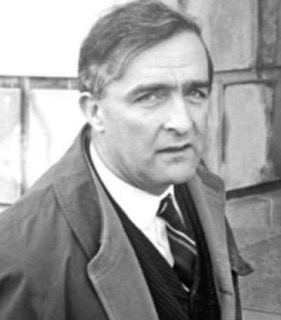
Birth of Desmond Boal, Unionist Politician & Barrister

Desmond Norman Orr Boalunionist politician and barrister, is born on August 8, 1928, in St. Columb’s Court, Derry, County Londonderry, Northern Ireland.

Boal is the third of five children (and only son) of James Boal, cashier and bakery manager, and his wife Kathleen (nèe Walker). Brought up in the Church of Ireland, he is educated at First Derry Primary School, Cathedral Primary School (Derry), Foyle College (Derry), Portora Royal School In Enniskillen, County Fermanagh, and Trinity College Dublin (TCD), where he graduates BA and Bachelor of Laws (LLB).

During his studies Boal founds an Orange lodge at TCD. He is called to the bar in 1952 at the Inner Temple, London. He travels extensively during his summers, visiting Afghanistan, South America and even China during the Cultural Revolution.

Around 1956, Boal makes the acquaintance of Ian Paisley through friendships with ultra-protestant activists, and for the next half-century is one of Paisley’s closest friends and advisers. He has a legal career before he enters politics in 1960. He was the Ulster Unionist Party (UUP) Member of the Parliament of Northern Ireland for the Belfast Shankill constituency between 1960 and 1972. He is very critical of the leadership under Captain Terence O’Neill, then Prime Minister of Northern Ireland. He opposes the manner, if not the substance, of O’Neill’s attempts at improving relations with both the Irish government and the Roman Catholic/Irish nationalist minority in Northern Ireland, along with many backbenchers.

Discontented with James Chichester-Clark and Brian Faulkner who come to government after O’Neill’s 1969 fall from power, Boal resigns from the UUP in 1971 and joins Ian Paisley in establishing the Democratic Unionist Party (DUP) in order to provide dissident unionist opinion with a viable political alternative. He works as the first chairman and one of the first public representatives of the DUP and continues to sit in Stormont during the years of 1971–1972. He later resumes his practice as a barrister.

While Boal’s interest in federalism diminishes after the 1970s, the federalist Boal scheme of January 1974 is again put forward by liberal protestants such as John Robb as late as 2007. His friendship with Paisley finally breaks when the DUP agrees to enter government with Sinn Féin in 2007. He tells Paisley, who takes the breach very hard, that he had betrayed everything he ever advocated.

Boal dies at his home in Holywood, County Down, on April 23, 2015, aged 86. His funeral is held at Roselawn Crematorium in Belfast.


Leave a comment

Birth of Richard Colley Wellesley, 1st Marquess Wellesley

Richard Colley Wellesley, 1st Marquess Wellesley, Anglo-Irish politician and colonial administrator, is born on June 20, 1760, at Dangan Castle, County Meath. He, as governor of Madras (now Chennai) and governor-general of Bengal (both 1797–1805), greatly enlarges the British Empire in India and, as Lord Lieutenant of Ireland (1821–28, 1833–34), attempts to reconcile Protestants and Roman Catholics in a bitterly divided country. Throughout his life he displays an ever-increasing jealousy of his younger brother Arthur Wellesley, 1st Duke of Wellington, despite his own achievements.

Born Richard Colley Wesley, he is the eldest son of Garret Wesley, 1st Earl of Mornington (he changes the family surname to Wellesley in 1789). He is educated at the Royal School, Armagh, Harrow School, Eton College, and Christ Church, Oxford, although he leaves the latter in 1781, following his father’s death, before completing his degree. He enters the Irish House of Commons in 1780 and, after he inherits his father’s Irish titles in 1781, moves to the Irish House of Lords. A moderately liberal disciple of Prime Minister William Pitt the Younger, he wins a seat in the British House of Commons in 1784 and serves there until 1797. From 1793 he is a member of the British Privy Council and a commissioner of the India Board of Control.

As Governor-General of India, Wellesley uses military force and diplomacy to strengthen and expand British authority. East India Company forces defeat and kill Tipu Sultan, Indian Muslim ruler of the Kingdom of Mysore (present-day Mysuru) and sympathizer for Revolutionary France, in the Fourth Anglo-Mysore War (1799), and he then restores the Hindu dynasty there that had been deposed by Tipu’s father, Hyder Ali. He annexes much territory after his brother Arthur and General Gerard Lake defeat the Maratha Confederacy of states in the Deccan Plateau (peninsular India). In addition, he forces the Oudh State to surrender numerous important cities to the British, and he contracts with other states a series of “subsidiary alliances” by which all parties recognize British preponderance. He receives a barony in the British peerage in 1797 at the time of his appointment as governor-general, and in 1799 he is awarded a marquessate in the Irish peerage for his victory in the Mysore War.

When Wellesley is faced with an invasion by Zaman Shah Durrani, ruler (1793–1800) of Kabul (Afghanistan), he utilizes his envoy, Captain John Malcolm, to induce Fatḥ-Alī Shah Qajar of Qajar Iran to restrain Zaman Shah Durrani and to give British political and commercial interests preference over the French. On receiving a British government order to restore to France its former possessions in India, he refuses to comply. His policy is vindicated when the Treaty of Amiens (1802) is violated, and Great Britain resumes war against Napoleonic France.

Wellesley’s annexations and the vast military expenditure that he had authorized alarms the court of directors of the East India Company. In 1805, he is recalled, and soon afterward he is threatened with impeachment, although two years later he refuses an offer of the foreign secretaryship. In 1809, he goes to Spain to make diplomatic arrangements for the Peninsular War against France and later that year becomes foreign secretary under Prime Minister Spencer Perceval. In that office he antagonizes his colleagues, who consider him an indolent megalomaniac and welcome his resignation in February 1812. Unlike most of them, however, he had urged a stronger war effort in Spain and had advocated political rights for British Roman Catholics. After Perceval’s assassination on May 11, 1812, he attempts unsuccessfully to form a government at the request of the prince regent (the future King George IV).

As Lord Lieutenant of Ireland, Wellesley disappoints the anti-Catholic George IV, and he is about to be removed when his brother, Arthur, is appointed prime minister in January 1828. He then resigns because his brother is opposed to Roman Catholic emancipation, although the duke is constrained to accept that policy as a political necessity in 1829. His second term as Lord Lieutenant of Ireland (1833–34) ends with the fall of Charles Grey, 2nd Earl Grey’s reform government. When the Whig Party returns to power in April 1835, he is not sent back to Ireland, and in his rage, he threatens to shoot the prime minister, William Lamb, 2nd Viscount Melbourne. He wants to be created Duke of Hindustan so that his rank will equal that of his brother.

Wellesley dies at the age of 82 on September 26, 1842, at Knightsbridge, London. He is buried in Eton College Chapel, at his old school. He and Arthur, after a long estrangement, had been once more on friendly terms for some years. Arthur weeps at the funeral and says that he knows of no honour greater than being Lord Wellesley’s brother.

Wellesley’s library is sold at auction in London by R. H. Evans on January 17, 1843 (and three following days); a copy of the catalogue, annotated with prices and buyers’ names, is held at Cambridge University Library.

Wellesley has several children, including three sons, but none are legitimate. The marquessate thus becomes extinct upon his death. The earldom of Mornington goes to his next surviving brother, William Wellesley-Pole.

(From: “Richard Colley Wellesley, Marquess Wellesley, British statesman,” written and fact-checked by the Editors of Encyclopaedia Britannica, http://www.britannica.com, April 2024 | Pictured: “Richard Colley Wellesley, Marquess of Wellesley (1760-1842),” oil on canvas portrait by Thomas Lawrence, 1812-13)


Leave a comment

Bono Named Europe’s Greatest Hero of 2003 by “Time” Magazine

On April 19, 2003, Bono, the lead singer of the Irish rock band U2, surpasses competition from British Prime Minister Tony Blair and French President Jacques Chirac to become Europe’s greatest hero. Already laden down with similar honours, he is picked by online voters from a list of 36 other Europeans compiled by the prestigious Time magazine.

Bono’s work for the starving starts with Band Aid in 1984 but develops over the years into a crusade lobbying world leaders and trying to reduce Third World debt.

Able to open any door from the Vatican to the White House, Bono in 2003 alone is nominated for a second successive Nobel Peace Prize, receives the French Legion of Honour and an international humanitarian award from the American Ireland Fund.

“There are potentially another ten Afghanistans in Africa, and it is cheaper by a factor of 100 to prevent the fires from happening than to put them out. Look, I know how absurd it is to have a rock star talk about debt relief or HIV/AIDS in Africa. But if not me, who?” Bono says.

Caoimhe Butterly, a 24-year-old from Dublin, is also nominated by Time editors for her role as a peace activist, which resulted in her being shot at by Israeli troops. “I don’t really think the concept of heroes is helpful, but if my inclusion helps highlight the cause of people struggling against oppression, then it’s of some good,” Butterly says. She expects to go to Iraq in the near future “to further the struggle against oppression.”

The third Irish person on the list is 58-year-old Christina Noble whose torrid childhood leads her to work on behalf of impoverished street children in Asia. She survives tuberculosis, hunger, homelessness, beatings, molestation by relatives, institutionalisation and a gang rape. She starts her foundation‘s work in Vietnam in 1989 and Mongolia in 1997.

In Vietnam, where she is known fondly as Mama Tina, her foundation has 50 projects providing education, food and clean water for children. “We’re tools. We help a little. You don’t need brains or brawn to do that. You just need the heart of a survivor,” Noble says.

Others nominated include footballers David Beckham and Zinedine Zidane, former The Who singer Roger Daltrey, celebrity chef Jamie Oliver, and Harry Potter author J. K. Rowling.

All 36 nominees are honoured at a ceremony in London on May 21, 2003.

(From: “Debt crusader Bono named greatest European hero” be Sean O’Riordan, Irish Examiner, http://www.irishexaminer.com, April 21, 2003)


Leave a comment

Birth of Charles Williams, Journalist & War Correspondent

Charles Frederick Williams, Scottish Irish writer, journalist, and war correspondent, is born in Coleraine, County Londonderry on May 4, 1838.

Williams is descended on his father’s side from the yeomen of Worcestershire who grew their orchards and tilled their land in the parishes of Tenbury and Mamble. His mother’s side descended from Scottish settlers who planted Ulster in 1610. He is educated at Belfast Academy in Belfast and at a Greenwich private school. Later on, he goes to the southern United States for health purposes and takes part in a filibustering expedition to Nicaragua, where he sees some hard fighting and reportedly earns the reputation of a blockade runner. He is separated from his party and is lost in the forest for six days. Fevered, he discovers a small boat and manages to return to the nearest British settlement. He serves in the London Irish Rifles with the rank of Sergeant.

Williams returns to England in 1859, where he becomes a volunteer, and a leader writer for the London Evening Herald. In October 1859, he begins a connection with The Standard which lasts until 1884. From 1860 until 1863, he works as a first editor for the Evening Standard and from 1882 until 1884, as editor of The Evening News.

Williams is best known for being a war correspondent. For The Standard, he is at the headquarters of the Armée de la Loire, a French army, during the Franco-Prussian War in 1870. He is also one of the first correspondents in Strasbourg, where the French forces are defeated. In the summer and autumn of 1877, he is a correspondent to Ahmed Muhtar Pasha who commands the Turkish forces in Armenia during the Russo-Turkish War (1877-78). He remains constantly at the Turkish front, and his letters are the only continuous series that reaches England. In 1878, he publishes this series in a revised and extended form as The Armenian Campaign: A Diary of the Campaign on 1877, in Armenia and Koordistan, which is a large and accurate record of the war, even though it is pro-Turkish. From Armenia, he follows Muhtar Pasha to European Turkey and describes his defence of the lines of Constantinople against the Imperial Russian Army. He is with General Mikhail Skobelev at the headquarters of the Imperial Russian Army when the Treaty of San Stefano is signed in March 1878.

At the end of 1878, Williams is in Afghanistan reporting the war, and in 1879 publishes the Notes on the Operations in Lower Afghanistan, 1878–9, with Special Reference to Transport.

In the autumn of 1884, representing the Central News Agency of London, Williams joins the Nile Expedition, a British mission to relieve Major-General Charles George Gordon in Khartoum, Sudan. His is the first dispatch to tell of the loss of Gordon. While in Sudan, he quarrels with Henry H. S. Pearse of The Daily News, who later unsuccessfully sues him. After leaving The Standard in 1884, he works with the Morning Advertiser but later works with the Daily Chronicle as a war correspondent. He is the only British correspondent to be with the Bulgarian Land Forces under Prince Alexander of Battenberg during the Serbo-Bulgarian War in November 1885. In the Greco-Turkish War of 1897, he is attached to the Greek forces in Thessaly. His last war reporting is on Herbert Kitchener‘s Sudanese campaign of 1898.

In 1887, Williams meets with United States General of the Army, General Philip Sheridan in Washington, D.C. to update the general on European affairs and the prospects of upcoming conflicts.

Williams tries to run as a Conservative Party candidate for the House of Commons representative of Leeds West, a borough in Leeds, West Yorkshire, during the 1885 United Kingdom general election. He fails to win the seat against Liberal candidate Herbert Gladstone. He serves as the Chairman of the London district of the Institute of Journalists from 1893 to 1894. He founds the London Press Club where he also serves as its President from 1896 to 1897.

Williams dies in Brixton, London on February 9, 1904, and is buried in Nunhead Cemetery in London. His funeral is well attended by the press as well as members of the military including Field Marshal Sir Evelyn Wood.

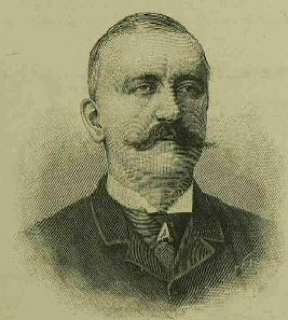
(Pictured: Portrait of Charles Frederick Williams, London President, The Institute of Journalists, from The Illustrated London News, September 30, 1893 issue)


Leave a comment

Royals Visit St. Malachy’s Church in Belfast

royals-visit-st-malachys-church-belfast

Charles, Prince of Wales, and the Duchess of Cornwall fly into George Best Belfast City Airport on February 4, 2011 for a one-day visit to Northern Ireland. The primary focus of their visit is to view a £3.5 million restoration project at St. Malachy’s Church in Belfast.

First Minister Peter Robinson, who greets Prince Charles on the doorstep of the building, is quoted as saying “Northern Ireland has entered a new era. It is the first time in recent history that we have had a royal in a Roman Catholic Church here.” Robinson adds, “So it is a good start. It should send of an indication that respect, understanding and tolerance is growing in Northern Ireland.”

St. Malachy’s Church was destroyed by a Luftwaffe bomb in 1941, but in 2006 the Roman Catholic Diocese of Down and Connor embarked on a project to restore its original features. Robinson says, “It has been set out very well and has held on to the architecture of the original.”

Prince Charles also presides over the first inter-faith meeting of members of the four main churches, organised by the local branch of The Prince’s Regeneration Trust.

The Northern Ireland Trustee Fionnuala Jay-O’Boyle says, “It’s a hugely exciting event. Not only does it celebrate the fantastic restoration of St. Malachy’s Church, but equally it is very significant because we brought together a group of very senior church figures to begin the discussion of unlocking the potential of redundant churches.”

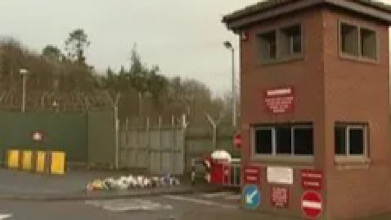
The Royal couple also visits the Palace Barracks, Holywood for a medal presentation. They meet the soldiers of 2nd Battalion, Mercian Regiment who are preparing for service in Afghanistan.

(Pictured: First Minister Peter Robinson greets the Prince of Wales on the doorstep of St. Malachy’s Church; From a BBC article “Royal visit to St Malachy’s Church is historic,” February 4, 2011)


2 Comments

Formation of The Irish Guards

The Irish Guards regiment is formed on April 1, 1900 by order of Queen Victoria to commemorate the Irishmen who fought in the Second Boer War for the British Empire. The Irish Guards, part of the Guards Division, is a Foot Guards regiment based in Cavalry Barracks, Hounslow.

The regiment takes its motto, “Quis Separabit” or “Who shall separate us?” from the Order of St. Patrick, an order of chivalry founded by George III.

As a Foot Guards Regiment the Irish Guards Regiment is involved in state ceremonial and public duties at Buckingham PalaceWindsor CastleSt. James’s Palace, and the Tower of London. HRH Prince William is Colonel of the Regiment and wore the uniform of the Irish Guards for his marriage to Kate Middleton.

Saint Patrick’s Day is the traditional celebration of the Irish Guards and fresh shamrock is presented to members of the regiment.

The 1st Battalion Irish Guards is broken down into five separate Companies – three rifle companies, Numbers One, Two, and Four Companies, the Support Company (3 Company) and Headquarter Company. The rifle companies use the Warrior tracked armoured vehicle. In common with her sister Guards regiments, the regimental organization also includes the Band of the Irish Guards and the Corps of Drums, a fife and drum band.

The Battalion has deployed on recent conflicts including Iraq and Afghanistan. The Battalion has also recently carried out a tour of Cyprus under the United Nations. As well as deploying on operations the Battalion has also deployed on various oversea exercises to BosniaLatviaOmanKenya, and numerous other countries.

(Photo used with approval of copyright holder James Brunker, https://james-brunker.pixels.com/featured/irish-guards-on-the-march-james-brunker.html)