seamus dubhghaill

Promoting Irish Culture and History from Little Rock, Arkansas, USA


Leave a comment

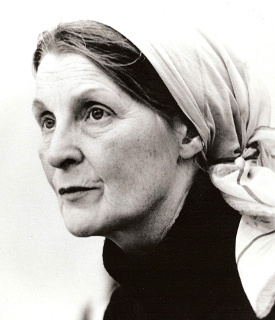
Death of Frederick May, Composer & Arranger

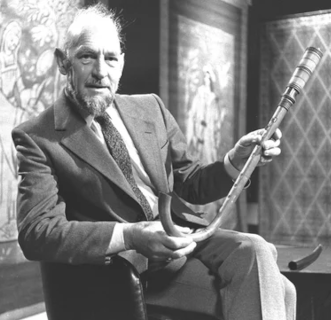
Frederick May, Irish composer and arranger, dies in Dublin on September 8, 1985. His musical career is seriously hindered by a lifelong hearing problem, and he produces relatively few compositions.

May is born on June 9, 1911, into a Dublin Protestant family who lives in the suburb of Donnybrook. His father, also named Frederick, is employed at the Guinness Brewery. He pursues his musical studies at the Royal Irish Academy of Music, where he is taught composition by John Larchet. In 1930, McCullough Pigott and Co. publishes his Irish Love Song. That same year he is awarded the Esposito Cup at the Feis Ceoil and as a result of this he is nominated as the first recipient of a new scholarship prize worth £100 to be spent on the further study of piano. In July 1930, he takes his preliminary examination for the Bachelor of Music at Trinity College Dublin (TCD) before departing Dublin to utilise his scholarship in London. In September he enrolls at the Royal College of Music (RCM) where his teachers include Charles Kitson, Ralph Vaughan Williams, R. O. Morris and Gordon Jacob. He takes his final TCD examination in December 1931 submitting a string quartet and on December 10 his degree is conferred. During 1932 his study is funded by the RCM’s Foli Scholarship and in October he is awarded the Octavia Travelling Scholarship.

May’s compositions are few in number and he produces most of his small output in the 1930s and early 1940s. His first significant work is the Scherzo for Orchestra, written while he is still a student in London. The first orchestral run through of Scherzo for Orchestra takes place on March 17, 1933, and it receives its first public performance on December 1 when it is heard as part of the Patron’s Concert. Between the months of May and October he composes his Four Romantic Songs, which receive their premiere in London at a Macnaghten-Lemare concert on January 22, 1934. At some point, probably in the second half of 1933, he follows in the footsteps of other Octavia Scholarship winners and travels to Vienna to study with Egon Wellesz.

On January 1, 1936, May takes up the position of Director of Music at the Abbey Theatre in Dublin, a position he retains until he is fired in 1948. His duties mainly consist of leading the piano trio which bears the title “The Abbey Orchestra” in music during the intervals of productions. In 1936, he composes what is today his best-known composition, the String Quartet in C Minor, described in the Grove’s Dictionary of Music and Musicians as “one of the most individual statements from an Irish composer in the first half of the 20th century.” He composes the quartet as his hearing is beginning to deteriorate and he later describes it as “an appeal for release.” String Quartet in C Minor is not premiered until 1948 when it is performed by the Martin Quartet in the Wigmore Hall, London. This is followed by Symphonic Ballad (1937), Suite of Irish Airs (1937), Spring Nocturne (1938), Songs from Prison (1941) and Lyric Movement for Strings (1942). He effectively ceases original composition at this point.

Following a long break from composition, May produces what is to be his valedictory work in 1955, the nine-minute orchestral piece Sunlight and Shadows. It is given its first performance on January 22, 1956, by the Radio Éireann Symphony Orchestra at Dublin’s Gaiety Theatre. Although this is his last original work, he does not abandon music completely. He produces arrangements of Irish music for Radio Éireann, which while not perhaps rewarding artistically, does help to alleviate his always precarious financial situation. He also composes a number of songs for voice and piano and a short piece entitled Idyll for violin and piano. The latter is chosen as a set work for the junior violin competition at the Feis Ceoil in 2017.

Throughout his life May suffers from significant mental health issues which result in hospitalisation. He also experiences otosclerosis, as a result of which he gradually becomes increasingly deaf. In addition, he suffers from severe tinnitus with constant ringing noises in his head. In later life he becomes homeless for a time due to alcoholism and sleeps at night in Grangegorman Asylum, Dublin. He is rescued by some friends led by Garech Browne whose record company, Claddagh Records, records the String Quartet in 1974.

Throughout his career May is an advocate of better musical education in Ireland and expresses his views on this and other musical matters through the medium of The Bell, a monthly journal dealing with the arts. He is a co-founder, along with Brian Boydell and Aloys Fleischmann, of the Music Association of Ireland (now “Friends of Classical Music”), set up in 1948 to promote art music as an integral part of the cultural life of Ireland. Later he becomes a member of Aosdána. He lives the last years of his life at Orthopaedic Hospital of Ireland, Clontarf, Dublin. He dies on September 8, 1985, at the age of 74 and is buried in Mount Jerome Cemetery.
Leave a comment

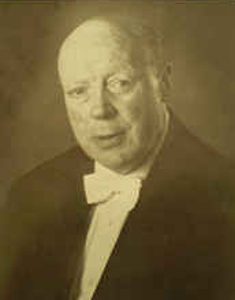
Death of John Francis Larchet, Composer & Teacher

John Francis Larchet, Irish composer and teacher, dies in Dublin on August 10, 1967.

Larchet is born on July 13, 1884, at Sandymount, Dublin, the son of John Edward Larchet, manager of a wine business, and his wife Isabella Emily (née Farmar). Educated at the Catholic University School in Leeson Street, Dublin, he subsequently commences study under Michele Esposito at the Royal Irish Academy of Music (RIAM) in Dublin, winning many prizes for composition, theory, harmony, and counterpoint from 1903 to 1912. As a student at Trinity College Dublin (TCD), he obtains his Bachelor of Music in 1915 and Doctor of Music in 1917 and comes to dominate the music profession in Dublin over the next forty years, moulding the composers, teachers, and conductors of the next generation, while developing an Irish school of music based on folk tradition but writing in the modern idiom. A senior professor at the RIAM by 1920, the following year he is appointed professor of music at University College Dublin (UCD), where he remains until 1958, successfully establishing music as a serious discipline within the university. He is director of music examinations for Irish secondary schools (1907–34) and succeeds in raising standards of teaching, particularly with regard to rectifying weakness in the teaching of the theory of music.

Along with Aloys Fleischmann and composer Frederick May, Larchet keeps discourse on music in the public domain during the 1930s and 1940s, frequently addressing the need for a national school of music and a system of music education that would raise standards of musical appreciation and nurture a school of Irish composers.

Appointed music director at the Abbey Theatre in 1907, he is closely associated with Lady Gregory and W. B. Yeats, establishing a tradition of music at the theatre that delights critics. A popular myth at the time is that there are some who leave the theatre during the acts and return to enjoy Larchet’s music during the intervals. Appointed musical adviser to the army in 1923, he introduces a new philharmonic pitch, and serves as president of the Dublin Grand Opera Society for many years.

A fellow of the RIAM, Larchet also conducts the Dublin Amateur Orchestra Society, is choir master of the Jesuit church in Gardiner Street, Dublin, and organises annual orchestral concerts at the Royal Dublin Society (RDS). He is also involved in preparing a report for the commission on vocational organisation on behalf of the Musical Association of Ireland. The products of his own creative endeavour are mostly orchestral and choral works including An Ardglass Boat Song, Pádraic the Fiddler, and Diarmuid’s Lament.

Perhaps the main challenge facing Larchet in the 1920–50 period is the divide between “colonial” and “native” which has characterised the history of music in Ireland. A gentle-mannered, kindly man who is acutely aware of the lack of a national policy for music, he is a persuasive advocate of the European aesthetic and his main aim is said to have been “a reconciliation between the cultural chauvinism of Ireland as an emergent nation state and the central value (artistic as well as educational) of music as a vital dynamic in Irish cultural affairs.”

Although it can be argued that Larchet is not possessed of a uniquely original voice, with his authority coming rather from his enormous workload and his essential contribution as a teacher, it is no exaggeration to claim that the majority of Irish composers who emerge in the decades after the 1940s are influenced by his guidance, including Frank Llewellyn Harrison, Frederick May, Joan Trimble and Brian Boydell.

In addition to receiving an honorary Doctor of Music from the National University of Ireland (NUI) in 1953, Larchet is made a Commendatore of the Italian Republic.

Larchet dies in Dublin on August 10, 1967. He is survived by his wife, Madeleine Moore, a well-known musician, and their two daughters and son, also musicians. His daughter, Sheila Larchet Cuthbert, is an Irish harpist and author. She publishes The Irish Harp Book: A Tutor and Companion (Dublin, 1975).

(From: “Larchet, John Francis” by Diarmaid Ferriter, Dictionary of Irish Biography, http://www.dib.ie, October 2009)


Leave a comment

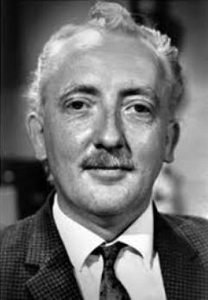
Birth of John Buckley, Composer & Pedagogue

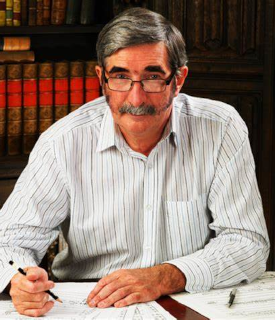
John Buckley, Irish composer and pedagogue, is born in Templeglantine, County Limerick, on December 19, 1951. He is a co-founder of the Ennis Summer School and a member of Aosdána, Ireland’s state-sponsored academy of creative artists.

Buckley grows up in a rural environment and is introduced to traditional music learning the button accordion from the local player Liam Moloney when he is 9 years of age. In 1969 he moves to Dublin to study for the Teacher’s Diploma at St. Patrick’s College, Drumcondra. Here he has his first opportunity to hear live classical and modern music including contemporary and avantgarde works by Irish composers including Aloys Fleischmann, Brian Boydell, John Kinsella, and Seóirse Bodley, as well as works by international composers such as Krzysztof Penderecki. He becomes a student at the Royal Irish Academy of Music, Dublin (1969–74), studying the flute with Doris Keogh and composition with A. J. Potter and James Wilson. He continues his musical studies with Alun Hoddinott in Cardiff, Wales (1978–82), Aloys Fleischmann in Cork (M.A. in composition, 1980), and briefly with John Cage during a summer school for composers and choreographers at Guildford, Surrey, in 1981. Initially working as secondary school teacher, from 1982 he is able to work independently as a composer.

In 1983, Buckley is the co-founder, with James Wilson, of the annual Ennis Summer School for composition, which becomes an influential training ground for aspiring young Irish composers; pupils include Michael Alcorn, Rhona Clarke, and Gráinne Mulvey. He becomes a member of Aosdána in 1984. Since 2001 he has been a lecturer in music at St. Patrick’s College, Drumcondra. From the National University of Ireland at Maynooth (now Maynooth University) he receives a PhD in 2002 and a DMus in 2007.

Apart from membership in Aosdána, Buckley is honoured with the Varming Prize (1976), the Macaulay Fellowship (1978), the Arts Council‘s Composers’ Bursary (1982) and the Marten Toonder Award (1991).

Buckley’s output includes many commissions for solo instruments, chamber ensembles, choirs, bands and orchestra. His music has been widely performed and broadcast in Ireland and in more than fifty countries worldwide. He has represented Ireland at the UNESCO International Rostrum of Composers on five occasions and at the 1990 Prix Italia. His music has also been performed at five International Society for Contemporary Music (ISCM) festivals.

Buckley’s music does not adhere to any particular compositional school. He acknowledges the influence of Luciano Berio, Witold Lutoslawski, György Ligeti, and Olivier Messiaen. His harmonic approach is freely atonal. Structurally, there is frequently a gradual build-up from initially very limited pitch material to large formal constructions. Many compositions work towards a climax in the fourth quarter of a piece and then return to initial pitch sequences. In a number of early works he explores the Celtic myths of his native Ireland in orchestral scores such as Taller than Roman Spears (1977) and Fornocht do chonac thú (1980) and in small-scale works such as Oileáin (1979) for piano, Boireann (1983) for flute and piano, or I am Wind on Sea (1987) for mezzo-soprano and percussion. Later this aspect becomes less important for him. Works since the late 1980s display “a textural subtlety in marked contrast to the more robust sonorities explored in Buckley’s earlier keyboard works,” a “French refinement of sound, and an elevation of timbre as central characteristics” and “a concern with achieving a greater degree of formal unity” and “an exploration of analogies between sound and light.” O’Leary (2013) describes his style as “characterised by a broad harmonic idiom, contrasting consonance and dissonance in a non-tonal but strongly coloured soundworld.”

In 2010, Buckley arranges a number of Irish traditional songs for flute, some with harp, viola, percussion and string quartet. These are skilled and tasteful settings in a tonal harmonic language, quite unlike his original compositions.


Leave a comment

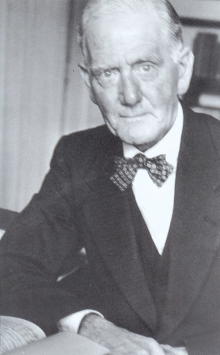
Death of Composer Brian Patrick Boydell

Brian Patrick Boydell, Irish composer whose works include orchestral pieces, chamber music, and songs, dies on November 8, 2000. He is Professor of Music at Trinity College Dublin for 20 years, founder of the Dowland Consort, conductor of the Dublin Orchestral Players, and a prolific broadcaster and writer on musical matters. He was also a prolific musicologist specialising in 18th-century Irish musical history.

Boydell is born on March 17, 1917, in Howth, County Dublin, into a prosperous Anglo-Irish family. His father James runs the family maltings business while his mother, Eileen Collins, is one of the first women graduates of Trinity College. Following their son’s birth, the Boydells move from Howth and live in a succession of rented houses before settling in Shankill, County Dublin. The young Boydell begins his formal education at Monkstown Park in Dublin and is subsequently sent to the Dragon School at Oxford, England. From there he goes to Rugby School, where he comes under the influence of Kenneth Stubbs, the music master. Although he later speaks of his resentment at the anti-Irish attitude he experiences at Rugby, he appreciates the very good education in science and music he receives there.

Having completed his secondary education, Boydell spends the summer of 1935 developing his musical knowledge at Heidelberg, Germany, where he writes his first songs and also studies organ. He wins a choral scholarship to Clare College, Cambridge, where, perhaps through parental pressure, he studies natural science, graduating in 1938 with a first-class degree.

However, his love of music leads him next to the Royal College of Music where he studies composition under Patrick Hadley, Herbert Howells and Vaughan Williams. Already a good pianist, he also becomes a proficient oboe player during this time.

Upon the outbreak of World War II, Boydell returns to Dublin and achieves further academic success in 1942 with a Bachelor of Music degree from Trinity College. He also takes further lessons in composition from John F. Larchet.

Boydell’s busy working life combines teaching, performing and composing. Following a brief stint in his father’s business, he plunges himself into Dublin’s classical music scene. In 1943, he succeeds Havelock Nelson as conductor of the Dublin Orchestral Players, beginning an association with the amateur orchestra that endures for a quarter of a century (until 1966). In 1944, he is appointed Professor of Singing at the Royal Irish Academy of Music, a position he holds for eight years. Along with fellow composers Edgar M. Deale, Aloys Fleischmann, and Frederick May he founds the Music Association of Ireland in 1948 as a vehicle to promote classical music throughout the country.

Boydell’s interest in Renaissance music, in particular the madrigal, leads in 1959 to founding the Dowland Consort, a vocal ensemble with which he performs for many years and records an LP. In 1962, having obtained a Doctorate in Music, he is appointed Professor of Music at Trinity College, a position he holds until 1982. He immediately revamps the course making it more relevant to the second half of the twentieth century. He also finds time to sit on the Arts Council throughout the 1960s, 70s, and early 80s.

Boydell’s communication skills combined with his infectious enthusiasm makes him a natural broadcaster. The appeal of his programmes on the history and performance of music, first on RTÉ Radio 1 and later on Telefís Éireann, go beyond a specialist audience and are, for many people, their introduction to a new world of aural pleasure.

Boydell has many interests beyond music. As a surrealist painter in the 1940s, having taken lessons from Mainie Jellett, he is a member of The White Stag Group. He is also passionate about cars and photography.

Following retirement from Trinity as Fellow Emeritus, Boydell devotes himself to musical scholarship, writing two books on the music of 18th century Dublin. He also contributes to The New Grove Dictionary of Music and Musicians.

Boydell dies at his home in Howth on November 8, 2000, at the age of 83 and in the company of his wife of 56 years, Mary (née Jones) and their sons, Cormac and Barra. A third son, Marnac, predeceases him.

Boydell is awarded several honorary titles in recognition of his services to music, including the Honorary Doctorate of Music from the National University of Ireland (1974), the Order of Merit of the Italian Republic (1983), the election to Aosdána, Ireland’s academy of creative artists (1984), and Honorary Fellowship of the Royal Irish Academy of Music (1990).


Leave a comment

Death of Seán Ó Riada, Composer & Arranger

Seán Ó Riada, Irish composer and arranger of Irish traditional music, dies in London, England on October 3, 1971. Through his incorporation of modern and traditional techniques he becomes the single most influential figure in the revival of Irish traditional music during the 1960s.

Ó Riada is born John Reidy in Cork, County Cork on August 1, 1931. He receives his primary education at St. Finbarr’s College, Farranferris. He moves to St. Munchin’s College in Limerick where he completes his Leaving Certificate in 1948. He plays violin, piano, and organ, and studies Greek and Latin classics at University College Cork, with Aloys Fleischmann and graduates in 1952. While at College, Ó Riada is the auditor of the UCC Philosophical Society.

Ó Riada’s career begins in 1954 as a music director at Radio Éireann, after which he works at the Abbey Theatre from 1955 to 1962. He lectures in music at University College Cork from 1963 until his death in 1971. He leaves a lasting influence as founder and director of the ensemble Ceoltóirí Chualann beginning in 1961. Ó Riada becomes a household name in Ireland through his participation in Ceoltóirí Chualann, compositions, writings, and broadcasts. His best-known pieces in the classical tradition include Nomos No. 1: Hercules Dux Ferrariae (1957), but he becomes particularly famous for his film scores Mise Éire (1959) and Saoirse? (1960).

In 1963 Ó Riada is appointed lecturer in music at University College Cork. He moves to Ballyvourney, and not Cúil Aodha (a common misconception) in West Cork, an Irish-speaking area, where he establishes Cór Chúil Aodha, a male voice choir.

He becomes involved in Irish politics and is a friend of several influential leaders. Ó Riada drinks regularly at a local pub which still advertises itself as being his local. He develops cirrhosis of the liver. He is flown to King’s College Hospital in London for treatment and dies there on October 3, 1971, two months after his 40th birthday. He is buried in St. Gobnait‘s graveyard, Baile Bhuirne, County Cork. Willie Clancy plays at his funeral.

Two schools are named “Scoil Uí Riada” after him – a Gaelscoil in Kilcock, County Kildare, and another in Bishopstown, Cork City. In 2008, a life-sized statue is erected in the grounds of Sépéil Naomh Gobnait, Cúil Aodha.


Leave a comment

Death of Joan Denise Moriarty, Ballet Dance & Choreographer

joan-denise-moriarty

Joan Denise Moriarty, Irish ballet dancer, choreographer, teacher of ballet and traditional Irish dancer and musician, dies on January 24, 1992. She is a key figure in the development of both amateur and professional ballet in Ireland.

Little is known of Moriarty’s early life. Her year of birth is estimated between 1910 and 1913 but no documentation has been found. The place of her birth is also unknown, and even the country is uncertain. She grows up as the daughter of Michael Augustus Moriarty, an alumnus of Stonyhurst College and contemporary of Sir Arthur Conan Doyle, and his wife, Marion (née McCarthy). The Moriartys are originally from Mallow, County Cork, where her grandfather John Moriarty was a successful solicitor.

Moriarty is brought up in England. She studies ballet until her early teens with Dame Marie Rambert. She is an accomplished Irish step-dancer and traditional musician and becomes the champion Irish step-dancer of Britain on April 24, 1931. She also wins a swimming championship. She is a member of the Liverpool branch of the Conradh na Gaeilge.

In the autumn of 1933 Moriarty returns with her family to their native Mallow in County Cork. In 1934, she sets up her first school of dance there. From 1938 she also gives weekly classes in Cork in the Gregg Hall and Windsor School. During the 1930s she takes part in the Cork Feis, annual arts competitions with a focus on traditional dance and music, competing in Irish step-dancing, warpipes and operatic solo singing. She performs on the warpipes in various public concerts and gives at least two broadcasts. In 1938 she is invited by Seán Neeson, lecturer in Irish music at University College Cork, to perform at a summer school which the Music Department organises for primary school teachers.

Moriarty’s mother dies in February 1940. The following November she moves to Cork where she sets up the Moriarty School of Dancing. The early years during the war are very difficult financially. In the early 1940s she performs with her dancers in musicals and variety shows at the Cork Opera House.

In 1945 the composer Aloys Fleischmann invites Moriarty to perform in his Clare’s Dragoons for baritone, war pipes, choir and orchestra, which had been commissioned by the national broadcasting company, Radio Éireann, for the Thomas Davis centenary. Moriarty agrees on condition that his Cork Symphony Orchestra would play for her Ballet Company’s annual performances, which marks the beginning of a lifelong collaboration.

Branches of the Moriarty School of Dance are established in Bandon, Clonmel, Fermoy, Killarney, Mallow, Tralee, Waterford, and Youghal. Moriarty bequeaths her Cork school to Breda Quinn, a long-standing member of the Cork Ballet Company, who runs it with another Moriarty student, Sinéad Murphy, who creates a new dance school, Cork School of Dance, after Breda’s death in 2009.

Moriarty founds the Cork Ballet Group in 1947, the members recruited from her school. It gives its first performance in June of that year at the Cork Opera House. In 1954 the group is registered as a company under the name “Cork Ballet Company.” The company’s final season is 1993, the year following Moriarty’s death.

Irish Theatre Ballet is founded by Moriarty in the summer of 1959, and gives its first performance in December 1959. It is a small touring company of 10 to 12 dancers, which travels all over Ireland, going to some 70 venues annually with extracts from the classical ballets, contemporary works and folk ballets. In an attempt to resolve the constant financial difficulties, the Arts Council in 1963 insists on a merger with Patricia Ryan’s Dublin National Ballet. The amalgamation does not bring a solution to the financial problems besetting both companies and, after one joint season, the amalgamated company, Irish National Ballet, has to be disbanded in March 1964.

In 1973, the Irish government decides to fund a professional ballet company, the Irish Ballet Company, and entrusts it to Moriarty. Like Irish Theatre Ballet, it is a touring company which travels all over Ireland in two annual seasons. The company has a number of striking successes between 1978 and 1981. In 1983 the name of the company is changed to Irish National Ballet. The severe recession in Ireland during the 1980s and shrinking funds force the Irish National Ballet to disband in 1989.

Moriarty spends almost 60 years working for ballet in Ireland. Her amateur Cork Ballet Company is still the longest-lasting ballet company the country’s history. Her two professional touring companies bring ballet to all parts of Ireland for 21 years. She receives numerous awards for her work, among them an honorary doctorate from the National University of Ireland in 1979.

During the last years of her life, Moriarty suffers ill-health, but continues her work with the Cork Ballet Company, bringing the shows to towns in the county. She dies on January 24, 1992, in Dublin.


Leave a comment

Birth of Pianist Charles Lynch

charles-lynch

Charles Edgeworth Cagney Lynch, Irish pianist who premiers works by several important 20th-century composers, is born in Parkgariff, County Cork, on October 22, 1906.

Lynch’s father is a British army colonel and his mother comes from a well-known Cork business dynasty, the Suttons. While still a young boy, the family moves to Greenock in western Scotland and it is there, at the Tontine Hotel, that the young pianist gives his first public recital at the age of nine. When he is fifteen, he wins a scholarship to the Royal Academy of Music in London, where he studies under York Bowen and, later, Egon Petri.

Lynch becomes a popular recitalist in London during the 1920s and 1930s. He gives the first performance in England of Sergei Rachmaninoff‘s Piano Sonata No. 2 in B flat minor, having been coached beforehand by the composer. Sir Arnold Bax‘s Fourth Piano Sonata (1932) is dedicated to the 26-year-old Lynch, whom Bax later describes as “Ireland’s most imaginative pianist.” In addition to concert recitals he broadcasts regularly with the BBC and, in 1937, acts as assistant to Sir Thomas Beecham at Covent Garden. Lynch is the Ballet Rambert‘s pianist for many years, having helped Marie Rambert form the company.

A pacifist, Lynch returns to Ireland following the outbreak of World War II, where he becomes the country’s premier concert pianist. During this phase of his career he premiers a number of works by leading Irish composers, including Brian Boydell‘s Sonata for Cello and Piano (1945) and Sean Ó Riada‘s Nomos No. 4 (1959). Lynch also performs in the world première of English composer Ernest John Moeran‘s Cello Sonata in A minor, given in Dublin in May 1947. He is joined by the composer’s wife, cellist Peers Coetmore.

In February 1971 at Trinity College, Dublin, he plays the entire set of Franz Liszt‘s transcriptions of Beethoven’s symphonies over four successive Saturday evenings.

Lynch continues to give public recitals throughout Ireland until shortly before his death at the age of 77. He also lectures in music at University College Cork and gives masterclasses at the Cork School of Music. In 1982, Lynch receives a doctorate in music from the National University of Ireland.

Lynch’s technique is remarkable for the stillness with which he sits, making the most difficult of music seem almost technically unremarkable. His recorded legacy is small, but includes music by Samuel Barber, Ernest John Moeran‘s Violin Sonata (with Geraldine O’Grady, violin) as well as music by Irish composers such as Aloys Fleischmann.

Toward the end of his life he lives in very reduced circumstances. He dies in Cork on September 15, 1984 at St. Finbarr’s Hospital and is buried near Sir Arnold Bax in St. Finbarrs Cemetery, Glasheen Road, Cork.


Leave a comment

Birth of Seán Ó Riada, Composer of Irish Traditional Music

seán-o-riada

Seán Ó Riada, Irish composer and arranger of Irish traditional music, is born John Reidy in Cork City on August 1, 1931. Through his incorporation of modern and traditional techniques he becomes the single most influential figure in the revival of Irish traditional music during the 1960s.

Ó Riada receives his primary education at St. Finbarr’s College, Farranferris. He moves to St. Munchin’s College in Limerick where he completes his Leaving Certificate in 1948. He plays violin, piano, and organ, and studies Greek and Latin classics at University College Cork, with Aloys Fleischmann and graduates in 1952. While at College, Ó Riada is the auditor of the UCC Philosophical Society.

Ó Riada’s career begins in 1954 as a music director at Radio Éireann, after which he works at the Abbey Theatre from 1955 to 1962. He lectures in music at University College Cork from 1963 until his death in 1971. He leaves a lasting influence as founder and director of the ensemble Ceoltóirí Chualann beginning in 1961. Ó Riada becomes a household name in Ireland through his participation in Ceoltóirí Chualann, compositions, writings, and broadcasts. His best-known pieces in the classical tradition include Nomos No. 1: Hercules Dux Ferrariae (1957), but he becomes particularly famous for his film scores Mise Éire (1959) and Saoirse? (1960).

In 1963 Ó Riada is appointed lecturer in music at University College Cork. He moves to Cúil Aodha in West Cork, an Irish-speaking area, where he establishes Cór Chúil Aodha, a male voice choir.

He becomes involved in Irish politics and is a friend of several influential leaders. Ó Riada drinks regularly at a local pub which still advertises itself as being his local. He develops cirrhosis of the liver. He is flown to King’s College Hospital in London for treatment and dies there on October 3, 1971, two months after his 40th birthday. He is buried in St. Gobnait‘s graveyard, Baile Bhuirne, County Cork. Willie Clancy played at his funeral.

Two schools are named “Scoil Uí Riada” after him – a Gaelscoil in Kilcock, County Kildare, and another in Bishopstown, Cork City. In 2008, a life-sized statue is erected in the grounds of Sépéil Naomh Gobnait, Cúil Aodha.