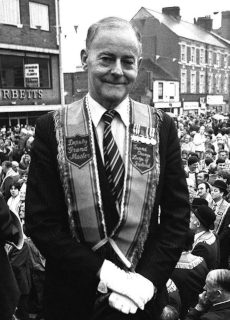
Molyneaux is educated at nearby Aldergrove School. Although he is raised an Anglican, as a child he briefly attends a local Catholic primary school. He leaves school at age 15 and works on his father’s poultry farm. When a Catholic church near his home is burned down by Ulster loyalist arsonists in the late 1990s, he helps to raise funds for its rebuilding.
After demobilization Molyneaux establishes a printing business with his uncle, and in 1946 he joins the UUP. He is first elected to local government in 1964 and enters Parliament six years later. He staunchly opposes all power-sharing deals, notably the Anglo-Irish Agreement (1985) between British Prime MinisterMargaret Thatcher and Irish TaoiseachGarret FitzGerald, which gives Dublin an official consultative role in the affairs of Northern Ireland and paves the way for devolution.
Molyneaux lacks the firebrand public image of his longtime rival Ian Paisley, who in 1971 breaks with the UUP to form the Democratic Unionist Party (DUP). He never acquiesces to the Good Friday Agreement, which calls for the devolution of Northern Ireland’s government from London to Belfast, however, unlike Paisley and David Trimble, who in 1997 succeeds Molyneaux as the UUP leader and in April 1998 signs the devolution accord.
On retiring as UUP leader, Molyneaux is knighted as a Knight Commander of the Order of the British Empire (KBE) in 1996. The following year, after standing down as an MP at the 1997 general election, he is created a life peer on June 10, 1997, as Baron Molyneaux of Killead, of Killead in the County of Antrim.
The Anglo-Irish Agreement, an accord that gives the government of Ireland an official consultative role in the affairs of Northern Ireland, is signed by TaoiseachGarret FitzGerald and British Prime MinisterMargaret Thatcher on November 15, 1985, at Hillsborough Castle in County Down, Northern Ireland. Considered one of the most significant developments in British-Irish relations since the establishment of the Irish Free State in 1922, the agreement provides for regular meetings between ministers in the Irish and British governments on matters affecting Northern Ireland. It outlines cooperation in four areas: political matters, security and related issues, legal matters, including the administration of justice, and the promotion of cross-border cooperation.
The agreement is negotiated as a move toward easing long-standing tension between Britain and Ireland on the subject of Northern Ireland, although Northern Irish unionists, who are in favour of remaining part of the United Kingdom, are themselves strongly opposed to giving their southern neighbour a say in domestic matters. Many political leaders, including Thatcher, who has been strongly committed to British sovereignty in Northern Ireland, have come to believe that a solution to years of sectarian violence in Northern Ireland can only be achieved by means of an all-Ireland arrangement.
Such an attempt had previously been made in 1973. A power-sharing executive, composed of Irish nationalists as well as unionists, was set up in Northern Ireland, and Taoiseach Liam Cosgrave participated in talks with British Prime Minister Edward Heath that resulted in the Sunningdale Agreement. That accord recognized that Northern Ireland’s relationship with Britain could not be changed without the agreement of a majority of its population, and it provided for the establishment of a Council of Ireland composed of members from both the Dáil Éireann (the lower chamber of the Oireachtas) and the Northern Ireland Assembly. That agreement collapsed in May 1974 because of a general strike inspired by unionist opponents of power sharing.
In 1981 FitzGerald launches a constitutional crusade to make the reunification of Ireland more attractive to Northern Ireland’s Protestants. At the end of the year, the Irish and British governments set up an Anglo-Irish intergovernmental council to discuss matters of common concern, especially security. In 1984 the report of the New Ireland Forum, a discussion group that includes representatives of political parties in Ireland and Northern Ireland, sets out three possible frameworks for political development in Ireland: a unitary state, a federal state, and joint sovereignty. Of Ireland’s major political parties, Fianna Fáil prefers a unitary state, which Fine Gael and the Irish Labour Party regard as unrealistic. They prefer the federal option.
In the improved political climate between Britain and Ireland, leaders of the two countries sit down to negotiations. Ireland and Britain agree that any change in the status of Northern Ireland would come about only with the consent of the majority of the people of Northern Ireland, and an intergovernmental conference is established to deal with political, security, and legal relations between the two parts of the island. The agreement is a blow to Northern Ireland’s unionists, because it establishes a consultative role for the government of Ireland in the affairs of Northern Ireland through the Anglo-Irish Secretariat. The Ulster Unionist Party (UUP) and other unionists denounce the agreement, and UUP members of Parliament resign their seats over the issue, although 14 are returned in by-elections in 1986. The party organizes mass protests and boycotts of local councils and files a lawsuit challenging the legality of the agreement. However, these efforts, which are joined by the Democratic Unionist Party, fail to force abrogation of the agreement.
Contacts between the Irish and British governments continue after February 1987 within the formal structure of the intergovernmental conference. Fears that the violence in Northern Ireland would spill into Ireland as a consequence of closer Anglo-Irish cooperation in the wake of the agreement proves unfounded, and the UUP decides to participate in new negotiations on the constitutional future of Northern Ireland in 1990–93. After republican and unionist forces declare cease-fires in 1994, the UUP reluctantly joins discussions with the British and Irish governments and other political parties of Northern Ireland. No deal accepted by all sides is reached until the Good Friday Agreement in April 1998, which creates the Northern Ireland Assembly and new cross-border institutions.
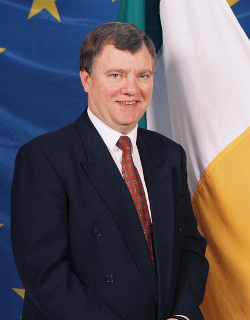
In 1982 Cushnahan is elected to the Prior Assembly for North Down and two years later he becomes the new leader of Alliance, succeeding Oliver Napier. During his tenure as leader, he seeks to strengthen the party’s links with the British Liberal Party. The Anglo-Irish Agreement is signed during this period and Cushnahan faces the difficult position of giving Alliance support to it and facing the united opposition of the Unionist parties. However, when the Assembly is dissolved in 1986, Cushnahan finds it financially difficult to remain in politics and so stands down as leader in 1987 to be succeeded by John Alderdice.
Two years later Cushnahan makes a surprise political comeback when he moves to the Republic of Ireland and stands as a Fine Gael candidate in the 1989 election to the European Parliament, winning a seat in the Munster constituency. He is an MEP for fifteen years before retiring at the 2004 elections.
Cushnahan now serves as a board member of the peace and reconciliation charity Co-operation Ireland.
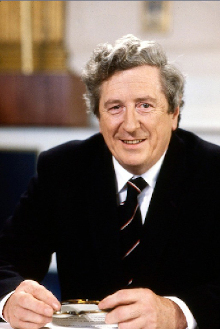
After serving for four years on the Roscommon County Council, Doherty is elected as a Fianna Fáil TD for the Roscommon–Leitrim constituency at the 1977 general election.
Doherty’s brother-in-law, Garda Thomas Nangle, is charged with assaulting James McGovern, a native of County Fermanagh, in a public house in December 1981. On September 27, 1982, hours before the case is due to be heard in District Court in the small village of Dowra, County Cavan, McGovern is arrested by the Special Branch of the Royal Ulster Constabulary (RUC) on the basis of entirely false Garda intelligence that he is involved in terrorism. The case against Nangle is dismissed because the principal witness, McGovern, fails to appear in court. The solicitor representing Nangle is Kevin Doherty, Seán Doherty’s brother. This questionable use of Garda/RUC Special Branch liaison, set up under the 1985 Hillsborough Anglo-Irish Agreement, prevents meetings between the Garda commissioner and the RUC chief constable for almost three years.
After Doherty leaves office it is revealed in The Irish Times that he ordered the tapping of three journalists home telephones. The newspaper also discloses that he has been interfering in the workings of the Garda and the administration of justice for both political and personal reasons. He immediately resigns from the party only to rejoin it in 1984.
At the 1989 general election his loses his seat in Dáil Éireann to the independent candidate Tom Foxe. He is also an unsuccessful candidate in the elections on the same day to the European Parliament, but he is later elected instead to the Seanad on the Administrative Panel and becomes the Cathaoirleach (Chairman) of the 19th Seanad.
In January 1992 the phone tapping scandal returns to haunt Fianna Fáil. Doherty announces in a television interview that he had shown transcripts of the conversations to Charles Haughey while Haughey was Taoiseach in 1982 although he had previously denied this. Haughey denies the claim also, but is forced to resign from the government, and then resigns as leader of Fianna Fáil. Doherty then regains his seat at the 1992 general election and holds it until his retirement at the 2002 general election.
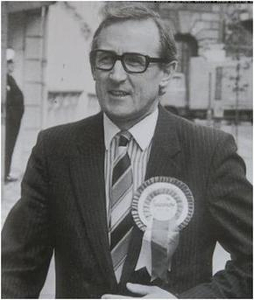
The youngest son of Jim and Lily McCusker, McCusker is born and raised in the heart of Lurgan, County Armagh, Northern Ireland. He is educated at Lurgan Model Primary School, Lurgan College and Stranmillis University College, before qualifying as a teacher. Before entering politics he works in industry, latterly with Goodyear, in their Craigavon Plant.
McCusker is an Orangeman and staunch Unionist. Prior to his death in Portadown, County Armagh, Northern Ireland on February 12, 1990, five days after his 50th birthday, McCusker is expected to rise further in the Ulster Unionist Party and British political scenes, due to his ability and popularity among his peers and the wider public. He is a member of the Methodist Church in Ireland (Lurgan circuit).
Paisley becomes a Protestant evangelical minister in 1946 and remains one for the rest of his life. In 1951, he co-founds the fundamentalist Free Presbyterian Church of Ulster and is its leader until 2008. Paisley becomes known for his fiery speeches and regularly preaches and protests against Catholicism, ecumenism and homosexuality. He gains a large group of followers who are referred to as “Paisleyites.”
Paisley becomes involved in Ulster unionist/loyalist politics in the late 1950s. In the mid-late 1960s he leads and instigates loyalist opposition to the Catholic civil rights movement in Northern Ireland. This leads to the outbreak of The Troubles in the late 1960s, a conflict that engulfs Northern Ireland for the next thirty years. In 1970, he becomes Member of Parliament for North Antrim and the following year he founds the Democratic Unionist Party (DUP), which he leads for almost forty years. In 1979, he becomes a Member of the European Parliament.
Throughout the Troubles, Paisley is seen as a firebrand and the face of hard-line unionism. He opposes all attempts to resolve the conflict through power-sharing between unionists and Irish nationalists/republicans, and all attempts to involve the Republic of Ireland in Northern affairs. His efforts help bring down the Sunningdale Agreement of 1974. He also opposes the Anglo-Irish Agreement of 1985, with less success. His attempts to create a paramilitary movement culminate in Ulster Resistance. Paisley and his party also oppose the Northern Ireland peace process and Good Friday Agreement of 1998.
In 2005, Paisley’s DUP becomes the largest unionist party in Northern Ireland, displacing the Ulster Unionist Party (UUP), which has dominated unionist politics since 1905. In 2007, following the St. Andrews Agreement, the DUP finally agrees to share power with republican party Sinn Féin and consent to all-Ireland governance in certain matters. Paisley and Sinn Féin’s Martin McGuinness become First Minister and deputy First Minister respectively in May 2007. Paisley steps down as First Minister and DUP leader in May 2008 and leaves politics in 2011. Paisley is made a life peer in 2010 as Baron Bannside.
In November 2011, Paisley announces to his congregation that he is retiring as a minister. He delivers his final sermon to a packed attendance at the Martyrs’ Memorial Hall on December 18, 2011, and finally retires from his religious ministry on January 27, 2012.
Paisley dies in Belfast on September 12, 2014. He is buried in Ballygowan, County Down on September 15 following a private funeral and a public memorial for 800 invited guests is held in the Ulster Hall on October 19. An obituary in The New York Times reports that late in life Paisley had moderated and softened his stances against Roman Catholics but that “the legacies of fighting and religious hatreds remained.”