seamus dubhghaill

Promoting Irish Culture and History from Little Rock, Arkansas, USA


Leave a comment

The Execution of Rory O’Connor

rory-o-connor

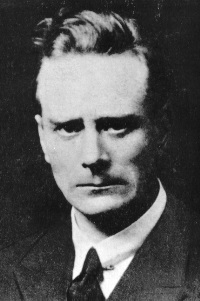
Rory O’Connor, Irish republican revolutionary, is executed by firing squad on December 8, 1922, in reprisal for the anti-treaty Irish Republican Army‘s (IRA) killing of Irish Free State member of parliament Sean Hales.

O’Connor is born in Kildare Street, Dublin on November 28, 1883. He is educated at St. Mary’s College, Dublin and then in Clongowes Wood College, a public school run by the Jesuit order and also attended by James Joyce, and his close friend Kevin O’Higgins, the man who later condemns him to death.

In 1910 O’Connor takes his Bachelor of Engineering and Bachelor of Arts degrees in University College Dublin, then known as the National University. He goes to work as a railway engineer in Ireland, then moves to Canada, where he is an engineer in the Canadian Pacific Railway and Canadian Northern Railway, being responsible for the construction of 1,500 miles of railroad.

After his return to Ireland, O’Connor becomes involved in Irish nationalist politics, joins the Ancient Order of Hibernians and is interned after the Easter Rising in 1916.

During the subsequent Irish War of Independence (1919-1921) O’Connor is made Director of Engineering of the Irish Republican Army (IRA) – a military organisation descended from the Irish Volunteers.

O’Connor does not accept the Anglo-Irish Treaty of 1921, which establishes the Irish Free State and abolishes the Irish Republic declared in 1916, which he and his comrades had sworn to uphold. On March 26, 1922, the anti-treaty officers of the IRA hold a convention in Dublin in which they reject the Treaty compromise and repudiate the authority of the Dáil, the elected Irish Parliament. Asked by a journalist if this means they are proposing a military dictatorship in Ireland, O’Connor replies, “you can take it that way if you want.”

On April 14, 1922, O’Connor, with 200 other hardline anti-treaty IRA men under his command, takes over the Four Courts building in the centre of Dublin in defiance of the new Irish government. They want to provoke the British troops, who are still in the country, into attacking them, which they believe will restart the war with Britain and re-unite the IRA against their common enemy. Michael Collins tries desperately to persuade O’Connor and his men to leave the building before fighting breaks out.

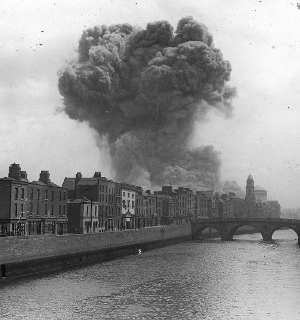
On June 28, 1922, after the Four Courts garrison has kidnapped JJ “Ginger” O’Connell, a general in the new Free State Army, Collins shells the Four Courts with borrowed British artillery. O’Connor surrenders after two days of fighting and is arrested and held in Mountjoy Prison. This incident sparks the Irish Civil War as fighting breaks out around the country between pro and anti-treaty factions.

On December 8, 1922, along with Liam Mellows, Richard Barrett and Joe McKelvey, three other republicans captured with the fall of the Four Courts, Rory O’Connor is executed by firing squad in reprisal for the anti-treaty IRA’s killing of Free State member of parliament Sean Hales. The execution order is given by Kevin O’Higgins, who less than a year earlier had appointed O’Connor to be best man at his wedding, symbolising the bitterness of the division that the Treaty has caused. O’Connor, one of 77 republicans executed by the Cumann na nGaedheal government of the Irish Free State, is seen as a martyr by the Republican movement in Ireland.

Leave a comment

Opening of the Custom House in Dublin

custom-house

The Custom House (Irish: Teach an Chustaim), a neoclassical 18th century building in Dublin which houses the Department of Housing, Planning and Local Government, opens on November 7, 1791. It is located on the north bank of the River Liffey, on Custom House Quay between Butt Bridge and Talbot Memorial Bridge.

A previous Custom House had been built in 1707 by engineer Thomas Burgh. However, by the late 18th century it is deemed unfit for purpose.

The building of a new Custom House for Dublin is the idea of John Beresford, who becomes first commissioner of revenue for Ireland in 1780. In 1781 he appoints James Gandon as architect, after Thomas Cooley, the original architect on the project, dies. This is Gandon’s first large scale commission. The new Custom House is unpopular with the Dublin Corporation and some city merchants who complain that it moves the axis of the city, would leave little room for shipping, and is being built on what at the time is a swamp. Purchase of land is delayed and proves exorbitant, and the laying of foundations is disrupted by the High Sheriff and members of the Dublin Corporation with a mob of several thousand. However, Beresford is determined to complete the project and ignores the protests.

Construction begins in 1781, and for his assistants Gandon chooses Irish artists such as Meath stone-cutter Henry Darley, mason John Semple, and carpenter Hugh Henry. Every available mason in Dublin is engaged in the work. When it is completed and opens for business on November 7, 1791, it has cost £200,000 to build – a considerable sum at the time. The four facades of the building are decorated with coats-of-arms and ornamental sculptures by Edward Smyth representing Ireland’s rivers. Another artist, Henry Banks, is responsible for the statue on the dome and other statues.

As the port of Dublin moves further downriver, the building’s original use for collecting custom duties becomes obsolete, and it is used as the headquarters of local government in Ireland. During the Irish War of Independence in 1921, the Irish Republican Army (IRA) burns down the Custom House in an attempt to disrupt British rule in Ireland. Gandon’s original interior is completely destroyed in the fire and the central dome collapses. A large quantity of irreplaceable historical records is also destroyed in the fire. Despite achieving its objectives, the attack on the Custom House is a setback for the IRA as a large number of Volunteers are captured either during the attack or when falling back.

After the Anglo-Irish Treaty, it is restored by the Irish Free State government. The results of this reconstruction can still be seen on the building’s exterior today. The dome is rebuilt using Irish Ardbraccan limestone which is noticeably darker than the Portland stone used in the original construction. This is done as an attempt to promote Irish resources.

Further restoration and cleaning of the stonework is done by an Office of Public Works team in the 1980s.


Leave a comment

Execution of James Joseph Daly

james-joseph-daly

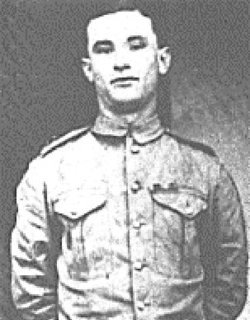
James Joseph Daly, a member of a mutiny of the Connaught Rangers in India in 1920, is executed by a British firing squad in India on November 2, 1920. He is the last British solider to be executed for mutiny.

On June 28, 1920, Joseph Hawes leads a company of the Connaught Rangers stationed at Jalandhar on the plains of the Punjab lay down their arms and refuse to perform their military duties as a protest against the activities of the Black and Tans, officially the Royal Irish Constabulary Special Reserve in Ireland. On the following day, the mutineers send two emissaries to a company of Connaught Rangers stationed at Salon, about twenty miles away in the foothills of the Himalayas. The soldiers there take up the protest as well and, like their counterparts at Jalandhar, fly the Irish tricolour, wear Sinn Féin rosettes on their British Army uniforms and sing rebel songs.

The protests are initially peaceful, but on the evening of July 1 around thirty members of the company at Salon, armed with bayonets, attempt to recapture their rifles from the company magazine. The soldiers on guard open fire, killing two men and wounding another. The incident effectively brings the mutiny to an end and the mutineers at both Jalandhar and Salon are placed under armed guard.

Sixty-one men are convicted by court-martial for their role in the mutiny. Fourteen are sentenced to death by firing squad, but the only soldier whose capital sentence is carried out is Private James Joseph Daly of Tyrellspass, County Westmeath. Daly is considered the leader of the mutiny at Salon and the man responsible for the failed attack on the magazine. On the morning of November 2, 1920, at the age of 22, he is executed in Dagshai prison in northern India.

The Connaught Rangers do not survive much longer than Daly. In 1922 the regiment is disbanded after the signing of the Anglo-Irish Treaty that creates the Irish Free State. In 1970, James Daly’s body is brought home and buried at Tyrellspass. Among those in the guard of honor at the reinterment ceremony are five of Daley’s fellow mutineers – Joseph Hawes, James Gorman, Eugene Egan, Patrick Hynes, and William Coote.


Leave a comment

Death of Dan Keating, Last Survivor of the Irish War of Independence

dan-keating

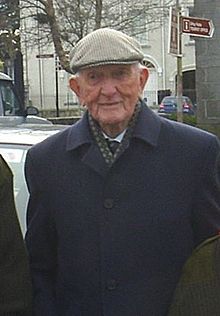
Daniel “Dan” Keating, lifelong Irish republican and patron of Republican Sinn Féin, dies in Knockbrack, County Kerry on October 2, 2007. At the time of his death, he is Ireland’s oldest man and the last surviving veteran of the Irish War of Independence.

Keating is born on January 2, 1902, in Castlemaine, County Kerry. He receives his education in local schools, including the Christian Brothers’ School in Tralee. Tralee is also the place where Keating does his apprenticeship. During this time, he becomes a skillful Gaelic football player in his native Kerry.

Keating joins Fianna Éireann in 1918. In 1920, during the Irish War of Independence, he joins the Boherbee B Company, 3rd Battalion, 1st Kerry Brigade, Irish Republican Army (IRA). He first brings a firearm of a Liverpool Irish soldier of the British Army into a public house in which he works. On April 21, 1921, Royal Irish Constabulary (RIC) Constable Denis O’Loughlin is shot dead in Knightly’s public house in Tralee. Keating, Jimmy O’Connor and Percy Hanafin are suspected of the killing and are forced to go on the run. On June 1, Keating is involved in an ambush between Castlemaine and Milltown which claims the lives of five RIC men. On July 10, a day before the truce between the IRA and British forces, his unit is involved in a gun battle with the British Army near Castleisland. This confrontation results in the deaths of four British soldiers and five IRA volunteers.

Keating opposes the 1921 Anglo-Irish Treaty and fights on the anti-treaty side in the Irish Civil War. He is involved in operations in counties Kerry, Limerick, and Tipperary, before his flying column is arrested by Free State Forces. Keating spends seven months in Portlaoise Prison and the Curragh prison before being released in March 1923.

Keating remains an IRA member for a long time after the Civil War. He is arrested several times during the 1930s on various charges. He is active in London during the 1939/1940 IRA bombing campaign.

In 1933, Keating is involved in an attempt to assassinate the leader of the Irish Blueshirts, Eoin O’Duffy, during a visit to County Kerry. The attack is to happen at Ballyseedy, where Free State forces had carried out the Ballyseedy Massacre during the Irish Civil War. However, the plot fails when the person travelling with O’Duffy refuses to divulge in which car O’Duffy would be riding.

Keating subsequently returns to Dublin and works as a barman in several public houses. He retires and returns to his native Kerry in 1978, living out the rest of his life with relatives in Knockbrack. Until his death he refuses to accept a state pension because he considers the 26-county Republic of Ireland an illegitimate state which usurps the 1916 Irish Republic.

“All the talk you hear these days is of peace. But there will never be peace until the people of the 32 counties elect one parliament without British interference.”

In 2002, Keating refuses the state’s standard €2,500 award to centenarians from President Mary McAleese. After former IRA volunteer George Harrison dies in November 2004, Keating becomes patron of Republican Sinn Féin until his own death. At the time of his death at the age of 105 on October 2, 2007, he is the oldest man in Ireland. He is buried in Kiltallagh Cemetery, Castlemaine.


Leave a comment

Four Courts Bombardment, Civil War Begins

four-courts-bombing

On June 28, 1922, the Provisional Government of the Irish Free State bombards the Four Courts in Dublin, which anti-Treaty forces had taken by force, and the Irish Civil War begins.

On April 14, 1922, a column of 200 men led by Rory O’Connor occupies the Four Courts, hoping to provoke an armed confrontation with British forces which are in the process of evacuating from Ireland following the signing of the Anglo-Irish Treaty the previous winter which had split the Irish Republican Army (IRA) into two opposing factions. The occupation is a direct challenge to the legitimacy of the Provisional government who seeks a smooth transition to a viable independent Irish state in the 26 counties of southern Ireland.

On June 22 Field Marshal Sir Henry Wilson is gunned down by two IRA assassins and on June 26, the Free State Army Deputy Chief of Staff General J.J. O’Connell is kidnapped by the Four Courts IRA garrison. Michael Collins has also shipped guns issued by the British to arm the new Irish Army to Northern IRA units to defend themselves from Ulster loyalists.

Collins, no longer able to resist British pressure, receives two 18-pounder artillery guns and a stock of 200 artillery shells from the store at Kilmainham. The guns are set up at Parliament Street and Winetavern Street and Bridgefoot Street and Usher’s Quay across the River Liffey from the facade of the heavily fortified Four Courts where the Anti-Treaty IRA has barricaded themselves. Free State troops establish a cordon around the building, closing streets with riflemen and machine gunners occupying windows and rooftops. Among the IRA leaders inside are Chief-of-Staff Joe McKelvey, Director of Engineering Rory O’Connor, Quarter Master General Liam Mellows, commander of the IRA’s 2nd Southern Division Ernie O’Malley, Commandant Paddy O’Brien, Commandant Tom Barry and many others. The IRA mostly drawn from 1st and 2nd Battalions of the 1st Dublin Brigade are armed with rifles, five Thompson submachine guns and two Lewis machine guns as well as an armoured car nicknamed “The Mutineer.”

The bombardment begins on June 28 as artillery guns supervised by Emmet Dalton begin blasting the Four Courts at point blank range every fifteen minutes from across the River Liffey. The complex of buildings also comes under a hail of rifle and machine gun fire. However, the strong stone walls of the 18th century Four Courts hold out. A number of the shells overshoot their target and land near General McCready’s British Army headquarters. IRA leader Ernie O’Malley later claims to have witnessed a gun crew fighting a duel with a sniper in the dome of the courts. The failures of the first day lead the impatient British to offer two more 18-pounders as well as heavy howitzers and aircraft in order to destroy the Four Courts once and for all.

On the 29th, Free State troops storm the eastern wing of the Four Courts, suffering three fatalities, 14 wounded and taking 33 prisoners. The republicans’ armored car, “The Mutineer,” is disabled and abandoned by its crew. Early the following day Paddy O’Brien is injured by shrapnel and Ernie O’Malley takes over military command in the Four Courts. By this time the shelling has caused the Four Courts to catch fire. In addition, orders arrive from Oscar Traynor, the anti-treaty IRA commander in Dublin, for the Four Courts garrison to surrender, as he is unable to reach their position to help them. At 3:30 PM on June 30, O’Malley surrenders the Four Courts to Brig. Gen. Paddy Daly of the Free State’s Dublin Guard unit.


Leave a comment

Death of Denis “Dinny” Lacey

dinny-lacey

Denis “Dinny” Lacey, Irish Republican Army (IRA) officer during the Irish War of Independence and anti-Treaty IRA officer during the Irish Civil War, dies at Glen of Aherlow, County Tipperary on February 18, 1923.

Lacey is born on May 31, 1889 in the village of Attybrick, near Annacarty, County Tipperary. He joins the Irish Volunteers in 1913 and is sworn into the secretive Irish Republican Brotherhood (IRB) in 1914. He is introduced to the IRB by Seán Treacy. During the War of Independence (1919–1921) he is selected to command an IRA flying column of the 3rd Tipperary Brigade, in September 1920. The flying column mounts two successful ambushes of British forces – killing six British soldiers at Thomastown near Golden, and four Royal Irish Constabulary (RIC) men at Lisnagaul in the Glen of Aherlow.

In April 1921, following another ambush of British troops near Clogheen, he captures RIC inspector Gilbert Potter, whom he later executes in reprisal of the British hanging of republican prisoners.

In December 1921, Lacey’s unit splits over the Anglo-Irish Treaty. He opposes the Treaty and most of his men follow suit. He takes over command of the 3rd Tipperary Brigade as Séamus Robinson is appointed to commanded the anti-Treaty IRA’s Second Southern Division. In the ensuing civil war (June 1922-May 1923), he organises guerrilla activity in the Tipperary area against Pro-Treaty Irish Free State forces.

Denis Lacey is killed in an action against Free State troops at Ballydavid, near Bansha in the Glen of Aherlow on February 18, 1923. He is 33 years old at the time of his death. Over 1,000 Free State troops drawn from Cahir, Cashel, Clonmel, and Tipperary, under the command of General John T. Prout, with the intention of breaking up Lacey’s guerrilla unit, converge on the Glen where he and four other men from his column are billeted. Lacey and one of his men are killed and others are captured. Two National Army soldiers are killed in the action.

A memorial in Annacarty commemorates Lacey’s war service and subsequent death in action.


1 Comment

Birth of Edward Martyn, Playwright & Activist

edward-martyn

Edward Martyn, Irish playwright and early republican political and cultural activist, is born in County Galway on January 30, 1859. He serves as the first president of Sinn Féin from 1905 to 1908.

Martyn is the elder son of John Martyn of Tullira Castle, Ardrahan and Annie Mary Josephine (née Smyth) of Masonbrook, Loughrea, both of County Galway. He is educated at Belvedere College, Dublin, and Wimbledon College, London, both Jesuit schools, after which he enters Christ Church, Oxford in 1877, but leaves without taking a degree in 1879. His only sibling, John, dies in 1883.

Martyn begins writing fiction and plays in the 1880s. While his own output is undistinguished, he acquires a well-earned reputation as a noted connoisseur of music, both European classical and Irish traditional. He is a fine musician in his own right, giving memorable performances for guests on an organ he has installed at Tullira. He uses his wealth to benefit Irish culture.

Martyn is reportedly pivotal in introducing William Butler Yeats and Lady Gregory to each other in 1896. The three found the Irish Literary Theatre, for whom Martyn writes his best and most popular plays, The Heather Field and A Tale of a Town. He covers the costs of the company’s first three seasons, which proves crucial to establishing the company and the future of the Abbey Theatre. He later parts ways with Yeats and Gregory, something he later regrets, but remains on warm terms with Lady Gregory until the end of his life.

Martyn is a cousin and friend to George Moore (1852–1933). The two make frequent trips all over Europe, where Moore influences Martyn’s views on modern art, which result in the latter purchasing several works by Edgar Degas, Claude Monet, Jean-Baptiste-Camille Corot and Kitagawa Utamaro, all later donated to the National Gallery of Ireland. Moore does not share Martyn’s fenian ideas nor espousal of violent means to achieve national sovereignty. Their different political opinions eventually drive their friendship apart.

Martyn is descended from Richard Óge Martyn, a leading Irish Confederate, and Oliver Óge Martyn, a Jacobite who fights in the Williamite War in Ireland. Yet by his lifetime, the family are unionists. Martyn’s outlook begins to change in the 1880s after studying Irish history, as well as living through the events of the Irish Land War. He comes out as an Irish republican when he famously refuses to allow “God Save The Queen” to be sung after a dinner party at Tullira. By this stage he is involved with the political work of Maude Gonne and Arthur Griffith and is a vocal opponent of the visit of Queen Victoria to Ireland in 1897. He also protests the visit by Edward VII in 1903, this time as chairman of the People’s Protection Committee. He is the first president of Sinn Féin from 1905 to 1908. In 1908 he resigns from the party and politics in general to concentrate on writing and his other activities.

He is on close personal terms with Thomas MacDonagh, Joseph Mary Plunkett and Patrick Pearse, and deeply mourns their executions in the aftermath of the Easter Rising. A parish hall and church that he founded at Labane, near Tullira, are burned by the Black and Tans. He supports the Anglo-Irish Treaty of 1921.

Martyn dies at Tullira on December 5, 1923, after years of ill health. Friends and family are shocked at a provision in his will that directs that his body be donated for the use of medical science and, after dissection, be buried in an unmarked pauper’s grave. The Palestrina Choir sings at his graveside. He bequeaths his papers to the Carmelites of Clarendon Street in Dublin, who subsequently misplace and lose them. Portraits of Martyn exist by, among others, John Butler Yeats and Sarah Purser. On his death the senior line of the Martyn family dies out. His property is inherited by his cousins, the Smyths of Masonbrook and Lord Hemphill. Tullira is sold by the latter forty years later changing ownership several times since.


Leave a comment

Constance Markievicz Elected to British House of Commons

constance-markievicz

Constance Markievicz, while detained in Holloway Prison for her part in conscription activities, becomes the first woman to be elected to the House of Commons of the United Kingdom on December 28, 1918.

Markievicz, an Irish nationalist, who is elected for the Dublin St. Patrick’s constituency, refuses to take her seat in the House of Commons along with 72 other Sinn Féin MPs. Instead, her party, which wins the majority of Irish seats in Westminster, establishes the Dáil, a breakaway Dublin assembly, and triggers the Irish War of Independence.

Markievicz, who inherits the title of “countess” from her noble Polish husband, and 45 other MPs are in jail when the first meeting takes place on January 21, 1919. They are described in Gaelic as being “imprisoned by the foreign enemy” when their names are read out during roll call at the Mansion House.

The 27 MPs who attend the Dáil’s first session ratify the Proclamation of the Irish Republic of Easter 1916, which had not been adopted by an elected body but merely by the Easter rebels claiming to act in the name of the Irish people. They also claim there is an “existing state of war, between Ireland and England” in a Message to the Free Nations of the World.

When Markievicz is released in April 1919, she becomes Minister for Labour. Having also been part of the suffragette movement, her deep political convictions contrast deeply with Nancy Astor, Viscountess Astor, the first woman to sit in the House of Commons. She believes Astor, a Tory who is elected in a 1919 Plymouth by-election after her husband is forced to give up the seat when he becomes a peer, is “out of touch.”

Her political views are also influenced by Irish poet William Butler Yeats, who is a regular visitor to the family home, Lissadell House in County Sligo. She becomes involved in the women’s suffrage movement after studying art in London, where she meets and marries Count Casimir Markievicz. In 1903, the couple, who has one son, settles in Dublin, where she becomes involved in nationalist politics. She joins both Sinn Féin and Inghinidhe na hÉireann.

Like Astor, Markievicz has an irrepressible personality and is in no mood to play coy and simply blend in. She comes to her first Sinn Féin meeting wearing a satin ball-gown and a diamond tiara after attending a function at Dublin Castle, the seat of British rule in Ireland.

Markievicz spends a year in the Dáil before walking out along with Éamon de Valera, the future dominant figure in Irish politics, after opposing the Anglo-Irish Treaty. The document, which grants southern Ireland independence but keeps the north as part of the UK, splits Sinn Féin and triggers the Irish War of Independence.

Following the conflict, which the Pro-Treaty forces win, Markievicz is elected again to the Dáil, but does not take her seat in protest. In 1927, she is elected for a third time as part of de Valera’s new party Fianna Fáil, which pledges to return to the Irish parliament. But before she can take her seat, she dies at age 59 on July 15, 1927, of complications related to appendicitis.


Leave a comment

Execution of Irish Republican Liam Mellows

liam-mellows

Liam Mellows, Irish republican and Sinn Féin politician, is executed by firing squad by Free State forces on December 8, 1922, in reprisal for the shooting of Teachta Dála (TD) Seán Hales.

Mellows is born at Hartshead Military Barracks, Ashton-Under-Lyne, Lancashire, England, to William Joseph Mellows, a British Army non-commissioned officer, and Sarah Jordan, of Inch, County Wexford. His family moves to 10 Annadale Avenue, Fairview, Dublin, in February 1895 when Sergeant Mellows is transferred there, however Liam remains in Wexford with his grandfather Patrick Jordan due to ill health. He attends the military school in Wellington Barracks in Cork and the Portobello garrison school in Dublin but ultimately refuses a military career much to his father’s disappointment, instead working as a clerk in several Dublin firms, including the Junior Army & Navy Stores on D’Olier Street.

A nationalist from an early age, Mellows approaches Thomas Clarke, who recruits him to Fianna Éireann, an organisation of young republicans.

Mellows is introduced to socialism when he meets James Connolly at Countess Markiewicz’s residence, recuperating after his hunger strike. He is active in the Irish Republican Brotherhood (IRB) and is a founder member of the Irish Volunteers, being brought onto its Organising Committee to strengthen the Fianna representation. He is arrested and jailed on several occasions under the Defence of the Realm Act. Eventually escaping from Reading Gaol, he returns to Ireland to command the “Western Division” of the Irish Republican Army (IRA) during the Easter Rising of 1916.

Mellows leads roughly 700 Volunteers in abortive attacks on Royal Irish Constabulary stations at Oranmore and Clarinbridge in County Galway and takes over the town of Athenry. However, his men are very badly armed and supplied and they disperse after a week, when British troops and the cruiser HMS Gloucester are sent west to attack them.

After this insurrection fails, Mellows escapes to the United States, where he is arrested and detained without trial in The Tombs in Lower Manhattan, New York, on a charge of attempting to aid the German side in World War I. After his release in 1918, he works with John Devoy and helps to organise Éamon de Valera’s fund-raising visit to America in 1919–1920.

Mellows returns to Ireland to become Irish Republican Army “Director of Supplies” during the Irish War of Independence, responsible for buying arms. At the 1918 general election of December, he is elected to the First Dáil as a Sinn Féin candidate for both East Galway and for North Meath. He considers the Anglo-Irish Treaty as signed to be a betrayal of the Irish Republic. A conference of 9 TDs is deputed to meet privately on January 5, 1922, to resolve the dispute and to achieve a unified front by compromise. The four other anti-Treaty TDs say there is agreement but Mellows does not and is seen thereafter by pro-Treaty TDs as one of their most implacable opponents. The following day the Dáil votes to approve the Treaty by a majority of 64 to 57.

Mellows is one of the more strident TDs on the approach to the Irish Civil War. In June 1922, he and fellow republicans Rory O’Connor, Joe McKelvey and Richard Barrett, among others, enters the Four Courts, which has been occupied by anti-Treaty forces since April. However, they are bombarded by pro-Treaty Free State forces and surrender after two days. Mellows has a chance to escape along with Ernie O’Malley but does not take it. Imprisoned in Mountjoy Gaol, Mellows, O’Connor, McKelvey and Barrett are executed by firing squad on December 8, 1922, in reprisal for the shooting of TD Seán Hales. Mellows is buried in Castletown cemetery, County Wexford, a few miles from Arklow. An annual commemoration ceremony is held at his grave site, in which a wreath is laid by a member of the Liam Mellows Commemoration committee.

Mellows is commemorated by statues in Oranmore and Eyre Square in Galway, in the official name of the Irish Defence Forces army barracks at Renmore and in the naming of Mellows Bridge in Dublin. Mellows Avenue in Arklow is named in his honour. He is also commemorated in the names of two hurling clubs, one in Galway and one in Wexford, and by Unidare RFC in Ballymun and their “Liam Mellows Perpetual Cup.”


Leave a comment

Execution of Robert Erskine Childers

During the Irish Civil War, British writer and Irish republican Robert Erskine Childers is executed by the Irish Free State government at the Beggars Bush Barracks in Dublin on November 24, 1922.

The London-born son of a British scholar and an Irish mother, Childers is a lifelong Protestant, itself an anomaly since Irish nationalism maps strongly to Catholicism. In his early years his loyalty was with the British Empire. In his twenties, Childers volunteers for the Second Boer War, and he later says the rank savagery and underlying injustice of England’s war “changed the whole current of my life and made me a Liberal and a Nationalist.”

Laying down the sword, Childers takes up the pen and writes several books of military history. He also writes a novel, The Riddle of the Sands, that has a claim of being the first spy novel. The Riddle of the Sands has never gone out of print since it was published in 1903.

Both in fiction and nonfiction, Childers’ warnings against the German challenge to British hegemony are prophetic, but he is himself becoming a man divided. In 1914 he runs German guns to Irish nationalists aboard his yacht Asgard and then signs up for the royal navy when World War I erupts. The British crackdown on the Easter Rising during the war completes his radicalization. He moves to Dublin and turns his eloquence against the British.

Childers is swept into the tragedy of the Irish War of Independence and the Irish Civil War that follows. Although both he and Michael Collins are in the delegation that produces the contentious Anglo-Irish Treaty, Childers breaks with Collins over it and backs the Irish Republican Army (IRA) nationalists who fight the Irish Free State.

After Collins’s assassination, emergency laws promulgate the death sentence for anyone caught armed without authorization. Childers is a writer, not a partisan, but he is arrested in early November with a small sidearm, a gift Collins had given him back when they were on the same side. It is a time of bloody justice, and they throw the book at him.

Childers knows as well as Collins had that the internecine conflict would have to end. He faces his execution with awe-inspiring forgiveness. Summoning his 16-year-old son to prison the night before his execution, Childers extracts a promise from the boy that he will find everyone who signed his death warrant and shake their hands. This son, young Erskine Hamilton Childers, eventually becomes President of Ireland.

Childers himself likewise shakes the hands of his own firing squad, one by one. His last words, reported in a number of slightly different variations, are lightheartedly addressed to them: “Take a step or two forwards, lads. It will be easier that way.”