seamus dubhghaill

Promoting Irish Culture and History from Little Rock, Arkansas, USA


Leave a comment

Birth of Author & Journalist Mary Kenny

mary-kenny

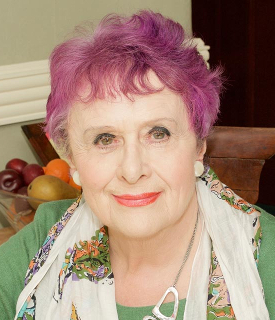
Mary Kenny, Irish author, broadcaster, playwright and journalist, is born in Dublin on April 4, 1944. She is a frequent columnist for the Irish Independent and is a founding member of the Irish Women’s Liberation Movement (IWLM). She has modified the radical ideas of her past but not rejected feminist principles.

Kenny grows up in Sandymount and is expelled from convent school at age 16. She begins working at the London Evening Standard in 1966 on the Londoner’s Diary, later as a general feature writer, and is woman’s editor of The Irish Press in the early 1970s.

Kenny is one of the founding members of the Irish Women’s Liberation Movement. Although the group has no formal structure of officials, she is often seen as the “ringleader” of the group. In March 1971, as part of an action by the IWLM, she walks out of Haddington Road church after the Archbishop of Dublin‘s pastoral is read out from the pulpit, confirming that “any contraceptive act is always wrong,” saying “this is Church dictatorship.” In a follow-up letter to The Irish Times she explains her actions by saying Ian Paisley was right, “Home Rule is Rome Rule.”

In 1971, Kenny travels with Nell McCafferty, June Levine and other Irish feminists on the so-called “Contraceptive Train” from Dublin to Belfast to buy condoms, then illegal within the Republic of Ireland. Later that year she returns to London as Features Editor of the Evening Standard.

In 1973, Kenny is allegedly “disturbed in the arms of a former cabinet minister of President Obote of Uganda during a party,” which leads poet James Fenton to coin the euphemism “Ugandan discussions” to mean sexual intercourse. The phrase is first used by the magazine Private Eye on March 9, 1973, but has been widely used since then and is included by the BBC in a list of “The 10 most scandalous euphemisms” in 2013.

Kenny has written for many British and Irish broadsheet newspapers, including the Irish Independent, The Times, The Guardian, The Daily Telegraph and The Spectator and has authored books on William Joyce and Catholicism in Ireland. She also writes for the weekly The Irish Catholic. She is known in the UK as a Roman Catholic journalist. Crown and Shamrock: Love and Hate between Ireland and the British Monarchy (2009), is described by R.F. Foster as “characteristically breezy, racy and insightful.” She is author of the play Allegiance, in which Mel Smith plays Winston Churchill and Michael Fassbender plays Michael Collins, at the Edinburgh Festival in 2006.

Kenny marries journalist and writer Richard West in 1974, and the couple raises two children, Patrick West and Ed West, both journalists.

2 Comments

The Arnon Street Massacre

arnon-street-massacre

The Arnon Street Massacre takes place on April 1, 1922, in Belfast, Northern Ireland. Six Catholic civilians, three in Arnon Street, are shot dead. It is believed that members of either the Ulster Special Constabulary (USC) or the Royal Irish Constabulary (RIC) are responsible, acting in retaliation for the killing of an RIC officer by the Irish Republican Army (IRA).

Although the Irish War of Independence officially ends in July 1921, the Irish Republican Army’s conflict with British and unionist forces continues in Northern Ireland and escalates in the first half of 1922. The Ulster IRA, with the tacit but covert assistance of Michael Collins, head of the new Irish Free State, continues to wage a guerrilla war in Northern Ireland. According to historian Alan Parkinson, despite “the IRA having some short-term successes … the main effect of this intensive campaign was to unleash a terrible backlash on the Catholic population in Belfast.” Only a week before the Arnon Street incident, policemen – either Royal Irish Constabulary (RIC) or Ulster Special Constabulary (USC) – kill six Catholic civilians in the McMahon murders.

On the evening of April 1, RIC constable George Turner is patrolling the Old Lodge Road when he is killed by a sniper.

About ten police officers in Brown Square Barracks, upon hearing of Turner’s murder, take a Lancia armoured car and begin touring nationalist areas. When they dismount their vehicle, witnesses hear them shouting “Cut the guts out of them for the murder of Turner.” Their first victim is John McRory who lives on Stanhope Street, just across the road from where Constable Turner had been shot. The police break into his house and shoot him dead in his kitchen. In Park Street, Bernard McKenna, father of seven, is killed while lying in bed. Finally, the police arrived at Arnon Street.

William Spallen, who lives at 16 Arnon Street, has just returned from the funeral of his wife who had also been killed in the conflict. His 12-year-old grandson, Gerald Tumelty, witnesses his death. “Two men came into the room, one was in the uniform of a policeman. They asked my grandfather his name and he said William Spallen. The man in plain clothes fired three shots at him. When I cried out, he said, ‘lie down or I will put a bullet into you.'” Tumelty says the killers then take £20 that his grandfather had to pay for his wife’s funeral.

The attackers then use a sledgehammer to break into the house next door, where they find Joseph Walsh in bed with his seven-year-old son Michael and his two-year-old daughter Bridget. Joseph Walsh is bludgeoned to death with the sledgehammer while Michael Walsh is shot and dies from his wounds the next day. Another son, Frank, is shot in the thigh but survives. Later that evening another Catholic, John Mallon, is shot dead in Skegoneill Avenue.

The unionist press, the Belfast News Letter and Belfast Telegraph, condemn the killings but do not identify the killers as police. The Dublin-based Irish Independent writes that “never even in the worst state of terror in the west and south has the state of affairs which now prevails in the Northern capital been experienced.” Michael Collins sends an angry telegram to Northern Ireland Prime Minister James Craig, demanding a joint inquiry into the killings. No such inquiry is set up.

As with the McMahon killings one week earlier, it is strongly suspected that an RIC Detective Inspector, Nixon, operating out of the Brown Street Police barracks, had organised the attack. Nixon and several other policemen fail to turn up at roll call at the barracks immediately after the killings.


Leave a comment

Birth of Nell McCafferty, Journalist & Feminist

nell-mccafferty

Nell McCafferty, Irish journalist, playwright, civil rights campaigner and feminist, is born in Derry, County Londonderry, Northern Ireland on March 28, 1944. In her journalistic work she has written for The Irish Press, The Irish Times, Sunday Tribune, Hot Press and The Village Voice.

McCafferty is born to Hugh and Lily McCafferty and spends her early years in the Bogside area of Derry. She is admitted to Queen’s University Belfast, where she takes a degree in Arts. After a brief spell as a substitute English teacher in Northern Ireland and a stint on an Israeli kibbutz, she takes up a post with The Irish Times.

McCafferty is a founding member of the Irish Women’s Liberation Movement. Her journalistic writing on women and women’s rights reflects her beliefs on the status of women in Irish society. In 1971, she travels to Belfast with other members of the Irish Women’s Liberation Movement in order to protest the prohibition of the importation and sale of contraceptives in the Republic of Ireland.

After the disintegration of the Irish Women’s Liberation Movement, McCafferty remains active in other women’s rights groups, as well as focusing her journalism on women’s rights. Her most notable work is her coverage of the Kerry Babies case, which is recorded in her book, A Woman to Blame. She contributes the piece “Coping with the womb and the border” to the 1984 anthology Sisterhood Is Global: The International Women’s Movement Anthology, edited by Robin Morgan.

In 1990, McCafferty wins a Jacob’s Award for her reports on the 1990 FIFA World Cup for RTÉ Radio 1‘s The Pat Kenny Show. She publishes her autobiography, Nell, in 2004. In it, she explores her upbringing in Derry, her relationship with her parents, her fears about being gay, the joy of finding a domestic haven with the love of her life, the Irish writer Nuala O’Faolain, and the pain of losing it.

In 2009, after the publication of the Murphy Report into the abuse of children in the Dublin archdiocese, McCafferty confronts Archbishop Diarmuid Martin asking him why the Catholic Church has not, as a “gesture of redemption,” relinquished titles such as “Your Eminence” and “Your Grace.”

McCafferty causes a controversy in 2010 with a declaration in a live Newstalk radio interview that the then Minister for Health, Mary Harney, is an alcoholic. This allegation leads to a court case in which Harney is awarded €450,000 the following year. McCafferty has very rarely been featured on live radio or television in Ireland as a commentator since the incident, despite being ever present in those media from 1990 forward. However, she has been featured on a number of recorded programs.

The Irish Times writes that “Nell’s distinctive voice, both written and spoken, has a powerful and provocative place in Irish society.”

McCafferty receives an honorary Doctor of Literature from University College Cork on November 2, 2016, for “her unparalleled contribution to Irish public life over many decades and her powerful voice in movements that have had a transformative impact in Irish society, including the feminist movement, campaigns for civil rights and for the marginalised and victims of injustice.”

McCafferty lives in Ranelagh, an area of Dublin.


Leave a comment

The Selton Hill Ambush

selton-hill-ambush-memorial

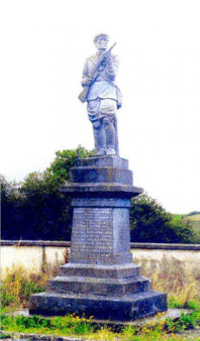
The Selton Hill Ambush takes place on March 11, 1921, during the Irish War of Independence. An Irish Republican Army (IRA) flying column is ambushed by members of the Royal Irish Constabulary (RIC) Auxiliary Division at Selton Hill, County Leitrim. Six IRA officers of the Leitrim Brigade are killed.

Seán Connolly is an IRA activist from County Longford, but he is also used by IRA GHQ to organise the surrounding areas of County Roscommon and County Leitrim. When Michael Collins orders Connolly into the county, he warns that it is “the most treacherous county in Ireland.” As Connolly is running a training camp at Selton Hill in early 1921, his position is given to the RIC. The RIC District Inspector, Thomas Gore-Hickman, has been alerted to Connolly’s position by a local doctor who had served in the British Army. The doctor had reportedly been told of the training camp by a local member of the Orange Order.

The events at Selton Hill take place one week after the Sheemore ambush, in which British troops from the Bedfordshire and Hertfordshire Regiment, based in Boyle suffer several casualties and at least one fatality. On March 11, at Selton Hill, a large force of RIC and Auxiliaires, based in Mohill and troops from the Bedfordshire and Hertfordshire Regiment surround and then attack the IRA camp. Six IRA volunteers are killed. The RIC suffers no losses. The IRA dead are Sean Connolly, Seamus Wrynne, Joseph O’Beirne, John Reilly, Joseph Reilly, and Capt. M.E. Baxter.

Ernie O’Malley later claims the volunteers’ bodies are “taken to Mohill by soldiers who shouted, “fresh meat!” as they were driving through the town.” He is also quoted as saying, “Men from the Bedfordshire Regiment were seen by a badly wounded IRA officer, Bernie Sweeney who survived, to use rifle butts on the skulls of two wounded men.” He also states that the location of the column was given to the local District Inspector of the RIC by a doctor who had been in the British Army, who received the information by a local Orangeman. The IRA officer who survives is Bernie Sweeney, from Ballinamore, who survives by hiding in a drain, where the cold water prevents him from bleeding to death. He is rescued and hidden from the Black and Tans and Auxiliaries by locals.

The IRA learn their position had been given away by the doctor and the Orangeman. The latter is later killed by the IRA. The doctor escapes to England and later dies in an accident.

The border country of the north midlands often proves to be a treacherous place for IRA training camps. On May 8, 1921, a camp of Belfast IRA volunteers based in the Lappanduff hills in neighbouring County Cavan, is also surprised. One volunteer is killed, thirteen captured, and arms and ammunition are seized by the British forces.

(Pictured: Selton Hill Ambush Memorial, south of the village of Fenagh, County Leitrim)


Leave a comment

Birth of Footballer Jimmy Keaveney

jimmy-keavney

James Keaveney (Séamus Ó Géibheannaigh), retired Gaelic footballer, is born in Whitehall, Dublin on February 12, 1945. His league and championship career with the Dublin GAA senior team spans sixteen seasons from 1964 to 1980. He is widely regarded as one of Dublin’s greatest-ever players.

Keaveney’s first sporting interest is in soccer, however, he is later introduced to Gaelic games by his Belfast-born father. He is educated at St. Joseph’s Secondary School in Fairview, Dublin where he favours hurling over Gaelic football.

Keaveney first plays competitive Gaelic games at underage levels with the St. Vincent’s GAA club before later joining the club’s senior team. Between 1964 and 1981 he wins ten county football championship medals, however, the highlight of his club career is the winning of an All-Ireland medal in 1976. He also wins two Leinster Senior Club Football Championship medals and three Dublin Senior Hurling Championship medals.

Keaveney makes his debut on the inter-county scene when he is selected for the Dublin minor and under-21 teams, however, he ends his underage career without success. He makes his senior debut during the 1964-1965 league. Over the course of the following sixteen seasons, he wins three All-Ireland medals, beginning with a lone triumph in 1974, followed by back-to-back championships in 1976 and 1977. He also wins seven Leinster medals, two National Football League medals and is named Footballer of the Year in 1976 and 1977. He plays his last game for Dublin in February 1980.


Leave a comment

Opening of the Belfast Academical Institution

belfast-academical-institution

The Belfast Academical Institution, later the Royal Belfast Academical Institution, a grammar school in Belfast, is opened on February 1, 1814. Today, locally referred to as Inst, the school educates boys from ages 11 to 18. It is one of the eight Northern Irish schools represented on the Headmasters’ and Headmistresses’ Conference. The school occupies an 18-acre site in the centre of the city on which its first buildings were erected.

The first demands for the school which would become “Inst” comes from a group of Belfast merchants and professional gentlemen. They insist that the existing Belfast Academy under William Bruce does not offer a “complete, uniform, and extensive system of education.” They hope that a new school will give more access to the “higher” branches of learning as well as to those which would fit youths for a practical commercial career. The foundation stone of Inst is laid, in pouring rain, on July 3, 1810, by George Augustus Chichester, 2nd Marquess of Donegall. Donegall owns much of the land in the Belfast area and grants the school a lease for the grounds at an annual rent of £22–5s–1d. The eminent English architect John Soane, who designed the new Bank of England in 1788, offers to draw up plans in 1809.

Construction begins in 1810. Money is collected to pay for the buildings by encouraging rich merchants and businessmen to subscribe one hundred guineas each for the privilege of being able to nominate one boy to receive free education at Inst. The roof of the main building is completed during the winter of 1811. The Institution is formally opened at 1:00 PM on February 1, 1814. William Drennan announces that the aim is to “diffuse useful knowledge, particularly among the middling orders of society, as a necessity, not a luxury of life.” He also refers to the particularly noble and rural setting of the school – in front a fair and flourishing town, and backed by a sublime and thought-inspiring mountain. Until the middle of the 19th century, the RBAI is both a school and a university, a dual function which the Belfast Academy never had.


Leave a comment

First Meeting of Dáil Éireann

first-dail

The first meeting of Dáil Éireann, chaired by Sean T. O’Kelly, occurs on January 21, 1919 in the Round Room of the Mansion House, the residence of the Lord Mayor of Dublin.

The First Dáil is convened from 1919–1921. It is the first meeting of the unicameral parliament of the revolutionary Irish Republic. In 1919 candidates who have been elected in the Westminster elections of 1918 refuse to recognise the Parliament of the United Kingdom and instead establish an independent legislature in Dublin called “Dáil Éireann.” The establishment of the First Dáil occurs on the same day as the outbreak of the Irish War of Independence.

Being the first and highly symbolic meeting, the proceedings of the Dáil are conducted for the only time entirely in the Irish language, except for previously drafted declarations that are repeated in other languages as well. The Dáil elects Cathal Brugha as its Ceann Comhairle (chairman). A number of short documents were then adopted. These are the:

The Declaration of Independence asserts that the Dáil is the parliament of a sovereign state called the “Irish Republic,” and so the Dáil establishes a cabinet called the Ministry or “Aireacht,” and an elected prime minister known both as the “Príomh Aire” and the “President of Dáil Éireann.” The first, temporary president is Cathal Brugha. He is succeeded in April by Éamon de Valera.

The membership of the Dáil was drawn from the Irish MPs elected to sit at the Westminster parliament, 105 in total, of which 27 are listed as being present for the first meeting. Of the remainder 34 are described as being “imprisoned by the foreigners” and three as being “deported by the foreigners.” Five Sinn Féin members are described as being “as láthair” (absent). The remaining 32 members who are invited but not present are six members of the Irish Parliamentary Party and 26 unionists, mainly from the northern six counties that would later form Northern Ireland. These include all MPs elected to sit for Belfast, Counties Down, Antrim, Armagh, and Londonderry, two out of three MPs for County Tyrone and one out of two MPs for County Fermanagh. For the portion of the country that would later become the Irish Free State, MPs do not sit for Waterford city or the Dublin University constituency, although members do attend for the National University of Ireland constituency.

(Pictured: Members of the First Dáil, April 10, 1919. First row, left to right: Laurence Ginnell, Michael Collins, Cathal Brugha, Arthur Griffith, Éamon de Valera, George Noble Plunkett, Eoin MacNeill, W. T. Cosgrave and Ernest Blythe.)


Leave a comment

Publication of the First Issue of the “Northern Star”

northern-star

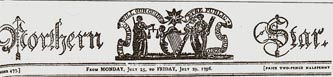
The first issue of the Northern Star, the newspaper of the Society of United Irishmen, is published in Belfast on January 4, 1792. It is published from 1792 until its suppression by the British army in May 1797.

The publication of an Irish newspaper that reflects and disseminates liberal views is an early goal of Irish republicans in the late 18th century. By the founding of the Society of United Irishmen in October 1791, the project is well underway, and the first edition of the Northern Star appears in Belfast in January 1792. Like the United Irishmen, the first financial backers of the Northern Star are Presbyterian and one of the United Irish leadership, Samuel Neilson, is made editor.

Political content dominates the Northern Star but its publication of local news, as opposed to the focus on British and international affairs of other Irish newspapers of the time, brings it wide popularity. Leading members of the United Irishmen are regular contributors and mixed direct political analyses with cutting political satire. William Orr is among those who contributed to its content and his letters lead to his eventual arrest and execution under the Insurrection Act of 1797. The newspaper also enjoys an excellent voluntary distribution network as its penetration follows rapidly wherever the United Irishmen set up new branches. It was estimated that for each copy of the Northern Star sold there are at least five readers, as the reading aloud of articles from the paper is a regular feature of United Irish meetings.

The newspaper is initially protected from the authorities due to the support of well-connected liberals but following the outbreak of war between Great Britain and Revolutionary France in 1793 and the subsequent banning of the United Irishmen as a seditious body it begins to draw increasing attention. The massive popularity of the newspaper protects it from serious harassment until January 1797 when the establishment goes into a state of panic following the French invasion scare at Bantry Bay. The paper is alleged to be behind the Dublin-based Union Star, a militant, low-circulation newssheet, often posted in public places, which specializes in naming informers, “notorious Orangemen,” and other enemies of the United Irishmen, being regarded by Dublin Castle as a republican hitlist.

The extensive distribution network and potency of the Northern Star in spreading United Irish opinion alarms the authorities and possession of a copy comes to be regarded as an admission of seditious intent. The end finally comes with the uncovering of supposed United Irish infiltration of the Monaghan militia in Belfast, which results in the execution of four soldiers. General Gerard Lake, 1st Viscount Lake, already engaged in a brutal counter-insurgency campaign, is quick to put much of the blame on the Northern Star and requests permission to suppress the paper.

As it turns out, official suppression is not necessary as on May 19, 1797, three days after the execution of their ex-comrades, a mob of Monaghan militiamen anxious to prove their loyalty attack the offices of the Northern Star and destroy not only the printing presses but the building itself. The attack results in the demise of the Northern Star to the undoubted satisfaction of the authorities as no action is taken against those involved in the destruction. The Chartist movement later pays tribute to the Northern Star by using the same name for their newspaper that is founded in 1837 by Feargus O’Connor.


2 Comments

The Balmoral Furniture Company Bombing

balmoral-furniture-showroom-bombing

The Balmoral Furniture Company bombing, a paramilitary attack, takes place on December 11, 1971, in Belfast, Northern Ireland. The bomb explodes without warning outside a furniture showroom on the Shankill Road in a predominantly unionist area, killing four civilians, two of them babies.

At 12:25 PM on December 11, 1971, when the Shankill Road is packed with Saturday shoppers, a green car pulls up outside the Balmoral Furniture Company at the corner of Carlow Street and Shankill Road. The shop is locally known as “Moffat’s” although Balmoral Furniture Company is its official name. One of the occupants gets out of the car and leaves a box containing a bomb on the step outside the front door. The person gets back into the car, and it speeds away. The bomb explodes moments later, bringing down most of the building on top of those inside the shop and on passersby outside.

Four people are killed as a result of the massive blast, including two babies, Tracey Munn (age 2 years) and Colin Nichol (age 17 months), who both die instantly when part of the wall crashes down upon the pram they are sharing. Two employees working inside the shop are also killed, Hugh Bruce (age 70 years) and Harold King (age 29 years). Unlike the other three victims, who are Protestant, King is a Catholic. Bruce, a former soldier and a Corps of Commissionaires member, is the shop’s doorman and is nearest to the bomb when it explodes. Nineteen people are injured in the bombing, including Tracey’s mother. The building, which was built in the Victorian era, has load-bearing walls supporting upper floors on joists. It is unable to withstand the blast and collapses, adding to the devastation and injury count.

The bombing causes bedlam in the crowded street. Hundreds of people rush to the scene where they form human chains to help the British Army and Royal Ulster Constabulary (RUC) free those trapped beneath the rubble by digging with their bare hands. Peter Taylor describes the scene as “reminiscent of the London Blitz” in World War II.

It is widely believed that the bombing is carried out by members of the Provisional Irish Republican Army (IRA) in retaliation for the McGurk’s bar bombing one week earlier, which killed 15 Catholic civilians. The Ulster Volunteer Force (UVF) had carried out the McGurk’s bombing.

The Balmoral Furniture Company bombing is one of the catalysts that spark the series of tit-for-tat bombings and shootings by loyalists, republicans and the security forces that make the 1970s the bloodiest decade in the 30-year history of The Troubles.

(Pictured: Fireman is shown removing the body of one of the victims of the bombing at the Balmoral Furniture Showroom, December 11, 1971)


Leave a comment

Birth of Composer Sir Herbert Hamilton Harty

herbert-hamilton-harty

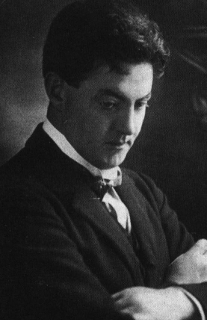
Sir Herbert Hamilton Harty, composer, conductor, pianist and organist, is born on December 4, 1879, in Hillsborough, County Down.

Harty’s father teaches him the viola, the piano and counterpoint, and, at the age of twelve, he follows his father’s profession and is appointed organist of Magheracoll Church, County Antrim.

Harty takes further posts in his teenage years as a church organist in Belfast and Bray. While in the latter, he comes under the influence of Michele Esposito, professor of piano at the Royal Irish Academy of Music, who encourages him to pursue a career as a piano accompanist. As Bray is only twelve miles from Dublin, Harty is able go into the city to hear an orchestra for the first time in his life.

After his early career as a church organist in his native Ireland, Harty moves to London at about age 20, soon becoming a well-known piano accompanist. The Musical Times calls him “the prince of accompanists.” As a composer he writes throughout his career, many of his works being well received, though few are regularly performed in the 21st century.

In his career as a conductor, which begins in 1904, Harty is particularly noted as an interpreter of the music of Hector Berlioz. From 1920 to 1933 he is the chief conductor of The Hallé symphony orchestra in Manchester, which he returns to the high standards and critical acclaim that it had enjoyed under its founder, Charles Hallé. His last permanent post is with the London Symphony Orchestra, but it lasts only two years, from 1932 to 1934, as Harty does not prove to be a box-office draw. According to a historian of the orchestra, Richard Morrison, Harty is “brutally and hurtfully” dropped in 1934.

During his conducting career, Harty makes some recordings with his orchestras. Shortly after his dismissal by the London Symphony Orchestra, Harty begins to suffer the symptoms of a brain tumor. After surgery which includes the removal of his right eye, he resumes his career until 1940, but the tumour returns to cause his death at the age of 61 in Hove on February 19, 1941. He is cremated, and his ashes are interred in the grounds of Hillsborough parish church, near the front door. There is a separate memorial in the church.