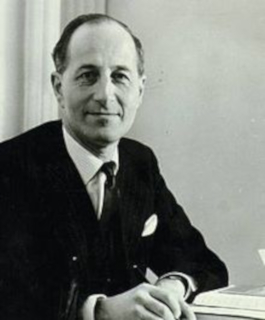
Andrews begins a successful medical practice in his native Belfast in 1835, also giving instruction in chemistry at the Royal Belfast Academical Institution. In 1842, he marries Jane Hardie Walker. They have six children, including the geologist, Mary Andrews.
Andrews first becomes known as a scientific investigator with his work on the heat developed in chemical actions, for which the Royal Society awards him a Royal Medal in 1844. Another important investigation, undertaken in collaboration with Peter Guthrie Tait, is devoted to ozone. In 1845 he is appointed vice-president and professor of chemistry of the newly established Queen’s University Belfast. He holds these two offices until his retirement in 1879 at the age of 66.
His reputation mainly rests on his work with liquefaction of gases. In the 1860s he carries out a very complete inquiry into the gas laws — expressing the relations of pressure, temperature, and volume in carbon dioxide. In particular, he establishes the concepts of critical temperature and critical pressure, showing that a substance passes from vapor to liquid state without any breach of continuity.
In Andrews’ experiments on phase transitions, he shows that carbon dioxide may be carried from any of the states we usually call liquid to any of those we usually call gas, without losing homogeneity. The mathematical physicist Josiah Willard Gibbs cites these results in support of the Gibbs free energy equation. They also set off a race among researchers to liquify various other gases. In 1877-78 Louis Paul Cailletet is the first to liquefy oxygen and nitrogen.
Thomas Andrews dies in Belfast on November 26, 1885, and is buried in the city’s Borough Cemetery.
Rose Maud Young (Irish: Róis Ní Ógáin), writer, scholar and collector of Irish songs, is born in Galgorm Castle, Ballymena, County Antrim, in what is now Northern Ireland, on October 30, 1866. She is best known for her work to preserve the Irish language. Her books make lyrics from the Gaelic tradition accessible to the general public and are used in the Irish classroom for several decades.
Young is the daughter and seventh of twelve children born to Grace Charlotte Savage and John Young, who is a prosperous unionist and high sheriff. Despite his position he is a believer in tenant rights. Her younger sister is the writer Ella Young and her brother Willie Young is secretary of the Ulster Unionist League.
Young is educated by governesses until 1884 before completing training as a teacher through the University of Cambridge. She also attends Gaelic League classes in 1903 in London while visiting her sister who is living in the city at the time. After visiting the Bodleian Library she becomes committed to the study of the Irish language.
In the early 1900s Young returns to Ireland and continues her study of the Irish language in Belfast at Seán Ó Catháin‘s Irish College and in Donegal at Coláiste Uladh in Gort an Choirce. She also stays in Dublin and becomes friends with members of the Gaelic League and meets Margaret Dobbs. She works with Dobbs on the Feis na nGleann (The Glens Festival), a gathering dedicated to the Irish language.
Young is not involved in nationalism though she is strongly supportive of creating and maintaining a sense of “Irishness” through language and culture. She is also a friend and patron of Roger Casement. She also works with Ellen O’Brien and contributes to O’Brien’s book, The Gaelic Church. She keeps meticulous diaries and becomes interested in Rathlin Island and the Gaelic spoken there.
Rose Young dies on May 28, 1947 in Cushendun, County Antrim, where she resides with Dobbs. She is buried in the Presbyterian churchyard at Ahoghill, County Antrim.
From November 1930 to 1957, Hewitt holds positions in the Belfast Museum & Art Gallery. His radical socialist ideals prove unacceptable to the Belfast Unionist establishment and he is passed over for promotion in 1953. Instead in 1957 he moves to Coventry, a city still rebuilding following its devastation during World War II. He is appointed Director of the Herbert Art Gallery & Museum where he works until retirement in 1972.
Hewitt is appointed the first writer-in-residence at Queen’s University Belfast in 1976. His collections includes The Day of the Corncrake (1969) and Out of My Time: Poems 1969 to 1974 (1974). He is also made a Freeman of the City of Belfast in 1983, and is awarded honorary doctorates at the University of Ulster and Queen’s University Belfast.
Hewitt has an active political life, describing himself as “a man of the left,” and is involved in the British Labour Party, the Fabian Society and the Belfast Peace League. He is attracted to the Ulster dissenting tradition and is drawn to a concept of regional identity within the island of Ireland, describing his identity as Ulster, Irish, British and European. He officially opens the Belfast Unemployed Resource Centre (BURC) Offices on May Day 1985.
John Hewitt dies in Belfast on June 22, 1987. His life and work are celebrated in two prominent ways – the annual John Hewitt International Summer School and, less conventionally, the John Hewitt Bar and Restaurant, a Belfast pub is named after him. The bar is named after him as he officially opens the Belfast Unemployed Resource Centre, which owns the establishment. It is a popular meeting place for local writers, musicians, journalists, students and artists. Both the Belfast Festival at Queen’s and the Belfast Film Festival use the venue to stage events.
In 1790 Russell resumes his military career as a junior officer in the 64th Regiment of Foot and is posted to Belfast. The French Revolution in 1789 is warmly greeted in Belfast as are its ideals of liberty, equality, and fraternity. With his keen mind and radical ideas, Russell soon becomes a confidante of Henry Joy McCracken, James Hope, Samuel Neilson and others who are to play a prominent role in the United Irish movement. With them he develops ideas of parliamentary reform, to include the bulk of the people, and Catholic emancipation.
Russell leaves the army in July 1791 and attends a convention of the Whig Club in Belfast to mark Bastille Day. The convention is addressed by William Drennan, who proposes a brotherhood promoting separation from England and co-operation with the increasingly radical Cisalpine Club in the pursuit of political and social reforms. However, Russell notes the lack of trust between Dissenters and Catholics which is due to fears that Catholic radicalism can be bought off by religious concessions. Informing Wolfe Tone of his observations, within weeks leads to Wolfe Tone’s publication of Argument on Behalf of the Catholics of Ireland to address these suspicions. The pamphlet is extremely well received and provides the impetus for the founding of the Society of United Irishmen in Belfast on October 18, 1791.
Pressure from Dublin Castle later forces the United Irish movement to become a clandestine organisation as the would-be revolutionaries seek to continue their slow progress towards challenging the occupying British.
In 1795 Russell, Andrew Henderson, Henry Joy McCracken and Samuel Neilson lead a band of United Irishmen to the top of Cavehill overlooking the town of Belfast where they swear an oath “never to desist in our effort until we have subverted the authority of England over our country and asserted her independence” prior to Wolfe Tone’s exile to the United States. The event is noted in Dublin Castle although there is no immediate move to disband or arrest the members of the United Irishmen.
In 1796, Russell publishes an ambitious and far-sighted document, Letter to the People of Ireland, which lays out his vision of social and economic reform for the Irish nation. In addition to his stance on religious freedom, he makes clear his anti-slavery views in the Northern Star on March 17, 1792.
Russell takes an active part in organising the Society of United Irishmen becoming the United Irish commander in County Down. However, the outbreak of the French Revolution in 1793 leads to an ongoing campaign against the United Irishmen and in 1796 he is arrested and imprisoned as a “state prisoner” in Dublin. In March 1799 he and the other state prisoners are transferred to Fort George in Scotland, an extensive fortress some miles north of Inverness built in the wake of the failed Jacobite rebellion of 1745-46. He is released on condition of exile to Hamburg in June 1802 following a brief cessation in the war with France.
Not content to sit things out in Hamburg, Russell soon makes his way to Paris where he meets Robert Emmet who is planning another insurrection pending the French renewal of the war against England. He agrees to return to Ireland in March 1803 to organise the North in conjunction with James Hope. However, he meets with little success as much of the north is subdued following the suppression of the Irish Rebellion of 1798 and displays little appetite for a renewed outbreak. Finally, finding some support in the vicinity of Loughinisland, he prepares to take to the field on July 23, 1803, the date set by Emmett.
However, the plan is badly thought out and quickly collapses, forcing Russell to flee to Dublin before a shot is fired in anger. He manages to hide for a number of weeks, but Dublin is a hard place in which to hide in the days following the failure of Emmett’s rebellion as the shocked authorities have launched a massive campaign of raids and arrests in an effort to finally eradicate the United Irishmen.
Thomas Russell is promptly arrested and sent to Downpatrick Gaol where he is executed by hanging then beheaded on October 21, 1803.
Hope is born to a Presbyterian family originally of Covenanter stock. He is apprenticed as a linen weaver but attends night school in his spare time. Influenced by the American Revolution, he joins the Irish Volunteers, but upon the demise of that organisation and further influenced by the French Revolution, he joins the Society of the United Irishmen in 1795.
Hope quickly establishes himself as a prominent organiser and is elected to the central committee in Belfast, becoming close to leaders such as Samuel Neilson, Thomas Russell, and Henry Joy McCracken. He is almost alone among the United Irish leaders in targeting manufacturers as well as landowners as the enemies of all radicals. In 1796, he is sent to Dublin to assist the United Irish organisation there to mobilise support among the working classes, and he is successful in establishing several branches throughout the city and especially in The Liberties area. He also travels to counties in Ulster and Connacht, disseminating literature and organizing localities.
Upon the outbreak of the 1798 rebellion in Leinster, Hope is sent on a failed mission to Belfast by Henry Joy McCracken to brief the leader of the County Down United Irishmen, Rev. William Steel Dickson, with news of the planned rising in County Antrim, unaware that Dickson had been arrested only a couple of days before. He manages to escape from Belfast in time to take part in the Battle of Antrim where he plays a skillful and courageous role with his “Spartan Band,” in covering the retreat of the fleeing rebels after their defeat.
Hope manages to rejoin McCracken and his remaining forces after the battle at their camp upon Slemish mountain, but the camp gradually disperses, and the dwindling band of insurgents are then forced to go on the run. He successfully eludes capture, but his friend McCracken is captured and executed on July 17. Upon the collapse of the general rising, he refuses to avail of the terms of an amnesty offered by Charles Cornwallis, 1st Marquess Cornwallis on the grounds that to do so would be “not only a recantation of one’s principles, but a tacit acquiescence in the justice of the punishment which had been inflicted on thousands of my unfortunate associates.”
Hope lives the years following 1798 on the move between counties Dublin, Meath and Westmeath but is finally forced to flee Dublin following the failure of Robert Emmet‘s rebellion in 1803. He returns to the north and evades the authorities attentions in the ensuing repression by securing employment with a sympathetic friend from England. He is today regarded as the most egalitarian and socialist of all the United Irish leadership.
James Hope dies in 1846 and is buried in the Mallusk cemetery, Newtownabbey. His gravestone features the outline of a large dog, which supposedly brought provisions to him and his compatriots when they were hiding following the Battle of Antrim.
Ferguson is born in Belfast on March 10, 1810. He lives at a number of addresses, including Glenwhirry, where he acquires the love of nature that informs his later work. He is educated at the Belfast Academy and the Belfast Academical Institution and then moves to Dublin to study law at Trinity College, obtaining his bachelor’s degree in 1826 and his master’s degree in 1832.
Because his father has exhausted the family property, Ferguson is forced to support himself through his student years. He turns to writing and is a regular contributor to Blackwood’s Magazine by the age of 22. He is called to the bar in 1838, but continues to write and publish, both in Blackwood’s and in the newly established Dublin University Magazine.
In addition to his poetry, Ferguson contributes a number of articles on topics of Irish interest to antiquarian journals. In 1863, he travels in Brittany, Ireland, Wales, England, and Scotland to study megaliths and other archaeological sites. These studies are important to his major antiquarian work, Ogham Inscriptions in Ireland, Wales and Scotland, which is edited after his death by his widow and published in 1887.
His collected poems, Lays of the Western Gael is published in 1865, resulting in the award of a degree LL.D. honoris causa from Trinity College. He writes many of his poems in both Irish and English translations. In 1867, Ferguson retires from the bar to take up the newly created post of Deputy Keeper of the Public Records in Ireland. As reward for his services, he receives a knighthood in 1878.
Ferguson’s major work, the long poem Congal is published in 1872 and a third volume, Poems, in 1880. In 1882, he is elected President of the Royal Irish Academy, an organisation dedicated to the advancement of science, literature, and antiquarian studies. His house in North Great George’s St., Dublin, is open to everyone interested in art, literature or music.
During World War II, Bing serves in the Royal Corps of Signals, attaining the rank of major. A 1943 experiment with parachutes at the GSO2 Airborne Forces Development Centre leaves him disfigured and he bears the scars for many years.
At the 1945 general election, Bing stands for Labour in Hornchurch, winning the seat. He is re-elected in 1950 and 1951, serving until 1955. He serves briefly as a junior whip in 1945-1946 but this is widely thought to have been the unintended result of confusion on the part of Clement Attlee, who confuses him for another Labour MP of a similar name.
On the backbenches, Bing is, according to his Times obituary, “the unrestrained leader of a small group of radicals, never fully trusted by their colleagues and known as ‘Bing Boys.'” He takes a particular interest in the cases of Timothy Evans and John Christie, and he supports the campaign to overturn the conviction of Evans, which is ultimately successful. He supports Communist China and takes a keen interest in Northern Ireland, the brewers’ monopoly and parliamentary procedure.
Bing also builds a practice in West Africa. He becomes close to Kwame Nkrumah, the first post-colonial president of Ghana and is appointed Ghana’s attorney-general, a post he holds until 1961. When Nkrumah is ousted in 1966, Bing is arrested and ill-treated, before being sent home some months later. His memoir of Nkrumah’s Ghana, Reap the Whirlwind, is published in 1968.
Geoffrey Henry Cecil Bing dies in London on April 24, 1977, at the age of 67.
In 1982 Cushnahan is elected to the Prior Assembly for North Down and two years later he becomes the new leader of Alliance, succeeding Oliver Napier. During his tenure as leader, he seeks to strengthen the party’s links with the British Liberal Party. The Anglo-Irish Agreement is signed during this period and Cushnahan faces the difficult position of giving Alliance support to it and facing the united opposition of the Unionist parties. However, when the Assembly is dissolved in 1986, Cushnahan finds it financially difficult to remain in politics and so stands down as leader in 1987 to be succeeded by John Alderdice.
Two years later Cushnahan makes a surprise political comeback when he moves to the Republic of Ireland and stands as a Fine Gael candidate in the 1989 election to the European Parliament, winning a seat in the Munster constituency. He is an MEP for fifteen years before retiring at the 2004 elections.
Cushnahan now serves as a board member of the peace and reconciliation charity Co-operation Ireland.
Cousins produces several books of poetry while in Ireland as well as acting in the first production of Cathleen ní Houlihan, under the stage name of H. Sproule, with the famous Irish revolutionary and beauty Maud Gonne in the title role. His plays are produced in the first years of the twentieth century in the Abbey Theatre, the most famous being “the Racing Lug”. After a dispute with W.B. Yeats, who objects to “too much Cousins,” the Irish National Theatre movement splits with two-thirds of the actors and writers siding with Cousins against Yeats.
Cousins also writes widely on the subject of Theosophy and in 1915 travels to India with the voyage fees paid for by Annie Besant, the President of the Theosophical Society. He spends most of the rest of his life in the sub-continent, apart from a year as Professor of English Literature at Keio University in Tokyo and another lecturing in New York. Toward the end of his life, he converts to Hinduism. At the core of Cousins’s engagement with Indian culture is a firm belief in the “shared sensibilities between Celtic and Oriental peoples.”
In his The Future PoetrySri Aurobindo acclaims Cousins’ New Ways in English Literature as “literary criticism, which is of the first order, at once discerning and suggestive, criticism which forces us both to see and think.” He also acknowledges that he learned to intuit deeper being alerted by Cousins’ criticisms of his poems. In 1920 Cousins comes to Pondicherry to meet the Mother and Sri Aurobindo.
Chapman has to wait two years for a donor to come forward. The hospital releases pictures of Adele in March 1998 in a bid to get donors to come forward. Her donor is of a similar age to her and also donates her heart and kidneys for transplants.
The youngest of five children, Chapman says the first thing she plans to do when she gets home is to “give my daddy and brothers and sisters a hug and a kiss.” Her mother Doreen says the family has been on a “roller coaster of emotion” over the past two years. At times, they had thought Adele would not survive. “Three months ago she was lying absolutely devastated on the bed and could not move. The transformation is just wonderful,” she said. “Now we are looking to the future.”
Chapman’s complex 10-hour operation is carried out by a team led by Jean de Ville de Goyet from Birmingham Children’s Hospital and David Mayer from the Queen Elizabeth Hospital in Birmingham. The Children’s Hospital is the only centre in the United Kingdom which can perform small intestine and liver transplants on children.
Chapman had a rare bowel disease which prevented her from eating solid food for two years. But only four weeks after her operation she is tucking into toast and doughnuts. Shortly after the surgery, the hospital says there has been no major medical or surgical problems as a result of the operation, although she still has a single feeding tube attached to her nose.
Chapman’s family calls for more donors to come forward. Donor organisations are trying to get more people signed up to the national organ donor register. The number of transplants has fallen by 10% in the years prior to 1998. Beverley Cornforth, a transplant educationalist, says the real problem is the 30% who say no to donating organs. This is often because people who die have not stated in advance that they would like to donate their organs and families are too distressed to decide for them.