seamus dubhghaill

Promoting Irish Culture and History from Little Rock, Arkansas, USA


Leave a comment

Birth of William O’Dwyer, 100th Mayor of New York City

william-o-dwyer

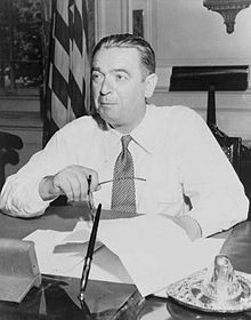
William O’Dwyer, Irish American politician and diplomat who serves as the 100th Mayor of New York City, holding that office from 1946 to 1950, is born in Bohola, County Mayo on July 11, 1890.

O’Dwyer studies at St. Nathy’s College, Ballaghaderreen, County Roscommon. He emigrates to the United States in 1910, after abandoning studies for the priesthood. He sails to New York City as a steerage passenger on board the liner Philadelphia and is inspected at Ellis Island on June 27, 1910. He first works as a laborer, then as a New York City police officer, while studying law at night at Fordham University Law School. He receives his degree in 1923 and then builds a successful practice before serving as a Kings County (Brooklyn) Court judge. He wins election as the Kings County District Attorney in November 1939 and his prosecution of the organized crime syndicate known as Murder, Inc. makes him a national celebrity.

After losing the mayoral election to Fiorello La Guardia in 1941, O’Dwyer joins the United States Army for World War II, achieving the rank of brigadier general as a member of the Allied Commission for Italy and executive director of the War Refugee Board, for which he receives the Legion of Merit. During that time, he is on leave from his elected position as district attorney and replaced by his chief assistant, Thomas Cradock Hughes, and is re-elected in November 1943.

In 1945, O’Dwyer receives the support of Tammany Hall leader Edward V. Loughlin, wins the Democratic nomination, and then easily wins the mayoral election. He establishes the Office of City Construction Coordinator, appointing Park Commissioner Robert Moses to the post, works to have the permanent home of the United Nations located in Manhattan, presides over the first billion-dollar New York City budget, creates a traffic department and raises the subway fare from five cents to ten cents. In 1948, he receives The Hundred Year Association of New York‘s Gold Medal Award “in recognition of outstanding contributions to the City of New York.” In 1948, he receives the epithets “Whirling Willie” and “Flip-Flop Willie” from U.S. Representative Vito Marcantonio of the opposition American Labor Party while the latter is campaigning for Henry A. Wallace.

Shortly after his re-election to the mayoralty in 1949, O’Dwyer is confronted with a police corruption scandal uncovered by the Kings County District Attorney, Miles McDonald. O’Dwyer resigns from office on August 31, 1950. Upon his resignation, he is given a ticker tape parade up Broadway‘s Canyon of Heroes in the borough of Manhattan. President Harry Truman appoints him U.S. Ambassador to Mexico. He returns to New York City in 1951 to answer questions concerning his association with organized crime figures and the accusations follow him for the rest of his life. He resigns as ambassador on December 6, 1952, but remains in Mexico until 1960.

O’Dwyer visits Israel for 34 days in 1951 on behalf of his Jewish constituents. Along with New York’s Jewish community, he helps organize the first Israel Day Parade.

William O’Dwyer dies in New York City on November 24, 1964, in Beth Israel Hospital, aged 74, from heart failure. He is interred at Arlington National Cemetery, Section 2, Grave 889-A-RH.


2 Comments

Death of Actress Maureen O’Sullivan

maureen-osullivan

Maureen Paula O’Sullivan, Irish American actress best known for playing Jane in the Tarzan series of films starring Johnny Weissmuller, dies in Scottsdale, Arizona, of complications from heart surgery on June 23, 1998.

O’Sullivan is born in Boyle, County Roscommon on May 17, 1911, the daughter of Evangeline “Mary Eva” Lovatt and Charles Joseph O’Sullivan, an officer in the Connaught Rangers who serves in World War I. She attends a convent school in Dublin, then the Convent of the Sacred Heart at Roehampton, England. One of her classmates there is Vivian Mary Hartley, future Academy Award-winning actress Vivien Leigh. After attending finishing school in France, O’Sullivan returns to Dublin to work with the poor.

O’Sullivan’s film career begins when she meets motion picture director Frank Borzage, who is doing location filming on Song o’ My Heart for 20th Century Fox. He suggests she take a screen test, which she does, and wins a part in the movie, which stars Irish tenor John McCormack. She travels to the United States to complete the movie in Hollywood. O’Sullivan appears in six movies at Fox, then makes three more at other movie studios.

In 1932, she signs a contract with Metro-Goldwyn-Mayer. After several roles there and at other movie studios, she is chosen by Irving Thalberg to appear as Jane Parker in Tarzan the Ape Man, opposite co-star Johnny Weissmuller. She is one of the more popular ingenues at MGM throughout the 1930s and appears in a number of other productions with various stars. In all, O’Sullivan plays Jane in six features between 1932 and 1942.

She stars with William Powell and Myrna Loy in The Thin Man (1934) and plays Kitty in Anna Karenina (1935) with Greta Garbo and Basil Rathbone. After co-starring with the Marx Bros. in A Day At The Races (1937), she appears as Molly Beaumont in A Yank at Oxford (1938), which is written partly by F. Scott Fitzgerald. At her request, he rewrites her part to give it substance and novelty.

She plays another Jane in Pride and Prejudice (1940) with Laurence Olivier and Greer Garson and supports Ann Sothern in Maisie Was a Lady (1941). After appearing in Tarzan’s New York Adventure (1942), O’Sullivan asks MGM to release her from her contract so she can care for her husband who has just left the Navy with typhoid. She retreats from show business, devoting her time to her family. In 1948, she re-appears on the screen in The Big Clock, directed by her husband for Paramount Pictures. She continues to appear occasionally in her husband’s movies and on television. However, by 1960 she believes she has permanently retired. In 1958, Farrow’s and O’Sullivan’s eldest son, Michael, dies in a plane crash in California.

Actor Pat O’Brien encourages her to take a part in summer stock, and the play A Roomful of Roses opens in 1961. That leads to another play, Never Too Late, in which she co-stars with Paul Ford in what is her Broadway debut. Shortly after it opens on Broadway, John Farrow dies of a heart attack. O’Sullivan sticks with acting after Farrow’s death. She is also an executive director of a bridal consulting service, Wediquette International. In June and July 1972, O’Sullivan is in DenverColorado, to star in the Elitch Theatre production of Butterflies are Free with Karen Grassle and Brandon deWilde. The show ends on July 1, 1972. Five days later, while still in Denver, deWilde is killed in a motor vehicle accident.

When her daughter, actress Mia Farrow, becomes involved with Woody Allen both professionally and romantically, she appears in Hannah and Her Sisters, playing Farrow’s mother. She has roles in Peggy Sue Got Married (1986) and the science fiction oddity Stranded (1987). Mia Farrow names one of her own sons Ronan O’Sullivan Farrow for her mother. In 1994, she appears with Robert Wagner and Stefanie Powers in Hart to Hart: Home Is Where the Hart Is, a feature-length made-for-TV movie with the wealthy husband-and-wife team from the popular weekly detective series Hart to Hart.

Maureen O’Sullivan dies in Scottsdale, Arizona, of complications from heart surgery on June 23, 1998, at the age of 87. O’Sullivan is buried at Most Holy Redeemer Cemetery, Niskayuna, New York. She is survived by six of her children, 32 grandchildren, and 13 great-grandchildren. Michael, her oldest son, is killed at age 19 in a plane crash in 1958.


Leave a comment

“The Beauty Queen of Leenane” Wins Four Tony Awards

the-beauty-queen-of-leenane

After being nominated in six categories, Galway’s Druid Theatre Company wins four Tony Awards on June 8, 1998, for its production of The Beauty Queen of Leenane, a 1996 comedy by Irish playwright Martin McDonagh.

The play receives its world premiere when the Druid Theatre Company opens the production at the Town Hall Theatre, Galway on February 1, 1996. It then tours Ireland, stopping off in Longford, Kilkenny and Limerick. It transfers to London‘s West End, where it opens at the Royal Court Theatre on February 29, 1996.

The Druid production returns to Ireland to embark on an extensive national tour, playing in Galway, Cork, Kerry, Limerick, Fermanagh, Donegal and Derry amongst others. The play returns to London where it is revived at the Duke of York’s Theatre on November 29, 1996, for several months.

The play is produced as part of Druid’s Leenane Trilogy, which includes two other plays by Martin McDonagh, in 1997 where it plays as part of another Irish and UK tour, which includes stops at the Olympia Theatre, Dublin and the Royal Court Theatre in London again.

The play receives its American premiere opening Off-Broadway on February 11, 1998, presented by the Atlantic Theatre Company at the Linda Gross Theater. It transfers to the Walter Kerr Theater on Broadway where it opens on April 14, 1998. It receives six Tony Award nominations, winning four for Best Supporting Actor (Tom Murphy), Best Actress (Marie Mullen), Best Supporting Actress (Anna Manahan), and Best Director (Garry Hynes), the first female recipient of a Tony Award for directing a play.

The play is produced in Australia in 1998 and again in 1999. The 1999 production is a tour by the Royal Court Theatre Company, appearing at the Adelaide Festival Centre (May – June 1999) and Wharf 1 (July 1999) and directed by Garry Hynes. The production returns to Ireland in 2000 as part of a final national tour.

The play is revived in July 2010 at the Young Vic Theatre in the West End, starring Irish actress Rosaleen Linehan. The production transfers to Dublin’s Gaiety Theatre where Linehan reprises her role opposite Derbhle Crotty. It then returns to the Young Vic for another run, closing in September 2011.

The Druid Theatre Company presents a revival in 2016–2017. The production starts in Ireland in Galway at the Town Hall Theatre in September 2016, and then tours to The Everyman in Cork, the Lime Tree Theatre in Limerick and the Gaiety Theatre, Dublin. The play then tours in the United States starting in November 2016. The play runs at the Mark Taper Forum in Los Angeles in November 2016 then opens at the Brooklyn Academy of Music in New York City, running from January 11, 2017, to February 5. The production returns to Ireland, playing at The Gaiety Theatre from March 28 to April 15, 2017.


Leave a comment

Death of Victor Herbert, Composer, Cellist and Conductor

victor-herbert

Victor August Herbert, an Irish-born, German-raised American composer, cellist and conductor, dies suddenly of a heart attack on May 26, 1924, shortly after his final show, The Dream Girl, begins its pre-Broadway run in New Haven, Connecticut.

Herbert is born in Dublin on February 1, 1859, to Protestants Edward Herbert and Fanny Herbert (née Lover). At age three and a half, shortly after the death of his father, he and his mother move to live with his maternal grandparents in London, England, where he received encouragement in his creative endeavours. His grandfather is the Irish novelist, playwright, poet and composer Samuel Lover. The Lovers welcome a steady flow of musicians, writers and artists into their home. He joins his mother in Stuttgart, Germany in 1867, a year after she marries a German physician, Carl Schmidt of Langenargen. In Stuttgart he receives a strong liberal education at the Eberhard-Ludwigs-Gymnasium, which includes musical training.

Herbert initially plans to pursue a career as a medical doctor. Although his stepfather is related by blood to the German royal family, his financial situation is not good by the time Herbert is a teenager. Medical education in Germany is expensive, and so he focuses instead on music. He initially studies the piano, flute and piccolo but ultimately settles on the cello, beginning studies on that instrument with Bernhard Cossmann from age 15 to age 18. He then attends the Stuttgart Conservatory. After studying cello, music theory and composition under Max Seifritz, he graduates with a diploma in 1879.

Although Herbert enjoys important careers as a cello soloist and conductor, he is best known for composing many successful operettas that premiere on Broadway from the 1890s to World War I. He is also prominent among the Tin Pan Alley composers and is later a founder of the American Society of Composers, Authors, and Publishers (ASCAP). A prolific composer, Herbert produces two operas, a cantata, 43 operettas, incidental music to 10 plays, 31 compositions for orchestra, nine band compositions, nine cello compositions, five violin compositions with piano or orchestra, 22 piano compositions and numerous songs, choral compositions and orchestrations of works by other composers, among other music.

In the early 1880s, Herbert begins a career as a cellist in Vienna, Austria, and Stuttgart, Germany, during which he begins to compose orchestral music. Herbert and his opera singer wife, Therese Förster, move to the United States in 1886 when both are engaged by the Metropolitan Opera. He continues his performing career, while also teaching at the National Conservatory of Music of America, conducting and composing. His most notable instrumental compositions are his Cello Concerto No. 2 in E minor, Op. 30 (1894), which enters the standard repertoire, and his Auditorium Festival March (1901). He leads the Pittsburgh Symphony Orchestra from 1898 to 1904 and then founds the Victor Herbert Orchestra, which he conducts throughout the rest of his life.

Herbert begins to compose operettas in 1894, producing several successes, including The Serenade (1897) and The Fortune Teller (1898). Some of the operettas that he writes after the turn of the 20th century are even more successful: Babes in Toyland (1903), Mlle. Modiste (1905), The Red Mill (1906), Naughty Marietta (1910), Sweethearts (1913) and Eileen (1917). After World War I, with the change of popular musical tastes, he begins to compose musicals and contributes music to other composers’ shows. While some of these are well-received, he never again achieves the level of success that he enjoyed with his most popular operettas.

A healthy man throughout his life, Herbert dies suddenly of a heart attack at the age of 65 on May 26, 1924, shortly after his final show, The Dream Girl, began its pre-Broadway run in New Haven. He is survived by his wife and two children, Ella Victoria Herbert Bartlett and Clifford Victor Herbert. He is entombed in Woodlawn Cemetery in The Bronx, New York City.

Herbert and his music are celebrated in the 1939 film The Great Victor Herbert, where he is portrayed by Walter Connolly, and which also features Mary Martin. He is also portrayed by Paul Maxey in the 1946 film Till the Clouds Roll By. Many of Herbert’s own works are made into films, and his music has been used in numerous films and television shows. A Chicago elementary school is named for him. During World War II the Liberty ship SS Victor Herbert is built in Panama City, Florida, and named in his honor.


2 Comments

Birth of Actor Edward Mulhare

edward-mulhare

Edward Mulhare, Irish actor whose career spans five decades, is born in Cork, County Cork on April 8, 1923. He is best known for his starring roles in two television series, The Ghost & Mrs. Muir and Knight Rider.

Mulhare, one of three brothers, is born at 22 Quaker Road, Cork, County Cork, in what is then known as the Irish Free State, to John and Catherine Mulhare. As a child, he receives his education at St. Nessan’s Christian Brothers School, and later North Monastery. As a young adult, he begins schooling at the National University of Ireland in medicine, but eventually decides upon a career in theatre. After acting in various Irish venues including the Gate Theatre in Dublin, he moves to London, where he works with Orson Welles and John Gielgud.

His best-known stage role is as Professor Higgins in the original Broadway production of My Fair Lady, having taken over the role from Rex Harrison in 1957.

Mulhare’s first television appearance is in 1956 in a production of The Adventures of Robin Hood. He is a guest panelist in 1958 on the CBS television game show What’s My Line? By 1965, he is back in Hollywood appearing in films and television shows. He earns a role in the films Von Ryan’s Express in 1965, Our Man Flint in 1966, and Caprice in 1967. He guest-stars in television programs, including the Twelve O’Clock High episode “Siren Voices” as Luftwaffe Colonel Kurt Halland. He also guest-stars in “Experiment In Terra,” an episode of the original Battlestar Galactica series. In The Ghost & Mrs. Muir, a supernatural sitcom that runs from 1968 to 1970, he stars as Captain Daniel Gregg, and again is something of a successor to Rex Harrison, who had originated the role of “The Ghost” in the original 1947 film. In the mid-1980s, Mulhare hosts the television series Secrets & Mysteries, also called Secrets of the Unknown, a magazine show that examines historical mysteries and the paranormal. His most famous role is probably as Devon Miles in the Knight Rider series.

Mulhare stars in a number of films in his career including Megaforce and Out to Sea. His final role is on Baywatch Nights alongside former Knight Rider co-star David Hasselhoff in 1997.

Edward Mulhare dies of lung cancer on May 24, 1997, age 74, at his home in Van Nuys, California. He had been battling the cancer for five months prior to his death. He is buried in St. Joseph’s Cemetery, Tory Top Road, Cork. Team Knight Rider dedicates an episode titled “K.R.O.” to Mulhare’s memory which is broadcast on October 27, 1997.


2 Comments

Birth of Actor Spencer Tracy

spencer-tracy

Spencer Bonaventure Tracy, American actor noted for his natural style and versatility, is born in Milwaukee, Wisconsin on April 5, 1900. One of the major stars of Hollywood’s Golden Age, Tracy wins two Academy Awards for Best Actor, from nine nominations, sharing the record for nominations in that category with Laurence Olivier.

Tracy is the second son of Caroline and John Edward Tracy, a truck salesman. His mother is a Presbyterian from a wealthy Midwestern family and his father is of Irish Catholic background.

Tracy first discovers his talent for acting while attending Ripon College, and he later receives a scholarship for the American Academy of Dramatic Arts. He spends seven years in the theatre, working in a succession of repertory theatres and intermittently on Broadway. His breakthrough comes in 1930, when his lead performance in The Last Mile catches the attention of Hollywood. After a successful film debut in Up the River, he is signed to a contract with Fox Film Corporation. His five years with Fox are unremarkable and he remains largely unknown to audiences after 25 films, most of them starring Tracy as the leading man. None of them are hits although The Power and the Glory (1933) features one of his most acclaimed performances.

In 1935, Tracy joins Metro-Goldwyn-Mayer, at the time Hollywood’s most prestigious studio. His career flourishes with a series of hit films, and in 1937 and 1938 he wins consecutive Oscars for Captains Courageous and Boys Town. By the 1940s, Tracy is one of the studio’s top stars. In 1942, he appears with Katharine Hepburn in Woman of the Year, beginning a popular partnership that produces nine movies over 25 years.

Tracy leaves MGM in 1955 and continues to work regularly as a freelance star, despite an increasing weariness as he ages. His personal life is troubled, with a lifelong struggle against alcoholism and guilt over his son’s deafness. He becomes estranged from his wife in the 1930s but never divorces, conducting a long-term relationship with Katharine Hepburn in private. Towards the end of his life, he works almost exclusively for director Stanley Kramer. It is for Kramer that he makes his last film, Guess Who’s Coming to Dinner in 1967, completed just 17 days before his death.

On June 10, 1967, Tracy awakens at 3:00 AM to make himself a cup of tea in his apartment in Beverly Hills, California that he shares with Hepburn. She hears a loud thump and finds Tracy lying dead on the kitchen floor from a heart attack.

A Requiem Mass is held for Tracy on June 12, 1967, at the Immaculate Heart of Mary Catholic Church in East Hollywood. Pallbearers included George Cukor, Stanley Kramer, Frank Sinatra, James Stewart, and John Ford. Out of consideration for Tracy’s family, Hepburn does not attend the funeral. Tracy is interred at Glendale‘s Forest Lawn Memorial Park, near his wife, Louise, and son John.

During his career, Tracy appears in 75 films and develops a reputation among his peers as one of the screen’s greatest actors. In 1999 the American Film Institute ranks Tracy as the 9th greatest male star of Classical Hollywood Cinema.


1 Comment

Death of Actor Henry Wilfrid Brambell

henry-brambell-john-lennon

Henry Wilfrid Brambell, Irish film and television actor best known for his role in the British television series Steptoe and Son, dies of cancer in Westminster, London, on January 18, 1985.

Brambell is the youngest of three sons born to Henry Lytton Brambell, a cashier at the Guinness Brewery, and his wife, Edith Marks, a former opera singer. His first appearance is as a child, entertaining the wounded troops during World War I. Upon leaving school he works part-time as a reporter for The Irish Times and part-time as an actor at the Abbey Theatre before becoming a professional actor for the Gate Theatre. He also does repertory at Swansea, Bristol and Chesterfield. In World War II, he joins the British military forces entertainment organisation Entertainments National Service Association (ENSA).

His television career begins during the 1950s, when he is cast in small roles in three Nigel Kneale/Rudolph Cartier productions for BBC TelevisionThe Quatermass Experiment (1953), Nineteen Eighty-Four (1954), and Quatermass II (1955). All of these roles earn him a reputation for playing old men, though he is only in his forties at the time.

It is this ability to play old men that leads to his casting in his best remembered role, as Albert Steptoe, the irascible father in Steptoe and Son. This begins as a pilot on the BBC’s Comedy Playhouse, and its success leads to a full series being commissioned, running from 1962 to 1974 including a five-year hiatus. There are two feature film spin-offs, a stage show, and an American incarnation entitled Sanford and Son, some episodes of which are almost exact remakes of the original British scripts.

The success of Steptoe and Son makes Brambell a high-profile figure on British television, and earns him the supporting role of Paul McCartney‘s grandfather in The Beatles‘ first film, A Hard Day’s Night (1964). In 1965, Brambell tells the BBC that he does not want to do another series of Steptoe and Son and, in September that year, he goes to New York City to appear in the Broadway musical Kelly at the Broadhurst Theatre, however, it closes after just one performance.

Apart from his role as the older Steptoe, Brambell achieves recognition in many films. His performance in The Terence Davies Trilogy wins him critical acclaim, far greater than any achieved for Steptoe and Son. Although he appears throughout the full 94-minute piece, Brambell does not speak a single word.

After the final series of Steptoe and Son is made in 1974, Brambell has some guest roles in films and on television. He and Harry H. Corbett also undertake a tour of Australia in 1977 in a Steptoe and Son stage show.

Brambell dies of cancer in Westminster, London, on January 18, 1985, at the age of 72. He is cremated on January 25, 1985 at Streatham Park Cemetery, where his ashes are scattered.

(Pictured: Henry Wilfrid Brambell and John Lennon in The Beatles’ first motion picture, A Hard Day’s Night)


Leave a comment

Birth of Actress Fionnghuala Flanagan

fionnula-flanagan

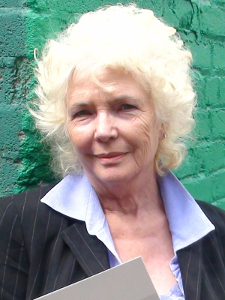
Fionnghuala Manon “Fionnula” Flanagan, Irish actress and political activist, is born in Dublin on December 10, 1941.

Flanagan is the daughter of Rosanna (née McGuirk) and Terence Niall Flanagan, an Irish Army officer and Communist who had fought in the International Brigade in the Spanish Civil War against General Francisco Franco. Although her parents are not Irish speakers, they want Fionnula and her four siblings to learn the Irish language, thus she grows up speaking English and Irish fluently. She is educated in Switzerland and England. She trains extensively at the Abbey Theatre in Dublin and travels throughout Europe before settling in Los Angeles, California in early 1968.

Flanagan comes to prominence in Ireland in 1965 as a result of her role as Máire in the Telefís Éireann production of the Irish language play An Triail, for which she receives the Jacob’s Award in Dublin for her “outstanding performance.” With her portrayal of Gerty McDowell in the 1967 film version of Ulysses, she establishes herself as one of the foremost interpreters of James Joyce. She makes her Broadway debut in 1968 in Brian Friel‘s Lovers, then appears in The Incomparable Max (1971) and such Joycean theatrical projects as Ulysses in Nighttown and James Joyce’s Women (1977-1979), a one-woman show written by Flanagan and directed for the stage by Burgess Meredith. It is subsequently filmed in 1983, with Flanagan both producing and playing all six main female roles.

Flanagan is a familiar presence in American television, as she has appeared in several made-for-TV movies including The Legend of Lizzie Borden (1975) starring Elizabeth Montgomery, Mary White (1977), The Ewok Adventure (1984) and A Winner Never Quits (1986). She wins an Emmy Award for her performance as Clothilde in the 1976 network miniseries Rich Man, Poor Man. Her weekly-series stints include Aunt Molly Culhane in How the West Was Won (1977), which earns her a second Emmy Award nomination. She does multiple appearances on Murder, She Wrote. She plays Lt. Guyla Cook in Hard Copy (1987), and as Kathleen Meacham, wife of a police chief played by John Mahoney in H.E.L.P. (1990).

Flanagan makes guest appearances in three of the Star Trek spin-offsStar Trek: Deep Space Nine episode “Dax,” Star Trek: The Next Generation episode “Inheritance,” and Star Trek: Enterprise episode “Fallen Hero.”

Flanagan guest-stars in several episodes of Lost as Eloise Hawking, a recurring character. She appears in such films as The Others opposite Nicole KidmanDivine Secrets of the Ya-Ya Sisterhood as the eldest Teensy and Waking Ned. She appears in television series and stage productions including the Emmy-nominated miniseries Revelations, starring Bill Pullman and Natascha McElhone, and in Transamerica, starring Felicity Huffman. From 2006–08, she plays Rose Caffee, the matriarch of an Irish American Rhode Island family on the Showtime drama Brotherhood.


Leave a comment

Death of Playwright Brian Friel

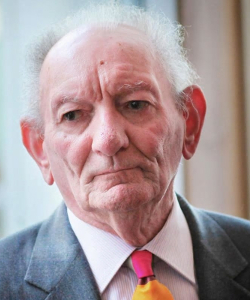
Brian Patrick Friel, Irish playwright, short story writer and founder of the Field Day Theatre Company, dies on October 2, 2015, in Greencastle, County Donegal. He has been considered one of the greatest living English-language dramatists. He has been likened to an “Irish Chekhov” and described as “the universally accented voice of Ireland.” His plays have been compared favourably to those of contemporaries such as Samuel Beckett, Arthur Miller, Harold Pinter and Tennessee Williams.

Friel is born in Knockmoyle, close to Omagh, County Tyrone, Northern Ireland. The family moves to Derry when Friel is ten years old. There, he attends St. Columb’s College, the same school attended by Seamus Heaney, John Hume, Seamus Deane, Phil Coulter, Eamonn McCann and Paul Brady. He receives his B.A. from St. Patrick’s College, Maynooth (1945–48).

Recognised for early works such as Philadelphia, Here I Come! and Faith Healer, Friel has 24 plays published in a career of more than a half-century. He is elected to the honorary position of Saoi of Aosdána. His plays are commonly produced on Broadway in New York City throughout this time, as well as in Ireland and the United Kingdom. In 1980 Friel co-founds Field Day Theatre Company, and his play Translations is the company’s first production. With Field Day, Friel collaborates with Seamus Heaney, 1995 recipient of the Nobel Prize in Literature. Heaney and Friel first become friends after Friel sends the young poet a letter following publication of his book Death of a Naturalist. Friel’s play Dancing at Lughnasa wins three Tony Awards in 1992.

Friel is a member of the American Academy of Arts and Letters, the British Royal Society of Literature and the Irish Academy of Letters. He is appointed to Seanad Éireann in 1987 and serves until 1989. In later years, Dancing at Lughnasa reinvigorates Friel’s oeuvre, bringing him Tony Awards, including Best Play, the Laurence Olivier Award for Best New Play and the New York Drama Critics Circle Award for Best Play. It is also adapted into a film, starring Meryl Streep, directed by Pat O’Connor, script by Frank McGuinness.

After a long illness Friel dies at the age of 86 in the early morning of Friday, October 2, 2015, in Greencastle, County Donegal. He is survived by his wife Anne and children Mary, Judy, Sally and David. A daughter, Patricia, predeceases him in 2012.


Leave a comment

Transatlantic Flight of “Wrong Way” Corrigan

Douglas Corrigan, an American aviator born in Galveston, Texas, earns the nickname “Wrong Way” Corrigan on July 17, 1938. After a transcontinental flight from Long Beach, California, to New York City, he flies from Floyd Bennett Field in Brooklyn, New York, to Ireland, though his flight plan is filed to return to Long Beach. He claims his unauthorized flight is due to a navigational error, caused by heavy cloud cover that obscures landmarks and low-light conditions, causing him to misread his compass. However, he is a skilled aircraft mechanic and has made several modifications to his own plane, preparing it for his transatlantic flight. He had been denied permission to make a nonstop flight from New York to Ireland, and his “navigational error” is seen as deliberate. Nevertheless, he never publicly admits to having flown to Ireland intentionally.

On July 9, 1938, Corrigan departs California in his 1929 Curtiss Robin OX-5 monoplane bound for Floyd Bennett Field, Brooklyn, New York. With the Robin cruising at 85 miles per hour (137 km/h) for maximum fuel efficiency, the outward journey takes him 27 hours. Fuel efficiency becomes critical towards the end of the flight as a gasoline leak develops, filling the cockpit with fumes.

Upon his unannounced arrival at Floyd Bennett Field, in the midst of Howard Hughes‘s preparations for takeoff on a world tour, Corrigan decides repairing the leak will take too long if he is to meet his schedule. His logged flight plan has him returning to California on July 17. Before takeoff, Corrigan asks the manager of Floyd Bennett Field, Kenneth P. Behr, which runway to use, and Behr tells him to use any runway as long as he does not take off to the west, in the direction of the administration building where Behr has his office. As recorded in Corrigan’s autobiography, Behr wishes him “Bon Voyage” prior to take-off, perhaps in a nod to Corrigan’s intentions to fly the Atlantic. Upon take off at 5:15 on the morning of July 17 with 320 US gallons of gasoline and 16 US gallons of oil, Corrigan heads east from the 4,200-foot runway of Floyd Bennett Field and keeps going. Behr later swears publicly that he has no foreknowledge of Corrigan’s intentions.

Corrigan claims to have noticed his “error” after flying for about 26 hours. This is not entirely consistent with his claim that after 10 hours, he feels his feet go cold. The cockpit floor is awash with gasoline leaking from the unrepaired tank. He uses a screwdriver to punch a hole through the cockpit floor so that the fuel will drain away on the side opposite the hot exhaust pipe, reducing the risk of a midair explosion. Had he been truly unaware he was over ocean, it seems likely he would descend at this point. Instead, he claims to increase the engine speed by almost 20% in the hope of decreasing his flight time.

Corrigan lands at Baldonnel Aerodrome, County Dublin, on July 18, after a 28-hour, 13-minute flight. His provisions for the flight consisted of just two chocolate bars, two boxes of fig bars, and 25 US gallons of water. Corrigan’s plane has fuel tanks mounted on the front, allowing him to see only out of the sides. He has no radio, and his compass is 20 years old.

Aviation officials require 600 words to list the regulations broken by his flight in a telegram, a medium that encourages brevity by charging at a rate per word. Despite the extent of Corrigan’s illegality, he receives only a mild punishment and his pilot’s certificate is suspended for 14 days. He and his plane return to New York on the steamship Manhattan and arrive on August 4, the last day of his suspension. His return is marked with great celebration. More people attend his Broadway ticker tape parade than had honored Charles Lindbergh after his triumph. He is also given a ticker tape parade in Chicago.