Campbell is born in Belfast on July 15, 1879, into a Catholic and Irish nationalist family from County Down. He is educated at St. Malachy’s College, Belfast. After working for his father he teaches for a while. He travels to Dublin in 1902, meeting leading nationalist figures. His literary activities begin with songs, as a collector in Antrim, County Antrim and working with the composer Herbert Hughes. He is then a founder of the Ulster Literary Theatre in 1904. He contributes a play, The Little Cowherd of Slainge, and several articles to its journal Uladh edited by Bulmer Hobson. The Little Cowherd of Slainge is performed by the Ulster Literary Theatre at the Clarence Place Hall in Belfast on May 4, 1905, along with Lewis Purcell’s The Enthusiast.
Campbell moves to Dublin in 1905 and, failing to find work, moves to London the following year where he is involved in Irish literary activities while working as a teacher. He marries Nancy Maude in 1910, and they move shortly thereafter to Dublin, and then later to County Wicklow. His play Judgement is performed at the Abbey Theatre in April 1912.
Campbell takes part as a supporter in the Easter Rising of 1916, doing rescue work. The following year he publishes a translation from Irish of the short stories of Patrick Pearse, one of the leaders of the Rising.
Campbell becomes a Sinn FéinCouncillor in Wicklow in 1921. Later in the Irish Civil War he is on the Republican side, and is interned in 1922-23. His marriage breaks up, and he emigrates to the United States in 1925 where he settles in New York City. He lectures at Fordham University, and works in academic Irish studies, founding the University’s School of Irish Studies in 1928, which lasts four years. He is the editor of The Irish Review (1934), a short lived “magazine of Irish expression.” The business manager is George Lennon, former Officer Commanding of the County WaterfordFlying Column during the Irish War of Independence. The managing editor is Lennon’s brother-in-law, George H. Sherwood.
Campbell returns to Ireland in 1939, settling at Glencree, County Wicklow. He dies at Lacken Daragh, Enniskerry, County Wicklow on June 6, 1944.
Davidson is the sixth of ten children of clerk of petty session, Edward Ellice Davidson, and Lucy Rising Davidson (née Doe). Her mother dies in 1888, and it is presumed that she receives a private education but as the family are not affluent, the details are unclear. She goes on to attend the Dublin Metropolitan School of Art (DMSA) from 1895 to 1905. While at the DMSA, she wins prizes in 1895 and 1896 and is awarded a scholarship and free studentship at the Royal Dublin Society (RDS) in 1897, the same year her father dies. She completes her studies in 1905. In the early 1910s, she is living in Rathmines and spends some time in England and Wales.
Davidson is commissioned by Switzer’s department store on Grafton Street to draw costumes in 1899. In 1909, her painting After Rain is exhibited by the Dublin Sketching Club, with her continuing to show work there until 1920. She exhibits The Bonfire with the Water Colour Society of Ireland in 1912, becoming a committee member in 1934 and continuing to exhibit with them until 1954. In 1914, she is one of the artists included in a sale of paintings to aid Belgian refugees. She is first exhibited at the Royal Hibernian Academy (RHA) in 1914, with The Student. Her painting exhibited by the RHA in 1916, The Harbour, St. Ives, demonstrates an influence from Stanhope Forbes and the Newlyn School, with a bright palette and contrasting illumination, which become characteristic of her work. She illustrates C. H. Bretherton’s collection of humorous poems and recollections about London Zoo, A Zoovenir (1919).
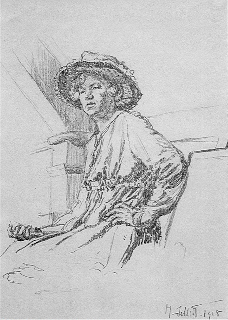
Davidson holds a joint exhibition with Mainie Jellett in 1920, at Mill’s Hall, Merrion Row, Dublin. Jellett produces a pencil portrait of Davison (pictured above), which shows her in a straw hat she frequently wears. The RHA exhibits Davidson’s oil painting, The Flax Pullers, in 1921. This work shows an influence from Paul Henry and French Impressionism in her use of colour-blocking. In the early 1920s, she travels to Switzerland, Belgium, and France, producing works such as Fish Market, Bruges. She lives in Paris in the late 1920s, exhibiting at the Salon de la Societé Nationale in 1924 and 1930. She places a self-portrait in her depiction of a peasant gathering, The Country Races. Reproductions of her drawing of Leinster House and Christ Church Cathedral by Bulmer Hobson are included in A Book of Dublin (1929). Her landscape, Low Tide, Wicklow, which is exhibited at the RHA in 1934, and Boats at Wicklow, Dusk show her ability to depict reflections in water. She continues to paint scenes of rural life, including Cottages – Keel, Achill, which shows an influence from Jack Butler Yeats in her use of space and colour. The fact that her family is not wealthy likely influences her choice of poorer people as her subjects, depicting them in a sympathetic manner. Her work is part of the painting event in the art competitions at the 1928 Summer Olympics.
Davidson’s paintings are exhibited at the Contemporary Picture Galleries, Dublin in 1930, alongside Yeats, Evie Hone, and Harry Kernoff. She is a member of the Picture Hire Club, 24 Molesworth Street, Dublin from 1941 to 1942, and is a frequent contributor to the Munster Fine Arts Club. Her work is exhibited at the Salon des Beaux Arts, Paris, the Royal Academy of Arts, London, and in Amsterdam. A large number of her works from the 1930s show the Irish-speaking area of Galway, Claddagh, such as Night in Claddagh, exhibited with the RHA in 1933. Her Irish landscapes, such as Claddagh Cottages, are included in the Oireachtas Art Exhibitions from 1932 to 1946. From around 1934, she is a member of the Society of Dublin Painters, exhibiting with them from 1939 to 1954. She influences the Society’s move toward the avant-garde in the 1940s. She is elected associate to the RHA in 1940 and continues to exhibit there until her death. Her 1946 work, Gorta, shows influence from Zola, Rilke, Dostoyevsky and Picasso.
Davidson teaches drawing at her studio at 1 Earlsfort Terrace, Dublin. Her pupils include Bea Orpen, Anne Yeats, and Mo Irwin. She also is a teacher at a number of Dublin schools, such as Belgrave school, Rathmines, Wesley College, St. Stephen’s Green, and Castle Park School, Dalkey. She travels to Abbeyleix, County Laois, once a week to teach at Glenbawn boarding school.
As well as painting, Davidson writes a number of plays, short stories, and monologues under a pseudonym, “Ulick Burke.” In 1927, a collection of her poems and Donegal rhymes is published. In 1931, Hilton Edwards directs her stage play Bride, at the Gate Theatre. Her short story, Her Only Son, is published in The Bell under a pseudonym in 1942. In 1935, she is a founder-member of the Torch Theatre, Dublin. She designs scenery, and is the co-director with Hugh Hyland in 1936, under the stage name “Jennifer Maude.”
Davidson dies at her home at 4 Wilton Terrace, Dublin on March 29, 1954. She is buried in an unmarked grave in Mount Jerome Cemetery. The National Gallery of Ireland (NGI) holds her 1938 portrait of Yeats, as well as her crayon drawing of Sarah Purser. She is a regular attendee at Purser’s “Second Tuesdays” gatherings. The Abbey Theatre holds her portrait of Joseph Holloway. She bequeaths The Golden Shawl to the Hugh Lane Gallery, which is a large self-portrait. Two of her works are included in the NGI’s 1987 exhibition, Irish Women Artists from the Eighteenth Century to the Present Day.
Colbert is the fourth youngest of thirteen children of Michael Colbert, a farmer, and Honora McDermott. His family moves to the village of Athea when he is three years old. He is educated at the local national school. In 1901, his family is living in the townland of Templeathea West. A younger brother, James, and a cousin, Michael Colbert, later serve as Teachtaí Dála (TDs).
Colbert leaves Athea at the age of 16 and goes to live with his sister Catherine in Ranelagh, County Dublin. He continues his education at a Christian Brothers school in North Richmond Street. He is employed as a clerk in the offices of Kennedy’s Bakery in Dublin. In 1911, he is living with Catherine, two other siblings and two boarders at a house on Clifton Terrace, Rathmines. He is a deeply religious Catholic and refrains from smoking or drinking.
Colbert is sworn into the Irish Republican Brotherhood (IRB) by his cousin Art O’Donnell in Art’s home in 1908. He joins Fianna Éireann at its inaugural meeting in 1909 and rises to Chief Scout. The following year he becomes a drill instructor at St. Enda’s School, founded by Patrick Pearse. In 1912, he becomes head of an IRB circle within the Fianna started by Bulmer Hobson. During 1913 he is one of a number of Fianna who conduct military training at the Forester’s Hall in Rutland Square (now Parnell Square), and in November of that year he joins the Provisional Committee of the newly formed Irish Volunteers.
In the weeks leading up to the Rising, Colbert acts as bodyguard for Thomas Clarke. Before the Rising, because he lives out of the city, he stays with the Cooney family in the city centre. During Easter Week, he fights at Watkin’s Brewery, Jameson’s Distillery and Marrowbone Lane. Thomas MacDonagh surrenders to Brigadier GeneralWilliam Lowe at 3:15 p.m. on Sunday, April 30. MacDonagh then goes around the garrisons under his command to arrange for their surrender.
Colbert surrenders with the Marrowbone Lane Garrison along with the South Dublin Union Garrison, which had been led by Éamonn Ceannt. When the order to surrender is issued, he assumes the command of his unit to save the life of his superior officer, who is a married man.
They are marched to Richmond Barracks, where Colbert is later court-martialed. Transferred to Kilmainham Gaol, he is told on Sunday, May 7, that he is to be shot the following morning. He writes no fewer than ten letters during his time in prison. During this time in detention, he does not allow any visits from his family. Writing to his sister, he says a visit “would grieve us both too much.”
The night before his execution Colbert sends for Mrs. Ó Murchadha, who is also being held prisoner. He tells her he is “proud to die for such a cause. I will be passing away at the dawning of the day.” Holding his Bible, he tells her he is leaving it to his sister. He hands her three buttons from his volunteer uniform, telling her, “They left me nothing else.” He then asks her to say a Hail Mary for the souls of the departed when she hears the volleys of shots in the morning for Éamonn Ceannt, Michael Mallin and himself. The soldier who is guarding the prisoner begins crying according to Mrs. Ó Murchadha, and records him as saying, “If only we could die such deaths.”
The next morning, May 8, 1916, Colbert is shot by firing squad.
Colbert Railway Station in Limerick, Con Colbert Road in Dublin and the Fianna Fáilcumann in the University of Limerick are named in his honor. Colbert Street in his native Athea, County Limerick, is named after him, as is the local community hall. Colbert Avenue and Colbert Park Janesboro, Limerick, are also named after him.
On May 4, 1958, a plaque is erected over a bed in Barringtons Hospital, County Limerick. The plaque has since disappeared.
In May 2016, one hundred years after his execution, a full-scale limestone sculpture of Colbert is unveiled at the gable of his one-time house in Moanleana, County Limerick.
An earlier “Fianna” is organised “to serve as a Junior Hurling League to promote the study of the Irish Language” on June 26, 1902, at the Catholic Boys’ Hall, Falls Road, in West Belfast, the brainchild of Bulmer Hobson. Hobson, a Quaker influenced by suffragism and nationalism, joins the Irish Republican Brotherhood in 1904 and is an early member of Sinn Féin during its monarchist-nationalist period, alongside Arthur Griffith and Constance Markievicz. Hobson later relocates to Dublin and the Fianna organisation collapses in Belfast. Markievicz, inspired by the rapid growth of Robert Baden-Powell‘s Boy Scouts, forms sometime before July 1909 the Red Branch Knights, a Dublin branch of Irish National Boy Scouts. After discussions involving Hobson, Markievicz, suffragist and labour activist Helena Molony and Seán McGarry, the Irish National Boy Scouts change their name to Na Fianna Éireann at a meeting in 34 Lower Camden Street, Dublin, on August 16, 1909, at which Hobson is elected as president, thus ensuring a strong IRB influence, Markievicz as vice-president and Pádraig Ó Riain as secretary. Seán Heuston is the leader of the Fianna on Dublin’s north side, while Cornelius “Con” Colbert is the leader on the south side. The Fianna forms as a Nationalist alternative to Powell’s Scouts with the aim to achieve the full independence of Ireland by training and teaching scouting and military exercises, Irish history, and the Irish language.
The Fianna finds its first years difficult and by 1912 has barely 1,000 members and a skeleton structure outside of the cities of Dublin, Cork, Belfast and Galway. But in the next couple of years the momentum of events carries the Fianna forward. It is involved in initiating the militarisation of the IRB, the launch of the Irish Volunteers and showing solidarity with the striking Irish Transport and General Workers’ Union (ITGWU). It is also crucial to the success of the Howth and Kilcoole gun-running operations. Alongside these headline-grabbing activities, the Fianna continues with classes, drilling, camps and protests and reaps the benefits of an expanding membership and structure. When the fighting starts, the Fianna are not found wanting either. In 1916, Na Fianna members are present in all areas that mobilise and fight alongside all the other Republican organisations. They continue to fight throughout the Irish War of Independence and Irish Civil War. Seeing comrades being killed in action or executed or suffering imprisonment does not dim their enthusiasm for the fight. In Na Fianna Éireann’s March 1922 Árd Fheis, the 187 delegates representing 30,000 members vote unanimously to reject the Anglo-Irish Treaty.
The Fianna are declared an illegal organisation by the government of the Irish Free State in 1931. This is reversed when Fianna Fáil comes to power in 1932 but re-introduced in 1938. During the splits in the Republican movement of the later part of the 20th century, the Fianna and Cumann na mBan support Provisional Sinn Féin in 1969 and Republican Sinn Féin in 1986. The Fianna have been a proscribed organisation in Northern Ireland since 1920.
While the events in which the Fianna members are involved over the revolutionary years have a special place in Irish history, the specific role of the Fianna is absent from most written histories. This, allied with the failure to adequately commemorate the organisation’s centenary, marks a kind of revisionism of omission.
McGarry is born at 17 Pembroke Cottages, Dundrum, Dublin, on August 2, 1886. An active member of the Irish Republican Brotherhood, he is a close friend of Bulmer Hobson and is frequently arrested or imprisoned by British authorities for his activities with the IRB during the early 1900s. He participates in the 1916 Easter Rising as an aide-de-camp to Tom Clarke and is sentenced to eight years penal servitude for his role in the failed rebellion.
McGarry is sent to Frongoch internment camp in Wales but is eventually released. He assists Michael Collins in his efforts to reorganise the Irish Republican Brotherhood and, at the Volunteer Executive Meeting held in late 1917, he is elected General Secretary of the Irish Volunteers.
On the night of May 17, 1918, McGarry is arrested, along with seventy-three other Irish nationalist leaders, and deported to England, where they are held in custody without charge. The day following their arrest, he and the others are charged with conspiring “to enter into, and have entered into, treasonable communication with the German enemy.” In his absence, Harry Boland is selected for the Supreme Council and becomes his successor as president of the IRB.
McGarry is only imprisoned a short time when he takes part in the famous escape from Lincoln Jail with Seán Milroy and Éamon de Valera on February 3, 1919. He and Milroy manage to smuggle out a postcard, a comical sketch of McGarry to his wife, allowing a copy of the key to their cell to be made. They are later assisted by Harry Boland and Michael Collins who await them outside the prison.
A month later, McGarry gives a dramatic speech at a Sinn Féin concert held at the Mansion House, Dublin, before going into hiding.
Throughout the Irish War of Independence, McGarry serves as a commander and is eventually elected to Second Dáil in the 1921 Irish elections as a Sinn Féin Teachta Dála (TD) representing Dublin Mid. He, like the majority of those in the Irish Republican Brotherhood, supports the Anglo-Irish Treaty and is involved in debates against de Valera during the controversy, most especially discussing the status of Sinn Féin as a political entity.
McGarry is re-elected as a Pro-Treaty Sinn Féin TD in the 1922 Irish general election, siding with the Free State government during the Irish Civil War. Liam Lynch and other members of the anti-Treaty Irish Republican Army plan the assassination of McGarry among other TDs supporting the Public Safety Bill. As one anti-Treaty volunteer tells Ernie O’Malley, “Seán McGarry was often drunk in Amiens Street and the boys wanted to shoot him and the Staters there, but I wouldn’t let them.”
On December 10, 1922, shortly before the first meeting of the Free State parliament, a fire is deliberately set by irregulars (anti-Treatyites) at McGarry’s family home. His seven-year-old son, Emmet, is badly burned and dies as a result. McGarry is one of four targeted by anti-Treatyites during the December Free State executions. De Valera publicly denounces the attack.
After retiring from politics, McGarry works for the Irish Hospitals Trust, writes articles for newspapers and journals, and engages in broadcasting. After residing from the mid-1920s at several addresses in Dún Laoghaire, from 1938 he lives at 25 Booterstown Avenue, Blackrock, Dublin. With his wife Tomasina he has two sons and one daughter. He dies suddenly on December 9, 1958, of a heart attack in his son’s home at 44 Richmond Avenue, Monkstown, County Dublin.
Ryan attributes to Pearse the saying “[G]ive me a hundred men and I will free Ireland!” He becomes part of a group of former students lodging in St. Enda’s while they go to university who join the Irish Republican Brotherhood (IRB). They meet in a safe house at Rathfarnham in 1911. The men take the tram from Rathfarnham to Nelson’s Pillar in central Dublin. Pearse once told his friend, “Let them talk! I am the most dangerous revolutionary of the whole lot of them!” In 1911, the Dungannon Clubs revive the Volunteers Militia movement. These clubs are not initially successful in Dublin but are more so in Belfast amongst nationalists. One of the northern members is the Dubliner Oscar Traynor, in his youth a professional footballer with Belfast Celtic F.C., later a war hero and later again a politician and Minister for Posts and Telegraphs.
Eoin MacNeill is appointed leader of the Irish Volunteers. Ryan writes that Pearse, a risk-taker and idealist, tells him MacNeill is “too tactful.” MacNeill is prepared to entertain the Irish Parliamentary Party with negotiations. Ryan quotes Pearse as saying, “[MacNeill] has the reputation of being tactful, but his tact consists in bowing to the will of the Redmondites every time. He never makes a fight except when they assail his personal honour, when he bridles up at once… very delicate position… he is weak, hopelessly weak.”
Pearse tells Ryan that MacNeill is “a Grattan come to life again.” Henry Grattan is a constitutional orator and MP in the Protestant-only 18th-century Irish House of Commons, but one of those who fiercely opposes the notorious Acts of Union 1800, secured by massive bribery (which is then repaid out of Irish taxes), making Ireland part of the United Kingdom. Moreover, MacNeill is an “inconclusive ditherer.” He wants the Irish Volunteers to be apolitical.
The Easter Rising is preceded by the revelation of the “Castle Document,” a plan by the British government to arrest the leaders of the Irish Volunteers and Irish Citizen Army and other radicals. Ryan claims that this document, presented to MacNeill on the Wednesday before the Rising and said to have been stolen from high-ranking British staff in Dublin Castle, is a forgery. Some claim that it is concocted by Joseph Plunkett with the implicit approval of Catholic Archbishop Cullen of Dublin, a sympathiser with Dublin Castle and Redmond’s war stratagem. “Forgery is a strong word,” Ryan says, “but that in its final form the document was a forgery no doubt can exist whatever.” Modern interpretation from Charles Townshend has judged the document to be genuine, and the opinion attributed to the Archbishop’s Palace as circumstantial. Grace Gifford, Plunkett’s widow, says that she was with Plunkett when he deciphered it at Larkfield House. Prior to his execution, Seán Mac Diarmada is met by a priest, and makes the assumptive response that it is a fraudulent document.
Ryan fights through the Easter Rising from April 24, 1916, in the General Post Office (GPO) under murderous artillery fire and describes the battle vividly in his witness statement to the Bureau of Military History. He describes the garrison retreating to Moore Street and quotes Pearse’s sculptor brother Willie Pearse, who is executed a few days later, as saying “Connolly has been asked out to negotiate. They have decided to go to save the men from slaughter, for slaughter it is.”
Ryan fights in the Irish War of Independence and afterwards writes about his experiences. However, the Irish Civil War which follows from June 1922 to April 1923 repels him. He cannot accept that Irishmen would fight Irishmen.
Ryan marries Sarah Hartley in 1933. In 1939 they return to Ireland, where he edits the Torch, a Labour paper. Finding his views at odds with the Labour Party‘s official line, publication ceases in 1944. He and his wife then move to Swords in north County Dublin, where they operate a poultry farm.
James Stephens formally establishes the Irish Republican Brotherhood (IRB) in Peter Lanigan’s timber yard, Lombard Street, Dublin, on Saint Patrick’s Day, March 17, 1858. It is originally named the Irish Revolutionary Brotherhood, but soon comes to be known as the Irish Republican Brotherhood. At the same time, John O’Mahoney is founding the American branch of the revolutionary group. O’Mahoney gives the organization the better-known name Fenians, in honor of the Fianna, the soldiers led by Fionn mac Cumhaill, the heroic warrior of Irish legend.
The IRB is a small, secret, revolutionary body whose sole object is to “establish and maintain a free and independent Republican Government in Ireland.” Stephens is a Young Irelander and is a lieutenant to William Smith O’Brien at the Battle of Widow McCormack’s Cabbage Patch in Ballingary, County Tipperary, in August 1848. He is wounded three times and is smuggled onto a ship to England and then to France, where he spends the next eight years. Upon his return to Dublin in 1856, he determines to organise a revolutionary movement and that leads to the founding of the IRB.
The IRB becomes known as the Fenian movement in the 1850s and 1860s and is committed to the use of force to establish an independent Irish republic. After organising an abortive rising in March 1867, it suffers deep internal divisions over its leadership and strategy in both the United States and Ireland—whether it is best to strike at England, in Ireland or in Canada. The issue is resolved after a series of failed interventions in Canada in 1866, 1867 and 1871, and after bombings in England that do not lead Ireland closer to independence. The IRB is unable to exploit the weaknesses and divisions in the constitutional movement following Charles Stewart Parnell’s divorce scandal (1890–91).
The IRB is eventually rejuvenated in Ireland about 1907, led by Bulmer Hobson and Tom Clarke, thus preparing the way for all that follows.The governing body is the Supreme Council. Before 1916 this consists of eleven members, and after the 1917 reorganisation it contains fifteen members. When not in session, all powers of the Supreme Council, except for declaring war, devolve onto an executive of three: the president, secretary and treasurer.
The constitution provides for the establishment of a military council, subordinate to the Supreme Council. The seven signatories of the 1916 Proclamation of the Irish Republic constitute the entire military council at the time. The constitution is dedicated to the use of force against England at any favourable opportunity, but this is to be a democratic decision: “The IRB shall await the decision of the Irish Nation as expressed by a majority of the Irish people as to the fit hour of inaugurating a war against England and shall, pending such an emergency, lend its support to every movement calculated to advance the cause of Irish independence, consistent with the preservation of its own integrity,” a clause adopted in 1873 in response to the controversies arising from the 1867 Fenian Rising.
The IRB plans the 1916 Easter Rising but the Irish Volunteers and the Irish Citizen Army make it possible. The establishment of the Irish Volunteers gives the IRB the great opportunity to train and equip its members as a military body for the purpose of securing independence for Ireland by force of arms and securing the cooperation of all Irish military bodies in the accomplishment of its objectives. Numerically the IRB probably never exceeds 2,000 members, but they are all extremely loyal and well trained, and there is very tight security. The executions of 1916 just about wipe out the Supreme Council, and after the prisoners are released, the IRB has to reconstitute itself.
Following the Easter Rising some republicans—notably Éamon de Valera and Cathal Brugha—leave the organization, which they view as no longer necessary, since the Irish Volunteers now perform its function. The IRB, during the Irish War of Independence (1919-21), is under the control of Michael Collins, who is secretary, and subsequently president, of the Supreme Council. Volunteers such as Séumas Robinson say afterwards that the IRB by then is “moribund where not already dead,” but there is evidence that it is an important force during the war.
When the Anglo-Irish Treaty is signed on December 6, 1921, it is debated by the Supreme Council, which votes to accept it by eleven votes to four. Those on the Supreme Council who oppose the Treaty include former leader Harry Boland, Austin Stack and Liam Lynch. Anti-Treaty republicans like Ernie O’Malley, who fought during the Irish Civil War against the Treaty, sees the IRB as being used to undermine the Irish Republic. The IRB becomes quiescent during the Irish Civil War, which ends in May 1923, but it emerges again later that year as a faction within the National Army that supports Minister for Defence Richard Mulcahy against the “Old IRA,” which fought against the recruitment of ex-British Army personnel and the demobilization of old IRA men. This comes to a head with the Irish Army Mutiny of 1924, in the wake of which Mulcahy resigns and other IRB members of the army are dismissed by acting President of the Executive CouncilKevin O’Higgins. The IRB subsequently dissolves itself, although it is not known whether a formal decision is taken, or it simply ceases to function.
Lynch returns to Ireland in 1909, where he starts training as a teacher in St Patrick’s College, Dublin. He graduates in 1911 as a primary school teacher. In April 1912 he begins working as a national schoolteacher at St. Michan’s School, Dublin, becomes an active member of the Keating branch of the Gaelic League, and is recruited into the Irish Republican Brotherhood (IRB) by Seán Mac Diarmada. He also joins the Irish Volunteers in 1913, and becomes captain of F Company, 1st Battalion, Dublin Brigade. With Piaras Béaslaí he founds Na hAisteoirí, a drama company dedicated to the production of plays in Irish, with many of its members fighting during the 1916 Easter Rising. In the months before the rising Lynch temporarily stands down from the Volunteers after his school manager tells him he will be sacked if he does not. Learning that a rising was imminent, he rejoins the Volunteers, and over the Easter weekend commands the detachment that guards Bulmer Hobson to prevent him from interfering with Volunteer mobilisation. During the rising he is involved in heavy fighting in the North King Street area and is subsequently imprisoned.
Held at Lewes Prison, Lynch is released under the general amnesty. In August 1916 he is reimprisoned for making an inflammatory speech, and in September leads the Mountjoy Prisonhunger strike with Austin Stack and Thomas Ashe. He is released in November following a further hunger strike at Dundalk prison. He is imprisoned again in May 1918 on the same charge during the ‘German Plot’ allegations and is released in August 1919, after which he helps to plan the escape of other prisoners.
Elected a Sinn FéinTD for South Kerry in December 1918 and for Kerry–Limerick West in May 1921, Lynch serves as assistant secretary to the Anglo-Irish Treaty delegation in London (October–December 1921), where he is largely responsible for organising the living arrangements at the two Irish headquarters. A supporter of the treaty, he addresses Pro-Treaty rallies with Michael Collins, and from January to August 1922 is Minister for Education with the Provisional Government, at the same time as Michael Hayes is Minister for Education for Dáil Éireann. Possible conflict is avoided by the pragmatic division of duties, under which Hayes takes responsibility for intermediate and higher education, and Lynch for primary education. It is also left for Lynch to clarify the relationship between the new Provisional Government and the board of commissioners of intermediate education, which is not abolished until 1923. These developments, however, are overshadowed by the beginning of the Irish Civil War, where military considerations take precedence over civic responsibilities.
Required to serve in the army, in July 1922 Lynch is appointed a vice-commandant of the south-western division with the rank of commandant-general, commanding a unit of Dublin soldiers in County Kerry, where on occasion he has to endure being ambushed, leading a fellow commandant to note ironically that his constituents do not seem to think much of him. However, the reluctance of former colleagues to attack him possibly ensure his survival during the war. Frank Henderson of Dublin’s No. 1 brigade of the Irish Republican Army (IRA) tells Ernie O’Malley of his reluctance to become involved in reprisal shootings after Free State executions, commenting, “I didn’t like that order. I could have shot Eamonn Duggan and Fionán Lynch, for they went home every night drunk, but I left them alone.”
After the Irish Civil War Lynch is elected a Cumann na nGaedheal TD for Kerry, a seat he holds until 1937, after which he represents the constituency of Kerry South (1937–44). He serves as Minister for Fisheries (1922–28) and Minister for Lands and Fisheries (1928–32) and retains his interest in education. He supports the Irish National Teachers‘ Organisation policy on the Irish language during the 1920s, commenting that he is entirely opposed to attempting to teach subjects through Irish where Irish is not the known language.
In 1931 Lynch qualifies as a barrister. After Fianna Fáil comes to power and during the rise of the Blueshirts he speaks at public meetings with Eoin O’Duffy, and they are attacked by a crowd in Tralee in October 1933. After the fall of O’Duffy and the reorganisation of Fine Gael, W. T. Cosgrave appoints a front bench designed to represent the various groups in the party, which witness former ministers, including Desmond FitzGerald, Patrick Hogan, and Lynch, relegated to the back benches. Lynch serves as Leas-Cheann Comhairle of the Dáil (1938–39). Having built up a legal practice, he retires from politics in October 1944 and is subsequently appointed a circuit court judge in the north-west district, retiring from the bench in 1959.
Lynch dies suddenly at his home in Dartry, County Dublin, on June 3, 1966, shortly after celebrating the 50th anniversary of the Easter Rising. He is survived by his wife Brighid (née Slattery), a native of Tralee, and by their five sons and one daughter. His papers are on permanent loan to Kerry County Library archives.
(From: “Lynch, Fionán (Finian)” by Diarmaid Ferriter, Dictionary of Irish Biography, http://www.dib.ie)
Campbell is born into a Catholic and Irish nationalist family from County Down. He is educated at St. Malachy’s College, Belfast. After working for his father he teaches for a while. He travels to Dublin in 1902, meeting leading nationalist figures. His literary activities begin with songs, as a collector in Antrim, County Antrim and working with the composer Herbert Hughes. He is then a founder of the Ulster Literary Theatre in 1904. He contributes a play, The Little Cowherd of Slainge, and several articles to its journal Uladh edited by Bulmer Hobson. The Little Cowherd of Slainge is performed by the Ulster Literary Theatre at the Clarence Place Hall in Belfast on May 4, 1905, along with Lewis Purcell’s The Enthusiast.
Campbell moves to Dublin in 1905 and, failing to find work, moves to London the following year where he is involved in Irish literary activities while working as a teacher. He marries Nancy Maude in 1910, and they move shortly thereafter to Dublin, and then later to County Wicklow. His play Judgement is performed at the Abbey Theatre in April 1912.
Campbell takes part as a supporter in the Easter Rising of 1916, doing rescue work. The following year he publishes a translation from Irish of the short stories of Patrick Pearse, one of the leaders of the Rising.
Campbell becomes a Sinn FéinCouncillor in Wicklow in 1921. Later in the Irish Civil War he is on the Republican side, and is interned in 1922-23. His marriage breaks up, and he emigrates to the United States in 1925 where he settles in New York City. He lectures at Fordham University, and works in academic Irish studies, founding the University’s School of Irish Studies in 1928, which lasts four years. He is the editor of The Irish Review (1934), a short lived “magazine of Irish expression.” The business manager is George Lennon, former Officer Commanding of the County WaterfordFlying Column during the Irish War of Independence. The managing editor is Lennon’s brother-in-law, George H. Sherwood.
Campbell returns to Ireland in 1939, settling at Glencree, County Wicklow. He dies at Lacken Daragh, Enniskerry, County Wicklow on June 6, 1944.
The ideas that lead to Sinn Féin are first propounded by the United Irishman newspaper and its editor, Arthur Griffith. An article by Griffith in that paper in March 1900 calls for the creation of an association to bring together the disparate Irish nationalist groups of the time and, as a result, Cumann na nGaedheal is formed at the end of 1900. Griffith first puts forward his proposal for the abstention of Irish members of parliament (MP) from the Parliament of the United Kingdom at the 1902 Cumann na nGaedheal convention. A second organisation, the National Council, is formed in 1903 by Maud Gonne and others, including Griffith, on the occasion of the visit of King Edward VII to Dublin. Its purpose is to lobby Dublin Corporation to refrain from presenting an address to the king. The motion to present an address is duly defeated, but the National Council remains in existence as a pressure group with the aim of increasing nationalist representation on local councils.
Griffith elaborates his policy in a series of articles in the United Irishman in 1904, which outline how the policy of withdrawing from the imperial parliament and passive resistance had been successfully followed in Hungary, leading to the Austro-Hungarian Compromise of 1867 and the creation of a dual monarchy, and proposes that Irish MPs should follow the same course. These are published later that year in a booklet entitled The Resurrection of Hungary: A Parallel for Ireland. Also in 1904, Mary Ellen Butler, a friend of Griffith and cousin of Ulster Unionist Party leader Edward Carson, remarks in a conversation that his ideas are “the policy of Sinn Féin, in fact” and Griffith enthusiastically adopts the term. The phrase Sinn Féin (‘Ourselves’ or ‘We Ourselves’) had been in use since the 1880s as an expression of separatist thinking and was used as a slogan by the Gaelic League in the 1890s.
The first annual convention of the National Council on November 28, 1905, is notable for two things: the decision, by a majority vote (with Griffith dissenting), to open branches and organise on a national basis; and the presentation by Griffith of his ‘Hungarian’ policy, which is now called the Sinn Féin policy. This meeting is usually taken as the date of the foundation of the Sinn Féin party. In the meantime, a third organisation, the Dungannon Clubs, named after the Dungannon Convention of 1782, has been formed in Belfast by Bulmer Hobson, and it also considers itself to be part of ‘the Sinn Féin movement.’
By 1907, there is pressure on the three organisations to unite — especially from the United States, where John Devoy offers funding, but only to a unified party. The pressure increases when Charles Dolan, the Irish Parliamentary Party MP for North Leitrim, announces his intention to resign his seat and contest it on a Sinn Féin platform. On April 21, 1907, Cumann na nGaedheal and the Dungannon Clubs merge as the ‘Sinn Féin League.’ Negotiations continue until August when, at the National Council annual convention, the League and the National Council merge on terms favourable to Griffith. The resulting party is named Sinn Féin, and its foundation is backdated to the National Council convention of November 1905.
In the 1908 North Leitrim by-election, Sinn Féin secures 27% of the vote. Thereafter, both support and membership fall. Attendance is poor at the 1910 Ardfheis, and there is difficulty finding members willing to take seats on the executive. While some local councillors are elected running under the party banner in the 1911 local elections, by 1915 the party is, in the words of one of Griffith’s colleagues, “on the rocks,” and so insolvent financially that it cannot pay the rent on its headquarters in Harcourt Street in Dublin.
Following the Easter Rising in 1916, Sinn Féin grows in membership, with a reorganisation at its Ard Fheis in 1917. Its split in 1922 in response to the Anglo-Irish Treaty which leads to the Irish Civil War leads to the origins of Fianna Fáil and Fine Gael, the two parties which have since dominated Irish politics. Another split in the remaining Sinn Féin organisation in the early years of the Troubles in 1970 leads to the Sinn Féin of today, which is a republican, left-wing nationalist and secular party.
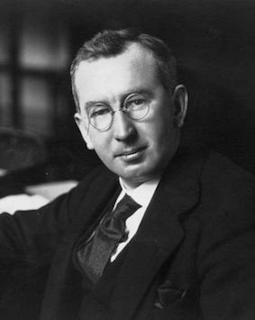
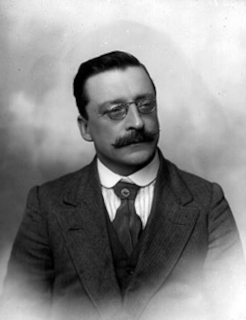
(Pictured: Arthur Griffith, founder (1905) and third president (1911-17) of Sinn Féin)





 seamus dubhghaill