Nationalist forces enter Newcastle West, County Limerick, on Monday, August 7, 1922, after a twelve-hour battle, in which twelve anti-Treaty Irish Republican Army (IRA) members, sometimes referred to as Irregulars, are killed. The casualties of the Nationalists are less than those of the Irregulars.
Taking little respite after Sunday’s labors, the Nationals advance from Rathkele on Monday morning, and by midday are in sight of their fresh objective. Armored cars enter the town and machine gun fire is directed against a party of Irregulars, causing many casualties.
When the artillery goes into action against the headquarters of the Irregulars, the Irregulars flee precipitately along Cord road.
Owing to the slow progress in the operations in Southern Ireland, the meeting of Dáil Éireann, scheduled to open Saturday, is postponed again.
The official army bulletin announces that the Nationals captured Castle Island on Saturday, August 5. It says that the counties of Cork and Kerry with a part of South Tipperary and a small area in County Waterford are the only districts held by the Irregulars with any degree of security.
The streets of Dublin are lined with great crowds of people on Tuesday, August 8, for the military funeral of nine National Army soldiers who were killed in fighting the Republican Irregulars in County Kerry. Michael Collins, Chairman of the Provisional Government, and all the leading officers of the army in Dublin march beside the hearses. Each coffin is covered with the Republican tricolour. There are many clergymen and other civilians in the funeral procession.
Prominent Catholics of Dublin and Belfast are trying to effect a better understanding between the Ulster and Free State Governments, according to the Daily Mail. This newspaper further states that all efforts to this end, which have all been taken with the advice and approval of leading English Catholics, are without official character.
A message from Strabane, County Tyrone, received by the Exchange Telegraph Company on August 8 states that a settlement between the Ulster Government and the Free State authorities is imminent, the terms of agreement having been practically arranged in negotiations proceeding in London.
In Downing Street, however, all knowledge of any such Irish negotiations is disclaimed and a telegram from Belfast quotes Ulster Government officials as denying that a settlement with the Free State is imminent.
The Free State Government is also unaware of any negotiations for a settlement between the Ulster Government and the Free State authorities. It is further states that such negotiations are unlikely to take place.
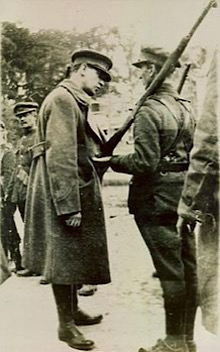
(From: “Irish Irregulars Routed With Loss,” The New York Times, August 9, 1922 | Pictured: General Michael Collins inspects a soldier at Newcastle West, County Limerick, August 8, 1922)
Cosgrave is born at 174 James’s Street, Dublin, on June 5, 1880, to Thomas Cosgrave, grocer, and Bridget Cosgrave (née Nixon). He is educated at the Christian Brothers School at Malahide Road, Marino, Dublin, before entering his father’s publican business. He first becomes politically active when he attends the first Sinn Féin convention in 1905.
At an early age, Cosgrave is attracted to the Irish nationalist party Sinn Féin. He becomes a member of the Dublin Corporation in 1909 and is subsequently reelected to represent Sinn Féin interests. He joins the Irish Volunteers in 1913, although he never joins the Irish Republican Brotherhood (IRB) because he does not believe in secret societies. When the group splits in 1914 upon the outbreak of World War I, he sides with a radical Sinn Féin minority against the constitutional nationalists led by John Redmond, who supports the British war effort.
Cosgrave takes part in the 1916 Easter Rising and is afterward interned by the British for a short time. In 1917, he is elected to Parliament for the city of Kilkenny. In the sweeping election victory of Sinn Féin in the 1918 United Kingdom general election, he becomes a member of the First Dáil. He is made Minister for Local Government in the first republican ministry, and during the Irish War of Independence (1919–21) his task is to organize the refusal of local bodies to cooperate with the British in Dublin.
Cosgrave is a supporter of the 1921 Anglo-Irish Treaty settlement with Great Britain, and he becomes Minister of Local Government in Ireland’s provisional government of 1922. He replaces Michael Collins as Chairman of the Provisional Government when the latter becomes commander-in-chief of the National Army in July 1922. He also replaces Arthur Griffith as president of the Dáil after Griffith’s sudden death on August 12, 1922. As the first president of the Executive Council of the Irish Free State, he, who had helped found the political party Cumann na nGaedheal in April 1923 and became its leader, represents Ireland at the Imperial Conference in October 1923. A month earlier he is welcomed as Ireland’s first spokesman at the assembly of the League of Nations.
Cosgrave’s greatest achievement is to establish stable democratic government in Ireland after the Irish Civil War (1922–23). In the Dáil there is no serious opposition, since the party headed by Éamon de Valera, which refuses to take the oath prescribed in the treaty, abstains from attendance. But neither Cosgrave nor his ministry enjoy much popularity. Order requires drastic measures, and taxation is heavy and sharply collected. He seems sure of a long tenure only because there is no alternative in sight.
In July 1927, shortly after a general election, the assassination of Kevin O’Higgins, the vice president, produces a crisis. The Executive Council introduces a Public Safety Act, which legislates severely against political associations of an unconstitutional character and introduces a bill declaring that no candidature for the Dáil should be accepted unless the candidate declares willingness to take a seat in the Dáil and to take the oath of allegiance. The result of this measure is that de Valera and his party decide to attend sessions in the Dáil, and, since this greatly alters the parliamentary situation, Cosgrave obtains leave to dissolve the assembly and hold a general election. The September 1927 Irish general election leaves his party numerically the largest in the Dáil but without an overall majority. He continues in office until de Valera’s victory at the 1932 Irish general election. Cumann na nGaedheal joins with two smaller opposition parties in September 1933 to form a new party headed by Cosgrave, Fine Gael (“Irish Race”), which becomes Ireland’s main opposition party. In 1944 he resigns from the leadership of Fine Gael.
Cosgrave dies on November 16, 1965, at the age of 85. The Fianna Fáil government under Seán Lemass awards him the honour of a state funeral, which is attended by the Cabinet, the leaders of all the main Irish political parties, and Éamon de Valera, then President of Ireland. He is buried in Goldenbridge Cemetery in Inchicore, Dublin. Richard Mulcahy says, “It is in terms of the Nation and its needs and its potential that I praise God who gave us in our dangerous days the gentle but steel-like spirit of rectitude, courage and humble self-sacrifice, that was William T. Cosgrave.”
While Cosgrave never officially holds the office of Taoiseach (prime minister), Ireland considers him to be its first Taoiseach due to having been the Free State’s first head of government.
Cosgrave’s son, Liam, serves as a TD (1943-81), as leader of Fine Gael (1965-77) and Taoiseach (1973-77). His grandson, also named Liam, also serves as a TD and as Senator. His granddaughter, Louise Cosgrave, serves on the Dún Laoghaire–Rathdown County Council (1999-2009).
In October 2014, Cosgrave’s grave is vandalised, the top of a Celtic cross on the headstone being broken off. It is again vandalised in March 2016.
A party of eighteen armed B-Specials, a part-time auxiliary police force which is almost 100% Protestant, when traveling by train to Enniskillen, are stopped at Clones railway station in County Monaghan by an IRA group. The B-Specials react immediately by shooting Commander Fitzpatrick. His colleagues retaliate by fatally shooting four Specials and arresting the survivors. Trouble in the North is at a boiling point and in the three days after the Clones incident thirty people are murdered in Belfast.
Collins and James Craig, Prime Minister of Northern Ireland, have further discussions in Dublin in early February 1922 but the meeting breaks down over the question of the boundary revision. Craig informs reporters that he has the assurance of the British Government that the Boundary Commission will make only slight changes. He complains that the maps which Collins had produced led him to the assumption that Collins had already been promised almost half of Northern Ireland. Craig agrees to minor changes but if North and South fail to agree, there will be no change at all. Collins issues a statement which refuses to admit any ambiguity and says that majorities must rule.
The British and the Provisional Government finally agreed that an Irish Free State Agreement Bill will legalise the Treaty and the transfer of power to the Provisional Government and will authorise the election of a Provisional Parliament to enact the Free State Constitution. Final ratification of the Treaty is deferred until the British confirm the Free State Constitution. Only then will Northern Ireland be allowed to exclude itself formally from the Free State.
(From: “OTD in 1922 – The IRA Kidnaps More Than Forty Loyalists Activists and ‘B’ Specials,” Stair na hÉireann | History of Ireland, https://stairnaheireann.net | Picture: Colour image of the IRA patrolling Grafton Street, Dublin, during the Irish Civil War in 1922, 1916 Easter Revolution in Colour)
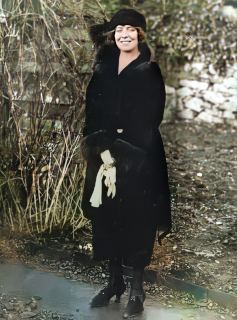
Kiernan is born to Peter Kiernan and Bridget (née Dawson). She is educated at Loreto Convent, County Wicklow. Hers is a very comfortably off merchant family with five sisters and one brother. Her parents enjoy a happy marriage, and life in the Kiernan home is joyous until Kitty reaches her teens. On November 27, 1907, her sister, Elizabeth Mary (a twin), dies at the age of eighteen of pulmonary tuberculosis, while Elizabeth’s twin sister, Rose, apparently dies the same year in Davos, Switzerland, which would also indicate tuberculosis as a cause of death. Her mother dies on November 29, 1908, of apoplexy, while her father dies almost exactly a year later, on November 9, 1909, of pneumonia. The Kiernan family owns the Greville Arms Hotel in the town, as well as a grocery shop, a hardware store, a timber and undertaking business and also a bar. Around the corner from the hotel, they operate a bakery which supplies the town and most of the surrounding countryside. All the family works in one capacity or another.
Michael Collins, one of the principal founders of the independent Irish state, is introduced to the vivacious Kiernan sisters by his cousin Gearóid O’Sullivan, who is already dating Maud Kiernan. Collins initially falls for the captivating Helen Kiernan, but she is already engaged to someone else. He then turns his interests to Kitty, who has already captured the interest of Collins’ friend Harry Boland. However, it is Collins to whom Kitty becomes engaged, with plans to marry Collins in a November 1922 double ceremony to include the nuptials of Maud and Gearóid. Collins’ assassination four months earlier, on August 22, 1922, near Béal na Bláth, County Cork, results in a single wedding taking place.
On June 10, 1925, Kiernan marries Felix Cronin, who is Quartermaster General in the Irish Army. They have two sons, Felix Jnr. and Michael Collins Cronin. Felix Jnr. and his son Rex are interred with his parents in Glasnevin Cemetery.
Kiernan dies, aged 52, of a cerebral hemorrhage on July 24, 1945, and her grave is close to that of Collins. Felix Cronin dies suddenly on October 22, 1961, while playing golf at Woodbrook Golf Club and is also buried in Glasnevin.
Kiernan and Michael Collins keep up a lengthy correspondence and while Collins is in London during the Anglo-Irish Treaty negotiations, he writes to her every day. The bulk of these letters are written between 1919 and 1922, and through their almost daily contact emerges a picture of the dreams and aspirations of the man often called Ireland’s “lost leader” and the woman with whom he wanted to share a “normal” life. These letters are the subject of a book written by Leon Ó Broin entitled In Great Haste. In 2000, some of the 300 letters sent by Kiernan and Collins to each other go on permanent display at the Cork Public Museum. These letters give a great insight into her attitude to life and into the political events of this time.
Former Fine Gael minister Peter Barry donates his collection of historic letters to the Lord Mayor of Cork, on behalf of the municipal museum. The collection, purchased from the Cronin family in 1995, is conserved at the Delmas bindery at Marsh’s Library in Dublin. The letters are also catalogued and then returned to the Cork Public Museum. The Peter Barry collection also contains letters from Harry Boland, a friend of Collins and former suitor of Kiernan.
In the 1996 film Michael Collins, Kiernan is played by American actress Julia Roberts though some reviewers are critical of the character’s development.
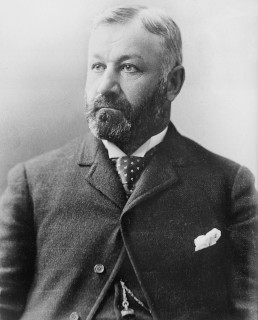
Croker is the son of Eyre Coote Croker (1800–1881) and Frances Laura Welsted (1807–1894). He is taken to the United States by his parents when he is just two years old. There are significant differences between this family and the typical family leaving Ireland at the time. They are Protestant and are not land tenants. Upon arrival in the United States, his father is without a profession but has a general knowledge of horses and soon becomes a veterinary surgeon. During the American Civil War, he serves in that same capacity under General Daniel Sickles.
Croker is educated in New York public schools but drops out at age twelve or thirteen to become an apprentice machinist in the New York and Harlem Railroad machine shops. Not long after, he becomes a valued member of the Fourth Avenue Tunnel Gang, a street gang that attacks teamsters and other workers that gather around the Harlem line’s freight depot. He eventually becomes the gang’s leader. He joins one of the Volunteer Fire Departments in 1863, becoming an engineer of one of the engine companies. That is his gateway into public life.
James O’Brien, a Tammany associate, takes notice of Croker after he wins a boxing match against Dick Lynch whereby, he knocks out all of Lynch’s teeth. He becomes a member of Tammany Hall and active in its politics. In the 1860s he is well known for being a “repeater” at elections, voting multiple times at the polls. He is an alderman from 1868–1870 and Coroner of New York City from 1873–1876. He is charged with the murder of John McKenna, a lieutenant of James O’Brien, who is running for United States Congress against the Tammany-backed Abram S. Hewitt. John Kelly, the new Tammany Hall boss, attends the trial and Croker is freed after the jury is undecided. He moves to Harrison, New York by 1880. He is appointed the New York City Fire Commissioner in 1883 and 1887 and city Chamberlain from 1889-1890.
After the death of Kelly, Croker becomes the leader of Tammany Hall and almost completely controls the organization. As head of Tammany, he receives bribe money from the owners of brothels, saloons and illegal gambling dens. He is chairman of Tammany’s Finance Committee but receives no salary for his position. He also becomes a partner in the real estate firm Meyer and Croker with Peter F. Meyer, from which he makes substantial money, often derived from sales under the control of the city through city judges. Other income comes by way of gifts of stock from street railway and transit companies, for example. At the time, the city police are largely still under the control of Tammany Hall, and payoffs from vice protection operations also contribute to Tammany income.
Croker survives Charles Henry Parkhurst‘s attacks on Tammany Hall’s corruption and becomes a wealthy man. Several committees are established in the 1890s, largely at the behest of Thomas C. Platt and other Republicans, to investigate Tammany and Croker, including the 1890 Fassett Committee, the 1894 Lexow Committee, during which Croker leaves the United States for his European residences for three years, and the Mazet Investigation of 1899.
Croker’s greatest political success is his bringing about the 1897 election of Robert Anderson Van Wyck as first mayor of the five-borough “greater” New York. During Van Wyck’s administration Croker completely dominates the government of the city.
In 1899, Croker has a disagreement with Jay Gould‘s son, George Jay Gould, president of the Manhattan Elevated Railroad Company, when Gould refuses his attempt to attach compressed-air pipes to the Elevated company’s structures. He owns many shares of the New York Auto-Truck Company, a company which would benefit from the arrangement. In response to the refusal, he uses Tammany influence to create new city laws requiring drip pans under structures in Manhattan at every street crossing and the requirement that the railroad run trains every five minutes with a $100 fine for every violation. He also holds 2,500 shares of the American Ice Company, worth approximately $250,000, which comes under scrutiny in 1900 when the company attempts to raise the price of ice in the city.
After Croker’s failure to carry the city in the 1900 United States presidential election and the defeat of his mayoralty candidate, Edward M. Shepard, in 1901, he resigns from his position of leadership in Tammany and is succeeded by Lewis Nixon. He departs the United States in 1905.
Croker operates a stable of thoroughbred racehorses during his time in the United States in partnership with Michael F. Dwyer. In January 1895, they send a stable of horses to England under the care of trainer Hardy Campbell, Jr. and jockey Willie Simms. Following a dispute, the partnership is dissolved in May but Croker continues to race in England. In 1907, his horse Orby wins Britain’s most prestigious race, The Derby. Orby is ridden by American jockey John Reiff whose brother Lester had won the race in 1901. Croker is also the breeder of Orby’s son, Grand Parade, who wins the Derby in 1919.
Under the Irish Republic‘s Dáil Constitution adopted in 1919, Dáil Éireann continues to exist after it has ratified the Anglo-Irish Treaty. In protest at the ratification, Éamon de Valera resigns the presidency of the Dáil then seeks re-election from among its members in order to clarify his mandate, but Arthur Griffith defeats him in the vote and assumes the presidency.
The Provisional Government takes office two days later on January 16, 1922, when British administration hands over Dublin Castle to Collins in person. At this time, Westminster has not formally appointed the new Irish ministers or conferred their government with any powers.
The handover of Dublin Castle to the Provisional Government is one of the earliest and most remarkable events in the short life of the Provisional Government. For centuries Dublin Castle is the symbol, as well as the citadel, of British rule in Ireland. The transfer of its Castle administration to the representatives of the Irish people is greatly welcomed in Dublin. It is regarded as a significant outward and visible sign that British rule is ending.
By mid-1922, Collins in effect lays down his responsibilities as Chairman of the Provisional Government to become Commander-in-Chief of the Irish Army, a formal structured uniformed army that forms around the pro-Treaty Irish Republican Army (IRA). As part of those duties, he travels to his native County Cork. En route home on August 22, 1922, at Béal na Bláth, he is killed in an ambush. Arthur Griffith dies of a cerebral haemorrhage ten days prior to Collins’ assassination. After Collins’ and Griffith’s deaths in August 1922, W. T. Cosgrave becomes both Chairman of the Provisional Government and President of Dáil Éireann, and the distinction between the two posts becomes irrelevant.
(Pictured: The Provisional Government of Ireland with President Arthur Griffith (front row center) and his cabinet and party includng Michael Collins (to Griffith’s right) likely taken at the Mansion House in February 1922)
The Declaration of Independence asserts that the Dáil is the parliament of a sovereign state called the “Irish Republic,” and so the Dáil establishes a cabinet called the Ministry or “Aireacht,” and an elected prime minister known both as the “Príomh Aire” and the “President of Dáil Éireann.”
When the First Dáil meets in the Round Room of the Mansion House in Dublin on January 21, 1919, de Valera is the president of Sinn Féin and thus the natural choice for leadership. However, he is imprisoned in England so, at the second meeting of the Dáil on January 22, Cathal Brugha is elected as the first Príomh Aire on a temporary basis. De Valera escapes Lincoln Gaol in February and is then elected to replace Brugha at the Dáil’s third meeting.
As leader, de Valera visits the United States from June 1919 to December 1920. His aim is to gain both popular and official recognition for the Republic and to obtain a loan to finance Dáil Éireann and the War of Independence. By the time of his return, de Valera has won public but not official support for the Republic and has raised a loan of $6 million.
After the election of the Second Dáil in 1921, de Valera resigns on August 26 and is immediately re-elected under the new title of President of the Republic. He then remains in office until January 1922 when, against his wishes, the Dáil votes to ratify the Anglo-Irish Treaty. De Valera resigns and submits his name for re-election but is rejected by the house, which instead elects Arthur Griffith, who supports the Treaty, by a vote of 60-58.
On January 16, 1922, the British government implements the Treaty and appoints a new Irish administration called the Provisional Government. The Dáil decides that the new administration will operate in parallel with the existing institutions of the Irish Republic, which the British do not recognise. Therefore, as the Irish Civil War begins the country has two leaders, Arthur Griffith as President of Dáil Éireann and Michael Collins as Chairman of the Provisional Government. Collins is also Minister for Finance in Griffith’s cabinet. This anomalous situation continues until Griffith and Collins both died suddenly in August 1922, Collins being assassinated by anti-Treaty irregulars and Griffith dying of natural causes. W.T. Cosgrave becomes Chairman of the Provisional Government on August 25 and, when he is also elected as President of Dáil Éireann in September, the two administrations are merged.
On December 6, both the Irish Republic and the Provisional Government come to an end as the new Constitution of the Irish Free State comes into force. The new Irish Free State has three leaders, the King as head of state, the Governor-General as the King’s representative, and the President of the Executive Council as head of government. W.T. Cosgrave is appointed as the first President of the Executive Council on the same day.





 seamus dubhghaill