seamus dubhghaill

Promoting Irish Culture and History from Little Rock, Arkansas, USA


Leave a comment

New Departure

Fenians propose a “New Departure,” an alliance with the Parnellites, on October 27, 1878. The term New Departure is used to describe several initiatives in the late 19th century by which Irish republicans, who are committed to independence from Britain by physical force, attempt to find a common ground for co-operation with groups committed to Irish Home Rule by constitutional means. The term refers to the fact that Fenians are to some extent departing from their orthodox doctrine of noninvolvement with constitutional politics, especially the British parliament.

In January 1877, James Joseph O’Kelly, a journalist with the New York Herald persuades John Devoy to meet with Irish parliamentarians. In January 1878, Devoy meets with Charles Stewart Parnell in Dublin. In March the exiled senior Irish Republican Brotherhood member John O’Leary and Supreme Council secretary John O’Connor meet secretly in London with MPs Charles Stewart Parnell, Frank Hugh O’Donnell, William Henry O’Sullivan and O’Kelly. The meeting is sought by Parnell or by William Carroll of Clan na Gael to consider co-operation between the IRB and Parnell. Parnell apparently merely listens and does not commit himself.

John O’Connor and Dr. Mark Ryan, both members of the IRB’s Supreme Council, believe O’Connor Power has some hand in the new departure. John O’Connor suspects that Michael Davitt of the IRB has been influenced by O’Connor Power, and that the new departure proposals conceal some sinister scheme of Power’s devising, assumptions that Davitt hotly rejects. The precedent for constitutional agitation set by Power is not lost on orthodox Fenians such as Dr. Ryan, who sees behind the new departure the nefarious influence of the member for Mayo.

In late 1878 Michael Davitt makes a fund-raising political lecture tour of the United States, promoted by William Carroll and John Devoy of Clan na Gael. On October 13 in Brooklyn, New York, Davitt first presents, in a lecture titled “Ireland in parliament from a nationalist’s point of view,” a doctrine that Irish republicans cannot prevent Irishmen voting or being elected to the British parliament, but they can influence who is sent to that parliament. He states that the Home Rule League, especially Isaac Butt and John O’Connor Power, are failing to prevent Ireland from being “imperialised” or “West Britainised.” Davitt however believes that Parnell and Joseph Biggar are acceptable Irish MPs, and Irish republicans should ensure that more such strong nationalists are voted in. John Devoy follows and points out that if Irish republicans are to gain the support of Britain’s potential enemies, such as Russia, they need to provide far stronger opposition to Britain both inside and outside parliament. He points out that Russia has not yet seen the Irish as providing any such meaningful opposition, in fact to Russia they appear loyal to Britain. Hence it is necessary to replace representatives in all Irish public bodies with suitable committed nationalists. Both Davitt and Devoy at this meeting stress that resolution of the Irish land question by transfer of ownership to the farmers themselves is integral to Irish demands on Britain.

On October 27, 1878, Devoy, without first consulting Davitt, summarises these ideas in what he terms a “new departure” in the New York Herald, and it is reported in Ireland on November 11. He also states that Irish participation in the British parliament is to be temporary, and that at a suitable time Irish nationalist MPs will withdraw to Dublin and form an independent Irish legislature. Davitt is at first worried that perceived connections to the Fenians will threaten Parnell in parliament, but Devoy convinces him that Parnell will not be affected. IRB leaders John O’Leary and Charles Kickham reject the overture to constitutionalists and Parnell gives no comment. He does however adopt the militant rhetoric of land ownership to be transferred to the Irish farmers themselves in various public speeches in Ireland. Hence the stage is set for the successful collaboration in 1879 over the Land War.

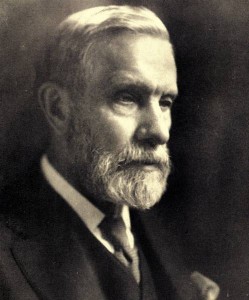
(Pictured: John Devoy)


Leave a comment

Founding of the Irish National League

The Irish National League (INL), a nationalist political party, is founded on October 17, 1882, by Charles Stewart Parnell as the successor to the Irish National Land League after it was suppressed. Whereas the Land League had agitated for land reform, the National League also campaigns for self-governance or Irish Home Rule, further enfranchisement and economic reforms.

The League is the main base of support for the Irish Parliamentary Party (IPP), and under Parnell’s leadership, it grows quickly to over 1,000 branches throughout the island. In 1884, the League secures the support of the Roman Catholic Church in Ireland. Its secretary is Timothy Harrington who organises the Plan of Campaign in 1886. The Irish League is effectively controlled by the Parliamentary Party, which in turn is controlled by Parnell, who chairs a small group of MPs who vet and impose candidates on constituencies.

In December 1890 both the INL and the IPP split on the issues of Parnell’s long standing family relationship with Katharine O’Shea, the earlier separated wife of a fellow MP, Captain William O’Shea, and their subsequent divorce proceedings. The majority of the League, which opposes Parnell, breaks away to form the “Anti-Parnellite” Irish National Federation (INF) under John Dillon. John Redmond assumes the leadership of the minority Pro-Parnellite (INL) group who remains faithful to Parnell. Despite the split, in the 1892 general election the combined factions still retain the Irish nationalist pro-Home Rule vote and their 81 seats.

Early in 1900 the Irish National League (INL) finally merges with the United Irish League and the Irish National Federation (INF) to form a reunited Irish Parliamentary Party under Redmond’s leadership returning 77 seats in the September 1900 general election, together with 5 Independent Nationalists, or Healyites, in all 82 pro-Home Rule seats.

(Pictured: A hostile Punch cartoon, from 1885, depicting the Irish National League as the “Irish Vampire”, with Parnell’s head)


2 Comments

Unveiling of the Charles Stewart Parnell Statue in Dublin

The statue of Charles Stewart Parnell on Sackville Street, now known as O’Connell Street, is unveiled in Dublin on October 1, 1911. It is one of the last sculptural initiatives in the city before independence.

On January 3, 1882 a resolution is passed by the Dublin City Council to grant the freedom of the city to Parnell. The plan for the Parnell monument is instigated by John Redmond, who succeeded Parnell as leader of the Irish Parliamentary Party, partly as a symbolic gesture to honour the “uncrowned king of Ireland” and to consolidate his aspiration to reunite the constitutionalists under his own leadership. The monument is funded through the efforts of a voluntary body, the Parnell Committee, founded in 1898. It is first proposed to place the monument on the site of the Thomas Moore statue, which would be moved to another location. The City Council refuses to grant this site and directs that the monument be erected on a site near the Rotunda Hospital, where it now stands.

Augustus Saint-Gaudens, an Irish-born sculptor and the most eminent in the art of public monuments in the United States, accepts the commission. It is however to prove a protracted project as the demand for Saint-Gaudens’ work in America is such that completion of the Parnell project is fraught with delays.

For the Parnell monument, Saint-Gaudens makes a scale replica of the buildings and square in Dublin and also a full scale model of the monument in wood in a field near his studio. In 1904 there is a disastrous fire in his studio and only the head of the statue is saved. The original concept is of an 8-foot high bronze figure placed by a bronze table and set against a 30-foot pyramid. However, as this form is already utilised in the Wellington Monument obelisk in Phoenix Park, Saint-Gaudens and architect Henry Bacon propose a triangular shaft almost double the height of the original.

Saint-Gaudens finally presents Parnell in what he considers a noble and calm manner, depicted in an open frock coat, with one hand resting on a table and the other extended dramatically as if making a point at a parliamentary debate. The shaft of the monument is constructed in undecorated ashlar granite.

On October 1, 1911, the monument is unveiled to a large crowd, many of whom had been absent from the foundation stone ceremony, but there are also strikes and marches indicating the unrest to follow.

In June 1913, John Redmond, as Secretary to the Parnell Monument Committee, writes to the City Council requesting the council to take the
Monument into their charge on behalf of the Citizens of Dublin. The Council agrees to this request and ever since then the Parnell Monument has been in the care of the Dublin Corporation.

The inscription on the monument reads:

To Charles Stewart Parnell

No Man has a right to fix the
Boundary to the march of a nation
No man has a right
To say to his country
Thus far shat thou
Go and no further
We have never
Attempted to fix
The ne-plus-ultra
To the progress of
Ireland’s nationhood
And we never shall

At the base of the statue the Irish inscription reads:

Go roimhigid Dia Éire da Clainn


Leave a comment

Charles Stewart Parnell’s Famous Speech at Ennis

Charles Stewart Parnell delivers his famous speech at Ennis, County Clare, on September 19, 1880, in which he introduces the term for non-violent protest – boycotting.

Parnell is elected president of Michael Davitt‘s newly founded Irish National Land League in Dublin on October 21, 1879, signing a militant Land League address campaigning for land reform. During the summer of 1880, the Land League, goes into decline but its fortunes are transformed when the House of Lords rejects a moderate measure of land reform. The movement is transformed into a national movement as it spreads into Munster and Leinster. As the movement spreads, crime increases especially in the West. Parnell, who had been elected leader of the Irish Parliamentary Party in May, is very worried about this violence and hopes that the Land League can deflect tenants away from the traditional violence associated with land agitation. He advocates a policy of “moral force” where tenants are to deny all social or commercial contact with anyone who is believed to oppose the aims of the League.

During his speech at Ennis, Parnell asks his audience, “What are you to do with a tenant who bids for a farm from which another has been evicted?” Several voices reply “Shoot him!” and “Kill him!” Parnell responds, “I wish to point out to you a very much better way, a more Christian and charitable way, which will give the lost man an opportunity of repenting. When a man takes a farm from which another has been evicted, you must shun him on the roadside when you meet him, you must shun him in the streets of the town, you must shun him in the shop, you must shun him on the fair green and in the market place, and even in the place of worship, by leaving him alone, by putting him in moral Coventry, by isolating him from the rest of the country, as if he were the leper of old – you must show him your detestation of the crime he committed.”

This type of “moral Coventry” is used in the cast of Captain Charles Cunningham Boycott, a County Mayo land agent, who is isolated by the local people until his nerve breaks. This leads to a new word entering into the English language – boycotting.


Leave a comment

Birth of Fanny Parnell, Poet & Nationalist

Fanny Parnell, Irish poet and Nationalist, is born Frances Isabelle Parnell in Avondale, County Wicklow on September 4, 1848. She is the sister of Charles Stewart Parnell, an important figure in nineteenth century Ireland.

Parnell is the eighth child out of eleven and fourth daughter born to John Henry Parnell, a landowner and the grandson of the last Chancellor of the Exchequer of Ireland, and Delia Tudor Stewart Parnell, an Irish American and the daughter of Admiral Charles Stewart (1778–1869) of the United States Navy. Her mother hates British rule in Ireland, a view presented through her children’s works. She is an intelligent girl and before she is through her teen years, she has studied mathematics, chemistry, and astronomy, and she can speak and write fluently in almost all the major European languages. She also has talents in music and painting and drawing in oil and water colours. Her parents separate when she is young. Soon afterwards, in July 1859, her father dies at the age of forty-eight and she and her mother move to Dalkey. A year later they move to Dublin, and in 1865 they move to Paris where Fanny studies art and writes poetry. In 1874 they move to Bordentown, New Jersey in the United States.

Parnell is known as the Patriot Poet. She shows interest in Irish politics and much of her poetry is about Irish nationalism. While she is living in Dublin in 1864, she begins publishing her poetry under the pseudonym “Aleria” in The Irish People, the newspaper of the Fenian Brotherhood. Most of her later work is published in The Pilot in Boston, the best-known Irish newspaper in America during the nineteenth century. Two of her most widely published works are The Hovels of Ireland, a pamphlet, and Land League Songs, a collection of poems. Her best-known poem is “Hold the Harvest,” which Michael Davitt refers to as the “Marseillaise of the Irish peasant.”

Parnell’s brother, Charles, becomes active in the Irish National Land League, an organisation that fights for poor tenant farmers, in 1879 and she strongly supports him. She and her younger sister, Anna Parnell (1852–1911), co-found the Ladies’ Land League in 1880 to raise money in America for the Land League. In 1881 the Ladies’ Land League continues the work of the men in the Land League while they are being imprisoned by the British government. In Ireland Anna becomes the president of the Ladies’ Land League, and the women hold many protests and quickly become more radical than the men, to the resentment of the male leaders. Fanny stays in America and works to raise money for the organisation. Most of the Land League’s financial support comes from America because of the campaigning done by Fanny Parnell.

Fanny Parnell dies on July 20, 1882, at the young age of 33, of a heart attack at the family mansion in Bordentown, New Jersey. She is buried at the Tudor family plot at Mount Auburn Cemetery in Cambridge, Massachusetts.


Leave a comment

Death of Thomas Croke, Archbishop of Cashel & Emly

Thomas William Croke, the second Catholic Bishop of Auckland in New Zealand (1870–74) and later Archbishop of Cashel and Emly in Ireland, dies on July 22, 1902. He is important in the Irish nationalist movement especially as a Champion of the Irish National Land League in the 1880s. The main Gaelic Athletic Association stadium in Dublin is named Croke Park in his honour.

Croke is born in Castlecor, County Cork, on May 28, 1824. He is educated in Charleville, County Cork, the Irish College in Paris and the Pontifical Irish College in Rome, winning academic distinctions including a Doctor of Divinity with honours. He is ordained in May 1847. Returning to Ireland for a short time he is appointed a Professor in St. Patrick’s, Carlow College. The Irish radical William O’Brien says that Croke fought on the barricades in Paris during the French Revolution of 1848. Croke returns to Ireland and spends the next 23 years working there. In 1858 he becomes the first president of St. Colman’s College, Fermoy, County Cork and then serves as both parish priest of Doneraile and Vicar General of Cloyne diocese from 1866 to 1870. Croke attends the First Vatican Council as the theologian to the Bishop of Cloyne 1870.

Croke gains the good opinion of the Irish ecclesiastical authorities and is rewarded in 1870 by his promotion to Bishop of Auckland in New Zealand. His former professor, Paul Cullen, by then Cardinal Archbishop of Dublin, is largely responsible for filling the Australasian Catholic church with fellow Irishmen. His strong recommendations lead to Croke’s appointment. Croke arrives at Auckland on December 17, 1870, on the City of Melbourne. During his three years as bishop, he restores firm leadership to a diocese left in disarray by his predecessor, Bishop Jean Baptiste Pompallier. He devotes some of his considerable personal wealth to rebuilding diocesan finances and also takes advantage of Auckland’s economic growth following the development of the Thames goldfields to further his aims, ensuring that all surplus income from parishes at Thames and Coromandel is passed on to him, and he institutes a more rigorous system for the Sunday collection at St. Patrick’s Cathedral. He imports Irish clergy to serve the growing Catholic community, and with Patrick Moran, the first Catholic Bishop of the Diocese of Dunedin, he tries unsuccessfully to secure an Irish monopoly on future episcopal appointments in New Zealand. Croke supports separate Catholic schools and their right to state aid and voices his opposition to secular education as Auckland’s Catholic schools are threatened by the provincial council’s Education Act 1872, which helps to create a free, secular and compulsory education system. However, generally, Croke’s image is uncontroversial. On January 28, 1874, after barely three years in office, Croke departs for Europe, on what is ostensibly a 12-month holiday, and he does not return to New Zealand.

Croke becomes a member of the Irish hierarchy when he is translated to be Archbishop of Cashel, one of the four Catholic Irish archbishoprics in 1875. Archbishop Croke is a strong supporter of Irish nationalism, aligning himself with the Irish National Land League during the Land War, and with the chairman of the Irish Parliamentary Party, Charles Stewart Parnell. In an 1887 interview he explains that he had opposed the League’s “No rent manifesto” in 1881, preferring to stop payment of all taxes.

Croke also associates himself with the Temperance Movement of Fr. Theobald Mathew and Gaelic League from its foundation in 1893. Within Catholicism he is a supporter of Gallicanism, as opposed to the Ultramontanism favoured by the Archbishop of Dublin, Cardinal Cullen. His support of nationalism causes successive British governments and Lord Lieutenant of Ireland‘s governments in Dublin to be deeply suspicious of him, as are some less politically aligned Irish bishops.

Following the scandal that erupts over Parnell’s relationship with Katharine O’Shea, the separated wife of fellow MP Captain William O’Shea, Archbishop Croke withdraws from active participation in nationalist politics.

Thomas Croke, 78, dies at the Archbishop’s Palace in Thurles, County Tipperary on July 22, 1902. He is buried at the Cathedral of the Assumption in Thurles. In honour of Croke, his successors as Archbishop of Cashel and Emly traditionally are asked to throw in the ball at the minor Gaelic football and All-Ireland Senior Hurling Championship finals.


Leave a comment

Richard Pigott Exposed as Forger of Phoenix Park Letters

richard-pigott

Richard Pigott, an Irish journalist, is exposed as the forger of The Times Phoenix Park letters on February 10, 1889.

Pigott is born in 1835 in Ratoath, County Meath. As a young man he supports Irish nationalism and works for The Nation and The Tablet before acting as manager of The Irishman, a newspaper founded by Denis Holland. James O’Connor later claims Pigott embezzled funds from the paper and covered his tracks by not keeping written records. Pigott also works for the Irish National Land League, departing in 1883 after accusing its treasurer, Mr. Fagan, of being unable to account for £100,000 of its funds, and for keeping inadequate records. Nothing is done about his accusation, which is publicised in the newspapers, and he turns against the League, which is allied to several Irish nationalist groups including the Irish Parliamentary Party led by Charles Stewart Parnell.

In 1879 Pigott is proprietor of three newspapers, which he soon sells to the Irish Land League, of which Charles Stewart Parnell is president. Hitherto a violent Nationalist, from 1884 Pigott begins to vilify his former associates and to sell information to their political opponents. In an effort to destroy Parnell’s career, Pigott produces fake letters, which purports that Parnell had supported one of the Phoenix Park murders.

The Times purchases Pigott’s forgeries for £1,780 and publishes the most damning letter on April 18, 1887. Parnell immediately denounces it as “a villainous and barefaced forgery.” In February 1889, the Parnell Commission vindicates him by proving that the letters are forgeries. They include misspellings which Pigott has written elsewhere. A libel action instituted by Parnell also vindicates him and his parliamentary career survives the Pigott accusations.

The Commission eventually produces 37 volumes in evidence, covering not just the forgeries but also the surrounding violence that follows from the Plan of Campaign.

After admitting his forgeries to Henry Labouchère, Pigott flees to Spain, and shoots himself in a Madrid hotel room. Parnell then sues The Times for libel, and the newspaper pays him £5,000 in an out-of-court settlement, as well as considerably more in legal fees. When Parnell next enters the House of Commons, he receives a hero’s reception from his fellow Members of Parliament.

(Pictured: Pigott as caricatured by Spy (Leslie Ward) in Vanity Fair, March 1889)


Leave a comment

Birth of Brendan Behan, Irish Republican, Poet & Writer

brendan-behan

Brendan Francis Aidan Behan, Irish Republican, poet, short story writer, novelist, and playwright who writes in both English and Irish, is born in Dublin on February 9, 1923.

Behan is widely regarded as one of the greatest Irish writers and poets of all time. He is also an Irish republican and a volunteer in the Irish Republican Army (IRA). Born in Dublin into a staunchly republican family, he becomes a member of the IRA’s youth organisation Fianna Éireann at the age of fourteen. However, there is also a strong emphasis on Irish history and culture in the home, which means he is steeped in literature and patriotic ballads from an early age. Behan eventually joins the IRA at sixteen, which leads to his serving time in a borstal youth prison in the United Kingdom. He is also imprisoned in Ireland. During this time, he takes it upon himself to study and he becomes a fluent speaker of the Irish language. Subsequently released from prison as part of a general amnesty given by the Fianna Fáil government in 1946, Behan moves between homes in Dublin, Kerry, and Connemara, and also resides in Paris for a time.

In 1954, Behan’s first play, The Quare Fellow, is produced in Dublin. It is well received, however, it is the 1956 production at Joan Littlewood‘s Theatre Workshop in Stratford, London, that gains Behan a wider reputation. This is helped by a famous drunken interview on BBC television. In 1958, Behan’s play in the Irish language, An Giall, has its debut at Dublin’s Damer Theatre. Later, The Hostage, Behan’s English-language adaptation of An Giall, meets with great success internationally. Behan’s autobiographical novel, Borstal Boy, is published the same year and becomes a worldwide best-seller.

He marries Beatrice Ffrench-Salkeld in 1955. By early March 1964, after developing diabetes, the end is in sight. Collapsing at the Harbour Lights bar, he is transferred to the Meath Hospital in central Dublin, where he dies at the age 41 on March 20, 1964. He is given an IRA guard of honour, which escorts his coffin. It is described by several newspapers as the biggest funeral since those of Michael Collins and Charles Stewart Parnell.


Leave a comment

First Edition of the “Irish Independent” Printed

irish-independent-first-issue

The first edition of the Irish Independent, flagship publication of Independent News & Media (INM) and Ireland’s largest-selling daily newspaper, is printed on January 2, 1905.

The Irish Independent is formed in 1905 as the direct successor to the Daily Irish Independent, an 1890s pro-Parnellite newspaper, and is launched by William Martin Murphy, a controversial Irish nationalist businessman, staunch anti-Parnellite and fellow townsman of Charles Stewart Parnell‘s most venomous opponent, Bantry’s Timothy Michael Healy.

During the Great Dublin Lockout of 1913, in which Murphy is the leading figure among the employers, the Irish Independent vigorously sides with its owner’s interests, publishing news reports and opinion pieces hostile to the strikers, expressing confidence in the unions’ defeat and launching personal attacks on the leader of the strikers, James Larkin. The Irish Independent describes the 1916 Easter Rising as “insane and criminal” and famously calls for the shooting of its leaders. In December 1919, during the Irish War of Independence, a group of twenty Irish Republican Army (IRA) men destroy the printing works of the paper, angered at its criticism of the IRA’s attacks on members of the Dublin Metropolitan Police and British government officials. In 1924, the traditional nationalist newspaper, the Freeman’s Journal, merges with the Irish Independent. Until October 1986 the paper’s masthead over the editorial contains the words “incorporating the Freeman’s Journal.”

For most of its history, the Irish Independent is seen as a nationalist, Catholic, anti-Communist, newspaper which gives its political allegiance to the Pro-Treaty party Cumann na nGaedheal and later its successor party, Fine Gael. During the Spanish Civil War, the Irish Independent‘s coverage is strongly pro-Franco, and the paper criticizes the De Valera government for not intervening on behalf of the Spanish Nationalists.

In the 1970s, the Irish Independent is taken over by former Heinz chairman Tony O’Reilly. Under his leadership, it becomes a more populist, market liberal newspaper — populist on social issues but economically right-wing. By the mid-nineties its allegiance to Fine Gael has ended. In the 1997 general election, it endorses Fianna Fáil under a front-page editorial entitled “It’s Payback Time.” While it suggests its headline refers to the fact that the election offers a chance to “pay back” politicians for their failings, its opponents suggest that the “payback” actually refers to its chance to get revenge for the refusal of the Rainbow Coalition to award the company a mobile phone licence.

In late 2004, Independent Newspapers moves from their traditional home in Middle Abbey Street to a new office, “Independent House” in Talbot Street, with the printing facilities already relocated to the Citywest business park near Tallaght.

On September 27, 2005, a fortnight after the paper publishes its centenary edition, it is announced that editor Vinnie Doyle will step down after 24 years in the position. He is replaced by Gerry O’Regan, who has until then been editor of the Irish Independent‘s sister paper, the Evening Herald. The newspaper’s previous editor Stephen Rae is also formerly editor of the Evening Herald and is appointed editor in September 2012. Fionnan Sheahan is appointed editor in January 2015.

In January 2008, at the same time as completing the purchase of Today FM, Ireland’s last national radio station independent of Denis O’Brien and state broadcaster RTÉ, O’Brien increases his INM shareholding to become the company’s second-largest shareholder behind Tony O’Reilly. In May 2008, O’Brien ousts O’Reilly and acquires a majority shareholding. Traditionally a broadsheet newspaper, it introduces an additional compact size in 2004 and in December 2012, following O’Brien’s takeover, it is announced that the newspaper will become compact only.

(Pictured: the first edition of the Irish Independent)


Leave a comment

Founding of the Irish National Land League

land-league-poster

The Irish National Land League, one of the most important political organizations in Irish history which seeks to help poor tenant farmers, is founded at the Imperial Hotel in Castlebar, County Mayo, on October 21, 1879. Its primary aim is to abolish landlordism in Ireland and enable tenant farmers to own the land they work on. The national organization is modeled on the Land League of Mayo, which Michael Davitt had helped found earlier in the year.

At the founding meeting Charles Stewart Parnell is elected president of the league. Davitt, Andrew Kettle, and Thomas Brennan are appointed as honorary secretaries. This unites practically all the different strands of land agitation and tenant rights movements under a single organisation.

Parnell, Davitt, John Dillon, and others including Cal Lynn then go to the United States to raise funds for the League with spectacular results. Branches are also set up in Scotland, where the Crofters Party imitates the League and secures a reforming Act in 1886.

The government introduces the Landlord and Tenant (Ireland) Act 1870, which proves largely ineffective. It is followed by the marginally more effective Land Acts of 1880 and 1881. These establish a Land Commission that starts to reduce some rents. Parnell together with all of his party lieutenants including Father Eugene Sheehy, known as “the Land League priest,” go into a bitter verbal offensive and are imprisoned in October 1881 under the Protection of Person and Property Act 1881 in Kilmainham Gaol for “sabotaging the Land Act.” It is from here that the No-Rent Manifesto is issued, calling for a national tenant farmer rent strike until “constitutional liberties” are restored and the prisoners freed. It has a modest success In Ireland and mobilizes financial and political support from the Irish Diaspora.

Although the League discourages violence, agrarian crimes increase widely. Typically, a rent strike is followed by eviction by the police and the bailiffs. Tenants who continue to pay the rent can be subject to a boycott by local League members. Where cases go to court, witnesses would change their stories, resulting in an unworkable legal system. This in turn leads on to stronger criminal laws being passed that are described by the League as “Coercion Acts.”

The bitterness that develops helps Parnell later in his Home Rule campaign. Davitt’s views as seen in his famous slogan: “The land of Ireland for the people of Ireland” is aimed at strengthening the hold on the land by the peasant Irish at the expense of the alien landowners. Parnell aims to harness the emotive element, but he and his party are strictly constitutional. He envisions tenant farmers as potential freeholders of the land they have rented.