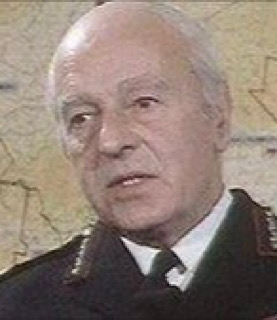
Shillington originally plans to join the Northern Ireland Civil Service, however he wants a more varied career. He joins the Royal Ulster Constabulary on February 8, 1933, as a cadet officer. He completes his training at the Newtownards depot in County Down. He is promoted to district inspector in 1935, and serves as officer in charge of D District in Belfast. In 1944, he is promoted to 1st Class District Inspector and is posted to Derry, County Londonderry.
In 1953, after nine years in Derry, Shillington is promoted to County Inspector and returns to Belfast. There, he joins the Inspector General’s Headquarters and serves in an administrative post. On January 16, 1961, he is appointed Commissioner of Belfast City.
In 1969, Shillington is appointed Deputy Inspector-General of the RUC, as second-in-command to the Inspector-General, Anthony Peacocke, who, like Shillington, had been educated at Sedbergh and Cambridge. When the Battle of the Bogside breaks out in Derry in August 1969, he requests permission to use CS gas for the first time in the United Kingdom. When that does not halt the rioting, he requests that the British Army be brought in. He telephones Peacocke on August 13 in order to persuade him of this. Peacocke, who has long denied the need for army involvement, eventually agrees, but his reputation never recovers and following the publication of the Hunt Report in October he resigns as Inspector-General.
Shortly thereafter, Sir Arthur Young is seconded from the City of London Police to be the last Inspector-General and the first Chief Constable of the RUC. James Callaghan, then Home Secretary, sends him to implement the Hunt Report. Young’s measures introduce the standard British rank system for police officers in Northern Ireland and disbands the Ulster Special Constabulary (USC). Shillington remains as Young’s deputy, and when the latter returns to the mainland in 1970 he succeeds him to become the RUC’s second Chief Constable.
Shillington marries Mary (Peggy) Bulloch in 1935. They have two sons and a daughter. He dies on August 14, 2001, at the age of 90, in a County Armagh nursing home.
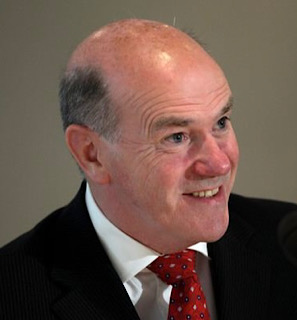
In 1992, Flanagan returns to duty with the RUC as Assistant Chief Constable of Operations, later taking on the responsibilities of Operational Commander for Belfast. He is appointed as head of Special Branch in 1994 and is promoted to Acting Deputy Chief Constable the following year. He becomes the Deputy Chief Constable proper in 1996, and when Chief Constable Hugh Annesley retires later that year, he succeeds him. When the PSNI is established in 2001, he serves as Chief Constable until his retirement the following year. He is replaced by Hugh Orde.
Since then Flanagan has served in Her Majesty’s Inspectorate of Constabulary and is appointed as HM Chief Inspector of Constabulary in 2005. He is tasked to review the police arrangements in Iraq in December 2005 as part of the British involvement there. Following his retirement in December 2008, Denis O’Connor succeeds him as Her Majesty’s Acting Chief Inspector of Constabulary.
Flanagan denies any wrongdoing or acting with any knowledge of the events in question. He agrees that these events had taken place. In the aftermath of the ombudsman’s report, Irish nationalist politicians say he should be forced to resign from his job as Chief Inspector of Constabulary.
The Police Ombudsman criticises Flanagan’s role in the RUC inquiry into the Omagh Bombing of August 15, 1998, in a report published in 2001, to which his response is that he would “publicly commit suicide” if he believed her report was correct, though he later apologises for the form of words he used.
In July 2010, Flanagan appears before the Iraq Inquiry into the UK’s role in the Iraq War. In 2005, he had conducted a review into the UK’s contribution to policing reform in Iraq. As he gives evidence, he has to apologise for the amount of acronyms in his report on Iraq, which is presented to the government in January 2006:
“In my view, and I would like to almost apologise for the number of acronyms in this report – but it wasn’t written with a view to being read publicly. It was written for the people who invented the acronyms…”
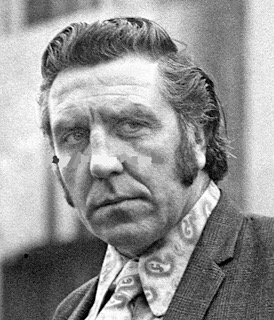
Charles Harding Smith, a Northern Irish loyalist and the first effective leader of the Ulster Defence Association (UDA), is born in Belfast, Northern Ireland, on January 24, 1931. An important figure in the Belfast-based “defence associations” that form the basis of the UDA on its formation in 1971, he later becomes embroiled in feuds with other UDA leaders and is eventually driven out of Northern Ireland by his opponents.
A former soldier in the British Army, Smith, at the time residing in Rosebank Street on the Shankill Road, calls a meeting of other locals at the Leopold Street Pigeon Fanciers Club to develop a response to attacks by republicans from the neighboring Ardoyne area. The location is chosen because Smith is himself a pigeon fancier and a member of the club. At the meeting, it is agreed to establish a vigilante group, the Woodvale Defence Association (WDA), with Smith in command and assisted by Davy Fogel, who organises military drilling for the forty or so recruits, and Ernie Elliott.
The WDA gains widespread notoriety and is blamed for a series of bomb attacks and shootings, most of which have been carried out by the Ulster Volunteer Force (UVF). Nevertheless, Smith’s reputation as a hardline loyalist is boosted as a result and when his group merges with other similar vigilante movements to form the Ulster Defence Association (UDA) in late 1971, he is chosen as chairman of the new group’s thirteen-member Security Council ahead of the other leading candidates, Tommy Herron and Jim Anderson. According to journalist Martin Dillon, Smith is heavily influenced by William Craig and William McGrath, both of whom see a need for a group to replace the Ulster Special Constabulary (USC) and feel that they can easily influence Smith to their way of thinking.
Smith soon takes charge of procuring arms for the UDA. In early 1972, working in tandem with Belfast businessman John Campbell who agrees to bankroll the purchases, he is put in contact with a Scottish arms dealer from whom he is to purchase £50,000 worth of weapons. He sends three WDA associates, John White, Bobby Dalzell, and Robert Lusty (who is also a serving officer in the Royal Ulster Constabulary (RUC)), to meet the arms dealer in a London hotel, following them without attending the actual meeting. The “arms dealer” is actually an RUC Special Branch agent and, after recording the conversation with the WDA men, arrests all three. Smith goes to Scotland Yard the same day to inquire about his friends only to be arrested himself.
Smith remains in custody in England until December 1972 when his case comes to trial. Campbell claims that the deal had been organised for the RUC to entrap the arms dealer, whom they believe to be a Provisional Irish Republican Army member and a series of mistakes by the prosecution helps to ensure that the case collapses with Smith acquitted. The trial is used as part of early arguments regarding collusion between the RUC and loyalists as a list of RUC Special Branch suspects is uncovered in Smith’s house while he attempts to call Chief ConstableGraham Shillington as a character witness.
By the time Smith returns to Belfast in December 1972 there has been changes in the UDA with Tommy Herron in effective control of the organisation and Davy Fogel the dominant figure amongst the WDA. He immediately takes back control of his west Belfast stronghold, threatening Fogel with death if he does not fall into line. Fogel, a close ally of Ernie Elliott, who was killed in circumstances that Smith had been rumoured to be involved in, although it is later determined that Elliott was shot dead after a drunken brawl on Sandy Row had descended into a gunfight, decides it is best not to go up against Smith and stands down.
However, Smith is not satisfied and, after putting out intelligence that Fogel has been taking UDA funds for himself, arrests Fogel and holds him captive for three hours in a Shankill social club where he is told to leave the area. Fogel briefly leaves for east Belfast but when the UDA there makes it clear he is not welcome either he leaves to live in England, from where he controversially gives an interview about his time in the UDA to The Sunday Times. Among claims made by Fogel in this interview is one that Smith was attempting to take control of the UDA with the help of the UVF. Smith is a strong admirer of the UVF’s military structure and hopes to replicate it in the UDA but he has a deep dislike of UVF leader Gusty Spence. As part of his remit to instill military discipline, Smith moves against a culture of racketeering that has become endemic in the west Belfast UDA during his absence. It is this initiative that leads to the rumours concerning his involvement in the death of Elliott, who had been named by some of his rivals in the UDA as a gangster.
Despite Smith’s show of strength following his return to Belfast his public persona remains low-key, with Herron fast emerging as the public face of the UDA. Much of this is down to the fact that Smith is inarticulate and unable to project a good image, unlike Herron who is a good talker and fairly charismatic. The emergence of these two leaders at the same time however is to bring the fledgling movement into near civil war.
Following a period of marginalisation Jim Anderson, who is serving as caretaker leader of the UDA, resigns as chairman of the UDA and as a result a meeting is called of the group’s leaders in March 1973 to determine who will succeed him. By this time Smith and Herron are recognised as the undisputed leaders of the Belfast UDA. There is a fear that whichever of the two is chosen as chairman, the other one will automatically feel obliged to challenge his leadership. As a result, it is determined that someone else should be appointed chairman as a compromise candidate and as Highfield-based activist Andy Tyrie, a man noted for his skill as an organiser, is chairing the conference it is decided that he will be acceptable to both men as chairman of the UDA. Tyrie soon proves to be a powerful rival to the two leaders. In September 1973, Herron is kidnapped and shot dead. His murder remains unsolved.
Tyrie had not proven to be the puppet Smith had hoped and had consolidated his power through his close involvement with Glenn Barr and the Ulster Workers’ Council during the strike of May 1974, an event that had helped to give real credence to Tyrie’s leadership abilities. Fearing the growing power of Tyrie, Smith criticises the UDA leader for sending a delegation to Libya to meet Muammar Gaddafi, who is a hated figure for many loyalists due to his providing arms to the Provisional Irish Republican Army. Smith, who had known about the trip in advance but had raised no objections, verbally attacks Tyrie over the Libya debacle in a meeting of the Inner Council in December 1974 before declaring the following January that he intends to split his West Belfast Brigade from the rest of the UDA.
Two weeks after announcing the schism, Smith is attending a meeting at the West Belfast UDA’s headquarters with Tommy Lyttle when he notices a sniper on a nearby roof. Smith, who is wearing a bulletproof vest, opens his coat as if to challenge the sniper to fire but is seriously wounded when the sniper shoots twice, hitting him both times with armour-piercing bullets. With Smith in hospital, Tyrie calls a meeting of the leading figures in the Shankill UDA and manages to convince Lyttle and other leading figures that Smith is too divisive a figure to remain in charge.
Smith is out of the hospital after only two weeks and declares himself back in charge, but before long he has fallen foul of a number of important people. Two Shankill UDA members are interned on the basis of evidence that rumours suggest had come from Smith, while he also clashed with the local UVF after suggesting that they merge but only on the basis that he will be in control. He begins to make threats against Barr and Chicken, two popular members who are leading figures on the UDA’s political side. Smith calls a meeting of his commanders, but, on February 6, 1975, in an attack arranged in advance by his opponents within the UDA, a gunman bursts in and shoots him twice in the chest. The gunman walks up to the injured Smith and prepares to shoot him in the head but the gun jams and he again survives an attempt on his life.
Smith spends another week in hospital after which he again returns to his Belfast home. Loyalist Davy Payne is sent to his house with another hitman and the two order Smith to leave Northern Ireland. He is taken to the airport the following day and leaves for England, leaving Tyrie as sole leader of the UDA. He settles in Southowram, West Yorkshire, where he works as a lorry driver before his death in 1997. During Dáil Éireann debates in 2005 he is named as a “self-confessed British intelligence agent.”
The gunmen, who are wearing workmen’s overalls, escape in a car afterward, killing Ken Campbell, a caretaker, as they leave. The people with whom Bradford had been meeting, most of them elderly, dive under tables for cover, and dozens of teenagers dancing nearby break into hysterical tears, but there are no injuries.
The killing is part of an escalation of IRA violence, both in London and in Northern Ireland, after the collapse of the prison hunger strike the previous month. The previous night an IRA bomb damages the London home of Britain’s Attorney General for Northern Ireland, Michael Havers. The home is empty and no one is seriously injured.
Bradford, a 40-year-old Methodist minister who is married and has a 6-year-old daughter, is shot several times, according to witnesses, and he dies almost immediately. His brother, Roy, who lives near the scene of the killing, in South Belfast, is at his side within moments. “But he was unconscious when I reached him, and he only lived for about a minute,” Roy Bradford says. News of the killing arouses fears of a Protestant reaction that could lead to serious civil unrest in Northern Ireland.
John “Jack” Hermon, the Chief Constable of the Royal Ulster Constabulary, issues an appeal to both the Protestant majority and the Roman Catholics to show “good sense and restraint.” He says security is being tightened in the province as a precautionary measure. He orders a wide-ranging search for the gunmen, who number at least three and possibly four, a point upon which the witnesses differ.
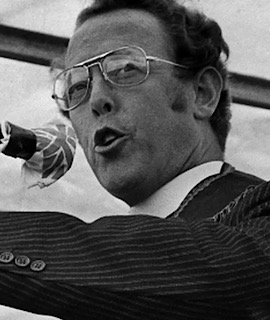
Bradford, who has been in Parliament since 1974, is an outspoken critic of the Irish nationalist guerrillas. He repeatedly calls for the reimposition of capital punishment in the province and for other strong deterrent measures.
With the Rev. Ian Paisley, another hard-line Member of Parliament, Bradford had planned to visit the United States In early 1982 to counteract the publicity of the IRA, which depends heavily on the money it receives from its American sympathizers. “There is a need for Americans to recognize that Ulster is not an occupied country,” Bradford says the previous month, “and that our political history is one of which we can be proud.”
The IRA, in a statement claiming responsibility for the killing, calls Bradford “one of the key people responsible for winding up the loyalistparamilitarysectarian machine in the North.” All twelve of Northern Ireland’s Members of Parliament – ten Protestants and two Catholics – are considered likely targets in the sectarian struggle that has claimed 2,100 lives in the province since 1969.
On the evening of December 3, 2012, hundreds of protesters gather outside Belfast City Hall as the Belfast City Council votes to limit the days that the Union Jack, the flag of the United Kingdom, flies from City Hall. Since 1906, the flag has been flown every day of the year. This is reduced to eighteen specific days a year, the minimum requirement for UK government buildings. The move to limit the number of days is backed by the council’s Irish nationalists while the Alliance Party abstains from the vote. It is opposed by the unionist councillors.
Minutes after the vote, protesters break into the back courtyard and try to force open the doors of the building. Two security staff and a press photographer are injured, and windows of cars in the courtyard are smashed. Protesters then clash with the police, injuring fifteen officers.
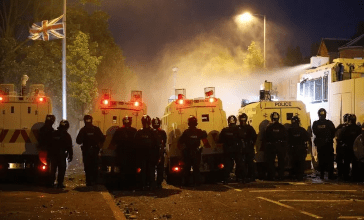
Ulster loyalists and British nationalists hold street protests throughout Northern Ireland. They see the council’s decision as part of a wider “cultural war” against “Britishness” in Northern Ireland. Throughout December and January, protests are held almost daily and most involve the protesters blocking roads while carrying Union Flags and banners. Some of these protests lead to clashes between loyalists and the police, sparking riots. Rioters attack police with petrol bombs, bricks, stones and fireworks. Police respond with plastic bullets and water cannon. Alliance Party offices and the homes of Alliance Party members are attacked, while Belfast City Councillors are sent death threats. According to police, some of the violence is orchestrated by high-ranking members of the Ulster Volunteer Force (UVF) and Ulster Defence Association (UDA). Loyalists also put up thousands of Union flags in public places, which further heightened tension.
After February 2013, the protests become smaller and less frequent, and lead to greater loyalist protests about related issues, such as restrictions on traditional loyalist marches.
Prime Minister of the United KingdomDavid Cameron condemns the protests, saying “violence is absolutely unjustified in those and in other circumstances.” MPNaomi Long says that Northern Ireland is facing “an incredibly volatile and extremely serious situation.” She also calls on Cameron to intervene after a police car outside her office is firebombed with a policewoman escaping injury in early December.
The Police Service of Northern Ireland‘s (PSNI) Chief ConstableMatt Baggott blames the violence on the UVF for “orchestrating violence for their own selfish motives. Everyone involved needs to step back. The lack of control is very worrying. The only answer is a political solution. Otherwise, this will eat into our ability to deal with drugs, into our ability to deal with alcohol issues, and deal with what is a very severe dissident threat.”
In September 2013, business representatives in Belfast reveal that the flag protests had resulted in losses totaling £50 million in the year to July 2013.
(Pictured: The Union Flag flying atop Belfast City Hall in 2006. The statue of Queen Victoria is in the foreground.)
McCaughey, from Aughnagar, Galbally, County Tyrone, Northern Ireland, is born on February 24, 1967, the oldest son of Owen and Bridget McCaughey. He is a boyhood friend of several of the “Loughgall Martyrs” including Declan Arthurs, Seamus Donnelly, Tony Gormley and Eugene Kelly, with whom he travels to local discos and football matches when they are growing up.
McCaughey is elected as a Sinn Féin councillor for Dungannon and South Tyrone Borough Council and at the time is the youngest elected representative on the island of Ireland.
Two months prior to his shooting, McCaughey is disqualified from holding his office on the council as he had failed to appear for a monthly council meeting. After his death, the Royal Ulster Constabulary (RUC) reveals the explanation behind his disappearance. He had been shot and wounded in a shoot-out with undercover British Army security forces near Cappagh, County Tyrone. He is then taken south across the Irish border into the Republic of Ireland where he is given hospital treatment and therefore unable to attend the meetings.
Ulster UnionistMP and fellow Dungannon councillor Ken Maginnis alleges that McCaughey had conspired to kill him while both sat as councillors.
McCaughey is shot dead on October 9, 1990, along with Dessie Grew, in an operation by undercover British soldiers. A secret undercover intelligence unit named 14 Intelligence Company, also known as the DET, are monitoring three AK-47s at a farm building in a rural part of County Armagh and are aware that the pair are due to remove the guns.
As McCaughey and Grew are approaching an agricultural shed which is being used to grow mushrooms and also thought to be an IRA arms dump, as many as 200 shots are fired at the two men. British Army reports of the shooting state that the two men left the shed holding two rifles. Republican sources state the men were unarmed.
McCaughey is buried at Galbally Cemetery in October 1990.
The family of McCaughey claims that he and Grew were ambushed after a stakeout by the Special Air Service (SAS). In January 2002, Justice Weatherup, a Northern Ireland High Court judge, orders that official military documents relating to the shooting should be disclosed. However, Police Service of Northern Ireland (PSNI) Chief ConstableHugh Orde has the ruling overturned on appeal in January 2005.
Fellow Sinn Féin representative, Francie Molloy, replaces McCaughey on Dungannon Council after a by-election is held following McCaughey’s death.
In January 2007, the lawyers representing McCaughey and another volunteer, Pearse Jordan, apply to the House of Lords to challenge the details of how the inquests into their deaths are to proceed.
McCaughey’s father, Owen, seeks to compel Chief Constable Hugh Orde to produce key documents including intelligence reports relevant to the shooting and the report of the RUC’s investigating officer.
In 2010, a commemorative portrait of McCaughey is unveiled in the mayor’s parlour at Dungannon council.
Major rioting and civil disorder break out in Ardoyne, north Belfast, Northern Ireland, on July 12, 2001. In some of the worst rioting in years, 113 police officers are injured in clashes which follow a July 12 parade. Police are attacked when trying clear the path for about 100 Orangemen returning from the parade to go along a main road passing the Catholic Ardoyne area.
In the seven-hour riot which involves about 250 nationalist youth, two blast bombs and 263 petrol bombs are exploded, while a dozen vehicles are hijacked, and 48 plastic bullets are shot by the police. Riot police also use water cannons. There are also incidents in east Belfast, Derry and Ballycastle, but the clashes in Ardoyne are by far the most serious.
The Royal Ulster Constabulary (RUC) says the riots are orchestrated by the Provisional Irish Republican Army, a claim denied by Sinn Féin, who believe the RUC’s heavy response escalates tensions. The incident also intensifies a row over the use of plastic bullets. Forty-eight of them are fired by the RUC in Ardoyne, and Sinn Féin claims fifty of them hit civilians, ten of which are badly injured. Chief ConstableRonnie Flanagan strongly rejects calls from the Northern Ireland Human Rights Commission (NIHRC) to halt its use in riots. Nationalist politicians see the ban on plastic bullets as a vital reform to make Catholics trust the police force more. Gerry Kelly from Sinn Féin says that the RUC “started the riot in Ardoyne. They are a sectarian force, using a very lethal weapon predominantly against nationalists and they should not be allowed to do so.”
A few days later another riot breaks out involving petrol bombs and acid being thrown by loyalists at police in north and west Belfast. Loyalists claim shots are fired at them from the Catholic Short Strand. A buffer zone is created by riot police in North Queen Street. Well-known Ulster Defence Association (UDA) members are spotted. From September 2001 the area sees fresh violence during the Holy Cross dispute and on the 23rd, with rioting also occurring in October and November.
Among the thousands paying their respects are 4,000 serving and retired gardaí, over 2,000 in uniform. Garda Golden is remembered as a happy man, proud to serve, a role model for the community – and by his brother Patrick as a “big gentle giant.”
In his homily, chief celebrant parish priest Father Pádraig Keenan tells the congregation that the killing of Garda Golden was “cold-blooded murder.” He reminds the mourners that Garda Golden is the 88th garda to die in the line of duty. He says, “It is 88 members too many. He like all the others is mourned by the entire nation.”
“His murder brings to mind once again all the families and communities that have been affected on our island.”
Fr. Keenan says, “Garda Tony’s death once again reflects how north Louth and the Cooley Peninsula have been affected by the tragic history of the Troubles on the island of Ireland, and especially the murder of Detective Garda Adrian Donohoe, three years ago at Lordship Credit Union in Bellurgan.”
He says that too many hearts have been broken, and too many lives shattered. There is no place for violence in our society, violence is wrong, always wrong. He refers to Garda Golden as one of life’s gentlemen.
Fr. Keenan begins the funeral mass by saying that Garda Golden quietly let “his light shine in so many ways through his life in a very humble way. Amidst our sadness may we be thankful for the charisma of his beautiful but too short life.”
The stillness of the water across from the churchyard in Dundalk Bay mirrors the silence and sadness that has unfolded on everyone since the weekend, he tells the congregation.
“Tony was so proud to serve the community of Omeath,” he says. “As one person from Omeath put it to me in recent days, he was ‘our garda’, and to a person amongst his family and colleagues, all are immensely proud of Garda Tony and his selfless nature. Proud of everything he lived for, worked for and stood for. Tony Golden was a much-loved role model in our community.”
Symbols including a family photograph are taken to the altar in memory of Garda Golden. A club jersey and hurley from the Stephenites GAA club in his native Ballina, County Mayo, represent his roots and love of sport. A television remote control, a soft drink, a bar of chocolate and packet of crisps were offered to recall his cherished “time out.”
Garda Golden’s final journey begins at the home in the village of Blackrock he shared with his wife Nicola and their three young children, Lucy, Alex and Andrew. The funeral cortège is led by the Garda Commissioner, while thousands of gardaí escort their colleague into his parish church, St. Oliver Plunkett’s, for the funeral mass at noon.
Fr. Keenan is joined on the altar by the vicar general of the Armagh diocese Dean Colum Curry, who represents the Primate of All Ireland, Bishop Eamon Martin. As well as the chaplains to the Garda and the Defence Forces, Bishop John Fleming and Father Gerard O Hora travel to the funeral from Golden’s home county of Mayo.
Screens are erected in the grounds and the village to relay the service to those outside.
Businesses shut down along the route as a mark of respect during the funeral. Roads around the village are sealed off for several hours. Garda Golden is laid to rest at St. Paul’s Cemetery Heynestown.
Golden is killed as he is bringing Siobhan Phillips to her home to retrieve her personal possessions. Phillips is also shot in the incident and is in a critical condition in hospital with her family at her bedside at the time of Garda Golden’s funeral.
President of the Garda Representative Association, Dermot O’Brien, says members of the gardaí from all corners of Ireland traveled to County Louth to pay their respects to their colleague. He says they are grief-stricken and numb.
O’Brien says everyone will reflect in their own way and that the realisation has struck that Garda Golden was murdered doing “a bread-and-butter type call.”
“They are going to ask themselves, those that attended the same type of call on Sunday that it could have been them. These are very similar calls that a lot of members did on Sunday, and they will sit back and reflect on what happened to Tony as they responded to a similar call.”
O’Brien says he had spoken to Garda Golden’s unit in the days leading to the funeral and, while they are coping, they are not well. “They are angry, grieving and disillusioned because today they have to bury a second friend, a murdered friend, a second murdered colleague.”
Father Michael Cusack also speaks of the pain and anger expressed by members of the garda force he met following Garda Golden’s death. Speaking on RTÉ‘s Today with Sean O’Rourke, Fr. Cusack says it is a very difficult day and week for gardaí. He says a lot of care needs to be offered to the members of the force and that there needs to be appropriate follow-up care given.
(From: “Garda Tony Golden ‘mourned by entire nation’,” RTÉ News, http://www.rte.ie, October 15, 2015)
Eleven people are injured when a car bomb rocks the centre of Moira, County Down, on the evening of February 20, 1998. The injured include seven Royal Ulster Constabulary (RUC) officers, one a policewoman, and four civilians. The RUC Chief Constable, Ronnie Flanagan, who visits the scene the following morning, says that a warning was issued by a man with a “southern” accent in calls to the Maze and Maghaberry prisons. He adds that a vehicle, possibly the getaway car, was discovered on the southern route of the M1 motorway, suggesting that the attack may have come from south of the Border.
The car bomb, estimated at 500 lbs., is planted outside the local RUC station and explodes at approximately 11:40 PM, about ten minutes after the warnings are issued. Houses and pubs in the vicinity of the RUC station are evacuated. Local people described the explosion as “huge” and “massive.”
The attack comes just hours after Sinn Féin is expelled from the talks about the future of the province by the British Government because of recent IRA killings. By the following morning, no organisation has admitted responsibility for the bombing.
There are reports of the explosion being heard 20 miles away from Moira, which is a picturesque village about 20 miles west of Belfast.
The injured are rushed to Craigavon Area Hospital. None of the injuries are believed to be critical. Flanagan says the damage caused to the local RUC station is significant. A number of nearby houses are also extensively damaged. “One house was virtually demolished in the explosion,” says a police source.
The Democratic Unionist Party (DUP) justice spokesman, Ian Paisley, Jr., who lives nearby, believes that the bomb is initially intended for a specific target in the nearby town of Lisburn, but because of heavy policing the bombers set off the device instead in Moira. “I lay the blame completely at the door of the Provisional IRA,” he says.
In December 2013, a 43-year-old man is arrested in Moy, County Tyrone, and questioned about the attack, but is later released unconditionally. A 47-year-old man is arrested in Dungannon, County Tyrone, on May 7, 2014. He is taken to Antrim police station for questioning but is also released unconditionally.
(From: “11 injured in bomb blast in Co Down,” by Gerry Moriarty, The Irish Times, http://www.irishtimes.com, February 21, 1998)
Eames spends his early years in Larne, with the family later moving to Belfast. He is educated at the city’s Belfast Royal Academy and Methodist College Belfast before going on to study at Queen’s University Belfast, graduating LL.B. (Upper Second Class Honours) in 1960 and earning a Ph.D. degree in canon law and history in 1963. During his undergraduate course at Queen’s, one of his philosophy lecturers is his future Roman Catholic counterpart, Cahal Daly.
Turning his back on legal studies for ordination in the Church of Ireland, Eames embarks on a three-year course at the divinity school of Trinity College, Dublin in 1960, but finds the course “intellectually unsatisfying.” In 1963 he is appointed curate assistant at Bangor Parish Church, becoming rector of St. Dorothea’s in Belfast in 1966, the same year he marries Christine Daly.
During his time at St. Dorothea’s, in the Braniel and Tullycarnet area of east Belfast, Eames develops a “coffee bar ministry” among young people but is interrupted by the Troubles. He turns down the opportunity to become dean of Cork and in 1974 is appointed rector of St. Mark’s in Dundela in east Belfast, a church with strong family links to C. S. Lewis.
On May 9, 1975, at the age of 38, Eames is elected bishop of the cross-border Diocese of Derry and Raphoe. Five years later, on May 30, 1980, he is translated to the Diocese of Down and Dromore. He is elected to Down and Dromore on April 23 and that election is confirmed on May 20, 1980. In 1986, he becomes the 14th Archbishop of Armagh and Primate of All Ireland since the Church of Ireland’s break with Rome. It is an appointment that causes some level of astonishment among other church leaders.
Drumcree Church, a rural parish near Portadown, becomes the site of a major political incident in 1996, when the annual Orangemen‘s march is banned by the Chief Constable of the Royal Ulster Constabulary from returning to the centre of Portadown via the nationalist Garvaghy Road after attending worship at Drumcree Church. Public unrest and violence escalate over the next three summers as other parades come under first police and later commission sanction.
Eames, as diocesan bishop and civil leader finds himself immersed in the search for a resolution to the issue. Within the wider Church of Ireland there is unease as it is a broad church in theology and politics including within its congregations nationalists in the south and unionists in the north. Eames, along with the rector of Drumcree, has to navigate this political and social controversy and seeks political assistance to diffuse tension. Some bishops in the Republic of Ireland call for Eames to close the parish church, including Bishop John Neill who later becomes Archbishop of Dublin. He refuses to do so, believing this action could precipitate greater unrest and possible bloodshed.
Eames is, for many years, a significant figure within the general Anglican Communion. In 2003, the self-styled ‘divine optimist’ is appointed Chairman of the Lambeth Commission on Communion, which examines significant challenges to unity in the Anglican Communion. The Commission publishes its report, the Windsor Report, on October 18, 2004.
At the Church of Ireland General Synod in 2006 Eames announces his intention to retire on December 31, 2006. Church law permits him to continue as primate until the age of 75 but he resigns, in good health, at the age of 69. On January 10, 2007, the eleven serving bishops of the Church of Ireland meet at St. Patrick’s Cathedral in Dublin and elect Alan Harper, Bishop of Connor, as Eames’s successor.




 seamus dubhghaill