seamus dubhghaill

Promoting Irish Culture and History from Little Rock, Arkansas, USA


Leave a comment

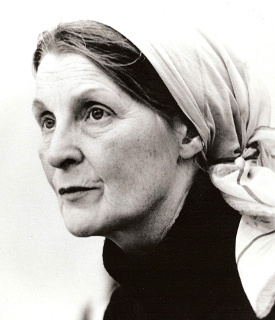
Death of Kathleen Clarke, Founder of Cumann na mBan

kathleen-clarke

Kathleen Clarke (née Daly), a founder member of Cumann na mBan, and one of very few privy to the plans of the Easter Rising in 1916, dies in Dublin on September 29, 1972. She is the wife of Tom Clarke and sister of Edward “Ned” Daly, both of whom are executed for their part in the Rising. She is subsequently a Teachta Dála (TD) and senator with both Sinn Féin and Fianna Fáil, and the first female Lord Mayor of Dublin (1939–41).

Kathleen Daly is born into a prominent Fenian family in Limerick on April 11, 1878, the third daughter of Edward and Catherine Daly. Her paternal uncle, John Daly, is at the time imprisoned for his political activities in Chatham and Portland Prisons in England. He is released in 1896 and returns home to Limerick. When Tom Clarke, who had been imprisoned with her uncle, is released in 1898 he travels to Limerick to receive the Freedom of the City and stays with the Daly family.

In 1901 Daly decides to emigrate to the United States to join Tom, who had been there since 1900, having secured work through his Fenian contacts. They marry on July 16, 1901, in New York City. Through his contacts in the Clan na Gael and the Irish Republican Brotherhood (IRB), Tom Clarke continues to be involved in nationalist activity. Kathleen joins the Gaelic League while in the United States and they return to Ireland in November 1907.

In 1914 Clarke becomes a founder member of Cumann na mBan. Her husband forbids her permission to take an active part in the 1916 Easter Rising as she has orders regardless of how the events pan out. As Tom Clarke is the first signatory of the Proclamation of the Irish Republic, he is chosen to be executed for his part in the Easter Rising. Her younger brother, Ned Daly, is also executed for taking part in the rising. She visits both of them before they are executed. After the Rising, Michael Collins establishes contact with her while in prison in his attempts to re-build the IRB network. She also sets up the Irish National Aid Fund to aid those who had family members killed or imprisoned as a result of the Easter Rising, closely aided by Sorcha MacMahon.

Clarke becomes a member of Sinn Féin and in 1917 is elected a member of the party’s Executive. During the German Plot she is arrested and imprisoned in Holloway Prison for eleven months. During the Irish War of Independence, she serves as a District Judge on the Republican Courts in Dublin. In 1919 she is elected as an Alderman for the Wood Quay and Mountjoy Wards of Dublin Corporation and serves until the Corporation is abolished in 1925.

Clarke is elected unopposed as a Sinn Féin TD to the Second Dáil at the 1921 elections for the Dublin Mid constituency. She is not re-elected at the 1922 Irish general election, however, and supports the Anti-Treaty forces during the Irish Civil War. In 1926 she becomes a founder member of Fianna Fáil and has to resign from Cumann na mBan. She is re-elected to the short-lived 5th Dáil at the June 1927 Irish general election as a Fianna Fáil member for the Dublin Mid constituency but loses her seat at the September 1927 Irish general election and does not regain it. She is elected as one of six Fianna Fáil Senators to the Free State Seanad for nine years at the 1928 Seanad election under the leadership of Joseph Connolly. She remains a member of the Seanad until it is abolished in 1936.

In 1930 Clarke is elected to the re-constituted Dublin Corporation for Fianna Fáil along with Robert Briscoe, Seán T. O’Kelly, Thomas Kelly and Oscar Traynor. She serves as the first Fianna Fáil Lord Mayor of Dublin as well as the first female Lord Mayor, from 1939 to 1941. She opposes the Constitution of Ireland as she feels that several of its sections would place women in a lower position that they had been afforded in the Proclamation of the Irish Republic. She is criticised by many in the Fianna Fáil organisation as a result and, while she resigns from the Thomas Clarke Cumann, she remains a member of the Fianna Fáil Ard Chomhairle.

While Clarke does not support the Irish Republican Army (IRA) bombing in England during World War II, she appeals for those sentenced to death by the Irish Government to be given clemency. Ultimately this leads to her breaking with the party completely after her term as Lord Mayor finishes in 1941. She declines to stand as a Fianna Fáil candidate at the 1943 Irish general election.

In 1966, as part of the celebrations of the Easter Rising, Clarke and other surviving relatives are awarded honorary Doctor of Law by the National University of Ireland. Following her death on September 29, 1972, she receives the rare honour of a state funeral. She is buried at Deans Grange Cemetery, Dublin.


Leave a comment

The Assassination of Tomás Mac Curtain

Tomas-mac-curtain

Tomás Mac Curtain, Sinn Féin Lord Mayor of Cork, is assassinated in Cork, County Cork on March 20, 1920, which is also his 36th birthday.

Thomas Curtin is born at Ballyknockane, Mourne Abbey, County Cork, on March 20, 1884, the son of Patrick Curtin, a farmer, and Julia Sheehan. He attends Burnfort National School. In 1897 the family moves to Cork City, where he attends the North Monastery school.

Mac Curtain, as he later becomes known, is active in a number of cultural and political movements beginning around the turn of the 20th century. He joins the Blackpool, Cork branch of Conradh na Gaeilge, becoming its secretary in 1902. He has interests in music, poetry, history, archaeology and Irish history. He works in his early career as a clerk, and in his free time teaches Irish. In 1911 he joins Fianna Éireann and is a member of the Irish Volunteers.

He meets Elizabeth Walsh (Eibhlís Breathnach) at a Gaelic League meeting, and they marry on June 28, 1908. They have six children, five of whom survive into adulthood. The family lives over 40 Thomas Davis Street, where Mac Curtain runs a small clothing and rainwear factory.

In April 1916, at the outset of the Easter Rising, Mac Curtain commands a force of up to 1,000 men of the Irish Volunteers who assemble at various locations around County Cork. From the volunteer’s headquarters at Sheares Street in the city, Mac Curtain and his officers await orders from the volunteer leadership in Dublin, but conflicting instructions and confusion prevail and as a result the Cork volunteers never enter the fray. A tense stand-off develops when British forces surround the volunteer hall and continued for a week until a negotiated agreement leads to the surrender of the volunteers’ arms to the then Lord Mayor of Cork Thomas Butterfield on the understanding that they will be returned at a later date. This does not happen however, and Mac Curtain is jailed in Wakefield Prison, in the Frongoch internment camp in Wales, and in Reading Gaol. After the general amnesty of participants in the Rising 18 months later, Mac Curtain returns to active duty as a Commandant of what is now the Irish Republican Army.

By 1918 Mac Curtain is a brigade commander, the highest and most important rank in the IRA. During the Conscription Crisis of 1918, he actively encourages the hiring of the women of Cumann na mBan to cater for Volunteers. He is personally involved with Michael CollinsSquad that, along with a Cork battalion, attempt to assassinate Lord John French, whose car is missed as the convoy passes through the ambush positions. Despite the setback he remains brigadier of No.1 Cork when he is elected Lord Mayor. He is elected in the January 1920 council elections as the Sinn Féin councillor for NW Ward No. 3 of Cork and is chosen by his fellow councillors to be the Lord Mayor. He begins a process of political reform within the city.

In January 1919, the Irish War of Independence starts, and Mac Curtain becomes an officer in the IRA. On March 20, 1920, his 36th birthday, Mac Curtain is shot dead in front of his wife and son by a group of men with blackened faces, who are found to be members of the Auxilaries along with unknown members of the Royal Irish Constabulary (RIC) by the official inquest into the event. In the wake of the killing, which is in revenge for the shooting of a policeman, Mac Curtain’s house in Blackpool is ransacked.

The killing causes widespread public outrage. The coroner’s inquest passes a verdict of willful murder against British Prime Minister David Lloyd George and against certain members of the RIC. Michael Collins later orders his squad of assassins to uncover and assassinate the police officers involved in the attack. RIC District Inspector Oswald Swanzy, who had ordered the attack, is fatally shot, with Mac Curtain’s own revolver, while leaving a Protestant church in Lisburn, County Antrim on August 22, 1920, sparking what is described by Tim Pat Coogan as a “pogrom” against the Catholic residents of the town.

Tomás Mac Curtain is buried in St. Finbarr’s Cemetery, Cork.