seamus dubhghaill

Promoting Irish Culture and History from Little Rock, Arkansas, USA


6 Comments

The 1973 Old Bailey Bombing

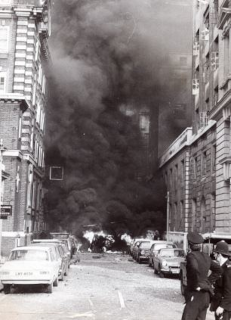
The 1973 Old Bailey bombing, a car bomb attack carried out by the Provisional Irish Republican Army (IRA) and dubbed as Bloody Thursday by newspapers in Britain, takes place outside the Central Criminal Court of England and Wales, commonly referred to as the Old Bailey, in London on March 8, 1973. This is the Provisional IRA’s first major attack in England since the Troubles began in the late 1960s. The unit also explodes a second bomb outside the Ministry of Agriculture building near Whitehall at around the same time the bomb at the Old Bailey explodes.

The Troubles had been ongoing in Northern Ireland and to a lesser extent in the Republic of Ireland since the late 1960s. Rioting, protests, gun battles, sniper attacks, bombings and punishment beatings became part of everyday life in many places in Northern Ireland, especially in the poorer working-class areas of Belfast and Derry. These events and others help to heighten sectarianism and boost recruitment into Irish republican and Ulster loyalist paramilitary groups and the security forces, mainly the newly created Ulster Defence Regiment (UDR).

England had been relatively untouched by the violence up until the beginning of 1973, but the IRA Army Council draws up plans for a bombing campaign to take place in England some time early in 1973. In the late 1960s and early 1970s, loyalist paramilitaries had bombed Dublin and other parts of the Republic of Ireland a number of times before the IRA began its bombing campaign in England. Following the Dublin bombings in late 1972 and in January 1973 carried out by Loyalists which killed three people and injured over 150, the media attention these bombings received helped the IRA decide to take its campaign to Britain in return. The arrest of top IRA personnel in both the Republic and Northern Ireland like Máire Drumm, Seán Mac Stíofáin, Ruairí Ó Brádaigh and Martin McGuinness in late 1972 help to convince the IRA to bomb England to take the heat off of the IRA in Ireland.

The IRA selects the volunteers who constitute the Active Service Unit (ASU) for the England bombing operation, which is scheduled to take place on March 8, 1973, the same day that a border poll, boycotted by Nationalists and Roman Catholics, is being held in Belfast. Volunteers from all three of the IRA’s Belfast Brigade Battalions are selected for the bombing mission. The team includes Gerry Kelly (19), Robert “Roy” Walsh (24), an expert bomb maker from Belfast, Hugh Feeney, a Belfast-born IRA volunteer and explosives expert, and two sisters, Marian (19) and Dolours Price (22) from Belfast and are from a staunchly Republican family, along with five other lesser-known volunteers from Belfast: Martin Brady (22), William Armstrong (29), Paul Holmes (19), William McLarnon (19), and Roisin McNearney (18).

Several days before the bombing, the leaders of the IRA ASU, which includes sisters Marian and Dolours Price, go to London and pick out four targets: the Old Bailey, the Ministry of Agriculture, an army recruitment office near Whitehall and New Scotland Yard. They then report back to their Officer Commanding (OC) in Belfast, and the IRA Army Council gives the go ahead. The bombs are made in Ireland and transported to London via ferry, according to Marian Price.

The Royal Ulster Constabulary (RUC) warns the British that the ASU is traveling to England, but are unable to provide specifics as to the target.

The drivers and the volunteers who are to prime the bombs wake up at 6:00 a.m. and drive the car bombs to their various targets. Gerry Kelly and Roy Walsh drive their car bomb to the Old Bailey. It is planned that by the time the bombs go off around 3:00 p.m., the ASU will be back in Ireland. The bomb at New Scotland Yard is found at 8:30 a.m. by a policeman who notices a discrepancy in the licence plate. The bomb team starts lifting out 5-pound (2.3 kg) bags of explosives and separates them, so that if the bomb does go off, the force of the explosion will be greatly reduced. The bomb squad eventually finds the detonating cord leads, which run under the front passenger seat of the car. Peter Gurney, a senior member of New Scotland Yard, cuts the detonator cord leads, defusing the bomb.

However, at the Old Bailey the bomb explodes, injuring many and causing extensive damage. Scotland Yard states it had warned the City of London police at 2:01 p.m. to search near the Old Bailey for a green Ford Cortina. The car is not located until 2:35 p.m. and explodes at 2:49 p.m. while police are evacuating the area. Several more people are injured by the car bomb near the Ministry of Agriculture, which brings the total number injured to over two hundred. A British man, Frederick Milton (60), dies of a heart attack. Dolours Price writes in her memoir, “There were warnings phoned in but people had stood about, curious to see… If people ignored the warnings and stood around gawking, they were stupid. The numbers of injured came about through curiosity and stupidity.” The ASU is caught trying to leave the country at Heathrow Airport prior to the explosions, as the police had been forewarned about the bombings and are checking all passengers to Belfast and Dublin. All ten give false names that do not match their documents and they are detained. The IRA Volunteer who gave a warning about the bombs an hour before they exploded is the only one not captured.

The IRA volunteers have to be tried at Winchester Crown court in Winchester Castle as the Old Bailey is wrecked by the car bomb. The trial takes ten weeks and is set amid extremely strict security. William McLarnon pleads guilty to all charges on the first day of the trial. On November 14, 1973, a jury convicts six men and two women of the bombings. The jury acquits Roisin McNearney in exchange for information and she is given a new identity. As her verdict is handed down, the other defendants begin to hum the “Dead March” from Saul, and one throws a coin at her, shouting, “Take your blood money with you” as she leaves the dock in tears. Six of the nine people convicted admit to Provisional IRA membership.

The judge sentences the eight to life imprisonment for the bombings and 20 years for conspiracy, while William McLarnon, whose family was forced out of their home in August 1969, is sentenced to 15 years. When his sentence is read he shouts, “Up The Provisional IRA.” As the eight are led to the cells below the court, several give raised fist salutes to relatives and friends in the public gallery. The Price sisters immediately go on hunger strike, soon followed by Feeney and Kelly, for the right not to do prison work and to be repatriated to a jail in Ireland. The bombers on hunger strike are eventually moved to jails in Ireland as part of the 1975 IRA truce agreed with the British. In 1983, Kelly escapes from Maze Prison and becomes part of an IRA ASU in the Netherlands. He is recaptured three years later by the Dutch authorities and extradited.

The Old Bailey bomb is the beginning of a sustained bombing campaign in England. The next major bombing by the IRA in England is the King’s Cross station and Euston station bombings which injured 13 people and do widespread damage. Another significant attack that year is the 1973 Westminster bombing which injures 60 people. Two more people die in England from IRA bombings in 1973, bringing the total to three for the year in that part of United Kingdom. The next year, 1974, is the bloodiest year of the Troubles outside of Northern Ireland with over 70 people being killed in the Republic of Ireland and England combined. Thirty-four are killed in the Dublin and Monaghan bombings, 21 from the Birmingham pub bombings, 12 from the M62 coach bombing, and several people are killed by the IRA’s Balcombe Street Gang.

One of the Old Bailey bombers, Marian Price, explains the IRA’s reasoning for bombing England. “It doesn’t seem to matter if it’s Irish people dying.” So if the armed struggle was to succeed then it was necessary to “bring it to the heart of the British Establishment.” Hence symbolic targets such as the Old Bailey “were carefully chosen.”

Leave a comment

Six Charged in the Birmingham Pub Bombings

On November 24, 1974, British police charge six men in connection with the Birmingham pub bombings three days earlier. Hugh Callaghan, Patrick Hill, Robert Hunter, Noel McIlkenny, William Power and John Walker are accused of the murder of the youngest victim of the attacks, Jane Davis, age 17, who is one of 19 people killed when bombs explode on November 21 in the Mulberry Bush at the foot of the Rotunda, and the Tavern in the Town, a basement pub in New Street.

A massive security operation is launched in Birmingham the following day when the six accused men appear in a hearing at the Victoria Law Courts. Assistant Chief Constable Maurice Buck, who is leading the investigation, says the six had been apprehended on the night of the attacks.

Five of the alleged bombers, who are from Northern Ireland but have been resident in England for at least eleven years, are arrested on the Belfast ferry at Heysham. Callaghan is arrested in Birmingham. All of the men had been living in the city, but Buck declines to give their addresses “for security reasons.”

The assistant chief constable tells reporters that the alleged bombers will be charged soon in connection with the deaths of the other 18 victims. “We are satisfied that we have found the men primarily responsible, but our inquiries will continue,” he says.

The so-called Birmingham Six are found guilty in August 1975 of carrying out the bombings and sentenced to life imprisonment. They are released after 16 years in jail when their convictions are quashed by the Court of Appeal in May 1991. One of the six, Paddy Hill states on his release, “The police told us from the start they knew we hadn’t done it. They didn’t care who had done it.” The real bombers have never been prosecuted and no group has ever admitted planting devices.

Three detectives are charged with perjury and conspiracy in connection with the investigation, but their trial is halted in 1993 on the grounds of prejudicial media coverage.

The six men finally agree on undisclosed compensation settlements in June 2002 – more than ten years after they had been freed.

(From: “1974: Six charged over Birmingham pub bombs” by BBC News, http://www.news.bbc.co.uk)


Leave a comment

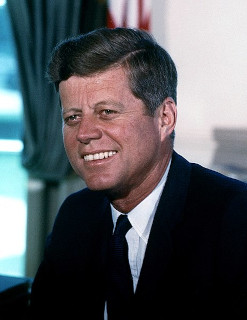
Birth of John F. Kennedy, 35th President of the United States

John Fitzgerald Kennedy, Irish American politician who serves as the 35th president of the United States, is born in Brookline, Massachusetts on May 29, 1917. He serves from 1961 until his assassination in 1963 during the height of the Cold War, with the majority of his work as president concerning relations with the Soviet Union and Cuba.

Kennedy is born into the wealthy, political Kennedy family, the son of Joseph P. Kennedy Sr., a businessman and politician, and Rose Kennedy (née Fitzgerald), a philanthropist and socialite. All four of his grandparents are children of Irish immigrants. He graduates from Harvard University in 1940, before joining the United States Naval Reserve the following year. During World War II, he commands a series of PT boats in the Pacific theater and earns the Navy and Marine Corps Medal for his service.

Following a brief stint in journalism, Kennedy, a Democrat, represents a working-class Boston district in the U.S. House of Representatives from 1947 to 1953. He is subsequently elected to the U.S. Senate and serves as the junior senator for Massachusetts from 1953 to 1960. While in the Senate, Kennedy publishes his book, Profiles in Courage, which wins a Pulitzer Prize.

Kennedy meets his future wife, Jacqueline Lee “Jackie” Bouvier (1929–1994), while he is a congressman. Charles L. Bartlett, a journalist, introduces the pair at a dinner party. They are married a year after he is elected senator, on September 12, 1953. Following a miscarriage in 1955 and a stillbirth in 1956, they produce three children, Caroline, John, Jr., and Patrick, who dies of complications two days after birth.

In the 1960 presidential election, Kennedy narrowly defeats Republican opponent Richard Nixon, who is the incumbent vice president. His humor, charm, and youth in addition to his father’s money and contacts are great assets in the campaign. His campaign gains momentum after the first televised presidential debates in American history. He is the first Catholic elected president of the United States.

Kennedy’s administration includes high tensions with communist states in the Cold War. As a result, he increases the number of American military advisors in South Vietnam. The Strategic Hamlet Program begins in Vietnam during his presidency. In April 1961, he authorizes an attempt to overthrow the Cuban government of Fidel Castro in the failed Bay of Pigs Invasion. He authorizes the Cuban Project, also known as Operation Mongoose, in November 1961. He rejects Operation Northwoods, plans for false flag attacks to gain approval for a war against Cuba, in March 1962. However, his administration continues to plan for an invasion of Cuba in the summer of 1962.

In October 1962, U.S. spy planes discover Soviet missile bases have been deployed in Cuba. The resulting period of tensions, termed the Cuban Missile Crisis, nearly results in the breakout of a global thermonuclear conflict. He also signs the first nuclear weapons treaty in October 1963.

Kennedy presides over the establishment of the Peace Corps, Alliance for Progress with Latin America, and the continuation of the Apollo space program with the goal of landing a man on the Moon. He also supports the civil rights movement but is only somewhat successful in passing his New Frontier domestic policies.

On November 22, 1963, Kennedy is assassinated in Dallas, Texas. Vice President Lyndon B. Johnson assumes the presidency upon Kennedy’s death. Marxist and former U.S. Marine Lee Harvey Oswald is arrested for the state crime but is shot and killed by Jack Ruby two days later. The FBI and the Warren Commission both conclude Oswald had acted alone in the assassination, but various groups contest the Warren Report and believe that Kennedy was the victim of a conspiracy.

After Kennedy’s death, Congress enacts many of his proposals, including the Civil Rights Act of 1964 and the Revenue Act of 1964. Despite his truncated presidency, he ranks highly in polls of U.S. presidents with historians and the general public. His personal life has also been the focus of considerable sustained interest following public revelations in the 1970s of his chronic health ailments and extramarital affairs. He is the last U.S. President to have been assassinated as well as the last U.S. president to die in office.

(Pictured: John F. Kennedy, photograph in the Oval Office, July 11, 1963)


Leave a comment

The Sack of Baltimore

sack-of-baltimore

The Sack of Baltimore takes place on June 20, 1631, when the village of Baltimore, County Cork is attacked by the Ottoman Algeria and Republic of Salé slavers from the Barbary Coast of North Africa. The attack is the largest by Barbary pirates on either Ireland or Great Britain.

The attack is led by a Dutch captain, Jan Janszoon van Haarlem, also known as Murad Reis the Younger. Murad’s force is led to the village by a man called Hackett, the captain of a fishing boat he had captured earlier, in exchange for his freedom. Hackett is subsequently hanged from the clifftop outside the village for conspiracy.

Murad’s crew, made up of Dutchmen, Moroccans, Algerians and Ottoman Turks, launches their covert attack on the remote village on June 20, 1631. They capture 107 villagers, mostly English settlers along with some local Irish people (some reports put the number as high as 237). The attack is focused on the area of the village known to this day as the Cove. The villagers are put in irons and taken to a life of slavery in North Africa.

There are conspiracy theories relating to the raid. It has been suggested that Sir Walter Coppinger, a prominent Catholic lawyer and member of the leading Cork family, who had become the dominant power in the area after the death of Sir Thomas Crooke, 1st Baronet, the founder of the English colony, orchestrates the raid to gain control of the village from the local Gaelic chieftain, Sir Fineen O’Driscoll. It is O’Driscoll who had licensed the lucrative pilchard fishery in Baltimore to the English settlers. Suspicion also points to O’Driscoll’s exiled relatives, who had fled to Spain after the Battle of Kinsale and had no hope of inheriting Baltimore by legal means. On the other hand, Murad may have planned the raid without any help. It is known that the authorities had advance intelligence of a planned raid on the Cork coast, although Kinsale is thought to be a more likely target than Baltimore.

Some prisoners are destined to live out their days as galley slaves, rowing for decades without ever setting foot on shore while others spend long years in harem or as labourers. At most, only three of them ever return to Ireland. One is ransomed almost at once and two others in 1646.

In the aftermath of the raid, the remaining villagers move to Skibbereen, and Baltimore is virtually deserted for generations.

(Pictured: “The sack of Baltimore (West Cork), ca. 1890-1891” pen and ink by Jack Butler Yeats)


Leave a comment

Birth of Kenneth Branagh, Actor, Director & Producer

kenneth-branagh

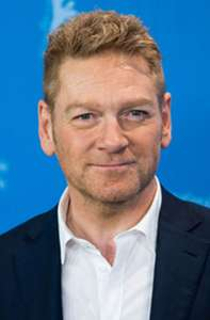
Sir Kenneth Charles Branagh, British actor, director, producer, and screenwriter, is born in Belfast on December 10, 1960.

Branagh is the middle of three children of working-class Protestant parents Frances (née Harper) and William Branagh, a plumber and joiner who runs a company that specialises in fitting partitions and suspended ceilings. He lives in the Tiger’s Bay area of the city and is educated at Grove Primary School.

At the age of nine, Branagh moves with his family to Reading, Berkshire, England, to escape the Troubles. He is educated at Whiteknights Primary School, then Meadway School, Tilehurst, where he appears in school productions such as Toad of Toad Hall and Oh, What a Lovely War!. He attends the amateur Reading Cine & Video Society (now called Reading Film & Video Makers) as a member and is a keen member of Progress Theatre for whom he is now the patron. He goes on to train at the Royal Academy of Dramatic Art in London and in 2015 succeeds Richard Attenborough as its president.

Branagh has both directed and starred in several film adaptations of William Shakespeare‘s plays, including Henry V (1989) (for which he was nominated for the Academy Award for Best Actor and Academy Award for Best Director), Much Ado About Nothing (1993), Othello (1995), Hamlet (1996) (for which he was nominated for the Academy Award for Best Adapted Screenplay), Love’s Labour’s Lost (2000), and As You Like It (2006).

Branagh stars in numerous other films and television series including Fortunes of War (1987), Woody Allen‘s Celebrity (1998), Wild Wild West (1999), The Road to El Dorado (2000), Conspiracy (2001), Harry Potter and the Chamber of Secrets (2002), Warm Springs (2005), as Major General Henning von Tresckow in Valkyrie (2008), The Boat That Rocked (2009), Wallander (2008–2016), My Week with Marilyn (2011) as Sir Laurence Olivier (nominated for Academy Award for Best Supporting Actor), and as Royal Navy Commander Bolton in the action-thriller Dunkirk (2017). He directs such films as Dead Again (1991), in which he also stars, Swan Song (1992) (nominated for Academy Award for Best Live Action Short Film), Mary Shelley’s Frankenstein (1994) in which he also stars, The Magic Flute (2006), Sleuth (2007), the blockbuster superhero film Thor (2011), the action thriller Jack Ryan: Shadow Recruit (2014) in which he also co-stars, the live-action film Cinderella (2015), and the mystery drama adaptation of Agatha Christie‘s Murder on the Orient Express (2017), in which he also stars as Hercule Poirot.

Branagh narrates the series Cold War (1998), the BBC documentary miniseries Walking with Dinosaurs (1999), Walking with Beasts (2001) and Walking with Monsters (2005). He has been nominated for five Academy Awards, five Golden Globe Awards, and has won three BAFTAs, and an Emmy Award. He is appointed a Knight Bachelor in the 2012 Birthday Honours and is knighted on November 9, 2012. He is awarded the Freedom of the City of his native city of Belfast in January 2018.


Leave a comment

The Release of the Birmingham Six

birmingham-six

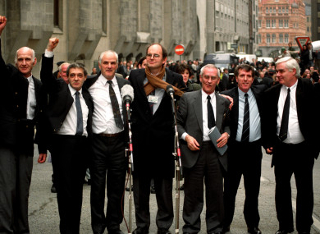
The Birmingham Six – Paddy Joe Hill, Hugh Callaghan, Richard McIlkenny, Gerry Hunter, Billy Power and Johnny Walker – are released from jail on March 14, 1991, after their convictions for the murder of 21 people in two pubs are quashed by the Court of Appeal.

The Birmingham pub bombings take place on November 21, 1974, and are attributed to the Provisional Irish Republican Army. Explosive devices are placed in two central Birmingham pubs – the Mulberry Bush at the foot of the Rotunda and the Tavern in the Town, a basement pub in New Street. Up until this point, the resulting explosions collectively are the most injurious attacks in Great Britain since World War II. Ten people at the Mulberry Bush and eleven at the Tavern in the Town are killed and 182 people are injured. A third device, outside a bank in Hagley Road, fails to detonate.

Five of the six are taken into custody on the evening of November 21. The men agree to be taken to Morecambe police station for forensic tests. The following morning, after the forensic tests and questioning at the hands of the Morecambe police, the men are transferred to the custody of West Midlands Serious Crime Squad police unit. Hugh Callaghan is taken into custody on the evening of November 22.

On May 12, 1975, the six men are charged with murder and conspiracy to cause explosions. The trial begins on June 9, 1975, at the Crown Court sitting at Lancaster Castle. After legal arguments the statements made in November are deemed admissible as evidence. The unreliability of these statements is later established. Forensic scientist Dr. Frank Skuse uses positive Griess test results to claim that Hill and Power had handled explosives. Callaghan, Hunter, McIlkenny and Walker all had tested negative. The jury finds the six men guilty of murder. On August 15, 1975, they are each sentenced to 21 life sentences.

In March 1976 their first application for leave to appeal is dismissed by the Court of Appeal. Their second full appeal, in 1991, is allowed. New evidence of police fabrication and suppression of evidence, the successful attacks on both the confessions and the 1975 forensic evidence causes the Crown to decide not to resist the appeals. The Court of Appeal states that “in the light of the fresh scientific evidence, which at least throws grave doubt on Dr. Skuse’s evidence, if it does not destroy it altogether, these convictions are both unsafe and unsatisfactory.” On March 14, 1991, the six walk free.

In 2001, a decade after their release, the six men are awarded compensation ranging from £840,000 to £1.2 million.

The success of the appeals and other miscarriages of justice cause the Home Secretary to set up a Royal Commission on Criminal Justice in 1991. The commission reports in 1993 and leads to the Criminal Appeal Act 1995 which establishes the Criminal Cases Review Commission in 1997. Superintendent George Reade and two other police officers are charged with perjury and conspiracy to pervert the course of justice but are never prosecuted. During the inquest into the bombings in 2016, Hill states that he knows the identities of three of the bombers who are still “free men” in Ireland.


Leave a comment

Execution of John Atherton, Anglican Bishop of Waterford & Lismore

john-atherton-execution-pamphlet

John Atherton, Anglican Bishop of Waterford and Lismore in the Church of Ireland, is executed on December 5, 1640, on a charge of immorality.

Atherton is born in 1598 in Somerset, England. He studies at Oxford University and joins the ranks of the Anglican clergy. In 1634 he becomes Bishop of Waterford and Lismore in the Church of Ireland. In 1640 he is accused of buggery with a man, John Childe, his steward and tithe proctor. They are tried under a law that Atherton himself had helped to institute. They are both condemned to death, and Atherton is executed in St. Stephen’s Green, Dublin. Reportedly, he confesses to the crime immediately before his execution, although he had proclaimed his innocence before that.

More recently, some historical evidence has been developed that shows Atherton might have been a victim of a conspiracy to discredit him and his patrons. This is attributable to Atherton’s status as an astute lawyer, who seeks to recover lost land for the relatively weak Protestant Church of Ireland during the 1630s. Unfortunately for Atherton, this alienates him from large landowners, who then allegedly use his sexuality to discredit him.

English Puritan, Congregationalist and Independent activists, as well as English and Scottish Presbyterian activists, contemporaneously campaign to abolish Episcopacy (bishops) within the embattled Church of England, Church of Scotland and Church of Ireland, notionally expediting the political interest in Atherton’s downfall.

Posthumous accusations of sexual wrongdoing also include allegations of “incest” with his sister-in-law, and infanticide of the resultant child, as well as zoophilia with cattle. However, these allegations begin to be circulated several months after his death in an anonymous pamphlet, and may have been intended to further discredit the bishop’s campaign to restore the finances of the Church of Ireland.

(Pictured: Anonymous pamphlet of the hangings of John Atherton and John Childe, 1641)


1 Comment

Fenian James Carey Killed by Patrick O’Donnell

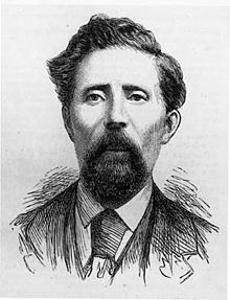
james-careyJames Carey, a Fenian and informer most notable for his involvement in the Phoenix Park Murders, is shot and killed by Patrick O’Donnell aboard the Melrose on July 29, 1883.

Carey is born in James Street, Dublin, in 1845. He becomes a bricklayer and builder as well as the leading spokesman of his trade and obtains several large building contracts. During this period Carey is engaged in an Irish nationalist conspiracy, but to outward appearance he is one of the rising men of Dublin. He is involved in religious and other societies, and at one time is spoken of as a possible lord mayor. In 1882 he is elected a town councillor.

About 1861 Carey joins the Irish Republican Brotherhood, soon becoming treasurer. In 1881 he breaks with the IRB and forms a new group which assumes the title of the Irish National Invincibles and establishes their headquarters in Dublin. Carey takes an oath as one of the leaders. The object of the Invincibles is to remove all “tyrants” from the country.

The secret head of the Invincibles, known as No. 1, gives orders to kill Thomas Henry Burke, the under-secretary to the lord-lieutenant. On May 6, 1882, nine of the conspirators proceed to the Phoenix Park where Carey, while sitting on a jaunting-car, points out Burke to the others. At once they attack and kill him with knives and, at the same time, also kill Lord Frederick Cavendish, the newly appointed chief secretary, who happens to be walking with Burke.

For a long time no clue can be found to identify the perpetrators of the act. However, on January 13, 1883, Carey is arrested and, along with sixteen other people, charged with a conspiracy to murder public officials. On February 13, Carey turns queen’s evidence, betraying the complete details of the Invincibles and of the murders in the Phoenix Park. His evidence, along with that of getaway driver Michael Kavanagh, results in the execution of five of his associates by hanging.

His life being in great danger, he is secretly put onboard the Kinfauns Castle with his wife and family, which sails for the Cape on July 6. Carey travels under the name of Power. Aboard the same ship is Patrick O’Donnell, a bricklayer. Not knowing his true identity, O’Donnell becomes friendly with Carey. After stopping off in Cape Town, he is informed by chance of Carey’s real identity. He continues with Carey on board the Melrose for the voyage from Cape Town to Natal. On July 29, 1883, when the vessel is twelve miles off Cape Vaccas, O’Donnell uses a pistol he has in his luggage to shoot Carey dead.

O’Donnell is brought to England and is tried for murder. After being found guilty, he is executed on December 17 at Newgate.