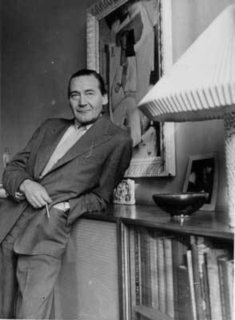
Scott is born in Drogheda on June 24, 1905. His family originates in the province of Munster. His father, William Scott, is a school inspector from near Sneem on the Iveragh Peninsula in County Kerry. His mother is from County Cork. He is educated at Belvedere College in Dublin. There he first demonstrates his skills at painting and acting. Initially he wants to pursue a career as a painter, but his father points out that it might make more financial sense to become an architect.
Scott becomes an apprentice for the sum of £375 per annum to the Dublin architectural firm Jones and Kelly. He remains there from 1923 until 1926, where he studies under Alfred E. Jones. In the evenings after work, he also attends the Metropolitan School of Art and the Abbey School of Acting, and appears in many plays there until 1927, including the first productions of Seán O’Casey’s Juno and the Paycock and The Plough and the Stars. On completing his pupilage, he becomes an assistant to Charles James Dunlop and then has a brief spell as an assistant architect in the Office of Public Works.
In 1931 Scott partners with Norman D. Good to form Scott and Good, and they open an office in Dublin. They design the hospital at Tullamore (1934–1937) and Portlaoise General Hospital (1935). Between 1937 and 1938, he is the President of the Architectural Association of Ireland (AAI). He founds his company, Michael Scott Architects, in 1938. That same year he also designs his house Geragh, at Sandycove, County Dublin.
Scott’s most important pre-war commission is the Irish Pavilion for the 1939 New York World’s Fair. He produces a shamrock shaped building constructed in steel, concrete and glass. It is selected by an international jury as the best building in the show. As a result, he is presented with a silver medal for distinguished services and given honorary citizenship of the city of New York by then Mayor Fiorello H. La Guardia. Other better-known architects who design national pavilions for this World Fair include Alvar Aalto of Finland and Oscar Niemeyer of Brazil.
Scott has three major commissions from the Córas Iompair Éireann CIÉ, the Inchicore Chassis Works, the Donnybrook Bus Garage and, most famously, the Dublin Central Bus Station, to be known as àras Mhic Dhiarmada or Busáras. Though initially controversial, Busáras wins Scott the Royal Institute of the Architects of Ireland Triennial Gold Medal for Architecture.
Scott, who spends most of his life living at Sandycove Point, just south of Dún Laoghaire in south Dublin, dies in Dublin on January 24, 1989, and is buried near Sneem in County Kerry.
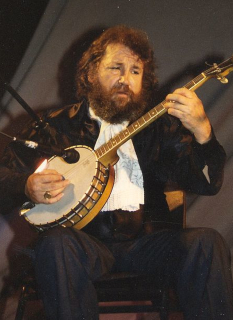
McKenna plays the banjo from an early age, initially because he cannot afford to buy the instrument of his choice, a mandolin. He is a member of The Dubliners from 1962 and is the only living member of the original formation at the time of his death. Prior to joining the Dubliners, he spends a few months in The Chieftains. In addition to his work on traditional Irish music, he also plays jazz on occasion.
McKenna uses GDAE tuning on a 19-fret tenor banjo, an octave below fiddle/mandolin and, according to musician Mick Moloney, is single-handedly responsible for making the GDAE-tuned tenor banjo the standard banjo in Irish music.
McKenna remains a great favourite with live audiences, and some of the loudest and most affectionate applause follows the tunes and songs on which he is the featured performer. He is well known for his unaccompanied renditions of songs such as “South Australia” and “I Wish I Had Someone to Love Me.” His banjo solos on tunes such as “The Maid Behind the Bar,” “The High Reel” and “The Mason’s Apron,” where he is usually accompanied by Eamonn Campbell on guitar, are often performed to cries of “C’mon Barney!” from audience or band members. Another featured spot in Dubliners performances is the mandolin duet that he plays with John Sheahan, again with Eamonn Campbell providing guitar accompaniment. As he often points out to the audience, “It’s an Irish duet, so there’s three of us going to play it.”
McKenna’s tendency to relate funny, and often only marginally believable, stories is legendary amongst Dubliners fans and friends. These anecdotes become known as Barneyisms, and his friend and former Dubliners bandmate Jim McCann collects them for the book An Obstacle Confusion: The Wonderful World of Barney McKenna.
McKenna dies unexpectedly on the morning of April 5, 2012 after collapsing in the kitchen of his home in Howth, County Dublin. He is buried at St. Loman’s Cemetery in Trim, County Meath, on April 9, 2012. Initially it is unclear whether The Dubliners will continue their 50th Anniversary Tour in the wake of McKenna’s death. However they soon confirm that they would “do their best to honour all the concert dates for the rest of the year [2012].”
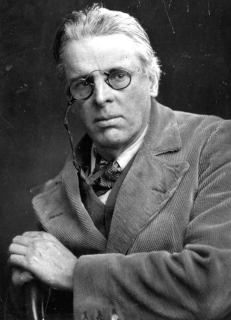
Yeats is born at Sandymount in County Dublin on June 13, 1865. His father, John Butler Yeats, is a lawyer and a well-known portrait painter. He is educated in London and in Dublin but spends his summers in the west of Ireland in the family’s summer house at Connacht. The young Yeats is very much part of the fin de siècle in London. At the same time, he is active in societies that attempt an Irish literary revival. His first volume of verse appears in 1887, but in his earlier period his dramatic production outweighs his poetry both in bulk and in import.
After 1910, Yeats’s dramatic art takes a sharp turn toward a highly poetical, static, and esoteric style. His later plays are written for small audiences. They experiment with masks, dance, and music, and are profoundly influenced by the Japanese Noh plays. Although a convinced patriot, he deplores the hatred and the bigotry of the Nationalist movement, and his poetry is full of moving protests against it. He is appointed to the Irish Senate, Seanad Éireann, in 1922.
Yeats is one of the few writers whose greatest works are actually written after the award of the Nobel Prize. Whereas he receives the Prize chiefly for his dramatic works, his significance today rests on his lyric achievement. His poetry, especially the volumes The Wild Swans at Coole (1919), Michael Robartes and the Dancer (1921), The Tower (1928), The Winding Stair and Other Poems (1933), and Last Poems and Plays (1940), make him one of the outstanding and most influential twentieth-century poets writing in English. His recurrent themes are the contrast of art and life, masks, cyclical theories of life (the symbol of the winding stairs), and the ideal of beauty and ceremony contrasting with the hubbub of modern life.
Anthony Malone, Irish lawyer and politician, is born on December 5, 1700, the eldest son of Richard Malone of Baronston, County Westmeath, and Marcella, daughter of Redmond Molady. Edmund Malone is his nephew, and a younger brother, Richard Malone (1706–1759), is MP for Fore from 1741.
Malone makes a successful career as a lawyer. From 1727 to 1760, and again from 1769 to 1776, he represents the county of Westmeath, and from 1761 to 1768 the borough of Castlemartyr, in the Irish parliament. In 1740 he is appointed Serjeant-at-law, but is dismissed from office in 1754 for opposing the claim of the crown to dispose of unappropriated revenue. In 1757 he is made Chancellor of the Exchequer of Ireland, but his attitude in council in regard to the Money Bill of 1761 leads to his again being removed from office. His treatment is regarded as too severe by William Pitt, 1st Earl of Chatham, and Malone, who draws a distinction between advice offered in council and his conduct in parliament, introduces the measure as chairman of the committee of supply. He is shortly afterwards granted a patent of precedence at the bar, but is charged with having sold his political principles for money.
Malone supports John Monck Mason‘s bill for enabling Roman Catholics to invest money in mortgages on land. In 1762 he is appointed, with Sir Richard Aston, to try the Whiteboys of Munster. They agree in ascribing the rural violence to local and individual grievances.
Malone dies at the age of 75 on May 8, 1776. At one time, a marble bust of him adorned Baronston House. By his will, made in July 1774, he leaves all his estates in the counties of Westmeath, Roscommon, Longford, Cavan, and Dublin to his nephew, Richard Malone, 1st Baron Sunderlin as he became, eldest son of his brother Edmund. On his death in 1816 the right of succession is disputed.
Pearse is born on August 24, 1878, at 27 Great Brunswick Street (now Pearse Street) in Dublin, the eldest child of James Pearse and Margaret Pearse (née Brady), who serves as a Teachta Dála (TD) in the 1920s. She is educated at the Holy Faith Convent in Glasnevin. After leaving school, she trains as a teacher. She helps to found St. Enda’s School with her brothers Patrick and Willie. Following the executions of her brothers in the aftermath of the Easter Rising, she continues to run St. Enda’s, along with Fergus De Búrca, until 1933.
Illness forces Pearse into the Linden Convalescent Home in Blackrock, County Dublin when she is in her 80s. In 1967, when she is 89 years old, her condition is described to be deteriorating. However, in 1968 during the months leading up to her 90th birthday, she leaves the Linden Convalescent Home for a short while in order to spend her birthday at St. Endas in Rathfarnham. The president of Ireland at the time, Éamon de Valera, visits her at St. Endas to congratulate her on her upcoming 90th birthday.
Margaret Pearse dies, unmarried, at the Linden Convalescent Home in Blackrock, County Dublin, on November 7, 1968, and is given a state funeral. President de Valera, the church and the state all pay tribute to her at the funeral. She is buried beside her parents and sister at Glasnevin Cemetery. The Taoiseach, Jack Lynch, says that Margaret Mary Pearse is the last remaining member of the noble Pearse family. He says her life, like her patriotic brothers, was dedicated to Ireland.
As per her mother’s wishes, Pearse bequeaths St. Enda’s to the people of Ireland as a memorial to her brother’s sacrifice. The school is now home to the Pearse Museum.
Maureen O’Hara, Irish actress and singer, dies peacefully in her sleep at her home in Boise, Idaho on October 24, 2015. The famously red-headed O’Hara is known for her beauty and playing fiercely passionate but sensible heroines, often in westerns and adventure films. She works on numerous occasions with director John Ford and longtime friend John Wayne and is one of the last surviving stars from the Golden Age of Hollywood.
O’Hara is born Maureen FitzSimons on August 17, 1920, in Ranelagh, County Dublin and grows up in an “eccentric” devout Catholic family and aspires to become an actress from a very young age. She trains with the Rathmines Theatre Company from the age of 10 and at the Abbey Theatre from the age of 14. She is given a screen test, which is deemed unsatisfactory, but Charles Laughton sees potential and arranges for her to co-star with him in Alfred Hitchcock‘s Jamaica Inn in 1939. She moves to Hollywood the same year to appear with him in the production of The Hunchback of Notre Dame and is given a contract by RKO Pictures. From there, she goes on to enjoy a long and highly successful career, and acquires the nickname “The Queen of Technicolor,” which she detests, believing that people see her only for her beauty rather than talent.
O’Hara appears in her first film with John Wayne, the actor with whom she is most closely associated, with Rio Grande (1950). This is followed by The Quiet Man (1952), her best-known film, and The Wings of Eagles (1957), by which time her relationship with Ford has deteriorated. Such is her strong chemistry with Wayne that many assume they are married or in a relationship. In the 1960s O’Hara increasingly turns to more motherly roles as she ages, appearing in films such as The Deadly Companions (1961), The Parent Trap (1961), and The Rare Breed (1966).
O’Hara retires from the industry in 1971 after starring with Wayne one final time in Big Jake but returns 20 years later to appear with John Candy in Only the Lonely (1991). In the late 1970s, O’Hara helps run her third husband’s flying business in St. Croix in the American Virgin Islands, and edits a magazine, but later sells them to spend more time in Glengariff in Ireland. She is married three times and has one daughter, Bronwyn, born in 1944 to her second husband.
Her autobiography, ‘Tis Herself, is published in 2004 and becomes a New York Times Bestseller. In November 2014, she is presented with an Honorary Academy Award with the inscription “To Maureen O’Hara, one of Hollywood’s brightest stars, whose inspiring performances glowed with passion, warmth and strength.”
Maureen O’Hara dies of natural causes in her sleep at the age of 95 on October 24, 2015, at her home in Boise, Idaho. O’Hara is buried at Arlington National Cemetery in Virginia next to her late husband Charles F. Blair, Jr.
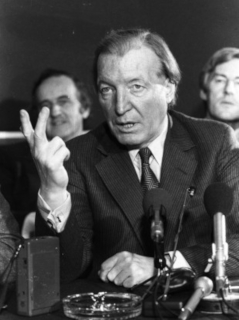
In 1970 Haughey is twice tried for conspiracy to use government funds to procure arms for the outlawed IRA. The first trial is aborted, and he wins acquittal in the second. Dismissed from the government, he remains in the Dáil and gains strong support among his party’s grass roots. When Fianna Fáil is returned to office in 1977, he is made Minister for Health and Minister for Social Welfare. On the resignation of party leader Jack Lynch in 1979, he is elected party leader and becomes Taoiseach. In June 1981 his government falls, but he returns to power briefly in 1982. He becomes Taoiseach again after elections in February 1987, though his government lacks a majority in the Dáil. When Fianna Fáil forms a government with the Progressive Democrats in July 1989, thereby eschewing the party’s traditional rejection of coalition rule, he is made Taoiseach for a fourth time.
Haughey’s first two terms in office are marked by deteriorating relations with Great Britain, a declining economy, and deep divisions within Fianna Fáil. Despite the controversies that plague his government, the charismatic Haughey remains party leader after losing office for a second time in late 1982. During his later terms, he successfully mounts a fiscal austerity program to address Ireland’s financial crisis. In 1992 he resigns and retires after being implicated in a phone tapping scandal of two journalists. He denies the allegations. He remains out of public life until 1997, when an official tribunal of inquiry determines that he had received large sums of money from a prominent businessman while Taoiseach. The Dáil then establishes another tribunal to investigate his financial affairs, and many other irregularities are uncovered. He eventually agrees to pay €6.5 million in back taxes and penalties.
Haughey dies at the age of 80 from prostate cancer, from which he had suffered for a decade, on June 13, 2006, at his home in Kinsealy, County Dublin. He receives a state funeral on June 16. He is buried in St. Fintan’s Cemetery, Sutton, Dublin, following mass at Donnycarney. The then Taoiseach Bertie Ahern delivers the graveside oration. The funeral rites are screened live on RTÉ One and watched by a quarter of a million people. The funeral is attended by PresidentMary McAleese, the Taoiseach, Bertie Ahern, members of the Oireachtas, many from the world of politics, industry and business. The chief celebrant is Haughey’s brother, Father Eoghan Haughey.
Christy Brown, Irish writer and painter who has cerebral palsy and is able to write or type only with the toes of one foot, dies on September 7, 1981, in Parbrook, Somerset, England. His most recognized work is his autobiography, My Left Foot (1954).
Brown is born into a working-class Irish family at the Rotunda Hospital in Dublin on June 5, 1932. He is one of 22 siblings of parents Bridget Fagan and Patrick Brown. After his birth, doctors discover that he has severe cerebral palsy, a neurological disorder which leaves him almost entirely spastic in his limbs. Though urged to commit him to a hospital, his parents are unswayed and subsequently determined to raise him at home with their other children. During his adolescence, social worker Katriona Delahunt becomes aware of his story and begins to visit the Brown family regularly. She brings him books and painting materials as, over the years, he has shown a keen interest in the arts and literature. He has also demonstrated extremely impressive physical dexterity since, soon after discovering several household books, he had learned to both write and draw himself with his left leg, the only limb over which he has unequivocal control.
Brown quickly matures into a serious artist. Although he famously receives almost no formal schooling during his youth, he does attend St. Brendan’s School-Clinic in Sandymount intermittently. At St. Brendan’s he comes in contact with Dr. Robert Collis, a noted author. Collis discovers that Brown is also a natural novelist and, later, helps use his own connections to publish My Left Foot, by then a long-gestating autobiographical account of Brown’s struggle with everyday life amidst the vibrant culture of Dublin.
When My Left Foot becomes a literary sensation, one of the many people who write letters to Brown is married American woman Beth Moore. Brown and Moore become regular correspondents and, in 1960, he holidays in North America and stays with Moore at her home in Connecticut. When they meet again in 1965, they began an affair. Brown journeys to Connecticut once more to finish his magnum opus, which he had been developing for years. He finally does so in 1967 with help from Moore, who introduces and administers a strict working regimen, mostly by denying him alcohol until a day’s work is completed. The book, Down All the Days, is published in 1970. It is an ambitious project drawn largely from a playful expansion of My Left Foot. It becomes an international best-seller, translated into fourteen languages. The Irish Times reviewer Bernard Share claims the work is “the most important Irish novel since Ulysses.”
Down All the Days is followed by a series of other novels, including A Shadow on Summer (1972), Wild Grow the Lilies (1976) and A Promising Career (published posthumously in 1982). He also publishes three poetry collections: Come Softly to My Wake, Background Music and Of Snails and Skylarks. All the poems are included in The Collected Poems of Christy Brown.
Brown’s fame continues to spread internationally, and he becomes a prominent celebrity. Upon his return to Ireland, he is able to use proceeds from the sales of his books to design and move into a specially constructed home outside Dublin with his sister’s family. Though he and Beth had planned to marry and live together at the new home, and though Moore had informed her husband of these plans, it is around this time that he begins an affair with Englishwoman Mary Carr, whom he meets at a party in London. He then terminates his affair with Moore and marries Carr at the Registry Office, Dublin, in 1972. They move to Stoney Lane, Rathcoole, County Dublin, to Ballyheigue, County Kerry and then to Somerset. He continues to paint, write novels, poetry and plays. His 1974 novel, A Shadow on Summer, is based on his relationship with Moore, whom he still considers a friend.
Brown’s health deteriorates after marrying Carr. He becomes mainly a recluse in his last years, which is thought to be a direct result of Carr’s influence and perhaps abusive nature. He dies at the age of 49 on September 7, 1981, after choking during a lamb chop dinner. His body is found to have significant bruising, which leads many to believe that Carr had physically abused him. Further suspicions arise after Georgina Hambleton’s biography, The Life That Inspired My Left Foot, reveals a supposedly more accurate and unhealthier version of their relationship. The book portrays Carr as an abusive alcoholic and habitually unfaithful. He is buried in the Glasnevin Cemetery in Dublin.
The Anglo-Irish rock band The Pogues pay tribute to Christy Brown with a song titled “Down All the Days.” It is the seventh track on their 1989 recording Peace and Love. Similarly, U2 releases a song titled “Down All the Days” with the 20th anniversary edition of Achtung Baby. The Men They Couldn’t Hang also writes a song “Down All the Days” which appears on their Silver Town album also released in 1989.
Marie Kean, actress of stage and screen whose career spanned over 40 years, is born in the village of Rush, County Dublin on June 27, 1918. The Stage calls her one of Ireland’s most impressive actresses, and “an artist of considerable emotional depth and theatrical command.”
Kean grows up in Rush and is educated at Loreto College, North Great George’s Street, Dublin. She learns her craft at the Gaiety School of Acting and is part of the Abbey Theatre company until 1961.
Kean’s leading role as the kindly matriarch, Mrs. Kennedy, in the RTÉ Radio serial drama, The Kennedys of Castleross, makes her famous throughout Ireland. She stars in the programme for the duration of its 18-year run.
In 1968, Kean wins a Jacob’s Award for her performance as Winnie in RTÉ television’s production of Samuel Beckett‘s play Happy Days, a role she had previously performed on stage and which she describes later as her favourite part. Among her other television roles is that of Mrs. Conn Brickley, Bridget’s mother, in an episode of The Irish R.M. called “The Boat’s Share.”
Kean’s many stage appearances include performances in the plays of John Millington Synge, Seán O’Casey and Brian Friel. She takes the lead role of Maggie Polpin in the 1969 world première of John B. Keane‘s play Big Maggie at the Cork Opera House. In 1978 she wins the State of New York best actress award for her performance in what has become Keane’s most successful play.
Arguably her most memorable film role is as Barry’s scheming mother in Stanley Kubrick‘s Barry Lyndon. She also plays a bigoted Irish shopkeeper in David Lean‘s Ryan’s Daughter. Her final movie appearance is in John Huston‘s The Dead (1987), in which she plays the part of Mrs. Malins.
Marie Kean dies in Donnybrook, Dublin at the age of 75 on December 30, 1993. Her husband, William Mulvey, predeceases her in 1977.
Margaret Anna Cusack, founder of the first Poor Clares convent in the west of Ireland and a talented writer who publishes on the issues of social injustice, is born to an aristocratic family of English origin in Coolock, County Dublin on May 6, 1829. Her writings and actions focus on advocacy of women’s rights including equal pay, equal opportunity for education, and legal reform to give women control of their own property.
Cusack is raised in the Anglican church tradition until her conversion to Catholicism in 1858. She enters the Irish Poor Clare Sisters and is among the first group of Sisters sent to found the convent at Kenmare, County Kerry.
During the next 21 years, Cusack, now known as Sister Francis Clare, dedicates herself to writing. Her writings include a wide range of concerns including lives of the saints, local histories, biographies, books and pamphlets on social issues and letters to the press. As the “Nun of Kenmare” she writes on behalf of the liberation of women and children who are victims of oppression. Income from her books and from her famine relief fund is distributed throughout Ireland. While doing all she can to feed the hungry, at the same time she campaigns vigorously against the abuse of absentee landlords, lack of education for the poor and against a whole system of laws which degrade and oppress a section of society.
To broaden the scope of her work Cusack moves to Knock, County Mayo in 1881 with the idea of expanding the ministry of the Poor Clares. She starts an industrial school for young women and evening classes for daytime land-workers. Several women are attracted by this work and in 1884 she decides to found her own community, The Sisters of St. Joseph of Peace.
Later, Cusack travels to the United States to continue her work with immigrant Irish women but is immediately rebuked by ArchbishopMichael Corrigan of New York. Just at that time, New Jersey stretches out a hand of welcome and encouragement as Bishop Winand Wigger of the Archdiocese of Newark invites her to establish homes for young Irish working women there. Within a few years, however, she claims that because of Archbishop Corrigan’s criticism of her among bishops throughout the United States, the work of her new community cannot continue as long as she remains with them.
Physically exhausted, sick and disillusioned with a patriarchal Church, Cusack withdraws from the Sisters of St. Joseph of Peace and leaves behind the sisters she so dearly loved. She eventually returns to her friends in the Church of England. In later years, she keeps in contact with the Sisters and expresses a loving concern for them. She dies on June 5, 1899, and is buried in the cemetery reserved for the Church of England at Leamington Spa, Warwickshire, England.
Cusack passes into obscurity for a long time until, as a result of the Second Vatican Council, religious orders are encouraged to review their roots and the intent of their founders. Since then, there have been a number a studies on Cusack, such as Philomena McCarthy’s The Nun of Kenmare: The True Facts. With the rediscovery of the life and times of Cusack, she has been hailed as a feminist and a social reformer ahead of her time.





 seamus dubhghaill