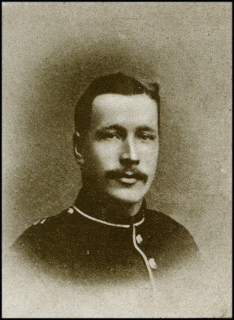
John Barry is born on February 1, 1873, in St. Mary’s Parish, Kilkenny, County Kilkenny. He is by birth an Irish recipient of the Victoria Cross (VC), the highest and most prestigious award for gallantry in the face of the enemy that can be awarded to British and Commonwealth forces.
Little is known of Barry’s early life prior to his enlistment with the 1st Battalion, Royal Irish Regiment of the British Army. Shortly after his enlistment, he finds himself sailing to South Africa for the outbreak of the Second Boer War, a conflict which ultimately leads to the award of the Victoria Cross, albeit tragically posthumously.
During the night attack on Monument Hill on January 7-8, 1901, Private Barry, although surrounded and threatened by the Boers at the time, smashes the breach of the Maxim gun, thus rendering it useless to its captors. It is in doing this splendid act for his country that he meets his death.
Barry dies of wounds received during his VC action at Monument Hill, South Africa. At the time, no posthumous awards of the VC can be made. However, as so often in the history of the Victoria Cross it is an individual, the mother of Alfred Atkinson, that brings about a decisive move to investigate those servicemen who would have been recommended for the award of the VC if they had not died beforehand. The outcome of the War Office investigation results in an announcement being published in The London Gazette on August 8, 1902. In fact, Barry’s family had already received his medal via registered post on April 30, 1902.
Barry is buried in Belfast Cemetery, east of Johannesburg, South Africa. His medals are sold at auction on September 22, 2000, and purchased at a hammer price of £85,000 by the Ashcroft Trust and displayed in the Lord Ashcroft Gallery in the Imperial War Museum, London.
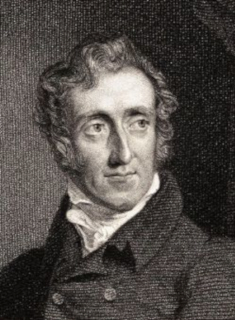
In 1793 Agar is elected to the House of Commons of the United Kingdom as one of two representatives for Heytesbury. He succeeds his great-uncle Lord Mendip as second Baron Mendip in 1802 according to a special remainder in the letters patent. This is an English peerage and forces him to resign from the House of Commons and enter the House of Lords. Two years later he assumes by Royal licence the surname of Ellis in lieu of Agar.
Lord Clifden marries Lady Caroline , daughter of George Spencer, 4th Duke of Marlborough, in 1792. His only son, George, becomes a successful politician and is created Baron Dover in his father’s lifetime, but predeceases his father. Lady Clifden dies at the age of 50 at Blenheim Palace in November 1813. Lord Clifden remains a widower until his death at the age of 75 at Hanover Square, Mayfair, London, on July 13, 1836. He is succeeded in his titles by his grandson Henry, the eldest son of Lord Dover.
Henry Flood, Anglo-Irishstatesman and founder of the Patriot movement that in 1782 wins legislative independence for Ireland, dies on December 2, 1791.
Flood enters the Irish Parliament in 1759 as member for Kilkenny County. Irish Protestants are becoming impatient with the British Parliament’s right to legislate for Ireland over the wishes of the Irish Parliament. Moreover, the British government controls a majority in Ireland’s House of Commons through the distribution of crown patronage by the owners of parliamentary boroughs.
Flood’s outstanding oratorical powers soon enable him to create a small but effective opposition inside the Irish Parliament that agitates for political reforms. They demand provisions for new Irish parliamentary elections every eight years, instead of merely at the start of a new British king’s reign. Their long-range goal is legislative independence. In 1768 his Patriots engineer passage of a bill limiting the duration of Parliament to eight years, and in 1769 and 1771 they defeat measures to grant funds for the British administration in Ireland.
Although Flood had become the first independent Irish statesman, he sacrifices this position in 1775 by accepting the office of vice treasurer under the British viceroy, Lord Simon Harcourt, 1st Earl Harcourt. Henry Grattan, an even greater orator than Flood and who describes Flood as a man “with a metaphor in his mouth and a bribe in his pocket,” replaces him as leader of the Patriots.
Flood, however, leaves the Patriot cause at the wrong time. The movement grows rapidly as more and more Irish people are influenced by the North American colonists who are rebelling against the British in the American Revolution. In 1779 he rejoins his old party, and two years later he is officially dismissed from his government post. Although he has lost his following, he helps Grattan force the British government to renounce its restrictions on Irish trade (1779) and grant legislative independence to Ireland (1782).
Flood then decides to challenge Grattan’s leadership. Charging that Grattan has not gone far enough in his reforms, he obtains passage of a measure requiring the British Parliament to renounce all claims to control of Irish legislation. Nevertheless, his newly acquired popularity is destroyed upon the defeat of his attempt to reform the Irish Parliament in 1784.
Flood is a member of both the British and Irish parliaments from 1783 until he loses his seat in both parliaments in 1790, although in England he fails to achieve the kind of political successes that characterize his Irish parliamentary career.
Following the loss of his seats in parliament, Flood retires to Farmley, his residence in County Kilkenny, where he remains until his death on December 2, 1791. He and his wife Lady Frances Beresford, daughter of Marcus Beresford, 1st Earl of Tyrone, who survives until 1815, have no children, and his property passes to a cousin, John Flood. A large bequest to Trinity College Dublin is declared invalid.
(Pictured: Portrait of Henry Flood (1732 – 1791) by Bartholomew Stoker (1763-1788). John Comerford later makes a sketch of the portrait, from which James Heath makes an engraving.)
Charles Bianconi, Italo-Irish passenger car entrepreneur, is born Carlo Bianconi in Tregolo, Costa Masnaga, Italy on September 24, 1786.
Bianconi moves from an area poised to fall to Napoleon and travels to Ireland in 1802, by way of England, just four years after the Irish Rebellion of 1798. At the time, British fear of continental invasion results in an acute sense of insecurity and additional restrictions on the admission of foreigners. He is christened Carlo but anglicises his name to Charles when he arrives in Ireland.
Bianconi works as an engraver and printseller in Dublin, near Essex Street, under his sponsor, Andrea Faroni, when he is 16. In 1806 he sets up an engraving and print shop in Carrick-on-Suir, County Tipperary, moving to Clonmel in 1815.
Bianconi eventually becomes famous for his innovations in transport and is twice elected mayor of Clonmel.
Bianconi is the founder of public transportation in Ireland, at a time preceding railways. He establishes regular horse-drawn carriage services on various routes from about 1815 onward. These are known as “Bianconi coaches” and the first service, Clonmel to Cahir, takes five to eight hours by boat but only two hours by Bianconi’s carriage. Travel on one of his carriages cost one penny farthing a mile.
In 1832 Bianconi marries Eliza Hayes, the daughter of a wealthy Dublin stockbroker. They have three children – Charles Thomas Bianconi, Catherine Henrietta Bianconi and Mary Anne Bianconi, who marries Morgan O’Connell and is the mother of his grandson John O’Connell Bianconi.
Bianconi’s transport services continue into the 1850s and later, by which time there are a number of railway services in the country. The Bianconi coaches continue to be well-patronised, by offering connections from various termini, one of the first and few examples of an integrated transport system in Ireland. By 1865 Bianconi’s annual income was about £35,000.
Charles Bianconi dies on September 22, 1875 at Longfield House, Boherlahan, County Tipperary. Having donated land to the parish of Boherlahan for the construction of a parish church, he wishes to be buried on the Church grounds. He, and his family, are buried in a side chapel, separate from the parish church in Boherlahan, approximately 5 miles from Cashel, County Tipperary.
Agar is the second son of Henry Agar, a former MP for Gowran, and Anne Ellis, and is probably born at Gowran Castle in County Kilkenny. On March 20, 1760, he marries Lucia Martin, widow of Henry Boyle-Walsingham. Together they have three children: Henry-Welbore Agar-Ellis (b. January 22, 1761), John Ellis (b. December 31, 1763), and Charles-Bagnell (b. August 13, 1765).
In addition to being a Member of Parliament (MP) for Gowran, for which he sits three times, from 1753 to 1761, again from 1768 to 1769 and finally from 1776 to 1777, Agar controls three other borough seats through the strength of his family holdings. He represents Kilkenny County between 1761 and 1776 and Thomastown between 1768 and 1769. He holds the post of joint Postmaster General of Ireland with William Ponsonby, 1st Baron Ponsonby between 1784 and 1789.
James Agar dies on January 1, 1789. His eldest son, Henry-Welbore Agar-Ellis, becomes 2nd Viscount Clifden and Baron Mendip.
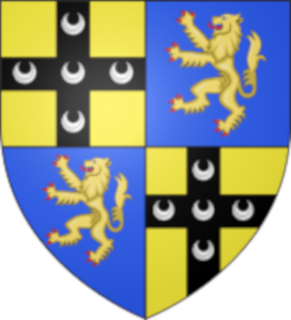
(Pictured: Arms of Agar-Ellis: 1st and 4th quarter: a cross sable charged with five crescents argent for Ellis; 2nd and 3rd quarter: azure with a lion rampant for Agar)
Like William Orpen, Lavery is appointed an official artist in World War I. Ill-health, however, prevents him from travelling to the Western Front. A serious car crash during a Zeppelin bombing raid also keeps him from fulfilling this role as war artist. He remains in Britain and mostly paints boats, aeroplanes, and airships. During the war years he is a close friend of H.H. Asquith‘s family and spends time with them at their Sutton Courtenay Thames-side residence, painting their portraits and idyllic pictures like Summer on the River (Hugh Lane Gallery).
After the war Lavery is knighted and in 1921 he is elected to the Royal Academy of Arts.
During this time, he and his wife, Hazel, are tangentially involved in the Irish War of Independence and the Irish Civil War. They give the use of their London home to the Irish negotiators during the negotiations leading to the Anglo-Irish Treaty. After Michael Collins is assassinated, Lavery paints Michael Collins, Love of Ireland, now in the Hugh Lane Gallery. In 1929, Lavery makes substantial donations of his work to both the Ulster Museum and the Hugh Lane Gallery and in the 1930s he returns to Ireland. He receives honorary degrees from the University of Dublin and Queen’s University Belfast. He is also made a free man of both Dublin and Belfast. A long-standing member of Glasgow Art Club, Lavery exhibits at the club’s annual exhibitions, including its exhibition in 1939 in which his The Lake at Ranelagh is included.
The first clash of the Tithe War takes place on March 3, 1831, in Graiguenamanagh, County Kilkenny, when a force of 120 yeomanry attempts to enforce seizure orders on cattle belonging to a Roman Catholic priest. Encouraged by his bishop, he has organised people to resist tithe collection by placing their stock under his ownership prior to sale.
The Tithe War is a campaign of mainly nonviolent civil disobedience, punctuated by sporadic violent episodes, in Ireland between 1830 and 1836 in reaction to the enforcement of tithes on the Roman Catholic majority for the upkeep of the established state church – the Church of Ireland. Tithes are payable in cash or kind and payment is compulsory, irrespective of an individual’s religious adherence.
After Emancipation in 1829, an organized campaign of resistance to collection begins. It is sufficiently successful to have a serious financial effect on the welfare of established church clergy. In 1831, the government compiles lists of defaulters and issues collection orders for the seizure of goods and chattels. Spasmodic violence breaks out in various parts of Ireland, particularly in counties Kilkenny, Tipperary and Wexford. The Royal Irish Constabulary, which had been established in 1822, attempts to enforce the orders of seizures. At markets and fairs, the constabulary often seize stock and produce, which often results in violent resistance.
A campaign of passive resistance is proposed by Patrick “Patt” Lalor, a farmer of Tenakill, Queen’s County (now County Laois), who later serves as a repeal MP. He declares at a public meeting in February 1831 in Maryborough that he would never again pay tithes and, although the tithe men might take his property and offer it for sale, his countrymen would not buy or bid for it if offered for sale. Lalor holds true to his word and does not resist the confiscation of 20 sheep from his farm but is able to ensure no buyers appear at subsequent auctions.
Following the clash at Graiguenamanagh, the revolt soon spreads. On June 18, 1831, in Bunclody, County Wexford, people resisting the seizure of cattle are fired upon by the Royal Irish Constabulary, who kill twelve and wound twenty. One yeoman is shot dead in retaliation. This massacre causes objectors to organise and use warnings such as church bells to signal the community to round up the cattle and stock. On December 14, 1831, resisters use such warnings to ambush a detachment of 40 Constabulary at Carrickshock, County Kilkenny. Twelve constables, including the Chief Constable, are killed and more wounded.
Regular clashes causing fatalities continue over the next two years. On December 18, 1834, the conflict comes to a head at Rathcormac, County Cork, when armed Constabulary reinforced by the regular British Army kill twelve and wound forty-two during several hours of fighting when trying to enforce a tithe order reputedly to the value of 40 shillings.
Finding and collecting livestock chattels and the associated mayhem creates public outrage and proves an increasing strain on police relations. The government suspends collections. In 1838, parliament introduces a Tithe Commutation Act. This reduces the amount payable directly by about a quarter and makes the remainder payable in rent to landlords. They in turn are to pass payment to the authorities. Tithes are thus effectively added to a tenant’s rent payment. This partial relief and elimination of the confrontational collections ends the violent aspect of the Tithe War.
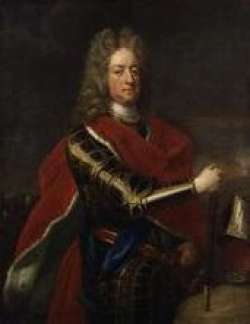
On May 15, 1346, Butler marries Elizabeth Darcy, daughter of Sir John Darcy and Joan de Burgh. They have five children: James Butler, 3rd Earl of Ormond (1362-1405), Thomas Butler (1359-1396), Justice of Cork, Eleanor Butler (1350-1392), Joan Butler (1360-1393), and Ralph Butler (1356-1367).
In the 1360s Butler clashes with Maurice FitzGerald, 4th Earl of Kildare. In 1364 the Irish House of Commons sends a delegation to England, headed by Kildare, to complain of misgovernment, and to ask for the removal of “corrupt” officials, some of whom have links to Butler. A number of these officials are removed, but Butler’s position is not seriously threatened.
Butler is Lord Justice by July 24, 1376, with a salary of £500 per year, in which office he is continued by King Richard II of England. On April 2, 1372, he is made constable of Dublin Castle, with the fee of £18 5s per year. He is summoned to the Parliaments held by Richard II.
James Butler dies October 18, 1382 at Knocktopher Castle in Kilkenny, Leinster, near which he had founded a priory for Carmelite friars in 1356. He is buried in St. Canice’s Cathedral, Kilkenny.
Born Carlo Bianconi, in Tregolo, Costa Masnaga, Italy on September 24, 1786, he moves from an area poised to fall to Napoleon and travels to Ireland via England in 1802, just four years after the Irish Rebellion of 1798. At the time, British fear of continental invasion results in an acute sense of insecurity and additional restrictions on the admission of foreigners. He is christened Carlo but anglicises his name to Charles when he arrives in Ireland in 1802.
At the age of 16, Bianconi works as an engraver and printseller in Dublin, near Essex Street, under his sponsor, Andrea Faroni. In 1806 he sets up an engraving and print shop in Carrick-on-Suir, moving to Clonmel in 1815.
Bianconi eventually becomes famous for his innovations in transport and is twice elected mayor of Clonmel. He is the founder of public transportation in Ireland, at a time preceding railways. He establishes regular horse-drawn carriage services on various routes beginning in 1815. These are known as “Bianconi coaches” and the first service, Clonmel to Cahir, which takes five to eight hours by boat, takes only two hours by Bianconi’s carriage. Travel on a coach costs one penny farthing a mile.
Bianconi’s carriage services continue into the 1850s and later, by which time there are a number of railway services in the country. The Bianconi coaches continue to be well-patronised, by offering connections from various termini, one of the first and few examples of an integrated transport system in Ireland. By 1865 Bianconi’s annual income is about £35,000.
In 1832 Bianconi marries Eliza Hayes, the daughter of a wealthy Dublin stockbroker. They have three children. Bianconi dies on September 22, 1875 at Longfield House, Boherlahan, County Tipperary.
Having donated land to the parish of Boherlahan for the construction of a parish church, Bianconi wishes to be buried on the Church grounds. He, and his family, are buried in a side chapel, separate from the parish church in Boherlahan, approximately 5 miles from Cashel, County Tipperary.
On June 4, 1798, the rebels advance from their camp on Carrigbyrne Hill to Corbet Hill, just outside the town of New Ross. The battle, the bloodiest of the 1798 rebellion, begins at dawn on June 5 when the Crown garrison is attacked by a force of almost 10,000 rebels, massed in three columns outside the town. The attack has been expected since the fall of Wexford to the rebels on May 30 and the British garrison of 2,000 has prepared defences both outside and inside the town. Trenches are dug and manned by skirmishers on the approaches to the town while cannon are stationed facing all the rapidly falling approaches and narrow streets of the town to counter the expected mass charges by the rebels, who are mainly armed with pikes.
Bagenal Harvey, the United Irish Leader recently released from captivity following the rebel seizure of Wexford, attempts to negotiate surrender of New Ross but the rebel emissary Matt Furlong is shot down by Crown outposts while bearing a flag of truce. His death provokes a furious charge by an advance guard of 500 insurgents led by John Kelly who has instructions to seize the Three Bullet Gate and wait for reinforcements before pushing into the town. To aid their attack, the rebels first drive a herd of cattle through the gate.
Another rebel column attacks the Priory Gate but the third pulls back from the Market Gate intimidated by the strong defences. Seizing the opportunity, the garrison sends a force of cavalry out the Market Gate to attack and scatter the remaining two hostile columns from the flanks. However, the rebel rump has not yet deployed and upon spotting the British manoeuvre, rally the front ranks who stand and break the cavalry charge with massed pikes.
The encouraged rebel army then sweeps past the Crown outposts and seizes the Three Bullet Gate causing the garrison and populace to flee in panic. Without pausing for reinforcement, the rebels break into the town attacking simultaneously down the steeply sloping streets but meet with strong resistance from well-prepared second lines of defence of the well-armed soldiers. Despite horrific casualties the rebels manage to seize two-thirds of the town by using the cover of smoke from burning buildings and force the near withdrawal of all Crown forces from the town. However, the rebels’ limited supplies of gunpowder and ammunition force them to rely on the pike and blunts their offensive. The military manages to hold on and, following the arrival of reinforcements, launches a counterattack before noon which finally drives the exhausted rebels from the town.
No effort to pursue the withdrawing rebels is made but when the town has been secured, a massacre of prisoners, trapped rebels and civilians of both sympathies alike begins which continues for days. Hundreds are burned alive when rebel casualty stations are torched by victorious troops. More rebels are believed to have been killed in the aftermath of the battle than during the actual fighting. Reports of such atrocities brought by escaping rebels are believed to have influenced the retaliatory murder of over 100 loyalists in the flames of Scullabogue Barn.
Casualties in the Battle of New Ross are estimated at 2,800 to 3,000 Rebels and 200 Garrison dead. Most of the dead Rebels are thrown in the River Barrow or buried in a mass grave outside the town walls a few days after the Battle. The remaining rebel army reorganises and forms a camp at Sliabh Coillte some five miles to the east but never attempts to attack the town again. They later attack General John Moore‘s invading column but are defeated at the Battle of Foulksmills on June 20, 1798.
(Pictured: The 1845 illustration “The Battle of Ross” by George Cruikshank)






 seamus dubhghaill