seamus dubhghaill

Promoting Irish Culture and History from Little Rock, Arkansas, USA


Leave a comment

The Battle of Julianstown

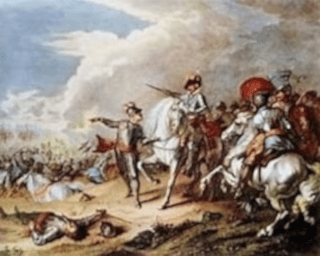
The Battle of Julianstown is fought on November 29, 1641, at Julianstown, County Meath during the Irish Rebellion of 1641 where an English Royalist relief force is soundly defeated by Irish rebels.

After the Irish Rebellion starts, the rebels first attempt to move into Ulster and capture Belfast. When they meet stiff Protestant resistance in Ulster, the rebels turn their focus southward with the goal of taking Dublin. En route to attack Dublin, the rebels come upon the town of Drogheda and begin the siege of the garrison. Approximately one week after the rebels have encircled Drogheda, the English authorities in Dublin put together a relief force and send them to reinforce the Royalist strongpoint. En route to Drogheda, the English force is ambushed and routed by the rebels in Julianstown.

The English relief force is hastily put together and largely untrained. Many of the soldiers in the relief force are emaciated and sick refugees from the northern counties who are pressed into service. The detachment is commanded by Sir Patrick Wemyss and is composed of 600 foot and 50 horse. The rebel forces are led by Philip O’Reilly and Miles O’Reilly, both Irish leaders from County Cavan. Their force of 3,000 men including 300 horse has experienced commanders and appears to have been assigned to the south of Drogheda to complete the encirclement of the garrison.

On the morning of the battle, the rebels become aware of the approach of the Royalists and prepare an ambush. As the rebels spring their trap, the English commander does not immediately order his men to attack and fire upon the enemy. By mistake Wemyss orders his men to “countermarch” which causes them to move backwards as if they are retreating. The rebels take full advantage of the situation and immediately charge the Royalists. The rebel attack causes panic and confusion among the English and prevents them from coordinating an effective counterattack. Many of the Royalists throw down their weapons and attempt to escape. The Royalist horse flee the field. In the end, the rebels kill almost all of the Royalist foot soldiers.

The victory has several short-term benefits for the rebels. From the manner in which they rout the Royalists, the rebel forces gain respect as a military force. It boosts rebel morale and helps to spread the revolt throughout Ireland. For the commander of the Royal Irish Army, James Butler, Earl of Ormond, the battle shows the determination of the rebels and the degree of support for their cause. Ultimately, the Battle of Julianstown as a small part of the Irish Rebellion indirectly leads to the English Civil War and Confederate Ireland.


Leave a comment

The Battle of Knocknanauss

The Battle of Knocknanauss is fought on November 13, 1647, during the Irish Confederate Wars, part of the Wars of the Three Kingdoms, between Confederate Ireland’s Munster army and an English Parliamentarian army under Murrough O’Brien, 1st Earl of Inchiquin. The battle results in a crushing defeat for the Irish Confederates.

In the summer of 1647, Murrough O’Brien (later created the Earl of Inchiquin), commander of the English Parliamentarian forces in Cork, ravages and burns the Confederate territory in Munster. This causes severe food shortages and earns O’Brien the Irish nickname, Murchadh na d’Tóiteán (Murrough the Burner). In addition, Inchiquinn takes the Rock of Cashel, which is garrisoned by Confederate troops and rich in emotive religious symbolism. In the sack of the castle, O’Brien’s troops massacre the garrison and all the clergy they find there.

The Confederates’ Munster army is incapable of stopping O’Brien because of political infighting between officers who support a deal with the English Royalists and those who reject such a deal. Eventually, in reaction to the sack of Cashel and famine conditions, the Confederate Supreme Council replaces Donough MacCarthy, 2nd Viscount Muskerry, as commander of the Munster army with Theobald Taaffe, 1st Earl of Carlingford, and order him to bring O’Brien to battle.

Taaffe is an English Catholic and not an experienced soldier. Although he has an excellent contingent of veteran troops under Alasdair Mac Colla, most of his men are similarly inexperienced. Furthermore, the Irish troops are demoralised by the internal factionalism in their ranks and most of them have little loyalty to Taafe. O’Brien, on the other hand, has been commanding his force since 1642 and is well experienced in battle. His troops are a mixture of well trained Parliamentarian soldiers from England and British settlers who have been driven from their homes in the Irish Rebellion of 1641. The two armies meet at Knocknanuss near Mallow, approximately 29 kilometers north of Cork.

The battle that follows is essentially an uncoordinated rout of the Irish forces. Taaffe positions his men on either side of a hill, so that they cannot see one another. The result is that one wing of the Confederate army has no idea of what the other wing is doing. Mac Colla’s men charge the Parliamentarians opposite them putting them to flight and killing a large number of them. Thinking the battle is over, they then take to looting the enemy’s baggage train.

However, on the other wing, O’Brien’s cavalry has charged the raw Irish horsemen, causing them to run away. Despite Taaffe’s desperate attempt to rally them, the Irish infantry follow suit, many of them being cut down by the pursuing roundheads. The pursuit continues for miles and not only results in heavy casualties among the Irish, but also in the loss of most of their equipment and supplies. Inchiquin loses several senior officers, including the Judge-Advocate, Sir Robert Travers. Mac Colla and his men surrender when they realise what has happened but are subsequently killed by their captors. Around 3,000 Confederates die at Knocknanauss, and up to 1,000 English Parliamentarians. The carnage does not stop after the fighting is finished. The next day a couple of hundred Irish soldiers are found sheltering in a nearby wood. These are promptly put to the sword.

When combined with the Battle of Dungans Hill in County Meath, the defeat leads to the collapse of the Confederate Catholic cause and forces them to make a deal with the English Royalists.


Leave a comment

Death of Irish Poet Francis Edward Ledwidge

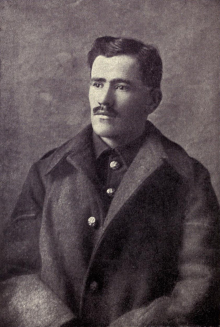
Francis Edward Ledwidge, Irish poet from County Meath, sometimes known as the “poet of the blackbirds,” is killed in action He was later also known as a World War I war poet. He was killed in action on July 31, 1917, at the Battle of Pilckem Ridge near Boezinge, Ypres Salient, Belgium.

Born on August 19, 1887, to a poor family in Slane, County Meath, Ledwidge starts writing at an early age, and is first published in a local newspaper at the age of fourteen. Finding work as a labourer and miner, he is also a trade union activist and a keen patriot and nationalist, associated with Sinn Féin. He becomes friendly with a local landowner, the writer Lord Dunsany, who gives him a workspace in the library of Dunsany Castle and introduces him to literary figures including William Butler Yeats and Katherine Tynan, with whom he has a long-term correspondence. He is elected to a local authority post and helps organise the local branch of the Irish Volunteers, while Dunsany edits and helps him secure publication for a first volume of his poetry.

Having sided with the faction of the Irish Volunteers which oppose participation in the war, he enlists in the Royal Inniskilling Fusiliers in October 1914, and continues to write poetry on assignment, sending work to Lord Dunsany and to family and other friends. The poems he writes on active service reveal his pride at being a soldier, as he believes, in the service of Ireland. He often wonders whether he would find a soldier’s death.

On July 31, 1917, a group from Ledwidge’s battalion of the Royal Inniskilling Fusiliers are road-laying in preparation for an assault during the Third Battle of Ypres, near the village of Boezinge, northwest of Ypres.

According to Irish author and lecturer Alice Curtayne, “Ledwidge and his comrades had been toiling since the early morning at roadmaking. The army’s first need was men; their second, guns; their third roads. These latter consisted mainly of heavy beech planks bolted together, which could be rapidly laid down. No advance could be supported in that sodden land without a sufficiency of these communications tracks, six or seven feet wide. Supplies were conveyed by pack mules over the wooden paths. Survivors concur in placing the road work done by B Company that day one mile northeast of Hellfire Corner, so called because it was very exposed to German shelling. There was a violent rainstorm in the afternoon, shrouding the region in a gray monochrome. Sullenly, the enemy’s long-range guns continued to fling their shells far behind the lines. Roadwork could not be suspended, however, as the tracks were in use as fast as they were laid down. Tea was issued to the men and, drenched to the skin, they stopped to swallow it. A shell exploded beside Ledwidge and he was instantly killed.”

A Roman Catholic military chaplain, Father Devas, is the first on the scene. That night, Father Devas writes in his diary, “Crowds at Holy Communion. Arranged for service but washed out by rain and fatigues. Walk in rain with dogs. Ledwidge killed, blown to bits; at Confession yesterday and Mass and Holy Communion this morning. R.I.P.”

Ledwidge is first buried at Carrefour de Rose, and later re-interred in the nearby Artillery Wood Military Cemetery, at Boezinge, where the Welsh poet Hedd Wyn, who was killed in action on the same day, also lies buried.

Dunsany arranges for the publication of more of Ledwidge’s poems, and a collected edition in 1919. Further poems, from the archives at Dunsany Castle and some material held by family, are later published by Ledwdige’s biographer, Alice Curtayne, and by one of the Ledwidge memorial societies. Ledwidge is selected as one of twelve prominent war poets for the exhibition Anthem for Doomed Youth at the Imperial War Museum in London in 2002, and memorialised at an event in Inchicore, Dublin, in 2017, with his work set to music by Anúna. A museum of his life and work is opened in his birthplace cottage in 1982. Some of his manuscripts are held in the National Library of Ireland and more in the archives of Dunsany Castle.


Leave a comment

Death of Valerie Hamilton, Hon. Lady Goulding

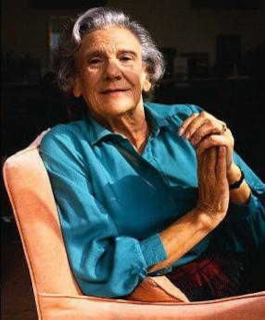
Valerie Hamilton, Hon. Lady Goulding, Irish senator and campaigner for disabled people, dies in a Dublin nursing home on July 28, 2003. She, alongside Kathleen O’Rourke, sets up the Central Remedial Clinic (CRC) in 1951 which is now the largest organisation in Ireland looking after people with physical disabilities. She served as a member of Seanad Éireann from 1977 to 1981.

Born Valerie Hamilton Monckton at Ightham Mote in Ightham, Kent, England on September 12, 1918, she is the only daughter of Mary Adelaide Somes Colyer-Ferguson and Sir Walter Monckton (later 1st Viscount Monckton of Brenchley). Ightham Mote is owned by her maternal grandfather, Sir Thomas Colyer-Fergusson, until his death in 1951. Her only brother, Gilbert (1915–2006), becomes a major general in the British Army. She is educated at Downe House School, near Newbury. Both she and her brother eventually convert to Roman Catholicism.

Hamilton’s father is a British lawyer and politician, and becomes chief legal adviser to Edward VIII during the Abdication Crisis in 1936. She acts as her father’s secretary and courier during the crisis, carrying letters between the King and Prime Minister Stanley Baldwin.

In World War II, Hamilton joins the First Aid Nursing Yeomanry before switching to the Auxiliary Territorial Service. In Dublin for a race meeting in 1939, she meets and soon marries Irish fertiliser manufacturer and art collector Sir Basil Goulding and moves to Ireland. However, her husband moves to England to join the Royal Air Force, ending the war as a wing commander. Meanwhile, she serves as a second lieutenant in the British Army. After the war, the couple returns to Ireland, where Sir Basil and his family manage Goulding Chemicals.

In 1951, Lady Goulding co-founds, with Kathleen O’Rourke, the Central Remedial Clinic located in a couple of rooms in central Dublin to provide non-residential care for disabled people. The Clinic later moves to a purpose building in Clontarf in 1968, where it is located today. The Clinic’s foundation initiates a revolution in the treatment of physical disability and rapidly grows to by far the largest centre dealing with the needs of disabled people. She remains chairman and managing director of the CRC until 1984.

On account of her widespread popularity, Lady Goulding is nominated by Taoiseach Jack Lynch to Seanad Éireann, where she works to raise awareness of disability issues in 1977. She seeks election to Dáil Éireann as a Fianna Fáil candidate at the November 1982 Irish general election for the Dún Laoghaire constituency but is unsuccessful. She is mentioned as a possible President of Ireland in 1983, should the president, Patrick Hillery, decline to seek a second term. Hillery ultimately is re-elected.

Lady Goulding dies at the age of 84 in a nursing home in Dublin on July 28, 2003. She is predeceased by her husband in 1982, but is survived by her sons, the eldest of whom, Sir William Goulding, known as Lingard Goulding, serves as Headmaster of Headfort School in County Meath. The other sons are Hamilton and Timothy, who is a founding member of the experimental Irish folk group Dr. Strangely Strange.


Leave a comment

Birth of Johnny Logan, Two-time Eurovision Song Contest Winner

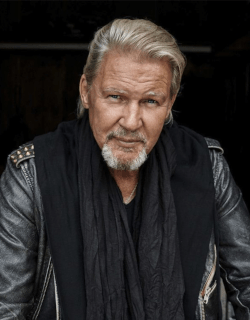
Seán Patrick Michael Sherrard, Irish singer and composer better known by his stage name Johnny Logan, is born in the Melbourne suburb of Frankston, Victoria, Australia on May 13, 1954. He is known as being the only performer to have won the Eurovision Song Contest twice, in 1980 and 1987. He also composes the winning song in 1992.

Logan is born while his father, Charles Alphonsus Sherrard, is a Derry-born Irish tenor known by the artistic name Patrick O’Hagan, is touring Australia. The family moves back to Ireland when he is three years old. He learns the guitar and begins composing his own songs by the age of thirteen. On leaving school he apprentices as an electrician, while performing in pubs and cabaret. His earliest claim to fame is starring as “Adam” in the 1977 Irish musical Adam and Eve and “Joseph” in Joseph and the Amazing Technicolor Dreamcoat.

Logan adopts the stage name Johnny Logan after the main character of the film Johnny Guitar and releases his first single in 1978. He first attempts to participate in the Eurovision Song Contest in 1979, when he places third in the Irish National Final with the song “Angie.” Readers of The Connaught Telegraph in Ireland vote him as “Best New Male Artist.”

In 1980, Logan again enters the Irish National selection for the Eurovision Song Contest with the Shay Healy song “What’s Another Year,” winning the Irish final on March 9 in Dublin. Representing Ireland in the Netherlands, he wins the Eurovision Song Contest on April 19. The song becomes a hit all over Europe and reaches number one in the UK.

In 1987, Logan makes another attempt at Eurovision and with his self-penned song, “Hold Me Now,” representing Ireland at the Eurovision Song Contest in Belgium. The song wins the contest, and he becomes the first person to win the contest twice.

Having composed the Irish Eurovision Song Contest 1984 entry for Linda Martin, “Terminal 3” (which finishes in second place), Logan repeats the collaboration in 1992 when he gives Martin another of his songs, “Why Me?” The song becomes the Irish entry at the finals in Sweden. The song takes the title and cements Logan as the most successful artist in Eurovision history with three wins.

Logan continues to perform and write songs. He is sometimes referred to as “Mister Eurovision” by fans of the contest and the media at large. He has continued his love of participating in musical theatre, having toured Norway with Which Witch, an opera-musical originating in that country. He continues to have success, particularly in the Scandinavian countries. His 2007 album, The Irish Connection, goes platinum in Denmark, twice platinum in Norway and gold in Sweden. He performs in the Celtic rock opera Excalibur from 2009 to 2011.

On May 16, 2020, Logan appears in Eurovision: Europe Shine a Light which is commissioned to replace the 65th Eurovison Song Contest due to its postponement until 2021 as a result of the Coronavirus Pandemic, singing his 1980 winning song “What’s Another Year.”

Logan and his family live in Ashbourne, County Meath. He rarely gives media interviews, claiming to have been frequently misquoted.


2 Comments

Birth of Sir James Comyn, Irish-born English High Court Judge

Sir James Peter Comyn, Irish-born barrister and English High Court judge, is born at Beaufield House, Stillorgan, County Dublin on March 8, 1921. Considered by many to be “the finest all-round advocate at the English bar”, he is appointed to the High Court of Justice in 1978, serving on the bench until his retirement in 1985.

Comyn is the son of Nationalist barrister James Comyn KC and of Mary Comyn. Through his father he is the nephew of the barrister Michael Comyn KC. Both his father and uncle had been political and legal advisers to Éamon de Valera, who at one point uses Beaufield House as a safe house. However, the Comyn brothers have a falling out with de Valera shortly before he comes to power in 1932, and Michael Comyn is passed over as Attorney General of the Irish Free State. As a result, James Comyn, who is then attending Belvedere College in Dublin, is sent by his father to attend The Oratory School in England. He spends six months as a trainee at The Irish Times under the editor R. M. “Bertie” Smyllie, but abandons journalism after a joke he added to an obituary is printed in the paper, leading to his demotion to the racing department.

Comyn then matriculates at New College, Oxford, where he reads law, graduating with Second Class Honours. In 1940, he defeats Roy Jenkins for the presidency of the Oxford Union, winning by four votes. After suffering the first of several breakdowns through his life, he briefly works for the BBC‘s Empire Service during World War II.

Comyn is called to the English bar by the Inner Temple in 1942, the Irish bar in 1947, and the Hong Kong bar in 1969. In 1944, he begins his pupillage with Edward Holroyd Pearce KC, later a law lord, and joins his chambers at Fountain Court. He practises in London and on the Western circuit, supplementing his earnings by teaching banking, a subject of which he knows nothing. On one occasion, he rises in Lambeth County court to cross-examine a female defendant in an eviction case. Just as he begins by saying “Madam,” the defendant opens her bag, takes out a dead cat, and throws it at him. The judge’s reaction is to tell the defendant, “Madam, if you do that again, I’ll commit you.” Comyn wins the case.

Comyn takes silk in 1961, and acquires a large practice as a senior, appearing in many high-profile cases. In 1964, he wins damages for libel for the former safe-breaker Alfred George Hinds against a Scotland Yard inspector by convincing the jury that Hinds is in fact innocent. In 1970, he successfully defends the Labour MP Will Owen, who is accused of providing information to the Czechoslovak intelligence services. In 1975, he defeats the government’s attempt to obtain an injunction against the publication of the diaries of former minister Richard Crossman.

Comyn is Recorder of Andover between 1964 and 1971 (honorary life recorder from 1972), commissioner of assize for the Western Circuit in 1971, and a Recorder of the Crown Court between 1972 and 1977. He is elected a bencher of the Inner Temple in 1968 and serves as chairman of the Bar council from 1973 to 1974.

Having refused a previous invitation by Quintin Hogg, Baron Hailsham of St. Marylebone to join the bench, Comyn is again nominated by Elwyn Jones, Baron Elwyn-Jones, in 1977, and is appointed a High Court judge in 1978, receiving the customary knighthood upon his appointment. Initially assigned to the Family Division, he does not take to the work and is reassigned to the Queen’s Bench Division in 1979. He has a reputation for leniency in sentencing, first acquired as Recorder of Andover. In 1980–81, he presides over an unsuccessful libel action by a member of the Unification Church, colloquially known as the Moonies, against the Daily Mail, the longest libel trial in England up to that time. His Irish background makes him the target of Irish Republican Army (IRA) action, and in 1981 the Provisional IRA burns his house in Tara.

Recurring bouts of depression lead to Comyn’s early retirement, on grounds of ill health, in 1985. In retirement, he divides his time between England and Ireland, whose citizenship he has retained. He writes a number of books, including memoirs, light verse, and books on famous trials. He also breeds Friesian cattle. He dies in Navan, County Meath on January 5, 1997, at age 75.


Leave a comment

2009 Bank of Ireland Robbery

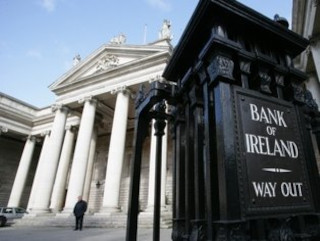
The 2009 Bank of Ireland robbery is a large robbery of cash from the College Green cash centre of the Bank of Ireland in Dublin on February 27, 2009. It is the largest bank robbery in the Republic of Ireland‘s history. Criminals engage in the tiger kidnapping of a junior bank employee, 24-year-old Shane Travers, and force him to remove €7.6 million (US$9 million) in cash from the bank as his girlfriend and two others are held hostage.

Late on the night of February 26, Travers, whose father is a member of the Garda Síochána based at Clontarf, Dublin, is alone watching television at the home of his girlfriend near Kilteel, County Kildare. The woman and her mother are out shopping together. When they arrive home with the five-year-old nephew of Travers, six heavily built masked men, dressed in black and carrying handguns, jump from the bushes.

The family is held overnight by the armed gang, during which time their mobile phones are confiscated, and Travers’ girlfriend is hit across the back of her head with a vase by one of the men. As dawn approaches, the gang orders all but Travers to enter their dark Volkswagen Golf family car. They are then bound together and driven to Ashbourne, County Meath.

The bank employee is given a mobile phone, ordered to collect €20, €50, €100 and €200 bank notes from his workplace, and supplied with a photograph of the rest of the family at gunpoint to convince his colleagues that their lives are under threat. Travers drives to Dublin in his red Toyota Celica, acquires the cash through the assistance of colleagues who viewed the photo, and carries the money out of the building in four laundry bags. He takes it to Clontarf Road railway station, whereupon he surrenders the cash and his sports car to a waiting gang member.

Travers then enters a Garda station, the first point at which Gardaí are notified that the robbery had taken place. One hour after this, the other family members succeed in freeing themselves and walk to a nearby garda station. Travers’ girlfriend requires immediate medical treatment for a head wound she received during a struggle with her captors, and the family are reported to be “traumatised” by their ordeal. Travers’s car is later found burned out in an apartment block near Tolka House Pub in Glasnevin.

Minister for Justice, Equality and Law Reform Dermot Ahern says “proper procedures” were not followed during the course of the robbery, saying that Gardaí should have been contacted before the money had left the bank. He also questions how such a large sum of money could be taken as a result of one man being targeted.

The bank’s chief executive, Richie Boucher, appointed just two days earlier, immediately writes to all his staff to remind them that protocol should be followed in the event of future robberies, saying “Our priority is always for the safety and well-being of all staff. I am sure this incident will raise concerns. Our best defence is to follow tried and tested procedures. I would ask everybody to remind themselves of these procedures, which are there to protect you, your families and the bank.”

€1.8 million of the stolen cash is recovered and seven people are arrested by Gardaí in a number of incidents on February 28. A house in Phibsborough is sealed off and ten more houses are searched. A total of five cars and one van are seized by Gardaí. One of the men is arrested following a chase along the M50 motorway near the Navan road, with two bales of packed cash being discovered in his car. Four other men are arrested in a car in Monk Place and in Great Western Square, Phibsborough, and two more are seized in a house on Great Western Villas, Phibsborough. Cash is also found in a car in Phibsborough.

The six men and one woman are believed to be members of a well-known gang from Dublin’s north inner city and have connections to a major Dublin gangland figure. On March 2, those arrested appear before the High Court to challenge the lawfulness of their detention, viewing the warrants issued by the District Court the day before as invalid. That day, two of those arrested are released.

An unidentified bank employee is arrested on January 28, 2010, based on suspicion that the robbery had been an inside job.


Leave a comment

Birth of Colm O’Rourke, Footballer & Broadcaster

colm-orourke

Colm O’Rourke, sports broadcaster, columnist and former Gaelic footballer, is born on August 31, 1957. His league and championship career with the Meath GAA senior team spans twenty years from 1975 to 1995.

O’Rourke is born in Aughavas, County Leitrim, but is raised in Skryne, County Meath after his family moves there in his youth. He plays competitive Gaelic football during his schooling at St. Patrick’s Classical School in Navan. He first appears for the Skryne GFC at underage levels, before winning two county senior championship medals in 1992 and 1993. While studying at University College Dublin he wins a Sigerson Cup medal in 1979.

O’Rourke makes his debut on the inter-county scene when he is picked for the Meath minor team. He later joins the under-21 side but enjoys little success in these grades. He makes his senior debut during the 1975-1976 league. Over the course of the next twenty years he is a regular member of the starting fifteen and wins back-to-back All-Ireland medals in 1987 and 1988. He also wins five Leinster Senior Football Championship medals, three National Football League titles and is named Texaco Footballer of the Year in 1991. He plays his last game for Meath in July 1995.

In retirement from playing O’Rourke combines his teaching career with a new position as a sports broadcaster. His media career begins with RTÉ where he has worked as a studio analyst with the flagship programme The Sunday Game for over twenty-five years. He also writes a weekly column for the Sunday Independent.


Leave a comment

Death of Thomas Blood, Anglo-Irish Officer

thomas-blood

Colonel Thomas Blood, Anglo-Irish officer and self-styled colonel best known for his attempt to steal the Crown Jewels of England and Scotland from the Tower of London in 1671, dies at his home in Bowling Alley, Westminster on August 24, 1680. He is also known for his attempt to kidnap and, later, to kill, his enemy, James Butler, 1st Duke of Ormond.

Sources suggest that Blood is born in County Clare in 1618, the son of a successful land-owning blacksmith of English descent. He is partly raised at Sarney, near Dunboyne, County Meath. He receives his education in Lancashire, England. At the age of 20, he marries Maria Holcroft, the daughter of John Holcroft, a gentleman from Golborne, Lancashire, and returns to Ireland.

At the outbreak of the First English Civil War in 1642, Blood returns to England and initially takes up arms with the Royalist forces loyal to Charles I. As the conflict progresses, he switches sides and becomes a lieutenant in Oliver Cromwell‘s Roundheads. Following the Restoration of King Charles II to the Crowns of the Three Kingdoms in 1660, Blood flees with his family to Ireland.

As part of the expression of discontent, Blood conspires to storm Dublin Castle, usurp the government, and kidnap James Butler, 1st Duke of Ormonde and Lord Lieutenant of Ireland, for ransom. On the eve of the attempt, the plot is foiled. Blood manages to escape to the United Dutch Provinces in the Low Country although a few of his collaborators are captured and executed.

In 1670, despite his status as a wanted man, Blood returns to England. On the night of December 6, 1670, he and his accomplices attack Ormonde while he travels St. James’s Street. Ormonde is dragged from his coach and taken on horseback along Piccadilly with the intention of hanging him at Tyburn. The gang pins a paper to Ormonde’s chest spelling out their reasons for his capture and murder. Ormonde succeeds in freeing himself and escapes. Due to the secrecy of the plot, Blood is not suspected of the crime.

Blood does not lie low for long, and within six months he makes his notorious attempt to steal the Crown Jewels. After weeks of deception, on May 9, 1671, he convinces Talbot Edwards, the newly appointed Master of the Jewel House, to show the jewels to him, his supposed nephew, and two of his friends while they wait for a dinner that Mrs. Edwards is providing. The jewel keeper’s apartment is in Martin Tower above a basement where the jewels are kept behind a metal grille. Reports suggest that Blood’s accomplices carried canes that concealed rapier blades, daggers, and pocket pistols. They enter the Jewel House, leaving one of the men to supposedly stand watch outside while the others joined Edwards and Blood. The door is closed, and a cloak is thrown over Edwards, who is struck with a mallet, knocked to the floor, bound, gagged and stabbed to subdue him.

As Blood and his gang flee to their horses waiting at St. Catherine’s Gate, they fire on the warders who attempt to stop them, wounding one. As they run along the Tower wharf it is said they join the calls for alarm to confuse the guards until they are chased down by Captain Beckman, brother-in-law of the younger Edwards. Although Blood shoots at him, he misses and is captured before reaching the Iron Gate. The Jewels are recovered although several stones are missing, and others are loose.

Following his capture, Blood refuses to answer to anyone but the King and is consequently taken to the palace in chains, where he is questioned by King Charles, Prince Rupert and others. To the disgust of Ormonde, Blood is not only pardoned but also given land in Ireland worth £500 a year. The reasons for the King’s pardon are unknown although speculation abounds.

In 1679 Blood falls into dispute with the Duke of Buckingham, his former patron, and Buckingham sues him for £10,000, for insulting remarks Blood had made about his character. In the proceedings that follow, Blood is convicted by the King’s Bench in 1680 and granted bail, although he never pays the damages.

Blood is released from prison in July 1680 but falls into a coma by August 22. He dies on August 24 at his home in Bowling Alley, Westminster. His body is buried in the churchyard of St. Margaret’s Church (now Christchurch Gardens) near St. James’s Park. It is believed that his body was exhumed by the authorities for confirmation as, such was his reputation for trickery, it is suspected he might have faked his death and funeral to avoid paying his debt to Buckingham.


Leave a comment

Birth of Garret Wesley, 1st Earl of Mornington

garret-wesley

Garret Colley Wesley, 1st Earl of Mornington, Anglo-Irish politician and composer best known today for fathering several distinguished military commanders and politicians of the United Kingdom of Great Britain and Ireland, is born on July 19, 1735, at the family estate of Dangan Castle, near Summerhill, County Meath.

Wesley is the son of Richard Wesley, 1st Baron Mornington, and Elizabeth Sale. He is educated at Trinity College Dublin and is elected its first Professor of Music in 1764. From early childhood he shows extraordinary talent on the violin and soon begins composing his own works. As a composer he is remembered chiefly for glees such as “Here in cool grot” and for a double Anglican chant. His son, Arthur Wellesley, 1st Duke of Wellington, is the only one of his children to inherit something of his musical talent.

Wesley represents Trim in the Irish House of Commons from 1757 until 1758, when he succeeds his father as 2nd Baron Mornington.

Wesley marries Anne Hill-Trevor, eldest daughter of banker Arthur Hill-Trevor, 1st Viscount Dungannon, and his wife Anne Stafford, on February 6, 1759. His godmother, the famous diarist Mary Delany, says the marriage is happy, despite his lack of financial sense and her “want of judgment.” They have nine children, most of whom are historically significant.

In 1759 Wesley is appointed Custos Rotulorum of Meath and in 1760, in recognition of his musical and philanthropic achievements, he is created Viscount Wellesley, of Dangan Castle in the County of Meath, and Earl of Mornington. He is elected Grandmaster of the Grand Lodge of Ireland in 1776, a post he holds until the following year.

Wesley dies at the age of 45 on May 22, 1781. Like his father, he is careless with money, and his early death leaves the family exposed to financial embarrassment, leading ultimately to the decision to sell all their Irish estates.

Four streets in Camden Town, which form part of the estate of Wesley’s son-in-law Henry FitzRoy, are named Mornington Crescent, Place, Street and Terrace after him. Of these, the first has since become famous as the name of a London Underground station.

Four of Wesley’s five sons are created peers in the Peerages of Great Britain and the United Kingdom. The Barony of Wellesley and the Barony of Maryborough are now extinct, while the Dukedom of Wellington and Barony of Cowley are extant. The Earldom of Mornington is held by the Dukes of Wellington, and the Barons Cowley has since been elevated to be Earls Cowley.