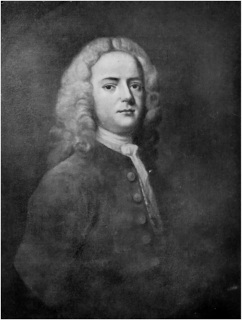
Wesley is the son of Richard Wesley, 1st Baron Mornington, and Elizabeth Sale. He is educated at Trinity College Dublin and is elected its first Professor of Music in 1764. From early childhood he shows extraordinary talent on the violin and soon begins composing his own works. As a composer he is remembered chiefly for glees such as “Here in cool grot” and for a double Anglican chant. His son, Arthur Wellesley, 1st Duke of Wellington, is the only one of his children to inherit something of his musical talent.
Wesley represents Trim in the Irish House of Commons from 1757 until 1758, when he succeeds his father as 2nd Baron Mornington.
Wesley marries Anne Hill-Trevor, eldest daughter of banker Arthur Hill-Trevor, 1st Viscount Dungannon, and his wife Anne Stafford, on February 6, 1759. His godmother, the famous diarist Mary Delany, says the marriage is happy, despite his lack of financial sense and her “want of judgment.” They have nine children, most of whom are historically significant.
In 1759 Wesley is appointed Custos Rotulorum of Meath and in 1760, in recognition of his musical and philanthropic achievements, he is created Viscount Wellesley, of Dangan Castle in the County of Meath, and Earl of Mornington. He is elected Grandmaster of the Grand Lodge of Ireland in 1776, a post he holds until the following year.
Wesley dies at the age of 45 on May 22, 1781. Like his father, he is careless with money, and his early death leaves the family exposed to financial embarrassment, leading ultimately to the decision to sell all their Irish estates.
Four streets in Camden Town, which form part of the estate of Wesley’s son-in-law Henry FitzRoy, are named Mornington Crescent, Place, Street and Terrace after him. Of these, the first has since become famous as the name of a London Underground station.
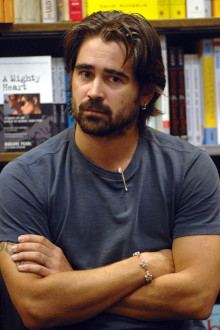
Farrell is inspired to try acting when Henry Thomas‘ performance in E.T. the Extra-Terrestrial moves him to tears. With his brother’s encouragement, he attends the Gaiety School of Acting, dropping out in 1998 when he is cast as Danny Byrne on Ballykissangel, a BBC drama about a young English priest who becomes part of an Irish rural community.
Farrell makes his film debut in the Tim Roth-directed drama The War Zone in 1999 and is discovered by Hollywood when Joel Schumacher casts him as the lead in the war drama Tigerland in 2000. He then stars in Schumacher’s psychological thriller Phone Booth (2003) where he plays a hostage in a New York City phone booth, and the American thrillers S.W.A.T. (2003) and The Recruit (2003), establishing his international box-office appeal. During this time, he also appears in Steven Spielberg‘s science fiction thriller Minority Report (2002) and as the villain Bullseye in the superhero film Daredevil (2003).
Farrell stars in the black comedy film Horrible Bosses (2011), for which he receives critical praise, along with the comedy-horror film Fright Night (2011) and the science fiction action film Total Recall (2012), both remakes, and McDonagh’s second feature, the black comedy crime film Seven Psychopaths (2012). He also stars in the Niels Arden Oplev action film Dead Man Down (2013), and as Travers Goff in the period drama Saving Mr. Banks (2013). In 2014, he stars as Peter Lake in the supernatural fable Winter’s Tale, an adaptation of the novel of the same name by Mark Helprin. In 2015, he stars as Detective Ray Velcoro in the second season of HBO‘s True Detective, and also stars in the film The Lobster, for which he is nominated for his second Golden Globe Award for Best Actor – Motion Picture Musical or Comedy. In 2016, he plays Percival Graves in the Harry Potter spin-off film Fantastic Beasts and Where to Find Them.
In December 2005, Farrell checks into a rehabilitation treatment centre for addictions to recreational drugs and painkillers. He speaks about it on the Late Show with David Letterman after coming out of rehab and continues to do so in the years following. “There was an energy that was created,” he says of the time when he was addicted, “a character that was created, that no doubt benefited me. And then there was a stage where it all began to crumble around me.”
In 2007, Farrell joins other celebrities as a spokesman for the Special Olympics World Games in Shanghai, China. He has also lent his support to the anti-bullying campaign Stand Up! organised by the Irish LGBT youth organisation BeLonG To in March 2012. He appears on The Ellen DeGeneres Show two years earlier to increase awareness of the subject. In 2015 he becomes an official Ambassador of the Homeless World Cup which uses street football to inspire homeless people to change their lives.
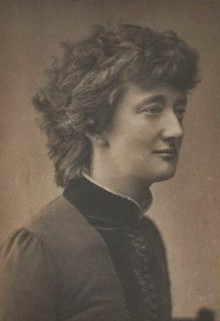
In the 1890s Stopford Green becomes interested in Irish history and the nationalist movement as a result of her friendship with John Francis Taylor. She is vocal in her opposition to English colonial policy in South Africa during the Boer Wars and supports Roger Casement‘s Congo Reform movement. Her 1908 book The Making of Ireland and its Undoing argues for the sophistication and richness of the native Irish civilisation. She is active in efforts to make the prospect of Home Rule more palatable to Ulster Unionists. She is closely involved in the Howth gunrunning.
Stopford Green moves to Dublin in 1918 where her house at 90 St. Stephen’s Green becomes an intellectual centre. She supports the pro-Treaty side in the Irish Civil War and is among the first nominees to the newly formed Seanad Éireann in 1922, where she serves as an independent member until her death in Dublin on May 28, 1929, two days shy of her 82nd birthday. She is one of four women elected or appointed to the first Seanad in 1922.
James Clarence Mangan, Irish poet, is born on May 1, 1803, in Dublin. His poetry fits into a variety of literary traditions. Most obviously, and frequently, his work is read alongside such nationalist political authors as John Mitchel, as they appear in The Nation, The Vindicator and the United Irishman newspapers or as a manifestation of the 19th-century Irish Cultural Revival. He is also frequently read as a Romantic poet.
Mangan is the son of James Mangan, a former hedge school teacher and native of Shanagolden, County Limerick, and Catherine Smith from Kiltale, County Meath. Following his marriage to Smith, James Mangan takes over a grocery business in Dublin owned by the Smith family, eventually becoming bankrupt as a result. Mangan describes his father as having “a princely soul but no prudence,” and attributes his family’s bankruptcy to his father’s suspect business speculations and tendency to throw expensive parties. Thanks to poor record keeping, inconsistent biographies, and his own semi-fictional and sensationalized autobiographical accounts, his early years are the subject of much speculation. However, despite the popular image of him as a long-suffering, poor poet, there is reason to believe that his early years are spent in middle class comfort.
Mangan is educated at a Jesuit school where he learns Latin, Spanish, French, and Italian. He attends three schools before the age of fifteen. Obliged to find a job in order to support his family, he then becomes a lawyer’s clerk, and is later an employee of the Ordnance Survey and an assistant in the library of Trinity College, Dublin.
Mangan’s first verses are published in 1818. From 1820 he adopts the middle name Clarence. In 1830 he begins producing translations – generally free interpretations rather than strict transliterations – from German, a language he had taught himself. Of interest are his translations of Johann Wolfgang von Goethe. From 1834 his contributions begin appearing in the Dublin University Magazine. In 1840 he begins producing translations from Turkish, Persian, Arabic and Irish. He is also known for literary hoaxes as some of his “translations” are in fact works of his own, like Twenty Golden Years Ago, attributed to a certain Selber.
Mangan is friends with the patriotic journalists Thomas Davis and John Mitchel, who ultimately writes his biography. His poems are published in their newspaper The Nation.
Although Mangan’s early poetry is often apolitical, after the Great Famine he begins writing patriotic poems, including influential works such as Dark Rosaleen, a translation of “Róisín Dubh,” and A Vision of Connaught in the Thirteenth Century.
Mangan’s best known poems include Dark Rosaleen, Siberia, Nameless One, A Vision of Connaught in the Thirteenth Century, The Funerals, To the Ruins of Donegal Castle, Pleasant Prospects for the Land-eaters and Woman of Three Cows. He writes a brief autobiography, on the advice of his friend Charles Patrick Meehan, which ends mid-sentence. This is apparently written in the last months of his life, since he mentions his narrative poem of the Italian Gasparo Bandollo, which is published in the Dublin University Magazine in May 1849.
Mangan is a lonely and often difficult man who suffers from mood swings, depression and irrational fears, and becomes a heavy drinker and opium user. His appearance grows eccentric, and he is described by the artist WF Wakeman as frequently wearing “a huge pair of green spectacles,” padded shirts to hide his malnourished figure and a hat which “resembled those which broomstick-riding witches are usually represented with.” On June 20, 1849, weakened by poverty, alcoholism and malnutrition, he succumbs to cholera at the age of 46. He is buried in Glasnevin Cemetery in Dublin.
(Pictured: Memorial bust of James Mangan in St. Stephen’s Green, sculpted by Oliver Sheppard)
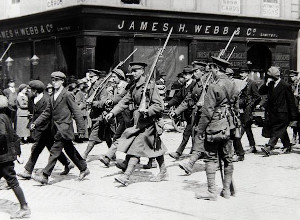
The United Kingdom declares martial law in Ireland for one month on April 25, 1916, the day after the commencement of the Easter Rising. A curfew is imposed from 8:30 PM until 5:00 AM. Anyone spotted on the streets during the hours of darkness are to be shot on sight. The trams stop running at 7:00 PM and the theatres and cinemas close by 8:00 PM. Those rushing for trams leaving the city centre have to pass through a stop-and-search military cordon.
With vastly superior numbers and artillery, the British army quickly suppresses the Rising and Pearse agrees to an unconditional surrender on Saturday, April 29, 1916. Most of the leaders are executed following courts-martial, but the Rising succeeds in bringing physical force republicanism back to the forefront of Irish politics. Support for republicanism continues to rise in Ireland in the context of the ongoing war in Europe and the Middle East and revolutions in other countries, and especially as a result of the Conscription Crisis of 1918 and the failure of the British-sponsored Irish Convention.
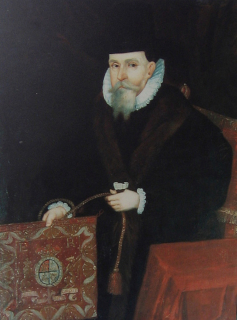
Loftus is born in 1533, the second son of a monastic bailiff, Edward Loftus, in the heart of the English Yorkshire Dales. He embraces the Protestant faith early in his development. He is an undergraduate at Trinity College, Cambridge, where he reportedly attracts the notice of the young Queen Elizabeth, as much by his physique as through the power of his intellect. Although this encounter may never have happened, Loftus certainly meets with the Queen more than once, and she becomes his patron for the rest of her reign. At Cambridge Loftus takes holy orders as a Catholic priest and is appointed rector of Outwell St. Clement in Norfolk. He comes to the attention of the Catholic Queen Mary, who names him vicar of Gedney, Lincolnshire. On Elizabeth’s accession in 1558 he declares himself Anglican.
Loftus makes the acquaintance of the Queen’s favourite Thomas Radclyffe, 3rd Earl of Sussex and serves as his chaplain in Ireland in 1560. In 1561 he becomes chaplain to Alexander Craike, Bishop of Kildare and Dean of St. Patrick’s Cathedral in Dublin. Later that year he is appointed rector of Painstown in Meath and evidently earns a reputation as a learned and discreet advisor to the English authorities in Dublin. In 1563, he is consecrated Archbishop of Armagh at the unprecedented age of 28 by Hugh Curwen, Archbishop of Dublin.
Following a clash with Shane O’Neill, the real power in Ulster during these years, he comes to Dublin in 1564. To supplement the meager income of his troubled archbishopric he is temporarily appointed to the Deanery of St. Patrick’s Cathedral by the queen in the following year. He is also appointed president of the new commission for ecclesiastical causes. This leads to a serious quarrel with the highly respected Bishop of Meath, Hugh Brady.
In 1567 Loftus, having lobbied successfully for the removal of Hugh Curwen, who becomes Bishop of Oxford, and having defeated the rival claims of the Bishop of Meath, is appointed Archbishop of Dublin, where the queen expects him to carry out reforms in the Church. On several occasions he temporarily carries out the functions of Lord Keeper of the Great Seal, and in August 1581 he is appointed Lord Chancellor of Ireland after an involved dispute with Nicholas White, Master of the Rolls in Ireland. He is constantly occupied in attempts to improve his financial position by obtaining additional preferment and is subject to repeated accusations of corruption in public office.
In 1582 Loftus acquires land and builds a castle at Rathfarnham, which he inhabits from 1585. In 1569–1570 the divisions in Irish politics take on a religious tinge with the First Desmond Rebellion in Munster and Pope Pius V‘s 1570 papal bullRegnans in Excelsis. The bull questions Elizabeth’s authority and thereafter Roman Catholics are suspected of disloyalty by the official class unless they are discreet.
Loftus takes a leading part in the execution of Dermot O’Hurley, Archbishop of Cashel. When O’Hurley refuses to give information, Francis Walsingham suggests he should be tortured. Although the Irish judges repeatedly decide that there is no case against O’Hurley, on June 19, 1584, Loftus and Sir Henry Wallop write to Walsingham “We gave warrant to the knight-marshal to do execution upon him, which accordingly was performed, and thereby the realm rid of a most pestilent member.”
Between 1584 and 1591 Loftus has a series of clashes with Sir John Perrot on the location of an Irish University. Perrot wants to use St. Patrick’s Cathedral, Dublin as the site of the new University, which Loftus seeks to preserve as the principal place of Protestant worship in Dublin, as well as a valuable source of income for himself. The archbishop wins the argument with the help of his patron, Queen Elizabeth I, and Trinity College, Dublin is founded at its current location, named after his old college at Cambridge, leaving the Cathedral unaffected. Loftus is named as its first Provost in 1593.
The issue of religious and political rivalry continues during the two Desmond Rebellions (1569–83) and the Nine Years’ War (1594–1603), both of which overlap with the Anglo-Spanish War (1585–1604), during which some rebellious Irish nobles are helped by the Papacy and by Elizabeth’s arch-enemy Philip II of Spain. Due to the unsettled state of the country Protestantism makes little progress, unlike in Celtic Scotland and Wales at that time. It comes to be associated with military conquest and is therefore hated by many. The political-religious overlap is personified by Loftus, who serves as Archbishop and as Lord Chancellor of Ireland. An unlikely alliance forms between Gaelic Irish families and the Norman “Old English“, who had been enemies for centuries but who now mostly remain Roman Catholic.
Adam Loftus dies in Dublin on April 5, 1605, and is interred in the building he had helped to preserve for future generations, while many of his portraits hang today within the walls of the University which he helped found. Having buried his wife Jane (Purdon) and two sons (of their 20 children) in the family vault at St. Patrick’s, Loftus dies at his Episcopal Palace in Kevin Street “worn out with age” and joins his family in the same vault. His zeal and efficiency are commended by James I upon the king’s accession.
Mac Stíofáin is born John Stephenson, the son of Protestant parents. He claims Irish ancestry on his mother’s side although the validity of this is uncertain. He leaves school at sixteen, working as a labourer and converting to Catholicism. He also serves in the Royal Air Force during World War II, working as a storeman. After the war, he becomes involved and obsessed with Irish republicanism. He joins the Irish Republican Army in 1949 and helps organise an IRA unit in London.
In 1953, Stephenson leads a raid that steals rifles and mortars from a cadet school armoury in Essex. He is stopped randomly by police, arrested and sentenced to eight years in prison. He serves more than three years behind bars, using this time to learn Irish Gaelic. Released in 1956, he marries an Irish woman, moves to Dublin and changes his name to Seán Mac Stíofáin, the Gaelic form of his birth name.
Mac Stíofáin gradually ascends through the ranks of the IRA, becoming its director of intelligence. The outbreak of the Troubles in 1969 opens up divisions in the IRA over strategy and tactics. While Cathal Goulding and other leaders want to use violence carefully, Mac Stíofáin and his supporters urge open warfare with the Royal Ulster Constabulary (RUC).
In August 1969, Mac Stíofáin leads a raid on the RUC station at Crossmaglen, in defiance of IRA orders. In December, he and four others form a Provisional Army Council. This splinter group becomes the nucleus of the Provisional IRA.
Mac Stíofáin becomes the Provisional IRA’s first chief of staff. He also oversees its rearming and the escalation of its military campaign in Northern Ireland. In July 1972, he represents the Provisional IRA in secret talks with the British government in London. When these talks collapse, he orders an increase in Provisional IRA operations, beginning with the mass bombing of Belfast on July 21, 1972.
Mac Stíofáin remains in charge until November 1972, when a controversial television interview leads to his arrest, imprisonment and removal from the Provisional IRA leadership. He is released the following year but is no longer prominent in the Provisional IRA. He spends the rest of the 1970s working for a Sinn Féin newspaper.
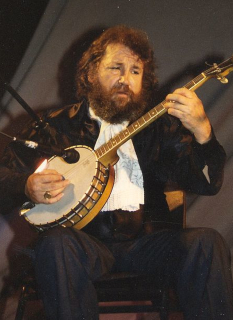
McKenna plays the banjo from an early age, initially because he cannot afford to buy the instrument of his choice, a mandolin. He is a member of The Dubliners from 1962 and is the only living member of the original formation at the time of his death. Prior to joining the Dubliners, he spends a few months in The Chieftains. In addition to his work on traditional Irish music, he also plays jazz on occasion.
McKenna uses GDAE tuning on a 19-fret tenor banjo, an octave below fiddle/mandolin and, according to musician Mick Moloney, is single-handedly responsible for making the GDAE-tuned tenor banjo the standard banjo in Irish music.
McKenna remains a great favourite with live audiences, and some of the loudest and most affectionate applause follows the tunes and songs on which he is the featured performer. He is well known for his unaccompanied renditions of songs such as “South Australia” and “I Wish I Had Someone to Love Me.” His banjo solos on tunes such as “The Maid Behind the Bar,” “The High Reel” and “The Mason’s Apron,” where he is usually accompanied by Eamonn Campbell on guitar, are often performed to cries of “C’mon Barney!” from audience or band members. Another featured spot in Dubliners performances is the mandolin duet that he plays with John Sheahan, again with Eamonn Campbell providing guitar accompaniment. As he often points out to the audience, “It’s an Irish duet, so there’s three of us going to play it.”
McKenna’s tendency to relate funny, and often only marginally believable, stories is legendary amongst Dubliners fans and friends. These anecdotes become known as Barneyisms, and his friend and former Dubliners bandmate Jim McCann collects them for the book An Obstacle Confusion: The Wonderful World of Barney McKenna.
McKenna dies unexpectedly on the morning of April 5, 2012 after collapsing in the kitchen of his home in Howth, County Dublin. He is buried at St. Loman’s Cemetery in Trim, County Meath, on April 9, 2012. Initially it is unclear whether The Dubliners will continue their 50th Anniversary Tour in the wake of McKenna’s death. However they soon confirm that they would “do their best to honour all the concert dates for the rest of the year [2012].”
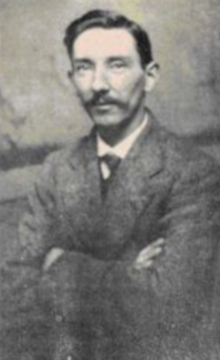
Kearney was born on December 12, 1883, at 68 Lower Dorset Street, Dublin, above one of the two grocer’s shops owned by his father, John Kearney, originally from Funshog, Collon, County Louth. His mother, Katie (née McGuinness), is from Rathmaiden, Slane, County Meath. He is educated at the Model School, Schoolhouse Lane and St. Joseph’s Secondary C.B.S. in Fairview. He hears Willie Rooney give nationalist lectures on history in the Mechanics’ Institute. For a short time, he attends Belvedere College. Following the death of his father, he is left to support his mother and five younger siblings. He has various menial jobs for three years before being apprenticed to a house painter.
In 1901, the death of Willie Rooney prompts Kearney to join the Willie Rooney Branch of the Gaelic League. He joins the Irish Republican Brotherhood in 1903. He teaches night classes in Irish and numbers Seán O’Casey among his pupils. He finds work with the National Theatre Society and in 1904 is one of the first to inspect the derelict building that becomes the Abbey Theatre. He assists with props and performs occasional walk-on parts at the Abbey until 1916.
Kearney is a co-founder of the Irish Volunteers in 1913 and takes part in the Howth and Kilcoole gun runnings in 1914. In the Easter Rising of 1916 he fights at Jacob’s biscuit factory under Thomas MacDonagh, abandoning an Abbey Theatre tour in England to take part in the Rising. He escapes before the garrison is taken into custody.
A personal friend of Michael Collins, Kearney at first takes the Free State side in the Irish Civil War but loses faith in the Free State after Collins’s death. He takes no further part in politics, returning to his original trade of house painting.
Kearney’s songs are highly popular with the Irish Volunteers (which later becomes the Irish Republican Army) in the 1913–1922 period. Most popular is “The Soldier’s Song.” He pens the original English lyrics in 1907 and his friend and musical collaborator Patrick Heeney composes the music. The lyrics are published in 1912 and the music in 1916. After 1916 it replaces “God Save Ireland” as the anthem of Irish nationalists. The Irish Free State is established in 1922 and formally adopts the anthem in 1926.
Other well-known songs by Kearney include “Down by the Glenside,” “The Tri-coloured Ribbon,” “Down by the Liffey Side,” “Knockcroghery” (about the village of Knockcroghery) and “Erin Go Bragh” (Erin Go Bragh is the text on the Irish national flag before the adoption of the tricolour).
Peadar Kearney dies in relative poverty in Inchicore on November 24, 1942. He is buried in Glasnevin Cemetery in Dublin.
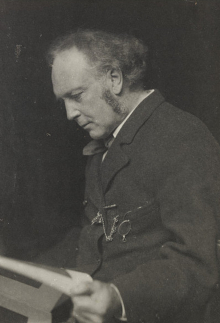
Stopford Augustus Brooke, churchman, royal chaplain and writer, is born in the rectory of Glendoen, near Letterkenny, County Donegal on November 14, 1832. His maternal grandfather, Joseph Stopford, is then rector of the parish.
Brooke is the eldest son of the Rev. Richard Sinclair Brooke, later incumbent of the Mariners’ Church, Kingstown (now Dún Laoghaire), and is educated at Trinity College, Dublin. He is ordained in the Church of England in 1857 and holds various charges in London. From 1863 to 1865 he is chaplain to Victoria, Princess Royal in Berlin. In 1869, with his brother Edward, he makes long tours of Counties Donegal and Sligo, and spends much time at Kells, County Meath studying Irish antiquities. Between 1866 and 1875 he is the minister at St. James’s Chapel, a Proprietary Chapel. After it closes, he takes services at Bedford Chapel, Bloomsbury where he continues to attract large congregations. In 1875, he becomes chaplain in ordinary to Queen Victoria. But in 1880 he secedes from the Church, being no longer able to accept its leading dogmas, and officiates as an independent preacher for some years at Bedford chapel, Bloomsbury.
Bedford chapel is pulled down about 1894, and from that time Brooke has no church of his own, but his eloquence and powerful religious personality continues to make themselves felt among a wide circle. A man of independent means, he is always keenly interested in literature and art, and a fine critic of both. The two-volume Life and Letters of Stopford Brooke, written by his son-in-law L. P. Jacks and published in 1917, contains many details of different facets of his life.
In 1890-1891 Brooke takes the lead in raising the funds to purchase Dove Cottage, William Wordsworth’s home in Grasmere from 1800 to 1808, and establishing it “for the eternal possession of those who love English poetry all over the world.” Dove Cottage is now administered by the Wordsworth Trust.
Brooke publishes in 1865 his Life and Letters of FW Robertson (of Brighton), and in 1876 writes an admirable primer of English Literature, followed in 1892 by The History of Early English Literature down to the accession of Alfred the Great, and English Literature from the Beginnings to the Norman Conquest (1898).
Brooke gives the inaugural lecture to the Irish Literary Society, London, on “The Need and Use of Getting Irish Literature into the English Tongue” at Bloomsbury House, March 11, 1893. He delivers a sermon on “The Kingdom of God Within” to the International Council of Unitarian and Other Liberal Religious Thinkers and Workers, meeting in London in May 1901.