On the evening of December 3, 2012, hundreds of protesters gather outside Belfast City Hall as the Belfast City Council votes to limit the days that the Union Jack, the flag of the United Kingdom, flies from City Hall. Since 1906, the flag has been flown every day of the year. This is reduced to eighteen specific days a year, the minimum requirement for UK government buildings. The move to limit the number of days is backed by the council’s Irish nationalists while the Alliance Party abstains from the vote. It is opposed by the unionist councillors.
Minutes after the vote, protesters break into the back courtyard and try to force open the doors of the building. Two security staff and a press photographer are injured, and windows of cars in the courtyard are smashed. Protesters then clash with the police, injuring fifteen officers.
Ulster loyalists and British nationalists hold street protests throughout Northern Ireland. They see the council’s decision as part of a wider “cultural war” against “Britishness” in Northern Ireland. Throughout December and January, protests are held almost daily and most involve the protesters blocking roads while carrying Union Flags and banners. Some of these protests lead to clashes between loyalists and the police, sparking riots. Rioters attack police with petrol bombs, bricks, stones and fireworks. Police respond with plastic bullets and water cannon. Alliance Party offices and the homes of Alliance Party members are attacked, while Belfast City Councillors are sent death threats. According to police, some of the violence is orchestrated by high-ranking members of the Ulster Volunteer Force (UVF) and Ulster Defence Association (UDA). Loyalists also put up thousands of Union flags in public places, which further heightened tension.
After February 2013, the protests become smaller and less frequent, and lead to greater loyalist protests about related issues, such as restrictions on traditional loyalist marches.
Prime Minister of the United KingdomDavid Cameron condemns the protests, saying “violence is absolutely unjustified in those and in other circumstances.” MPNaomi Long says that Northern Ireland is facing “an incredibly volatile and extremely serious situation.” She also calls on Cameron to intervene after a police car outside her office is firebombed with a policewoman escaping injury in early December.
The Police Service of Northern Ireland‘s (PSNI) Chief ConstableMatt Baggott blames the violence on the UVF for “orchestrating violence for their own selfish motives. Everyone involved needs to step back. The lack of control is very worrying. The only answer is a political solution. Otherwise, this will eat into our ability to deal with drugs, into our ability to deal with alcohol issues, and deal with what is a very severe dissident threat.”
In September 2013, business representatives in Belfast reveal that the flag protests had resulted in losses totaling £50 million in the year to July 2013.
(Pictured: The Union Flag flying atop Belfast City Hall in 2006. The statue of Queen Victoria is in the foreground.)
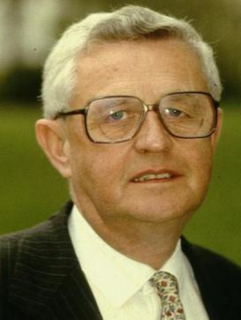
Cole starts his career in print journalism in 1945, joining the Belfast Telegraph as a reporter and industrial correspondent. He subsequently works as a political reporter for the paper. He gains a scoop when he interviews the then Prime Minister, Clement Attlee, who is holidaying in Ireland.
Cole joins The Guardian, then The Manchester Guardian, in 1956, reporting on industrial issues. He transfers to the London office in 1957 as the paper’s labour correspondent. Appointed news editor in 1963, succeeding Nesta Roberts, he takes on the task of reorganising the paper’s “amateurish” system for gathering news. He heads opposition to a proposed merger with The Times in the mid-1960s, and later serves as deputy editor under Alastair Hetherington. When Hetherington leaves in 1975, Cole is in the running for the editorship, but fails to secure the post, for reasons which may include his commitment to the cause of unionism in Northern Ireland, as well as what is seen by some as inflexibility and a lack of flair. Unwilling to continue at The Guardian, he then joins The Observer as deputy editor under Donald Trelford, remaining there for six years.
After Tiny Rowland takes over as proprietor of The Observer in 1981, Cole gives evidence against him at the Monopolies Commission. The following day he receives a call from the BBC offering him the job of political editor, succeeding John Simpson. He has little previous television experience but proves a “natural broadcaster.” Reporting through most of the premiership of Margaret Thatcher, he becomes a familiar figure on television and radio.
Cole’s health is put under strain by the workload, and he suffers a heart attack in February 1984. Returning to report on that year’s conference season, he covers the Brighton hotel bombing, getting a “memorable” interview with Thatcher on the pavement in its immediate aftermath, in which she declares that the Tory conference will take place as normal. An astute observer of the political scene, he is one of the earliest to forecast Thatcher’s resignation as Prime Minister in 1990, in what colleague David McKie refers to as “perhaps his greatest exclusive.”
Cole establishes a strong reputation for his “gentle but probing” interviewing style, for his political assessments, and for presenting analysis rather than “bland reporting.” Held in enormous affection by viewers, he is trusted by both politicians and the public. He is known for speaking in the language used by ordinary people rather than so-called Westminster experts. His distinctive Northern Irish accent leads the way for BBC broadcasters with regional accents.
Cole retires as political editor in 1992 at the age of 65, compulsory at the time, but continues to appear on television, including making programmes on golf and travel. He also continues to appear on the BBC programme Westminster Live for several years after he retired as political editor.
In addition to his journalistic writing, Cole authors several books. The earliest are The Poor of the Earth, on developing countries, and The Thatcher Years (1987). After his retirement as BBC political editor, he spends more time writing. His political memoir, As It Seemed to Me, appears in 1995 and becomes a best-seller. He also publishes a novel, A Clouded Peace (2001), set in his birthplace of Belfast in 1977.
In 2007, Cole writes an article for the British Journalism Review, blaming both politicians and the media for the fact that parliamentarians are held in such low esteem, being particularly scathing of Alastair Campbell‘s influence during Tony Blair‘s premiership.
In 1966, the Eisenhower Fellowships selects Cole to represent Great Britain. He receives the Royal Television Society‘s Journalist of the Year award in 1991. After his retirement in 1992, he is awarded an honorary degree from the Open University as Doctor of the University and receives the Richard Dimbleby Award from BAFTA in 1993. He turns down a CBE in 1993, citing the former The Guardian newspaper rule that journalists can only accept gifts which can be consumed within 24 hours.
In his private life Cole is a supporter of the Labour Party and is a believer in the trades union movement. He considers that the combating of unemployment is one of the most important political issues. He is a British Republican and a committed Christian, associating in the latter part of his life with the United Reformed Church at Kingston upon Thames.
Cole suffers health problems in retirement including heart problems and two minor strokes. In 2009, he is diagnosed with cancer. He subsequently develops aphasia. He dies at his home at Claygate in the county of Surrey on November 7, 2013.
Tributes are paid by journalists, broadcasters and politicians across the political spectrum. Prime Minister David Cameron calls Cole a “titan at the BBC” and an “extraordinary broadcaster.” Labour Party leader Ed Miliband says that “my generation grew up watching John Cole. He conveyed the drama and importance of politics.” The Scottish First MinisterAlex Salmond says that Cole is “an extremely able journalist but also extraordinarily helpful and generous to a young politician.” The BBC’s political editor at the time, Nick Robinson, writes that Cole “shaped the way all in my trade do our jobs.”
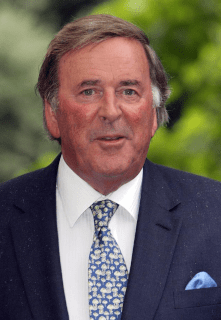
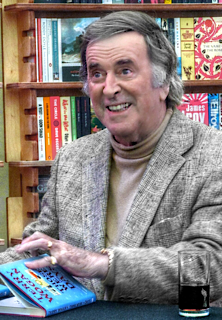
Sir Michael Terence WoganKBEDL, Irish-British radio and television broadcaster who works for the BBC in the United Kingdom (UK) for most of his career, is born at Cleary’s Nursing Home, Elm Park, Limerick, County Limerick, on August 3, 1938. Between 1993 and his semi-retirement in December 2009, his BBC Radio 2 weekday breakfast programme Wake Up to Wogan regularly draws an estimated eight million listeners. He is believed at the time to be the most listened-to radio broadcaster in Europe.
Wogan is the elder of two children. He is the son of the manager of Leverett & Frye, a high-class grocery store in Limerick, and is educated at Crescent College, a Jesuit school, from the age of eight. He experiences a strongly religious upbringing, later commenting that he had been brainwashed into believing by the threat of going to hell. Despite this, he often expresses his fondness for the city of his birth, commenting on one occasion that “Limerick never left me, whatever it is, my identity is Limerick.”
At the age of 15, after his father is promoted to general manager, Wogan moves to Dublin with his family. While living there he attends Crescent College’s sister school, Belvedere College. He participates in amateur dramatics and discovers a love of rock and roll. After leaving Belvedere in 1956, he has a brief career in the banking profession, joining the Royal Bank of Ireland. Still in his twenties, he joins the national broadcaster of Ireland, Raidió Teilifís Éireann (RTÉ), as a newsreader and announcer, after seeing a newspaper advertisement inviting applicants.
Wogan conducts interviews and presents documentary features during his first two years at RTÉ, before moving to the light entertainment department as a disc jockey and host of TV quiz and variety shows such as Jackpot, a top-rated quiz show on RTÉ in the 1960s.
Wogan is a leading media personality in Ireland and Britain from the late 1960s, and is often referred to as a “national treasure.” In addition to his weekday radio show, he is known for his work on television, including the BBC One chat show Wogan, presenting Children in Need, the game show Blankety Blank and Come Dancing. He is the BBC’s commentator for the Eurovision Song Contest from 1971 to 2008 (radio in 1971, 1974–1977; television in 1973, 1978, 1980–2008) and the Contest’s host in 1998. From 2010 to 2015 he presents Weekend Wogan, a two-hour Sunday morning show on BBC Radio 2.
In 2005, Wogan acquires British citizenship in addition to his Irish nationality and is awarded a knighthood in the same year and is therefore entitled to use the title “Sir” in front of his name.
Wogan’s health declines after Christmas 2015. He does not present Children in Need in November 2015, citing back pain as the reason for his absence from the long-running annual show. One of his friends, Father Brian D’Arcy, visits him during January and notices he is seriously ill. He dies of cancer at the age of 77 on January 31, 2016 at his home.
After Wogan’s death and his private funeral a few weeks later, a public memorial service is held on September 27 the same year. This is held at Westminster Abbey and is opened by a recording of Wogan himself, and features a number of his celebrity friends making speeches, such as Chris Evans and Joanna Lumley. The service is broadcast live on BBC Radio 2.
On November 16, 2016, the BBC renames BBC Western House, home of BBC Radio 2, in his memory, to BBC Wogan House.
Bloody Sunday, as the events on January 30, 1972, come to be known, is one of the most controversial moments of the Troubles. Paramilitary open fire while trying to police a banned civil rights march. They kill 13 marchers outright, and, according to Saville, wound another 15, one of whom subsequently dies later in the hospital.
In the House of Commons of the United Kingdom, Cameron begins his statement by saying he is “deeply patriotic” and does not want to believe anything bad about his country. Cameron says the inquiry, a 5,000-page, 10-volume report, which takes twelve years to compile at a cost of almost £191m, is “absolutely clear” and there are “no ambiguities” about the conclusions. He adds, “What happened on Bloody Sunday was both unjustified and unjustifiable. It was wrong.”
The report concludes there is no justification for shooting at any of those killed or wounded on the march. “None of the firing by the Support Company [Paratroopers] was aimed at people posing a threat or causing death or serious injury.” The report adds that the shootings “were not the result of any plan to shoot selected ringleaders” and that none of those killed by British soldiers was armed with firearms and no warning was given by the soldiers.
“The government is ultimately responsible for the conduct of the armed forces, and for that, on behalf of the government and on behalf of the country, I am deeply sorry,” says Cameron. The inquiry finds that the order sending British soldiers into the Bogside “should not have been given.” Cameron adds the casualties were caused by the soldiers “losing their self-control.”
The eagerly awaited report does not hold the British government at the time directly responsible for the atrocity. It finds that there is “no evidence” that either the British government or the unionist-dominated Northern Ireland administration encouraged the use of lethal force against the demonstrators. It also exonerates the army’s then commander of land forces, Major General Robert Ford, of any blame.
Most of the damning criticism against the military is directed at the soldiers on the ground who fired on the civilians. Saville says that on Bloody Sunday there had been “a serious and widespread loss of fire discipline among the soldiers.” He concludes that many of the soldiers lied to his inquiry. “Many of these soldiers have knowingly put forward false accounts in order to seek to justify their firing.” Under the rules of the inquiry this conclusion means that soldiers could be prosecuted for perjury.
The report also focuses on the actions of two Republican gunmen on the day and says that the Official Irish Republican Army (IRA) men had gone to a prearranged sniping position. But Saville finds that their actions did not provoke in any way the shootings by the paramilitary regiment.
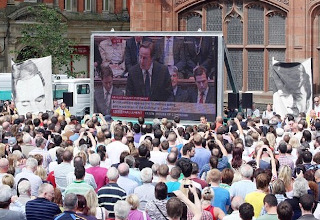
Relatives cheer as they watch the statement, relayed to screens outside the Guildhall in Derry. A minute of silence is held as thousands of supporters fill the square outside, waiting to be told about the report’s contents. A representative of each of the families speaks in turn and a copy of the hated report by Lord Widgery, which in 1972 accuses the victims of firing weapons or handling bombs, is torn apart by one of the families’ representatives.
Denis Bradley, who played a key part in secret talks that brought about the IRA ceasefire of 1994 and who was on the Bloody Sunday march in 1972, welcomes the report’s findings. The former Derry priest, who narrowly escaped being shot on the day, says he is “amazed” at how damning the findings are against the soldiers. He adds, “This city has been vindicated, this city has been telling the truth all along.”
(Pictured: Family and supporters watch David Cameron’s formal state apology in Guildhall Square in Derry, County Londonderry, Northern Ireland)
Hunniford starts as a BBC production assistant in Belfast and a local radio broadcaster. In the 1970s and 1980s, she is the presenter of Good Evening Ulster and on the ITV Network Sunday Sunday and We Love TV. She also appears on Lily Savage’s Blankety Blank and on Call My Bluff. She is a regular reporter on This Morning and The One Show.
From 1998 to 2003, Hunniford presents Open House with Gloria Hunniford for Channel 5. In August 2010, she appears as a panellist/presenter on the ITV daytime programme 3@Three. Since 2009, she has co-presented Rip Off Britain, a consumer complaints programme on BBC One with Angela Rippon and, for the first two series, Jennie Bond, and then, for the third series, with Julia Somerville replacing Bond. Together, the trio of Hunniford, Rippon and Somerville also present Charlie’s Consumer Angels.
In 2012, Hunniford presents the BBC One documentary series Doorstep Crime 999. From September 8, 2014, she is a presenter on ITV chat show Loose Women. She is previously a guest panelist in 2003. From September 2014 to July 2015, she appears on the panel in 31 episodes of the programme, three of which she anchors. As of April 6, 2017, she has appeared 93 times, four of which she anchors and two where she is a guest panelist.
In 2014, Hunniford presents the first series of the BBC One programme Home Away from Home. Gyles Brandreth presents the second series. She also presents three series of Food: Truth or Scare with Chris Bavin from 2016.
Hunniford makes a health and exercise video called Fit for Life and also appears on the UK music video of the Muppets cover to “She Drives me Crazy.” She has written an Irish Cookery Book with her sister Lena entitled Gloria Hunniford’s Family Cookbook.
On The Alan Titchmarsh Show on May 6, 2011, Hunniford reveals her support for David Cameron‘s Conservative-led coalition government, describing herself as “a bit of a David Cameron fan,” although she criticises the government’s decision to continue giving aid to Pakistan when it is making cuts in the UK.
In August 2014, Hunniford is one of 200 public figures who are signatories to a letter to The Guardian opposing Scottish independence in the run-up to September’s referendum on that issue.
Widgery receives promotion to the Court of Appeal in 1968. He has barely gotten used to his new position when Lord Parker of Waddington, who had been Lord Chief Justice of England and Wales since 1958, announces his retirement. There is no obvious successor and Widgery is the most junior of the possible appointees. The Lord Chancellor, Quintin Hogg, Baron Hailsham of St. Marylebone, chooses Widgery largely on the basis of his administrative abilities. On April 20, 1971, he is created a life peer taking the title Baron Widgery, of South Molton in the County of Devon.
Shortly after taking over, Widgery is handed the politically sensitive job of conducting an inquiry into the events of January 30, 1972, in Derry, where troops from 1st Battalion, Parachute Regiment had murdered 13 civil rights marchers, commonly referred to as Bloody Sunday. A 14th person dies shortly after Widgery’s appointment. He hears testimony from the paratroopers, who claim they had been shot at, while the marchers insist that no one from the march was armed. Widgery produces a report that takes the British Army‘s side. He placed the main blame for the deaths on the march organisers for creating a dangerous situation where a confrontation was inevitable. His strongest criticism of the Army is that the “firing bordered on the reckless.”
The Widgery Report is accepted by the British government and Northern Ireland‘s unionists but is immediately denounced by Irish nationalist politicians, and people in the Bogside and Creggan areas are disgusted by his findings. The British Government had acquired some goodwill because of its suspension of the Stormont Parliament, but that disappears when Widgery’s conclusions are published. The grievance with Widgery’s findings lingers and the issue remains live as the Northern Ireland peace process advances in the 1990s.
In January 1998, on the eve of the 26th anniversary of Bloody Sunday, Prime MinisterTony Blair announces a new inquiry, criticising the rushed process in which Widgery failed to take evidence from those wounded and did not personally read eyewitness accounts. The resulting Bloody Sunday Inquiry lasts 12 years before the Saville Report is published on June 15, 2010. It demolishes the Widgery Report, finding that soldiers lied about their actions and falsely claimed to have been attacked.
Prime Minister David Cameron, on behalf of the United Kingdom, formally apologises for the “unjustified and unjustifiable” events of Bloody Sunday. As a result of the Saville Report, even observers who are natural supporters of the British Army now regard Widgery as discredited. The conservative historian and commentator Max Hastings describes the Widgery report as “a shameless cover-up.”
The Bloody Sunday Inquiry, also known as the Saville Inquiry or the Saville Report after its chairman, Mark Saville, Baron Saville of Newdigate, is launched on April 3, 1998, by British Prime MinisterTony Blair. The inquiry follows campaigns for a second inquiry by families of those killed and injured in Derry on Bloody Sunday during the peak of ethno-political violence known as The Troubles. The inquiry is set up to establish a definitive version of the events of Sunday, January 30, 1972, superseding the tribunal set up under John Widgery, Baron Widgery that had reported on April 19, 1972, eleven weeks after the events, and to resolve the accusations of a whitewash that had surrounded it.
The judges finish hearing evidence on November 23, 2004, and reconvene once again on December 16 to listen to testimony from another witness, known as Witness X, who had been unavailable earlier.
The report is published on June 15, 2010. That morning thousands of people walk the path that the civil rights marchers had taken on Bloody Sunday before fourteen were killed, holding photos of those who had been shot. The families of the victims receive advance copies of the report inside the Guildhall.
Then British prime minister David Cameron addresses the House of Commons that afternoon where he describes what British soldiers had done as “both unjustified and unjustifiable, it was wrong.” He acknowledges, among other things, that the paratroopers had fired the first shot, had fired on fleeing unarmed civilians, and shot and killed one man who was already wounded. He then apologises on behalf of the British Government by saying he is “deeply sorry.”
(Pictured: Lord Saville and his colleagues visit the Bogside during their first day in the city on April 3, 1998. Credit: Derry Journal)
Finucane is born into a Roman Catholic family on the Falls Road, Belfast on March 21, 1949. At the start of the Troubles, his family is forced out of their home. He graduates from Trinity College, Dublin in 1973. He comes to prominence due to successfully challenging the British government in several important human rights cases during the 1980s.
Finucane is shot fourteen times and killed at his home in Fortwilliam Drive, north Belfast, by Ken Barrett and another masked man using a Browning Hi-Power 9mm pistol and a .38 revolver respectively. The two gunmen knock down the front door with a sledgehammer and enter the kitchen where Finucane has been having a Sunday meal with his family. They immediately open fire and shoot him twice, knocking him to the floor. Then while standing over him, the leading gunman fires twelve bullets into his face at close range. Finucane’s wife Geraldine is slightly wounded in the shooting attack which their three children witness as they hide underneath the table.
The Royal Ulster Constabulary (RUC) immediately launches an investigation into the killing. The investigation, led by Detective Superintendent Alan Simpson, runs for six weeks and he later states that from the beginning, there had been a noticeable lack of intelligence coming from the other agencies regarding the killing. Finucane’s killing is widely suspected by human rights groups to have been perpetrated in collusion with officers of the RUC and, in 2003, the British GovernmentStevens Report states that the killing is indeed carried out with the collusion of police in Northern Ireland.
In September 2004, an Ulster Defence Association (UDA) member, and at the time of the murder a paid informant for the Royal Ulster Constabulary, Ken Barrett, pleads guilty to Finucane’s murder.
The Ulster Defence Association/Ulster Freedom Fighters (UDA/UFF) claim they killed Finucane because he was a high-ranking officer in the Irish Republican Army (IRA). Police at his inquest say they have no evidence to support this claim. Finucane had represented republicans in many high-profile cases, but he had also represented loyalists. Several members of his family have republican links, but the family strongly denies Finucane is a member of the IRA. Informer Sean O’Callaghan claims that he attended an IRA finance meeting alongside Finucane and Gerry Adams in Letterkenny in 1980. However, both Finucane and Adams have consistently denied being IRA members.
In Finucane’s case, both the RUC and the Stevens Report find that he is not a member of the IRA. Republicans strongly criticise the claims made by O’Callaghan in his book The Informer and subsequent newspaper articles. One Republican source says O’Callaghan “…has been forced to overstate his former importance in the IRA and to make increasingly outlandish accusations against individual republicans.”
In 2011 British Prime MinisterDavid Cameron meets with Finucane’s family and admits the collusion, although no member of the British security services has yet been prosecuted.
The Bloody Sunday Inquiry, the biggest public inquiry in British history, opens properly on March 27, 2000, when formal public hearings begin at the Guildhall in Derry. The Inquiry holds public hearings on 116 days over the year, clocking up more than 600 hours of evidence. The vast majority of the evidence is from eyewitnesses.
The Bloody Sunday Inquiry, also known as the Saville Inquiry or the Saville Report after its chairman, Lord Saville of Newdigate, is established in 1998 by British Prime Minister Tony Blair after campaigns for a second inquiry by families of those killed and injured in Derry on Bloody Sunday during the peak of ethno-political violence known as The Troubles. The inquiry is set up to establish a definitive version of the events of Sunday, January 30, 1972, superseding the tribunal set up under Lord Widgery in April 1972, and to resolve the accusations of a whitewash that had surrounded it.
The inquiry takes the form of a tribunal established under the Tribunals of Inquiry (Evidence) Act 1921, and consists of Lord Saville, the former Chief Justice of New BrunswickWilliam L. Hoyt, and John L. Toohey, a former Justice of the High Court of Australia. The judges retire on November 23, 2004, and reconvene once again on December 16 to listen to testimony from another key witness, known only as Witness X.
The results are published on June 15, 2010. The report states, “The firing by soldiers of 1 PARA on Bloody Sunday caused the deaths of 13 people and injury to a similar number, none of whom was posing a threat of causing death or serious injury.” It also says, “The immediate responsibility for the deaths and injuries on Bloody Sunday lies with those members of Support Company whose unjustifiable firing was the cause of those deaths and injuries.”
Saville states that British paratroopers “lost control”, fatally shooting fleeing civilians and those who tried to aid the civilians who had been shot by the British soldiers and that the civilians had not been warned by the British soldiers that they intended to shoot. Saville also says British soldiers should not have been ordered to enter the Bogside area as “Colonel Wilford either deliberately disobeyed Brigadier MacLellan’s order or failed for no good reason to appreciate the clear limits on what he had been authorised to do.”
The report states five British soldiers aimed shots at civilians they knew did not pose a threat and two other British soldiers shot at civilians “in the belief that they might have identified gunmen, but without being certain that this was the case.” It also states that British soldiers had concocted lies in their attempt to hide their acts and, contrary to the previously established belief, that none of the soldiers fired in response to attacks by petrol bombers or stone throwers, and that the civilians were not posing any threat. The report finds that Martin McGuinness, “did not engage in any activity that provided any of the soldiers with any justification for opening fire.”
On the morning that the report is published, thousands of people walk the path that the civil rights marchers had taken on Bloody Sunday, holding photos of those who had been shot. The families of the victims receive advance copies of the report inside the Guildhall. British Prime Minister David Cameron addresses the House of Commons that afternoon where he acknowledges, among other things, that the paratroopers had fired the first shot, had fired on fleeing unarmed civilians, and shot and killed one man who was already wounded. He then apologises on behalf of the British Government.