seamus dubhghaill

Promoting Irish Culture and History from Little Rock, Arkansas, USA


Leave a comment

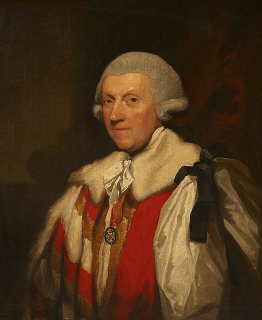
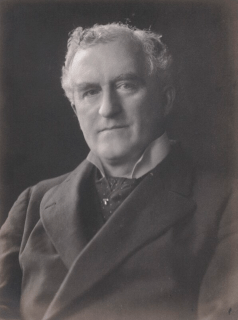
Birth of John Henry MacFarland, Irish Australian University Chancellor

Sir John Henry MacFarland, Irish Australian educationist and churchman, is born in Omagh, County Tyrone, on April 19, 1851.

MacFarland is the elder son of John MacFarland, draper, and his second wife Margaret Jane, daughter of Rev. William Henry, a famous Covenanting Church minister. Both parents are devout Presbyterians, well educated, with strong intellectual interests.

MacFarland attends the local national school until he is 13 when he moves to the Royal Belfast Academical Institution. He is senior scholar in Mathematics and Natural Philosophy at Queen’s College, Belfast, where he is taught by John Purser. There he earns a BA in 1871 and MA in 1872. He goes on to St. John’s College, Cambridge, for three more years of undergraduate study of mathematics and physics. There he is elected a foundation scholar and earns a second BA, as 25th wrangler, in 1876. He also earns an MA there in 1879.

MacFarland teaches at Repton School in Derbyshire from 1876 to 1880. A decade later, his younger brother Robert, also a Queen’s Belfast and Cambridge mathematics graduate, also teaches at Repton.

The emissaries of the provisional council of Ormond College in the University of Melbourne are impressed with MacFarland. He negotiates a salary of £600 plus the profit from “farming” the college. On March 18, 1881, he becomes the first master of Ormond College, passing the opening-day ordeal in the presence of 440 Presbyterian grandees, clergy and their ladies.

On Sir John Madden‘s death in 1918, MacFarland becomes chancellor of the university and is knighted in 1919. He presides over a period of considerable expansion, working closely with Sir John Monash, vice-chancellor from 1923, and Sir James Barrett.

MacFarland is immensely and properly proud of his careful financial management, but the erstwhile reformers are hardly tender enough in balancing economy with humanity. The professors become increasingly restive about the limited responsibility for academic matters and allocation of resources council allows them. When the issues come to a head in 1928, MacFarland’s prestige is too much for the professoriate who have great respect for his administrative capacity, humanity and reasonableness. Even in his eighties he does not retire as chancellor, probably wisely concluding that his likely successor, Barrett, will prove to be too divisive.

In 1892, MacFarland receives and honorary LLD degree from the Royal University of Ireland.

MacFarland’s reputation as a business manager leads to his directorship from about 1905 of the National Mutual Life Association, serving as chairman from 1928, and of the Trustees Executors and Agency Company. From 1913 he represents the Trustees Executors on the Felton Bequests Committee. He is also the popular chairman from its foundation in 1908 of the Alexandra Club Co. as the members of the leading female social club prefer men to control their finances.

In his younger days MacFarland is a vigorous cyclist and walker in the Australian Alps, Tasmania and New Zealand. By the age of 40 he is spending a month each summer trout-fishing in the South Island of New Zealand. He is also a regular golfer at Royal Melbourne and belongs to the Melbourne Club.

MacFarland dies in Melbourne, Victoria, Australia, on July 22, 1935. His remains are cremated following a service at Scots’ Church. The university council minutes:

“Few men in any community, and almost no man in this community, can have won such universal esteem. No evil was ever spoken of him or could be thought of in connection with him; before him evil quailed. The greatest disciple of the greatest of the Greeks called his dead master ‘our friend whom we may truly call the wisest, and the justest, and the best of all men we have ever known’. And many of us can sincerely say that of John Henry MacFarland.”

(From: “Sir John Henry MacFarland (1851-1935)” by Geoffrey Serle, Australian Dictionary of Biography, http://www.adb.anu.edu.au, 1986)

Leave a comment

Birth of Sir Richard Levinge, 1st Baronet

Sir Richard Levinge, 1st Baronet, Irish politician and judge who plays a leading part in Irish public life for more than 30 years, is born at Leek, Staffordshire, England, on May 2, 1656.

Levinge is the second son of Richard Levinge of Parwich Hall, Derbyshire, Recorder of Chester, and Anne Parker, daughter of George Parker of Staffordshire and his wife Grace Bateman. The Levinges (sometimes spelled “Levin”) are a long-established Derbyshire family with a tradition of public service. Through his mother he is a first cousin of Thomas Parker, 1st Earl of Macclesfield, Lord High Chancellor of Great Britain.

Levinge is educated at Audlem School, Derbyshire, and St. John’s College, Cambridge. He enters the Inner Temple in 1671 and is called to the Bar in 1678. He is a Member of Parliament (MP) of the House of Commons of England for City of Chester from 1690 to 1695. He is also, like his father, Recorder of Chester in 1686-87, but is summarily removed from this office by King James II of England.

Levinge is one of the first to declare for William III of England at the Glorious Revolution and is sent by the new Government to Ireland as Solicitor-General in 1689. In 1692 he is elected as a member of the Irish House of Commons for Belfast and for Blessington, but chooses to sit for Blessington, a seat he holds until 1695. During this time, he serves as Speaker of the Irish House of Commons. In politics he is a moderate Tory, noted throughout his career for his desire to conciliate. In an age of bitter political faction this earns him the uncharitable nickname “Tom Double.” Although he supports the Penal Laws, as no Irish officeholder then could do otherwise, he is very tolerant in religious matters and has several Roman Catholic friends, including his predecessor as Solicitor-General, Sir Theobald Butler.

Levinge later represents Longford Borough from 1698 to September 1713 and Kilkenny City from 1713 to November 1715 in the Irish Parliament. In 1713 he is also returned for Gowran but chooses to sit for Kilkenny. He is created a Baronet of High Park in the County of Westmeath, in the Baronetage of Ireland on October 26, 1704.

Levinge also serves as Solicitor-General for Ireland from 1689, from which office he is dismissed in 1695 following a quarrel with Henry Capell, 1st Baron Capell of Tewkesbury, the Lord Lieutenant of Ireland. He returns to office as Solicitor-General in 1705 through the good offices of James Butler, 2nd Duke of Ormonde, who has acted as his patron for some years past. History repeats itself when the Lord Lieutenant, Thomas Wharton, 1st Earl of Wharton, dismisses him from office in 1709 with what is regarded by many, including Jonathan Swift, as brutal suddenness. He once again becomes a member of the Parliament of Great Britain representing Derby from 1710 to 1711. He becomes Attorney-General for Ireland in 1711, after Ormonde replaces Wharton as Lord Lieutenant.

Levinge had expressed his interest in being appointed to the English Bench but meets with no success in his efforts to achieve office in England. Under George I of Great Britain, despite being of the “wrong” political persuasion, and his growing age, his famous moderation, and his 30 years’ experience of Irish public life make him acceptable as an Irish judge to the Government, in which he has a powerful supporter in his cousin Lord Macclesfield. In 1721 he becomes Chief Justice of the Irish Common Pleas for Ireland and a member of the Privy Council of Ireland. He complains bitterly of the poor quality of his junior judges, and asks for suitable replacements, although he complains equally about some of those whose names are put forward as possible replacements. Despite being in great pain from gout in his last years, he remains on the Bench until his death on July 13, 1724.

Levinge divides his time between his ancestral home, Parwich Hall, which he purchases from his childless elder brother, and his newly acquired property Knockdrin Castle, County Westmeath. Most of his estates passes to his eldest son, who extensively rebuilds Parwich.

(Pictured: Knockdrin Castle, County Westmeath, the main Levinge residence in Ireland)


Leave a comment

Lord Gosford Denounces Protestant Extremists in Armagh

The Governor of County Armagh, Arthur Acheson, 1st Earl of Gosford, gives his opinion of the violence in Armagh which results from the “battle” at a meeting of magistrates on December 28, 1795.

Acheson is born around 1744-45. He is the eldest son of Archibald Acheson, 1st Viscount Gosford, and his wife, the former Mary Richardson. His paternal grandfather is Sir Arthur Acheson, 5th Baronet, and his maternal grandfather is John Richardson of Rich Hill. His father succeeds to the baronetcy in 1748 upon the death of his father and is subsequently created Baron Gosford in 1776 and Viscount Gosford in 1785.

In 1774, Acheson marries Millicent Pole, daughter of Lieutenant-General Edward Pole, who is descended from the Poles of Radbourne Hall in Derbyshire, and Olivia (née Walsh) Pole, a daughter and heiress of John Walsh of Ballykilcavan. The have seven children, two of whom die at a young age.

Acheson is a Member of Parliament (MP) for Old Leighlin from 1783 until 1791. He serves as governor of County Armagh at the time of the Armagh disturbances of 1795 and on December 28 denounces the Protestant extremists:

“It is no secret that a persecution is now raging in this country… the only crime is… profession of the Roman Catholic faith. Lawless banditti (Orange Order) have constituted themselves judges… and the sentence they have denounced… is nothing less than a confiscation of all property, and an immediate banishment.”

Upon the death of his father in 1790, Acheson succeeds to the viscountcy. He is subsequently created Earl of Gosford in February 1806.

Acheson dies on January 14, 1807, at Bath, Somerset, England. His widow, Lady Gosford, dies on November 1, 1825.

(Pictured: “Arthur Acheson (c.1742–1807), 2nd Viscount, 1st Earl of Gosford,” oil on canvas by Gilbert Stuart)


Leave a comment

Death of Sir Denis Stanislaus Henry, 1st Baronet

Sir Denis Stanislaus Henry, 1st Baronet, KBE, PC (Ire), QC, Irish lawyer and politician who becomes the first Lord Chief Justice of Northern Ireland, dies in Belfast on October 1, 1925.

Henry is born on March 7, 1864, in Cahore, Draperstown, County Londonderry, the son of a prosperous Roman Catholic businessman. He is educated at Marist College, Dundalk, Mount St. Mary’s College, Chesterfield, Derbyshire (a Jesuit foundation) and Queen’s College, Belfast, where he wins every law scholarship available to a student in addition to many other prizes and exhibitions. In 1885, he is called to the Bar of Ireland.

During the 1895 United Kingdom general election in Ireland campaign, Henry speaks in support of unionist candidates in two constituencies: Thomas Lea in South Londonderry, Henry’s native constituency, and E. T. Herdman in East Donegal.

Henry’s legal career flourishes. He becomes Queen’s Counsel in 1896, a Bencher of the King’s Inns in 1898 and ultimately Father of the North-West Circuit – but his interest in politics does not diminish. In March 1905, he is a delegate at the inaugural meeting of the Ulster Unionist Council and in the 1907 North Tyrone by-election he is the Unionist candidate, losing by a mere seven votes.

On May 23, 1916, Henry is elected as an MP in the South Londonderry by-election, the first by-election to be held in Ireland after the Easter Rising, which occurred a month earlier. The rebellion has had no discernible impact on the contest.

In November 1918, Henry becomes Solicitor-General for Ireland and in July 1919, Attorney-General for Ireland. He later serves as the first Lord Chief Justice of Northern Ireland from 1921 to 1925. In 1923, he becomes a Baronet, of Cahore in the County of Londonderry.

Henry marries Violet Holmes, daughter of Hugh Holmes, a judge of the Court of Appeal in Ireland, and Olivia Moule. They have five children, including James Holmes Henry, who succeeds as second baronet. It is a mixed marriage as Violet is and remains a staunch member of the Church of Ireland. Despite their religious differences, the marriage is said to be happy.

Henry dies in Belfast on October 1, 1925, aged 61, and is buried near his native Draperstown.

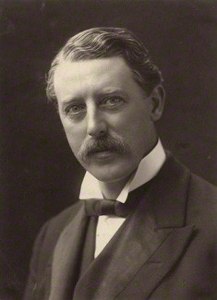
(Pictured: Sir Denis Stanislaus Henry, 1st Baronet, bromide print by Walter Stoneman, 1920, National Portrait Gallery, London)


Leave a comment

Birth of Joseph Thomas Sheridan Le Fanu, Journalist & Novelist

joseph-sheridan-le-fanu

Joseph Thomas Sheridan Le Fanu, journalist, novelist, and short story writer, often called the father of the modern ghost story, is born in Dublin on August 28, 1814. He is the leading ghost story writer of the nineteenth century and is central to the development of the genre in the Victorian era. His best-known works include Uncle Silas (1864), a suspense story, and The House by the Churchyard (1863), a murder mystery. His vampire story Carmilla, which influences Bram Stoker’s Dracula, has been filmed several times.

Le Fanu is born at 45 Lower Dominick Street in Dublin to Thomas Philip Le Fanu and Emma Lucretia Dobbin, a literary family of Huguenot, Irish, and English descent. Within a year of his birth the family moves to the Royal Hibernian Military School in Phoenix Park where his father, a Church of Ireland clergyman, is appointed to the chaplaincy of the establishment.

In 1826, the family moves to Abington, County Limerick, where Le Fanu’s father takes up his second rectorship. Le Fanu uses his father’s library to educate himself and by the age of fifteen he was writing poetry.

The disorders of the Tithe War (1831–1836) affect the region in 1832 and the following year the family temporarily moves back to Dublin, where Le Fanu works on a government commission. Although Thomas Le Fanu tries to live as though he is well-off, the family is in constant financial difficulty. At his death, Thomas has almost nothing to leave to his sons and the family has to sell his library to pay off some of his debts.

Le Fanu studies law at Trinity College, Dublin, where he is elected Auditor of the College Historical Society. He is called to the bar in 1839 but never practices and soon abandons law for journalism. In 1838 he begins contributing stories to the Dublin University Magazine, including his first ghost story, The Ghost and the Bone-Setter (1838). He becomes owner of several newspapers from 1840, including the Dublin Evening Mail and the Warder.

In 1847, Le Fanu supports John Mitchel and Thomas Francis Meagher in their campaign against the indifference of the government to the Irish Famine. Others involved in the campaign include Samuel Ferguson and Isaac Butt. Butt writes a forty-page analysis of the national disaster for the Dublin University Magazine in 1847. Le Fanu’s support costs him the nomination as Tory Member of Parliament (MP) for County Carlow in 1852.

In 1856 the family moves from Warrington Place to the house of his wife Susanna’s parents at 18 Merrion Square. His personal life becomes difficult at this time, as his wife suffers from increasing neurotic symptoms. She suffers from anxiety after the deaths of several close relatives, including her father two years previous. In April 1858, Susanna suffers a “hysterical attack” and dies the following day. She is buried in the Bennett family vault in Mount Jerome Cemetery beside her father and brothers. He does not write any fiction from this point until the death of his mother in 1861.

He becomes the editor and proprietor of the Dublin University Magazine in 1861 and begins to take advantage of double publication, first serializing in the Dublin University Magazine, then revising for the English market. He publishes both The House by the Churchyard and Wylder’s Hand in this manner. After lukewarm reviews of The House by the Churchyard, which is set in the Phoenix Park area of Dublin, Le Fanu signs a contract with Richard Bentley, his London publisher, which specifies that future novels be stories “of an English subject and of modern times,” a step Bentley thinks necessary for Le Fanu to satisfy the English audience. Le Fanu succeeds in this aim in 1864, with the publication of Uncle Silas, which is set in Derbyshire. In his very last short stories, however, Le Fanu returns to Irish folklore as an inspiration and encourages his friend Patrick Kennedy to contribute folklore to the Dublin University Magazine.

Le Fanu dies in his native Dublin on February 7, 1873, at the age of 58. Today there is a road and a park in Ballyfermot, near his childhood home in south-west Dublin, named after him.


Leave a comment

Birth of William McCrea, Astronomer & Mathematician

CREATOR: gd-jpeg v1.0 (using IJG JPEG v80), quality = 100

Sir William Hunter McCrea, English astronomer and mathematician, is born in Dublin on December 13, 1904.

McCrea’s family moves to Kent in 1906 and then to Derbyshire where he attends Chesterfield Grammar School. His father is a school master at Netherthorpe Grammar School in Staveley. He goes to Trinity College, Cambridge in 1923 where he studies mathematics, later gaining a PhD in 1929 under Ralph H. Fowler.

In 1928, McCrea studies Albrecht Unsöld‘s hypothesis and discovers that three quarters of the sun is made of hydrogen and about one quarter is helium with 1% being other elements. Previous to this many people thought the sun consisted mostly of iron. After this, people realise most stars consist of hydrogen.

From 1930 McCrea lectures in mathematics at the University of Edinburgh. In 1931, during his time in Edinburgh, he is elected a Fellow of the Royal Society of Edinburgh. His proposers are Sir Edmund Taylor Whittaker, Sir Charles Galton Darwin, Edward Copson and Charles Glover Barkla. He wins the Society’s Keith Medal, jointly with Edward Copson, for the period 1939-1941.

In 1932 McCrea moves to Imperial College London as a Reader and marries Marian Core the following year. In 1936 he becomes Professor of Mathematics and head of the mathematics department at the Queen’s University Belfast.

During World War II McCrea is co-opted onto the Admiralty Operational Research Group. After the war, he joins the mathematics department at Royal Holloway College in 1944. He is elected a Fellow of the Royal Society of London in 1952.

McCrea is president of the Royal Astronomical Society from 1961 to 1963 and president of Section A of the British Association for the Advancement of Science from 1965–1966.

In 1964 McCrea proposes mass transfer mechanism as an explanation of blue straggler stars. In 1965, he creates the astronomy centre of the physics department at the University of Sussex.

McCrea wins the Gold Medal of the Royal Astronomical Society in 1976 and is knighted by Queen Elizabeth II in 1985.

William McCrea dies on April 25, 1999, at Lewes in Sussex. The McCrea Building on the Royal Holloway College campus is named after him.


Leave a comment

Death of John Hely-Hutchinson, Lawyer & Statesman

CH35304

John Hely (later Hely-Hutchinson), Irish lawyer, statesman, and Provost of Trinity College Dublin, dies on September 4, 1794, at Buxton, Derbyshire, England.

Hely is born in 1724 at Gortroe, Mallow, son of Francis Hely, a gentleman of County Cork. He is educated at Trinity College Dublin (BA 1744) and is called to the Irish bar in 1748. He takes the additional name of Hutchinson upon his marriage in 1751 to Christiana Nixon, heiress of her uncle, Richard Hutchinson.

Hely-Hutchinson is elected member of the Irish House of Commons for the borough of Lanesborough in 1759, but from 1761 to 1790 he represents Cork City. He at first attaches himself to the patriotic party in opposition to the government, and although he afterwards joins the administration, he never abandons his advocacy of popular measures.

After a session or two in parliament he is made a privy councillor and prime Serjeant-at-law. From this time, he gives a general, though by no means invariable, support to the government. In 1767 the ministry contemplates an increase of the army establishment in Ireland from 12,000 to 15,000 men, but the Augmentation Bill meets with strenuous opposition, not only from Henry Flood, John Ponsonby and the habitual opponents of the government, but from the Undertakers, or proprietors of boroughs, on whom the government has hitherto relied on to secure them a majority in the House of Commons.

It therefore becomes necessary for Lord Townshend to turn to other methods for procuring support. Early in 1768 an English Act is passed for the increase of the army, and a message from King George III setting forth the necessity for the measure is laid before the House of Commons in Dublin. An address favourable to the government policy is, however, rejected as Hely-Hutchinson, together with the speaker and the attorney general, do their utmost both in public and private to obstruct the bill. Parliament is dissolved in May 1768, and the lord lieutenant sets about the task of purchasing or otherwise securing a majority in the new parliament. Peerages, pensions and places are bestowed lavishly on those whose support could be thus secured. Hely-Hutchinson is won over by the concession that the Irish army should be established by the authority of an Irish act of parliament instead of an English one.

The Augmentation Bill is carried in the session of 1769 by a large majority. Hely-Hutchinson’s support had been so valuable that he receives as reward an addition of £1,000 a year to the salary of his sinecure of alnager, a major’s commission in a cavalry regiment, and a promise of the Secretaryship of State. He is at this time one of the most brilliant debaters in the Irish parliament and is enjoying an exceedingly lucrative practice at the bar. This income, however, together with his well-salaried sinecure, and his place as prime serjeant, he surrenders in 1774 to become provost of Trinity College, although the statute requiring the provost to be in holy orders has to be dispensed with in his favour.

For this great academic position Hely-Hutchinson is in no way qualified and his appointment to it for purely political service to the government is justly criticised with much asperity. His conduct in using his position as provost to secure the parliamentary representation of the university for his eldest son brings him into conflict with Patrick Duigenan, while a similar attempt on behalf of his second son in 1790 leads to his being accused before a select committee of the House of Commons of impropriety as returning officer. But although without scholarship Hely-Hutchinson is an efficient provost, during whose rule material benefits are conferred on Trinity College.

Hely-Hutchinson continues to occupy a prominent place in parliament, where he advocates free trade, the relief of the Catholics from penal legislation, and the reform of parliament. He is one of the very earliest politicians to recognise the soundness of Adam Smith‘s views on trade and he quotes from the Wealth of Nations, adopting some of its principles, in his Commercial Restraints of Ireland, published in 1779, which William Edward Hartpole Lecky pronounces one of the best specimens of political literature produced in Ireland in the latter half of the 18th century.

In the same year, the economic condition of Ireland being the cause of great anxiety, the government solicits from several leading politicians their opinion on the state of the country with suggestions for a remedy. Hely-Hutchinson’s response is a remarkably able state paper, which also shows clear traces of the influence of Adam Smith. The Commercial Restraints, condemned by the authorities as seditious, goes far to restore Hely-Hutchinson’s popularity which has been damaged by his greed of office. Not less enlightened are his views on the Catholic question. In a speech in parliament on Catholic education in 1782 the provost declares that Catholic students are in fact to be found at Trinity College, but that he desires their presence there to be legalised on the largest scale.

In 1777 Hely-Hutchinson becomes Secretary of State. When Henry Grattan in 1782 moves an address to the king containing a declaration of Irish legislative independence, he supports the attorney general’s motion postponing the question. On April 16, however, after the Easter recess, he reads a message from the Lord Lieutenant, the William Cavendish-Bentinck, 3rd Duke of Portland, giving the king’s permission for the House to take the matter into consideration, and he expresses his personal sympathy with the popular cause which Grattan on the same day brings to a triumphant issue. Hely-Hutchinson supports the opposition on the regency question in 1788, and one of his last votes in the House is in favour of parliamentary reform. In 1790 he exchanges the constituency of Cork for that of Taghmon in County Wexford, for which borough he remains member until his death at Buxton, Derbyshire on September 4, 1794.

(Pictured: Portrait, oil on canvas, of John Hely-Hutchinson (1724–1794) by Sir Joshua Reynolds (1723–1792))


Leave a comment

Birth of Henry Grattan Guinness, Evangelist & Author

henry-grattan-guinness

Henry Grattan Guinness, Irish Protestant Christian preacher, evangelist, and author, is born in Kingstown in Taney Parish, Dublin, on August 11, 1835. He is the great evangelist of the Evangelical awakening and preaches during the Ulster Revival of 1859 which draws thousands to hear him. He is responsible for training and sending hundreds of “faith missionaries” all over the world.

Guinness begins preaching in 1855. He offers to join the China Inland Mission founded by James Hudson Taylor in 1865 but takes Taylor’s advice to continue his work in London.

In September 1866, while in Keighley, Yorkshire, Guinness sees a notice advertising a series of lectures by the freethinker and communist Harriet Law. For a week he holds a series of meetings at the same time to try to counteract her influence. He is appalled at the “scoffing unbelief” of such speakers. With the help of Professor John Couch Adams, some astronomical tables, and examination of the scriptures, Guinness works out the prophetic chronology of the bible in terms of a series of “solilunar cycles.” This proves to him that he is living at the end of the sixth unsabbatic day of creation, 6,000 years from Adam, and that the “redemption Sabbath” will soon arrive. This revelation becomes the subject of many of his books and sermons.

In March 1873, Henry and his wife Fanny start the famous East London Missionary Training Institute, also known as Harley College, at Harley House in Bromley-by-Bow, East End of London with just six students. The renowned Dr. Thomas John Barnardo is co-director with Dr. Guinness and is greatly influenced by him. The school trains 1,330 missionaries for 30 societies of 30 denominations.

Harley College becomes so successful that it needs a larger home. In 1883, Elizabeth Hulme offers Guinness Cliff House near Calver, Derbyshire. Harley College is renamed Hulme Cliff College. Now known as Cliff College it continues to this day training and equipping Christians for mission and evangelism.

In 1873, Guinness founds the East London Institute for Home and Foreign Missions, the root of the Regions Beyond Missionary Union. In 1877, he founds the Livingstone Inland Mission. His son, Dr. Henry Grattan Guinness, founds the Congo-Balolo Mission in 1888 and co-founds the Congo Reform Association in 1904.

Guinness dies in Bath, Somerset, England, on June 21, 1910, at 75 years of age.