The Royalist rebellion that breaks out in Ireland against the new English republic in 1649 is met by a prompt English response. On August 15 Oliver Cromwell and 15,000 troops land in Dublin. His merciless policy toward the Irish Royalists becomes brutally clear within a month.
The defeat of the Irish Royalists in the Battle of Rathmines in early August is fortuitous for Cromwell, for without it, the English would have held only the small port of Derry (known as Londonderry from 1662) in the north, making his invasion almost impossible to effect. Cromwell quickly finds that the Irish Royalists have retreated into fortified towns. He therefore prepares for a series of sieges.
The first such siege occurs at Drogheda, 28 miles north of Dublin. Cromwell arrives at Drogheda on September 3. His siege guns, brought up by sea, arrive two days later. He finds the town surrounded by high but relatively thin walls and its governor, Sir Arthur Ashton, is confident of his defenses and refuses an order to surrender. On September 10 Cromwell begins an artillery bombardment of the walls. These are breached the following day, but the gap created is too small to allow troops to enter the city. Twice they are repelled until Cromwell himself leads an assault and overwhelms the defenders on September 11.
The carnage inside the city is appalling. Cromwell’s troops kill priests and monks on sight and set fire to a Catholic church sheltering some soldiers. Civilians as well as soldiers are massacred, and Ashton is bludgeoned to death with his own wooden leg. The few Royalist soldiers who survive are transported to Barbados. What happens at Drogheda is replicated at Wexford the following month and Clonmel the next May. By the time Cromwell has put down the rebellion and returned to England in that same month, he has become forever hated by Irish Catholics.
During the eight day siege the British lose 150 of their 12,000 men while 2,800 Irish are killed and 200 captured of the 3,100 at Drogheda.
(Pictured: St Laurence’s Gate – the last remaining of the ten original defensive gates at Drogheda)
Born in St. Johnston, County Donegal around 1760, Bond is the son of a dissenting minister and is connected with several respectable families. In his early years, he works as an apprentice haberdasher in Derry before relocating to Dublin.
In the capital, Bond is in business as a merchant in the woollen trade, and becomes wealthy. Initially, he is based in Pill Lane (now Chancery Street), before moving to 9 Lower Bridge Street in 1786. In 1791, he marries Eleanor ‘Lucy’ Jackson, daughter of the iron founder Henry Jackson, who like Bond is to become a leading United Irishman.
Bond is an early member in the movement planning for a union in Ireland across religious lines to press for reform of the Parliament of Ireland and for an accountable government independent of the Privy Council of the United Kingdom and cabinet. When, following the Belfast example, the Society of United Irishmen forms in Dublin in November 1791, Bond becomes a member.
Bond is secretary of the meeting, with the barrister Simon Butler presiding, when in February 1793 the society passes resolutions which, in addition to the call for Catholic emancipation and parliamentary reform, condemn as unconstitutional the repressive measures of the government, and deplore war against the new French Republic. A result is a summons to appear before the bar of the Irish House of Lords in Dublin where, in consequence of the their defiant performance, Bond and Butler are charged and convicted of libel, fined and confined for six months in Newgate Prison.
Despairing of their efforts to secure full emancipation and advance parliamentary reform, and in anticipation of French assistance, the United Irishmen resolve on an insurrection to depose the Crown‘s Dublin Castle executive and the Protestant AscendancyLords and Commons, and to establish Ireland as an independent republic. Bond becomes a member of the United Irishmen’s northern executive committee and of the Leinster directorate, the meetings of which are generally held at his house on Lower Bridge Street.
There, on February 19, 1798, the famous resolution is passed: “We will pay no attention to any measure which the Parliament of this kingdom may adopt, to divert the public mind from the grand object we have in view; as nothing short of the entire and complete regeneration of our country can satisfy us.”
Through the treachery of Thomas Reynolds, Bond’s house is surrounded by military on the morning of March 12, 1798, and fourteen members of the Leinster Directory are seized. The insurrection goes forward in their absence to defeat in the early summer. Following suppression of the rebellion, Bond goes to trial. The efforts of his defence counsel, John Philpot Curran, to discredit Reynold’s testimony are unavailing. On July 27, 1798, Bond is convicted of treason and sentenced to hang.
It is mainly to prevent Bond’s execution that Thomas Addis Emmet and other state prisoners enter a compact with government whereby (without incriminating further individuals) they agree to testify on the activities of Union Irishmen before a parliamentary committee, and to accept permanent exile. With the endorsement of Charles Cornwallis, 1st Marquess Cornwallis, the Commander-in-Chief, Ireland, Bond’s sentence is commuted. He survives, however, but five weeks, dying in prison of apoplexy at the age of 36 on September 6, 1798.
Sharkey’s debut single is a collaboration with Madness member Cathal Smyth titled “Listen to Your Father.” The single is released on Madness’s label Zarjazz in 1984, reaching No. 23 in the UK chart. The track is performed on Top of the Pops with members of Madness.
Sharkey’s solo work is significantly different from the post-punk offerings of The Undertones. His best-known solo material is the 1985 UK chart-topping single penned by Lone Justice frontwoman Maria McKee, “A Good Heart,” which goes to No. 1 in several countries including the UK in late 1985. He also has a UK Top 5 hit in 1986 with “You Little Thief.” His eponymous debut album reaches No. 12 in the UK Albums Chart.
Following on from his second album Wish in 1988, Sharkey achieves further success in 1991 with his UK Top 30 album Songs From The Mardi Gras, which produces the No. 12 hit single “I’ve Got News for You.”
Starting in the early 1990s Sharkey moves into the business side of the music industry, initially as A&R for Polydor Records, and then as managing director of EXP Ltd. He is appointed a member of the Radio Authority for five years from December 1998 to December 2003.
When the Undertones reunite in 1999, Sharkey is offered the opportunity to rejoin the group but turns down the offer. His position as lead vocalist/frontman for the Undertones is taken by fellow Derry native Paul McLoone, who is also a radio presenter for the Irish national and independent radio station, Today FM.
Sharkey becomes chairman of the UK Government task force the ‘Live Music Forum’ in 2004, to evaluate the impact of the Licensing Act 2003 on the performance of live music, and gives public evidence before the Culture, Media and Sport Committee on November 11, 2008.
In 2008, Sharkey is appointed as the CEO of British Music Rights, replacing Emma Pike. In October 2008, he becomes head of UK Music, an umbrella organisation representing the collective interests of the UK’s commercial music industry. He has become prominent in criticising the use of Form 696 by the Metropolitan Police requiring event promoters to provide data on performers and audiences. He resigns from UK Music on November 11, 2011.
In 2011 Sharkey makes a one-off appearance in a set named Erasure + Special Guests singing “Never Never.” He states that he has not sung live for 20 years and that Vince Clarke is the only person he would have returned for.
Sharkey appears on BBC Radio Newcastle, interviewed by Simon Logan on the afternoon show on August 7, 2013. He speaks about his career and his decision to retire from the stage. “I’ve had an absolutely brilliant career… It’s time to get off the stage and make room for [new artists].”
Sharkey is awarded the “Scott Piering Award” by the radio industry in 2004, the “Bottle Award” at the International Live Music Conference in 2006, and an Honorary “Doctor of Arts” by the University of Hertfordshire in 2008. In 2009 he enters The Guardian‘s MediaGuardian 100 at number 56. In 2010 he appears in Wired‘s The Wired 100 at number 45. The same year he receives a Doctor of Letters honoris causa from the University of Ulster in recognition of his services to music.
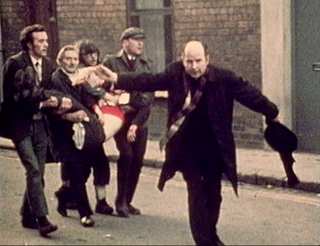
During his time in Derry, Daly takes part in the civil rights marches. He has first-hand experience of the Battle of the Bogside in 1969, the early years of the Troubles, internment, and the events of Bloody Sunday, in which British soldiers fire on unarmed protesters on January 30, 1972, killing 14 people. He becomes a public figure after he is witnessed using a blood-stained handkerchief as a white flag in an attempt to escort 17-year-old Jackie Duddy, a wounded protester, to safety. Duddy dies of his injuries soon after and Daly administers the last rites. He later describes the events as “a young fella who was posing no threat to anybody being shot dead unjustifiably.”
Daly gives an interview to the BBC in which he insists, contrary to official reports, that the protesters were unarmed. He testifies as such to the Widgery Tribunal, though he also testifies that he had seen a man with a gun on the day, to the anger of some of those involved. The Widgery Report largely exonerates the British Army, perpetuating the controversy. Years later, he says that the events of Bloody Sunday were a significant catalyst to the violence in Northern Ireland, and that the shootings served to greatly increase recruitment to the Irish Republican Army (IRA).
Prior to Bloody Sunday, Daly is sympathetic to the “old” IRA, of which his father was a member, but the events of Bloody Sunday leave him of the opinion that “violence is completely unacceptable as a means to a political end,” which leads to tension with the Provisional Irish Republican Army throughout his career.
Daly is appointed Bishop of Derry in 1974, a position he holds until he is forced to retire in October 1993 after suffering a stroke. He continues in the role of chaplain to Derry’s Foyle Hospice until February 2016.
Daly makes headlines in 2011 when he says there needs to be a place in the modern Catholic Church for married priests. He addresses the controversial issue in his book about his life in the Church, A Troubled See. Allowing clergymen to marry would ease the church’s problems, he says.
Daly is awarded the Freedom of the City by Derry City Council in 2015 in a joint ceremony with Bishop James Mehaffey, with whom he had worked closely while the two were in office. He is “hugely pleased to accept [the award], particularly when it is being shared with my friend and brother, Bishop James.” The city’s mayor, Brenda Stevenson, announces that the joint award is in recognition of the two bishops’ efforts towards peace and community cohesion.
Daly dies on August 8, 2016, at Altnagelvin Area Hospital in Derry, having been admitted after a fall several weeks previously. He had also been diagnosed with cancer. He is surrounded by family and local priests.
Daly’s remains are taken to St. Eugene’s Cathedral, where he lay in state with mourners able to file past. His coffin is sealed at midday on August 11, 2016, and buried after Requiem Mass in the grounds of St. Eugene’s Cathedral alongside his predecessor as Bishop of Derry, Neil Farren. The bells of the cathedral toll for one hour on the morning of Daly’s death while many local people arrived to pay tribute. The mayor of Derry, Hilary McClintock, opens a book of condolence in the city’s guildhall for members of the public to sign. The funeral, conducted by the incumbent Bishop of Derry Donal McKeown, is attended by multiple religious and political leaders from across Ireland and retired leaders from throughout his career. A message from Pope Francis is read aloud at the beginning of the service. Hundreds of members of the public also attend the funeral, some lining the route from the cathedral to the gravesite. His coffin is greeted with applause as it is carried out of the cathedral for burial.
(Pictured: Father Edward Daly, waving a blood-stained white handkerchief as he escorts a mortally-wounded protester to safety during the events of Bloody Sunday (1972) in Derry, Northern Ireland, an image which becomes one of the most recognisable moments of the Troubles)
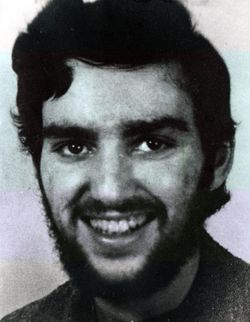
O’Hara joins Na Fianna Éireann in 1970 and, in 1971, his brother Sean is interned in Long Kesh Prison. In late 1971, at the age of 14, he is shot and wounded by a soldier while manning a barricade. Due to his injuries, he is unable to attend the civil rights march on Bloody Sunday but watches it go by him in the Brandywell Stadium, and the events of the day have a lasting effect on him.
In October 1974, O’Hara is interned in Long Kesh Prison, and upon his release in April 1975 he joins the Irish Republican Socialist Party (IRSP) and INLA. He is arrested in Derry in June 1975 and held on remand for six months. In September 1976, he is arrested again and once more held on remand for four months.
On May 10, 1978, O’Hara is arrested on O’Connell Street in Dublin under section 30 of the Offences Against the State Act and is released eighteen hours later. He returns to Derry in January 1979 and is active in the INLA. On May 14, 1979, he is arrested and is convicted of possessing a hand grenade. He is sentenced to eight years in prison in January 1980.
O’Hara becomes Officer Commanding of the INLA prisoners at the beginning of the first hunger strike in 1980, and he joins the 1981 strike on March 22.
On Thursday, May 21, 1981, at 11:29 PM, Patsy O’Hara dies at the age of 23 after 61 days on hunger strike. In accordance with his wishes, his parents do not get him the medical intervention needed to save his life. His corpse is found to be mysteriously disfigured prior to its departure from prison and before the funeral, including signs of his face being beaten, a broken nose, and cigarette burns on his body.
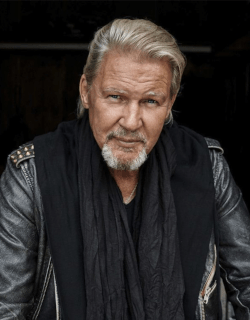
Seán Patrick Michael Sherrard, Irish singer and composer better known by his stage name Johnny Logan, is born in the Melbourne suburb of Frankston, Victoria, Australia on May 13, 1954. He is known as being the only performer to have won the Eurovision Song Contest twice, in 1980 and 1987. He also composes the winning song in 1992.
Logan is born while his father, Charles Alphonsus Sherrard, is a Derry-born Irish tenor known by the artistic name Patrick O’Hagan, is touring Australia. The family moves back to Ireland when he is three years old. He learns the guitar and begins composing his own songs by the age of thirteen. On leaving school he apprentices as an electrician, while performing in pubs and cabaret. His earliest claim to fame is starring as “Adam” in the 1977 Irish musical Adam and Eve and “Joseph” in Joseph and the Amazing Technicolor Dreamcoat.
Logan adopts the stage name Johnny Logan after the main character of the film Johnny Guitar and releases his first single in 1978. He first attempts to participate in the Eurovision Song Contest in 1979, when he places third in the Irish National Final with the song “Angie.” Readers of The Connaught Telegraph in Ireland vote him as “Best New Male Artist.”
In 1980, Logan again enters the Irish National selection for the Eurovision Song Contest with the Shay Healy song “What’s Another Year,” winning the Irish final on March 9 in Dublin. Representing Ireland in the Netherlands, he wins the Eurovision Song Contest on April 19. The song becomes a hit all over Europe and reaches number one in the UK.
In 1987, Logan makes another attempt at Eurovision and with his self-penned song, “Hold Me Now,” representing Ireland at the Eurovision Song Contest in Belgium. The song wins the contest, and he becomes the first person to win the contest twice.
Having composed the Irish Eurovision Song Contest 1984 entry for Linda Martin, “Terminal 3” (which finishes in second place), Logan repeats the collaboration in 1992 when he gives Martin another of his songs, “Why Me?” The song becomes the Irish entry at the finals in Sweden. The song takes the title and cements Logan as the most successful artist in Eurovision history with three wins.
Logan continues to perform and write songs. He is sometimes referred to as “Mister Eurovision” by fans of the contest and the media at large. He has continued his love of participating in musical theatre, having toured Norway with Which Witch, an opera-musical originating in that country. He continues to have success, particularly in the Scandinavian countries. His 2007 album, The Irish Connection, goes platinum in Denmark, twice platinum in Norway and gold in Sweden. He performs in the Celtic rock opera Excalibur from 2009 to 2011.
Downey attends Thornhill College, a Catholic girls school. Her mother, Maureen O’Reilly Downey, a homemaker with an interest in the performing arts, dies of a heart attack at age 48 when Downey is 10 years old. Her father, Patrick Downey, is a schoolteacher by training but works as a mortgage broker. He dies when Downey is 20. Originally, she plans to be a painter and earns a Bachelor of Arts at Brighton College of Art. She studies BA(Hons) Expressive Arts at Brighton Polytechnic, which later becomes the University of Brighton. Based at the Falmer campus she combines Art and Drama for her degree.
Downey joins the Abbey Players in Dublin and tours the United States in a production of The Playboy of the Western World. She moves to New York after an agent, whom she met during the tour of The Playboy of the Western World, suggests she has potential for success there. She takes a job as a coat checker at an Upper West Side restaurant before getting cast in Broadway shows. The production leads to a nomination during the Broadway run for the Helen Hayes Award for Best Actress in 1991. She also stars on Broadway in The Circle with Rex Harrison and also at the Roundabout Theater and The Public Theater in New York City.
Downey stars in and is executive producer for a number of hit television movies for the CBS network. She is an ambassador for Operation Smile, a nonprofit medical service organization. On August 11, 2016, she is honored for her work as an actress and producer with a star on the Hollywood Walk of Fame. In her acceptance speech, she dedicates her star to the people of Derry and anyone who ever “walked Hollywood Boulevard with a dream in their hearts.”
Variety recognizes Downey and Burnett as “Trailblazers” and lists Downey as one of Variety’s “100 Most Powerful Women in Hollywood.” The Hollywood Reporter includes the couple in their “Most Influential People of 2013” and Downey as one of the “100 Women in Entertainment Power” in 2014. She is honored on Variety‘s “Women of Impact in 2014.” Downey and Burnett also produce The Dovekeepers (2015) based on the bestselling book by Alice Hoffman for CBS and A.D. The Bible Continues (2015) for NBC, Women of the Bible for Lifetime, and Answered Prayers (2015) for TLC. Downey is the executive producer of the documentary “Faithkeepers” about the persecution of Christians in the Middle East.
Downey is the author of two books, Love Is a Family (2001) and Box of Butterflies: Discovering the Unexpected Blessing All Around Us (2018).
Basil Blackshaw, Northern Irish artist, dies at the age of 83 on May 2, 2016. He is best known for his paintings of dogs, horses, landscapes and people and is regarded as one of the country’s most talented artists.
Blackshaw’s home and studio is in County Antrim by Lough Neagh. He becomes well known for his country scenes including landscapes, farm buildings and horses, painted in an expressionist style.
Blackshaw is initially acclaimed for his mastery of traditional approaches to painting. He continues to develop as an artist, becoming most highly regarded for his very loose gestural application of paint and a very distinctive and subtle use of colour. His paintings of such sports as horse racing and boxing make him particularly popular, but he is also a talented portrait painter.
Blackshaw’s paintings are often figurative in form, but with a non-naturalistic palette which re-balances the composition in an expressionist, even abstract, way. His themes are very Irish and often rural; greyhounds, Irish Travellers, and the landscape. He also produces portraits and designs posters for Derry‘s Field Day Theatre Company.
The Arts Council of Northern Ireland organises a major retrospective of Blackshaw’s work in 1995, which travels from Belfast to Dublin, Cork and many galleries in the United States. In 2001 he receives the GlenDimplex Award for a Sustained Contribution to the Visual Arts in Ireland. The Ulster Museum holds a major exhibition of his work in 2002 and a major book is published by Eamonn Mallie on the artist in 2003.
For a 2005 exhibition at the Fenton Gallery in Cork, Blackshaw works exclusively over a period of 20 months creating a dramatic collection of fifteen new paintings. His choice of arguably mundane subjects, The Studio Door, Car, Wall, Six Trees, express both an engagement with tradition and a watchful detachment.
In 2006 Blackshaw’s work is exhibited at the Irish College in Paris (French: Centre Culturel Irlandais).
Blackshaw is elected as an associate of The Royal Ulster Academy of Arts in 1977 and elected an Academician in 1981. Dublin’s Royal Hibernian Academy describes him as “one of Ireland’s greatest artists” who was “lauded by the art world and his fellow painters.”
Basil Blackshaw dies on May 2, 2016. Father to well-known artist Anya Waterworth, he is buried in a wicker coffin in a humanist funeral, the ceremony ending to Bob Dylan‘s “Mr. Tambourine Man” at Roselawn Cemetery on the outskirts of Belfast. More than 100 mourners come to pay their respects. Among them are artists Jack Pakenham and Neil Shawcross, actor Stephen Rea and boxing legend Barry McGuigan.
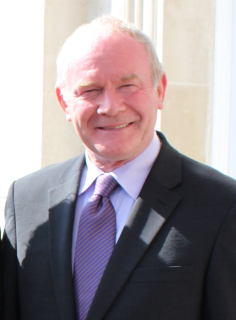
McGuinness is born James Martin Pacelli McGuinness on May 23, 1950 in Derry. He attends St. Eugene’s Primary School and later the Christian Brothers technical college, leaving school at the age of 15.
McGuinness joins the IRA about 1970, and by 1971 he is one of its leading organizers in Derry. In 1973 a Special Criminal Court in the Republic of Ireland sentences him to six months in prison after he is caught in a car containing large quantities of explosives and ammunition. Although the IRA keeps secret the membership of its seven-person Army Council, few doubt that McGuinness is one of its most important members from the 1970s through the 1990s. Even while reportedly planning attacks on civilians in Northern Ireland and on the British mainland, McGuinness is involved in spasmodic secret talks with British government ministers and officials to end the conflict. In 1972 McGuinness, with fellow IRA leader Gerry Adams, privately negotiates with British Secretary of State for Northern IrelandWilliam Whitelaw, but these and other talks over the next two decades are unsuccessful.
McGuinness contests seats in the British House of Commons on several occasions, losing in 1983, 1987, and 1992. However, in 1997 he is elected to the House of Commons to represent the constituency of Mid Ulster and, in line with party policy, he does not take his seat. He subsequently wins reelection to the seat in 2001, 2005, and 2010.
McGuinness is the IRA’s chief negotiator in the deliberations, also secret at first, that culminate in the Good Friday Agreement in 1998. This pact finally ends the conflict and eventually brings Sinn Féin into a coalition government to rule Northern Ireland. He is elected to the new Northern Ireland Assembly and in 1999 is appointed Minister of Education. In this post he eliminates the controversial eleven-plus examination, which determines which type of secondary school a child should attend. The test had been abolished in most of the rest of the United Kingdom more than 25 years earlier.
Disagreements over such issues as policing and the decommissioning of arms causes Northern Ireland’s Executive and Assembly to be suspended for some years, but a fresh agreement in 2006 paves the way for them to be revived. In elections in March 2007, both Sinn Féin and the antirepublican Democratic Unionist Party (DUP) gain seats, becoming the two largest parties in the Northern Ireland Assembly. McGuinness becomes Deputy First Minister, working with First Minister Ian Paisley, leader of the DUP. The two men, previously bitter enemies, perform so well together that they are dubbed the “Chuckle brothers.”
When Paisley retires in 2008, he is succeeded by the DUP’s Peter Robinson, who is considered to be even more militantly antirepublican. Once again, however, a shared need to rebuild the economy and attract international investment leads to cooperation between former opponents. In 2009 their government is in jeopardy as Sinn Féin and the DUP argue over the devolution of the police and justice system in Northern Ireland. McGuinness and Robinson are involved in the ensuing negotiations, and in February 2010 an agreement is reached for the transfer of powers from Britain to Northern Ireland in April.
In the Assembly elections in May 2011, McGuinness and Robinson are a formidable pair, and voters respond to their call for stability in a time of economic uncertainty. Sinn Féin gains an additional seat and increases its overall share of the vote, and McGuinness is assured an additional term as Deputy First Minister. In the autumn he steps down to run as Sinn Féin’s candidate for the presidency of Ireland. After finishing third in the election held on October 28, he returns to the position of Deputy First Minister a few days later. On June 27, 2012, in an event widely seen as having great symbolic importance for the ongoing reconciliation efforts in Northern Ireland, McGuinness and Elizabeth II shake hands twice, once in private and again in public, during a visit by the British monarch to Belfast.
In January 2017 McGuinness resigns as Deputy First Minister in response to First Minister Arlene Foster’s refusal to temporarily step down from her position during the investigation of a scandal relating to the government’s Renewable Heat Incentive (RHI), a mishandled program under which large amounts of state funds allegedly had been squandered. Foster had served as head of the department that oversaw the RHI before becoming First Minister. Under the power-sharing agreement the posts of First Minister and Deputy First Minister constitute a single joint office so that the resignation of one minister results in termination of the other’s tenure. When Sinn Féin chooses not to nominate a replacement for McGuinness within the required seven-day period, authority reverts to the British government’s Secretary of State for Northern Ireland in advance of a snap election on March 2.
Even before McGuinness’s resignation there had been speculation late in 2016 that he might step down for health reasons, and soon after resigning he confirms that he is suffering from amyloidosis, a rare disease brought about by deposits of abnormal protein in organs and tissue. With McGuinness removing himself from “frontline politics,” Michelle O’Neill leads Sinn Féin into the election. The disease claims McGuinness’s life only months later on March 21, 2017.
Bradley is one of four surviving children of John and Margaret Bradley, Lecky Road, Derry. He leaves school to work as a telegraph boy but returns to education at St. Columb’s College. Following training as a teacher at St. Mary’s Training College, Belfast, he qualifies in 1947. While teaching in a primary school in Derry he studies for a degree in mathematics as an external student at the University of London and is awarded a degree in 1953.
Moving to London where he teaches mathematics in a grammar school, Bradley decides to register for an evening course at Birkbeck College. His first choice is mathematics but as he already has a degree in the subject the admissions staff suggests that he study physics. In 1957, after four years of part-time study, he is awarded a Bachelor of Science degree in physics by Birkbeck, achieving the highest marks in his final exams in the University of London overall. He next joins Royal Holloway College as an assistant lecturer and simultaneously enrolls as a PhD student, working on Fabry–Pérot interferometer etalon-based high-resolution spectroscopy supervised by Samuel Tolansky. He receives a PhD in 1961.
Bradley is a pioneer of laser physics, and his work on the development of ultra-fast pulsed lasers adds a new and vitally important element to the capabilities of this new type of light source. In particular, working on dye lasers, he produces pulses of light as short as one picosecond (one picosecond is to a second as a second is to 31,800 years). His work paves the way for the completely new field of non-linear optical interactions. In addition, he inspires a new generation of laser scientists in Ireland and the UK, many of whom are international leaders in their fields.
Appointed to a lectureship in the physics department at Imperial College London, Bradley sets up a research programme in UV solar spectroscopy using rocket technology to reach high altitudes.
In 1963 Bradley begins work in laser physics but returns to Royal Holloway College as a reader one year later. In 1966 he is appointed professor and head of department at Queen’s University, Belfast. There he quickly establishes a space research group of international standing to do high-resolution solar spectroscopy. He attracts significant funding from a variety of agencies, allowing him to build his department into one of the world’s leading laser research centres, involving a total of 65 scientists. However, he leaves Belfast because of fears for his family’s safety as political violence escalates in the early 1970s amidst The Troubles.
Bradley returns to Imperial College London in 1973 to a chair in laser physics and heads a group in optical physics, laser physics and space optics. He is head of the Physics department from 1976 to 1980 but is frustrated by cutbacks and a rule governing the ratio of senior to junior positions, one consequence of which is that he is unable to maintain a long-established chair in optical design. He is also critical of the college administration’s handling of some departmental grant applications. He resigns in 1980 and moves to Dublin.
Among Bradley’s many lasting contributions to laser research in the UK is the setting up of one of the world’s leading research facilities for laser research, the Central Laser Facility at the Rutherford Appleton Laboratory (RAL).
Arriving at Trinity College, Dublin, Bradley decides the time is ripe to move on from laser research and development into laser applications. In 1982, with Dr. John Kelly, a chemist, and Dr. David McConnell, a geneticist, he forms a team which wins funding for a project using laser techniques to explore the structure of organic molecules like DNA and proteins. Unfortunately, however, his work at Trinity is cut short by ill health and he retires in 1984. His research on semiconductor lasers is carried on and this work on developing widely tuneable lasers for optical communications systems continues.
A member of the Royal Irish Academy, Bradley is Fellow Emeritus of Trinity College Dublin, and holds fellowships of the Royal Society, The Optical Society of America and Institute of Physics. Through time the ravage of his illness restricts his travelling and eventually he is cared for in a residential home in Dublin, where he passes away on February 7, 2010.




 seamus dubhghaill