seamus dubhghaill

Promoting Irish Culture and History from Little Rock, Arkansas, USA


Leave a comment

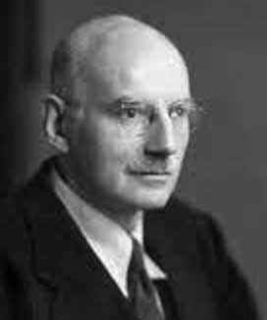
Birth of Pádraig de Brún, Catholic Priest & Linguist

Pádraig de Brún, also called Patrick Joseph Monsignor Browne, a Roman Catholic priestlinguistClassicist, and Celticist, is born in Grangemockler, County Tipperary, on October 13, 1889. With regard to his contribution to modern literature in Irish, he, who Louis de Paor terms in 2014 “one of the most distinguished literary figures of his time,” is also a writer of Irish poetry in the Irish language and the literary translator of many of the greatest works of the Western canon into Modern Irish. He serves as President of University College, Galway (UCG), and is known in friendly and informal circles as Paddy Browne.

De Brún is the son of a primary school teacher, Maurice Browne. He is educated locally, at Rockwell CollegeCashel, and at Holy Cross College, Drumcondra, Dublin (at both he is tutored in mathematics by Éamon de Valera). In 1909, he is awarded a BA from the Royal University of Ireland. He is awarded an MA degree by the National University of Ireland, and wins a traveling scholarship in mathematics and mathematical physics, enabling him to pursue further studies in Paris. He is ordained as a Catholic priest at the Irish College in Paris in 1913, the same year he earns his D.Sc. in mathematics from the University of Paris under Émile Picard.

After a period at the University of Göttingen, de Brún is appointed professor of mathematics at St. Patrick’s Pontifical University, Maynooth, in 1914. In April 1945, he is elected by the Senate of the National University of Ireland to succeed John Hynes as President of University College, Galway, an office he holds until his retirement in 1959. His friend Thomas MacGreevy refers to de Brún as, “Rector Magnificus,” and praises his, “Olympian capacity to appreciate the most exalted works of art and literature, ancient and modern.”

The School of Mathematics, Mathematical Physics and Statistics is based in Áras de Brún, a building named in de Brún‘s honour. He subsequently becomes Chairman of the Arts Council of Ireland, a position he holds until his death in 1960. He also serves as chairman of the Council of the Dublin Institute for Advanced Studies (DIAS).

De Brún is close friend of 1916 Easter Rising leader Seán Mac Diarmada and is deeply affected by the latter’s execution.

De Brún was a prolific writer of Irish poetry in the Irish language, including the well-known poem “Tháinig Long ó Valparaiso.” He further translates into Modern Irish many great works of the Western canon, including Homer‘s Iliad and OdysseySophocles‘ Antigone and Oedipus Rex, and Plutarch‘s Parallel Lives, as well as French stage plays by Jean Racine and Dante Alighieri‘s Divine Comedy. With regards to his importance to modern literature in Irish, he is recently termed “one of the most distinguished literary figures of his time.”

The French Government awards de Brún the title of Chevalier of the Legion d’Honneur in 1949, and in 1956, the order Al Merito della Repubblica Italiana is conferred on him by the President of Italy. He is created a Domestic Prelate (a Monsignor) by Pope Pius XII in 1950.

De Brún purchases land at Dunquin in the Dingle Peninsula Gaeltacht. In the 1920s, he also builds a house there known as Tigh na Cille, where his sister and her children often visit and stay at length. Through his literary mentorship of his niece, the future poet Máire Mhac an tSaoi, he has been credited with having an enormous influence upon the future development of modern literature in Irish.

After suffering a heart attack at his house at Seapoint, Dún Laoghaire, into which he had recently moved, de Brún dies on June 5, 1960, in St. Vincent’s nursing home, Leeson Street, Dublin.


Leave a comment

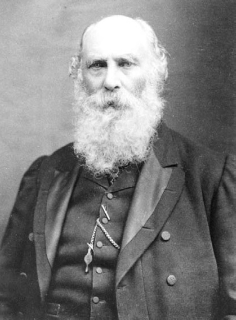
Death of William Thrift, Academic & Politician

William Edward Thrift, Irish academic and politician who serves as the 37th Provost of Trinity College Dublin (TCD) and a Teachta Dála (TD) for the Dublin University constituency from 1921 to 1937, dies in Dublin, on April 23, 1942.

Thrift was born in Halifax, West Yorkshire, England, on February 28, 1870, one of at least two sons and two daughters of Henry George Thrift, civil servant, and Sarah Anne Thrift (née Smith). The family moves in his childhood to Dublin, where his father is an officer in the Inland Revenue.

He is educated at The High School, Dublin, and enters Trinity College Dublin in 1889 with a second sizarship in mathematics, and commences a highly distinguished university career, scoring firsts in several examinations and winning numerous prizes. Elected fellow in mathematics and experimental science, and in mental and moral philosophy in 1896, he becomes Erasmus Smith’s Professor of Natural and Experimental Philosophy at TCD from 1901 to 1929. He is awarded a Doctor of Science (DSc) in 1936. He is appointed Provost of Trinity College Dublin in 1937, serving until his death in 1942.

Thrift is also active in politics. He is elected to the House of Commons of Southern Ireland at the 1921 Irish elections, representing the Dublin University constituency. As an independent Unionist, he does not participate in the Second Dáil. He is re-elected for the same constituency at the 1922 Irish general election and becomes a member of the Third Dáil. He is re-elected at the next five general elections until 1937 when he retires from politics.

While rarely speaking on controversial issues, Thrift opposes the 1925 legislation banning divorce, which he describes as an infringement of individual and minority rights, and a betrayal of commitments made by Arthur Griffith during the Anglo-Irish Treaty debates. His capable service on various Dáil committees is recognised by his election as Leas-Ceann Comhairle (deputy speaker). A long-serving council member of the Royal Dublin Society (RDS) (1902–42), he is a commissioner of charitable donations and bequests, and financial adviser to the General Synod of the Church of Ireland. He sits on the governing boards of the Erasmus Smith schools and of the Incorporated Society for Promoting Protestant Schools in Ireland.

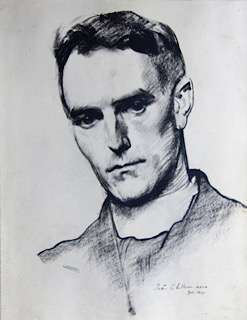
Thrift’s portrait is painted by Leo Whelan. He marries Etta Robinson, a daughter of C. H. Robinson, a medical doctor, and they have three sons and three daughters. He dies at the provost’s house, Trinity College Dublin, on April 23, 1942. He is buried at Mount Jerome Cemetery, Harold’s Cross, County Dublin.


Leave a comment

Birth of George Francis Mitchell, Historian, Archaeologist & Educator

George Francis (Frank) Mitchell, FRSHonFRSEMRIA, environmental historian, archaeologist, geologist, and educator, is born on October 15, 1912, in Dublin.

Mitchell is the younger son of David William Mitchell, owner of a Dublin ironmongery and furniture business, and Francis Elizabeth Mitchell (née Kirby). His elder brother David becomes president of the Royal College of Physicians of Ireland (RCPI) and his sister Lillias is a noted weaver and teacher. He is educated at The High School, Dublin, and Trinity College Dublin (TCD), where he is a scholar in 1933 and receives a gold medal the following year. In 1934 he is appointed assistant to the professor of geology at TCD, and later is lecturer in geology (1940), reader in Irish archaeology (1959) and professor of Quaternary studies – a personal chair (1965). He is an efficient administrator and serves TCD successively as registrar, senior lecturer, and tutor, and after retirement is briefly a pro-chancellor of the university.

Mitchell’s major research focuses on the evolution of Ireland during the last two million years, particularly during the Quaternary since the retreat of the glacial ice over Ireland, and the effect man has had on this landscape. His interest in Quaternary studies begins in 1934, when he is appointed by the Royal Irish Academy (RIA) as an assistant to the Danish botanist and Quaternary geologist Knud Jessen, who uses the distribution of ancient pollen grains to reconstruct vegetational history. From 1940 he publishes a series of papers on topics such as the distribution of Irish giant deer and reindeer remains in Ireland, lacustrine deposits in County Meath, interglacial deposits in southeast Ireland, the palynology of Irish raised bogs, cave deposits, fossil pingos in County Wexford, bog flows, and the deposits of the older Pleistocene period in Ireland. His major study in this field is the documentation (1965) of the vegetational history of Littleton bog, County Tipperary, which has given its name to the present interglacial – the Littletonian warm stage.

Mitchell does not confine his studies to Ireland but also carries out work in Glasgow, Cornwall, and the Isle of Man. In 1957, he helps organise the British Association for the Advancement of Science meeting in Dublin and is later chairman of the Geological Society of London sub-commission on British and Irish Quaternary stratigraphy, which produces a comprehensive report in 1973. He is a frequent broadcaster on radio and a prolific author of academic papers, and in later life writes several acclaimed books, including The Irish Landscape (1976), which goes through two further editions as Reading the Irish Landscape (1986, 1997), and a volume of semi-autobiography, The Way That I Followed (1990).

Although the recipient of many honours, Mitchell is modest about his achievements. He is a member of the Royal Irish Academy (RIA) (1939), its president (1976–79), and Cunningham medalist (1989); president of the Dublin Naturalists’ Field Club (1945–46); Fellow of Trinity College Dublin (1945); president of the Royal Society of Antiquaries of Ireland (RSAI) (1957–60); president of the Royal Zoological Society of Ireland (RZSI) (1958–61); president of the International Union for Quaternary Research (1969–73); Fellow of the Royal Society (FRS) (1973); founder member and later president (1991–93) of An Taisce; Boyle medalist of the Royal Dublin Society (RDS) (1978); pro-chancellor of Dublin University (1985–87); personal chair in Quaternary studies, Trinity College Dublin (TCD) (1965–79); honorary member, Royal Hibernian Academy (RHA) (1981); honorary life member, Royal Dublin Society (RDS) (1981); honorary member, The Prehistoric Society (1983); honorary member, Quaternary Research Association (1983); honorary member, International Association for Quaternary Research (1985); and honorary fellow, Royal Society of Edinburgh (1984). He receives honorary degrees from Queen’s University Belfast (QUB) (D.Sc., 1976), the National University of Ireland (NUI) (D.Sc., 1977), and Uppsala University (fil.D., 1977).

Mitchell dies on November 25, 1997, in Townley Hall, County Louth.

In 1940, Mitchell marries Lucy Margaret (‘Pic’) (1911–87), daughter of E. J. Gwynn, provost of TCD. They have two daughters. For many years they live at Townley Hall, near Drogheda, County Louth, which had been TCD’s agricultural facility. A 1985 portrait by David Hone is displayed at Trinity College Dublin.

(From: “Mitchell, George Francis (‘Frank’)” by Patrick N. Wyse Jackson, Dictionary of Irish Biography, http://www.dib.ie, October 2009)


Leave a comment

Death of Physicist George Johnstone Stoney

George Johnstone Stoney FRS, Irish physicist, dies on July 5, 1911, at Notting Hill, London, England. He is most famous for introducing the term “electron” as the “fundamental unit quantity of electricity.” He introduces the concept, though not the word, as early as 1874, initially naming it “electrine,” and the word itself comes in 1891. He publishes around 75 scientific papers during his lifetime.

Stoney is born on February 15, 1826, at Oakley Park, near Birr, County Offaly, in the Irish Midlands, the son of George Stoney and Anne (née Bindon Blood). His only brother is Bindon Blood Stoney, who becomes chief engineer of the Dublin Port and Docks Board. The Stoney family is an old-established Anglo-Irish family. During the time of the famine (1845–52), when land prices plummet, the family property is sold to support his widowed mother and family. He attends Trinity College Dublin (TCD), graduating with a BA degree in 1848. From 1848 to 1852 he works as an astronomy assistant to William Parsons, 3rd Earl of Rosse, at Birr Castle, County Offaly, where Parsons had built the world’s largest telescope, the 72-inch Leviathan of Parsonstown. Simultaneously he continues to study physics and mathematics and is awarded an MA by TCD in 1852.

From 1852 to 1857, Stoney is professor of physics at Queen’s College Galway. From 1857 to 1882, he is employed as Secretary of the Queen’s University of Ireland, an administrative job based in Dublin. In the early 1880s, he moves to the post of superintendent of Civil Service Examinations in Ireland, a post he holds until his retirement in 1893. He continues his independent scientific research throughout his decades of non-scientific employment duties in Dublin. He also serves for decades as honorary secretary and then vice-president of the Royal Dublin Society (RDS), a scientific society modeled after the Royal Society of London and, after his move to London in 1893, he serves on the council of that society as well. Additionally, he intermittently serves on scientific review committees of the British Association for the Advancement of Science from the early 1860s.

Stoney publishes seventy-five scientific papers in a variety of journals, but chiefly in the journals of the Royal Dublin Society. He makes significant contributions to cosmic physics and to the theory of gases. He estimates the number of molecules in a cubic millimeter of gas, at room temperature and pressure, from data obtained from the kinetic theory of gases. His most important scientific work is the conception and calculation of the magnitude of the “atom of electricity.” In 1891, he proposes the term “electron” to describe the fundamental unit of electrical charge, and his contributions to research in this area lays the foundations for the eventual discovery of the particle by J. J. Thomson in 1897.

Stoney’s scientific work is carried out in his spare time. A heliostat he designed is in the Science Museum Group collection. He is elected a Fellow of the Royal Society in June 1861.

Stoney proposes the first system of natural units in 1881. He realizes that a fixed amount of charge is transferred per chemical bond affected during electrolysis, the elementary charge e, which can serve as a unit of charge, and that combined with other known universal constants, namely the speed of light c and the Newtonian constant of gravitation G, a complete system of units can be derived. He shows how to derive units of mass, length, time and electric charge as base units. Due to the form in which Coulomb’s law is expressed, the constant 4πε0 is implicitly included, ε0 being the vacuum permittivity.

Like Stoney, Max Planck independently derives a system of natural units (of similar scale) some decades after him, using different constants of nature.

Hermann Weyl makes a notable attempt to construct a unified theory by associating a gravitational unit of charge with the Stoney length. Weyl’s theory leads to significant mathematical innovations, but his theory is generally thought to lack physical significance.

Stoney marries his cousin, Margaret Sophia Stoney, by whom he has had two sons and three daughters. One of his sons, George Gerald Stoney FRS, is a scientist. His daughter Florence Stoney OBE is a radiologist while his daughter Edith is considered to be the first woman medical physicist. His most scientifically notable relative is his nephew, the Dublin-based physicist George Francis FitzGerald. He is second cousin of the grandfather of Ethel Sara Turing, mother of Alan Turing.

After moving to London, Stoney lives first at Hornsey Rise, north London, before moving to 30 Chepstow Crescent, Notting Hill, west London. In his later years illness confines him to a single floor of the house, which is filled with books, papers, and scientific instruments, often self-made. He dies at his home on July 5, 1911. His cremated ashes are buried in St. Nahi’s Church, Dundrum, Dublin.

Stoney receives an honorary Doctor of Science (D.Sc.) from the University of Dublin in June 1902. Also in 1902, he is elected as a member to the American Philosophical Society. The street that he lived on in Dundrum is later renamed Stoney Road in his memory.
Craters on Mars and the Moon are named in his honour.


Leave a comment

Birth of John Lighton Synge, Mathematician & Physicist

John Lighton Synge FRSC FRS, mathematician and physicist, whose seven-decade career includes significant periods in Ireland, Canada, and the United States, is born in Dublin on March 23, 1897. He is a prolific author and influential mentor and is credited with the introduction of a new geometrical approach to the theory of relativity.

Synge is born into a prominent Church of Ireland family. His uncle, John Millington Synge, is a famous playwright. He is more distantly related to the winner of the 1952 Nobel Prize in Chemistry, Richard Laurence Millington Synge. He is a great-great-great-grandson of the mathematician and bishop Hugh Hamilton.

Synge attends St. Andrew’s College, Dublin and in 1915 enters Trinity College Dublin (TCD). He is elected a Foundation Scholar his first year, which is unusual as it is normally won by more advanced students. While an undergraduate at TCD, he spots a non-trivial error in Analytical Dynamics of Particles and Rigid Bodies, a textbook by E. T. Whittaker, who had recently taught there, and notifies Whittaker of the error. In 1919 he is awarded a BA in Mathematics and Experimental Physics, and also a gold medal for outstanding merit. In 1922 he is awarded an MA, and in 1926 a Sc.D., the latter upon submission of his published papers up to then.

In 1918, Synge marries Elizabeth Eleanor Mabel Allen. She is also a student at TCD, first of mathematics, then of history, but family finances forced her to leave without graduating. Their daughters Margaret (Pegeen), Cathleen and Isabel are born in 1921, 1923 and 1930 respectively. The middle girl grows up to become the distinguished Canadian mathematician Cathleen Synge Morawetz.

Synge is appointed to the position of lecturer at Trinity College, and then accepts a position at the University of Toronto in 1920, where he is an assistant professor of mathematics until 1925. There he attends lectures by Ludwik Silberstein on the theory of relativity, stimulating him to contribute “A system of space-time co-ordinates,” a letter in Nature in 1921.

Synge returns to Trinity College Dublin, in 1925, where he is elected to a fellowship and is appointed the University Professor of Natural Philosophy (later to be known as “physics”). He is a member of the American Mathematical Society and the London Mathematical Society. He is treasurer of the Royal Irish Academy in 1929. He goes back to Toronto in 1930, where he is appointed Professor of Applied Mathematics and becomes Head of the Department of Applied Mathematics. In 1940, he supervises three Chinese students, Guo Yonghuai, Qian Weichang and Chia-Chiao Lin, who later become leading applied mathematicians in China and the United States.

Synge spends some of 1939 at Princeton University, and in 1941, he is a visiting professor at Brown University. In 1943 he is appointed as Chairman of the Mathematics Department of Ohio State University. Three years later he becomes Head of the Mathematics Department of the Carnegie Institute of Technology in Pittsburgh, where John Nash, Jr. is one of his students. He spends a short time as a ballistic mathematician in the United States Air Force between 1944 and 1945.

Synge returns to Ireland in 1948, accepting the position of Senior Professor in the School of Theoretical Physics at the Dublin Institute for Advanced Studies. This school had been set up in 1940, and had several outstanding members, including Erwin Schrödinger, a contributor to quantum mechanics, who is also a Senior Professor.

Synge makes outstanding contributions to different fields of work including classical mechanics, general mechanics and geometrical optics, gas dynamics, hydrodynamics, elasticity, electrical networks, mathematical methods, differential geometry, and Albert Einstein‘s theory of relativity. He studies an extensive range of mathematical physics problems, but his best-known work revolves around using geometrical methods in general relativity.

Synge is one of the first physicists to seriously study the interior of a black hole, and his early work is cited by both Martin David Kruskal and George Szekeres in their independent discoveries of the true structure of the Schwarzschild black hole. Synge’s later derivation of the Szekeres-Kruskal metric solution, which is motivated by a desire to avoid “using ‘bad’ coordinates to obtain ‘good’ coordinates,” has been generally under-appreciated in the literature, but is adopted by Chandrasekhar in his black hole monograph.

In pure mathematics, Synge is perhaps best known for Synge’s theorem, which concerns the topology of closed orientable Riemannian manifold of positive sectional curvature. When such a space is even-dimensional and orientable, the theorem says it must be simply connected. In odd dimensions, it instead says that such a space is necessarily orientable.

Synge also creates the game of Vish in which players compete to find circularity (vicious circles) in dictionary definitions.

Synge retires in 1972. He receives many honours for his works. He is elected as a fellow of the Royal Society of London in 1943. He is elected as a fellow of the Royal Society of Canada, and in 1943 is the first recipient of the society’s Henry Marshall Tory Medal, as one of the first mathematicians working in Canada to be internationally recognised for his research in mathematics. In 1954 he is elected an honorary fellow of Trinity College Dublin. He is president of the Royal Irish Academy from 1961 until 1964. The Royal Society of Canada establishes the John L. Synge Award in his honour in 1986.

Synge dies on March 30, 1995, in Dublin, exactly one week after his ninety-eighth birthday.


Leave a comment

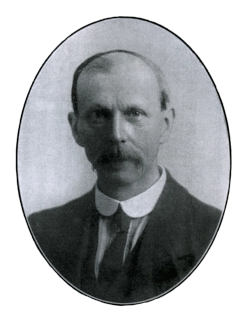
Birth of Mathematician William McFadden Orr

William McFadden Orr, mathematician, is born May 2, 1866, at Ballystockart, Comber, County Down, in what is now Northern Ireland.

Orr is the eldest son of Fletcher Blakely Orr of Ballystockart, a unitarian farmer and millowner, and Elizabeth Orr, daughter of David Lowry, farmer, of Ballymacashin, County Down. He attends a local national school, spends two years at an intermediate school in Newtownards, and then attends Methodist College Belfast (MCB). He wins a Royal University of Ireland (RIU) scholarship in mathematics in 1883 and graduates in 1885 from Queen’s College Belfast, a constituent college of the RUI. He then matriculates at St. John’s College, Cambridge, where he is Senior Wrangler in 1888 and comes in first in part two of the Mathematical Tripos in 1889. Two years later he is elected to a fellowship at St. John’s, and the same year is appointed professor of applied mathematics at the Royal College of Science for Ireland in Dublin. When the Royal College is merged with University College Dublin (UCD) in October 1926, he becomes professor of pure and applied mathematics, a position he holds until his retirement in 1933.

Orr’s 1909 publication Notes on Thermodynamics for Students is seen as epitomising his style of teaching, with its emphasis on logical rigour and clear statement of underlying assumptions. Known for his generosity to staff and students who encounter difficulties, he is nonetheless a strict disciplinarian who abhors idleness and valued stoicism. He is elected Fellow of the Royal Society (FRS) in 1909 and is awarded an honorary degree of D.Sc. from Queen’s University Belfast (QUB) in 1919.

In 1892, Orr marries Elizabeth Campbell of Melbourne, Australia, whose father, Samuel Campbell, is from County Down. They live at 19 Pembroke Road, Dublin, and have three daughters. He dies at Douglas, Isle of Man on August 14, 1934, and is interred in Mount Jerome Cemetery, Dublin. He is survived by his two daughters.

(From: “Orr, William McFadden” contributed by Paul Rouse, Dictionary of Irish Biography, http://www.dib.ie)


Leave a comment

Birth of Sophie Bryant, Mathematician, Educator & Feminist

sophie-bryant

Sophie Willock Bryant, Anglo-Irish mathematician, educator, feminist and activist, is born Sophie Willock in Dublin on February 15, 1850.

Bryant’s father is Rev. Dr. William Willock DD, Fellow and Tutor of Trinity College, Dublin. She is educated at home, largely by her father. As a teenager she moves to London when her father is appointed Professor of Geometry at the University of London in 1863, and she attends Bedford College. At the age of nineteen she marries Dr. William Hicks Bryant, a surgeon ten years her senior, who dies of cirrhosis within a year.

In 1875 Bryant becomes a teacher and is invited by Frances Mary Buss to join the staff of North London Collegiate School. In 1895 she succeeds Buss as headmistress of North London Collegiate, serving until 1918.

When the University of London opens its degree courses to women in 1878, Bryant becomes one of the first women to obtain First Class Honours, in Mental and Moral Sciences, together with a degree in mathematics in 1881, and three years later is awarded the degree of Doctor of Science. In 1882 she is the third woman to be elected to the London Mathematical Society and is the first active female member, publishing her first paper with the Society in 1884. Together with Charles Smith, Bryant edits three volumes of Euclid‘s Elements, for the use of schools (Euclid’s Elements of Geometry, books I and II (1897); Euclid’s Elements of Geometry, books III and IV (1899); Euclid’s Elements of Geometry, books VI and IX (1901)).

Bryant is a pioneer in education for women. She is the first woman to receive a Doctor of Science in England, one of the first three women to be appointed to a Royal Commission, the Bryce commission on Secondary Education in 1894–1895, and one of the first three women to be appointed to the Senate of the University of London. When Trinity College Dublin opens its degrees to women, she is one of the first to be awarded an honorary doctorate. She is also instrumental in setting up the Cambridge Training College for Women, now Hughes Hall, Cambridge. She is also said to be one of the first women to own a bicycle.

Bryant is interested in Irish politics, writes books on Irish history and ancient Irish law (Celtic Ireland (1889), The Genius of the Gael (1913)), and is an ardent Protestant Irish nationalist. She is president of the Irish National Literary Society in 1914. She supports women’s suffrage but advocates postponement until women were better educated.

Bryant loves physical activity and the outdoors. She rows, cycles, swims, and twice climbs the Matterhorn. She dies at the age of 72 in a hiking accident in the Alps near Chamonix, France on August 14, 1922.