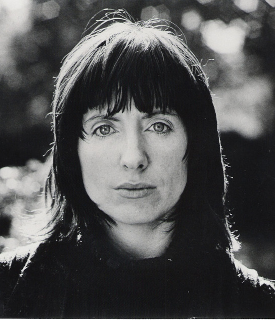
Maude is reared in the Irish language. Her mother, Máire Nic an Iomaire, is a school teacher from Ballyfinglas. She receives her primary education from her mother on a small island off the coast of Rosmuc, Connemara. Her father, John Maude, is from Cill Bhriocáin in Rosmuc. She attends University College Galway, where she excels in French. She becomes a teacher, working in schools in Counties Kildare, Mayo, and Wicklow. She also works in other capacities in London and Dublin.
Maude is widely praised as an actor. She acts at the University, at An Taibhdhearc in Galway and the Damer in Dublin, and is particularly successful in a production of An Triail by Máiréad Ní Ghráda in 1964, in which she plays the protagonist of the story, Máire Ní Chathasaigh. She herself is a playwright and co-authors An Lasair Choille with poet Michael Hartnett.
Maude begins writing poetry in Irish in secondary school and develops a lyrical style closely attuned to the rhythms of the voice. Though not conventionally religious, she says in an interview that she has a deep interest in the spiritual and that this leaves its mark on her poetry. She is noted as a highly effective reciter of her own verse. Géibheann is the best-known of her poems, and is studied at Leaving Certificate Higher Level Irish in the Republic of Ireland. A posthumous collected edition, Caitlín Maude, Dánta, is published in 1984, Caitlín Maude: file in 1985 in Ireland and Italy, and Coiscéim in 1985.
As a member of the Dublin Irish-speaking community Maude is active in many campaigns, including the establishment of the Gaelscoil (Irish-medium primary school) Scoil Santain in Tallaght, County Dublin.
Maude is a sean-nós singer of distinction. She makes one album in this genre, Caitlín, released in 1975 on Gael Linn Records and now available as a CD. It contains both traditional songs and a selection of her poetry.
Maude marries Cathal Ó Luain in 1969. They have one child, their son Caomhán.
Maude dies of complications from cancer at the age of 41 on June 6, 1982. She is buried in Bohernabreena graveyard overlooking the city on the Dublin Mountains.
In 2001, a new writers’ centre in Galway, Ionad Schribhneoiri Chaitlin Maude, Gaillimh, is named in her memory.
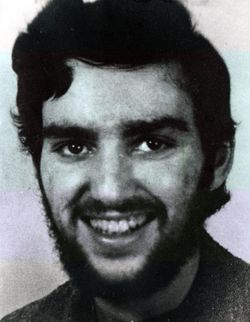
O’Hara joins Na Fianna Éireann in 1970 and, in 1971, his brother Sean is interned in Long Kesh Prison. In late 1971, at the age of 14, he is shot and wounded by a soldier while manning a barricade. Due to his injuries, he is unable to attend the civil rights march on Bloody Sunday but watches it go by him in the Brandywell Stadium, and the events of the day have a lasting effect on him.
In October 1974, O’Hara is interned in Long Kesh Prison, and upon his release in April 1975 he joins the Irish Republican Socialist Party (IRSP) and INLA. He is arrested in Derry in June 1975 and held on remand for six months. In September 1976, he is arrested again and once more held on remand for four months.
On May 10, 1978, O’Hara is arrested on O’Connell Street in Dublin under section 30 of the Offences Against the State Act and is released eighteen hours later. He returns to Derry in January 1979 and is active in the INLA. On May 14, 1979, he is arrested and is convicted of possessing a hand grenade. He is sentenced to eight years in prison in January 1980.
O’Hara becomes Officer Commanding of the INLA prisoners at the beginning of the first hunger strike in 1980, and he joins the 1981 strike on March 22.
On Thursday, May 21, 1981, at 11:29 PM, Patsy O’Hara dies at the age of 23 after 61 days on hunger strike. In accordance with his wishes, his parents do not get him the medical intervention needed to save his life. His corpse is found to be mysteriously disfigured prior to its departure from prison and before the funeral, including signs of his face being beaten, a broken nose, and cigarette burns on his body.
Queen Elizabeth II spends the last of her four days in Ireland visiting Cork on May 20, 2011, where she once again is greeted warmly. Despite initial concerns about security, the visit proves to be a huge success for both countries. The Queen’s apology at Dublin Castle for the treatment her government meted out to Ireland over many years is received with enormous positive, emotional response.
Large crowds line the streets in Cork city centre and the Queen is given a tour of the city’s English Market by the Lord Mayor of Cork, Terry Shannon. She meets some stall owners and speaks to members of the public after she leaves the market. There is a carnival atmosphere on the streets of Cork and the visit is more relaxed than many engagements in Dublin.
The Queen indicates she would like to return to Ireland for another visit. TaoiseachEnda Kenny says he invited her to return as she boarded her flight at Cork Airport. Kenny says the Queen told him she and the royal party enjoyed the visit. He pays tribute to everyone involved in the State visit. He says Ireland responded magnificently to the visit, from the President right down to ordinary people, who showed restraint and understanding.
Kenny says the Queen had received a real Irish welcome, which he says demonstrates the importance of a new beginning for both islands. He says that Ireland has measured up to the highest global standards and the county can be proud.
Tánaiste and Minister for Foreign AffairsEamon Gilmore says the visit has enhanced Ireland’s reputation abroad at a time when there are only negative headlines. He says that, because of the visit, the world is finally getting a picture of a country that does things well and that is working through its difficulties.
Sinn Féin President Gerry Adams says that, while expressing concerns about Queen Elizabeth’s visit, he also hopes some good will come from it.
At Cork Airport she walks to her plane passing an army guard of honour and Taoiseach Enda Kenny is there to bid her farewell. The plane departs bringing an end to her four-day State visit.
(From: “Queen Elizabeth II concludes Irish visit,” RTÉ.ie, the website of Raidió Teilifís Éireann, May 20, 2011)
The IRA in west Mayo is relatively quiet until January 1921, when Michael Kilroy, described as “a puritanical and ascetic blacksmith” takes over command of the Brigade after Thomas Derrig is arrested by the Royal Irish Constabulary. Kilroy forms a relatively large “flying column” of 40 to 50 men to carry out attacks on Crown forces in the area. On May 6 they suffer a reverse at Islandeady, when a police patrol comes upon the IRA men cutting a road. Three volunteers are killed and two captured.
On May 18, 1921, the IRA decides to attack an RIC/Black and Tan convoy at Kilmeena. Two small-unit attacks are made on the RIC barracks in Newport and Westport to try to draw the police out of their well-defended barracks. One RIC man dies in these attacks.
At 3:00 AM the next day, May 19, the column of 41 IRA men take up position close to Knocknabola Bridge. The British convoy, traveling from Newport to Westport, consists of two Crossleylorries and one Ford touring car and a total of about thirty men. The convoy does not arrive until 3:00 PM and its arrival sparks a two-hour fire-fight. In the battle, one RIC man is wounded and later dies. The British regroup around the house of the parish priest, Father Conroy, and launch a counterattack.
Four IRA volunteers are killed. They are Seamus Mc Evilly, Thomas O’Donnell, Patrick Staunton and Sean Collins. Paddy Jordan of the Castlebar battalion is injured and dies later at Bricens Hospital in Dublin. Seven more IRA men are wounded.
The remainder of the column, carrying their wounded, flee over the mountains to Skerdagh, where they have safe houses. However, the police track them there and, in another exchange of fire, another IRA man is killed, Jim Brown from Newport, along with one RIC Constable and a Black and Tan.
The Black and Tans throw the dead and wounded IRA men onto the street outside the RIC barracks in nearby Westport, causing widespread revulsion among the local people and local police. The Marquis of Sligo, no friend of the republican guerrillas, visits the barracks to complain of their treatment of enemy dead. At the funerals of those killed, in Castlebar, the authorities allow only close family to attend and forbid the draping of the Irish tricolour over the coffins.
The local IRA blames their defeat in the ambush on the failure of an IRA unit from Westport to show up in time.
Kilroy’s column manages to get some revenge for the setback at Kilmeena the following month in an action at Carrowkennedy on June 3, where they kill eight policemen and capture sixteen.
McClean is born on February 12, 1941. Having been abandoned as a baby, he starts life as an orphan at Bethany Home in Dublin. He spends much of his teenage years working on a farm until he becomes bored and enlists in the British Army. After Chay Blyth and John Ridgway row the Atlantic in 1966, he announces to both that he is going to complete this alone.
McClean starts his military career in the Parachute Regiment and then progresses into the Special Air Service (SAS). Following his retirement from military service, he gains fame for numerous feats of endurance. He holds the world record as the first man to row solo across the Atlantic Ocean from west to east which he does in 1969. In 1982 he sails across the Atlantic in the smallest boat to accomplish that crossing. The self-built boat measures 9-feet and 9-inches, and because of the weight of the food takes seven weeks to cross. His record is broken three weeks later by a sailor manning a 9-feet and 1-inch long boat. In response, McClean uses a chainsaw to cut two feet off his own vessel, making it 7-feet and 9-inches long. During the return trip he loses his mast and the journey takes even longer than his first attempt but he regains the record.
He is a survival expert who lives on the island of Rockall from May 26 to July 4, 1985 to affirm the United Kingdom‘s claim to it. This is the third longest human occupancy of the island, surpassed in 1997 by a team from Greenpeace which spends 42 days on the island, and in 2014 by Nick Hancock who spends 45 days there. Two years later, the then 44-year-old McClean sets about regaining his transatlantic rowing record and achieves his goal crossing the Atlantic in 54 days, a record still held.
In 1990 McClean completes a west-east crossing in a 37-foot bottle-shaped vessel, which had been constructed at Market Harborough by Springer Engineering, a firm with a past history of steel fabrication and narrowboat construction. The Typhoo Atlantic Challenger sails from New York to Falmouth, England. This vessel is now preserved at Fort William Diving Centre.
McClean’s most recent feat is the construction, in 1996, of a boat shaped like a giant whale, which completes a circumnavigation of Great Britain. The boat, ‘Moby’ Prince of Whales, stands 25-feet high and 65-feet long. It has a spout which can launch water as high as 6 metres in the air. The Moby Dick, as of 2017, is in the process of conversion to electric power for an Atlantic crossing.
Barrington’s escapades, arrests, and trials are widely chronicled in the London press of his day. For over a century following his death, and still perhaps today, he is most celebrated for the line “We left our country for our country’s good.” The attribution of the line to Barrington is considered apocryphal since the 1911 discovery by Sydney book collector Alfred Lee of the 1802 book in which the line first appears.
In 1771 Barrington robs his schoolmaster in Dublin and runs away from school, becoming a member of a touring theatrical company at Drogheda under the assumed name of Barrington. At the Limerick races he joins the manager of the company in picking pockets. The manager is detected and sentenced to penal transportation, and Barrington flees to London, where he assumes clerical dress and continues his pickpocketing. At Covent Garden theatre he robs the Russian Count Orlov of a snuff box, said to be worth £30,000. He is detected and arrested but, as Count Orlov declines to prosecute, is discharged, though subsequently he is sentenced to three years’ hard labour for pocket-picking at Theatre Royal, Drury Lane.
On his release, Barrington is again caught at his old practices and sentenced to five years’ hard labour, but influence secures his release on the condition that he leave England. He accordingly goes for a short time to Dublin and then returns to London, where he is once more detected pocket-picking, and, in 1790, sentenced to seven years’ penal transportation.
One account states that on the voyage out to Botany Bay a conspiracy is hatched by the convicts on board to seize the ship. Barrington discloses the plot to the captain, and the latter, on reaching New South Wales, reports him favourably to the authorities, with the result that Barrington obtains a warrant of emancipation in 1792, becoming subsequently superintendent of convicts and later high constable of Parramatta.
While enjoying the beginnings of his prosperity in Australia, Barrington romances and cohabits with a native woman, Yeariana, who soon leaves him to return to her family. He says that Yeariana possessed “a form that might serve as a perfect model for the most scrupulous statuary.”
Barrington dies on December 27, 1804, at the age of 49 in Parramatta, New South Wales.
At some point in the 1785–1787 period Barrington marries, and the couple has a child, but the names of the wife and child, and their eventual fates, are not known.
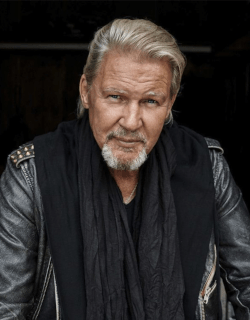
Seán Patrick Michael Sherrard, Irish singer and composer better known by his stage name Johnny Logan, is born in the Melbourne suburb of Frankston, Victoria, Australia on May 13, 1954. He is known as being the only performer to have won the Eurovision Song Contest twice, in 1980 and 1987. He also composes the winning song in 1992.
Logan is born while his father, Charles Alphonsus Sherrard, is a Derry-born Irish tenor known by the artistic name Patrick O’Hagan, is touring Australia. The family moves back to Ireland when he is three years old. He learns the guitar and begins composing his own songs by the age of thirteen. On leaving school he apprentices as an electrician, while performing in pubs and cabaret. His earliest claim to fame is starring as “Adam” in the 1977 Irish musical Adam and Eve and “Joseph” in Joseph and the Amazing Technicolor Dreamcoat.
Logan adopts the stage name Johnny Logan after the main character of the film Johnny Guitar and releases his first single in 1978. He first attempts to participate in the Eurovision Song Contest in 1979, when he places third in the Irish National Final with the song “Angie.” Readers of The Connaught Telegraph in Ireland vote him as “Best New Male Artist.”
In 1980, Logan again enters the Irish National selection for the Eurovision Song Contest with the Shay Healy song “What’s Another Year,” winning the Irish final on March 9 in Dublin. Representing Ireland in the Netherlands, he wins the Eurovision Song Contest on April 19. The song becomes a hit all over Europe and reaches number one in the UK.
In 1987, Logan makes another attempt at Eurovision and with his self-penned song, “Hold Me Now,” representing Ireland at the Eurovision Song Contest in Belgium. The song wins the contest, and he becomes the first person to win the contest twice.
Having composed the Irish Eurovision Song Contest 1984 entry for Linda Martin, “Terminal 3” (which finishes in second place), Logan repeats the collaboration in 1992 when he gives Martin another of his songs, “Why Me?” The song becomes the Irish entry at the finals in Sweden. The song takes the title and cements Logan as the most successful artist in Eurovision history with three wins.
Logan continues to perform and write songs. He is sometimes referred to as “Mister Eurovision” by fans of the contest and the media at large. He has continued his love of participating in musical theatre, having toured Norway with Which Witch, an opera-musical originating in that country. He continues to have success, particularly in the Scandinavian countries. His 2007 album, The Irish Connection, goes platinum in Denmark, twice platinum in Norway and gold in Sweden. He performs in the Celtic rock opera Excalibur from 2009 to 2011.
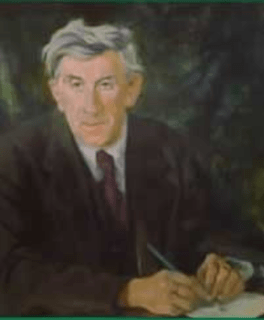
Austin Clarke, considered at his death to be the greatest poet of his generation after W. B. Yeats, is born in 83 Manor Street, Stoneybatter, Dublin, on May 9, 1896. He also writes plays, novels and memoirs. His main contribution to Irish poetry is the rigour with which he uses technical means borrowed from classical Irish language poetry when writing in English.
Effectively, this means writing English verse based not so much on metre as on complex patterns of assonance, consonance, and half rhyme. Describing his technique to Robert Frost, Clarke says, “I load myself down with chains and try to wriggle free.”
Clarke’s early poetry clearly shows the influence of Yeats. His first book, The Vengeance of Fionn, is a long narrative poem retelling an Ossianic legend. It meets with critical acclaim and, unusually for a first book of poetry, goes to a second edition. Between this and the 1938 volume Night and Morning, he publishes a number of collections, all of which, to one extent or another, can be seen as being written in the shadow of Yeats. There is, however, one significant difference. Unlike the older poet, Clarke is a Catholic, and themes of guilt and repentance run through this early work.
Between 1938 and 1955, Clarke publishes no new lyric or narrative poetry. He is co-founder of the Lyric Theatre, Dublin and writes a number of verse plays for them. He also works as a journalist and has a weekly poetry programme on RTÉ radio. It seems likely that he also experiences some kind of personal crisis during this time, and this has significant consequences for his later poetry.
Clarke returns to publishing poetry with the 1955 collection Ancient Lights and is to continue writing and publishing prolifically for the remainder of his life. Although he continues to use the same Gaelic-derived techniques, this late poetry is markedly different from his earlier work. Many of the later poems are satires of the Irish church and state, while others are sensual celebrations of human sexuality, free of the guilt of the earlier poems. He also publishes the intensely personal Mnemosyne Lay in Dust, which is a poem sequence detailing the fictional Maurice Devanes’s nervous breakdown and subsequent recovery.
Clarke also comes to admire the work of more avant-garde poets like Ezra Pound and Pablo Neruda, both of whom he writes poems about. A number of the late long poems, such as, for instance, the 1971 Tiresias, show the effects of studying these poets and their looser formal structures. He sets up the Bridge Press to publish his own work, which allows him the freedom to publish work that many mainstream Irish publishers of the time might have been reluctant to handle. His Collected Poems is published in 1974 and a Selected Poems in 1976.
In addition to some twenty volumes of poetry and numerous plays, Clarke publishes three novels: The Bright Temptation (1932), The Singing Men at Cashel (1936), and The Sun Dances at Easter (1952). All of these are banned by the Censorship of Publications Board (Ireland). He also publishes two volumes of memoirs, Twice Round the Black Church (1962) and A Penny in the Clouds (1968), and a number of scattered critical essays and book reviews. While all of these prose writings are of interest, his reputation rests firmly on his poetry.
In 1920 Clarke marries Cornelia (Lia) Cummins. The marriage effectively lasts only a few days, and he spends several months in St. Patrick’s Hospital recovering from it, but they do not divorce before Cummins dies in 1943. He meets, has three sons with, and later marries (1945) Norah Esmerelda Patricia Walker (1900–1985), granddaughter of Matthew Harris, MP for East Galway from 1885 to 1890.
Clarke lives in Bridge House beside Templeogue Bridge which spans the River Dodder in the south Dublin suburb of Templeogue. After his death on March 19, 1974, there is a proposal to preserve the house and his library of 6,500 books as a memorial. This is not possible owing to long-term plans to demolish the house and widen the road. The old Templeogue Bridge, built in 1800, and Bridge House are removed. A new bridge is opened by CouncillorBernie Malone, Chairman Dublin City Council, on December 11, 1984, which is renamed Austin Clarke Bridge in his honour.
An active member of parliament, O’Conor is an effective though not an eloquent speaker and a leading exponent of Roman Catholic opinion. He frequently speaks on Irish education and land tenure. He criticises unfavourably the Queen’s Colleges established in 1845 and the model schools, and advocates separate education for Roman Catholics. In 1867 he introduces a measure to extend the Industrial Schools Act to Ireland, which becomes law the following year.
O’Conor opposes William Ewart Gladstone‘s Irish University Bill of 1873, and in May 1879 brings forward a measure, which has the support of almost every section of Irish political opinion, for the creation of a new examining university, St. Patrick’s, with power to make grants based on the results of examination to students of denominational colleges affiliated to it. This is withdrawn on July 23 on the announcement of the University Education (Ireland) Act 1879 creating the Royal University of Ireland.
O’Conor steadily lurges a reform of the Irish land laws. On social and industrial questions he also speaks with authority. From 1872 onwards he professes his adherence to home rule and supports Isaac Butt in his motion for inquiry into the parliamentary relations of Great Britain and Ireland in 1874. He also acts with the Irish leader in his endeavours to mitigate the severity of coercive legislation, though declaring himself not in all circumstances opposed to exceptional laws.
Following his parliamentary career in 1880, O’Conor is a member of the Registration of Deeds Commission of 1880, and takes an active part in the Bessborough land commission of the same year. He is a member of both the parliamentary committee of 1885 and the royal commission of 1894 on the financial relations between Great Britain and Ireland, and becomes chairman of the commission on the death of Hugh Culling Eardley Childers in 1896. He is also active in local government, presiding over parliamentary committees on Irish grand jury laws and land valuation in 1868 and 1869, and being elected to the first county council of Roscommon in 1898. He is Lord-Lieutenant of the county from 1888 until his death.
O’Conor is much interested in antiquarian studies. He serves for many years as president of the Antiquarian Society of Ireland, as well as of the Royal Irish Academy. He is president of the Irish Language Society, and procures the insertion of Irish language into the curriculum of the intermediate education board.
O’Conor dies at Clonalis House, Castlerea, County Roscommon, on June 30, 1906, and is buried in the new cemetery, Castlerea.
Downey attends Thornhill College, a Catholic girls school. Her mother, Maureen O’Reilly Downey, a homemaker with an interest in the performing arts, dies of a heart attack at age 48 when Downey is 10 years old. Her father, Patrick Downey, is a schoolteacher by training but works as a mortgage broker. He dies when Downey is 20. Originally, she plans to be a painter and earns a Bachelor of Arts at Brighton College of Art. She studies BA(Hons) Expressive Arts at Brighton Polytechnic, which later becomes the University of Brighton. Based at the Falmer campus she combines Art and Drama for her degree.
Downey joins the Abbey Players in Dublin and tours the United States in a production of The Playboy of the Western World. She moves to New York after an agent, whom she met during the tour of The Playboy of the Western World, suggests she has potential for success there. She takes a job as a coat checker at an Upper West Side restaurant before getting cast in Broadway shows. The production leads to a nomination during the Broadway run for the Helen Hayes Award for Best Actress in 1991. She also stars on Broadway in The Circle with Rex Harrison and also at the Roundabout Theater and The Public Theater in New York City.
Downey stars in and is executive producer for a number of hit television movies for the CBS network. She is an ambassador for Operation Smile, a nonprofit medical service organization. On August 11, 2016, she is honored for her work as an actress and producer with a star on the Hollywood Walk of Fame. In her acceptance speech, she dedicates her star to the people of Derry and anyone who ever “walked Hollywood Boulevard with a dream in their hearts.”
Variety recognizes Downey and Burnett as “Trailblazers” and lists Downey as one of Variety’s “100 Most Powerful Women in Hollywood.” The Hollywood Reporter includes the couple in their “Most Influential People of 2013” and Downey as one of the “100 Women in Entertainment Power” in 2014. She is honored on Variety‘s “Women of Impact in 2014.” Downey and Burnett also produce The Dovekeepers (2015) based on the bestselling book by Alice Hoffman for CBS and A.D. The Bible Continues (2015) for NBC, Women of the Bible for Lifetime, and Answered Prayers (2015) for TLC. Downey is the executive producer of the documentary “Faithkeepers” about the persecution of Christians in the Middle East.
Downey is the author of two books, Love Is a Family (2001) and Box of Butterflies: Discovering the Unexpected Blessing All Around Us (2018).