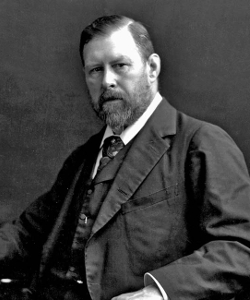
Stoker is born on November 8, 1847, in Clontarf, Dublin. During his lifetime, he is better known as the personal assistant of actor Henry Irving and business manager of the Lyceum Theatre, London, which Irving owns.
Stoker’s father, Abraham Stoker, is a civil servant and his mother, Charlotte Mathilda Blake Thornley, is a charity worker and writer. Stoker is a sickly child and is bedridden with an unknown illness until he starts school at the age of seven, when he makes a complete recovery. Growing up his mother tells him a lot of horror stories which may have influence on his later writings.
In 1864 Stoker enters Trinity College, Dublin. While attending college he begins working as an Irish civil servant. He also works part time as a free lance journalist and drama critic. In 1876 he meets Henry Irving, a famous actor, and they soon become friends. Not long after that, Stoker meets and falls in love with an aspiring actress named Florence Balcombe whom he marries on December 4, 1878 at St. Anne’s Parish Church, Dublin. In 1878 he accepts a job working in London as Irving’s personal secretary.
On December 9, Stoker and his new wife move to England to join Irving. His first book The Duties of Clerks of Petty Sessions in Ireland, though written while he is still in Dublin, is published in 1879. On December 30, 1879 Stoker and his wife have their only child, a son Noel. While in England Stoker also writes several novels and short stories. His first book of fiction, Under the Sunset, is published in 1881.
Stoker visits the English coastal town of Whitby in 1890, a visit that is said to be part of the inspiration for Dracula. Before writing Dracula, he meets Ármin Vámbéry, a Hungarian writer and traveler. Dracula likely emerges from Vámbéry’s dark stories of the Carpathian Mountains. Stoker then spends several years researching European folklore and mythological stories of vampires.
Dracula is an epistolary novel, written as a collection of realistic but completely fictional diary entries, telegrams, letters, ship’s logs, and newspaper clippings, all of which add a level of detailed realism to the story, a skill which Stoker develops as a newspaper writer. At the time of its publication, Dracula is considered a “straightforward horror novel” based on imaginary creations of supernatural life.
The original 541-page typescript of Dracula is believed to have been lost until it is found in a barn in northwestern Pennsylvania in the early 1980s. It consists of typed sheets with many emendations, plus handwritten on the title page is “THE UN-DEAD.” The author’s name is shown at the bottom as Bram Stoker. The typescript is purchased by Microsoft co-founder Paul Allen.
After suffering a number of strokes, Abraham “Bram” Stoker dies at No. 26 St. George’s Square, London on April 20, 1912. Some biographers attribute the cause of death to tertiary syphilis, others to overwork. He is cremated and his ashes are placed in a display urn at Golders Green Crematorium in north London.
Herzog joins the British Army during World War II, operating primarily in Germany as a tank commander in the Armoured Corps. There, he is given his lifelong nickname of “Vivian” because the British could not pronounce the name, “Chaim.” A Jewish soldier had volunteered that “Vivian” is the English equivalent of “Chaim.”
After leaving the army, Herzog opens a private law practice. He returns to public life when the Six-Day War breaks out in 1967, serving as a military commentator for Kol Yisrael radio news. Following the capture of the West Bank, he is appointed Military Governor of East Jerusalem, and Judea and Samaria.
Herzog enters politics in the 1981 elections, winning a Knesset seat as a member of the Alignment. Two years later, in March 1983, he is elected to the largely ceremonial role of President. He serves two five-year terms before retiring in 1993. He dies on April 17, 1997, and is buried on Mount Herzl, Jerusalem. His son, Isaac Herzog, leads the Israeli Labour Party and the parliamentary Opposition in the Knesset from 2013 to 2018.
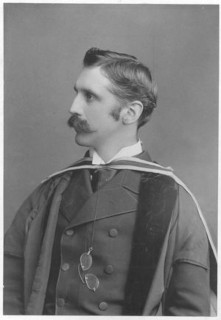
Butcher leaves Trinity on his marriage, in 1876, to Rose Julia Trench (1840-1902), the daughter of ArchbishopRichard Chenevix Trench. The marriage produces no children.
Butcher dies in London on December 29, 1910, and his body is returned to Scotland and interred at the Dean Cemetery in Edinburgh with his wife. His grave has a pale granite Celtic cross and is located near the northern path of the north section in the original cemetery.
Butcher’s many publications include, in collaboration with Andrew Lang, a prose translation of Homer‘s Odyssey which appears in 1879 and the OCT edition of Demosthenes, Orationes, vol. I (Or. 1-19, Oxford, 1903), II.i (Or. 20–26, Oxford, 1907).
The inaugural meeting of Aosdána, an Irish association of artists, takes place in the Old Parliament House in Dublin on April 14, 1983. It is created in 1981 on the initiative of a group of writers with support from the Arts Council of Ireland. Membership, which is by invitation from current members, is limited to 250 individuals, up from 200 prior to 2005. Its governing body is called the Toscaireacht.
At the suggestion of writer Anthony Cronin, who becomes a founding member, Aosdána is originally established in 1981 by TaoiseachCharles Haughey, well known for his support for the Arts, although columnist Fintan O’Toole has argued that this also serves to deflect criticism of Haughey’s political actions. Haughey’s successor, Garret FitzGerald, formally addresses the inaugural assembly of Aosdána in Dublin.
The process of induction into Aosdána relies entirely on members proposing new members. Applications by artists themselves are not allowed. Some members receive a stipend, called the Cnuas, from the Arts Council of Ireland. This stipend is intended to allow recipients to work full-time at their art. The value of the Cnuas in 2015 is €17,180.
The poet Pearse Hutchinson, a member of Aosdána, describes the organisation as “a miracle and a godsend” that allows him to continue writing at a time when he might have had to give up. Composer Roger Doyle has also spoken about the difference it makes, “I was elected to Aosdána in 1986. This gave me a small stipend from the Government each year, which enabled me to devote all my time to composing. This changed my life for the better and I have composed non-stop since then.”
The Toscaireacht is a committee of ten members, called Toscairí, of the Aosdána. It meets several times a year to deal with the administration and external relations of Aosdána, reports to every General Assembly, which meets once a year, and sets its Agenda. When new members of Aosdána are proposed, the Toscairí have the task of verifying that the nomination process has been complied with, and also that the candidate is willing to accept membership, before the next stage of election is begun.
Toscairí are elected to the Toscaireacht by the members of Aosdána for two year terms. All members of Aosdána are eligible for election, and nominations must be made in writing by three members. The electoral process is in two stages. First, within each of Aosdána’s three disciplines (Music, Literature, and Visual Arts), the two nominees with the highest number of votes are elected. This guarantees a minimum of two Toscairí from each of the disciplines. Next, the remaining four places are filled by the remaining nominees from any discipline who have the highest number of votes.
The procedure at meetings is laid down in the Toscaireacht’s Standing Orders. Minutes of its meetings appear on Aosdána’s web site (aosdana.artscouncil.ie).
Leslie is born on July 27, 1650, in Dublin, the sixth son and one of eight surviving children of John Leslie (1571-1671) and Katherine Conyngham (or Cunningham), daughter of Dr. Alexander Cunningham, Dean of Raphoe. He is allegedly named after the executed Charles I and educated at Enniskillen school and Trinity College, Dublin. After his father dies in 1671, he studies law in London before changing career and being ordained as an Anglican priest in 1681. Shortly afterwards, he returns to the family estate at Glaslough in County Monaghan and marries Jane Griffith. They have a daughter, Vinigar Jane, who appears to have died young and two sons, Robert (1683-1744) and Henry who are also Jacobites and spend time in exile.
Leslie is appointed assistant curate for the Church of Ireland parish of Donagh but as most of his parish is Roman Catholic or Presbyterian, he has few duties. His father had been chaplain to Charles I and a key supporter of Caroline religious reforms, first in Scotland, then in Ireland as Bishop of Raphoe in 1633, while the estate at Glaslough was granted by Charles II in 1660 as a reward for his service. With this background, Leslie is a firm supporter of the Stuart dynasty, although deeply hostile to Catholicism and soon becomes involved in political and theological disputes.
Shortly afterwards, Leslie becomes Clarendon’s personal chaplain and like his patron refuses to take the oath of allegiance to William III and Mary II. Like other non-jurors, he is deprived of his Church offices and becomes instead one of the most prominent Jacobite and Tory propagandists. This includes a long dispute with his Trinity College contemporary William King, who supports the Revolution. Gilbert Burnet, Bishop of Salisbury, later names him ‘the violentest Jacobite’ active in England during these years.
Much of Leslie’s early writing focuses on Scotland, where the 1690 Settlement ends Episcopacy and restores a Presbyterian kirk. He uses this to inspire concern about William’s intentions towards the Church of England. Ironically, his modern fame now rests primarily on a pamphlet written in 1695, called Gallienus Redivivus, or Murther will out, &c. Being a true Account of the De Witting of Glencoe, Gaffney. The focus of this is William’s alleged complicity in the 1672 death of Dutch Republican leader Johan de Witt, with other crimes including Glencoe included as secondary charges. During the Jacobite rising of 1745, Charles Stuart orders Leslie’s pamphlet and the 1695 Parliamentary minutes of the investigation to be reprinted in the EdinburghCaledonian Mercury.
During the 1690s, Leslie serves as a messenger between James’ court in exile at Château de Saint-Germain-en-Laye and the Non-Juror community in England, including the non-juror bishops Jeremy Collier, Thomas Ken and George Hickes. He defends Collier and two other non-juror priests when they become involved in a furor over the execution of Sir John Friend and Sir William Parkyns for their role in the 1696 Jacobite plot to assassinate William. Immediately prior to the execution, the clergymen declare the two absolved of their sins, effectively declaring the correctness of their actions, while also performing a rite not recognised by the Church of England.
In 1702, the accession of Queen Anne, the last Stuart monarch, causes a resurgence in Jacobite activity and in 1704, Leslie begins a weekly periodical initially called The Observator, later The Rehearsal of Observator and finally The Rehearsal. Although his Tory readership shares his High Church principles, he is primarily a Jacobite and violently opposes the common practice of ‘occasional conformity.’ The Rehearsal is forced to close in 1709 and he falls out with his former allies, including Henry Sacheverell whose trial helped the Tories win a landslide victory in the 1710 British general election.
Despite his Tory allies now being in government, a warrant is issued for Leslie’s arrest for his tract The Good Old Cause, or, Lying in Truth. In 1711 he escapes to Paris, where James Francis Edward Stuart has succeeded his father as the Stuart heir in 1701. He continues to write polemics and act as a Jacobite agent. However, after the failed Jacobite rising of 1715, France withdraws support for the Stuarts who are forced to leave France, eventually being invited to settle in Rome by Pope Benedict XIV. The Spanish-sponsored 1719 Rising in Scotland is judged to have done more damage to the Jacobite cause than otherwise, one of its leaders concluding “it bid fair to ruin the King’s Interest and faithful subjects in these parts.”
Despite these failures, Leslie remains a dedicated Jacobite but his lifelong antipathy towards Catholicism makes living in Rome as a Papal pensionary difficult, while hopes of converting James to Anglicanism fades due to his devout personal Catholicism. He returns to Paris in 1717 and in 1719 publishes a two folio-volume edition of his Theological Works. It is later claimed these placed him ‘very high in the list of controversial authors, the ingenuity of the arguments being equalled only by the keenest and pertinacity with which they are pursued.’ He invites friends and supporters to subscribe to these and by 1721, over 500 members of the House of Lords and House of Commons have pledged a total of £750. Charles Spencer, 3rd Earl of Sunderland finally allows him to return home, with the stipulation he cease his political activities.
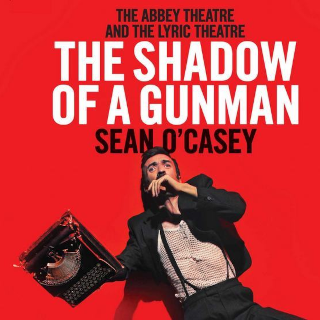
The play is the first in O’Casey’s “Dublin Trilogy” – the other two being Juno and the Paycock (1924) and The Plough and the Stars (1926). It is set in Dublin in May 1920 during the Irish War of Independence and centres on the mistaken identity of a building tenant who is thought to be an Irish Republican Army (IRA) assassin. Each act takes place in Seumus Shield’s room in a tenement in Hilljoy Square.
Donal Davoren is a poet who has come to room with Seumus Shields in a poor, Dublin tenement slum. Many of the residents of the tenement mistake Donal for an IRA gunman on the run. Donal does not refute this notoriety, especially when it wins him the affection of Minnie Powell, an attractive young woman in the tenement. Meanwhile, Seumus’ business partner, Mr. Maguire, drops a bag off at Seumus’ apartment before participating in an ambush in which he is killed. Seumus believes the bag to contain household items for re-sale. The city is put under curfew as a result of the ambush. The Black and Tans raid the tenement and, at that point, Donal and Seumus discover the bag is full of Mills bombs. Minnie Powell takes the bag and hides it in her own room. The Black and Tans find nothing of note in Seumus’ room, but arrest Minnie Powell, who is later shot and killed trying to escape.
In the music video for Northern Irish rock/pop band The Adventures song “Send My Heart” (1984), the lead character is seen trying out for a version of the play.
Sheppard is born to Simpson Sheppard, a sculptor, and Ellen White, of Ormond Quay, Dublin.
Sheppard is based in Dublin for almost all of his life, having travelled widely across Europe. He and his wife Rosie have several children. They live at Howth and 30 Pembroke Road in central Dublin. She dies in 1931.
From 1902 to 1937 Sheppard teaches sculpture at the Dublin Metropolitan School of Art, which is renamed the National College of Art in 1936. His annual stipend is £250 but for this he only has to lecture on three mornings per week, allowing him plenty of time for work on commissioned projects. One of his most famous students is the sculptor Kathleen Cox.
Sheppard is generally critical of the low standards of sculpture in Ireland, saying, “For the last sixty years or so thousands of figures and groups have been executed in Dublin for ecclesiastical purposes, and, with one or two exceptions…was not up to a reasonable standard. The making of a work of art hardly entered into it at all. The sculptor, well trained and properly encouraged, should collaborate with the architect.”
In 1890–1910 Sheppard is a part of the Celtic Revival movement, and, from his works such as Inis Fáil, is admired by his student William Pearse. Through him he meets his brother, Patrick Pearse, who later helps launch the Easter Rising in 1916. While most of the Revival’s artists are writers, playwrights and poets, Sheppard can claim to be the main sculptor working on themes similar to theirs.
Sheppard is in the minority of Irish Protestants who support independence, starting with support for the Irish Parliamentary Party in the 1880s, when he is an art student. After the Irish War of Independence (1919–21) he says, “They thought me too old to fight but I have tried to help in other ways. My politics are simple. I have always thought that this country should be a free country.” His opinions are not overly dogmatic, considering his work on the war memorials in 1920.
In the mid-1920s the first series of Irish Free State coinage is planned and is finally launched in 1928. Sheppard is one of the designers short-listed but his designs are not accepted.
Sheppard dies in Dublin on September 14, 1941.
(Pictured: “The Dying Cúchulainn,” sculpture by Oliver Sheppard, now at the General Post Office (GPO) in Dublin)
Walsh is born at 11 Essex Quay in Dublin, the only child of Ralph and Mary Perce Walsh. His father is a watchmaker and jeweler. He inherits his sympathy for Irish nationalism and independence from his father, who has the boy enrolled in the Repeal Association before he is two years old. He is educated locally at Mr. Fitzpatrick’s School on Peter St. and at St. Laurence O’Toole Seminary School, Harcourt Street, Dublin. In 1856, he goes to the Catholic University of Ireland and three years later to St. Patrick’s College, Maynooth where he becomes Professor of Theology in 1867. He is appointed vice-president of Maynooth in 1878 and president in 1880. A poor preacher, he makes the press his pulpit, making a name for himself in the areas of land law and education.
Walsh is ordained into the priesthood on May 22, 1866. He is appointed Archbishop of Dublin on July 3, 1885, followed by his consecration on August 2, 1885. He serves in this position until his death in 1921 and is succeeded by Edward Joseph Byrne.
The Land issue divides the Irish hierarchy. Walsh supports agrarian reform on behalf of the rural population. He is openly sympathetic to Irish nationalism, and an advocate of both Home Rule and agrarian land reform. It is his support for this movement, led by Michael Davitt, which leads the Vatican to honour Michael Logue in Armagh with the dignity of Cardinal in 1893 rather than Walsh in Dublin.
Walsh serves on the Senate of the Royal University of Ireland (1883–84) and as part of the Commission of National Education (1885–1901). He is appointed Chancellor of the newly founded National University of Ireland in 1908, a position he holds until his death, after which he is succeeded by Éamon de Valera.
Walsh has been described as “the greatest archbishop of Dublin since Laurence O’Toole (Lorcán Ua Tuathail). Walsh Road in Drumcondra, Dublin is named after him.
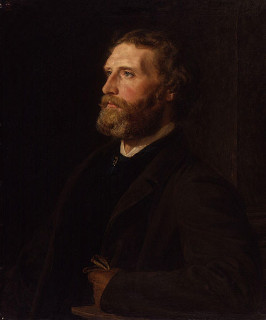
Irish painter Sir Frederic William BurtonRHA is born in County Wicklow on April 8, 1816. The third son of Samuel Frederick Burton and his wife Hanna Mallett, he is taken by his parents to live in County Clare on the west coast of Ireland at the age of six. The old Burton seat is Clifden House, Corofin, County Clare, which is built around the middle of the eighteenth century. The artist’s grandparents were Major Edward William Burton, Clifden, who was High Sheriff of Clare in 1799, and his wife, Jane Blood of nearby Roxton, County Clare. In his youth he has strong sympathy with the Young Ireland movement.
Educated in Dublin, Burton is elected an associate of the Royal Hibernian Academy at the age of twenty-one and an academician two years later. In 1842 he begins to exhibit at the Royal Academy. A visit to Germany and Bavaria in 1842 is the first of a long series of trips to various parts of Europe, which give him a profound knowledge of the works of the Old Masters. From 1851 he spends seven years working as a painter in the service of Maximilian II of Bavaria.
Burton works with George Petrie on archaeological sketches and is on the council of the Royal Irish Academy and the Archaeological Society of Ireland. He is elected an associate of the Royal Society of Painters in Watercolours in 1855, and a full member in the following year. He resigns in 1870 and is reelected as an honorary member in 1886.
During the twenty years that Burton holds this post he is responsible for many important purchases, among them Leonardo da Vinci‘s Virgin of the Rocks, Raphael‘s Ansidei Madonna, Anthony van Dyck‘s Equestrian portrait of Charles I, Hans Holbein the Younger‘s Ambassadors, and the Admiral Pulido Pareja, by Diego Velázquez (this subsequently attributed to Velázquez’s assistant Juan Bautista Martínez del Mazo). He also adds to the noted series of Early Italian pictures in the gallery. The number of acquisitions made to the collection during his period of office exceeds 500.
Burton’s best-known watercolours, The Aran Fisherman’s Drowned Child (1841) and The Meeting on Turret Stairs (1864) are in the National Gallery of Ireland. The Meeting on Turret Stairs is voted by the Irish public as Ireland’s favourite painting in 2012 from among ten works shortlisted by critics. A knighthood is conferred on him in 1884, and the degree of LL.D. of Dublin in 1889.
Adèle King, Irish entertainer better known as Twink, is born on April 4, 1951, in Dublin. She is the mother of singer Chloë Agnew from the group Celtic Woman.
King spends more than 30 years in Dublin’s theatres, 26 years in the Gaiety Theatre, two years in the Point Theatre and five years in the Olympia Theatre. At the Olympia Theatre she co-produces and co-writes much of the shows. She has been described as Ireland’s “Panto Queen.” She has roles in a number of theatrical productions in Ireland, including Dirty Dusting at the Gaiety Theatre and Menopause: The Musical.
King appears on Irish television regularly since the late 1960s. She stars in her own series Twink on RTÉ. She spends ten years on Play the Game and makes many appearances as a guest on a wide range of programmes, including RTÉ’s The Late Late Show, being the subject of a tribute on that show in 2005. She also is the subject of a weekend visit by the television programme Livin’ with Lucy with Lucy Kennedy.
In 1993 King is the guest act at a Christmas concert by Perry Como at Dublin’s Point Theatre, televised to a worldwide audience of 880 million. In 2003 she takes part in RTÉ’s Celebrity Farm and in 2011 she wins TV3‘s Celebrity Head Chef, receiving €10,000 for charity as a result.
King has written an agony aunt page for the Irish magazine TV Now. In 2011, she is given an agony aunt programme on TV3 called Give Adele a Bell. However, after a delay, the programme is cancelled in June 2012 without an episode being made. She wins a Jacob’s Award for her performance in her 1981 Christmas Light Entertainment Special on RTÉ2.
King establishes a performance school in the summer of 2002, the Adèle King Theatre School in Castleknock and Greenhills. Pupils of the school have appeared on television, in films, and in commercials in Ireland and abroad. The school does not re-open for the 2008 autumn term.
King marries oboist David Agnew in 1983 and has two children, Chloë in 1989, who sings with the group Celtic Woman, and Naomi in 1993. The marriage ends after 21 years, in October 2004.
King describes the Irish singer Linda Martin as a “cunt” during a tirade in May 2010. The two had been friends for 30 years but afterwards both say they have no plans to speak to each other again.
King has pet dogs, cats, birds, and a donkey. She lives with her daughters in Knocklyon, Dublin. In April 2015 it is reported that she and her ex-husband face a bid by the Bank of Scotland to repossess a house which is mortgaged in both their names. The application for possession against King had already previously been adjourned by the court.
In September 2014 it is widely reported across major Irish media outlets that King’s dog, Teddy Bear, had been kidnapped. Commenting on the events, she is quoted describing Linda Martin as being “a very powerful woman in the dog world” and that the kidnapping marked her own personal “Erin Brockovich moment.” On September 24 she is reunited with her dog after a public tip-off leads to the police arrest of a man in Dublin.