seamus dubhghaill

Promoting Irish Culture and History from Little Rock, Arkansas, USA


Leave a comment

Enactment of the Constitution of Ireland

constitution-of-ireland

The current Constitution of Ireland is enacted by a national plebiscite of voters on July 1, 1937, in what is then the Irish Free State. The Constitution comes into effect on December 29, 1937. The Constitution is closely associated with Éamon de Valera, the President of the Executive Council of the Irish Free State at the time, who is personally eager to replace the Constitution of the Irish Free State.

There are two main motivations for replacing the constitution in 1937. Firstly, the Irish Free State constitution of 1922 is, in the eyes of many, associated with the controversial Anglo-Irish Treaty. The second motive for replacing the original constitution is primarily symbolic. De Valera wants to put an Irish stamp on the institutions of government and chooses to do this in particular through the use of Irish nomenclature.

De Valera, as President of the Executive Council, personally supervises the writing of the Constitution. It is drafted initially by John Hearne, legal adviser to the Department of External Affairs. De Valera serves as his own External Affairs Minister, hence the use of the Department’s Legal Advisor, with whom he has previously worked closely, as opposed to the Attorney General or someone from the Department of the President of the Executive Council. He also receives significant input from John Charles McQuaid, the Catholic Archbishop of Dublin, on religious, educational, family, and social welfare issues. The text is translated into Irish over a number of drafts by a group headed by Micheál Ó Gríobhtha who works in the Department of Education.

The framers of the 1937 Constitution decide that it will be enacted not by an elected body but by the people themselves by means of a plebiscite. The preamble to the 1937 Constitution is thus written in the name not of the legislature but of “We, the people of Éire.” On June 2, 1937, the Oireachtas passes the Plebiscite (Draft Constitution) Act 1937, which mandates the holding of a plebiscite on the draft constitution on the same date as the next general election. The Dáil is dissolved on June 14, 1937, as soon as it has approved the draft constitution. The ensuing general election is held on July 1, 1937, and the plebiscite is held in parallel. The question put to voters is simply “Do you approve of the Draft Constitution which is the subject of this plebiscite?” It is passed by a plurality – 56% of voters are in favour, comprising 38.6% of the entire electorate.

Neither the Dáil resolution approving the draft Constitution nor the Plebiscite (Draft Constitution) Act 1937 provide for the plebiscite establish how the Constitution would come into force. It is the Constitution itself which states that this will occur 180 days after its approval, and that the 1922 Constitution will simultaneously be repealed. This happens on December 29, 1937, one hundred eighty days after the July 1 plebiscite.

Consequential acts are passed between July and December to provide for the establishment of, and holding elections for, the new Seanad and the Presidency, as well as for other adaptations. The Presidential Establishment Act, 1938 is passed after the Constitution has come into effect but before the first President, Douglas Hyde, takes office.


2 Comments

Michael Collins Made President of the IRB

michael-collins

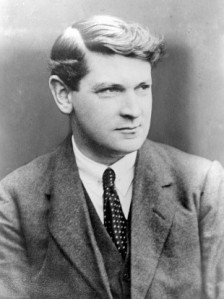
Michael Collins, who is also a leader in the Irish Republican Army, is made president of the Irish Republican Brotherhood (IRB) on June 28, 1919.

At the start of the 20th century, the IRB is a stagnating organisation, concerned more with Dublin municipal politics than the establishment of a republic. A younger generation of Ulster republicans aim to change this and, in 1905, Denis McCullough and Bulmer Hobson found the Dungannon Clubs, whose purpose is to discourage enlistment into the British Army and encourage enlistment into the IRB.

In 1909, Michael Collins is introduced to the brotherhood by Sam Maguire. By 1914, the Supreme Council is largely purged of its older, tired leadership, and is dominated by enthusiastic men such as Hobson, McCullough, Patrick McCartan, John MacBride, Seán Mac Diarmada, and Tom Clarke. The latter two are to become the primary instigators of the Easter Rising in 1916.

Following the Rising some republicans, notably Éamon de Valera and Cathal Brugha, leave the organization as they view it as no longer necessary since the Irish Volunteers now perform its function. The IRB, during the War of Independence (1919-1921), is under the control of Michael Collins, who initially is secretary and subsequently, on June 28, 1919, is made president of the Supreme Council.

When the Anglo-Irish Treaty is signed on December 6, 1921, it is debated by the Supreme Council, which votes to accept it by an 11-4 vote. Those who oppose the Treaty include former leader Harry Boland, Austin Stack, and Liam Lynch. Anti-Treaty republicans like Ernie O’Malley, who fought during the Civil War against the Treaty, see the IRB as being used to undermine the Irish Republic.

The IRB becomes quiescent during the Irish Civil War, which ends in May 1923, but it emerges again later that year as a faction within the National Army. It supports Minister for Defence Richard Mulcahy against the “Old IRA,” which fights against the recruitment of ex-British Army personnel and the demobilization of old IRA men. This comes to a head with the Army Mutiny of 1924, in the wake of which Mulcahy resigns and other IRB members of the army are dismissed by acting President of the Executive Council Kevin O’Higgins. The IRB subsequently dissolves itself, although it is not known whether a formal decision is made, or it simply ceases to function.


Leave a comment

German Bombing of North Strand, Dublin

north-strand-bombing

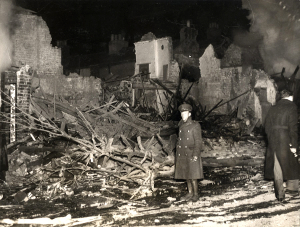
Four German bombs are dropped on north Dublin at approximately 2:00 AM on May 31, 1941. One bomb falls in the Ballybough area, demolishing the two houses at 43 and 44 Summerhill Park, injuring many but with no loss of life. A second bomb falls at the Dog Pond pumping works near the zoo in Phoenix Park, again with no casualties but damaging Áras an Uachtaráin, the official residence of the Irish President. A third bomb makes a large crater in the North Circular Road near Summerhill, again causing no injuries. A fourth bomb falls in North Strand destroying seventeen houses and severely damaging about fifty others, the worst damage occurring in the area between Seville Place and Newcomen Bridge. The raid claims the lives of 28 people, injures 90, destroys or damages approximately 300 houses, and leaves 400 people homeless.

The first bombing of Dublin during World War II occurs early on the morning of January 2, 1941, when German bombs are dropped on the Terenure area of south Dublin. This is followed, early on the following morning of January 3, 1941, by further German bombing of houses on Donore Terrace in the South Circular Road area of south Dublin. A number of people are injured, but no one is killed in these bombings.

After the war, what becomes West Germany accepts responsibility for the raid, and by 1958 it has paid compensation of £327,000. Over 2,000 claims for compensation are processed by the Irish government, eventually costing £344,000. East Germany and Austria, which are both part of Nazi Germany in 1941, make no contribution. The amounts are fixed after the 1953 London Agreement on German External Debts, allowing maximum compensation.

Several reasons for the raid have been asserted over time. German Radio, operated by the Ministry of Public Enlightenment and Propaganda, broadcasts that “it is impossible that the Germans bombed Dublin intentionally.” Irish airspace has been violated repeatedly, and both Allied and German airmen are being interned at the Curragh Camp. A possible cause is a navigational error or a mistaken target, as one of the pathfinders on the raid later recounts. Numerous large cities in the United Kingdom are targeted for bombing, including Belfast, which like Dublin, is across the Irish Sea from Great Britain. War-time Germany’s acceptance of responsibility and post-war Germany’s payment of compensation are cited as further indications that the causation is error on the part of the Luftwaffe pilots.

Another possible reason is that in April 1941, Germany has launched the Belfast blitz, which results in Belfast being heavily bombed. In response, Ireland sends rescue, fire, and emergency personnel to Belfast to assist the city. Éamon de Valera, the Taoiseach, formally protests the bombing to the German government, as well as making his famous “they are our people” speech. Some contend that the raid serves as a warning to Ireland to keep out of the war. This contention is given added credibility when Colonel Edward Flynn, second cousin of Ireland’s Minister for Coordination of Defensive Measures, recalls that Lord Haw Haw has warned Ireland that Dublin’s Amiens Street Railway Station, where a stream of refugees from Belfast is arriving, will be bombed. The station, now called Connolly Station, stands a few hundred metres from North Strand Road, where the bombing damage is heaviest. Flynn similarly contends that the German bombing of Dundalk on July 4 is also a pre-warning by Lord Haw Haw as a punishment for Dundalk being the point of shipment of Irish cattle sold to the United Kingdom.


Leave a comment

Birth of Activist & Feminist Hanna Sheehy-Skeffington

hanna-sheehy-skeffington

Johanna Mary “Hanna” Sheehy-Skeffington, Republican activist and feminist, is born in Kanturk, County Cork, on May 24, 1877.

Sheehy is the eldest daughter of Elizabeth McCoy and David Sheehy, an ex-Fenian and Member of Parliament (MP) for the Irish Parliamentary Party, representing South Galway. One of her uncles, Father Eugene Sheehy, is known as the Land League Priest, and his activities land him in prison. He is also one of Éamon de Valera‘s teachers in Limerick. When Hanna’s father becomes an MP in 1887, the family moves to Drumcondra, Dublin.

Sheehy is educated at the Dominican Convent on Eccles Street, where she is a prize-winning pupil. She then enrolls at St. Mary’s University College, a third level college for women established by the Dominicans in 1893, to study modern French and German. She sits for examinations at Royal University of Ireland and receives a Bachelor of Arts degree in 1899, and a Master of Arts Degree with first-class honours in 1902. This leads to a career as a teacher in Eccles Street and an examiner in the Intermediate Certificate examination.

Sheehy marries Francis Skeffington in 1903, and they both take the surname Sheehy Skeffington, which they do not hyphenate but use as a double name. In 1908, they found the Irish Women’s Franchise League, a group aiming for women’s voting rights.

Sheehy-Skeffington gets into numerous scuffles with the law. She is jailed in 1912 for breaking windows of government buildings in support of suffrage as part of an IWFL campaign. That same year she also throws a hatchet at visiting British Prime Minister Herbert Asquith. She loses her teaching job in 1913 when she is arrested and imprisoned for three months after throwing stones at Dublin Castle and assaulting a police officer in a feminist action. While in jail she goes on hunger strike and is released under the Prisoner’s Temporary Discharge of Ill Health Act but is soon rearrested.

Being free from her teaching job enables Sheehy-Skeffington to devote more time to the fight for suffrage. She is influenced by James Connolly and during the 1913 lock-out works with other suffragists in Liberty Hall, providing food for the families of the strikers.

She strongly opposes participation in World War I which breaks out in August 1914 and is prevented by the British government from attending the International Congress of Women held in The Hague in April 1915. The following June her husband is imprisoned for anti-recruiting activities. He is later shot dead during the 1916 Easter Rising after having been arrested by British soldiers.

Sheehy-Skeffington refuses compensation for her husband’s death, which is offered on condition of her ceasing to speak and write about the murder. Rather, she travels to the United States to publicise the political situation in Ireland. In October 1917, she is the sole Irish representative to League for Small and Subject Nationalities where, along with several other contributors, she is accused of pro-German sympathies. She publishes British Militarism as I Have Known It, which is banned in the United Kingdom until after the World War I. Upon her return to Britain she is once again imprisoned, this time in Holloway prison. After release, Sheehy-Skeffington attends the 1918 Irish Race Convention in New York City and later supports the anti-Treaty Irish Republican Army (IRA) during the Irish Civil War.

In 1926, Sheehy-Skeffington becomes a founding member of Fianna Fáil and is elected to the party’s Ard Comhairle. During the 1930s, she is assistant editor of An Phoblacht. In January 1933, she is arrested in Newry for breaching an exclusion order banning her from Northern Ireland. At her trial she says, “I recognize no partition. I recognize it as no crime to be in my own country. I would be ashamed of my own name and my murdered husband’s name if I did…Long live the Republic!” She is sentenced to a month’s imprisonment.

Sheehy-Skeffington is a founding member of the Irish Women Workers’ Union and an author whose works deeply oppose British imperialism in Ireland. Her son, Owen Sheehy-Skeffington, becomes a politician and Irish Senator.

Hanna Sheehy-Skeffington dies in Dublin on April 20, 1946, at the age of 68 and is buried with her husband in Glasnevin Cemetery, Dublin.


Leave a comment

Death of Seán Francis Lemass, Taoiseach (1959-1966)

sean-francis-lemass

Seán Francis Lemass, one of the most prominent Irish politicians of the 20th century and Taoiseach from 1959 until 1966, dies at Mater Misericordiae University Hospital in Dublin on May 11, 1971, at the age of 71.

John Francis Lemass is born in Ballybrack, County Dublin before his family moves to Capel Street in Dublin city centre. He is the second of seven children born to John and Frances Lemass. Within the family his name soon changes to Jack and eventually, after 1916, he himself prefers to be called Seán. He is educated at O’Connell School where he was described as studious, with his two best subjects being history and mathematics.

As early as the age of sixteen, Lemass becomes a freedom fighter in the streets of Dublin, engaging in the 1916 Easter Rising, the Irish War of Independence, and the Irish Civil War, landing in jail again and again. He opposes the establishment of the Irish Free State as a dominion under the Anglo-Irish Treaty of 1921 and becomes a member of the headquarters staff of the Irish Republican Army in the civil war of 1922–1923.

Lemass is first elected as a Sinn Féin Teachta Dála (TD) for the Dublin South constituency in a by-election on November 18, 1924, and is returned at each election until the constituency is abolished in 1948, when he is re-elected for Dublin South–Central until his retirement in 1969.

He plays a key role in persuading Éamon de Valera to found a new republican party, Fianna Fáil, in 1926. After de Valera rises to the premiership in 1932, Lemass holds portfolios in all his cabinets for 21 of the next 27 years, notably as Minister for Industry and Commerce, Minister for Supplies, and Tánaiste (deputy prime minister).

When de Valera becomes President of Ireland in 1959, Lemass inherits the office of Taoiseach, serving in this position until 1966. Under him the country takes a more outward-looking approach, and he especially presses for Ireland’s entry into the European Economic Community (EEC), now the European Community embedded in the European Union, and for reconciliation with Northern Ireland.

Ill health forces Lemass to relinquish the leadership of his party in 1966 and he withdraws from politics altogether in 1969. He has been a heavy pipe smoker all his life, smoking almost a pound of tobacco a week in later life. At the time of his retirement, it is suspected that Lemass has cancer, but this is later disproved. In February 1971, while attending a rugby game at Lansdowne Road, he becomes ill, is rushed to hospital, and is told by his doctor that one of his lungs is about to collapse.

On Tuesday, May 11, 1971, Seán Lemass dies in Dublin’s Mater Misericordiae University Hospital. He is afforded a state funeral and is buried in Dean’s Grange Cemetery.

Lemass is widely regarded as the father of modern Ireland, primarily due to his efforts in facilitating industrial growth, bringing foreign direct investment into the country, and forging permanent links between Ireland and the European community. His greatest legacy, Ireland’s membership in the EEC, is not secured until 1973, after his death.


Leave a comment

The Beginning of the 1916 Easter Rising

proclamation-of-independence

The Easter Rising, also known as the Easter Rebellion, begins in Dublin on April 24, 1916, and lasts for six days. The Rising, organised by seven members of the Military Council of the Irish Republican Brotherhood, is launched to end British rule in Ireland and establish an independent Irish Republic while the United Kingdom is heavily engaged in World War I. It is the most significant uprising in Ireland since the Irish Rebellion of 1798, and the first armed action of the Irish revolutionary period.

Shortly before midday, members of the Irish Volunteers, led by schoolmaster and Irish language activist Patrick Pearse and joined by the smaller Irish Citizen Army of James Connolly and 200 women of Cumann na mBan, seize key locations in Dublin and proclaim an Irish Republic. The rebels’ plan is to hold Dublin city centre, a large, oval-shaped area bounded by the Grand Canal to the south and the Royal Canal to the north, with the River Liffey running through the middle.

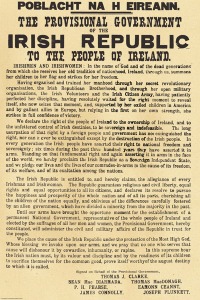
The rebels march to the General Post Office (GPO) on O’Connell Street, Dublin’s main thoroughfare, and occupy the building and hoist two republican flags. Pearse stands outside and reads the Proclamation of the Irish Republic.

Elsewhere in Dublin, some of the headquarters battalion under Michael Mallin occupy St. Stephen’s Green, where they dig trenches and barricade the surrounding roads. The 1st battalion, under Edward “Ned” Daly, occupy the Four Courts and surrounding buildings, while a company under Seán Heuston occupies the Mendicity Institution across the River Liffey from the Four Courts. The 2nd battalion, under Thomas MacDonagh, occupies Jacob’s Biscuit Factory. The 3rd battalion, under Éamon de Valera, occupy Boland’s Mill and surrounding buildings. The 4th battalion, under Éamonn Ceannt, occupy the South Dublin Union and the distillery on Marrowbone Lane. From each of these garrisons, small units of rebels establish outposts in the surrounding area.

There are isolated actions in other parts of Ireland, with attacks on the Royal Irish Constabulary barracks at Ashbourne, County Meath and in County Galway, and the seizure of the town of Enniscorthy, County Wexford. Due to a last-minute countermand issued on Saturday, April 22, by Volunteer leader Eoin MacNeill, the number of rebels who mobilise is much lower than expected.

The British Army brings in thousands of reinforcements as well as artillery and a gunboat. There is fierce street fighting on the routes into the city centre, where the rebels put up stiff resistance, slowing the British advance and inflicting heavy casualties. Elsewhere in Dublin, the fighting mainly consists of sniping and long-range gun battles. The main rebel positions are gradually surrounded and bombarded with artillery.

With much greater numbers and heavier weapons, the British Army suppresses the Rising, and Pearse agrees to an unconditional surrender on Saturday, April 29. Almost 500 people are killed during Easter Week. About 54% are civilians, 30% are British military and police, and 16% are Irish rebels. More than 2,600 are wounded. Many of the civilians are killed as a result of the British using artillery and heavy machine guns, or mistaking civilians for rebels. Others are caught in the crossfire in a crowded city. The shelling and the fires leave parts of inner-city Dublin in ruins.

After the surrender the country remains under martial law. About 3,500 people are taken prisoner by the British, many of whom have played no part in the Rising, with 1,800 of them being sent to internment camps or prisons in Britain. Most of the leaders of the Rising are executed following courts-martial. The Rising brings physical force republicanism back to the forefront of Irish politics, which for nearly 50 years has been dominated by constitutional nationalism. It, and the British reaction to it, leads to increased popular support for Irish independence. In December 1918, republicans, represented by the reconstituted Sinn Féin party, win a landslide victory in the general election to the British Parliament. They do not take their seats but instead convene the First Dáil and declare the independence of the Irish Republic, which ultimately leads to the Irish War of Independence.


Leave a comment

Birth of Maurice Walsh, Author of “The Quiet Man”

maurice-walsh

Maurice Walsh, Irish novelist best known for the short story The Quiet Man which is later made into an Oscar-winning movie, is born on April 21, 1879, in Ballydonoghue near Listowel, County Kerry.

Walsh is the third child of ten and the first son born to John Walsh, a local farmer, and his wife Elizabeth Buckley who live in a three-room thatched farmhouse. John Walsh’s main interests are books and horses and he himself does little work about the farm, preferring to have a hired man. The most famous of these hired men is Paddy Bawn Enright, whose name is immortalised by Walsh in his story The Quiet Man, although the name is not used in the later motion picture. John Walsh passes on to his son not only a love of books but also legends and folk tales that are later featured of many of Walsh’s books.

Walsh goes to school in Lisselton, a mile or so up the road from Ballydonoghue, and later goes to St. Michael’s College in Listowel to prepare for the Civil Service examination. He enters the service on July 2, 1901, as an Assistant Revenue Officer in the Customs and Excise Service. He is posted to Scotland before the year is out and, although he subsequently has a number of postings outside Scotland, he spends most of his time there while in the British service.

Walsh has a life-long interest in writing and, during his early years in Scotland, this interest starts to bear fruit. He submits some of his stories and has two published in the Irish Emerald in 1908. Later that year, on August 8, 1908, Walsh marries Caroline Begg in Dufftown, Banffshire, Scotland.

When the Irish Free State is formed in 1922, Walsh transfers to its excise service and moves to Dublin. Fighting is still going on there at the time, and he leaves his family in Scotland until it is safe for them to join him in 1923. The story The Key Above the Door is written during the months of separation although it is not published until some years later, appearing first in Chambers Journal as a serial between December 1925 and May 1926 and then in book form, published by W & R Chambers Ltd., in July 1926.

Sales of Walsh’s books grow steadily, especially in the wake of an unsolicited and generous letter from J. M. Barrie, the creator of Peter Pan, praising The Key Above the Door, which Chambers is subsequently able to use on dust covers of Walsh’s books.

Walsh retires from government service in 1933 but his success as a writer continues. In that same year he sells a story to The Saturday Evening Post, then a well-known weekly magazine published in the United States. That story, later to be incorporated in the collection of stories published under the title Green Rushes, is The Quiet Man.

Director John Ford reads the story in 1933 and soon purchases the rights to it for $10. Walsh is paid another $2,500 when Republic Pictures buys the idea and receives a final payment of $3,750 when the film is actually made. Filming commences on June 7, 1951, with John Wayne and Maureen O’Hara in the leading roles. All of the outdoor scenes are shot on location in County Mayo and County Galway. The inside scenes are filmed in late July at the Republic Studios in Hollywood. The Quiet Man wins the Academy Award for Best Director for John Ford, his fourth, and for Best Cinematography.

Walsh becomes President of the Irish branch of PEN International in 1938 and visits the United States for an international meeting that year as the Irish delegate. His wife Caroline is able to accompany him although she has been in failing health for some years and ultimately dies in January 1941. Walsh himself dies on February 18, 1964, in Blackrock, a suburb of Dublin, and is buried in the Esker cemetery at Lucan, County Dublin. President Éamon de Valera attended Walsh’s funeral Mass.

In 2013, The Quiet Man is selected for preservation in the United States National Film Registry by the Library of Congress as being “culturally, historically, or aesthetically significant.”


Leave a comment

Ireland Declares Independence from British Commonwealth

Ireland declares its total independence and withdraws from the British Commonwealth on April 18, 1949, officially becoming the Republic of Ireland rather than the Irish Free State within the British Commonwealth.

Since December 1922 Ireland, apart from the six counties in the north, has been the Irish Free State, a British Dominion established by the Anglo-Irish Treaty of 1922. The partition leads to the civil war in Ireland that carries on into 1923, with Éamon de Valera leading the Irish Republican Army who are vehemently against the division of their country.

By 1927, however, de Valera has been brought into government and becomes Prime Minister in 1932, changing the name of the country to Éire in 1937, a symbol of its identity as separate from Britain.

In accordance with the terms of a 1938 treaty between the two states, British naval forces close their bases in southern Ireland and the Irish make a settlement of loans provided previously by the British. The two countries continue to drift apart. This separation is underlined further by Eire’s decision to remain neutral during World War II.

In February 1948, John Costello, the head of a six party coalition, ousts Fianna Fail and de Valera from power. By November of that year The Republic of Ireland Act is passed in the Dail, formally ending all Irish allegiance to Britain and its Commonwealth. The Oireachtas gathers to sign The Republic of Ireland Act on December 21, 1948, and it comes into force four months later on Easter Monday, April 18, 1949. The Act ends Ireland’s membership in the British Commonwealth of Nations and the existing basis upon which Ireland and its citizens are treated in the United Kingdom and other Commonwealth countries as “British subjects” rather than foreigners.

The Act, which has five concise sections, grants executive authority of Ireland, and its external relations, to the President of Ireland. The President will act under the advice of Government of Ireland, which will act alone without British influence. The Act is still largely in force but has been amended.

Britain accepts the Republic’s independence, but they enact the Ireland Act of 1949 which holds that citizens of the Republic will not be treated as aliens under British nationality law. They also guarantee to support Northern Ireland until the Northern Irish parliament decides they want a split.


Leave a comment

Éamon de Valera Elected President of Dáil Éireann

eamon-de-valera

Éamon de Valera is elected President of Dáil Éireann (Príomh Aire) at the third meeting of the First Dáil on April 1, 1919.

The Declaration of Independence asserts that the Dáil is the parliament of a sovereign state called the “Irish Republic,” and so the Dáil establishes a cabinet called the Ministry or “Aireacht,” and an elected prime minister known both as the “Príomh Aire” and the “President of Dáil Éireann.”

When the First Dáil meets in the Round Room of the Mansion House in Dublin on January 21, 1919, de Valera is the president of Sinn Féin and thus the natural choice for leadership. However, he is imprisoned in England so, at the second meeting of the Dáil on January 22, Cathal Brugha is elected as the first Príomh Aire on a temporary basis. De Valera escapes Lincoln Gaol in February and is then elected to replace Brugha at the Dáil’s third meeting.

As leader, de Valera visits the United States from June 1919 to December 1920. His aim is to gain both popular and official recognition for the Republic and to obtain a loan to finance Dáil Éireann and the War of Independence. By the time of his return, de Valera has won public but not official support for the Republic and has raised a loan of $6 million.

After the election of the Second Dáil in 1921, de Valera resigns on August 26 and is immediately re-elected under the new title of President of the Republic. He then remains in office until January 1922 when, against his wishes, the Dáil votes to ratify the Anglo-Irish Treaty. De Valera resigns and submits his name for re-election but is rejected by the house, which instead elects Arthur Griffith, who supports the Treaty, by a vote of 60-58.

On January 16, 1922, the British government implements the Treaty and appoints a new Irish administration called the Provisional Government. The Dáil decides that the new administration will operate in parallel with the existing institutions of the Irish Republic, which the British do not recognise. Therefore, as the Irish Civil War begins the country has two leaders, Arthur Griffith as President of Dáil Éireann and Michael Collins as Chairman of the Provisional Government. Collins is also Minister for Finance in Griffith’s cabinet. This anomalous situation continues until Griffith and Collins both died suddenly in August 1922, Collins being assassinated by anti-Treaty irregulars and Griffith dying of natural causes. W.T. Cosgrave becomes Chairman of the Provisional Government on August 25 and, when he is also elected as President of Dáil Éireann in September, the two administrations are merged.

On December 6, both the Irish Republic and the Provisional Government come to an end as the new Constitution of the Irish Free State comes into force. The new Irish Free State has three leaders, the King as head of state, the Governor-General as the King’s representative, and the President of the Executive Council as head of government. W.T. Cosgrave is appointed as the first President of the Executive Council on the same day.


Leave a comment

The Founding of Fianna Fáil

fianna-fail

Fianna Fáil, the centrist to centre-right and conservative political party in the Republic of Ireland, is founded on March 23, 1926, after a split with Sinn Féin on the issue of abstentionism. Historically, Fianna Fáil has been seen as to the left of Fine Gael and to the right of Sinn Féin and the Labour Party. It is generally seen as a “catch all” populist party, representing a broad range of people from all social classes.

When his motion calling for elected members to be allowed to take their seats in Dáil Éireann if and when the controversial Oath of Allegiance is removed fails to pass at the Sinn Féin Ardfheis in 1926, Éamon de Valera resigns from the presidency of the party and, with Seán Lemass, Constance Markievicz, and others, forms a new party, Fianna Fáil (The Warriors of Destiny), a party that is to dominate 20th-century Irish politics. The party adopts its name on April 2 of the same year.

Though the new party is also opposed to the Treaty settlement, it adopts a different approach of aiming to make the Irish Free State a republic. Fianna Fáil’s platform of economic autarky has appeal among the farmers, working-class people, and the poor, whilst alienating more affluent classes.

From the formation of the first Fianna Fáil government on March 9, 1932, until the election of 2011, the party is in power for 61 of 79 years. Its longest continuous period in office is 15 years and 11 months (March 1932 – February 1948). Its single longest period out of office in the 20th century, is four years and four months (March 1973 – July 1977). Seven of the party’s eight leaders, including de Valera, serve as Taoiseach.

Fianna Fáil joins the Alliance of Liberals and Democrats for Europe (ALDE) party on April 16, 2009, and the party’s Members of the European Parliament (MEPs) sit in the ALDE Group during the 7th European Parliament term from June 2009 until 1 July 1, 2014. The party is an observer affiliate of the Liberal International.

It is the largest party in the Dáil at every general election from the 1932 general election until the 2011 general election, when it suffers the worst defeat of a sitting government in the history of the Irish state. This loss is described as “historic” in its proportions, and “unthinkable.” The party moves from being the largest party to the third-largest party in the Dáil.