Fianna Fáil, the centrist to centre-right and conservative political party in the Republic of Ireland, is founded on March 23, 1926, after a split with Sinn Féin on the issue of abstentionism. Historically, Fianna Fáil has been seen as to the left of Fine Gael and to the right of Sinn Féin and the Labour Party. It is generally seen as a “catch all” populist party, representing a broad range of people from all social classes.
When his motion calling for elected members to be allowed to take their seats in Dáil Éireann if and when the controversial Oath of Allegiance is removed fails to pass at the Sinn Féin Ardfheis in 1926, Éamon de Valera resigns from the presidency of the party and, with Seán Lemass, Constance Markievicz, and others, forms a new party, Fianna Fáil (The Warriors of Destiny), a party that is to dominate 20th-century Irish politics. The party adopts its name on April 2 of the same year.
Though the new party is also opposed to the Treaty settlement, it adopts a different approach of aiming to make the Irish Free State a republic. Fianna Fáil’s platform of economic autarky has appeal among the farmers, working-class people, and the poor, whilst alienating more affluent classes.
From the formation of the first Fianna Fáil government on March 9, 1932, until the election of 2011, the party is in power for 61 of 79 years. Its longest continuous period in office is 15 years and 11 months (March 1932 – February 1948). Its single longest period out of office in the 20th century, is four years and four months (March 1973 – July 1977). Seven of the party’s eight leaders, including de Valera, serve as Taoiseach.
It is the largest party in the Dáil at every general election from the 1932 general election until the 2011 general election, when it suffers the worst defeat of a sitting government in the history of the Irish state. This loss is described as “historic” in its proportions, and “unthinkable.” The party moves from being the largest party to the third-largest party in the Dáil.
The 1981 hunger strike begins on March 1, 1981, when Bobby Sands, a former commanding officer of the Irish Republican Army (IRA) and prisoner at Long Kesh prison, refuses food. Other prisoners join the hunger strike one at a time at staggered intervals, which they believe will arouse maximum public support and exert maximum pressure on Prime Minister Margaret Thatcher.
The movement initially struggles to generate public support for the hunger strike. The Sunday before Sands begins his strike, only 3,500 people march through the streets of west Belfast as compared to 10,000 marchers during a previous hunger strike four months earlier.
Five days into the strike, however, Independent Republican Member of Parliament (MP) for Fermanagh and South TyroneFrank Maguire dies, resulting in a by-election. There is debate among nationalists and republicans regarding who should contest the election, but they ultimately agreed not to split the nationalist vote by contesting the election and Sands stands as an Anti H-Block candidate against Ulster Unionist Party candidate Harry West. Following a high-profile campaign the election takes place on April 9, and Sands is elected to the British House of Commons with 30,492 votes to West’s 29,046.
Sands’ election victory raises hopes that a settlement can be negotiated, but Thatcher stands firm in refusing to give concessions to the hunger strikers. The world’s media descends on Belfast, and several intermediaries, including Síle de Valera, granddaughter of Éamon de Valera, Pope John Paul II‘s personal envoy John Magee, and European Commission of Human Rights officials, visit Sands in an attempt to negotiate an end to the hunger strike. With Sands close to death, the government’s position remains unchanged, and they do not force medical treatment upon him.
On May 5, Sands dies in the prison hospital on day 66 of his hunger strike, prompting rioting in nationalist areas of Northern Ireland. Over 100,000 people line the route of his funeral, which is conducted with full IRA military honours. Margaret Thatcher showed no sympathy for his death.
In the two weeks following Sands’ death, three more hunger strikers die – Francis Hughes on May 12, and Raymond McCreesh and Patsy O’Hara on May 21. The deaths result in further rioting in Northern Ireland, particularly Derry and Belfast. Following the May 21 deaths, Primate of All Ireland Tomás Ó Fiaich criticises the British government’s handling of the hunger strike. Despite this, Thatcher still refuses to negotiate a settlement.
On July 28, following the deaths of Joe McDonnell (July 8) and Martin Hurson (July 13), the families of some of the hunger strikers attend a meeting with Catholic priest Father Denis Faul. The families express concern at the lack of a settlement and a decision is made to meet with Gerry Adams later that day. At the meeting Father Faul puts pressure on Adams to find a way of ending the strike, and Adams agrees to ask the IRA leadership to order the men to end the hunger strike. The following day Adams holds a meeting with six of the hunger strikers to outline a proposed settlement on offer from the British government should the strike be brought to an end. The strikers reject the settlement, believing that accepting anything less than their original demands will be a betrayal of the sacrifice made by Bobby Sands and the other men who had died.
On July 31, the hunger strike begins to break when the mother of Paddy Quinn insists on medical intervention to save his life. The following day Kevin Lynch dies, followed by Kieran Doherty on August 2, Thomas McElwee on August 8, and Michael Devine on August 20. On September 6, the family of Laurence McKeown becomes the fourth family to intervene and asks for medical treatment to save his life, and Cahal Daly issues a statement calling on republican prisoners to end the hunger strike.
A week later James Prior replaces Humphrey Atkins as Secretary of State for Northern Ireland and meets with prisoners in an attempt to end the strike. Liam McCloskey ends his strike on September 26 after his family says they will ask for medical intervention if he becomes unconscious. It also becomes clear that the families of the remaining hunger strikers will also intervene to save their lives. The strike is called off at 3:15 PM on October 3. Three days later Secretary of State Prior announces partial concessions to the prisoners including the right to wear their own clothes at all times. The only one of their original five demands still outstanding is the right not to do prison work. Following sabotage by the prisoners and the Maze Prison escape in 1983, the prison workshops are closed, effectively granting all five of the demands but without any formal recognition of political status from the government.
Over the summer of 1981, ten hunger strikers die. Thirteen others begin refusing food but are taken off hunger strike, either due to medical reasons or after intervention by their families. Many of them still suffer from the effects of the strike, with problems including digestive, visual, physical and neurological disabilities.
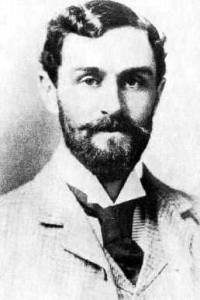
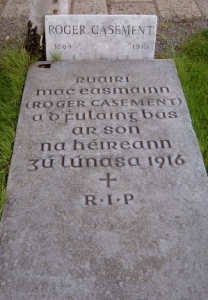
Irish patriot Roger Casement‘s body is returned to Ireland from the United Kingdom on February 23, 1965, forty-nine years after his execution for treason.
In October 1914, Roger Casement sails for Germany where he spends most of his time seeking to recruit an Irish Brigade from among more than 2,000 Irish prisoners-of-war taken in the early months of World War I and held in the prison camp of Limburg an der Lahn. His plan is that they will be trained to fight against Britain in the cause of Irish independence.
In April 1916, Germany offers the Irish 20,000 Mosin–Nagant 1891 rifles, ten machine guns and accompanying ammunition, but no German officers. It is a fraction of the quantity of arms that Casement has hoped. Casement does not learn of the Easter Rising until after the plan is fully developed. The German weapons never land in Ireland as the Royal Navy intercepts the ship transporting them.
In the early hours of April 21, 1916, three days before the beginning of the rising, Casement is taken by a German submarine and is put ashore at Banna Strand in Tralee Bay, County Kerry. Suffering from a recurrence of malaria and too weak to travel, he is discovered at McKenna’s Fort in Rathoneen, Ardfert, and arrested on charges of treason, sabotage, and espionage against the Crown. He is imprisoned in the Tower of London.
Casement’s trial for treason is highly publicized and he is ultimately convicted and sentenced to be hanged. He unsuccessfully appeals the conviction and death sentence. Among the many people who plead for clemency are Sir Arthur Conan Doyle, W. B. Yeats, and George Bernard Shaw.
On the day of his execution, Casement is again received into the Catholic Church at his request. He is attended by two Irish Catholic priests, Dean Timothy Ring and Father James Carey, from the East London parish of St. Mary and St. Michael’s. Casement is hanged at Pentonville Prison in London on August 3, 1916. His body is buried in quicklime in the prison cemetery at the rear of the prison.
During the decades after his execution, many formal requests for repatriation of Casement’s remains are refused by the U.K. government. Finally, February 23, 1965, Casement’s remains are repatriated to the Republic of Ireland. Casement’s last wish, to be buried at Murlough Bay on the North Antrim coast, in what is now Northern Ireland, may never be satisfied as U.K. Prime Minister Harold Wilson‘s government releases the remains only on condition that they cannot be brought into Northern Ireland, as “the government feared that a reburial there could provoke Catholic celebrations and Protestant reactions.”
Casement’s remains lay in state at Arbour Hill in Dublin for five days, during which time an estimated half a million people file past his coffin. After a state funeral on March 1, the remains are buried with full military honours in the Republican plot in Glasnevin Cemetery in Dublin, with other militant republican heroes. The President of the Republic of Ireland, Éamon de Valera, who is in his mid-eighties and the last surviving leader of the Easter Rising, defies the advice of his doctors and attends the ceremony, along with an estimated 30,000 others.
The first burial takes place at Glasnevin Cemetery in Glasnevin, Dublin, on February 22, 1832.
Prior to the establishment of Glasnevin Cemetery, Irish Catholics have no cemeteries of their own in which to bury their dead. The repressive Penal Laws of the eighteenth-century place heavy restrictions on the public performance of Catholic services, forcing Catholics to conduct a limited version of their own funeral services in Protestant churchyards or graveyards. This situation continues until an incident at a funeral held at St. Kevin’s Churchyard in 1823 provokes public outcry when a Protestant sexton reprimands a Catholic priest for proceeding to perform a limited version of a funeral mass. The outcry prompts Daniel O’Connell, champion of Catholic rights, to launch a campaign and prepare a legal opinion proving that there is actually no law forbidding praying for a dead Catholic in a graveyard. O’Connell pushes for the opening of a burial ground in which both Irish Catholics and Protestants can give their dead a dignified burial.
Glasnevin Cemetery is consecrated and opened to the public for the first time on February 21, 1832. The first burial, that of eleven-year-old Michael Carey from Francis Street in Dublin, takes place on the following day in a section of the cemetery known as Curran’s Square. The cemetery is initially known as Prospect Cemetery, a name chosen from the townland of Prospect, which surrounds the cemetery lands.
Originally covering nine acres of ground, the area of the cemetery has now grown to approximately 124 acres and is the final resting place of some 1.5 million people. The cemetery consists of two parts. The main part, with its trademark high walls and watchtowers, is located on one side of the road from Finglas to the city centre, while the other part, called St. Paul’s, is located across the road and beyond a green space, between two railway lines.
Glasnevin is one of the few cemeteries that allows stillborn babies to be buried in consecrated ground and contains an area called the Angels Plot for that purpose. In 1982, a crematorium is constructed within the cemetery grounds by Glasnevin Trust and has since been used for people of various religious denominations who wish to be cremated.
Glasnevin Cemetery remains under the care of the Dublin Cemeteries Committee and the development, expansion, and refurbishment of the cemetery is an ongoing task.
The Catholic Mass is celebrated by members of the parish clergy every Sunday at 9:45 AM. An annual blessing of the graves takes place each summer as it has since the founding of the cemetery in 1832.
An Irish general election is held on February 16, 1932, just over two weeks after the dissolution of the Dáil on January 29. The general election takes place in 30 parliamentary constituencies throughout the Irish Free State for 153 seats in the lower house of parliament, Dáil Éireann. The 1932 general election is one of the most important general elections held in Ireland in the 20th Century, resulting in the formation of the first Fianna Fáil government. Fianna Fáil becomes the largest party and would continue to be the largest party in Dáil Éireann and at every general election until 2011.
Cumann na nGaedheal fights the general election on its record of providing ten years of stable government. The party brings stability following the chaos of the Irish Civil War and provides honest government. However, by 1932 support of the government is wearing thin, particularly since the party has no solution to the collapse in trade which follows the depression of the early 1930s. Instead of offering new policies the party believes that its record in government will be enough to retain power. Cumann na nGaedheal also employs “red scare” tactics, describing Fianna Fáil as communists and likening Éamon de Valera to Joseph Stalin.
In comparison, Fianna Fáil has an elaborate election programme designed to appeal to a wide section of the electorate. It plays down its republicanism to avoid alarm but provides very popular social and economic policies. The party promises to free Irish Republican Army (IRA) prisoners, abolish the Oath of allegiance, and reduce the powers of the Governor-General and the Senate. It also promises the introduction of protectionist policies, industrial development, self-sufficiency, and improvements in housing and social security benefits.
The election campaign between the two ideologically opposed parties is reasonably peaceful. However, during the campaign the government prosecutes de Valera’s newly established newspaper, The Irish Press. The editor is also brought before a military tribunal. This is seen by many as a major blunder and a serious infringement on the belief of freedom of speech. The “red scare” tactics also seemed to backfire on the government, who seem to have little else to offer the electorate.
When the results are known Fianna Fáil is still 5 seats short of an overall majority but looks like the only party capable of forming a government. Discussions get underway immediately after the election and an agreement is reached in which the Labour Party would support Fianna Fáil. The party now has the necessary votes to form a minority government.
On March 9, 1932, the first change of government in the Irish Free State takes place. Similar to when the party first enters the Dáil in 1927, a number of Fianna Fáil Teachtaí Dála (TDs) have guns in their pockets. However, the feared coup d’état does not take place. W. T. Cosgrave is determined to adhere to the principles of democracy that he has practised while in government. Likewise, the army, Garda Síochána, and the civil service all accept the change of government, despite the fact that they will now be taking orders from men who had been their enemies less than ten years previously. After a brief and uneventful meeting in the Dáil chamber, Éamon de Valera is appointed President of the Executive Council of the Irish Free State by the Governor-General, James McNeill, who has come to Leinster House to make the appointment rather than require de Valera travel to the Viceregal Lodge, formerly a symbol of British rule. Fianna Fáil, the party most closely identified with opposing the existence of the state ten years earlier, is now the party of government. The 1932 general election is the beginning of a sixteen-year period in government for Fianna Fáil.
Redmond is born at Ballytrent House, his grandfather’s old family mansion, in Kilrane, County Wexford. As a student at Clongowes Wood College, he exhibits the seriousness that many soon come to associate with him. After finishing at Clongowes, Redmond attends Trinity College, Dublin to study law, but his father’s ill health leads him to abandon his studies before taking a degree and, in 1876, goes to live with him in London. As a clerk in the House of Commons he increasingly identifies himself with the fortunes of Charles Stewart Parnell, one of the founders of the Irish Land League.
Redmond first attends political meetings with Parnell in 1879. Upon the death of his father, a Member of Parliament for Wexford, in 1880, Redmond writes to Parnell asking for adoption as the Nationalist Party, which becomes the Irish Parliamentary Party in 1882, candidate in the by-election to fill the open seat, but is disappointed to learn that Parnell has already promised the next vacancy to his secretary Timothy Healy. When a vacancy arises in New Ross, he wins election unopposed as the Parnellite candidate for the seat. He served as MP for New Ross from 1881 to 1885, for North Wexford from 1885 to 1891 and finally for Waterford City from 1891 until his death in 1918.
In 1890, the Irish Parliamentary Party splits over Parnell’s leadership when his long-standing adultery with Katharine O’Shea is revealed in a spectacular divorce case. Redmond stands by Parnell and works to keep the minority faction active. When Parnell dies in 1891, Redmond takes over leadership of the Parnellite faction of the split party, called the Irish National League (INL). The larger anti-Parnellite group forms the Irish National Federation (INF) under John Dillon.
Through the initiative of William O’Brien and his United Irish League (UIL), the INL and the INF re-unite on February 6, 1900, within the Irish Parliamentary Party. Redmond is elected its chairman, a position he holds until his death in 1918, a longer period than any other nationalist leader with the exceptions of Éamon de Valera and Daniel O’Connell.
The achievement of Home Rule is his life’s goal, having strongly supported William Gladstone’s Home Rule bills of 1886 and 1893. His best opportunity arises when the Irish Parliamentary Party holds the balance of power under H. H. Asquith in the period from 1910 onwards. Opposition by the Ulster Unionists frustrates his plans, his main worry being that Home Rule will result in the permanent exclusion of at least some of the Ulster counties. He also fears that the activities of the Irish Volunteers might hinder the enactment of Home Rule. To guard against this eventuality, he secures the control of the organisation in June 1914. He welcomes the Government of Ireland Act, 1914 as the only measure of Home Rule then possible. Its suspension for the duration of the war postpones addressing the issue of partition.
To ensure the success of the war effort and the speedier implementation of Home Rule, Redmond offers the services of the Irish Volunteers for the defence of the country, an offer rejected by the government. By encouraging the Volunteers to join the British army, he splits the organisation. The vast majority, totaling 170,000 and thereafter known as the National Volunteers, follow Redmond, many of them enlisting in the British army. Those who aspire to an Irish republic or who have lost faith in Home Rule remain as the Irish Volunteers, their numbers now reduced to about 10,000.
Consequently, the 1916 Easter Rising takes him completely by surprise. Committed to keeping Ireland within the Union, he regards the Rising as treason and a “German intrigue.” He has no sympathy with the leaders or their objective of a republic. Nevertheless, he pleads for leniency in the House of Commons.
An operation in March 1918 to remove an intestinal obstruction appears to progress well at first, but then he suffers heart failure. He dies a few hours later at a London nursing home on March 6, 1918. One of the last things he says to the Jesuit Father who is with him to the end is, “Father, I am a broken-hearted man.”
The Gore-Booths are known as model landlords in County Sligo as they provide free food for the tenants on their estate. Perhaps being raised in this atmosphere of concern for the common man has something to do with the way Constance and her younger sister, Eva, conduct their later lives.
Gore-Booth decides to train as a painter and, in 1892, she enters the Slade School of Art in London because, at the time, only one art school in Dublin accepts female students. While in school in London Gore-Booth first becomes politically active and joins the National Union of Women’s Suffrage Societies.
She later moves to Paris and enrolls at the prestigious Académie Julian where she meets her future husband, Count Casimir Markievicz. They are married in London on September 29, 1900, making her Countess Markievicz. The Markieviczes relocate to Dublin in 1903 and move in artistic and literary circles, with Constance being instrumental in founding the United Artists Club.
In 1908, Markievicz becomes actively involved in nationalist politics in Ireland and joins Sinn Féin and Inghinidhe na hÉireann (Daughters of Ireland), a revolutionary women’s movement founded by Maud Gonne. In the same year, Markievicz plays a dramatic role in the women’s suffrage campaigners’ tactic of opposing Winston Churchill‘s election to Parliament during the Manchester North West by-election. Churchill ultimately loses the election to Conservative candidate William Joynson-Hicks.
In 1909, Markievicz founds Fianna Éireann, a para-military nationalist scouts organisation that instructs teenage boys and girls in the use of firearms. Patrick Pearse says that the creation of Fianna Éireann is as important as the creation of the Irish Volunteers in 1913. She is jailed for the first time in 1911 for speaking at an Irish Republican Brotherhood demonstration organised to protest against George V’s visit to Ireland.
As a member of the Irish Citizen Army, Markievicz takes part in the 1916 Easter Rising. Under Michael Mallin and Christopher Poole, she supervises the erection of barricades as the Rising begins and is in the middle of the fighting all around Stephen’s Green. Mallin and Poole and their men and women, including Markievicz, hold out for six days, ending the engagement when the British bring them a copy of Patrick Pearse’s surrender order.
They are taken to Dublin Castle and Markievicz is transported to Kilmainham Gaol, where she is the only one of 70 women prisoners who is put into solitary confinement. At her court martial on May 4, 1916, Markievicz is sentenced to death, but General Maxwell commutes this to life in prison on “account of the prisoner’s sex.” It is widely reported that she tells the court, “I do wish your lot had the decency to shoot me.” Markievicz is transferred to Mountjoy Prison and then to Aylesbury Prison in England in July 1916. She is released from prison in 1917, along with others involved in the Rising.
In the 1918 general election, Markievicz is elected for the constituency of Dublin St Patrick’s, making her the first woman elected to the British House of Commons. However, in line with Sinn Féin abstentionist policy, she does not take her seat in the House of Commons. She is re-elected to the Second Dáil in the elections of 1921. Markievicz serves as Minister for Labour from April 1919 to January 1922, holding cabinet rank from April to August 1919, becoming both the first Irish female Cabinet Minister and only the second female government minister in Europe.
Markievicz leaves government in January 1922 along with Éamon de Valera and others in opposition to the Anglo-Irish Treaty. She fights actively for the Republican cause in the Irish Civil War. She is returned in the 1923 general election for the Dublin South constituency but again, in common with other Republican candidates, she does not take her seat.
She joins Fianna Fáil on its foundation in 1926, chairing the inaugural meeting of the new party in La Scala Theatre. In the June 1927 general election, she is re-elected to the 5th Dáil as a candidate for the new Fianna Fáil party, which is pledged to return to Dáil Éireann.
Before she can take up her seat, Markievicz dies at the age of 59 on July 15, 1927, in a public ward “among the poor where she wanted to be” of complications related to appendicitis. One of the doctors attending her is her revolutionary colleague, Kathleen Lynn. Also at her bedside are Casimir and Stanislas Markievicz, Éamon de Valera, and Hanna Sheehy-Skeffington. Refused a state funeral by the Free State government, Markievicz is buried at Glasnevin Cemetery, Dublin, and de Valera gives the funeral oration.
After his participation as a leader of the Easter Rising of 1916, de Valera is arrested and sentenced to death for his role in the uprising, but the sentence is later commuted due to his American citizenship. Following his release from prison in 1916, he quickly gains fame on the Irish political scene, ultimately becoming the leader of Sinn Féin. He also gains notoriety amongst the British political elites, which ensures his eventual re-arrest and imprisonment in Lincoln Gaol.
De Valera is sent to Lincoln Gaol presumably for his participation in a “German Plot” against the British. Once incarcerated at Lincoln, de Valera, wanting to embarrass the English, quickly begins to plan his escape with the assistance of Milroy and McGarry. Irish Republicans on the outside, including Boland and Collins, also assist in the planning.
Open fields surrounded by barbed wire are to the rear and east of the prison. The Republicans hope to use this to their advantage by sneaking de Valera through a rear door. The plans are sung in Gaelic to de Valera through a window in his cell by a fellow Irish inmate in order to confuse the guards. The first song tells him of the escape route and the second gives him instructions to obtain a copy of the master-key for the prison.
De Valera, being a deeply religious man, is active in the prison’s chapel from the beginning of his internment. Using his connections within the chapel, over time he manages to steal candles from the altar. While Mass is being read, he “borrows” the master-key of the chaplain and makes an impression of it in the candle wax. The mould is then wrapped in paper and tossed over the prison wall so a duplicate can be made.
The key is duplicated and smuggled back into the prison concealed in a cake and the escape begins on the evening of February 3, 1919. While Collins and other members of Sinn Féin cut through the barbed wire, a group of Irish girls are sent to flirt with the prison guards to ensure they are preoccupied. With the guards’ attention diverted, de Valera, wrapped in a fur coat, McGarry, and Milroy are able to walk to the back door of the prison and, after some difficulty with the key, walk away from the prison.
They stroll down Wragby Road to the Adam & Eve Pub where a taxi driver, unaware of who his passengers are, awaits them. De Valera is swiftly moved to the railway station where they split up. Collins and Boland catch a train to London from St. Mark’s while the rest drive to Worksop where another innocent taxi driver drives them to Sheffield. De Valera then returns to Ireland briefly before traveling on to the United States. The prison officials, realizing that the men will be virtually impossible to locate, concede defeat after a one-day search of the city.
The escape from Lincoln Gaol is major news and is covered in all the national papers. Prison officials blame the escape on the ability of special prisoners to interact with the general prison population. The escape proves to be an important moment in Irish history – when a cake, a wax key, and some pretty Irish girls help spring the future Irish president from Lincoln Gaol.
Dr. Douglas Hyde, Gaelic scholar and the first President of Ireland, is born at Longford House in Castlerea, County Roscommon, on January 17, 1860. In 1867, his father is appointed prebendary and rector of Tibohine, and the family moves to neighbouring Frenchpark, in County Roscommon. He is home schooled by his father and his aunt due to a childhood illness. While a young man, he becomes fascinated with hearing the old people in the locality speak the Irish language.
Rejecting family pressure to follow previous generations with a career in the Church, Hyde instead becomes an academic. He enters Trinity College, Dublin, where he gains a great facility for languages, learning Latin, Greek, Hebrew, French, and German, but his great passion in life is the preservation of the Irish language.
After spending a year teaching modern languages in Canada, Hyde returns to Ireland. For much of the rest of his life he writes and collects hundreds of stories, poems, and folktales in Irish, and translates others. His work in Irish helps to inspire many other literary writers, such as W.B. Yeats and Lady Gregory.
In 1892, Hyde helps establish the Gaelic Journal and in November of that year writes a manifesto called The necessity for de-anglicising the Irish nation, arguing that Ireland should follow her own traditions in language, literature, and even in dress.
In 1893, Hyde founds the Gaelic League (Conradh na Gaeilge) along with Eoin MacNeill and Fr. Eugene O’Growney and serves as its first president. Many of the new generation of Irish leaders who play a central role in the fight for Irish independence in the early twentieth century, including Patrick Pearse, Éamon de Valera, Michael Collins, and Ernest Blythe first become politicised and passionate about Irish independence through their involvement in the Gaelic League. Hyde does not want the Gaelic League to be a political entity, so when the surge of Irish nationalism that the Gaelic League helps to foster begins to take control of many in the League and politicize it in 1915, Hyde resigns as president.
Hyde takes no active part in the armed upheaval of the 1910s and 1920s, but does serve in Seanad Éireann, the upper house of the Irish Free State’s Oireachtas, as a Free State senator in 1925-26. He then returns to academia, as Professor of Irish at University College Dublin, where one of his students is future Attorney General and President of Ireland Cearbhall Ó Dálaigh.
In 1938, Hyde is unanimously elected to the newly created position of President of Ireland, a post he holds until 1945. Hyde is inaugurated on June 26, 1938, in the first inaugural ceremony in the nation’s history. Despite being placed in a position to shape the office of the presidency via precedent, Hyde by and large opts for a quiet, conservative interpretation of the office. In April 1940 he suffers a massive stroke and plans are made for his lying-in-state and state funeral, but to the surprise of everyone he survives, albeit paralysed and confined to a wheelchair. One of Hyde’s last presidential acts is a visit to the German ambassador Eduard Hempel on May 3, 1945 to offer his condolences on the death of Adolf Hitler, a visit which remains a secret until 2005.
Hyde leaves office on June 25, 1945, opting not to nominate himself for a second term. He opts not return to his Roscommon home due to his ill-health, but rather moves into the former Secretary to the Lord Lieutenant’s residence in the grounds of Áras an Uachtaráin, where he lived out the remaining four years of his life.
Hyde dies in Dublin on July 12, 1949 at age 89. As a former President of Ireland he is accorded a state funeral which, as a member of the Church of Ireland, takes place in Dublin’s Church of Ireland St. Patrick’s Cathedral. Since contemporary rules of the Roman Catholic Church in Ireland at the time prohibit Roman Catholics from attending services in non-Catholic churches, all but one member of the Catholic cabinet remain outside the cathedral grounds while Hyde’s funeral takes place. Hyde is buried in Frenchpark, County Roscommon at Portahard Church.
Ashe plays a major part in the 1916 Easter Rising outside the capital city commanding the Fingal battalion of the Irish Volunteers. Ashe is commandant of the 5th battalion of the Dublin brigade, a force of 60–70 men engaging British forces around north County Dublin during the rising. They are armed only with a few rounds, about a dozen service rifles, a dozen Mausers, and a dozen Martini-Henry carbines. Some of Ashe’s men are armed only with a shotgun against the well-equipped army regulars.
Ashe’s battalion wins a major victory in Ashbourne, County Meath, where they engage a much larger force. They capture a significant quantity of arms and up to twenty Royal Irish Constabulary (RIC) vehicles. Eleven RIC members, including County Inspector Alexander Gray, and two volunteers are killed during the 5-1/2-hour battle. Twenty-four hours after the rising collapses, Ashe’s battalion surrenders on the orders of Patrick Pearse. On May 8, 1916, Ashe and Éamon de Valera are court-martialled and sentenced to death. The sentences are commuted to penal servitude for life. Ashe is imprisoned in Lewes Prison in Lewes, East Sussex, England.
De Valera, Ashe, and Thomas Hunter lead a prisoner hunger strike on May 28, 1917. With accounts of prison mistreatment appearing in the Irish press and mounting protests in Ireland, Ashe and the remaining prisoners are freed on June 18, 1917, by David Lloyd George as part of a general amnesty.
Upon his release, Ashe returns to Ireland and begins a series of speaking engagements. In August 1917, he is arrested and charged with sedition for a speech that he makes in Ballinalee, County Longford, where Michael Collins is also speaking. He is detained at the Curragh but is then transferred to Mountjoy Prison in Dublin. He is convicted and sentenced to two years hard labour. Ashe and other prisoners, including Austin Stack, demand prisoner of war status. On September 20, 1917, Ashe again goes on hunger strike. He dies at the Mater Hospital on September 25, 1917, after being force fed by prison authorities. At the inquest into his death, the jury condemns the staff at the prison for the “inhuman and dangerous operation performed on the prisoner, and other acts of unfeeling and barbaric conduct.” His body lies in state at Dublin City Hall and is buried in Glasnevin Cemetery in Dublin.
Ashe is a relative of Catherine Ashe, the paternal grandmother of American actor Gregory Peck, who emigrates to the United States in the 19th century. The Ashe Memorial Hall built in 1928, housing the Kerry County Museum, in Tralee, County Kerry, is named after him while Nelson Street, also in Tralee, is renamed Ashe Street.




 An Irish general election is held on February 16, 1932, just over two weeks after the dissolution of the Dáil on January 29. The general election takes place in 30 parliamentary constituencies throughout the



 seamus dubhghaill