seamus dubhghaill

Promoting Irish Culture and History from Little Rock, Arkansas, USA


Leave a comment

Birth of Footballer Johnny Giles

Michael John “Johnny” Giles, former association footballer and manager, is born in Ormond Square, Dublin, on November 6, 1940. He is best remembered for his time as a midfielder with Leeds United F.C. in the 1960s and 1970s. After retiring from management in 1985, Giles serves as the senior analyst on RTÉ Sport‘s coverage of association football from 1986 until 2016. The Football Association of Ireland (FAI) votes Giles as the greatest Irish player of the last 50 years at the UEFA Jubilee Awards in 2004.

After winning an FA Cup winner’s medal under Matt Busby at Manchester United F.C., Giles moves to Leeds in 1963 where he plays in midfield alongside captain Billy Bremner. The duo goes on to form a central midfield partnership which is one of the best in English club football. Their pairing helps yield several major trophies in the most successful era in Leeds’ history. By a strange coincidence, Giles and Bremner both score exactly 115 goals for the club.

In his later years in football, Giles pursues a managerial career which sees him installed as player-manager and manager of, among others, West Bromwich Albion F.C., the Republic of Ireland national football team, Vancouver Whitecaps F.C. and Shamrock Rovers F.C. Despite having an outstanding knowledge of the game, Giles personally never likes being a manager. He becomes disillusioned with aspects of the job, such as suffering at the hands of non-committal boardrooms and leaves management permanently in 1985. He later declares that he has no regrets about quitting managerial life.

Subsequently, after repeated encouragement from childhood friend Eamon Dunphy, Giles inadvertently enters the world of football punditry in 1986. He goes on to establish himself as the highly respected senior analyst on RTÉ Sport. In addition, he writes two columns per week for the Irish Evening Herald newspaper and offers his opinions about the game on radio station, Newstalk 106.

Giles resides in the Harborne area of the city of Birmingham, England. To coincide with his 70th birthday, Giles compiles a first ever autobiography chronicling his life in and outside of football which is released in November 2010. The autobiography, titled A Football Man, becomes the best-selling book in the Republic of Ireland.


Leave a comment

Death of Thomas “Buck” Whaley

Thomas Whaley, Irish gambler and member of the Irish House of Commons commonly known as Buck Whaley or Jerusalem Whaley, dies on November 2, 1800, in England.

Whaley is born in Dublin on December 15, 1766, the eldest surviving son of the landowner, magistrate and former Member of Parliament Richard Chapell Whaley. At the age of sixteen, he is sent to Europe on the Grand tour, accompanied by a tutor. He settles in Paris for some time, maintaining both a country residence and town house, but is forced to leave Paris when his cheque for the amount of £14,000, to settle gambling debts accrued in one night of gambling, is refused by his bankers. Following his return to Dublin, Whaley, at the age of eighteen, is elected to the Irish House of Commons in 1785 representing the constituency of Newcastle in County Dublin.

While dining with William FitzGerald, 2nd Duke of Leinster at Leinster House, wagers totaling £15,000 are offered that Whaley cannot travel to Jerusalem and back within two years and provide proof of his success. The reasoning of those offering the bets is based on the belief that, as the region was part of the Ottoman Empire and had a reputation for widespread banditry, it will be too dangerous for travelers, and it will be unlikely that Whaley can complete the journey.

Whaley embarks from Dublin on October 8, 1788. He sails first to Deal, Kent, where he is joined by a companion, a Captain Wilson, and then on to Gibraltar. In Gibraltar, his party is joined by another military officer, Captain Hugh Moore. The party sets sail for the port of Smyrna, although Wilson is prevented from travelling any further due to rheumatic fever. The remaining pair make an overland journey from there to Constantinople, arriving in December.

The British ambassador in Constantinople introduces Whaley to the Vizier Cezayirli Gazi Hasan Pasha. Taking a liking to Whaley, Hasan Pasha provides him with permits to visit Jerusalem. Whaley’s party leaves Constantinople on January 21, 1789, by ship and sail to Acre, Israel. He encounters the Wāli of Acre and Galillee, Ahmad Pasha al-Jazzar. Al-Jazzar, notoriously known as “The Butcher” in the region he rules, takes a liking to Whaley and, though he dismisses the documents issued in Constantinople as worthless, he permits Whaley to continue his journey.

Whaley and his companions make their way overland to Jerusalem, arriving on January 28. During his visit, he stays at a Franciscan monastery, the Convent of Terra Sancta. It is a signed certificate from the superior of this institution, along with detailed observations of the buildings of Jerusalem, that provide the proof needed to prove the success of his journey. They stay for little over a month before returning overland to Ireland.

Whaley arrives back in Dublin in the summer of 1789 to great celebrations and collects the winnings of the wager. The trip costs him a total of £8,000, leaving him a profit of £7,000.

Following his Jerusalem exploit, Whaley remains in Dublin for two years and later spends time in London and travelling in Europe, including Paris during the Revolutionary period. Due to mounting debts, he is forced to sell much of his estate in the early 1790s and these financial problems also lead to his departure from Dublin.

Thomas Whaley dies on November 2, 1800, in the Cheshire town of Knutsford, while travelling from Liverpool to London. The cause of death is attributed to rheumatic fever, although a popular story circulated in Ireland is that he is stabbed in a jealous rage by one of two sisters, both of whom are objects of his attentions.


Leave a comment

Birth of Richard Brinsley Sheridan, Playwright & Satirist

Richard Brinsley Butler Sheridan, Irish satirist, playwright and poet, and long-term owner of the London Theatre Royal, Drury Lane, is born on October 30, 1751, in Dublin, where his family has a house on then fashionable Dorset Street.

While in Dublin Sheridan attends the English Grammar School in Grafton Street. The family moves permanently to England in 1758 where he is a pupil at Harrow School from 1762 to 1768. After his period in Harrow School, his father employs a private tutor to directs his studies.

In 1775, Sheridan’s first play, The Rivals, is produced at London’s Covent Garden Theatre. It is a failure on its first night. He casts a more capable actor in the lead for its second performance, and it is a smash which immediately establishes the young playwright’s reputation and the favour of fashionable London. It has gone on to become a standard of English literature.

Shortly after the success of The Rivals, Sheridan and his father-in-law, Thomas Linley the Elder, a successful composer, produce the opera, The Duenna. This piece is accorded such a warm reception that it plays for seventy-five performances.

The following year, Sheridan, his father-in-law, and one other partner purchase a half-interest in the Drury Lane theatre and, two years later, buy out the other half. Sheridan is the manager of the theatre for many years and later becomes sole owner with no managerial role.

His most famous play, The School for Scandal (Drury Lane, May 8, 1777), is considered one of the greatest comedies of manners in English. It is followed by The Critic (1779), an updating of the satirical Restoration comedy The Rehearsal. He has a rivalry with his fellow playwright Richard Cumberland and includes a parody of Cumberland in The Critic. In 1778, Sheridan writes The Camp, which comments on the ongoing threat of a French invasion of Britain.

In 1780, Sheridan enters Parliament as the ally of Charles James Fox on the side of the American Colonials in the political debate of that year. He remains in Parliament for 32 years.

On February 24, 1809, despite the much-vaunted fire safety precautions of 1794, the theatre burns down. On being encountered drinking a glass of wine in the street while watching the fire, Sheridan is famously reported to have said, “A man may surely be allowed to take a glass of wine by his own fireside.”

When he fails to be re-elected to Parliament in 1812, his creditors close in on him and his last years are harassed by debt and disappointment. On hearing of his debts, the United States Congress offers Sheridan £20,000 in recognition of his efforts to prevent the American Revolutionary War. The offer is refused.

In December 1815 Sheridan becomes ill and is largely confined to bed. He dies in poverty on July 7, 1816, and is buried in the Poets’ Corner of Westminster Abbey. His funeral is attended by dukes, earls, lords, viscounts, the Lord Mayor of London, and other notables.


Leave a comment

Birth of Sir Horace Curzon Plunkett

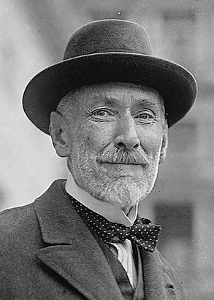
Sir Horace Curzon Plunkett, Anglo-Irish agricultural reformer, pioneer of agricultural cooperatives, Unionist Member of Parliament (MP), supporter of Home Rule, Irish Senator and author, is born on October 24, 1854.

Plunkett is the third son of Admiral the 16th Baron of Dunsany, of Dunsany Castle, Dunsany, near Dunshaughlin, County Meath, and the Honourable Anne Constance Dutton, daughter of John Dutton, 2nd Baron Sherborne. He is educated at Eton College and University College, Oxford, of which he becomes an honorary fellow in 1909.

Threatened by lung trouble in 1879, Plunkett goes to the United States and spends ten years as a cattle rancher in the Bighorn Mountains of Wyoming. He returns to Ireland in 1889 and devotes himself to the agricultural cooperative movement, first organizing creameries and then, in 1894, the Irish Agricultural Organisation Society, a forerunner of similar societies in England, Wales, and Scotland. A moderate Unionist member of Parliament for South County Dublin from 1892 to 1900, he becomes vice president (1899–1907) of the new Department of Agriculture and Technical Instruction for Ireland, which he has been instrumental in creating.

Plunkett’s later experience convinces him of the need for the independence of an Ireland without partition inside the Commonwealth, and he fights strongly for this goal, as chairman of the Irish Convention (1917–18) and, in 1919, as founder of the Irish Dominion League and of the Plunkett Foundation for Cooperative Studies, an agricultural research and information centre. He is appointed to the first Senate of the Irish Free State (1922–23). His house in Dublin is bombed and burned during in the Irish Civil War and he lives in England thereafter. In 1924 the Plunkett Foundation also moves to England. In 1924 he presides over a conference in London on agricultural co-operation in the British Commonwealth and in 1925 he visits South Africa to help the movement there.

Plunkett is made a Fellow of the Royal Society in 1902 and Knight Commander of the Royal Victorian Order in 1903. His writings include Ireland in the New Century (1904) and The Rural Life Problem of the United States (1910).

Sir Horace Plunkett dies at Weybridge, Surrey, England on March 26, 1932.


Leave a comment

Death of Emily Lawless, Irish Novelist & Poet

The Honourable Emily Lawless, Irish novelist and poet from County Kildare, dies at Gomshall, a village in the borough of Guildford in Surrey, England, on October 19, 1913. According to Betty Webb Brewer, writing in 1983 for the journal of the Irish American Cultural Institute, Éire/Ireland, “An unflagging unionist, she recognised the rich literary potential in the native tradition and wrote novels with peasant heroes and heroines, Lawless depicted with equal sympathy the Anglo-Irish landholders.”

Lawless is born at Lyons Demesne below Lyons Hill, Ardclough, County Kildare. Her grandfather is Valentine Lawless, 2nd Baron Cloncurry, a member of the Society of United Irishmen and son of a convert from Catholicism to the Church of Ireland. Her father is Edward Lawless, 3rd Baron Cloncurry, thus giving her the title of “The Honourable.” In contrast, her brother Edward Lawless is a landowner with strong Unionist opinions, a policy of not employing Roman Catholics in any position in his household, and chairman of the Property Defence Association set up in 1880 to oppose the Irish National Land League and “uphold the rights of property against organised combination to defraud.” The prominent Anglo-Irish unionist and later nationalist, Home Rule politician Horace Plunkett is a cousin. Lord Castletown, Bernard FitzPatrick, 2nd Baron Castletown is also a cousin. It is widely believed that she is a lesbian and that Lady Sarah Spencer, dedicatee of A Garden Diary (1901) is her lover.

Lawless spends part of her childhood with the Kirwans of Castle Hackett, County Galway, her mother’s family, and draws on West of Ireland themes for many of her works. She occasionally writes under the pen name “Edith Lytton.”

Lawless writes nineteen works of fiction, biography, history, nature studies and poetry, many of which are widely read at the time. She is most famous today for her Wild Geese poems (1902).

Some critics identify a theme of noble landlord and noble peasant in her fourth book, Hurrish, a Land War story set in The Burren of County Clare which is read by William Ewart Gladstone and said to have influenced his policy. It deals with the theme of Irish hostility to English law. In the course of the book a landlord is assassinated, and Hurrish’s mother, Bridget, refuses to identify the murderer, a dull-witted brutal neighbour. The book is criticised by Irish-Ireland journals for its “grossly exaggerated violence,” it’s embarrassing dialect, staid characters.

Her reputation is damaged by William Butler Yeats who accuses her in a critique of having “an imperfect sympathy with the Celtic nature” and for adopting “theory invented by political journalists and forensic historians.” Despite this, Yeats includes her novels With Essex in Ireland (1890) and Maelcho (1894) in his list of the best Irish novels.

Emily Lawless dies at Gomshall, Surrey, on October 19, 1913. Her papers are preserved in Marsh’s Library in Dublin.


Leave a comment

The Brighton Hotel Bombing

The Brighton hotel bombing, a Provisional Irish Republican Army (IRA) assassination attempt against the top tier of the British government, takes place on October 12, 1984, at the Grand Brighton Hotel in Brighton, England. A long-delay time bomb is planted in the hotel by IRA member Patrick Magee, with the intent of killing Prime Minister Margaret Thatcher and her cabinet, who are staying at the hotel for the Conservative Party conference. Although Thatcher narrowly escapes injury, five people are killed including a sitting Conservative MP, and 31 are injured.

Patrick Magee stays in the hotel under the pseudonym Roy Walsh during the weekend of September 14-17, 1984. During his stay, he plants the bomb under the bath in his room, number 629. The device, described as a “small bomb by IRA standards,” is fitted with a long-delay timer made from videocassette recorder components and a Memo Park Timer safety device. The device may have avoided detection by sniffer dogs due to it being wrapped in cling film to mask the smell of the explosive.

The bomb detonates at approximately 2:54 AM (BST) on October 12. The midsection of the building collapses into the basement, leaving a gaping hole in the hotel’s facade. Firemen say that many lives are likely saved because the well-built Victorian hotel remained standing. Margaret Thatcher is still awake at the time, working on her conference speech for the next day in her suite. The blast badly damages her bathroom but leaves her sitting room and bedroom unscathed. Both she and her husband escape injury. She changes her clothes and is led out through the wreckage along with her husband and her friend and aide Cynthia Crawford and driven to Brighton police station.

At about 4:00 AM, as Thatcher leaves the police station, she gives an impromptu interview to the BBC‘s John Cole, saying that the conference would go on as scheduled. Alistair McAlpine persuades Marks & Spencer to open early at 8:00 AM so those who have lost their clothes in the bombing can purchase replacements. Thatcher goes from the conference to visit the injured at the Royal Sussex County Hospital.

Five people are killed, none of whom are government ministers. But a Conservative MP, Sir Anthony Berry, is killed, along with Eric Taylor, North-West Area Chairman of the Conservative Party, Lady Jeanne Shattock, wife of Sir Gordon Shattock, Western Area Chairman of the Conservative Party, Lady Muriel Maclean, wife of Sir Donald Maclean, President of the Scottish Conservatives, and Roberta Wakeham, wife of Parliamentary Treasury Secretary John Wakeham. Donald and Muriel Maclean are in the room in which the bomb explodes, but Mr. Maclean survives.

Several more, including Walter Clegg, whose bedroom is directly above the blast, and Margaret Tebbit, the wife of Norman Tebbit, who is then President of the Board of Trade, are left permanently disabled. Thirty-four people are taken to the hospital and recover from their injuries. When hospital staff asks Norman Tebbit, who is less seriously injured than his wife, whether he is allergic to anything, he is said to answer “bombs.”


Leave a comment

The Guildford Pub Bombings

The Guildford pub bombings occur on October 5, 1974, when the Provisional Irish Republican Army (IRA) detonate two 6-pound gelignite bombs at two pubs in Guildford, Surrey, southwest of London. The pubs are targeted because they are popular with British Army personnel stationed at the barracks in Pirbright. Four soldiers and one civilian are killed, while 65 others are wounded.

The bomb in the Horse and Groom pub detonates at 8:30 PM. It kills Paul Craig, a 22-year-old plasterer, two members of the Scots Guards and two members of the Women’s Royal Army Corps. The Seven Stars pub is evacuated after the first blast, and thus there are no serious injuries when the second bomb explodes at 9:00 PM.

These attacks are the first in a year-long campaign by an IRA Active Service Unit who are eventually captured after the Balcombe Street siege. A similar bomb to those used in Guildford, with the addition of shrapnel, is thrown into the Kings Arms pub in Woolwich on November 7, 1974. Gunner Richard Dunne and Alan Horsley, a salesclerk, die in that explosion. On August 27, 1975, the same IRA unit detonates a bomb in Surrey at the Caterham Arms pub which injures over 30 people. Surrey police say it is “a carbon copy of the Guildford bombs.”

The bombings occur at the height of the Troubles in Northern Ireland. The Metropolitan Police Service is under enormous pressure to apprehend the IRA bombers responsible for the attacks in England. The bombings contribute to the speedy and unchallenged passing of the Prevention of Terrorism Acts in November 1974.

In December 1974 the police arrest Gerry Conlon, Paul Hill, Patrick Armstrong and Carole Richardson, later known as the Guildford Four. The Guildford Four are falsely convicted of the bombings in October 1975 after the Metropolitan Police use the Prevention of Terrorism Acts to force false confessions. All four are sentenced to life in prison.

The Guildford Four are held in prison for fifteen years, although Gerry Conlon dies near the end of his third year of imprisonment. All the convictions are overturned years later in the appeal courts after it is proved the Guildford Four’s convictions had been based on confessions obtained by torture, while evidence specifically clearing the Four is not reported by the police.


2 Comments

First Irish Convict Ship Arrives in Botany Bay

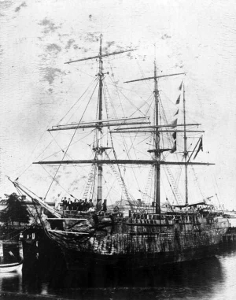
The Queen, the first ship delivering Irish convicts, arrives at the penal settlement of Botany Bay in New South Wales, Australia on September 26, 1791. About 30% of all Australians are of Irish birth or descent. Many emigrated freely but many are descended from convicts transported there in the early years of the colony.

Britain has a policy of transportation. Up until the American Revolution most are sent to the American colonies or the West Indies. By the 1780s, Britain badly needs prison space. Petty criminals are housed on overcrowded prison ships anchored on the River Thames. In 1786, the government decides to start a prison settlement in the new colony at Botany Bay.

The transportation is arranged by a private company and those convicts who arrive there are actually the lucky ones, as conditions on the journey are horrendous and many die en route. The organisers of the transportation ships operate on a contract basis. They are paid a certain amount per head and the less provisions they give the prisoners the more profit they make.

The first two fleets of convict ships sail from England. The first ship to sail directly from Ireland is the Queen, which leaves Cork in April 1791 and joins the third fleet sailing from England. On board are 133 male convicts, 22 females and three children. The youngest on the ship is two-week-old Margaret, daughter of convict Sarah Brennan. The youngest convicts are 11-year-old David Fay and 12-year-old James Blake, convicted for stealing a pair of buckles. The oldest convict is 64-year-old Patrick Fitzgerald from Dublin, who is sentenced to seven years for stealing clothes. Seven men and one woman die on the voyage and within a year, half the men who had sailed on the Queen are dead. Young James Blake dies within a few months of landing.

The last convict ship sails from Ireland to Australia in 1853 and over the course of 60 years, 30,000 men and 9,000 women are transported for a minimum of seven years. While a good number of them are patriots and rebels – United Irishmen and Young Irelanders – the majority are transported for petty crimes.

Transportation continues for more than 60 years and is followed by assisted emigration. More than 100,000 travel on assisted passage during the 1850s alone. Some are assisted on their journey by charitable organisations in an effort to relieve distress. The last transportation ship, the Phoebe Dunbar, sails from Dún Laoghaire in 1853, bound for Perth.


Leave a comment

Death of Hunger Striker Thomas Patrick Ashe

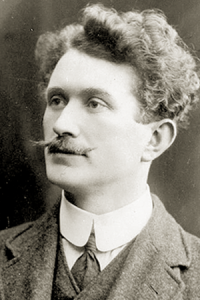
Thomas Patrick Ashe, a member of the Gaelic League, the Irish Republican Brotherhood (IRB), and a founding member of the Irish Volunteers, dies on September 25, 1917, at Mater Misericordiae Hospital in Dublin following a hunger strike.

Ashe is born in Lispole, County Kerry, on January 12, 1885. He enters De La Salle Training College, Waterford in 1905 and begins a teaching career as principal of Corduff National School, Lusk, County Dublin, in 1908.

Ashe plays a major part in the 1916 Easter Rising outside the capital city commanding the Fingal battalion of the Irish Volunteers. He is commandant of the 5th battalion of the Dublin brigade, a force of 60–70 men engaging British forces around north County Dublin during the rising. They are armed only with a few rounds, about a dozen service rifles, a dozen Mausers, and a dozen Martini carbines. Some of Ashe’s men are armed only with a shotgun against the well-equipped army regulars.

Ashe’s battalion wins a major victory in Ashbourne, County Meath, where they engage a much larger force. They capture a significant quantity of arms and up to twenty Royal Irish Constabulary (RIC) vehicles. Eleven RIC members, including County Inspector Alexander Gray, and two volunteers are killed during the 5-1/2-hour battle. Twenty-four hours after the rising collapses, Ashe’s battalion surrenders on the orders of Patrick Pearse. On May 8, 1916, Ashe and Éamon de Valera are court-martialled and sentenced to death. The sentences are commuted to penal servitude for life. Ashe is imprisoned in Frongoch internment camp and Lewes Prison in Lewes, East Sussex, England.

De Valera, Ashe, and Thomas Hunter lead a prisoner hunger strike on May 28, 1917. With accounts of prison mistreatment appearing in the Irish press and mounting protests in Ireland, Ashe and the remaining prisoners are freed on June 18, 1917, by David Lloyd George as part of a general amnesty.

Upon his release, Ashe returns to Ireland and begins a series of speaking engagements. In August 1917, he is arrested and charged with sedition for a speech that he makes in Ballinalee, County Longford, where Michael Collins is also speaking. He is detained at the Curragh but is then transferred to Mountjoy Prison in Dublin. He is convicted and sentenced to two years hard labour. Ashe and other prisoners, including Fionán Lynch and Austin Stack, demand prisoner of war status.

On September 20, 1917, Ashe again goes on hunger strike. He dies at Mater Misericordiae Hospital on September 25, 1917, after being force fed by prison authorities. At the inquest into his death, the jury condemns the staff at the prison for the “inhuman and dangerous operation performed on the prisoner, and other acts of unfeeling and barbaric conduct.” His body lies in state at Dublin City Hall and is buried in Glasnevin Cemetery in Dublin.

The Ashe Memorial Hall built in 1928, housing the Kerry County Museum, in Tralee is named after him while Nelson Street, also in Tralee, is renamed Ashe Street. Ashe is a relative of Catherine Ashe, the paternal grandmother of American actor Gregory Peck, who emigrates to the United States in the 19th century.


Leave a comment

Birth of Artist Thomas James Carr

Thomas James Carr, British artist who is associated with the Euston Road School in the 1930s and has a long career as a painter of domestic scenes and landscapes, is born in Belfast to a well-to-do family on September 21, 1909.

Carr attends Oundle School where his art masters include E.M.O’R. Dickey and Christopher Perkins. In 1927 Carr moves to London where he studies at the Slade School of Fine Art. After two years at the Slade, he moves to Italy and spends six months in Florence. Upon returning to London, he establishes himself as a well-regarded painter of domestic scenes.

Although essentially a realist painter, Carr is included in the 1934 Objective Abstractionists exhibition at Zwemmer’s Gallery. In 1937, he shares an exhibition with Victor Pasmore and Claude Rogers at the Storran Gallery and subsequently becomes associated with the representational style of the Euston Road School. Starting in 1940, at Georges Wildenstein‘s gallery, he holds a series of one-man exhibitions at various galleries including at the Leicester Galleries, The Redfern Gallery and also at Thomas Agnew & Sons.

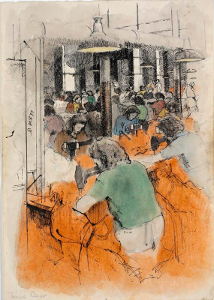
In 1939, Carr returns to Northern Ireland and settles in Newcastle, County Down. During the World War II, he receives a small number of commissions from the War Artists’ Advisory Committee to depict parachute manufacture and the Short Sunderland flying boats being built at the Short Brothers factory in Belfast.

After the war, Carr teaches at the Belfast College of Art and moves to Belfast in 1955. After the death of his wife in 1995, he moves to Norfolk, England to be nearer one of his three daughters and her family. He continues to paint into old age and tends to concentrate on landscape painting.

Carr is a regular exhibitor at the Royal Academy of Arts and is a member of the Royal Ulster Academy, the New English Art Club, the Royal Watercolour Society and is an honorary member of the Royal Hibernian Academy. Queen’s University awards him an honorary doctorate in 1991. For his services to art in Northern Ireland, he is awarded the MBE in 1974 and receives an OBE in 1993.

Thomas Carr dies at the age of 89 in Norwich, England on February 17, 1999.

(Pictured: “Making Coloured Parachutes” by Thomas James Carr (http://www.iwm.org.uk/collections/item/object/4674) [Public domain], via Wikimedia Commons)