Fine Gael is currently the third-largest party in Ireland in terms of members of Dáil Éireann and largest in terms of Irish members of the European Parliament. The party has a membership of 21,000 in 2017. Leo Varadkar succeeds Enda Kenny as party leader on June 2, 2017, and as Taoiseach on June 14. Kenny had been leader since 2002, and Taoiseach since 2011.
Fine Gael is generally considered to be more of a proponent of market liberalism than its traditional rival, Fianna Fáil. Apart from brief minority governments, Fine Gael has rarely governed Ireland without a coalition that also includes the Labour Party, a social-democratic, centre-left party. Fine Gael describes itself as a “party of the progressive centre” which it defines as acting “in a way that is right for Ireland, regardless of dogma or ideology.” The party lists its core values as “equality of opportunity, free enterprise and reward, security, integrity and hope.”
Having governed in coalition with the Labour Party between 2011 and 2016, and in a minority government along with Independent TDs from 2016 to 2020, Fine Gael currently forms part of an historic coalition government with its traditional rival, Fianna Fáil, and the Green Party. On June 27, 2020, Micheál Martin of Fianna Fáil is appointed as Taoiseach and forms a new government. Leo Varadkar serves as Tánaiste with both parties agreeing that in December 2022, Varadkar will serve again as Taoiseach.
Some of the most prolific bombers and gunmen involved in the Troubles have been imprisoned in the Maze, originally called Long Kesh, since it opened in 1971.
One of the freed republicans, Seán Lynch, describes what he saw as the real and symbolic importance of the Maze. “We had achieved the status of political prisoners even if the British Government never admitted it. The prison struggle was a microcosm of the larger struggle.”
Founder member of the Ulster Defence Association, Thomas McKeown, released in 1990 is one of over 10,000 loyalists sent to the prison. He reflects, “We had it pretty easy. We made replica weapons and instruments from wood and conducted military parades and drill every morning. There were also political classes and other sorts of education.”
After the H-block hunger strikes of the 1980s there are numerous escape attempts and by 1994 the authorities have given in to many of the prisoners’ demands for freedom of association and high levels of autonomy. A total of 2,700 incidents of officers being threatened or attacked are reported. A granite memorial outside the gates bears the names of the 29 prison guards murdered since the prison opened in 1971.
On September 29, 2000, the remaining four prisoners at the Maze are transferred to other prisons in Northern Ireland and the Maze Prison is closed. Redundancy packages are arranged for staff. These are accepted by 300 who left in June 2000.
The future of the buildings is uncertain, but some republicans want it to be turned into a museum to commemorate their struggle.
A monitoring group is set up on January 14, 2003 to debate the future of the 360-acre site. There are many proposals, including a museum, a multi-purpose sports stadium and an office, hotel and leisure village. In January 2006, the government unveils a masterplan for the site incorporating many of these proposals, including a 45,000 seat national multi-sport stadium for association football, rugby and Gaelic games. In October 2006, demolition work begins in preparation for construction on the site, however, in January 2009 plans to build the new multi-purpose stadium are cancelled, with Minister of Culture, Arts and LeisureGregory Campbell citing a lack of support and concerns for a net loss to the economy.
Discussion is still ongoing as to the listed status of sections of the old prison. The hospital and part of the H-Blocks are currently listed buildings, and will remain as part of the proposed site redevelopment as a “conflict transformation centre” with support from republicans such as Martin McGuinness and opposition from unionists, who consider that this risks creating “a shrine to the IRA.”
In January 2013, plans are approved by the Northern Ireland Minister of the Environment, Alex Attwood, for the site to be redeveloped as showgrounds as the result of an application by the Royal Ulster Agricultural Society with the objective of relocating Balmoral Show from its current location in Belfast. The site is now known as Balmoral Park.
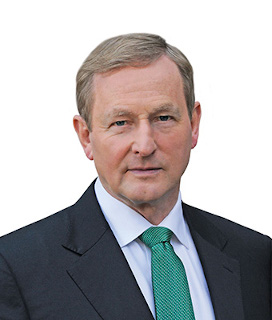
Kenny turns to politics in 1975 upon the death of his father, Henry Kenny, a long-serving member of the Dáil Éireann, representing Mayo. He wins a comfortable victory in a special election to fill his father’s seat, and at age 24 he is the youngest member of the Dáil. He spends much of his early political career on the backbench, focusing on local issues. In 1994 he is appointed Minister for Tourism and Trade in the “rainbow coalition” government of Fine Gael Taoiseach John Bruton.
With the collapse of Bruton’s coalition in 1997, Kenny loses his portfolio, but his stature rises as the party itself declines. Weeks after the 2002 Irish general election, which sees Fine Gael win just 31 seats, he is elected party leader. He immediately sets to restoring the party’s fortunes, and Fine Gael makes an impressive showing in the 2007 Irish general election, capturing 51 seats.
Fine Gael’s momentum continues to build as Fianna Fáil Taoiseach Brian Cowen, beset with a banking crisis and a soaring national deficit, is obliged to accept a bailout package of more than $100 billion from the International Monetary Fund and the European Union. The Green Party withdraws from Cowen’s coalition, and the government collapses, forcing early elections in February 2011. Capitalizing on widespread voter dissatisfaction, Fine Gael wins more than 70 seats, ending 14 years of Fianna Fáil rule, and Kenny begins discussions with the Labour Party about the formation of a coalition government. After more than a week of negotiations, the details of the coalition are settled and Kenny is formally elected Taoiseach by the Dáil on March 9, 2011, by an unprecedented 90 votes.
Kenny oversees a strong rebound by the Irish economy over the next five years, but the perception by many that the recovery has not been shared equally is reflected in the results of the 2016 Irish general election, when the electorate punishes the ruling coalition by ending its majority. In particular, voters appear to be disenchanted by the government’s pledge to end the Universal Social Charge — a graduated tax on all income over €13,000 — despite austerity-mandated cuts to social services. In the event, Fine Gael remains the largest party in the Dáil, but its share of the seats falls from the 76 it ultimately had secured in 2011 to 50, while coalition partner Labour plummets from 37 seats to seven. Meanwhile, Fianna Fáil, Fine Gael’s traditional rival for power, which had appeared politically moribund after the last general election, bounces back forcefully to add 24 seats to its 2011 count, reaching a total of 44 deputies.
With no party holding a majority and no quick path to coalition rule evident, a hung parliament ensues. Ten weeks of negotiations follow as Kenny seeks to form a government. Even the unheard-of possibility of grand coalition rule with Fianna Fáil is on the table. Finally, in early May, after much policy-related horse trading, an agreement is reached whereby Kenny and Fine Gael will continue to lead the government, supported by independent deputies and with a promise by Fianna Fáil that it will abstain on key votes until 2018. With Fianna Fáil abstaining, Kenny captures 59 votes on May 6, 2016, enough to return to power. In the process he becomes the first Fine Gael Taoiseach to be reelected.
A scandal involving the public smearing of a police whistleblower nearly topples the government in February 2017, and Kenny narrowly survives a vote of confidence, 57 to 52, with Fianna Fáil abstaining. Under pressure from the opposition as well as from members of his own party, Kenny stands down as Fine Gael leader in May 2017. The following month the party chooses Kenny’s Minister for Social Protection, Leo Varadkar, to succeed him as leader of Fine Gael. Kenny resigns as Taoiseach on June 13, 2017, and Varadkar is elected Taoiseach the following day.
Childers is educated at Gresham’s School, Holt, and the University of Cambridge, hence his striking British upper-class accent. On November 24, 1922, when he is sixteen, his father, Robert Erskine Childers, is executed by the new Irish Free State on politically inspired charges of gun-possession. The pistol he had been found with had been given to him by Michael Collins. Before his execution, in a spirit of reconciliation, the elder Childers obtains a promise from his son to seek out and shake the hand of every man who had signed his death warrant.
Following his father’s funeral, he returns to Gresham’s, then two years later he goes on to Trinity College, Cambridge. He returns to Ireland in 1932 and becomes advertising manager of The Irish Press, the newly founded newspaper owned by the family of Éamon de Valera.
Childers is nominated as the presidential candidate of Fianna Fáil at the behest of de Valera, who pressures Jack Lynch in the selection of the presidential candidate. He is a controversial nominee, owing not only to his British birth and upbringing but to his Protestantism. However, on the campaign trail his personal popularity proved enormous, and in a political upset at the 1973 Irish presidential election, he is elected the fourth President of Ireland on May 30, 1973, defeating Tom O’Higgins by 635,867 (52%) votes to 578,771 (48%). He becomes the second Protestant to hold the office, the first being Douglas Hyde (1938–1945).
Prevented from transforming the presidency as he desires, Childers instead throws his energy into a busy schedule of official visits and speeches, which is physically taxing.
In July 2015 there are 4,242 applications submitted by people in Great Britain compared to 7,321 in July 2016. Meanwhile 6,638 passport requests are submitted from Northern Ireland.
Within in a day of the Brexit vote there is a surge in online interest in Irish passports and moving to Ireland. While the UK as a whole vote to leave the EU in the referendum, Northern Ireland votes to remain by a majority of 56 percent to 44 percent. The Department of Foreign Affairs says there is “an increase in queries in respect of entitlements to Irish passports” the very next day. The year-on-year figures for January show a 20 percent increase in applications prior to the vote.
Google Trends says UK searches for “getting an Irish passport” jump more than 100% after the Brexit result comes through. And while the data analysts do not reveal the exact number of searches for information on the Republic of Ireland‘s citizenship rules, they say most interest is shown in Northern Ireland with the normally unionist heartland of Holywood, County Down, taking top spot.
Sinn Féin repeatedly says that Northern Ireland must not be “dragged out of Europe.” Up to this point the British government dismisses calls from its representatives and others for a border poll in Irish unity.
As EU delegates discuss the Union’s budget and Europe‘s farming subsidies, the two prime ministers vow to battle on with the peace deal’s outstanding problems.
“We’re very clear on what we have to do in the Good Friday agreement … we have just got to keep pushing the thing forward as well as we possibly can,” says Blair.
Both Ahern and Blair say the way forward on the outstanding deadlocked issue of paramilitary disarmament is through the official decommissioning commission. Chaired by former Canadian General John de Chastelain, the international commission is working to take arms out of the province’s political arena.
The republican party Sinn Féin insists it is fully cooperating with the commission, which is implementing the final deadline for the handover of arms in May 2000. But some Ulster Unionists oppose further peace moves because of the Irish Republican Army‘s (IRA) failure to begin disarming.
According to Ahern and Blair, the following few weeks will be a key time to try and finalise disarmament issues.
“During the month of March … we can conclude the central aspects,” says Blair.
However, in a separate development on February 26, the chairman of the IRA’s political wing, Sinn Féin’s Mitchel McLaughlin, warns that pressure on disarmament could cause irreparable damage to the fragile peace process. He adds that disarmament should not become a litmus test for progress.
“Those who are now demanding prior decommissioning before we move to setting up the executive are reneging on the Good Friday Agreement,” says McLaughlin in an interview with BBC Radio.
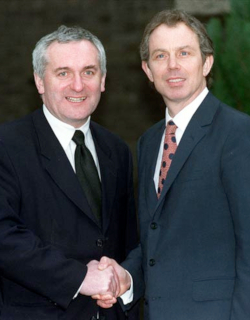
(From BBC News Online Network, Friday, February 26, 1999 | Pictured: Bertie Ahern with Tony Blair at the signing of the Good Friday Agreement in April 1998)
The Council of Europe currently has 47 member states, covers approximately 820 million people and operates with an annual budget of approximately half a billion euros.
The organisation is distinct from the 28-nation European Union (EU), although it is sometimes confused with it, partly because the EU has adopted the original European Flag which was created by the Council of Europe in 1955, as well as the European Anthem. No country has ever joined the EU without first belonging to the Council of Europe, which is an official United Nations Observer.
Unlike the EU, the Council of Europe cannot make binding laws, but it does have the power to enforce select international agreements reached by European states on various topics. The best known body of the Council of Europe is the European Court of Human Rights, which enforces the European Convention on Human Rights.
The Fine Gael–Labour Party coalition is defeated at the 1977 general election resulting in the resignation of Brendan Corish as Labour Party leader. Cluskey is elected the new leader of the Labour Party. In 1981, the Labour Party enters into a coalition government with Fine Gael. However, Cluskey has lost his seat in Dáil Éireann at the 1981 general election and with it the party leadership. He is appointed on July 1, 1981, as a Member of the European Parliament (MEP) for Dublin, replacing Michael O’Leary, who had resigned the seat after succeeding Cluskey as Labour leader.
On December 8, 1983, Cluskey resigns as Minister due to a fundamental disagreement over government policy about the Dublin Gas Company. He retains his Dáil seat in the 1987 general election.
Following his re-election Cluskey’s health begins to deteriorate. He dies in Dublin on May 7, 1989, following a long battle with cancer.
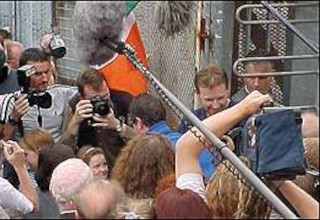
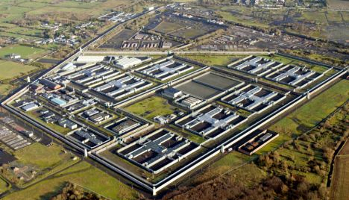
Bulldozers begin demolishing Northern Ireland‘s notorious HM Prison Maze, previously known as Long Kesh Detention Centre, on October 31, 2006. The prison once housed the most dangerous guerrillas from both sides of the province’s sectarian conflict.
Among the inmates at Maze are ten Irish nationalisthunger strikers who starved themselves to death in 1981. The prison has been empty since 2000, after the release of most guerrilla prisoners under the Good Friday Agreement, which ushered in relative peace after 30 years of fighting in which 3,600 people died.
A sports stadium, equestrian center, hotel, and shopping center are originally proposed for the 360-acre site in County Antrim. In January 2009, however, Sports Minister Gregory Campbell rules out the plan for a multi-sports stadium which has divided political and sporting opinion, opting instead to explore alternatives with the soccer, rugby, and Gaelic Athletic Association (GAA) authorities.
Northern Ireland first and deputy first ministers, Peter Robinson and Martin McGuinness, announce in 2010 that an agreement has been reached on building a peace and conflict resolution facility at the Maze site. It will also host the Royal Ulster Agricultural Society’s annual show. On February 2, 2012, European funding of £18m is approved for building the contentious conflict resolution centre.
Planning permission for the peace centre on the site of the former prison is granted on April 18, 2013. However, in June the Orange Order calls on unionist politicians to halt the peace centre plan, objecting to its location on the former prison site.
On August 15, 2013, Peter Robinson calls a halt to the peace centre plan. In a letter to Democratic Unionist Party (DUP) members, he says it would be wrong to proceed without a consensus about how it will operate. As a result, in October 2013 the European Union funding programme withdraws its £18m offer in financial support for the Maze peace centre.
That the Maze Prison development remains unrealised 16 years after the site’s closure testifies to the complexities involved. That the prospect of redevelopment has never been taken off the table affirms the ineluctable power ideas of profit still hold.
On July 24, 1997, Robinson announces her intention to resign as President of Ireland. The Irish Government states that her announcement “was not unexpected” and wishes her “every success.” She resigns by addressing a message to the Ceann Comhairle of Dáil Éireann and it takes effect at 1:00 PM on September 12.
Upon her resignation as President, the role of President is transferred to the Presidential Commission, which is comprised of the Chief Justice, the Ceann Comhairle, and the Cathaoirleach of the Seanad Éireann, from September 12 until November 11, 1997, when Mary McAleese is sworn in as the new President.
Media reports suggest that Robinson has been head-hunted for the post by Secretary General of the United NationsKofi Annan to assume an advocacy as opposed to administrative role, in other words to become a public campaigner outlining principles rather than the previous implementational and consensus-building model. The belief is that the post has ceased to be seen as the voice of general principles and has become largely bureaucratic. Robinson’s role is to set the human rights agenda within the organisation and internationally, refocusing its appeal.
Robinson is the first High Commissioner for Human Rights to visit Tibet, making her trip in 1998. During her tenure she criticises the Irish system of permits for non-EU immigrants as similar to “bonded labour” and criticises the United States’ use of capital punishment.
In 2001, Robinson chairs the Asia Regional Preparatory Meeting for the World Conference against Racism, Racial Discrimination, Xenophobia and related intolerances, which is held in Tehran, Iran. Representatives of the Simon Wiesenthal Centre, a Jewish group, and the Baha’i International Community are not permitted to attend. Robinson wears a headscarf at the meeting in conformance to the Iranians edict that all women attending the conference must wear a headscarf. Women who do not wear the headscarf are criticized, which Robinson says plays into the hands of religious conservatives.
She extends her intended single four-year term by a year following an appeal by Secretary General Annan to preside over the World Conference against Racism 2001 in Durban, South Africa. The conference proves controversial, and under continuing pressure from the United States, Robinson resigns her post in September 2002.






 seamus dubhghaill