seamus dubhghaill

Promoting Irish Culture and History from Little Rock, Arkansas, USA


Leave a comment

Death of David Neligan, Intelligence Agent & Police Detective

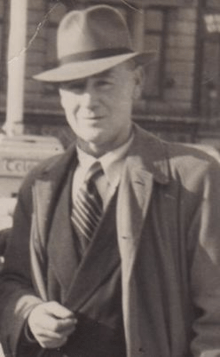
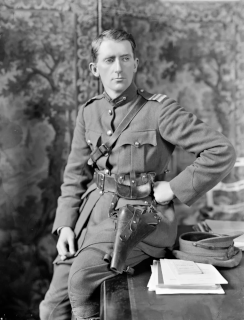
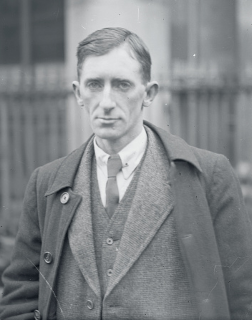
David Neligan, intelligence agent, police detective and superintendent known by his sobriquet “The Spy in the Castle,” dies on October 6, 1983, at St. Vincent’s Hospital in Dublin. He is a figure involved in the Irish War of Independence (1919–21) and subsequently becomes Director of Military Intelligence for the Irish Army after the Irish Civil War (1922–23).

Neligan is born on October 14, 1899, at TempleglantineCounty Limerick, where his parents, David and Elizabeth Neligan (née Mullan), are primary school teachers. He is an accomplished hurler with his local Templeglantine GAA club. In 1917, he joins the Irish Volunteers, the military organisation established in 1913 by Irish nationalists.

Against his father’s wishes, Neligan joins the Dublin Metropolitan Police (DMP) – also in 1917. Picking up travel documentation from the local Royal Irish Constabulary barracks, he declines a suggestion that he enlist in this armed rural force. After service as a uniformed constable with the DMP, he is promoted to Detective and transferred into the Department’s widely hated counterintelligence and anti-political-subversion unit, the G Division, in 1919. In May 1920, his elder brother Maurice (1895–1920), an Irish Republican Army (IRA) member and friend of Michael Collins, persuades him to resign from the DMP.

After his resignation, Neligan returns to his native County Limerick with the intention of joining the Limerick IRA. Shortly afterward, Maurice is killed in a motorcycle accident, near their home in Templeglantine. In the meantime, Neligan also receives word from a family friend that Michael Collins wishes to meet with him in Dublin. Collins is outraged that Neligan has been allowed to resign and persuades him to rejoin the DMP as a mole for the intelligence wing of the IRA. Along with Detectives Eamon Broy and James McNamara, Neligan acts as a highly valuable agent for Collins and passes on reams of vital information. He leaks documents about the relative importance of police and military personnel and also warns insurgents of upcoming raids and ambushes. There are unconfirmed rumors that Neligan might be a double agent working for British interests.

In 1921, Collins orders Neligan to let himself be recruited into MI5 and he uses the opportunity to memorise their passwords and the identities of their agents. All of this is passed on to Collins. After Broy and McNamara are dismissed in 1921, Neligan becomes Collins’ most important mole inside Dublin Castle.

On the outbreak of the Irish Civil War in June 1922, Neligan joins the Irish Army in Islandbridge Barracks with the rank of Commandant, and is attached to the Dublin Guard. He is involved in the seaborne assault on Fenit, County Kerry, and spends the remainder of the war serving as a military intelligence officer operating between Ballymullen BarracksTralee and Killarney. He is involved in atrocities alongside Paddy Daly including the Ballyseedy massacre, mock executions and the torture of prisoners using crowbars and is sometimes referred to as the “Butcher of Kerry.” In 1923, he is posted to Dublin, where he is promoted to Colonel and succeeds Diarmuid O’Hegarty as the Irish Army’s Director of Military Intelligence.

In 1924, Neligan hands over his post to the youthful Colonel Michael Joe Costello and takes command of the DMP, which still continues as a force separate from the newly established Garda Síochána, with the rank of Chief Superintendent. The next year he transfers to the Garda when the two police forces are amalgamated, and is instrumental in the foundation of the Garda Special Branch. When Éamon de Valera becomes head of government in 1932, his republican followers demand Neligan’s dismissal. Instead, Neligan is transferred to an equivalent post in the Irish Civil Service. In June 1935, he is married to fellow civil servant Sheila Maeve Rogan. They have one son and three daughters, and reside at 15 St. Helen’s Road, Booterstown, Dublin.

Neligan draws pensions from the DMP, the British MI5, the Garda Síochána and the Irish Civil Service. He also receives an “Old IRA” pension through the Department of Defence.

Leave a comment

Birth of Richard Mulcahy, Fine Gael Politician & Army General

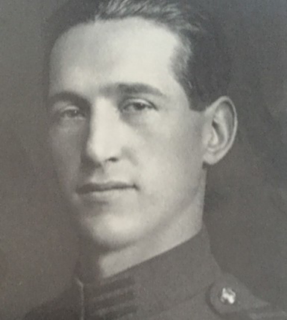
Richard James Mulcahy, Irish Fine Gael politician and army general, is born in Manor Street, Waterford, County Waterford, on May 10, 1886, the son of post office clerk Patrick Mulcahy and Elizabeth Slattery. He is educated at Mount Sion Christian Brothers School and later in Thurles, County Tipperary, where his father is the postmaster.

Mulcahy joins the Royal Mail (Post Office Engineering Dept.) in 1902, and works in Thurles, Bantry, Wexford and Dublin. He is a member of the Gaelic League and joins the Irish Volunteers at the time of their formation in 1913. He is also a member of the Irish Republican Brotherhood.

Mulcahy is second-in-command to Thomas Ashe in an encounter with the armed Royal Irish Constabulary (RIC) at Ashbourne, County Meath, during the 1916 Easter Rising, one of the few stand-out victories won by republicans in that week and generally credited to Mulcahy’s grasp of tactics. In his book on the Rising, Charles Townshend principally credits Mulcahy with the defeat of the RIC at Ashbourne, for conceiving and leading a flanking movement on the RIC column that had engaged with the Irish Volunteers. Arrested after the Rising, he is interned at Knutsford and at the Frongoch internment camp in Wales until his release on December 24, 1916.

On his release, Mulcahy immediately rejoins the republican movement and becomes commandant of the Dublin Brigade of the Irish Volunteers. He is elected to the First Dáil in the 1918 Irish general election for Dublin Clontarf. He is then named Minister for Defence in the new government and later Assistant Minister for Defence. In March 1918, he becomes Irish Republican Army (IRA) chief of staff, a position he holds until January 1922.

Mulcahy and Michael Collins are largely responsible for directing the military campaign against the British during the Irish War of Independence. During this period of upheaval in 1919, he marries Mary Josephine (Min) Ryan, sister of Kate and Phyllis Ryan, the successive wives of Seán T. O’Kelly. Her brother is James Ryan. O’Kelly and Ryan both later serve in Fianna Fáil governments.

Mulcahy supports the Anglo-Irish Treaty of December 1921. Archive film shows that Mulcahy, as Minister of Defence, is the Irish officer who raises the Irish tricolour at the first hand-over of a British barracks to the National Army in January 1922. He is defence minister in the Provisional Government on its creation and succeeds Collins, after the latter’s assassination, as Commander-in-Chief of the Provisional Government’s forces during the subsequent Irish Civil War.

Mulcahy earns notoriety through his order that anti-Treaty activists captured carrying arms are liable for execution. A total of 77 anti-Treaty prisoners are executed by the Provisional Government. He serves as Minister for Defence in the new Free State government from January 1924 until March 1924, but resigns in protest because of the sacking of the Army Council after criticism by the Executive Council over the handling of the “Army Mutiny,” when some National Army War of Independence officers almost revolt after he demobilises many of them at the end of the Irish Civil War. He re-enters the cabinet as Minister for Local Government and Public Health in 1927.

During Mulcahy’s period on the backbenches of Dáil Éireann his electoral record fluctuates. He is elected as TD for Dublin North-West at the 1921 and 1922 Irish general elections. He moves to Dublin North for the election the following year and is re-elected there in four further elections: June 1927, September 1927, 1932, and 1933.

Dublin North is abolished for the 1937 Irish general election, at which Mulcahy is defeated in the new constituency of Dublin North-East. However, he secures election to Seanad Éireann as a Senator, the upper house of the Oireachtas, representing the Administrative Panel. The 2nd Seanad sits for less than two months, and at the 1938 Irish general election he is elected to the 10th Dáil as a TD for Dublin North-East. Defeated again in the 1943 Irish general election, he secures election to the 4th Seanad by the Labour Panel.

After the resignation of W. T. Cosgrave as Leader of Fine Gael in 1944, Mulcahy becomes party leader while still a member of the Seanad. Thomas F. O’Higgins is parliamentary leader of the party in the Dáil at the time and Leader of the Opposition. Facing his first general election as party leader, Mulcahy draws up a list of 13 young candidates to contest seats for Fine Gael. Of the eight who run, four are elected. He is returned again to the 12th Dáil as a TD for Tipperary at the 1944 Irish general election. While Fine Gael’s decline had been slowed, its future is still in doubt.

Following the 1948 Irish general election Mulcahy is elected for Tipperary South, but the dominant Fianna Fáil party finishes six seats short of a majority. However, it is 37 seats ahead of Fine Gael, and conventional wisdom suggests that Fianna Fáil is the only party that can possibly form a government. Just as negotiations get underway, however, Mulcahy realises that if Fine Gael, the Labour Party, the National Labour Party, Clann na Poblachta and Clann na Talmhan band together, they would have only one seat fewer than Fianna Fáil and, if they can get support from seven independents, they will be able to form a government. He plays a leading role in persuading the other parties to put aside their differences and join forces to consign the then Taoiseach and Fianna Fáil leader Éamon de Valera, to the opposition benches.

Mulcahy initially seems set to become Taoiseach in a coalition government. However, he is not acceptable to Clann na Poblachta’s leader, Seán MacBride. Many Irish republicans had never forgiven him for his role in the Irish Civil War executions carried out under the Cosgrave government in the 1920s. Consequently, MacBride lets it be known that he and his party will not serve under Mulcahy. Without Clann na Poblachta, the other parties would have 57 seats between them — 17 seats short of a majority in the 147-seat Dáil. According to Mulcahy, the suggestion that another person serve as Taoiseach comes from Labour leader William Norton. He steps aside and encourages his party colleague John A. Costello, a former Attorney General of Ireland, to become the parliamentary leader of Fine Gael and the coalition’s candidate for Taoiseach. For the next decade, Costello serves as the party’s parliamentary leader while Mulcahy remained the nominal leader of the party.

Mulcahy goes on to serve as Minister for Education under Costello from 1948 until 1951. Another coalition government comes to power at the 1954 Irish general election, with Mulcahy once again stepping aside to become Minister for Education in the Second Inter-Party Government. The government falls in 1957, but he remains as Fine Gael leader until October 1959. In October the following year, he tells his Tipperary constituents that he does not intend to contest the next election.

Mulcahy dies from natural causes at the age of 85 in Dublin on December 16, 1971. He is buried in Littleton, County Tipperary.


Leave a comment

Death of W. R. E. Murphy, Soldier & Policeman

William Richard English-Murphy, DSO MC, Irish soldier and policeman known as W. R. E. Murphy, dies on March 5, 1975, in Ardee, County Louth. He serves as an officer with the British Army in World War I and later in the National Army. In the Irish Civil War, he is second in overall command of the National Army from January to May 1923. He is first Irish Commissioner of the Dublin Metropolitan Police (DMP) and the last Commissioner of the force before its merger with the Garda Síochána in 1925. Thereafter he is the Deputy Commissioner of the Gardaí until his retirement in 1955.

Murphy is born in Danecastle, Bannow, County Wexford, on January 26, 1890. His parents die when he is four years old. His grandparents also die during his childhood. He and his sister Mae (Mary Sarah) are separately raised by relatives in Belfast and Waterford. He is completing his master’s degree at Queens University Belfast (QUB) when he follows the call of John Redmond to join the war effort and ensure Irish independence. Ulster regiments reject him because he is Catholic. Seeking a regiment that treats Irish volunteers with respect, he joins the British Army in Belfast in 1915 as an officer cadet in the South Staffordshire Regiment.

Murphy serves in the Battle of Loos in 1915 and is wounded but returns to action for the start of the Battle of the Somme in July 1916. He becomes commanding officer of the 1st Battalion, the South Staffordshire Regiment in August 1918, reaching the rank of temporary lieutenant colonel. In 1918, his regiment is posted to the Italian Front, at the Piave River, where they are when the armistice is declared on November 4, 1918. He is granted the rank of substantive lieutenant colonel on the retired list on May 16, 1922.

After he returns to Ireland, Murphy resumes his career as a teacher. At some point, he joins the Irish Republican Army (IRA), an organisation fighting to end British rule in Ireland.

In December 1921, the Anglo-Irish Treaty is signed between British and Irish leaders, resulting in the setting up of the Irish Free State. Conflict over the Treaty among Irish nationalists ultimately leads to the outbreak of the Irish Civil War in June 1922. Murphy enlists as a general in the new National Army of the Irish Free State. After the start of the Irish Civil War, he is put in command of troops charged with taking posts held by the anti-Treaty IRA in Limerick.

At the Battle of Kilmallock in July–August 1922, Murphy is second in command to Eoin O’Duffy. His troops successfully dislodge the anti-Treaty IRA from positions around Kilmallock in County Limerick, but he is criticised for his tendency to “dig in” and resort to trench warfare rather than rapid offensive action.

Afterward, Murphy is put in overall command of Free State forces in County Kerry until January 1923. He lobbies Richard Mulcahy, commander in chief, for 250 extra troops, to bring his command up to 1,500 and help to put down the guerrilla resistance there. In the early stages of the guerrilla war, he organises large-scale “sweeps” to break up the republican concentrations in west Cork and east Kerry. These meet with little success, however. He exercises overall command in the county, but day-to-day operations are largely run by Brigadier Paddy Daly, of the Dublin Guard.

In October, in response to continuing guerrilla attacks on his troops, Murphy orders a nightly curfew to be put into place in Tralee.

In December, Murphy writes to Mulcahy that the “Irregular [Anti-Treaty] organisation here is well-nigh broken up,” and suggests the end of the war in the county is in sight. His optimistic prediction, however, proves premature.

On December 20, Murphy sentences four captured republican fighters to death under the fictitious “Public Safety Act” for possession of arms and ammunition. However, the sentences are to be called off if local guerrilla activity ceases. Humphrey Murphy, the local IRA Brigade commander, threatens to shoot eight named government supporters in reprisal if the men are executed. Eventually, their sentence is commuted to penal servitude.

In January 1923, Murphy is promoted from his command in Kerry to “responsibility for operations and organisation at the national level” in the army. Paddy Daly takes over as commanding officer in Kerry. Murphy later voices the opinion that Daly had been a bad choice, given his implication in the Ballyseedy massacre and other events of March 1923, in which up to 30 anti-Treaty prisoners were killed in the county.

Murphy leaves the National Army after the end of the Irish Civil War in May 1923 and becomes the first Irish commissioner of the Dublin Metropolitan Police. He later becomes deputy commissioner of the Garda Síochána, when DMP is merged with the new national police force in 1925. He holds this post until his retirement in 1955.

Murphy is at the forefront of efforts to close down Dublin’s red-light district, the Monto, in the early 1920s. Between 1923 and 1925, religious missions led by Frank Duff of the Legion of Mary, a Roman Catholic organisation, and Fr. R.S. Devane work to close down the brothels. They receive the cooperation of Murphy in his role as Dublin Police Commissioner, and the campaign ends with 120 arrests and the closure of the brothels following a police raid on March 12, 1925.

Murphy also holds the post for a time of president of the Irish Athletic Boxing Association.

Murphy lives with his daughter, Joan McMahon, in Ardee, County Louth, after his wife, Mary Agnes Fortune, dies on July 31, 1958. He dies on March 5, 1975, and is buried in St. Peter’s Churchyard, Bray, County Wicklow.

(Pictured: Major-General W. R. E. Murphy, as depicted on a Wills’ Irish Sportsmen cigarette card, from their boxing series)


Leave a comment

Birth of Bill Gannon, IRA Volunteer & Communist Party Member

Bill Gannon, well-known militant of the Irish Republican Army (IRA) and later a leading member of the Communist Party of Ireland, is born on June 23, 1902.

Gannon fights in the Irish War of Independence. In the Irish Civil War, he takes the anti-Treaty side and is among the force which seizes the Four Courts in Dublin.

After the defeat of his side, Gannon spends a considerable time under internment together with numerous others. He is completely unreconciled to the victory of the “Free Staters,” and together with two fellow detainees, Archie Doyle and Timothy Coughlin, take part in forming a secret “vengeance grouping.” The three vow that once free of imprisonment they will take revenge on their opponents, whom they consider traitors to the Irish cause.

Most such private revenge pacts are broken up by the IRA leadership when it reorganises after 1924, but Gannon and his two fellow conspirators persist and carry through their deadly aim. The act which first makes Gannon, Doyle and Coughlin well-known is the assassination of Minister for Justice Kevin O’Higgins. On Sunday, July 10, 1927, the three surprise O’Higgins on the Booterstown Avenue side of Cross Avenue in Blackrock, County Dublin, and shoot him down.

O’Higgins is especially hated by IRA members for having ordered the executions of seventy-seven of their fellows during the Civil War, an act for which he outspokenly took responsibility and refused to express any remorse. Moreover, he was a dominant member of the Free State government, and the conspirators had good reasons to believe that his death would weaken it.

None of the three is ever apprehended or charged with the assassination, though Coughlin is killed by a police informer in 1928 under circumstances which remain controversial up to the present. Gannon and Doyle benefit from the amnesty for IRA members issued by Éamon de Valera on his accession to power in 1932, and after that date they can openly admit their part in assassinating O’Higgins without fear of being prosecuted.

By this time, Gannon has already turned to the Left and become a leading member of the Communist Party of Ireland when it is refounded in 1933. This decision is possibly influenced by Donal O’Reilly, his lifelong companion who had been with him at the Four Courts and who already joined the Communist Party in its earlier incarnation under Roddy Connolly. The radical left-wing commentator Jack Cleary approvingly mentions Gannon as among the few IRA militants who have “given up the gun in favor of working-class politics.” This is in marked contrast to Gannon’s aforementioned fellow-assassin Archie Doyle, who continues to take part in IRA armed raids well into the 1940s.

Being an Irish Communist in these years carries, however, its own risks. Gannon is mentioned as being among the defenders of Connolly House, the party’s Dublin headquarters, when it is attacked and ultimately set on fire by a right-wing mob in 1933. In subsequent years Communists continue to suffer constant harassment, often descending into outright violence.

Gannon is at present mainly remembered for his major part in organising Irish volunteers (the Connolly Column) to fight on the Republican side in the Spanish Civil War, a work undertaken in close co-operation with Frank Ryan and Peadar O’Donnell, and which comes to overshadow his earlier fame (or notoriety) in connection with the O’Higgins assassination.

Gannon dies at the age of 63 on September 12, 1965. He gets a well-attended party funeral; his coffin being draped with a red flag and the Irish Tricolor.


1 Comment

Death of Richard Mulcahy, Fine Gael Politician & Army General

Richard James Mulcahy, Irish Fine Gael politician and army general, dies from natural causes in Dublin on December 16, 1971.

Mulcahy is born in Manor Street, Waterford, County Waterford, on May 10, 1886, the son of post office clerk Patrick Mulcahy and Elizabeth Slattery. He is educated at Mount Sion Christian Brothers School and later in Thurles, County Tipperary, where his father is the postmaster.

Mulcahy joins the Royal Mail (Post Office Engineering Dept.) in 1902, and works in Thurles, Bantry, Wexford and Dublin. He is a member of the Gaelic League and joins the Irish Volunteers at the time of their formation in 1913. He is also a member of the Irish Republican Brotherhood.

Mulcahy is second-in-command to Thomas Ashe in an encounter with the armed Royal Irish Constabulary (RIC) at Ashbourne, County Meath, during the 1916 Easter Rising, one of the few stand-out victories won by republicans in that week and generally credited to Mulcahy’s grasp of tactics. In his book on the Rising, Charles Townshend principally credits Mulcahy with the defeat of the RIC at Ashbourne, for conceiving and leading a flanking movement on the RIC column that had engaged with the Irish Volunteers. Arrested after the Rising, he is interned at Knutsford and at the Frongoch internment camp in Wales until his release on December 24, 1916.

On his release, Mulcahy immediately rejoins the republican movement and becomes commandant of the Dublin Brigade of the Irish Volunteers. He is elected to the First Dáil in the 1918 Irish general election for Dublin Clontarf. He is then named Minister for Defence in the new government and later Assistant Minister for Defence. In March 1918, he becomes Irish Republican Army (IRA) chief of staff, a position he holds until January 1922.

Mulcahy and Michael Collins are largely responsible for directing the military campaign against the British during the Irish War of Independence. During this period of upheaval in 1919, he marries Mary Josephine (Min) Ryan, sister of Kate and Phyllis Ryan, the successive wives of Seán T. O’Kelly. Her brother is James Ryan. O’Kelly and Ryan both later serve in Fianna Fáil governments.

Mulcahy supports the Anglo-Irish Treaty of December 1921. Archive film shows that Mulcahy, as Minister of Defence, is the Irish officer who raises the Irish tricolour at the first hand-over of a British barracks to the National Army in January 1922. He is defence minister in the Provisional Government on its creation and succeeds Collins, after the latter’s assassination, as Commander-in-Chief of the Provisional Government’s forces during the subsequent Irish Civil War.

Mulcahy earns notoriety through his order that anti-Treaty activists captured carrying arms are liable for execution. A total of 77 anti-Treaty prisoners are executed by the Provisional Government. He serves as Minister for Defence in the new Free State government from January 1924 until March 1924, but resigns in protest because of the sacking of the Army Council after criticism by the Executive Council over the handling of the “Army Mutiny,” when some National Army War of Independence officers almost revolt after he demobilises many of them at the end of the Irish Civil War. He re-enters the cabinet as Minister for Local Government and Public Health in 1927.

During Mulcahy’s period on the backbenches of Dáil Éireann his electoral record fluctuates. He is elected as TD for Dublin North-West at the 1921 and 1922 Irish general elections. He moves to Dublin City North for the election the following year and is re-elected there in four further elections: June 1927, September 1927, 1932, and 1933.

Dublin City North is abolished for the 1937 Irish general election, at which Mulcahy is defeated in the new constituency of Dublin North-East. However, he secures election to Seanad Éireann as a Senator, the upper house of the Oireachtas, representing the Administrative Panel. The 2nd Seanad sits for less than two months, and at the 1938 Irish general election he is elected to the 10th Dáil as a TD for Dublin North-East. Defeated again in the 1943 Irish general election, he secures election to the 4th Seanad by the Labour Panel.

After the resignation of W. T. Cosgrave as Leader of Fine Gael in 1944, Mulcahy becomes party leader while still a member of the Seanad. Thomas F. O’Higgins is parliamentary leader of the party in the Dáil at the time and Leader of the Opposition. Facing his first general election as party leader, Mulcahy draws up a list of 13 young candidates to contest seats for Fine Gael. Of the eight who run, four are elected. He is returned again to the 12th Dáil as a TD for Tipperary at the 1944 Irish general election. While Fine Gael’s decline had been slowed, its future is still in doubt.

Following the 1948 Irish general election Mulcahy is elected for Tipperary South, but the dominant Fianna Fáil party finishes six seats short of a majority. However, it is 37 seats ahead of Fine Gael, and conventional wisdom suggests that Fianna Fáil is the only party that can possibly form a government. Just as negotiations get underway, however, Mulcahy realises that if Fine Gael, the Labour Party, the National Labour Party, Clann na Poblachta and Clann na Talmhan band together, they would have only one seat fewer than Fianna Fáil and, if they can get support from seven independents, they will be able to form a government. He plays a leading role in persuading the other parties to put aside their differences and join forces to consign the then Taoiseach and Fianna Fáil leader Éamon de Valera, to the opposition benches.

Mulcahy initially seems set to become Taoiseach in a coalition government. However, he is not acceptable to Clann na Poblachta’s leader, Seán MacBride. Many Irish republicans had never forgiven him for his role in the Irish Civil War executions carried out under the Cosgrave government in the 1920s. Consequently, MacBride lets it be known that he and his party will not serve under Mulcahy. Without Clann na Poblachta, the other parties would have 57 seats between them — 17 seats short of a majority in the 147-seat Dáil. According to Mulcahy, the suggestion that another person serve as Taoiseach comes from Labour leader William Norton. He steps aside and encourages his party colleague John A. Costello, a former Attorney General of Ireland, to become the parliamentary leader of Fine Gael and the coalition’s candidate for Taoiseach. For the next decade, Costello serves as the party’s parliamentary leader while Mulcahy remained the nominal leader of the party.

Mulcahy goes on to serve as Minister for Education under Costello from 1948 until 1951. Another coalition government comes to power at the 1954 Irish general election, with Mulcahy once again stepping aside to become Minister for Education in the Second Inter-Party Government. The government falls in 1957, but he remains as Fine Gael leader until October 1959. In October the following year, he tells his Tipperary constituents that he does not intend to contest the next election.

Mulcahy dies from natural causes at the age of 85 in Dublin on December 16, 1971. He is buried in Littleton, County Tipperary.


Leave a comment

Birth of Archie Doyle, Anti-Treaty Irish Republican Army Member

Archie Doyle, one of three anti-Treaty members of the Irish Republican Army (IRA) who assassinated the Irish Minister for Justice Kevin O’Higgins, is born on September 29, 1903. He has a long subsequent career in the organisation’s ranks.

Doyle fights in the Irish War of Independence (1919-21) and takes the anti-Treaty side in the Irish Civil War (1922-23) and is subsequently interned among numerous others. Together with two fellow-detainees, Timothy Coughlin and Bill Gannon, he takes part in forming a secret “vengeance grouping.” The three vow that once free of imprisonment they will take revenge on their opponents, whom they consider traitors to the Irish cause.

Most such private revenge pacts are broken up by the IRA leadership when it reorganises following 1924, but Doyle and his two fellow conspirators persist and carry through their deadly aim. On July 10, 1927, the three surprised O’Higgins on his way to Mass at the Booterstown Avenue side of Cross Avenue in Blackrock, Dublin, and shoot him down.

O’Higgins is especially hated by IRA members for having ordered the executions of seventy-seven of their fellows during the Civil War, an act for which he outspokenly takes responsibility and refuses to express any remorse. Moreover, he is a dominant member of the Irish Free State government, and the conspirators have good reasons to believe that his death would weaken it.

The three make their escape and are not apprehended. However, Timothy Coughlin is shot to death by police informer Sean Harling on the night of January 28, 1928, on Dublin’s Dartry Road, under circumstances which remain controversial up to the present. A second IRA man is known to have been with Coughlin that night, in surveillance of Harling’s home, and escapes unharmed. It is believed that Doyle is that second man, though this point, as many other details of this still rather mysterious affair, remains not quite certain.

Doyle is among the beneficiaries of the amnesty issued by Éamon de Valera when he comes to power in 1932, under which numerous IRA men are released from prison and the charges against others dropped. In later times Doyle openly admits his part in the killing of O’Higgins, and indeed takes pride in it, without fear of prosecution.

With the end of the IRA’s alliance with de Valera and the increasing confrontation between them, Doyle, now a veteran highly respected in the IRA circles, becomes deeply involved in the organisation’s 1940s campaigns. Harry, the memoirs of IRA man Harry White, make repeated admiring references to “Archie Doyle of Dublin, the Tan War veteran who had fought through it all.”

During the IRA’s Northern campaign, Doyle is said to have participated in the abortive raid on the British barracks at Crossmaglen, County Armagh, on September 2, 1942, in retaliation for the execution of Tom Williams earlier that morning. The IRA unit, some twenty men in a commandeered lorry and accompanying car, is discovered by a passing Royal Ulster Constabulary (RUC) patrol near the village of Cullaville. Doyle is mentioned in White’s memoirs as having “jumped out of the car, Thompson in hand, and started shooting at the RUC.” Since the element of surprise is lost, the attack on the barracks has to be cancelled.

A week later, on September 9, White mentions Doyle as having commanded the assassination of Sergeant Denis O’Brien, Irish Special Branch detective and himself a former IRA man, near Dublin. It is a highly controversial affair, opposed by the IRA GHQ in Belfast as damaging to the Northern campaign, and precipitates a massive manhunt by the Irish police. It is IRA Chief of Staff Charlie Kerins who is caught two years later, charged with the O’Brien assassination and eventually executed for it. White, however, claims that it is Doyle who actually commands that action, on Kerins’s orders. Doyle, who openly spoke of his part in killing O’Higgins, seems far more reticent about this part of his career.

In 1943 Doyle is assigned as the IRA’s Quartermaster General in Belfast.

On July 1, 1943, Doyle is mentioned as having participated, together with Kerins and with Jackie Griffith, in an operation of “fund-raising” for the hard-pressed IRA (i.e., robbery). The three men arrive on bikes at the gates of Player Wills factory on the South Circular Road, Dublin, and with scarves around their faces stop at gunpoint a van loaded with some £5,000 for wages and drive away with the van and the money.

Griffith is shot down by the police in Dublin less than a week later, in what is charged to be an extrajudicial assassination, and Kerins is caught in 1944 and executed, becoming a major IRA martyr. Doyle, however, continually survives decades of a very dangerous way of life and manages to die of old age. He dies in St. James’s Hospital in Dublin in 1980.