Bowman works mostly as a freelance journalist. He co-presents a radio show, The Rude Awakening, on Dublin’s FM104 with Scott Williams, George Hellis and Margaret Callanan for two years between 1993 and 1994 before joining the Sunday Independent newspaper as a columnist. He later presents television programmes on RTÉ, such as the quiz show Dodge the Question.
Bowman dies in a fall at his home on Fitzgerald Street in Harold’s Cross, Dublin, on March 6, 2000. He is found lying in the kitchen near the foot of the stairs. His death is believed to be the result of a fall down the stairs or from a stool, which is found nearby. He is buried in Glasnevin Cemetery, Glasnevin, County Dublin. Tributes are paid to him by party political leaders. He is survived by his parents, his sister Emma, his brothers Abie and Daniel and his only son Saul Philbin Bowman.
TaoiseachBertie Ahern says that he is deeply saddened on learning the news of Bowman’s death. His thoughts and prayers he says are with his family at this very sad time.
The leader of the Labour Party, Ruairi QuinnTD, expresses his shock and sadness on hearing of the death. He says that Bowman was without doubt one of the bright lights of Irish journalism. He extends his deepest sympathies to Bowman’s son, Saul, and to his parents John and Eimer.
The Fine Gael leader, John Bruton, says that few people he knew brought a smile to the face of anyone they met more readily. He says that his infectious good humour and iconoclastic attitude to life conveyed itself to all with whom he came into contact. He adds that Bowman will be missed for many years to come.
The editor of the Sunday Independent, Aengus Fanning, says that Bowman was one of the most brilliant journalists of his generation.
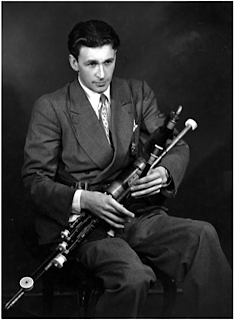
Séamus Ennis (Irish: Séamas Mac Aonghusa), Irish musician, singer and Irish music collector, dies in Naul, County Dublin, on October 5, 1982. He is most noted for his uilleann pipe playing and is partly responsible for the revival of the instrument during the twentieth century, having co-founded Na Píobairí Uilleann, a nonprofit organisation dedicated to the promotion of the uilleann pipes and its music. He is recognised for preserving almost 2,000 Irish songs and dance-tunes as part of the work he does with the Irish Folklore Commission. He is widely regarded as one of the greatest uilleann pipers of all time.
Ennis’s father, James, works for the Irish civil service at Naul, County Dublin. In 1908, James Ennis is in a pawn shop in London and purchases a bag containing the pieces of a set of old uilleann pipes. They were made in the mid nineteenth century by Coyne Pipemakers of Thomas Street in Dublin. In 1912, he comes in first in the Oireachtas competition for warpipes and second in the uilleann pipes. He is also a prize-winning dancer. In 1916, he marries Mary Josephine McCabe, an accomplished fiddle player from County Monaghan. They have six children, Angela, Séamus, Barbara, and twins, Cormac and Ursula (Pixie) and Desmond. Séamus is born on May 5, 1919, in Jamestown in Finglas, Dublin. James Ennis is a member of the Fingal trio, which includes Frank O’Higgins on fiddle and John Cawley on flute, and performs regularly with them on the radio. At the age of thirteen, Séamus starts receiving lessons on the pipes from his father. He attends a Gaelscoil, Cholmcille, and a Gaelcholáiste, Coláiste Mhuire, which gives him a knowledge of the Irish language that serves him well in later life. He sits in an exam to become Employment Exchange clerk but is too far down the list to be offered a job. He is twenty and unemployed.
Colm Ó Lochlainn is editor of Irish Street Ballads and a friend of the Ennis family. In 1938, Ennis confides in Colm that he intends to move to England to join the British Army. Colm immediately offers him a job at The Three Candles Press. There Ennis learns all aspects of the printing trade. This includes writing down slow airs for printed scores – a skill which later proves important. Colm is director of an Irish language choir, An Claisceadal, which Ennis joins. In 1942, during The Emergency, shortages and rationing mean that things become difficult in the printing trade. Professor Seamus Ó Duilearge of the Irish Folklore Commission hires the 23-year-old to collect songs. He is given “pen, paper and pushbike” and a salary of three pounds per week. Off he goes to Connemara.
From 1942 to 1947, working for the Irish Folklore Commission, Ennis collects songs in west Munster; counties Galway, Cavan, Mayo, Donegal, Kerry; the Aran Islands and the Scottish Hebrides. His knowledge of Scottish Gaelic enables him to transcribe much of the John Lorne Campbell collection of songs. Elizabeth Cronin of Ballyvourney, County Cork, is so keen to chat to Ennis on his visits that she writes down her own songs and hands them over as he arrives, and then gets down to conversation. He has a natural empathy with the musicians and singers he meets. In August 1947, he starts work as an outside broadcast officer with Raidió Éireann. He is a presenter and records Willie Clancy, Seán Reid and Micho Russell for the first time. There is an air of authority in his voice. In 1951, Alan Lomax and Jean Ritchie arrived from the United States to record Irish songs and tunes. The tables are turned as Ennis becomes the subject of someone else’s collection. There is a photograph from 1952/53 showing Ritchie huddled over the tape recorder while Ennis plays uilleann pipes.
Late in 1951, Ennis joins the BBC. He moves to London to work with producer Brian George. In 1952, he marries Margaret Glynn. They have two children, the organist Catherine Ennis and Christopher. His job is to record the traditional music of England, Scotland, Wales and Ireland and to present it on the BBC Home Service. The programme is called As I Roved Out and runs until 1958. Meeting up with Alan Lomax again, he is largely responsible for the album Folk and Primitive Music (volume on Ireland) on the Columbia Records label.
In 1958, after his contract with the BBC is not renewed, Ennis starts doing freelance work, first in England then back in Ireland, with the new TV station Teilifis Éireann. Soon he is relying totally on his musical ability to make a living. About this time, his marriage breaks down and he returns to Ireland. He suffers from tuberculosis and is ill for some time. In 1964, he performs at the Newport Folk Festival. His father gives him the pipes he had bought in 1908. Although most pipers can be classed as playing in a tight style or an open style, Ennis is in between. He is a master of the slow air, knowing how to decorate long notes with taste and discreet variation.
Two events will live in legend among pipers. The first is in Bettystown, County Meath, in 1968, when the society of Irish pipers, Na Píobairí Uilleann, is formed. Breandán Breathnach is playing a tape of his own piping. Ennis asks, “What year?” Breandán replies, “1948.” Ennis says, “So I thought.” For a couple of hours the younger players perform while Ennis sits in silence. Eventually he is asked to play. Slowly he takes off his coat and rolls up his sleeves. He spends 20 minutes tuning up his 130-year-old pipes. He then asks the gathering whether all the tape recorders are ready and proceeds to play for over an hour. To everyone’s astonishment he then offers his precious pipes to Willie Clancy to play a set. Clancy demurs but eventually gives in. Next, Liam O’Flynn is asked to play them, and so on, round the room. The second unforgettable session is in Dowlings’ Pub in Prosperous, County Kildare. Christy Moore is there, as well as most of the future members of Planxty.
Ennis never runs any school of piping but his enthusiasm infuses everyone he meets. In the early 1970s, he shares a house with Liam O’Flynn for almost three years. Finally, he purchases a piece of land in Naul and lives in a mobile home there. One of his last performances is at the Willie Clancy Summer School in 1982. He dies on October 5, 1982. His pipes are bequeathed to Liam O’Flynn. Radio producer Peter Browne produces a compilation of his performances, called The Return from Fingal, spanning 40 years.
Séamus Ennis Road in his native Finglas is named in his honour. The Séamus Ennis Arts Centre in Naul is opened in his honour, to commemorate his work and to promote the traditional arts. He is also the subject of Christy Moore’s song “The Easter Snow.” This is the title of a slow air Ennis used to play, and one after which he named his final home in Naul.
Born on March 13, 1831, in Lisburn, County Antrim, McCloy is the youngest of five children, born to Peter McCloy, a painter, and his wife Martha Phelan. He studies at the School of Design in Belfast from 1850 to 1851 while serving an apprenticeship in engraving, with J and T Smyth. He then spende a year at the Central School, Somerset House in London before being appointed Master at the Waterford School of Art around 1853, when he also becomes a visiting instructor to several other institutions. In the spring of 1865 he marries his student, the Waterford artist Ellen Lucy Harris, the fourth daughter of a banker named Richard Harris. The dismembered corpse of McCloy’s mother is recovered from the River Suir in September of the same year. She had been missing since the previous November.
McCloy shows just once at the Royal Academy of Arts with a work entitled The Haunt of Meditation in 1859. He exhibits infrequently at the Royal Hibernian Academy between 1862 and 1882, where he displays sixteen works in that time. He displays eleven works in the 1876 Industrial Exhibition at Belfast’s Ulster Hall. In 1880, he shows at Rodman and Company in London where the writer in the Belfast Telegraph indicates that McCloy is becoming a popular artist and is receiving extensive patronage.
After a year-long illness that prevents him from working, McCloy dies in Balham, South London, on October 4, 1904. He is survived by his wife, Ellen, and nine daughters. The Lisburn Museum in his hometown offers a belated retrospective of his work in 1981 to mark the one-hundred fiftieth anniversary of his birth. The exhibition is the first known solo display of McCloy’s work and consists of 58 works. The catalogue for this show is written by Eileen Black and funded by the Arts Council of Northern Ireland.
Bowman works mostly as a freelance journalist. He co-presents a radio show, The Rude Awakening, on Dublin’s FM104 with Scott Williams, George Hellis and Margaret Callanan for two years between 1993 and 1994 before joining the Sunday Independent newspaper as a columnist. He later presents television programmes on RTÉ, such as the quiz show Dodge the Question.
Bowman dies in a fall at his home on Fitzgerald Street in Harold’s Cross, Dublin, on March 6, 2000. He is found lying in the kitchen near the foot of the stairs. His death is believed to be the result of a fall down the stairs or from a stool, which is found nearby.
TaoiseachBertie Ahern says that he is deeply saddened on learning the news of Bowman’s death. His thoughts and prayers he says are with his family at this very sad time.
The leader of the Labour Party, Ruairí QuinnTD, expresses his shock and sadness on hearing of the death. He says that Bowman was without doubt one of the bright lights of Irish journalism. He extends his deepest sympathies to Bowman’s son, Saul, and to his parents John and Eimer.
The Fine Gael leader, John Bruton, says that few people he knew brought a smile to the face of anyone they met more readily. He says that his infectious good humour and iconoclastic attitude to life conveyed itself to all with whom he came into contact. He adds that Bowman will be missed for many years to come.
The editor of the Sunday Independent, Aengus Fanning, says that Bowman was one of the most brilliant journalists of his generation.
Bowman is survived by his parents, his sister Emma, his brothers Abie and Daniel and his only son Saul Philbin Bowman.
Jimmy Magee, Irish sports broadcaster known as The Memory Man, is born on January 31, 1935, in New York City. He spends over half a century in sports broadcasting, and presents radio and television coverage of the Olympic Games since 1968 and the FIFA World Cup since 1966. By the time of his retirement he is the longest-serving sports commentator in the English-speaking world.
Magee is born to Patrick (Paddy) Magee and his wife Rose (née Mackin). The family returns to Ireland shortly after his birth. He and his three siblings are subsequently raised in Cooley, County Louth. As a child he is influenced by the sports commentary of the legendary Gaelic games broadcaster Michael O’Hehir. He recalls commentating as a seven-year-old for his next-door neighbour on a variety of imaginary games that the young Magee is also playing in. He also speaks of making up his own radio commentary in a field at a young age.
After being educated locally, Magee secures a full-time clerical post with Dundalk, Newry and Greenore Railway. While still working at the Railway he begins his broadcasting career. He starts out as a reporter for the Radio Éireann programme Junior Sports Magazine. Other contributors on the programme are Jim Tunney and Peter Byrne, former football correspondent with The Irish Times. On leaving his Railway job, he presents a number of sponsored radio programmes before concentrating on sport. He is a producer, presenter and script writer for Radio Éireann’s sponsored programmes in the 1950s and 1960s.
Magee and his wife Marie are married on October 11, 1955, and have five children: Paul, a soccer player with Shamrock Rovers F.C. (winning the League of Ireland Cup in 1977), who died of motor neuron disease, in May 2008, Linda (b. 1959), June (b. 1961), Patricia (b. 1962), and Mark (b. 1970).
Magee’s column or quiz appears in every single publication of the Sunday World since the first edition in 1973.
Magee is also a staple of RTÉ’s coverage of the Olympic Games. Beginning at the 1968 Summer Olympics in Mexico City, he attends the eleven subsequent Olympic games as a commentator with RTÉ. In 2012, he commentates on the boxing for RTÉ at the 2012 Summer Olympics in London, including Katie Taylor‘s gold medal-winning fight. At the 2016 Summer Olympics, he provides commentary on the football.
From 1987 to 1998 Magee hosts Know Your Sport, a sports-themed quiz show, along with George Hamilton. His broadcasting career also sees him provide commentary for over 200 international football games, 30 European Cup finals, multiple Tour de France cycle races, World Athletic Championships and boxing. He also narrates numerous videos on sport in general such as The Purple and Gold, Meath Return to Glory, etc.
A freelancer, Magee works for Channel 4 in 1994 and signs for UTV in 1995 on a three-year contract where a lifetime ambition of commentating on All-Ireland Finals is achieved. He commentates on three finals in both hurling and football.
Magee launches his memoir, Memory Man, in 2012. Some of his one-liners in commentaries have become famous or infamous, what are affectionately known in the broadcasting industry as Colemanballs after the famed commentating clangers of BBC broadcaster David Coleman.
In the emotionally trying year of 1989, Magee’s mother and wife die within months of each other, Marie dying at the young age of 54.
Magee dies on September 20, 2017, after a short illness. Many tributes are made to him including TaoiseachLeo Varadkar who says, “His commentaries were legendary and based on a breadth of sporting knowledge that was peerless.” RTÉ Head of Sport Ryle Nugent says, “It’s hard to put it into words, the man meant an inordinate amount to so many people, I think he was the soundtrack to many generations.”
In 1972 Magee wins a Jacob’s Award for his radio sports commentaries. In 1989, he is the subject of a special tribute show on The Late Late Show. At the 2012 Summer Olympics in London, the International Olympic Committee presents him with a replica of its torch.
Moloney, aged 55, who lives alone at Portobello Place on the south side of Dublin, is on his way home when he is attacked. He is punched in the side of the head and falls to the ground as the two men in their 20s attack him. The incident is caught on CCTV and police make quick arrests just hours after the murder. Officers believe Moloney may have been robbed as he lay unconscious on the ground, as his wallet and identification are missing.
A murder investigation is launched after a post mortem examination confirms that Moloney had died from serious head injuries as a result of the assault.
Formerly with The Irish News in Belfast and the Irish Independent in Dublin, Moloney had been freelancing on his return from a spell teaching in Vietnam. His final article, on the Ulster Bank IT crisis, appears in the Irish edition of the Daily Mail just hours before his death.
Group Managing Editor of Independent Papers Ireland Ltd. Michael Denieffe pays tribute to Moloney in telling the Irish Independent, “On behalf of Independent Newspapers, I want to express our shock at the untimely death of our former colleague, Eugene Moloney. He was a resourceful and fearless journalist. It is a tragic irony that Eugene has died in an incident similar to many he would have recorded in his years working for the Evening Herald and the Irish Independent. Our sympathies go to his family and friends.”
The Irish News editor Noel Doran tells the paper he is deeply shocked by the death of his good friend Eugene Moloney. “Eugene and I studied journalism together at the former College of Business Studies in Belfast in the late 1970s, and went on to share flats over a number of years. Eugene was a talented and respected reporter with The Irish News during the height of the Troubles and was also the paper’s music columnist for a lengthy period.”
(From: “Journalist Eugene Moloney murdered as attempted robbery goes wrong in Dublin” by Patrick Counihan, IrishCentral, http://www.irishcentral.com, June 25, 2012)
McCollum joins UTV in March 2000. As well as presenting and reporting for UTV Sport, she has also presented UTV News bulletins and Sport on Sunday.
In February 2009, McCollum announces she is leaving UTV as part of a voluntary redundancy scheme at the station. In an interview with a regional newspaper, she announces her intention to become a freelance broadcast journalist.
Following her departure from UTV, McCollum builds up her portfolio with BBC Northern Ireland. She becomes synonymous with many of Northern Ireland television’s highest profile events. She co-hosts BBC Proms in the Park at Titanic Slipways, the Olympic flame arriving at Belfast City Hall and the Clipper Homecoming in Derry.
McCollum also presents and reports on two series of the popular BBC Northern Ireland consumer programme In Your Corner and covers many major sporting events including the North West 200, Commonwealth Games in Manchester, Northern Ireland’s Football World Cup qualifiers, Tennis Legends in Belfast and the Belfast International Horse Show. She is also a regular presenter on Balmoral Agricultural Show and Children In Need programmes and hosts the second glittering ‘Celebrity Strictly Come Dancing’ extravaganza for Children in Need.
McCollum and Clarke have two children and reside in her hometown of Newtownabbey, County Antrim.
Alfred Charles William Harmsworth, Viscount Northcliffe, one of the most successful newspaper publishers in the history of the British press and a founder of popular modern journalism, is born on July 15, 1865 in Chapelizod, near Dublin.
After an impoverished childhood and a few attempts at making a quick fortune, young Harmsworth embarks on freelance journalism as a contributor to popular papers, rises to editorial positions, and starts a paper called Answers to Correspondents. After some difficulty in securing financial backing, he begins publication, soon shortening the name to Answers. As the paper gains public favour, he is joined by his brother Harold, whose financial ability and capacity for attracting advertising, combined with Alfred’s genius for sensing the public taste, make it a success. Answers is followed by many other inexpensive popular periodicals, chief among them Comic Cuts and Forget-Me-Not, for the new reading public of women. These form the basis for what becomes Amalgamated Press, the largest periodical-publishing empire in the world.
In 1894 Harmsworth enters the newspaper field, purchasing the nearly bankrupt London Evening News and transforming it into a popular newspaper with brief news reports, a daily story, and a column for women. Within a year circulation grows to 160,000 copies, and profits are substantial. Conceiving the idea of a chain of halfpenny morning papers in the provinces, he purchases two papers in Glasgow, Scotland, and merges them into the Glasgow Daily Record. He then decides to experiment with a popular national daily in London. The Daily Mail, first published on May 4, 1896, is a sensational success. Announced as “the penny newspaper for one halfpenny” and “the busy man’s daily journal,” it is exactly suited to the new reading public. All news stories and feature articles are kept short, and articles of interest to women, political and social gossip, and a serial story are made regular features. With its first issue, the Daily Mail establishes a world record in daily newspaper circulation, a lead it never loses during Harmsworth’s lifetime.
Next Harmsworth purchases the Weekly Dispatch when it is nearly bankrupt and transforms it into the Sunday Dispatch, the biggest-selling Sunday newspaper in the country. In 1903 he founds the Daily Mirror, which successfully exploits a new market as a picture paper, with a circulation rivaling that of the Daily Mail. He saves The Observer from extinction in 1905, the year in which he is made Baron Northcliffe. In 1908 he reaches the pinnacle of his career by securing control of The Times, which he transforms from a 19th-century relic into a modern newspaper.
Northcliffe’s contributions to the British effort in World War I begin with his early exposure in the Daily Mail of the British army’s shell shortage. His criticisms of Lord Kitchener arouse intense resentment in some quarters, but he also presses for the creation of a separate Ministry of Munitions and for the formation in 1915 of a wartime coalition government. For his service as head of the British war mission in the United States in 1917, he is created a viscount. He acts as the British government’s director of propaganda aimed at Germany and other enemy countries in 1918. By this time Northcliffe’s press empire appears to hold such power over public opinion that he tries unsuccessfully to influence the composition of Prime MinisterDavid Lloyd George’s cabinet. Always unpredictable, he becomes the victim of a megalomania that damages his judgment and leads to the breakdown that precedes his death.
Harmsworth’s health declines during 1921 due mainly to a streptococcal infection. He goes on a world tour to revive himself, but it fails to do so. He dies of endocarditis in a hut on the roof of his London house on August 14, 1922, leaving three months’ pay to each of his six thousand employees. The viscountcy, barony, and baronetcy of Northcliffe become extinct upon his death. His body is buried at East Finchley Cemetery in North London.
Northcliffe’s success as a publisher rests on his instinctive understanding of the new reading public that had been created by compulsory education. Though he wants political power, the effect of his newspapers upon public affairs is generally considered to have been smaller than he believed. His influence lay rather in changing the direction of much of the press away from its traditional informative and interpretative role to that of the commercial exploiter and entertainer of mass publics.



 seamus dubhghaill