seamus dubhghaill

Promoting Irish Culture and History from Little Rock, Arkansas, USA


Leave a comment

Birth of Activist & Feminist Hanna Sheehy-Skeffington

hanna-sheehy-skeffington

Johanna Mary “Hanna” Sheehy-Skeffington, Republican activist and feminist, is born in Kanturk, County Cork, on May 24, 1877.

Sheehy is the eldest daughter of Elizabeth McCoy and David Sheehy, an ex-Fenian and Member of Parliament (MP) for the Irish Parliamentary Party, representing South Galway. One of her uncles, Father Eugene Sheehy, is known as the Land League Priest, and his activities land him in prison. He is also one of Éamon de Valera‘s teachers in Limerick. When Hanna’s father becomes an MP in 1887, the family moves to Drumcondra, Dublin.

Sheehy is educated at the Dominican Convent on Eccles Street, where she is a prize-winning pupil. She then enrolls at St. Mary’s University College, a third level college for women established by the Dominicans in 1893, to study modern French and German. She sits for examinations at Royal University of Ireland and receives a Bachelor of Arts degree in 1899, and a Master of Arts Degree with first-class honours in 1902. This leads to a career as a teacher in Eccles Street and an examiner in the Intermediate Certificate examination.

Sheehy marries Francis Skeffington in 1903, and they both take the surname Sheehy Skeffington, which they do not hyphenate but use as a double name. In 1908, they found the Irish Women’s Franchise League, a group aiming for women’s voting rights.

Sheehy-Skeffington gets into numerous scuffles with the law. She is jailed in 1912 for breaking windows of government buildings in support of suffrage as part of an IWFL campaign. That same year she also throws a hatchet at visiting British Prime Minister Herbert Asquith. She loses her teaching job in 1913 when she is arrested and imprisoned for three months after throwing stones at Dublin Castle and assaulting a police officer in a feminist action. While in jail she goes on hunger strike and is released under the Prisoner’s Temporary Discharge of Ill Health Act but is soon rearrested.

Being free from her teaching job enables Sheehy-Skeffington to devote more time to the fight for suffrage. She is influenced by James Connolly and during the 1913 lock-out works with other suffragists in Liberty Hall, providing food for the families of the strikers.

She strongly opposes participation in World War I which breaks out in August 1914 and is prevented by the British government from attending the International Congress of Women held in The Hague in April 1915. The following June her husband is imprisoned for anti-recruiting activities. He is later shot dead during the 1916 Easter Rising after having been arrested by British soldiers.

Sheehy-Skeffington refuses compensation for her husband’s death, which is offered on condition of her ceasing to speak and write about the murder. Rather, she travels to the United States to publicise the political situation in Ireland. In October 1917, she is the sole Irish representative to League for Small and Subject Nationalities where, along with several other contributors, she is accused of pro-German sympathies. She publishes British Militarism as I Have Known It, which is banned in the United Kingdom until after the World War I. Upon her return to Britain she is once again imprisoned, this time in Holloway prison. After release, Sheehy-Skeffington attends the 1918 Irish Race Convention in New York City and later supports the anti-Treaty Irish Republican Army (IRA) during the Irish Civil War.

In 1926, Sheehy-Skeffington becomes a founding member of Fianna Fáil and is elected to the party’s Ard Comhairle. During the 1930s, she is assistant editor of An Phoblacht. In January 1933, she is arrested in Newry for breaching an exclusion order banning her from Northern Ireland. At her trial she says, “I recognize no partition. I recognize it as no crime to be in my own country. I would be ashamed of my own name and my murdered husband’s name if I did…Long live the Republic!” She is sentenced to a month’s imprisonment.

Sheehy-Skeffington is a founding member of the Irish Women Workers’ Union and an author whose works deeply oppose British imperialism in Ireland. Her son, Owen Sheehy-Skeffington, becomes a politician and Irish Senator.

Hanna Sheehy-Skeffington dies in Dublin on April 20, 1946, at the age of 68 and is buried with her husband in Glasnevin Cemetery, Dublin.


Leave a comment

Death of Daniel O’Connell in Genoa, Italy

daniel-oconnell

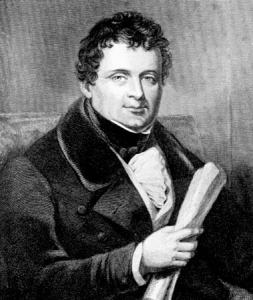
Daniel O’Connell, lawyer who becomes the first great 19th-century Irish nationalist leader and is known as “The Liberator,” dies in Genoa, Italy on May 15, 1847. Throughout his life, he campaigns for Catholic emancipation, including the right for Catholics to sit in the Westminster Parliament and the repeal of the Act of Union which combines Great Britain and Ireland.

Compelled to leave the Roman Catholic college at Douai, France, when the French Revolution breaks out, O’Connell goes to London to study law, and in 1798 he is called to the Irish bar. His forensic skill enables him to use the courts as nationalist forums. Although he has joined the Society of United Irishmen, a revolutionary society, as early as 1797, he refuses to participate in the Irish Rebellion of the following year. When the Act of Union takes effect on January 1, 1801, and abolishes the Irish Parliament, he insists that the British Parliament repeal the anti-Catholic laws in order to justify its claim to represent the people of Ireland. From 1813 he opposes various Catholic relief proposals because the government, with the acquiescence of the papacy, has the right to veto nominations to Catholic bishoprics in Great Britain and Ireland. Although permanent political organizations of Catholics are illegal, O’Connell sets up a nationwide series of mass meetings to petition for Catholic emancipation.

On May 12, 1823, O’Connell and Richard Lalor Sheil found the Catholic Association, which quickly attracts the support of the Irish priesthood and of lawyers and other educated Catholic laymen and which eventually comprises so many members that the government cannot suppress it. In 1826, when it is reorganized as the New Catholic Association, it causes the defeat of several parliamentary candidates sponsored by large landowners. In County Clare in July 1828, O’Connell himself, although as a Catholic ineligible to sit in the House of Commons, defeats a man who tries to support both the British government and Catholic emancipation. This result impresses on the British prime minister, Arthur Wellesley, 1st Duke of Wellington, the need for making a major concession to the Irish Catholics. Following the passage of the Catholic Emancipation Act of 1829, O’Connell, after going through the formality of an uncontested reelection, takes his seat at Westminster.

In April 1835, he helps to overthrow Sir Robert Peel’s Conservative ministry. In the same year, he enters into the “Lichfield House compact,” whereby he promises the Whig Party leaders a period of “perfect calm” in Ireland while the government enacts reform measures. O’Connell and his Irish adherents, known collectively as “O’Connell’s tail,” then aid in keeping the weak Whig administration of William Lamb, 2nd Viscount Melbourne, in office from 1835 to 1841. By 1839, however, O’Connell realizes that the Whigs will do little more than the Conservatives for Ireland, and in 1840 he founds the Repeal Association to dissolve the Anglo-Irish legislative union. A series of mass meetings in all parts of Ireland culminate in O’Connell’s arrest for seditious conspiracy, but he is released on appeal in September 1844 after three months’ imprisonment. Afterward his health fails rapidly, and the nationalist leadership falls to the radical Young Ireland group.

O’Connell dies at the age of 71 of cerebral softening in 1847 in Genoa, Italy, while on a pilgrimage to Rome. His time in prison has seriously weakened him, and the appallingly cold weather he has to endure on his journey is probably the final blow. According to his dying wish, his heart is buried at Sant’Agata dei Goti, then the chapel of the Irish College, in Rome and the remainder of his body in Glasnevin Cemetery in Dublin, beneath a round tower.


Leave a comment

Rebels Surrender Ends the 1916 Easter Rising

pearse-surrenders-to-lowe

The Irish Volunteers and Irish Citizen Army rebels headquartered at the General Post Office (GPO) on Sackville Street, after days of shelling, are forced to abandon their headquarters when fire caused by the shells spreads to the GPO. James Connolly, Commandant of the Dublin Brigade, has been incapacitated by a bullet wound to the ankle and has passed command on to Patrick Pearse. Michael Joseph O’Rahilly, a founding member of the Irish Volunteers, is killed in a sortie from the GPO. The rebels tunnel through the walls of the neighbouring buildings in order to evacuate the Post Office without coming under fire and take up a new position at 16 Moore Street.

On Saturday, April 29, 1916, from the new headquarters on Moore Street, after realising that they will not break out of this position without further loss of civilian life, Pearse issues an order for all companies to surrender. Pearse surrenders unconditionally to Brigadier-General William Henry Muir Lowe (photo). The surrender document reads:

“In order to prevent the further slaughter of Dublin citizens, and in the hope of saving the lives of our followers now surrounded and hopelessly outnumbered, the members of the Provisional Government present at headquarters have agreed to an unconditional surrender, and the commandants of the various districts in the City and County will order their commands to lay down arms.”

The other posts surrender only after Pearse’s surrender order, carried by nurse Elizabeth O’Farrell, reaches them. Sporadic fighting, therefore, continues into Sunday, April 30, when word of the surrender is received by the other rebel garrisons. Command of British forces has passed from Lowe to General John Maxwell, who arrives in Dublin just in time to accept the surrender. Maxwell is made temporary military governor of Ireland.

The surrender signals the end of the 1916 Easter Rising, the most significant campaign in the struggle for Irish independence since the Irish Rebellion of 1798. The Rising leaves large parts of the city decimated and results in thousands of casualties. It is also, unambiguously, a spectacular military failure. And yet it is the spark that lights the fuse on the Irish War of Independence which, within five years, forces the British government to the negotiating table to discuss the terms of Irish independence.

Martial law, which was declared in Dublin by British authorities, remains in effect in Ireland through the fall of 1916.

The 1916 Easter Rising results in at least 485 deaths, according to the Glasnevin Trust. More than 2,600 are wounded, including at least 2,200 civilians and rebels, at least 370 British soldiers, and 29 policemen. The vast majority of the Irish casualties are buried in Glasnevin Cemetery in the aftermath of the fighting. British families come to Dublin Castle in May 1916 to reclaim the bodies of British soldiers and funerals are arranged. Soldiers whose bodies are not claimed are given military funerals in Grangegorman Military Cemetery.


Leave a comment

Birth of Father Ted, Dermot John Morgan

dermot-john-morgan

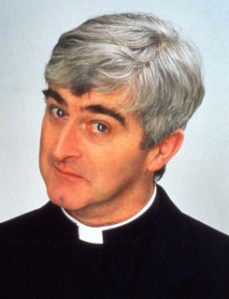
Dermot John Morgan, Irish comedian and actor who achieves international renown for his role as Father Ted Crilly in the Channel 4 sitcom Father Ted, is born in Dublin on March 31, 1952.

Educated at Oatlands College, Stillorgan, and University College, Dublin (UCD), Morgan comes to prominence as part of the team behind the highly successful RTÉ television show The Live Mike. Morgan makes his debut in the media on the Morning Ireland radio show produced by Gene Martin. Between 1979 and 1982 Morgan, who has been a teacher at St. Michael’s College, Ailesbury Road, plays a range of comic characters who appear between segments of the show, including Father Trendy, an unctuous trying-to-be-cool Catholic priest given to drawing ludicrous parallels with non-religious life in two-minute ‘chats’ to camera.

Morgan’s success as Father Trendy and other characters leads him to leave teaching and become a full-time comedian.

Morgan’s biggest Irish broadcasting success occurs in the late 1980s on the Saturday morning radio comedy show Scrap Saturday, which mocks Ireland’s political, business, and media establishment. The show’s treatment of the relationship between the ever-controversial Taoiseach Charles Haughey and his press secretary P.J. Mara prove particularly popular. When RTÉ axes the show in the early 1990s a national outcry ensues. Morgan lashes the decision, calling it “a shameless act of broadcasting cowardice and political subservience.”

Already a celebrity in Ireland, Morgan’s big break comes in Channel 4‘s Irish sitcom Father Ted, which runs for three series from April 21, 1995 until May 1, 1998. Writers Graham Linehan and Arthur Mathews audition many actors for the title role, but Morgan’s enthusiasm wins him the part.

Father Ted centres on three disparate characters. Father Ted Crilly, played by Morgan, lives a frustrated life trapped on the fictional Craggy Island. Irish TV comedy actor Frank Kelly plays Father Jack Hackett, a foul-mouthed and apparently brain-damaged alcoholic, while child-minded Father Dougal McGuire is played by comedian Ardal O’Hanlon. The three priests are looked after by their housekeeper, Mrs. Doyle, played by Pauline McLynn, with whom Morgan had worked on Scrap Saturday. Father Ted enjoys widespread popularity and critical acclaim. In 1998, the show wins a BAFTA award for the best comedy, Morgan wins a BAFTA for best actor, and McLynn is named best actress.

On February 28, 1998, one day after recording the last episode of Father Ted, Morgan has a heart attack while hosting a dinner party at his home in southwest London. He is rushed to hospital but dies soon afterwards. Morgan’s Requiem Mass in St. Therese’s Church in Mount Merrion, south Dublin, is attended by the President of Ireland Mary McAleese, her predecessor, Mary Robinson, and by political and church leaders, many of whom had been the targets of his humour in Scrap Saturday. He is cremated at Glasnevin Cemetery and his ashes are buried in the family plot in Deansgrange Cemetery.


Leave a comment

Death of Politician & Journalist Timothy Michael Healy

Timothy Michael “Tim” Healy, Irish nationalist politician, journalist, author, barrister, and one of the most controversial Irish Members of Parliament (MPs) in the House of Commons of the United Kingdom of Great Britain and Ireland, dies in Chapelizod, County Dublin, on March 26, 1931.

Healy is born in Bantry, County Cork, the second son of Maurice Healy, clerk of the Bantry Poor Law Union, and Eliza Healy (née Sullivan). His father is transferred in 1862 to a similar position in Lismore, County Waterford. Timothy is educated at the Christian Brothers school in Fermoy, and is otherwise largely self-educated, in 1869, at the age of fourteen, he goes to live with his uncle Timothy Daniel Sullivan in Dublin.

Healy then moves to England in 1871, working first as a railway clerk and then from 1878 in London as parliamentary correspondent of The Nation, writing numerous articles in support of Charles Stewart Parnell, the newly emergent and more militant home rule leader, and his policy of parliamentary obstructionism. Healy takes part in Irish politics and becomes associated with Parnell and the Irish Parliamentary Party. After being arrested for intimidation in connection with the Irish National Land League, he is promptly elected as member of Parliament for Wexford Borough in 1880.

In Parliament, Healy becomes an authority on the Irish land question. The “Healy Clause” of the Land Act of 1881, which protects tenant farmers’ agrarian improvements from rent increases imposed by landlords, not only makes him popular throughout nationalist Ireland but also wins his cause seats in Protestant Ulster. He breaks with Parnell in 1886 and generally remains at odds with subsequent leaders of the Irish Parliamentary Party, though he is a strong supporter of proposals for Irish Home Rule. Meanwhile, he is called to the Irish bar in 1884 and becomes a queen’s counsel in 1899.

Dissatisfied with both the Liberals and the Irish Nationalists after the Easter Rising in 1916, Healy supports Sinn Féin after 1917. He returns to considerable prominence in 1922 when, on the urging of the soon-to-be Irish Free State’s Provisional Government of W.T. Cosgrave, the British government recommends to King George V that Healy be appointed the first “Governor-General of the Irish Free State,” a new office of representative of the Crown created in the 1921 Anglo-Irish Treaty and introduced by a combination of the Irish Free State Constitution and Letters Patent from the King.

Healy believes that he has been awarded the Governor-Generalship for life. However, the Executive Council of the Irish Free State decides in 1927 that the term of office of Governors-General will be five years. As a result, he retires from the office and public life in January 1928 and publishes his extensive two volume memoirs later in that year. Throughout his life he is formidable because he is ferociously quick-witted, because he is unworried by social or political convention, and because he knows no party discipline. Towards the end of his life, he becomes more mellowed and otherwise more diplomatic.

Healy dies on March 26, 1931, at the age of 75, in Chapelizod, County Dublin. He is buried in Glasnevin Cemetery in Dublin.


Leave a comment

Roger Casement’s Remains Returned to the Republic of Ireland

roger-casement

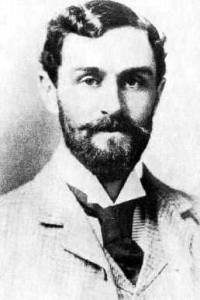
Irish patriot Roger Casement‘s body is returned to Ireland from the United Kingdom on February 23, 1965, forty-nine years after his execution for treason.

In October 1914, Roger Casement sails for Germany where he spends most of his time seeking to recruit an Irish Brigade from among more than 2,000 Irish prisoners-of-war taken in the early months of World War I and held in the prison camp of Limburg an der Lahn. His plan is that they will be trained to fight against Britain in the cause of Irish independence.

In April 1916, Germany offers the Irish 20,000 Mosin–Nagant 1891 rifles, ten machine guns and accompanying ammunition, but no German officers. It is a fraction of the quantity of arms that Casement has hoped. Casement does not learn of the Easter Rising until after the plan is fully developed. The German weapons never land in Ireland as the Royal Navy intercepts the ship transporting them.

In the early hours of April 21, 1916, three days before the beginning of the rising, Casement is taken by a German submarine and is put ashore at Banna Strand in Tralee Bay, County Kerry. Suffering from a recurrence of malaria and too weak to travel, he is discovered at McKenna’s Fort in Rathoneen, Ardfert, and arrested on charges of treason, sabotage, and espionage against the Crown. He is imprisoned in the Tower of London.

Casement’s trial for treason is highly publicized and he is ultimately convicted and sentenced to be hanged. He unsuccessfully appeals the conviction and death sentence. Among the many people who plead for clemency are Sir Arthur Conan Doyle, W. B. Yeats, and George Bernard Shaw.

On the day of his execution, Casement is again received into the Catholic Church at his request. He is attended by two Irish Catholic priests, Dean Timothy Ring and Father James Carey, from the East London parish of St. Mary and St. Michael’s. Casement is hanged at Pentonville Prison in London on August 3, 1916. His body is buried in quicklime in the prison cemetery at the rear of the prison.

roger-casement-glasnevin-grave

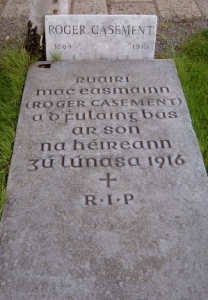
During the decades after his execution, many formal requests for repatriation of Casement’s remains are refused by the U.K. government. Finally, February 23, 1965, Casement’s remains are repatriated to the Republic of Ireland. Casement’s last wish, to be buried at Murlough Bay on the North Antrim coast, in what is now Northern Ireland, may never be satisfied as U.K. Prime Minister Harold Wilson‘s government releases the remains only on condition that they cannot be brought into Northern Ireland, as “the government feared that a reburial there could provoke Catholic celebrations and Protestant reactions.”

Casement’s remains lay in state at Arbour Hill in Dublin for five days, during which time an estimated half a million people file past his coffin. After a state funeral on March 1, the remains are buried with full military honours in the Republican plot in Glasnevin Cemetery in Dublin, with other militant republican heroes. The President of the Republic of Ireland, Éamon de Valera, who is in his mid-eighties and the last surviving leader of the Easter Rising, defies the advice of his doctors and attends the ceremony, along with an estimated 30,000 others.


Leave a comment

First Burial at Glasnevin Cemetery, Dublin

glasnevin-tower

The first burial takes place at Glasnevin Cemetery in Glasnevin, Dublin, on February 22, 1832.

Prior to the establishment of Glasnevin Cemetery, Irish Catholics have no cemeteries of their own in which to bury their dead. The repressive Penal Laws of the eighteenth-century place heavy restrictions on the public performance of Catholic services, forcing Catholics to conduct a limited version of their own funeral services in Protestant churchyards or graveyards. This situation continues until an incident at a funeral held at St. Kevin’s Churchyard in 1823 provokes public outcry when a Protestant sexton reprimands a Catholic priest for proceeding to perform a limited version of a funeral mass. The outcry prompts Daniel O’Connell, champion of Catholic rights, to launch a campaign and prepare a legal opinion proving that there is actually no law forbidding praying for a dead Catholic in a graveyard. O’Connell pushes for the opening of a burial ground in which both Irish Catholics and Protestants can give their dead a dignified burial.

Glasnevin Cemetery is consecrated and opened to the public for the first time on February 21, 1832. The first burial, that of eleven-year-old Michael Carey from Francis Street in Dublin, takes place on the following day in a section of the cemetery known as Curran’s Square. The cemetery is initially known as Prospect Cemetery, a name chosen from the townland of Prospect, which surrounds the cemetery lands.

SONY DSC

Originally covering nine acres of ground, the area of the cemetery has now grown to approximately 124 acres and is the final resting place of some 1.5 million people. The cemetery consists of two parts. The main part, with its trademark high walls and watchtowers, is located on one side of the road from Finglas to the city centre, while the other part, called St. Paul’s, is located across the road and beyond a green space, between two railway lines.

Glasnevin is one of the few cemeteries that allows stillborn babies to be buried in consecrated ground and contains an area called the Angels Plot for that purpose. In 1982, a crematorium is constructed within the cemetery grounds by Glasnevin Trust and has since been used for people of various religious denominations who wish to be cremated.

Glasnevin contains historically notable monuments and the graves of many of Ireland’s most prominent national figures. These include the graves of Daniel O’Connell, Charles Stewart Parnell, Michael Collins (pictured at right), Éamon de Valera, Arthur Griffith, Maud Gonne, Kevin Barry, Roger Casement, Constance Markievicz, Pádraig Ó Domhnaill, Seán MacBride, Jeremiah O’Donovan Rossa, Frank Duff, Brendan Behan, Christy Brown, and Luke Kelly of the Dubliners.

Glasnevin Cemetery remains under the care of the Dublin Cemeteries Committee and the development, expansion, and refurbishment of the cemetery is an ongoing task.

The Catholic Mass is celebrated by members of the parish clergy every Sunday at 9:45 AM. An annual blessing of the graves takes place each summer as it has since the founding of the cemetery in 1832.


Leave a comment

Birth of Constance Georgine Gore-Booth (Countess Markievicz)

countess-markievicz

Constance Georgine Gore-Booth is born on February 4, 1868, at Buckingham Gate, London, the eldest daughter of Arctic explorer and philanthropist Sir Henry Gore-Booth and Georgina May Hill.

The Gore-Booths are known as model landlords in County Sligo as they provide free food for the tenants on their estate. Perhaps being raised in this atmosphere of concern for the common man has something to do with the way Constance and her younger sister, Eva, conduct their later lives.

Gore-Booth decides to train as a painter and, in 1892, she enters the Slade School of Art in London because, at the time, only one art school in Dublin accepts female students. While in school in London Gore-Booth first becomes politically active and joins the National Union of Women’s Suffrage Societies.

She later moves to Paris and enrolls at the prestigious Académie Julian where she meets her future husband, Count Casimir Markievicz. They are married in London on September 29, 1900, making her Countess Markievicz. The Markieviczes relocate to Dublin in 1903 and move in artistic and literary circles, with Constance being instrumental in founding the United Artists Club.

In 1908, Markievicz becomes actively involved in nationalist politics in Ireland and joins Sinn Féin and Inghinidhe na hÉireann (Daughters of Ireland), a revolutionary women’s movement founded by Maud Gonne. In the same year, Markievicz plays a dramatic role in the women’s suffrage campaigners’ tactic of opposing Winston Churchill‘s election to Parliament during the Manchester North West by-election. Churchill ultimately loses the election to Conservative candidate William Joynson-Hicks.

In 1909, Markievicz founds Fianna Éireann, a para-military nationalist scouts organisation that instructs teenage boys and girls in the use of firearms. Patrick Pearse says that the creation of Fianna Éireann is as important as the creation of the Irish Volunteers in 1913. She is jailed for the first time in 1911 for speaking at an Irish Republican Brotherhood demonstration organised to protest against George V’s visit to Ireland.

Markievicz joins James Connolly‘s socialist Irish Citizen Army, a small volunteer force formed in response to the lock-out of 1913, to defend the demonstrating workers from the police. During the Howth gun-running on July 26, 1914, Irish Citizen Army members led by Markievicz, and including Thomas MacDonagh, Bulmer Hobson, Douglas Hyde and Darrell Figgis, unload arms from Erskine Childers‘ yacht Asgard in Howth harbour with hand carts and wheelbarrows.

As a member of the Irish Citizen Army, Markievicz takes part in the 1916 Easter Rising. Under Michael Mallin and Christopher Poole, she supervises the erection of barricades as the Rising begins and is in the middle of the fighting all around Stephen’s Green. Mallin and Poole and their men and women, including Markievicz, hold out for six days, ending the engagement when the British bring them a copy of Patrick Pearse’s surrender order.

They are taken to Dublin Castle and Markievicz is transported to Kilmainham Gaol, where she is the only one of 70 women prisoners who is put into solitary confinement. At her court martial on May 4, 1916, Markievicz is sentenced to death, but General Maxwell commutes this to life in prison on “account of the prisoner’s sex.” It is widely reported that she tells the court, “I do wish your lot had the decency to shoot me.” Markievicz is transferred to Mountjoy Prison and then to Aylesbury Prison in England in July 1916. She is released from prison in 1917, along with others involved in the Rising.

In the 1918 general election, Markievicz is elected for the constituency of Dublin St Patrick’s, making her the first woman elected to the British House of Commons. However, in line with Sinn Féin abstentionist policy, she does not take her seat in the House of Commons. She is re-elected to the Second Dáil in the elections of 1921. Markievicz serves as Minister for Labour from April 1919 to January 1922, holding cabinet rank from April to August 1919, becoming both the first Irish female Cabinet Minister and only the second female government minister in Europe.

Markievicz leaves government in January 1922 along with Éamon de Valera and others in opposition to the Anglo-Irish Treaty. She fights actively for the Republican cause in the Irish Civil War. She is returned in the 1923 general election for the Dublin South constituency but again, in common with other Republican candidates, she does not take her seat.

She joins Fianna Fáil on its foundation in 1926, chairing the inaugural meeting of the new party in La Scala Theatre. In the June 1927 general election, she is re-elected to the 5th Dáil as a candidate for the new Fianna Fáil party, which is pledged to return to Dáil Éireann.

Before she can take up her seat, Markievicz dies at the age of 59 on July 15, 1927, in a public ward “among the poor where she wanted to be” of complications related to appendicitis. One of the doctors attending her is her revolutionary colleague, Kathleen Lynn. Also at her bedside are Casimir and Stanislas Markievicz, Éamon de Valera, and Hanna Sheehy-Skeffington. Refused a state funeral by the Free State government, Markievicz is buried at Glasnevin Cemetery, Dublin, and de Valera gives the funeral oration.


1 Comment

Birth of Former IRA Chief of Staff Seán McBride

sean-macbride

Seán McBride, Irish government minister, prominent international politician, and a former Chief of Staff of the Irish Republican Army (IRA), is born in Paris on January 26, 1904. He is the son of Major John MacBride and Maud Gonne.

After his father’s execution for his participation in the Easter Rising of 1916, Seán is sent to school at Mount St. Benedict’s, Gorey, County Wexford in Ireland. In 1919, at the age of 15, he joins the Irish Volunteers, which fights as part of the Irish Republican Army, and takes part in the Irish War of Independence. He is imprisoned by the Irish Free State but is released in 1924 and resumes his IRA activities. He returns to Dublin in 1927 and becomes the Director of Intelligence of the IRA.

Toward the end of the 1920s, after many supporters have left the IRA to join Fianna Fáil, some members start pushing for a more left-wing agenda. After the IRA Army Council votes down the idea, MacBride launches a new movement, Saor Éire (“Free Ireland”), in 1931. Although it is a non-military organisation, Saor Éire is declared unlawful along with the IRA, Cumann na mBan, and nine other organizations.

In 1936, MacBride becomes Chief of Staff of the IRA after Moss Twomey is sent to prison for three years. At the time, the movement is in a state of disarray, with conflicts between several factions and personalities. In 1937, MacBride is called to the bar and then resigns from the IRA when the Constitution of Ireland is enacted later that year. As a barrister, MacBride frequently defends IRA political prisoners, but is not unsuccessful in stopping the execution of Charlie Kerins in 1944 who is convicted of killing Garda Detective Dennis O’Brien in 1942. In 1946, during the inquest into the death of Seán McCaughey, MacBride embarrasses the authorities by forcing them to admit that the conditions in Portlaoise Prison are inhumane.

In 1946, MacBride founds the republican/socialist party Clann na Poblachta, hoping it would replace Fianna Fáil as Ireland’s major political party. In October 1947, he wins a seat in Dáil Éireann at a by-election in the Dublin County constituency. However, at the 1948 general election Clann na Poblachta wins only ten seats.

MacBride is serving as Minister of External Affairs when the Council of Europe drafts the European Convention on Human Rights. He serves as President of the Committee of Ministers of the Council of Europe from 1949 to 1950 and is credited with being a key force in securing the acceptance of this convention, which is finally signed in Rome on November 4, 1950. He is instrumental in the implementation of the Repeal of the External Relations Act and the Declaration of the Republic of Ireland in 1949.

In 1951, Clann na Poblachta is reduced to only two seats after the general election. MacBride keeps his seat and is re-elected again in 1954. Opposing the internment of IRA suspects during the Border Campaign (1956–62), he contests both the 1957 and 1961 general elections but fails to be elected both times. He then retires from politics but continues practicing as a barrister. He expresses interest in running as an independent candidate in the 1983 Irish presidential election but does not receive sufficient backing and ultimately does not enter the contest.

Throughout the 1950s, 1960s, and 1970s, MacBride works tirelessly for human rights worldwide. He is a founding member of Amnesty International and serves as its international chairman from 1961 until 1975. During the 1980s, he initiates the Appeal by Lawyers against Nuclear War which is jointly sponsored by the International Peace Bureau and the International Progress Organization.

MacBride is awarded the Nobel Peace Prize in 1974 as a man who “mobilised the conscience of the world in the fight against injustice.” He later receives the Lenin Peace Prize (1975–76) and the UNESCO Silver Medal for Service (1980).

Seán MacBride dies in Dublin on January 15, 1988, just eleven days shy of his 84th birthday. He is buried in a simple grave in Glasnevin Cemetery, Dublin.


1 Comment

Death of Terence Bellew MacManus in San Francisco

terrence-bellew-macmanus

Terence Bellew MacManus, an Irish rebel and Young Irelander, dies in San Francisco, California, on January 15, 1861.

MacManus is born in 1811 in Tempo, County Fermanagh, Ireland, and was educated in parochial schools. As a young man he moves to the major port of Liverpool, where he becomes a successful shipping agent. In 1848 he returns to Ireland, where he becomes active in the Repeal Association, which seeks to overturn the Act of Union between Great Britain and Ireland. After joining the Irish Confederation, he is among those who take part with William Smith O’Brien and John Blake Dillon in the July 1848 Young Ireland Rebellion in Ballingarry, County Tipperary, where the only substantial armed action occurs. MacManus and the other leaders are charged and convicted of treason and sentenced to death for their actions.

Due to public outcry for clemency, the men’s sentences are commuted to deportation for life. MacManus, along with O’Brien, Thomas Francis Meagher, and Patrick O’Donoghue, is transported to Van Diemen’s Land in Tasmania, Australia in 1849. They are assigned to different settlements to reduce their collaboration in the new land; however, the Irish men continue to meet secretly.

In 1852 MacManus and Meagher escape from Australia and make their way to San Francisco, California, where MacManus settles. Meagher goes on to New York City. Like other immigrants, the Irish revolutionaries carry their issues to the United States. A Captain Ellis, of a ship that is supposed to carry O’Brien to freedom, also emigrates to San Francisco. MacManus holds a lynch court of Ellis among Irish emigrants for his betrayal of O’Brien in his escape attempt from Van Diemen’s Land. The court-martial acquits Ellis for lack of evidence.

Failing to re-establish his career as a shipping agent, MacManus lives in San Francisco and dies in poverty in 1861. It is after his death, however, that he performs his most valuable service to the cause of Irish freedom. On learning of his death, American Fenian leaders decide to return his body to Ireland for burial. This foreshadows the treatment given to Jeremiah O’Donovan Rossa at his famous funeral in 1915. Crowds of Irish gather in New York as Archbishop John Hughes, like MacManus born in Ulster, blesses MacManus’ body. Thousands greet his body when it arrives in Cork and crowds gather at rail stations all the way to Dublin.

The church, in the person of Archbishop of Dublin Paul Cullen, refuses permission for his body to lie-in-state at any church in Dublin. Thus, for a week MacManus’ body lies in the Mechanics’ Institute, while thousands pass by paying their respects. But Father Patrick Lavelle, a Fenian supporter, defies Cullen and performs the funeral ceremony on November 10, 1861. A crowd estimated at 50,000 follow the casket to Dublin’s Glasnevin Cemetery, and hundreds of thousands line the streets. The MacManus funeral is a seminal moment for the Fenian movement. It invigorates the nationalist movement in Ireland, just as Rossa’s funeral does 54 years later.

MacManus is notable for his statement in court in 1848 where he explains his actions by saying, “It was not because I loved England less, but because I loved Ireland more.”