seamus dubhghaill

Promoting Irish Culture and History from Little Rock, Arkansas, USA


Leave a comment

Death of Irish American Painter William Harnett

william-harnett

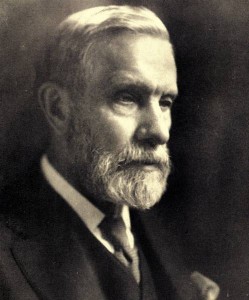
William Michael Harnett, Irish American painter known for his trompe-l’œil still lifes of ordinary objects, dies at New York Hospital on October 29, 1892.

Harnett is born in Clonakilty, County Cork, on August 10, 1848, during the time of the Great Famine. Shortly after his birth his family emigrates to America, settling in Philadelphia. Becoming a United States citizen in 1868, he makes a living as a young man by engraving designs on table silver, while also taking night classes at the Pennsylvania Academy of the Fine Arts and later, in New York City, at Cooper Union and at the National Academy of Design. His first known oil painting, a still life, dates from 1874.

The style of trompe-l’œil painting that Harnett develops is distinctive and inspired many imitators, but it is not without precedent. A number of 17th century Dutch painters, Pieter Claesz for instance, specialize in tabletop still life of astonishing verisimilitude. Raphaelle Peale, working in Philadelphia in the early 19th century, pioneers the form in America. What sets Harnett’s work apart, besides his enormous skill, is his interest in depicting objects not usually made the subject of a painting.

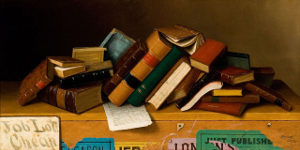
Harnett paints musical instruments, hanging game, and tankards, but also painted the unconventional Golden Horseshoe (1886), a single rusted horseshoe shown nailed to a board. He paints a casual jumble of second-hand books set on top of a crate, Job Lot, Cheap (1878), as well as firearms and even paper currency. His works sell well, but they are more likely to be found hanging in a tavern or a business office than in a museum, as they did not conform to contemporary notions of high art.

Harnett spent the years 1880–1886 in Europe, staying in Munich from 1881 until early 1885. Harnett’s best-known paintings, the four versions of After the Hunt, are painted between 1883 and 1885. Each is an imposing composition of hunting equipment and dead game, hanging on a door with ornate hinges at the right and keyhole plate at the left. These paintings, like the horseshoe or currency depictions mentioned earlier, are especially effective as trompe-l’œil because the objects occupy a shallow space, meaning that the illusion is not spoiled by parallax shift if the viewer moves.
job-lot-cheap

Overall, Harnett’s work is most comparable to that of the slightly younger John F. Peto. The two artists know each other, and a comparison can be made between two paintings featuring violins. Harnett’s Music and Good Luck from 1888 shows the violin hanging upright on a door with ornate hinges and with a slightly torn piece of sheet music behind it. The elements are arranged in a stable, deliberate manner. Peto’s 1890 painting shows the violin hanging askew, as well as chipped and worn, with one string broken. The sheet music is dog-eared and torn around the edges and placed haphazardly behind the instrument. The hinges are less ornate, and one is broken. Harnett’s objects show signs of use but are well preserved, while Peto’s more humble objects are nearly used up.

Crippling rheumatism plagues Harnett in his last years, reducing the number but not the quality of his paintings. He seeks relief in the waters at Karlsbad and Wiesbaden, Germany and later at Hot Springs, Arkansas. But he continues to worsen and is hospitalized several times. He dies in New York City in 1892.
Leave a comment

1947 All-Ireland Senior Football Championship Final

1947-all-ireland-final

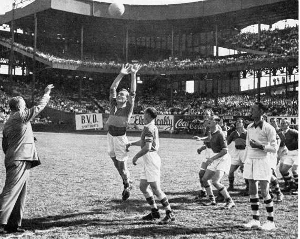
For the first and only time, the All-Ireland Senior Football Championship Final is played outside Ireland on September 14, 1947, at the Polo Grounds in Upper Manhattan, New York City, to cater for the large Irish American community there.

The New York final matching Cavan against Kerry is also intended to observe the centenary of the Great Famine that triggered mass Irish emigration to the United States and other countries. Around 30,000 people are in attendance for the final. Cavan travels to the U.S. by air and Kerry by sea. The Ulster team credits their victory partially to their shorter time spent travelling. The Cavan team flight, via the Azores, takes 30 hours. Kerry’s trip by Ocean Liner takes far longer.

Mick Higgins, a key member of the Cavan team that day, recalls later in life, “There was no huge send-off for us in Cavan, but both teams got a good reception in New York when we arrived. I remember the team stayed in the Commodore Hotel, but I stayed with my relatives.” He also remembers the “oppressive heat” during the game itself.

After a slow start, Cavan fights back to lead 2-5 to 2-4 at the break and goes on to win by four points. Peter Donohoe scores eight points from frees and is called “the Babe Ruth of Gaelic football” in the New York press. The match commentary was broadcast by radio across the Atlantic Ocean by Michael O’Hehir.

The Cavan team returns to Ireland aboard the RMS Queen Mary. Higgins recalls, “It was only after we arrived in Southampton that we realised the joy of it all. Large numbers of Cavan people turned up to see us in London and Birmingham. We were treated like kings in Cavan.”


Leave a comment

Birth of Irish Rebel Leader John Devoy

john-devoy

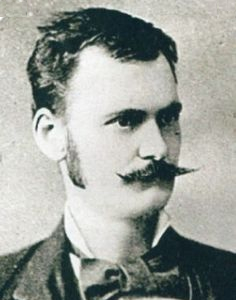
John Devoy, one of the most devoted revolutionaries the world has ever seen, is born in Kill, County Kildare, on September 3, 1842. Dedicating over 60 years of his life to the cause of Irish freedom, he is one of the few people to have played a leading role in the Fenian Rising of 1867, the 1916 Easter Rising, and the Irish War of Independence (1919 – 1921).

After the Great Famine, the family moves to Dublin where Devoy’s father obtains at job at Watkins’ brewery. Devoy attends night school at the Catholic University before joining the Fenians. In 1861 he travels to France with an introduction from Timothy Daniel Sullivan to John Mitchel. Devoy joins the French Foreign Legion and serves in Algeria for a year before returning to Ireland to become a Fenian organiser in Naas, County Kildare.

In 1865, when many Fenians are arrested, James Stephens, founder of the Irish Republican Brotherhood (IRB), appoints Devoy Chief Organiser of Fenians in the British Army in Ireland. His duty is to enlist Irish soldiers in the British Army into the IRB. In November 1865 Devoy orchestrates Stephens’ escape from Richmond Prison in Dublin.

In February 1866 an IRB Council of War calls for an immediate uprising but Stephens refuses, much to Devoy’s annoyance, as he calculated the Fenian force in the British Army to number 80,000. The British get wind of the plan through informers and move the regiments abroad, replacing them with regiments from Britain. Devoy is arrested in February 1866 and interned in Mountjoy Gaol, then tried for treason and sentenced to fifteen years penal servitude. In Portland Prison Devoy organises prison strikes and, as a result, is moved to Millbank Prison in Pimlico, London.

In January 1871, he is released and exiled to the United States as one of the “Cuba Five.” He receives an address of welcome from the House of Representatives. Devoy becomes a journalist for the New York Herald and is active in Clan na Gael. Under Devoy’s leadership, Clan na Gael becomes the central Irish republican organisation in the United States. In 1877 he aligns the organisation with the Irish Republican Brotherhood in Ireland.

In 1875, Devoy and John Boyle O’Reilly organise the escape of six Fenians from Fremantle Prison in Western Australia aboard the ship Catalpa. Devoy returns to Ireland in 1879 to inspect Fenian centres and meets Charles Kickham, John O’Leary, and Michael Davitt en route in Paris. He convinces Davitt and Charles Stewart Parnell to co-operate in the “New Departure” during the growing Land War.

Devoy’s fundraising efforts and work to sway Irish Americans to physical force nationalism makes possible the Easter Rising in 1916. In 1914, Patrick Pearse visits the elderly Devoy in America, and later the same year Roger Casement works with Devoy in raising money for guns to arm the Irish Volunteers. Though he is skeptical of the endeavor, he finances and supports Casement’s expedition to Germany to enlist German aid in the struggle to free Ireland from English rule. Also, before and during World War I, Devoy is also identified closely with the Ghadar Party, and is accepted to have played a major role in supporting Indian Nationalists, as well as playing a key role in the Hindu-German Conspiracy which leads to the trial that is the longest and most expensive trial in the United States at the time.

In 1916 Devoy plays an important role in the formation of the Clan-dominated Friends of Irish Freedom, a propaganda organization whose membership totals 275,000 at one point. The Friends fail in their efforts to defeat Woodrow Wilson for the presidency in 1916. Fearful of accusations of disloyalty for their cooperation with Germans and opposition to the United States’ entering the war on the side of Great Britain, the Friends significantly lower their profile after April 1917. Sinn Féin‘s election victories and the British government’s intentions to conscript in Ireland in April 1917 help to revitalize the Friends.

With the end of the war, Devoy plays a key role in the Friends’ advocacy for not the United States’ recognition of the Irish Republic but, in keeping with President Wilson’s war aims, self-determination for Ireland. The latter does not guarantee recognition of the Republic as declared in 1916 and reaffirmed in popular election in 1918. American Irish republicans challenge the Friends’ refusal to campaign for American recognition of the Irish Republic. Not surprisingly, Devoy and the Friends’ Daniel F. Cohalan become the key players in a trans-Atlantic dispute with de facto Irish president Éamon de Valera, touring the United States in 1919 and 1920 in hopes of gaining U.S. recognition of the Republic and American funds. Believing that the Americans should follow Irish policy, de Valera forms the American Association for the Recognition of the Irish Republic in 1920 with help from the Philadelphia Clan na Gael.

Devoy returns to Ireland and in 1919 addresses Dáil Éireann. He later supports the Anglo-Irish Treaty of 1921. Devoy is editor of The Gaelic American from 1903 until his death in Atlantic City on September 29, 1928. His body is returned to Ireland and buried in Glasnevin Cemetery. A large memorial to him stands on the road between his native Kill and Johnstown.


Leave a comment

Death of General Philip Henry Sheridan

philip-sheridan

Irish American General Philip Henry Sheridan, career United States Army officer and a Union general in the American Civil War, dies of heart disease in Dartmouth, Massachusetts, on August 5, 1888.

Sheridan is born in Albany, New York, the third child of six by John and Mary Meenagh Sheridan, immigrants from the parish of Killinkere, County Cavan. Fully grown, he reaches only 5 feet 5 inches in height, a stature that leads to the nickname “Little Phil.” Abraham Lincoln describes his appearance in a famous anecdote, “A brown, chunky little chap, with a long body, short legs, not enough neck to hang him, and such long arms that if his ankles itch, he can scratch them without stooping.”

Sheridan’s career is noted for his rapid rise to major general and his close association with General-in-chief Ulysses S. Grant, who transfers Sheridan from command of an infantry division in the Western Theater to lead the Cavalry Corps of the Army of the Potomac in the East. In 1864, he defeats Confederate forces in the Shenandoah Valley and his destruction of the economic infrastructure of the Valley, called “The Burning” by residents, is one of the first uses of scorched earth tactics in the war. In 1865, his cavalry pursues General Robert E. Lee and is instrumental in forcing his surrender at Appomattox Court House.

In later years, Sheridan fights in the Indian Wars of the Great Plains. Comanche Chief Tosahwi reputedly tells Sheridan in 1869, “Me, Tosahwi; me good Injun,” to which Sheridan supposedly replies, “The only good Indians I ever saw were dead.” Sheridan denies he had ever made the statement. Biographer Roy Morris Jr. states that, nevertheless, popular history credits Sheridan with saying “The only good Indian is a dead Indian.” This variation “has been used by friends and enemies ever since to characterize and castigate his Indian-fighting career.” In Bury My Heart at Wounded Knee, Dee Brown attributes the quote to Sheridan but does not provide documentation to support his contention, so the quote may be more apocryphal than real.

Both as a soldier and private citizen, Sheridan is instrumental in the development and protection of Yellowstone National Park. The protection of the Yellowstone area is Sheridan’s personal crusade. He authorizes Lieutenant Gustavus Doane to escort the Washburn Expedition in 1870 and for Captain John W. Barlow to escort the Hayden Expedition in 1871. Barlow names Mount Sheridan, a peak overlooking Heart Lake in Yellowstone, for the general in 1871. As early as 1875, Sheridan promotes military control of the area to prevent the destruction of natural formations and wildlife.

In 1883, Sheridan is appointed general-in-chief of the U.S. Army, and in 1888 he is promoted to the rank of General of the Army during the term of President Grover Cleveland. Sheridan serves as the ninth president of the National Rifle Association.

Sheridan suffers a series of massive heart attacks two months after sending his memoirs to the publisher. After his first heart attack, the U.S. Congress quickly passes legislation to promote him to general and he receives the news from a congressional delegation with joy, despite his pain. His family moves him from the heat of Washington, D.C. and he dies of heart failure in his summer cottage in the Nonquitt section of Dartmouth, Massachusetts.

His body is returned to Washington, and he is buried on a hillside facing the capital city near Arlington House in Arlington National Cemetery. The burial helps elevate Arlington to national prominence.


Leave a comment

The Sinking of John F. Kennedy’s PT-109

pt-109-crew

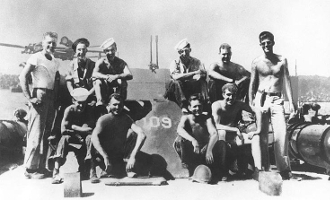
In the early morning hours of August 2, 1943, three small American torpedo boats are moving just west of New Georgia in the Solomon Islands. In command of PT-109 is a young Irish American destined to one day be the first Catholic president of the United States, Lieutenant John Fitzgerald Kennedy.

On a moonless night, Kennedy’s boat is idling on one engine to avoid detection of her wake by Japanese aircraft when the crew realizes they are in the path of the Japanese destroyer Amagiri, which is returning to Rabaul from Vila, Kolombangara, after offloading supplies and 900 soldiers. Amagiri is traveling at a relatively high speed of between 23 and 40 knots in order to reach harbor by dawn, when Allied air patrols are likely to appear.

The crew of PT-109 has less than ten seconds to get the engines up to speed. The commander of the Amagiri, Kohai Hanami, spots the tiny ship but it is too close to fire upon. Instead, Hanami decides to ram it. PT-109 is cut in half and bursts into flames. Seamen Andrew Jackson Kirksey and Harold W. Marney are killed, and two other members of the crew are badly injured. PT-109 is gravely damaged, with watertight compartments keeping only the forward hull afloat in a sea of flames.

PT-169 launches two torpedoes that miss the destroyer and PT-162‘s torpedoes fail to fire at all. Both boats then turn away from the scene of the action and return to base without checking for survivors.

The eleven survivors cling to PT-109’s bow section as it drifts slowly south. By about 2:00 PM, it is apparent that the hull is taking on water and will soon sink, so the men decide to abandon it and swim for land. Since there are Japanese camps on all the nearby large islands, they choose the tiny deserted Plum Pudding Island, southwest of Kolombangara. They place their lantern, shoes, and non-swimmers on one of the timbers used as a gun mount and begin kicking together to propel it. Kennedy, who had been on the Harvard University swim team, uses a life jacket strap clenched between his teeth to tow his badly burned senior enlisted machinist mate, MM1 Patrick McMahon. It takes four hours to cover the 3.5 miles to their destination, which they reach without confrontation by sharks or crocodiles.

The island is only 100 yards in diameter and has no food or water. The crew has to hide from passing Japanese barges. Kennedy swims to Naru and Olasana islands, a round trip of about 2.5 miles, in search of help and food. He then leads his men to Olasana Island, which has coconut trees and drinkable water.

The explosion of PT-109 is spotted by an Australian coastwatcher, Sub-lieutenant Arthur Reginald Evans, who mans a secret observation post at the top of the Mount Veve volcano on Kolombangara, where more than 10,000 Japanese troops are garrisoned below on the southeast portion. Evans dispatches islanders Biuku Gasa and Eroni Kumana in a dugout canoe to look for possible survivors after decoding news that the explosion he had witnessed was likely from the lost PT-109.

Kennedy and his men survive for six days on coconuts before they are found by the scouts. The small canoe is not big enough for passengers. Kennedy quickly carves a note on a coconut for Gasa and Kumana to deliver to Evans. Evans gets word back to the U.S. Navy and, on the night of August 8, all eleven survivors of PT-109 are rescued by PT-157.

John F. Kennedy keeps that carved coconut on his desk in the Oval Office at the White House until the day he is assassinated.


Leave a comment

Death of Frank McCourt, Author of “Angela’s Ashes”

frank-mccourt

Francis “Frank” McCourt, Irish American teacher and writer, dies of cancer in Manhattan, New York City, on July 19, 2009.

A New York city schoolteacher for more than thirty years, McCourt achieves literary fame later in life with his best-selling childhood memoir of the misery and squalor of his childhood, Angela’s Ashes. With a first printing of just 25,000 copies, the book becomes an instant favourite with critics and readers and is perhaps the ultimate case of the non-celebrity memoir, the extraordinary life of an ordinary man.

McCourt wins the annual Pulitzer Prize for Biography or Autobiography in 1997 and one of the annual National Book Critics Circle Awards for the book, which is eventually published in 25 languages and 30 countries. It is a bestseller and makes him a millionaire. Three years later, a movie version of Angela’s Ashes opens to mixed reviews with Northern Irish actor Michael Legge playing McCourt as a teenager.

McCourt is also the author of ‘Tis (1999), which continues the narrative of his life, picking up from the end of Angela’s Ashes and focusing on his life after returning to New York. He subsequently writes Teacher Man (2005) which details his teaching experiences and the challenges of being a teacher.

McCourt writes the book for a 1997 musical entitled The Irish…and How They Got That Way, which features an eclectic mix of Irish music – everything from the traditional Danny Boy to U2‘s I Still Haven’t Found What I’m Looking For.

It is announced in May 2009 that McCourt has been treated for melanoma and that he is in remission, undergoing home chemotherapy. On July 19, 2009, he died from the cancer, with meningeal complications, at a hospice in Manhattan.


Leave a comment

The Last Official Bare-Knuckle Title Fight

sullivan-kilrain-fight

Heavyweight boxer John L. Sullivan defeats fellow Irish American Jake Kilrain in a world championship bout which lasts 75 rounds on July 8, 1889, the last official bare-knuckle title fight ever held.

Bare-knuckle boxing is the original form of boxing, closely related to ancient combat sports. It involves two individuals fighting without boxing gloves or other padding on their hands. The difference between a street fight and a bare-knuckle boxing match is an accepted set of rules, such as not striking a downed opponent.

The Sullivan-Kilrain fight is considered to be a turning point in boxing history because it is the last world title bout fought under the London Prize Ring Rules, and therefore the last bare-knuckle heavyweight title bout. It is one of the first sporting events in the United States to receive national press coverage.

For the first time, newspapers carry extensive pre-fight coverage, reporting on the fighters’ training and speculating on where the bout will take place. The traditional center of bare-knuckle fighting is New Orleans, but the governor of Louisiana has forbidden the fight in that state. Sullivan has trained for months in Belfast, New York under trainer William Muldoon, whose biggest problem has been keeping Sullivan from liquor. A report on Sullivan’s training regimen in Belfast is written by famed reporter Nellie Bly and published in the New York World.

Rochester reporter Arch Merrill comments that occasionally Sullivan would “escape” from his guard. In Belfast village, the cry is heard, “John L. is loose again. Send for Muldoon!” Muldoon would snatch the champ away from the bar and take him back to their training camp.

On July 8, 1889, an estimated 3,000 spectators board special trains for the secret location, which turns out to be Richburg, a town just south of Hattiesburg, Mississippi. The fight begins at 10:30, and it looks as if Sullivan is going to lose, especially after he vomits during the 44th round. But the champion gets his second wind after that, and Kilrain’s manager, Mike Donovan, finally throws in the towel after the 75th round. Kilrain does not want to give up thinking he can outlast Sullivan, but Donovan defends his actions insisting that Kilrain would die if the fight continued. In any case, the Kilrain-Sullivan fight can rightly be listed among the greatest fights of the pre-modern era.


Leave a comment

State Visit of U.S. President John F. Kennedy

jfk-state-visit

John F. Kennedy, an Irish American and the first Catholic to become president of the United States, arrives in Ireland on a state visit on June 26, 1963. After Air Force One touches down at Dublin airport, Kennedy’s motorcade weaves through the streets of Dublin city, the thrilled crowd, lacking ticker tape, improvises by throwing rolls of bus tickets.

Kennedy is proud of his Irish roots and makes a special visit to his ancestral home in Dunganstown, County Wexford, while in the country. There, he is greeted by a crowd waving both American and Irish flags and is serenaded by a boys’ choir that sings The Boys of Wexford. Kennedy breaks away from his bodyguards and joins the choir for the second chorus, prompting misty-eyed reactions from both observers and the press.

Kennedy meets with 15 members of his extended Irish family at the Kennedy homestead in Dunganstown. There he enjoys a cup of tea and some cake and makes a toast to “all those Kennedys who went and all those Kennedys who stayed.” His great-grandfather, Thomas Fitzgerald, had left Ireland for the United States in the middle of the Great Famine of 1848 and settled in Boston, becoming a cooper. Generations of his descendants go on to make their mark on American politics.

At the time of JFK’s visit to Ireland, the predominantly Catholic Irish Republic has been an independent nation for 41 years. The northern counties of the island, however, remain part of the largely Protestant British Empire and still suffer from long-standing sectarian violence. On the day after his arrival in Dublin, Kennedy speaks before the Irish parliament, where he openly condemns Britain’s history of persecuting Irish Catholics. Two days later, he travels to England, America’s oldest ally, to meet with British Prime Minister Harold Macmillan and his cabinet to discuss setting up a pro-democratic regime in British Guiana.

Kennedy later tells his aides that his favourite part of the trip was the wreath laying and silent funeral drill done by the Irish Army cadets at Arbour Hill military cemetery in Dublin.

Five months later, his widow, Jacqueline Kennedy, makes a special request to the Irish government. She asks that those same Irish army cadets, who so impressed the President on his visit, perform the drill again at his state funeral. Within days, those awe-stuck, trembling young men stand just inches away from foreign dignitaries from over 90 countries and perform their silent funeral drill in memory of a president that had inspired their country just a few short months earlier.


2 Comments

Black Thursday – The Molly Maguire Executions

molly-maquires-gallows

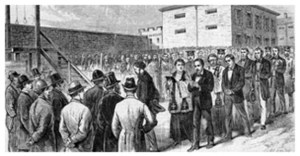
On June 21, 1877, a day that will long be remembered as Black Thursday, ten members of the Molly Maguires, an Irish labor organization, are executed in Pennsylvania, the first of twenty executions that make up the largest mass execution of any group by the U.S. federal government in history.

The Molly Maguires is an Irish 19th-century secret society active in Ireland, Liverpool, and parts of the eastern United States, best known for their activism among Irish American and Irish immigrant coal miners in Pennsylvania. The Mollies are believed to have been present in the anthracite coal fields of Pennsylvania in the United States since at least the Panic of 1873.

Members of the Mollies are accused of murder, arson, kidnapping and other crimes, in part based on allegations by Franklin B. Gowen and the testimony of a Pinkerton detective, James McParland, a native of County Armagh. Fellow prisoners testified against the defendants, who were arrested by the Coal and Iron Police. Gowen acts as a prosecutor in some of the trials. The Molly Maguires become largely inactive following the executions of 1877 and 1878.

On June 21, 1877, the first ten executions take place. Six Mollies – James Carroll, James Roarity, Hugh McGehan, James Boyle, Thomas Munley, and Thomas Duffy – are hanged in the prison at Pottsville, Pennsylvania. The sheriff hangs them successively two-by-two rather than build special gallows to accommodate six. An immense crowd gathers covering the surrounding hills. Boyle carries a blood-red rose and McGehan has two roses in his lapel. Carrol and Roarity declare their innocence from the scaffold. In County Donegal, McGehan’s relatives meet in the kitchen and, it is said, the sky blackens at the moment of hanging.

On the same date, Alexander Campbell, John “Yellow Jack” Donohue, Michael J. Doyle, and Edward J. Kelly are hanged at a Carbon County prison in Mauch Chunk for the murders of John P. Jones and Morgan Powell, both mine bosses. Here gallows have been erected to accommodate four hangings and the four are hung at the same instant. Campbell, just before his execution, allegedly slaps a muddy handprint on his cell wall stating, “There is proof of my words. That mark of mine will never be wiped out. It will remain forever to shame the county for hanging an innocent man.” The handprint remains to this day.

Ten more condemned, Thomas Fisher, John “Black Jack” Kehoe, Patrick Hester, Peter McHugh, Patrick Tully, Peter McManus, Dennis Donnelly, Martin Bergan, James McDonnell, and Charles Sharpe, are hanged at Mauch Chunk, Pottsville, Bloomsburg, and Sunbury over the next year. Peter McManus is the last Molly Maguire to be tried and convicted for murder at the Northumberland County Courthouse in 1878.


Leave a comment

Six Irish Students Killed in Berkeley Balcony Collapse

berkeley-balcony-collapse

Five Irish J-1 visa students and one Irish American die and seven others are injured in Berkeley, California, on June 16, 2015, after a fourth-floor balcony on which they are standing collapses. Thirteen people fall from the balcony and four are pronounced dead at the scene while two die later at the hospital.

One of the six killed is a dual Irish American citizen, Ashley Donohoe, 22, of Rohnert Park, California. The other five are Olivia Burke (Donohue’s cousin), Eoghan Culligan, Niccolai ‘Nick’ Schuster, Lorcán Miller, and Eimear Walsh, all aged 21 and from Dublin.

In June 2015, Berkeley Mayor Tom Bates promises a broad and wide-ranging investigation into the cause of the accident with the likely cause being that the balcony of the building had not been constructed properly leading to the development of dry rot, leading to the balcony becoming structurally compromised. Overwhelming evidence points to dry rot as the cause of the collapse, and not the weight of the 13 students on it at the time.

The New York Times publishes an article reporting the deaths and suggesting the deceased are to blame for the collapse. The paper states that Irish students coming to the U.S. on J-1 visas are an “embarrassment to Ireland.” Taoiseach Enda Kenny and former President Mary McAleese criticise the newspaper for “being insensitive and inaccurate” in its handling of the story. The newspaper subsequently apologizes, although the article remains available at its website.

Alameda County prosecutors open up a criminal investigation on the accident on June 25. They state that involuntary manslaughter charges could be filed. Berkeley District Attorney Nancy O’Malley denies that pressure from the Irish community have led to the collapse inquiry.

On July 3, 2015, the Alameda County Superior Court rejects a restraining order bid against the examination of evidence by construction company Segue Builders. D.A. O’Malley had argued that the granting of a restraining order would amount to an interference in her duty to investigate the tragedy.

In December 2015, a court is told that the collapse happened because contractors cut corners to save costs. It is alleged that Greystar, the management company for the building, ignored a “red flag” when students who rented the apartment complained about the presence of mushrooms growing on the balcony. Legal cases by some of the victims are set to be combined and heard together sometime in 2016.

A joint funeral service for Olivia Burke and her cousin Ashley Donohoe takes place on June 20, four days after the collapse, in a church in Cotati, California. Funeral services are held in Dublin for the remaining victims.