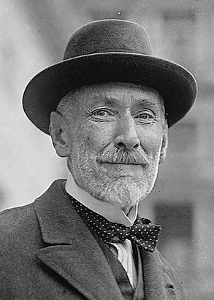
Threatened by lung trouble in 1879, Plunkett goes to the United States and spends ten years as a cattle rancher in the Bighorn Mountains of Wyoming. He returns to Ireland in 1889 and devotes himself to the agricultural cooperative movement, first organizing creameries and then, in 1894, the Irish Agricultural Organisation Society, a forerunner of similar societies in England, Wales, and Scotland. A moderate Unionist member of Parliament for South County Dublin from 1892 to 1900, he becomes vice president (1899–1907) of the new Department of Agriculture and Technical Instruction for Ireland, which he has been instrumental in creating.
Plunkett’s later experience convinces him of the need for the independence of an Ireland without partition inside the Commonwealth, and he fights strongly for this goal, as chairman of the Irish Convention (1917–18) and, in 1919, as founder of the Irish Dominion League and of the Plunkett Foundation for Cooperative Studies, an agricultural research and information centre. He is appointed to the first Senate of the Irish Free State (1922–23). His house in Dublin is bombed and burned during in the Irish Civil War and he lives in England thereafter. In 1924 the Plunkett Foundation also moves to England. In 1924 he presides over a conference in London on agricultural co-operation in the British Commonwealth and in 1925 he visits South Africa to help the movement there.
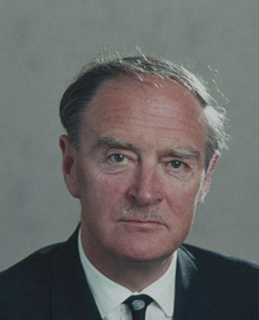
In 1948, when the first inter-party government replaces Éamon de Valera’s Fianna Fáil regime, which had been in power for the previous 16 years, Cosgrave becomes parliamentary secretary to the Taoiseach and to the Minister for Industry and Commerce. It is a short-lived administration, going out of power in 1951 after three years of rule. But in a second inter-party government (1954–57), he becomes Minister for External Affairs and leads the first Irish delegation to the United Nations General Assembly in 1956.
Cosgrave succeeds James Dillon as leader of the Fine Gael party in 1965. Eight years later, as leader of a coalition government in which Fine Gael combines forces with the Labour Party, he becomes Taoiseach. He and British Prime MinisterEdward Heath are the main participants in the intergovernmental conference at Sunningdale in December 1973 that gives birth to Northern Ireland’s first, though short-lived, power-sharing executive (1973–74).
A devout Roman Catholic, Cosgrave is intensely conservative on social issues and shocks his cabinet colleagues by voting against his own government’s bill on liberalizing the sale of contraceptives in 1974. The National Coalition is defeated in the general election of June 1977, largely on the economic issues of inflation and unemployment.
In 1981, Cosgrave retires as Dáil Deputy for Dún Laoghaire to be replaced by his son, Liam T. Cosgrave. He reduces his involvement in public life, but he makes occasional appearances and speeches. In October 2010 he attends the launch of The Reluctant Taoiseach, a book about former Taoiseach John A. Costello written by David McCullagh. He also appears in public for the Centenary of the Easter Rising in 2016, watching from a car as the military parade marches through Dublin. On May 8, 2016, in a joint appearance with the grandsons of Éamonn Ceannt and Cathal Brugha, he unveils a plaque commemorating the 1916 Rising at St. James’s Hospital, the former site of the South Dublin Union.
Liam Cosgrave dies on October 4, 2017, at the age of 97 of natural causes. He had been at Tallaght Hospital for several months prior to his death there. His funeral is held on October 7, 2017, after which he is interred alongside his father at Inchicore‘s Goldenbridge Cemetery.
Taoiseach Leo Varadkar says “Liam Cosgrave was someone who devoted his life to public service; a grateful country thanks and honours him for that and for always putting the nation first. Throughout his life he worked to protect and defend the democratic institutions of our State and showed great courage and determination in doing so. He always believed in peaceful co-operation as the only way of achieving a genuine union between the people on this island, and in the 1970s he celebrated that this country had embarked, in his own words, ‘on a new career of progress and development in the context of Europe’. I had the honour on a few occasions to meet and be in the presence of Liam Cosgrave, and I was always struck by his commanding presence and great humility, which in him were complementary characteristics.”
Sterling’s post in Ireland ends on March 7, 1934, when he becomes U.S. minister to Bulgaria, a position he remains in until 1936. In 1937, he is appointed to minister roles for both Latvia and Estonia, however he does not accept the post. In 1938, he becomes U.S. minister to Sweden and remains in that role until 1941.
Cumann na mBan is an Irish republican women’s paramilitary organisation formed in Dublin on April 2, 1914, merging with and dissolving Inghinidhe na hÉireann and, in 1916, it becomes an auxiliary of the Irish Volunteers. Although it is otherwise an independent organisation, its executive is subordinate to that of the Volunteers.
On January 7, 1922 the Anglo-Irish Treaty is approved by the Second Dáil by a close vote of 64–57. On February 5 a convention is held to discuss this, and 419 Cumann na mBan members vote against as opposed to 63 in favour. In the ensuing Civil War, its members largely support the anti-Treaty Republican forces. Over 400 of its members are imprisoned by the forces of the Provisional government which becomes in December 1922 the Irish Free State. Some of those who support the Treaty change the name of their branches to Cumann na Saoirse, while others retain their name but give allegiance to the Free State Government.
Cumann na mBan continues to exist after the Treaty, forming (alongside Sinn Féin, the Irish Republican Army, Fianna Éireann and other groups) part of the Irish republican milieu. The government of the Irish Free State bans the organisation in January 1923 and opens up Kilmainham Gaol as a detention prison for suspect women.
Its membership strength is adversely affected by the many splits in Irish republicanism, with sections of the membership resigning to join Fianna Fáil, Clann na Poblachta and other parties. Máire Comerford, a lifelong member from 1914, reflects in later years that it became a “greatly weakened organisation” that “gathered speed downhill” from the founding of Fianna Fáil in 1926.
O’Brien moves with his family to Dublin in 1897 and quickly becomes involved in the Irish Socialist Republican Party (ISRP). He is described as “a very significant figure in the ISRP” by ISRP historian David Lynch. He is a member of the Socialist Party of Ireland, serving on its executive.
An important figure in the Labour Party in Ireland in its formative days, O’Brien resists James Larkin‘s attempt to gain control of the Party on release from prison. Taking Larkin to court over his occupation of ITGWU headquarters, the Larkin-O’Brien feud results in a split within the labour and trade union movements, and the formation of the Irish Congress of Trade Unions.
In 1930, O’Brien seeks to have Leon Trotsky granted asylum in Ireland, but the head of the Free State government, W. T. Cosgrave, refuses to allow it.
Active in politics and the trade union movement into his 60s, O’Brien retires in 1946 and dies on October 31, 1968.
More broadly, the term “Wild Geese” is used in Irish history to refer to Irish soldiers who leave to serve in continental European armies in the 16th, 17th and 18th centuries, or even, poetically, Irish soldiers in British armies as late as World War I.
Irish recruitment for continental armies dries up after it is made illegal in 1745. In 1732 Sir Charles Wogan indicates in a letter to Jonathan Swift, Dean of St. Patrick’s Cathedral, Dublin, that 120,000 Irishmen have been killed and wounded in foreign service “within these forty years.” Swift later replies, “I cannot but highly esteem those gentlemen of Ireland who, with all the disadvantages of being exiles and strangers, have been able to distinguish themselves by their valour and conduct in so many parts of Europe, I think, above all other nations.”
It was some time before the British armed forces begin to tap into Irish Catholic manpower. In the late eighteenth century, the Penal Laws are gradually relaxed and in the 1790s the laws prohibiting Catholics bearing arms are abolished.
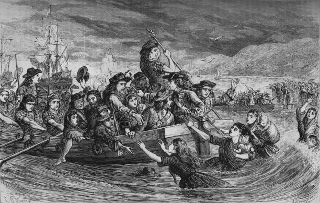
Sarsfield is honored to this day in the crest of County Limerick. The Flight of the Wild Geese is remembered in the poetic words… “War-battered dogs are we, Fighters in every clime, Fillers of trench and of grave, Mockers, bemocked by time. War-dogs, hungry and grey, Gnawing a naked bone, Fighters in every clime, Every cause but our own.”
(Pictured: ‘Irish Troops Leaving Limerick’, 1692, (Cassell Petter & Galpin, London, Paris & New York, c1880), Artist Unknown)
The Anglo-Irish Treaty, commonly known as “The Treaty” and officially the “Articles of Agreement for a Treaty Between Great Britain and Ireland,” is an agreement between the government of the United Kingdom of Great Britain and Ireland and representatives of the Irish Republic that concludes the Irish War of Independence. It provides for the establishment of the Irish Free State within a year as a self-governing dominion within the “community of nations known as the British Empire,” a status “the same as that of the Dominion of Canada.” It also provides Northern Ireland, which had been created by the Government of Ireland Act 1920, an option to opt out of the Irish Free State, which it exercises.
The agreement is signed in London on December 6, 1921, by representatives of the Government of the United Kingdom, which includes Prime MinisterDavid Lloyd George, who is head of the British delegates, and by representatives of the Irish Republic including Michael Collins and Arthur Griffith. The Irish representatives have plenipotentiary status (negotiators empowered to sign a treaty without reference back to their superiors) acting on behalf of the Irish Republic, though the British government declines to recognise that status. As required by its terms, the agreement is ratified by “a meeting” of the members elected to sit in the House of Commons of Southern Ireland and separately by the British Parliament.
Éamon de Valera calls a cabinet meeting to discuss the treaty on December 8, where he comes out against the treaty as signed. The cabinet decides by four votes to three to recommend the treaty to Dáil Éireann on December 14. Though the treaty is narrowly ratified, the split leads to the Irish Civil War, which is won by the pro-treaty side.
During the subsequent Irish War of Independence (1919-1921) O’Connor is made Director of Engineering of the Irish Republican Army (IRA) – a military organisation descended from the Irish Volunteers.
O’Connor does not accept the Anglo-Irish Treaty of 1921, which establishes the Irish Free State and abolishes the Irish Republic declared in 1916, which he and his comrades had sworn to uphold. On March 26, 1922, the anti-treaty officers of the IRA hold a convention in Dublin in which they reject the Treaty compromise and repudiate the authority of the Dáil, the elected Irish Parliament. Asked by a journalist if this means they are proposing a military dictatorship in Ireland, O’Connor replies, “you can take it that way if you want.”
On April 14, 1922, O’Connor, with 200 other hardline anti-treaty IRA men under his command, takes over the Four Courts building in the centre of Dublin in defiance of the new Irish government. They want to provoke the British troops, who are still in the country, into attacking them, which they believe will restart the war with Britain and re-unite the IRA against their common enemy. Michael Collins tries desperately to persuade O’Connor and his men to leave the building before fighting breaks out.
On June 28, 1922, after the Four Courts garrison has kidnapped JJ “Ginger” O’Connell, a general in the new Free State Army, Collins shells the Four Courts with borrowed British artillery. O’Connor surrenders after two days of fighting and is arrested and held in Mountjoy Prison. This incident sparks the Irish Civil War as fighting breaks out around the country between pro and anti-treaty factions.
On December 8, 1922, along with Liam Mellows, Richard Barrett and Joe McKelvey, three other republicans captured with the fall of the Four Courts, Rory O’Connor is executed by firing squad in reprisal for the anti-treaty IRA’s killing of Free State member of parliament Sean Hales. The execution order is given by Kevin O’Higgins, who less than a year earlier had appointed O’Connor to be best man at his wedding, symbolising the bitterness of the division that the Treaty has caused. O’Connor, one of 77 republicans executed by the Cumann na nGaedheal government of the Irish Free State, is seen as a martyr by the Republican movement in Ireland.
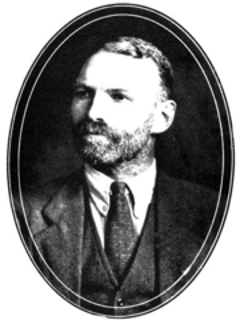
As a historian of sixteenth- and seventeenth-century Ireland, Bagwell works for nearly sixty years to produce his two three-volume works, Ireland under the Tudors (1885–90) and Ireland under the Stuarts (1909–16), using manuscript sources throughout. He is the first to treat this period in a systematic and scholarly fashion. For this solid work he is made Member of the Royal Irish Academy (MRIA) and honoured by the University of Dublin and the University of Oxford in 1918. He also writes the historical entry on “Ireland” for the Encyclopædia Britannica (Chicago 1911).
A one-time liberal, Bagwell is a founder member (1885) of the Irish Loyal and Patriotic Union, renamed the Irish Unionist Alliance (IUA) in 1891. A “diehard” unionist, he is one of the most prominent and respected southern unionists. A tireless political publicist, he is an assiduous letter-writer to the newspapers, a didactic pamphleteer, and a regular speaker at political meetings throughout Ireland. He opposes the majority report of the Irish Convention (1917) and is one of the original signatories of the “Call to unionists” that splits the IUA.
Bagwell serves as a Commissioner on National Education between 1905 and 1918 and a member of the Patriotic Union (Southern Unionists). He holds the position of High Sheriff of Tipperary in 1869. He is a Justice of the Peace for County Tipperary, and later for County Waterford, and holds the office of Deputy Lieutenant of Tipperary. He is also Special Local Government Commissioner between 1898 and 1903 and President of the Borstal Association of Ireland.
Bagwell marries Harriet Philippa Joscelyn, fourth daughter of P. J. Newton of Dunleckney Manor, County Carlow, on January 9, 1873. The couple has one son, John Philip Bagwell, and three daughters, Emily Georgiana, Margaret and Lilla Minnie.
Richard Bagwell dies one hundred years ago today on December 4, 1918 at Marlfield, having suffered from gout for many years.
The Anglo-Irish Agreement, an accord that gives the government of Ireland an official consultative role in the affairs of Northern Ireland, is signed by TaoiseachGarret FitzGerald and British Prime MinisterMargaret Thatcher on November 15, 1985, at Hillsborough Castle in County Down, Northern Ireland. Considered one of the most significant developments in British-Irish relations since the establishment of the Irish Free State in 1922, the agreement provides for regular meetings between ministers in the Irish and British governments on matters affecting Northern Ireland. It outlines cooperation in four areas: political matters, security and related issues, legal matters, including the administration of justice, and the promotion of cross-border cooperation.
The agreement is negotiated as a move toward easing long-standing tension between Britain and Ireland on the subject of Northern Ireland, although Northern Irish unionists, who are in favour of remaining part of the United Kingdom, are themselves strongly opposed to giving their southern neighbour a say in domestic matters. Many political leaders, including Thatcher, who has been strongly committed to British sovereignty in Northern Ireland, have come to believe that a solution to years of sectarian violence in Northern Ireland can only be achieved by means of an all-Ireland arrangement.
Such an attempt had previously been made in 1973. A power-sharing executive, composed of Irish nationalists as well as unionists, was set up in Northern Ireland, and Taoiseach Liam Cosgrave participated in talks with British Prime Minister Edward Heath that resulted in the Sunningdale Agreement. That accord recognized that Northern Ireland’s relationship with Britain could not be changed without the agreement of a majority of its population, and it provided for the establishment of a Council of Ireland composed of members from both the Dáil Éireann (the lower chamber of the Oireachtas) and the Northern Ireland Assembly. That agreement collapsed in May 1974 because of a general strike inspired by unionist opponents of power sharing.
In 1981 FitzGerald launches a constitutional crusade to make the reunification of Ireland more attractive to Northern Ireland’s Protestants. At the end of the year, the Irish and British governments set up an Anglo-Irish intergovernmental council to discuss matters of common concern, especially security. In 1984 the report of the New Ireland Forum, a discussion group that includes representatives of political parties in Ireland and Northern Ireland, sets out three possible frameworks for political development in Ireland: a unitary state, a federal state, and joint sovereignty. Of Ireland’s major political parties, Fianna Fáil prefers a unitary state, which Fine Gael and the Irish Labour Party regard as unrealistic. They prefer the federal option.
In the improved political climate between Britain and Ireland, leaders of the two countries sit down to negotiations. Ireland and Britain agree that any change in the status of Northern Ireland would come about only with the consent of the majority of the people of Northern Ireland, and an intergovernmental conference is established to deal with political, security, and legal relations between the two parts of the island. The agreement is a blow to Northern Ireland’s unionists, because it establishes a consultative role for the government of Ireland in the affairs of Northern Ireland through the Anglo-Irish Secretariat. The Ulster Unionist Party (UUP) and other unionists denounce the agreement, and UUP members of Parliament resign their seats over the issue, although 14 are returned in by-elections in 1986. The party organizes mass protests and boycotts of local councils and files a lawsuit challenging the legality of the agreement. However, these efforts, which are joined by the Democratic Unionist Party, fail to force abrogation of the agreement.
Contacts between the Irish and British governments continue after February 1987 within the formal structure of the intergovernmental conference. Fears that the violence in Northern Ireland would spill into Ireland as a consequence of closer Anglo-Irish cooperation in the wake of the agreement proves unfounded, and the UUP decides to participate in new negotiations on the constitutional future of Northern Ireland in 1990–93. After republican and unionist forces declare cease-fires in 1994, the UUP reluctantly joins discussions with the British and Irish governments and other political parties of Northern Ireland. No deal accepted by all sides is reached until the Good Friday Agreement in April 1998, which creates the Northern Ireland Assembly and new cross-border institutions.



 The
The 


 seamus dubhghaill