The Irish general election is that part of the 1918 United Kingdom general election which takes place in Ireland. The election is now seen as a key moment in modern Irish history because it sees the overwhelming defeat of the moderate nationalistIrish Parliamentary Party (IPP), which had dominated the Irish political landscape since the 1880s, and a landslide victory for the radical Sinn Féin party. The party had never stood in a general election but had won six seats in by-elections in 1917–1918. Sinn Féin vows in its manifesto to establish an independent Irish Republic. In Ulster, however, the Unionist Party is the most successful party.
The election is held in the aftermath of World War I, the Easter Rising and the Conscription Crisis. It is the first general election to be held after the Representation of the People Act 1918. It is thus the first election in which women over the age of 30, and all men over the age of 21, can vote. Previously, all women and most working-class men had been excluded from voting.
In the aftermath of the elections, Sinn Féin’s elected members refuse to attend the British Parliament in Westminster. Instead, they form a parliament in Dublin, the First Dáil Éireann, which declares Irish independence as a republic. The Irish War of Independence is conducted under this revolutionary government which seeks international recognition and sets about the process of state-building.
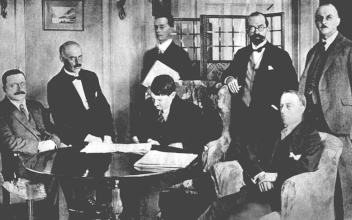
The Anglo-Irish Treaty, commonly known as The Treaty and officially the Articles of Agreement for a Treaty Between Great Britain and Ireland, is signed in the early morning hours of December 6, 1921 by representatives of the Irish government appointed by PresidentÉamon de Valera and those negotiating for the government of the United Kingdom of Great Britain and Ireland, ending the Irish War of Independence against Great Britain. It is then, and remains, one of the most debated moments in Irish history.
The Treaty provides for the establishment of the Irish Free State within a year as a self-governing dominion within the “community of nations known as the British Empire“, a status “the same as that of the Dominion of Canada.” It also provides Northern Ireland, which had been created by the Government of Ireland Act 1920, an option to opt out of the Irish Free State, which it exercises.
The agreement is signed in London by representatives of the British government, which includes Winston Churchill and Prime MinisterDavid Lloyd George, who are old masters at the game of politics, and by representatives of the Irish Republic including Michael Collins and Arthur Griffith, who have nowhere near the political acumen of the British delegation. De Valera, a shrewd, experienced politician, may have been the only man in all of Ireland who might have matched them, but he refuses to join the negotiations.
The Irish representatives have plenipotentiary status acting on behalf of the Irish Republic, though the British government declines to recognise that status. As required by its terms, the Treaty is approved by “a meeting” of the members elected to sit in the House of Commons of Southern Ireland and separately by the British Parliament. In reality, Dáil Éireann, the legislative assembly for the de facto Irish Republic, first debates then approves the treaty. Members then proceed with the “meeting.” Though the Treaty is narrowly approved, the split leads to the Irish Civil War, which is won by the pro-treaty side.
The Irish Free State as contemplated by the Treaty comes into existence when its constitution becomes law on December 6, 1922 by a royal proclamation.
(Pictured: Michael Collins signs the Anglo-Irish Treaty on December 6, 1921)
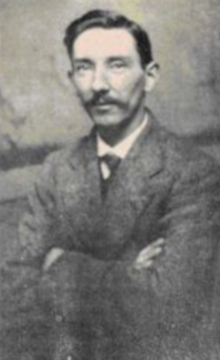
Kearney was born on December 12, 1883, at 68 Lower Dorset Street, Dublin, above one of the two grocer’s shops owned by his father, John Kearney, originally from Funshog, Collon, County Louth. His mother, Katie (née McGuinness), is from Rathmaiden, Slane, County Meath. He is educated at the Model School, Schoolhouse Lane and St. Joseph’s Secondary C.B.S. in Fairview. He hears Willie Rooney give nationalist lectures on history in the Mechanics’ Institute. For a short time, he attends Belvedere College. Following the death of his father, he is left to support his mother and five younger siblings. He has various menial jobs for three years before being apprenticed to a house painter.
In 1901, the death of Willie Rooney prompts Kearney to join the Willie Rooney Branch of the Gaelic League. He joins the Irish Republican Brotherhood in 1903. He teaches night classes in Irish and numbers Seán O’Casey among his pupils. He finds work with the National Theatre Society and in 1904 is one of the first to inspect the derelict building that becomes the Abbey Theatre. He assists with props and performs occasional walk-on parts at the Abbey until 1916.
Kearney is a co-founder of the Irish Volunteers in 1913 and takes part in the Howth and Kilcoole gun runnings in 1914. In the Easter Rising of 1916 he fights at Jacob’s biscuit factory under Thomas MacDonagh, abandoning an Abbey Theatre tour in England to take part in the Rising. He escapes before the garrison is taken into custody.
A personal friend of Michael Collins, Kearney at first takes the Free State side in the Irish Civil War but loses faith in the Free State after Collins’s death. He takes no further part in politics, returning to his original trade of house painting.
Kearney’s songs are highly popular with the Irish Volunteers (which later becomes the Irish Republican Army) in the 1913–1922 period. Most popular is “The Soldier’s Song.” He pens the original English lyrics in 1907 and his friend and musical collaborator Patrick Heeney composes the music. The lyrics are published in 1912 and the music in 1916. After 1916 it replaces “God Save Ireland” as the anthem of Irish nationalists. The Irish Free State is established in 1922 and formally adopts the anthem in 1926.
Other well-known songs by Kearney include “Down by the Glenside,” “The Tri-coloured Ribbon,” “Down by the Liffey Side,” “Knockcroghery” (about the village of Knockcroghery) and “Erin Go Bragh” (Erin Go Bragh is the text on the Irish national flag before the adoption of the tricolour).
Peadar Kearney dies in relative poverty in Inchicore on November 24, 1942. He is buried in Glasnevin Cemetery in Dublin.
The IFA’s first decisions are to elect its first President, Major Spencer Chichester, and to form an annual challenge cup competition similar to the FA Cup and Scottish Cup competitions, called the Irish Cup. Two years later, Ireland plays its first international against England, losing 13–0, which remains a record for both teams, a record win for England and a record loss for Ireland.
Shortly after the partition of Ireland in 1921, the Football Association of Ireland (FAI) is established as a rival association to regulate the game in what is to become the Irish Free State. The immediate cause of the split lay in a bitter dispute over the venue for the replay of an Irish Cup match in 1921 involving Glentoran F.C. of Belfast and Shelbourne F.C. of Dublin. When the first cup match is drawn in Belfast, because of the Irish War of Independence, the IFA reneges on a promise to play the replay in Dublin and schedules the rematch again for Belfast. Shelbourne refuses to comply and forfeits the Cup.
Such is the anger over the issue that the Leinster Football Association breaks away from the IFA and forms its own national association. Those behind the FAI believe that football should be regulated by a federation based in the Irish Free State’s capital, Dublin. They also accuse the IFA of neglecting the development of the game in the South. The IFA’s supporters argue that the federation should be based where the game is primarily played – namely Ulster, and its principal city Belfast.
Both associations claim to represent the whole of the island, each competing internationally under the name “Ireland” and selecting players from both the rival national leagues, which also split at this time. Interventions by FIFA give the FAI de jure organising rights over the 26 counties of the Republic, with the IFA restricted to Northern Ireland. From the 1950s onwards, the IFA no longer claims it is the association for the whole of Ireland.
In 1960, the association moves to its present location on Windsor Avenue in south Belfast, in a building once occupied by Thomas Andrews. The IFA continues to regulate the game in Northern Ireland, and all results obtained by the Irish national side and records in the Irish Football League and the cup competition stand as Northern Irish records.
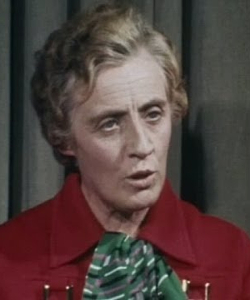
Drumm is born to a staunchly Irish republican family. Drumm’s mother has been active in the Irish War of Independence and the Irish Civil War. Drumm grows up in the village of Killean, County Armagh, where she plays camogie. She is active in the republican movement after meeting her husband, a republican prisoner. She begins to speak at many rallies and protest meetings and is soon elected as Vice President of Sinn Fein. She becomes involved in the Northern Ireland Civil Rights Association in the 1960s and works to rehouse Irish Catholics forced from their homes by loyalist intimidation.
Drumm is jailed twice for seditious speeches. After she is released from HM Prison Armagh, raids on her house by the security forces escalate. She is widely demonised in the British media and is already a target for assassination when she is admitted to Belfast’s Mater Hospital for eye treatment in October 1976.
While recovering from the operation, Drumm is shot at point blank range on October 28, 1976, in a joint operation by the Ulster Volunteer Force and the Ulster Defence Association who are dressed as doctors enabling them to enter and leave the hospital undisturbed. No one has ever been convicted of her murder.
Drumm’s speeches and quotations can be found on murals across Northern Ireland, including:
“The only people worthy of freedom are those who are prepared to go out and fight for it every day, and die if necessary.”
“We must take no steps backward, our steps must be onward, for if we don’t, the martyrs that died for you, for me, for this country will haunt us forever.”
Together with Kevin Gildea and Barry Murphy, O’Hanlon founds the International Comedy Cellar, upstairs in the International Bar on Dublin’s South Wicklow Street. Dublin has no comedy scene at the time. As a stand up, he wins the Hackney Empire New Act of the Year competition in 1994. For a time, he is the presenter of The Stand Up Show.
O’Hanlon moves into straight acting alongside Emma Fielding and Beth Goddard in the ITV comedy-drama Big Bad World, which airs for two series in summer 1999 and winter 2001. He also plays a minor role in The Butcher Boy and appears in an episode of the original Whose Line is it Anyway?.
In 2000, O’Hanlon stars in the comedy series My Hero, in which he plays a very naive superhero from the planet Ultron. His character juggles world-saving heroics with life in suburbia. He stays in the role until the first episode of series 6 in July 2006 where he is replaced by James Dreyfus during the same episode.
O’Hanlon also provides the voice of the lead character in the three Christmas television cartoon specials of Robbie the Reindeer. He appears in the 2005 BBC One sitcom Blessed, written by Ben Elton. Towards the end of 2005, he plays an eccentric Scottish character, Coconut Tam, in the family-based film, The Adventures of Greyfriars Bobby. Although more commonly on television, he also appears on radio. In 2015 he appears as incompetent angel Smallbone in the sitcom The Best Laid Plans, also on BBC Radio 4.
In 2006, O’Hanlon writes and presents an RTÉ television series called Leagues Apart, which sees him investigate the biggest and most passionate football rivalries in a number of European countries. He follows this with another RTÉ show, So You Want To Be Taoiseach? in 2007. It is a political series where he gives tongue-in-cheek advice on how to go about becoming Taoiseach of Ireland.
O’Hanlon appears in the Doctor Who episode “Gridlock“, broadcast on April 14, 2007, in which he plays a cat-like creature named Thomas Kincade Brannigan. He appears in Series 3 of the TV show Skins, playing Naomi Campbell’s Politics teacher named Kieran. He then goes on to form a relationship with Naomi’s mother, played by Olivia Colman. He plays the lead role in Irish comedy television programme Val Falvey, TD on RTÉ One.
O’Hanlon has written a novel, The Talk of the Town, which is published in 1998. The novel is about a teenage boy, Patrick Scully, and his friends.
In February 2015 O’Hanlon officially launches the 2015 Sky Cat Laughs Comedy Festival which takes place in Kilkenny from May 28–June 1. In 2015 he plays the role of Peter the Milkman in the Sky One sitcom After Hours.
On February 2, 2017, it is announced O’Hanlon will play the lead role in the BBC crime drama Death in Paradise taking the role of DI Jack Mooney following Kris Marshall‘s departure the same day.
The Volunteers in County Clare have been active since 1917 and by late 1920 have forced the Royal Irish Constabulary (RIC) to abandon most of its small rural barracks in the county. This gives the IRA greater freedom to move in the countryside. In August 1920, the RIC are reinforced by the British deployment of Black and Tans and Auxiliaries to the county. Five RIC men, eleven IRA volunteers and four civilians have been killed in County Clare during the two years before the ambush.
The Rineen Ambush is ordered by the leadership of the IRA’s Mid-Clare Brigade, who had noticed that a RIC lorry travels every week on the Ennistymon to Milltown Malbay road. John Joe Neylon, leader of the local IRA battalion, is put in charge, although the actual attack is led by Ignatius O’Neill, the Officer Commanding. He is a veteran of World War I who had formerly fought with the Irish Guards. The ambush party has only nine rifles and some grenades, the remainder being armed with shotguns or handguns. They prepare to attack the lorry from a railway bridge that overlooks the road at Rineen.
As the IRA party is lying in wait, Alan Lendrum, the local resident magistrate, drives unwittingly into a roadblock of the IRA’s West Clare Brigade, in an unrelated action. He is stopped at a railway crossing at Caherfeenick near Doonbeg. When the IRA demand he surrender his car, he draws an automatic pistol and the IRA men shoot him twice in the head, fatally wounding him. The IRA weights his body with stones and dumps it in a nearby lake. Even though the British Military inquest establishes that Lendrum had died of gunshot wounds, members of the RIC in Clare spread a false version of events and claim that Lendrum had died of drowning.
Although in strict military sense not related to the ambush, it has serious consequences for the ambush. It is quite quickly noticed that the magistrate is missing and the military in Ennistymon decide to send out a search party of ten lorries of soldiers.
The RIC lorry passes safely through the ambush position, travelling from Ennistymon to Milltown Malbay, due to some confusion among the IRA over the numbers they face. However, when they learn that there is only one lorry, it is attacked on its return journey from Milltown Malbay. The lorry is hit by a grenade and blasted at close range by rifle and shotgun fire. The shooting is over in seconds, with five out of the six RIC men being killed outright. The sixth man manages to run about 300 yards before being shot dead. Five of the dead are Irish RIC officers and one is an English Black and Tan. The IRA take their weapons and burn the lorry.
Not long after the lorry has been set ablaze, the ten-lorry search party arrives on the scene. A running fight develops, as four IRA riflemen keep the troops at bay while the other volunteers make their escape. Two IRA volunteers and several British soldiers are wounded in the firing. Padraic O’Farrell lists the casualties as three British soldiers killed, but this is not confirmed by the other sources.
The British forces, enraged by the ambush and the escape of the IRA force, take out reprisals on civilians in the surrounding area. Immediately after the action ends, they burn the house and farm of the O’Gorman family and shoot a local farmer, Sean Keane, who later dies of his wounds.
That night, a mixed force of police and soldiers raid the Lahinch home of Dan Lehane, whose two sons had taken part in the ambush. They shoot him dead and burn his house. Patrick Lehane, who is hiding in the attic, perishes in the blaze. Several other houses are burned in Lahinch and a further eight are razed in Milltown Malbay. A separate RIC raid takes place in Ennistymon, in which several homes and businesses are burned.
In what may have been a belated reprisal for the ambush, four IRA men are arrested by the Auxiliaries at Killaloe on November 16, beaten, interrogated and then shot dead. Another two are summarily executed in the same manner on December 22 at Kilkee.
The reprisals are condemned in the British, Irish and international press. In the House of Commons, the British Labour Party tables a resolution condemning the reprisals and calling for an investigation. This is defeated by 346 votes to 79. Hamar Greenwood, the Chief Secretary for Ireland, defends the State Forces’ actions, saying that the houses destroyed were those of “notorious Sinn Féiners…I am convinced that the people of those two villages knew of this ambush.”
In Clare itself, according to IRA man Anthony Malone, the ambush has two effects. One is that the RIC becomes careful to travel in convoys of no less than three lorries. The other is that, as a result of the reprisals, the civilian population becomes embittered against the British and adopt a more defiant attitude to the British military and Black and Tans.
The death of Resident Magistrate Alan Lendrum, however, according to pro-republican Catholic priest Sean Gaynor, “was not to our credit.” On October 1, the local IRA remove Lendrum’s body from the lake, put it in a roughly constructed coffin and leave it on the railway tracks at Craggaknock railway station for British forces to find.
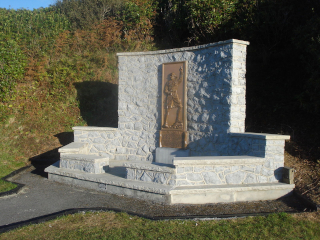
(Pictured: Monument for the attack at Rineen during the Irish War of Independence, designed by Walter Kiernan)
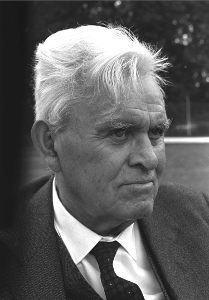
Breen’s father dies when he is six, leaving the family very poor. He is educated locally before becoming a plasterer and later a linesman on the Great Southern Railways.
Breen is sworn into the Irish Republican Brotherhood in 1912 and the Irish Volunteers in 1914. On January 21, 1919, the day the First Dáil meets in Dublin, Breen takes part in the Soloheadbeg Ambush. The ambush party of eight men, led by Seán Treacy, attacks two Royal Irish Constabulary (RIC) men who are escorting explosives to a quarry. The two policemen, James McDonnell and Patrick O’Connell, are fatally shot during the incident. The ambush is considered to be the first incident of the Irish War of Independence.
During the conflict, the British put a £1,000 price on Breen’s head, which is later increased to £10,000. He quickly establishes himself as a leader within the Irish Republican Army. He is known for his courage. On May 13, 1919 he helps rescue his comrade Seán Hogan at gunpoint from a heavily guarded train at Knocklong station in County Limerick. Breen, who is wounded, remembers how the battalion is “vehemently denounced as a cold-blooded assassins” and roundly condemned by the Catholic Church. After the fight, Treacy, Séumas Robinson, and Breen meet Michael Collins in Dublin, where they are told to make themselves scarce although they do not necessarily agree.
Breen and Sean Treacy shoot their way out through a British military cordon in the northern suburb of Drumcondra (Fernside). They escape, only for Treacy to be killed the next day. Breen is shot at least four times, twice in the lung.
The British reaction is to make Tipperary a “Special Military Area,” with curfews and travel permits. Volunteer GHQ authorises entrerprising attacks on barracks. The British policy forces Breen and Treacy to retreat to Dublin. They join Michael Collins’ Squad of assassins, later known as the Dublin Guard, and Dublin becomes the centre of the war.
Breen is present in December 1919 at the ambush in Ashtown beside Phoenix Park in Dublin where Martin Savage is killed while trying to assassinate the Lord Lieutenant of Ireland, Viscount John French. The IRA hides behind hedges and a dungheap as the convoy of vehicles drives past. They have been instructed to ignore the first car but this contains their target, Lord French. Their roadblock fails as a policeman removes the horse and cart intended to stop the car.
Breen utterly rejects the Anglo-Irish Treaty, which makes him, like many others, angry and embittered. In the June 1922 elections Breen is nominated as a candidate by both the pro- and anti-Treaty sides, but is not elected.
Breen is elected to Dáil Éireann at the 1923 general election as a Republican anti-Treaty Teachta Dála (TD) for the Tipperary constituency. Following the Anglo-Irish Treaty, Breen joins the Anti-Treaty IRA in the civil war, fighting against those of his former comrades in arms who support the Treaty. He is arrested by the National Army of the Irish Free State and interned at Limerick Prison. He spends two months there before going on hunger strike for six days followed by a thirst strike of six days, prompting his release.
Breen writes a best-selling account of his guerrilla days, My Fight for Irish Freedom, in 1924. He represents Tipperary from the fourth Dáil in 1923 as a Republican with Éamon de Valera and Frank Aiken. He is defeated in the June 1927 Irish general election and travels to the United States where he opens a prohibitionspeakeasy. In 1932 he returns to Ireland and regains his seat as a member of Fianna Fáil in the Dáil at that year’s general election. During World War II he is said to hold largely pro-Axis views. He represents his Tipperary constituency without a break until his retirement at the 1965 election.
Breen dies in Dublin on December 27, 1969 and is buried in Donohill, near his birthplace. His funeral is the largest seen in west Tipperary since that of his close friend and comrade-in-arms Seán Treacy at Kilfeacle in October 1920. An estimated attendance of 10,000 mourners assemble in the tiny hamlet, giving ample testimony to the esteem in which he was held.
Breen is the subject of a 2007 biography Dan Breen and the IRA by Joe Ambrose.
The railway line between Banteer and Millstreet had been cut in several places so the British Auxiliary forces based at Millstreet have to travel to Banteer by road for their supplies twice a week. As a result, a combined force of 130 Irish Republican Army (IRA) volunteers from the Millstreet, Kanturk, Newmarket, Charleville and Mallow battalion columns are mobilised to attack the Auxiliaries as they return from Banteer. The volunteers are under the command of Paddy O’Brien from Liscarroll.
On the night before the ambush the IRA volunteers sleep at Rathcoole Wood, which overlooks the planned ambush position. Shortly after sunrise the following morning, Captain Dan Vaughan lays six land mines on the untarred road and covers them with dust. After a wait of several hours a convoy of four armour-plated lorries, each mounted with a machine gun and carrying ten men, is observed heading for Banteer.
The volunteers prepare themselves and at 6:20 in the evening, as the lorries pass through the ambush area on their return journey, three of the land mines explode with devastating results. One mine detonates as the last of the four lorries drives over it and another explodes under the leading lorry in the convoy. Both vehicles are out of action with the two other lorries trapped between them. A third mine explodes amid a party of Auxiliaries as they attempted to outflank the position. A bitter firefight develops. Each time Auxiliaries attempt to outflank the IRA they are driven back, suffering losses of more than twenty dead and over a dozen wounded.
When it becomes clear that the IRA cannot achieve a complete victory because of their limited ammunition supply, the order for withdrawal is given and the whole force retires without a single casualty. Although no arms are captured during the action, a reconnaissance party from the column returns the next day to search the ambush position and recovers 1,350 rounds of ammunition which the Auxiliaries had left behind them as they removed their dead and wounded.
The ambush at Rathcoole is one of the Irish Republican Army’s most successful actions during the War of Independence. A week after the ambush, British Forces from Kanturk, Buttevant, Ballyvonaire, Macroom, Ballincollig, Killarney and Tralee carry out a widespread search throughout the Rathcoole area. Michael Dineen, a Volunteer in Kilcorney Company is taken from his brother’s house at Ivale by a party of Auxiliaries and shot dead. On the evening of July 1, the Auxiliaries set fire to and destroy the wood at Rathcoole from where the ambush had been launched. That same day that they shoot and kill a local man, Bernard Moynihan, as he is out cutting hay.
(Pictured: Monument at the site of the Rathcoole Ambush)
Wilson attends Marlborough public school between September 1877 and Easter 1880, before leaving for a crammer to prepare for the Army.
Wilson serves as Commandant of the Staff College, Camberley, and then as Director of Military Operations at the War Office, in which post he plays a vital role in drawing up plans to deploy an Expeditionary Force to France in the event of war. During these years he acquires a reputation as a political intriguer for his role in agitating for the introduction of conscription and in the Curragh incident of 1914, when he encourages senior officers to resign rather than move against the Ulster Volunteers.
As Sub Chief of Staff to the British Expeditionary Force (BEF), Wilson is John French‘s most important adviser during the 1914 campaign, but his poor relations with Douglas Haig and William Robertson see him sidelined from top decision-making in the middle years of the war. He plays an important role in Anglo-French military relations in 1915 and, after his only experience of field command as a corps commander in 1916, again as an ally of the controversial French General Robert Nivelle in early 1917. Later in 1917 he is informal military advisor to British Prime MinisterDavid Lloyd George, and then British Permanent Military Representative at the Supreme War Council at Versailles.
In 1918 Wilson serves as Chief of the Imperial General Staff, the professional head of the British Army. He continues to hold this position after the war, a time when the Army is being sharply reduced in size whilst attempting to contain industrial unrest in the UK and nationalist unrest in Mesopotamia, Iraq and Egypt. He also plays an important role in the Irish War of Independence.


 The
The