seamus dubhghaill

Promoting Irish Culture and History from Little Rock, Arkansas, USA


Leave a comment

Death of Rosie Hackett, Trade Union Leader & Insurgent

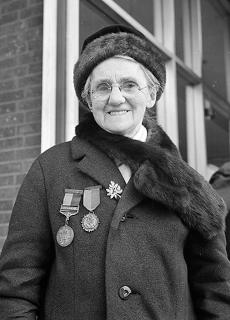
Rosanna “Rosie” Hackett, Irish insurgent and trade union leader, dies on May 4, 1976, at St. Vincent’s Hospital, Fairview, Dublin. She is a founder-member of the Irish Women Workers’ Union (IWWU) and supports strikers during the 1913 Dublin lock-out. She later becomes a member of the Irish Citizen Army and is involved in the 1916 Easter Rising. In the 1970s, the labour movement awards her a gold medal for decades of service, and in 2014 a Dublin city bridge is named in her memory.

Hackett is born into a working-class family in Dublin on July 25, 1893, the daughter of John Hackett, a hairdresser, and Roseanna Dunne. According to the 1901 census, she is living with her widowed mother and five other family members in a tenement building on Bolton Street in Dublin. The available documents suggest that her father dies when she is still very young. She joins the Irish Transport and General Workers’ Union (ITGWU) when it is established in 1909 by James Larkin, which marks the beginning of her lifelong activity in trade unionism. By 1911 she is living with her family in a cottage on Old Abbey Street, and her mother has remarried to Patrick Gray.

Hackett fights for many decades for the rights of workers. Through her affiliation and work with the ITGWU, the IWWU and the Irish Citizen Army, she helps carve out and secure modern-day working conditions. Her career begins as a packer in a paper store, then becoming a messenger for Jacob’s biscuits. At that time the working conditions in the factory are poor.

On August 22, 1911, Hackett helps organise the withdrawal of women’s labour in Jacob’s factory to support their male colleagues who are already on strike. With the women’s help, the men secure better working conditions and a pay rise. Two weeks later, at the age of eighteen, she co-founds the IWWU with Delia Larkin. During the 1913 lock-out she helps mobilise the Jacob’s workers to come out in solidarity with other workers. They, in turn, are locked out by their own employers. This does not stop her work to help others, and she, along with several of her IWWU colleagues, set up soup kitchens in Liberty Hall to help feed the strikers. However, in 1914 her Jacob’s employers sack her over her role in the lock-out.

Hackett begins work as a clerk in the printshop in Liberty Hall, and it is here she becomes involved with the Irish Citizen Army. She is involved in preparations for the 1916 Rising, working in a union shop, helping with printers, and making first-aid kits and knap-sacks.

If other members of the ITGWU were looking for James Connolly, Hackett aids in bringing them to him. She “worked as canvasser and traveler and was called on to carry out many confidential jobs.”

Hackett takes up first aid training provided by Dr. Kathleen Lynn for six months before the Rising and attends night marches organised by the Irish Citizen Army. According to her own account, she says, “A week before Easter, I took part in the ceremony of hoisting the challenge flag over Hall.” Like other girls and women who are involved in the Rising, she carries messages and guns and prepares uniforms and food for Irish Republican Army (IRA) members “and sometimes risky work.”

Three weeks before the Easter Rising, the Royal Irish Constabulary (RIC) raid a shop where Hackett is working. She is alone when they come, and they are looking for a copy of “Gael.” She says to them, “wait until I get the head” and she calls for Connolly. The police are stopped by Connolly and Helena Molony who are armed, and Hackett immediately hides everything, so that when the police come back, they cannot get anything.

Through her experience of working in the printshop, Hackett helps to print the Proclamation of the Irish Republic. She is in the printing room in Liberty Hall as a trusted messenger in 1916 when the Proclamation is printed, and it is the first time she is allowed in. Three men are there when she enters the room and one comes over to her, shakes her hand and congratulates her. It makes her very proud, especially since no one else is allowed to get in. She subsequently tells family members of handing it still wet to James Connolly before it is read by Patrick Pearse outside the entrance to the General Post Office (GPO).

Hackett is an active member of the Irish Citizen Army. On Easter Tuesday, under the command of Constance Markievicz, she takes part in the 1916 Rising and is located in the area of St. Stephen’s Green and the Royal College of Surgeons in Ireland. This position is heavily attacked with guns, short of first aid and “looked like a death trap.” However, after moving from an initially overlooked position in St. Stephen’s Green, it is one of the last positions to surrender. In the Royal College, as a first-aid practitioner, she is allowed entry to the lecture room sanctioned to the Red Cross only. Another first-aider, Aider Nora O’Daily, later reports that during those days, “I have a very kind remembrance of Little Rosie Hackett of the Citizen Army, always cheerful and always willing; to see her face about the place was a tonic itself.”

After surrendering, the rebels are taken to Dublin Castle. Hackett is imprisoned in Kilmainham Gaol for ten days.

In 1917, on the anniversary of Connolly’s death, Hackett, together with Helena Molony, Jennie Shanahan and Brigid Davis, print and hang a poster detailing the anniversary. After the first poster displayed by the ITGWU members is taken down by the police, they work to ensure that their poster will stay on Liberty Hall much longer by staying on top of the roof to defend it. They barricade the door using a ton of coal and nails on the windows. The poster is hanging there until 6:00 p.m. and thousands of people can see it.

After the Rising, Hackett returns to the IWWU which, at its strongest, organises over 70,000 women. After the 1945 laundry strike, they win an extra week of paid holidays for the workers. She attends many important labour union events such as the opening of the new Liberty Hall on May 2, 1965, and Arbour Hill memorial services. Until her retirement, she runs the trade union shops resulting in over five decades of active participation in the Irish trades union movement work to improve conditions for Irish workers. In 1970 she is awarded a gold medal for fifty years of ITGWU membership.

In the 1970s, Walter McFarlane, then branch secretary of the ITGWU, awards an honorary badge for Hackett’s fifty years contribution to the union.

Hackett never marries and lives in Fairview, Dublin, with her brother Tommy until her death on May 4, 1976. She is buried at St. Paul’s plot in Glasnevin Cemetery next to her mother and stepfather. At her burial, she is honoured with a military salute and her coffin is covered with the Irish flag. After her passing, her legacy is remembered in the union’s newspaper, a tale of the strife of Hackett together with the rest of Dublin’s working class, for which she fought to change.

In May 2014, the Rosie Hackett Bridge is officially opened by the Lord Mayor of Dublin. The Hackett Bridge Campaign began in October 2012, led by three women Angelina Cox, an active member of Labour Youth, Jeni Gartland and Lisa Connell. The final shortlist of contending names for the new bridge were Rosie Hackett, Kathleen Mills, Willie Bermingham, Bram Stoker and Frank Duff.

In April 2015, a plaque is unveiled on Foley Street by the North Inner City Folklore Project to commemorate the women of the Irish Citizen Army. The plaque lists Hackett as a member of the St. Stephen’s Green/College of Surgeons garrison during the 1916 Easter Rising.


Leave a comment

Birth of Rosie Hackett, Trade Union Leader & Insurgent

Rosanna “Rosie” Hackett, Irish insurgent and trade union leader, is born into a working-class family in Dublin on July 25, 1893. She is a founder-member of the Irish Women Workers’ Union (IWWU) and supports strikers during the 1913 Dublin lock-out. She later becomes a member of the Irish Citizen Army and is involved in the 1916 Easter Rising. In the 1970s, the labour movement awards her a gold medal for decades of service, and in 2014 a Dublin city bridge is named in her memory.

Hackett is the daughter of John Hackett, a hairdresser, and Roseanna Dunne. According to the 1901 census, she is living with her widowed mother and five other family members in a tenement building on Bolton Street in Dublin. The available documents suggest that her father dies when she is still very young. She joins the Irish Transport and General Workers’ Union (ITGWU) when it is established in 1909 by James Larkin, which marks the beginning of her lifelong activity in trade unionism. By 1911 she is living with her family in a cottage on Old Abbey Street, and her mother has remarried to Patrick Gray.

Hackett fights for many decades for the rights of workers. Through her affiliation and work with the ITGWU, the IWWU and the Irish Citizen Army, she helps carve out and secure modern-day working conditions. Her career begins as a packer in a paper store, then becoming a messenger for Jacob’s biscuits. At that time the working conditions in the factory are poor.

On August 22, 1911, Hackett helps organise the withdrawal of women’s labour in Jacob’s factory to support their male colleagues who are already on strike. With the women’s help, the men secure better working conditions and a pay rise. Two weeks later, at the age of eighteen, she co-founds the IWWU with Delia Larkin. During the 1913 lock-out she helps mobilise the Jacob’s workers to come out in solidarity with other workers. They, in turn, are locked out by their own employers. This does not stop her work to help others, and she, along with several of her IWWU colleagues, set up soup kitchens in Liberty Hall to help feed the strikers. However, in 1914 her Jacob’s employers sack her over her role in the lock-out.

Hackett begins work as a clerk in the printshop in Liberty Hall, and it is here she becomes involved with the Irish Citizen Army. She is involved in preparations for the 1916 Rising, working in a union shop, helping with printers, and making first-aid kits and knap-sacks.

If other members of the ITGWU were looking for James Connolly, Hackett aids in bringing them to him. She “worked as canvasser and traveller and was called on to carry out many confidential jobs.”

Hackett takes up first aid training provided by Dr. Kathleen Lynn for six months before the Rising and attends night marches organised by the Irish Citizen Army. According to her own account, she says, “A week before Easter, I took part in the ceremony of hoisting the challenge flag over Hall.” Like other girls and women who are involved in the Rising, she carries messages and guns and prepares uniforms and food for Irish Republican Army (IRA) members “and sometimes risky work.”

Three weeks before the Easter Rising, the Royal Irish Constabulary (RIC) raid a shop where Hackett is working. She is alone when they come, and they are looking for a copy of “Gael.” She says to them, “wait until I get the head” and she calls for Connolly. The police are stopped by Connolly and Helena Molony who are armed, and Hackett immediately hides everything, so that when the police come back, they cannot get anything.

Through her experience of working in the printshop, Hackett helps to print the Proclamation of the Irish Republic. She is in the printing room in Liberty Hall as a trusted messenger in 1916 when the Proclamation is printed, and it is the first time she is allowed in. Three men are there when she enters the room and one comes over to her, shakes her hand and congratulates her. It makes her very proud, especially since no one else is allowed to get in. She subsequently tells family members of handing it still wet to James Connolly before it is read by Patrick Pearse outside the entrance to the General Post Office (GPO).

Hackett is an active member of the Irish Citizen Army. On Easter Tuesday, under the command of Constance Markievicz, she takes part in the 1916 Rising and is located in the area of St. Stephen’s Green and the Royal College of Surgeons in Ireland. This position is heavily attacked with guns, short of first aid and “looked like a death trap.” However, after moving from an initially overlooked position in St. Stephen’s Green, it is one of the last positions to surrender. In the Royal College, as a first-aid practitioner, she is allowed entry to the lecture room sanctioned to the Red Cross only. Another first-aider, Aider Nora O’Daily, later reports that during those days, “I have a very kind remembrance of Little Rosie Hackett of the Citizen Army, always cheerful and always willing; to see her face about the place was a tonic itself.”

After surrendering, the rebels are taken to Dublin Castle. Hackett is imprisoned in Kilmainham Gaol for ten days.

In 1917, on the anniversary of Connolly’s death, Hackett, together with Helena Molony, Jennie Shanahan and Brigid Davis, print and hang a poster detailing the anniversary. After the first poster displayed by the ITGWU members is taken down by the police, they work to ensure that their poster will stay on Liberty Hall much longer by staying on top of the roof to defend it. They barricade the door using a ton of coal and nails on the windows. The poster is hanging there until 6:00 p.m. and thousands of people can see it.

After the Rising, Hackett returns to the IWWU which, at its strongest, organises over 70,000 women. After the 1945 laundry strike, they win an extra week of paid holidays for the workers. She attends many important labour union events such as the opening of the new Liberty Hall on May 2, 1965, and Arbour Hill memorial services. Until her retirement, she runs the trade union shops resulting in over five decades of active participation in the Irish trades union movement work to improve conditions for Irish workers. In 1970 she is awarded a gold medal for fifty years of ITGWU membership.

In the 1970s, Walter McFarlane, then branch secretary of the ITGWU, awards an honorary badge for Hackett’s fifty years contribution to the union.

Hackett never marries and lives in Fairview, Dublin, with her brother Tommy until her death on July 4, 1976. She is buried at St. Paul’s plot in Glasnevin Cemetery next to her mother and stepfather. At her burial, she is honoured with a military salute and her coffin is covered with the Irish flag. After her passing, her legacy is remembered in the union’s newspaper, a tale of the strife of Hackett together with the rest of Dublin’s working class, for which she fought to change.

In May 2014, the Rosie Hackett Bridge is officially opened by the Lord Mayor of Dublin. The Hackett Bridge Campaign began in October 2012, led by three women Angelina Cox, an active member of Labour Youth, Jeni Gartland and Lisa Connell. The final shortlist of contending names for the new bridge were Rosie Hackett, Kathleen Mills, Willie Bermingham, Bram Stoker and Frank Duff.

In April 2015, a plaque is unveiled on Foley Street by the North Inner City Folklore Project to commemorate the women of the Irish Citizen Army. The plaque lists Hackett as a member of the St. Stephens Green/College of Surgeons garrison during the 1916 Easter Rising.


Leave a comment

Birth of Evelyn Gleeson, Designer & Co-founder of Dun Emer Press

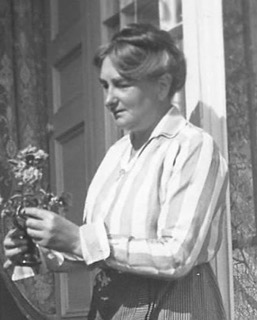
Evelyn Gleeson, English embroidery, carpet, and tapestry designer, is born on May 15, 1855, in Knutsford, Cheshire, England. Along with Elizabeth and Lily Yeats, she establishes the Dun Emer Press.

Gleeson is the daughter of Irish-born Edward Moloney Gleeson, a medical doctor, and Harriet (née Simpson), from Bolton, Lancashire. Her father has a practice in Knutsford but on a trip to Ireland he is struck by the poverty and unemployment and, with the advice of his brother-in-law, a textile manufacturer in Lancashire, he founds the Athlone Woollen Mills in 1859, investing all his money in the project. The family moves to Athlone in 1863, but Gleeson is educated in England, where she trains as a teacher. She later studies portraiture in London at the Atelier Ludovici from 1890–92. She goes on to study design with Alexander Millar, a follower of William Morris, who believes she has an exceptional aptitude for colour-blending. Many of her designs are bought by the exclusive Templeton Carpets of Glasgow.

Gleeson takes a keen interest in Irish affairs and, as a member of the Gaelic League and the Irish Literary Society, mixes with the Yeats family and the Irish artistic circle in London and is inspired by the Gaelic revival in art and literature. She is also involved in the suffrage movement and is chairwoman of the Pioneer Club, a women’s club in London. In 1900, an opportunity arises to make a practical contribution to the Irish renaissance and the emancipation of Irish women. She is suffering from ill-health, but her friend Augustine Henry, botanist and linguist, suggests she move away from the London smog to Ireland and open a craft centre with his financial assistance. She seizes the opportunity and discusses her plans with her friends the Yeats sisters, Elizabeth and Lily, who are talented craftswomen and have direct contact with William Morris and his followers. They have no money to contribute to the venture but are enthusiastic and can offer their skills and provide contacts. She seeks advice from W. B. and Jack Yeats, from Henry, who loans her £500, and from her cousin, T. P. Gill, secretary of the Department of Agriculture and Technical Instruction.

During the summer of 1902 Gleeson finds a suitable house in Dundrum, County Dublin, ten minutes from the railway station. The house, originally called Runnymede, is renamed Dun Emer, after the wife of Cú-Chulainn, renowned for her craft skills. The printing press arrives in November 1902, and soon three craft industries are in operation. Lily Yeats runs the embroidery section, since she had trained with Morris’s daughter May. Elizabeth Yeats operates the press, having learned printing at the Women’s Printing Society in London. Gleeson manages the weaving and tapestry and looks after the financial affairs of the industries. W. B. Yeats acts as literary adviser, an arrangement that often causes friction, and Gleeson’s sister, Constance McCormack, is also involved.

Local girls are employed and trained, and the industries seek to use the best of Irish materials to make beautiful, high-quality, lasting products of original design. Church patronage accounts for most of their orders and, in 1902–03, Loughrea cathedral commissions twenty-four embroidered banners portraying Irish saints. They also make vestments, traditional dresses, drapes, cushions and other items, all beautifully crafted and mostly employing Celtic design. The first book published is In the Seven Woods (1903), by W. B. Yeats, cased in full Irish linen.

Gleeson is in demand as an adjudicator in craft competitions around the country and at Feis na nGleann in 1904 she praises the workmanship of the entries but is critical of the lack of teaching in design. She gives lectures and tries to raise the status of craftwork from household occupation to competitive industry. There are tensions with the Yeats sisters, who complain that she is bad-tempered and arrogant. In truth she had taken on too much of a financial burden, even with the support of grants, and she is anxious to repay her debt to Augustine Henry, which he is prepared to forego. The sisters snub her and omit her name in an interview about Dun Emer in the magazine House Beautiful. Millar, her design teacher in London, likens the omission to Hamlet without the prince. In 1904, it is decided to split the industries on a cooperative basis: Dun Emer Guild Ltd. under Gleeson and Dun Emer Industries Ltd. under the Yeats sisters.

Work continues, and the guild and industries exhibit separately at the Royal Dublin Society (RDS) and other craft competitions. In 1907, the National Museum of Ireland commissions a copy of a Flemish tapestry. It takes far longer than anticipated to complete, but the result is beautiful and is exhibited at the Arts and Crafts Society of Ireland in 1910. The guild wins a silver medal at the Milan International exhibition in 1906. The guild and industries both show work at the New York exhibition of 1908. The guild alone shows work in Boston. By now cooperation has turned to rivalry, and there is a final split as the Yeats sisters leave, taking the printing press with them to their house in Churchtown, Dublin. Gleeson writes off a debt of £185 owed to her, on condition that they do not use the name Dun Emer.

The business thrives at Dundrum, with her niece Katherine (Kitty) MacCormack and Augustine Henry’s niece, May Kerley, assisting with design. Later they move the workshops to Hardwicke Street, Dublin. In 1909, Gleeson becomes one of the first members of the Guild of Irish Art Workers and is made master in 1917. The Irish Women Workers’ Union commissions a banner from her about 1919, and, among numerous other notable successes, a Dun Emer carpet is presented to Pope Pius XI in 1932, the year of the Eucharistic Congress of Dublin.

Gleeson dies at the age of 89 at Dun Emer on February 20, 1944, with Kitty carrying on the Guild after her death. The final home of Dun Emer is a shop on Harcourt Street, Dublin, which finally closes in 1964.

(From: “Gleeson, Evelyn” by Ruth Devine, Dictionary of Irish Biography, http://www.dib.ie, October 2009)
Leave a comment

De Valera’s 1937 Constitution

Éamon de Valera’s new constitution, with its assertions of Ireland as a sovereign 32-county state, and its definition of Catholic morality and “women’s place” is approved on January 14, 1937.

De Valera’s 1937 constitution (Bunreacht na hÉireann) evokes a passionate rebuke of the articles defining the role and rights of women. The aspirations of 1916 had been eroded to the extent that the rights of half of the State’s citizens were reduced and effectively became second-class citizens. In 1936, while formulating the new constitution, Éamon de Valera establishes a civil service committee to assist him. They are all men. He also takes extensive advice from the president of the Supreme Court and the High Court. Both again are men. Archbishop of Dublin, John Charles McQuaid, also heavily influences the final text. There are only three women TDs at the time and none of them say a word in the Dáil debates on the draft.

Women are told that marriage should be their highest aspiration, child rearing their only creative outlet, and that economic dependence their civic duty. That in its turn produces levels of misogyny, emotional sterility and civic immaturity.

Article 41.2.1 becomes famous as ‘a woman’s place is in the home’ statement: “the State recognises that by her life within the home, woman gives to the State a support without which the common good cannot be achieved.”

Many women protest in public and in private during the drafting of de Valera’s constitution. The Irish Women Workers Union, many of whose members had been involved in the 1916 Easter Rising, express outrage. A letter from the secretary to de Valera, quoting the clauses which refer to the position of women says, “it would hardly be possible to make a more deadly encroachment upon the liberty of the individual.” The constitution is accepted and a combination of revisionism and isolationism in the years that follow leave the majority of Ireland’s citizens ignorant of the legacy woman had been denied.

The fundamental principle of the 1916 proclamation, which guaranteed religious and civil liberty, equal rights and equal opportunities to all citizens, echoed by the 1922 Constitution of the Irish Free State, guaranteeing those rights to every person “without distinction of sex,” had been changed.

As commander of the Boland’s Mill outpost in 1916, de Valera had been the only leader to refuse women’s participation in the Rising. As with many of the woman who fought in the Rising, in the same streets where Elizabeth O’Farrell walked through gunfire, now with Article 41 of the Constitution, de Valera closes the door on women’s progress in a more definitive way.


Leave a comment

Death of Helena Molony, Feminist & Labour Activist

helena-moloney

Helena Mary Molony, prominent Irish republican, feminist and labour activist, dies in Dublin on January 28, 1967. She fights in the 1916 Easter Rising and later becomes the second woman president of the Irish Trades Union Congress (ITUC).

Molony is born in Dublin on January 15, 1883, to Michael Molony, a grocer, and Catherine McGrath. Her mother dies early in her life. Her father later remarries, but both became alcoholics, something which influences her years later.

In 1903, inspired by a pro-nationalist speech given by Maud Gonne, Molony joins Inghinidhe na hÉireann and begins a lifelong commitment to the nationalist cause. In 1908 she becomes the editor of the organisation’s monthly newspaper, Bean na hÉireann (Woman of Ireland). The newspaper brings together a nationalist group – Constance Markievicz designs the title page and writes the gardening column, Sydney Gifford writes for the paper and is on its production team and contributors include Eva Gore-Booth, Susan L. Mitchell, and Katharine Tynan, as well as Patrick Pearse, Thomas MacDonagh, George William Russell, Roger Casement, Arthur Griffith and James Stephens.

Molony is central to the school meals activism of the movement. With Maud Gonne, Marie Perolz and others, she organises the supply of daily school meals to children in impoverished areas, and pressures Dublin Corporation and other bodies to provide proper meals to the starved children of Dublin city.

Molony also has a career as an actress and is a member of the Abbey Theatre. However, her primary commitment is to her political work. She is a strong political influence, credited with bringing many into the movement, including Constance Markievicz and Dr. Kathleen Lynn.

As a labour activist, Molony is a close colleague of Markievicz and of James Connolly. In November 1915 Connolly appoints her secretary of the Irish Women Workers’ Union, in succession to Delia Larkin. This union had been formed during the strike at Jacob’s Biscuit Factory that was part of the 1913 Dublin lock-out. She manages the union’s shirt factory in Liberty Hall, founded to give employment to the strikers put out of work and blacklisted after the strike. She is friendly with the family of Thomas MacDonagh and his wife, Muriel, and is the godmother of their daughter Barbara, whose godfather is Patrick Pearse.

Fianna Éireann, the cadet body of the Irish Volunteers, is founded by Constance Markievicz in Molony’s home at 34 Lower Camden Street, Dublin, on August 16, 1909. Markievicz works closely with Molony and Bulmer Hobson in organising the fledgling Fianna. It is during this period of working together in building the Fianna that Molony and Hobson grow close and became romantically linked. However, the relationship does not last.

Molony is a prominent member of Cumann na mBan, the republican women’s paramilitary organisation formed in April 1914 as an auxiliary of the Irish Volunteers. Members of Cumann na mBan train alongside the men of the Irish Volunteers in preparation for the armed rebellion against the English forces in Ireland.

During the 1916 Easter Rising, Molony is one of the Citizen Army soldiers who attacks Dublin Castle. During the defence of City Hall, her commanding officer, Sean Connolly, is killed and she is captured and imprisoned until December 1916.

After the Irish Civil War, Molony becomes the second female president of the Irish Trades Union Congress. She remains active in the republican cause during the 1930s, particularly with the Women’s Prisoner’s Defense League and the People’s Rights Association.

Molony retires from public life in 1946 but continued to work for women’s labour rights. She dies in Dublin on January 28, 1967.


Leave a comment

Death of Sinn Féin Leader Margaret Buckley

Margaret Buckley, Irish republican and leader of Sinn Féin from 1937 to 1950, dies on July 24, 1962.

Originally from Cork, Buckley joins Inghinidhe na hÉireann, which was founded in 1900, taking an active role in the women’s movement. She is involved in anti-British royal visit protests in 1903 and 1907 and is among the group that founds An Dún in Cork in 1910. In 1906, she marries Patrick Buckley, described as “a typical rugby-playing British civil servant.” After his death she moves into a house in Marguerite Road, Glasnevin, Dublin. Later, she returns to Cork to care for her elderly father.

Arrested in the aftermath of 1916 Easter Rising, she is released in the amnesty of June 1917 and plays a prominent role in the reorganisation of Sinn Féin. She is involved in the Irish War of Independence in Cork.

After the death of her father, Buckley returns to Dublin. In 1920, she becomes a Dáil Court judge in the North city circuit, appointed by Austin Stack, the Minister for Home Affairs of the Irish Republic. She opposes the Anglo-Irish Treaty and is interned in Mountjoy Gaol and Kilmainham Gaol, where she goes on a hunger strike. She is released in October 1923. During her imprisonment, she is elected Officer Commanding (OC) of the republican prisoners in Mountjoy, Quartermaster (QM) in the North Dublin Union and OC of B-Wing in Kilmainham. She is an active member of the Women Prisoners’ Defence League, founded by Maud Gonne and Charlotte Despard in 1922.

In 1929, she serves as a member of Comhairle na Poblachta which unsuccessfully attempts to resolve the differences between Sinn Féin and the Irish Republican Army (IRA). She is also an organiser for the Irish Women Workers’ Union.

At the October 1934 Sinn Féin ardfheis, Buckley is elected one of the party’s vice-presidents. Three years later, in 1937, she succeeds Cathal Ó Murchadha, who is a former Teachta Dála (TD) of the second Dáil Éireann, as President of Sinn Féin at an ardfheis attended by only forty delegates.

When she assumes the leadership of Sinn Féin, the party is not supported by the IRA, which had severed its links with the party in the 1920s. When she leaves the office in 1950, relations with the IRA have been resolved. As President she begins the lawsuit Buckley v. Attorney-General, the Sinn Féin Funds case, in which the party seeks unsuccessfully to be recognised as owners of money raised by Sinn Féin before 1922 and held in trust in the High Court since 1924.

In 1938, her book, The Jangle of the Keys, about the experiences of Irish Republican women prisoners interned by the Irish Free State forces is published. In 1956, her Short History of Sinn Féin is published.

Buckley serves as honorary vice-president of Sinn Féin from 1950 until her death in 1962. She is the only member of the Ard Chomhairle of the party not to be arrested during a police raid in July 1957.

Margaret Buckley dies on July 24, 1962, and is buried in St. Finbarr’s Cemetery in Cork.


Leave a comment

Birth of Activist & Feminist Hanna Sheehy-Skeffington

hanna-sheehy-skeffington

Johanna Mary “Hanna” Sheehy-Skeffington, Republican activist and feminist, is born in Kanturk, County Cork, on May 24, 1877.

Sheehy is the eldest daughter of Elizabeth McCoy and David Sheehy, an ex-Fenian and Member of Parliament (MP) for the Irish Parliamentary Party, representing South Galway. One of her uncles, Father Eugene Sheehy, is known as the Land League Priest, and his activities land him in prison. He is also one of Éamon de Valera‘s teachers in Limerick. When Hanna’s father becomes an MP in 1887, the family moves to Drumcondra, Dublin.

Sheehy is educated at the Dominican Convent on Eccles Street, where she is a prize-winning pupil. She then enrolls at St. Mary’s University College, a third level college for women established by the Dominicans in 1893, to study modern French and German. She sits for examinations at Royal University of Ireland and receives a Bachelor of Arts degree in 1899, and a Master of Arts Degree with first-class honours in 1902. This leads to a career as a teacher in Eccles Street and an examiner in the Intermediate Certificate examination.

Sheehy marries Francis Skeffington in 1903, and they both take the surname Sheehy Skeffington, which they do not hyphenate but use as a double name. In 1908, they found the Irish Women’s Franchise League, a group aiming for women’s voting rights.

Sheehy-Skeffington gets into numerous scuffles with the law. She is jailed in 1912 for breaking windows of government buildings in support of suffrage as part of an IWFL campaign. That same year she also throws a hatchet at visiting British Prime Minister Herbert Asquith. She loses her teaching job in 1913 when she is arrested and imprisoned for three months after throwing stones at Dublin Castle and assaulting a police officer in a feminist action. While in jail she goes on hunger strike and is released under the Prisoner’s Temporary Discharge of Ill Health Act but is soon rearrested.

Being free from her teaching job enables Sheehy-Skeffington to devote more time to the fight for suffrage. She is influenced by James Connolly and during the 1913 lock-out works with other suffragists in Liberty Hall, providing food for the families of the strikers.

She strongly opposes participation in World War I which breaks out in August 1914 and is prevented by the British government from attending the International Congress of Women held in The Hague in April 1915. The following June her husband is imprisoned for anti-recruiting activities. He is later shot dead during the 1916 Easter Rising after having been arrested by British soldiers.

Sheehy-Skeffington refuses compensation for her husband’s death, which is offered on condition of her ceasing to speak and write about the murder. Rather, she travels to the United States to publicise the political situation in Ireland. In October 1917, she is the sole Irish representative to League for Small and Subject Nationalities where, along with several other contributors, she is accused of pro-German sympathies. She publishes British Militarism as I Have Known It, which is banned in the United Kingdom until after the World War I. Upon her return to Britain she is once again imprisoned, this time in Holloway prison. After release, Sheehy-Skeffington attends the 1918 Irish Race Convention in New York City and later supports the anti-Treaty Irish Republican Army (IRA) during the Irish Civil War.

In 1926, Sheehy-Skeffington becomes a founding member of Fianna Fáil and is elected to the party’s Ard Comhairle. During the 1930s, she is assistant editor of An Phoblacht. In January 1933, she is arrested in Newry for breaching an exclusion order banning her from Northern Ireland. At her trial she says, “I recognize no partition. I recognize it as no crime to be in my own country. I would be ashamed of my own name and my murdered husband’s name if I did…Long live the Republic!” She is sentenced to a month’s imprisonment.

Sheehy-Skeffington is a founding member of the Irish Women Workers’ Union and an author whose works deeply oppose British imperialism in Ireland. Her son, Owen Sheehy-Skeffington, becomes a politician and Irish Senator.

Hanna Sheehy-Skeffington dies in Dublin on April 20, 1946, at the age of 68 and is buried with her husband in Glasnevin Cemetery, Dublin.