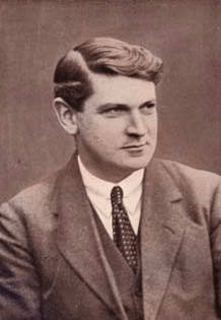
On February 21, 2003, a letter signed by Irish revolutionary leader Michael Collins, written in 1922 upon his return from London, fetches a record price of €28,000 at an auction at James Adam & Sons Ltd. on Dublin’s St. Stephen’s Green. Estimated to fetch up to €8,000.00, despite fierce bidding by the National Library of Ireland, the letter is purchased by singer Enya’s manager, Mickey Ryan, who says he wants the letter to remain in Ireland.
The letter is written after Collins returns to Dublin from a meeting in London with Churchill and Craig. He states in the letter that Craig’s stance on partition is seen as “an unreasonable one and not ours.”
“All the British statesmen are agreed that it was most disastrous on Craig’s part to talk about agreeing to nothing less than the six county area,” Collins writes.
Collins expresses his belief that ties would increase between leaders in the north and south, leading to a united Ireland in the long term. He tells Walsh that he is “no lover of partition, no matter what form it appears,” and that any form of partition is “distasteful” to him. “It would be far better to fix our minds for a time on a united Ireland, for this course will not leave minorities which would be impossible to govern,” he writes. He also says he hopes that one day a multi-denominational party might be formed in the north east, developing links with the Free State and destabilising the northern administration.
Craig is the seventh of nine children of James Craig (1828–1900), a wealthy whiskey distiller who had entered the firm of Dunville & Co. as a clerk and by age 40 is a millionaire and a partner in the firm. Craig Snr. owns a large house called Craigavon, overlooking Belfast Lough. His mother, Eleanor Gilmore Browne, is the daughter of Robert Browne, a prosperous man who owned property in Belfast and a farm outside Lisburn. Craig is educated at Merchiston Castle School in Edinburgh, Scotland. After school he begins work as a stockbroker, eventually opening his own firm in Belfast.
Craig enlists in the 3rd (Militia) battalion of the Royal Irish Rifles on January 17, 1900, to serve in the Second Boer War. He is seconded to the Imperial Yeomanry, a cavalry force created for service during the war, as a lieutenant in the 13th battalion on February 24, 1900, and leaves Liverpool for South Africa on the SS Cymric in March 1900. After arrival he is soon sent to the front and is taken prisoner in May 1900, but released by the Boers because of a perforated colon. On his recovery he becomes deputy assistant director of the Imperial Military Railways, showing the qualities of organisation that are to mark his involvement in both British and Ulster politics. In June 1901 he is sent home suffering from dysentery, and by the time he is fit for service again the war is over. He is promoted to captain in the 3rd Royal Irish Rifles on September 20, 1902, while still seconded to South Africa.
On June 7, 1921, Craig is appointed the first Prime Minister of Northern Ireland by the Lord Lieutenant of Ireland. The House of Commons of Northern Ireland assembles for the first time later that day.
Craig had made his career in British as well as Northern Irish politics, but his premiership shows little sign of his earlier close acquaintance with the British political world. He becomes intensely parochial and suffers from his loss of intimacy with British politicians in 1938, when the British government concludes agreements with Dublin to end the Anglo-Irish trade war between the two countries. He never tries to persuade Westminster to protect Northern Ireland‘s industries, especially the linen industry, which is central to its economy. He is anxious not to provoke Westminster, given the precarious state of Northern Ireland’s position. In April 1939, and again in May 1940 during World War II, he calls for conscription to be introduced in Northern Ireland (which the British government, fearing a backlash from nationalists, refuses). He also calls for Winston Churchill to invade Ireland using Scottish and Welsh troops in order to seize the valuable ports and install a Governor-General at Dublin.
While still prime minister, Craig dies peacefully at his home at Glencraig, County Down at the age of 69 on November 24, 1940. He is buried on the Stormont Estate on December 5, 1940, and is succeeded as the Prime Minister of Northern Ireland by the Minister of Finance, J. M. Andrews.
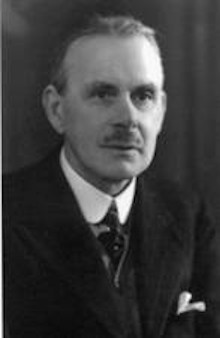
(Pictured: James Craig, 1st Viscount Craigavon, bromide print by Olive Edis, National Portrait Gallery, London)
In April 1943 backbench dissent forces Andrews from office. He is replaced as Prime Minister by Basil Brooke, 1st Viscount Brookeborough. He remains, however, the recognised leader of the UUP for a further three years. Five years later he becomes the Grand Master of the Orange Order. From 1949, he is the last parliamentary survivor of the original 1921 Northern Ireland Parliament, and as such is recognised as the Father of the House. He is the only Prime Minister of Northern Ireland not to have been granted a peerage. His predecessor and successor receive hereditary viscountcies, and later prime ministers are granted life peerages.
Throughout his life Andrews is deeply involved in the Orange Order. He holds the positions of Grand Master of County Down from 1941 and Grand Master of Ireland (1948–1954). In 1949 he is appointed Imperial Grand Master of the Grand Orange Council of the World.
Andrews is a committed and active member of the Non-subscribing Presbyterian Church of Ireland. He regularly attends Sunday worship, in the church built on land donated by his great-grandfather, James Andrews, in his hometown Comber. He serves on the Comber Congregational Committee from 1896 until his death on August 5, 1956, holding the position of Chairman from 1935 onwards. He is buried in the small graveyard adjoining the church.
Andrews is born in Comber, County Down, on July 17, 1871, the eldest child in the family of four sons and one daughter of Thomas Andrews, flax spinner, and his wife Eliza Pirrie, a sister of William Pirrie, 1st Viscount Pirrie, chairman of Harland & Wolff. He is named after his maternal great-uncle, John Miller of Comber (1795–1883). As a young man, with his parents and family, he is a committed and active member of the Non-subscribing Presbyterian Church of Ireland. He regularly attends Sunday worship in the church built on land donated by his great-grandfather James Andrews in his home town Comber.
In 1902 Andrews marries Jessie Ormrod, eldest daughter of Bolton stockbroker Joseph Ormrod at Rivington Unitarian Chapel, Rivington, near Chorley, Lancashire, England. They have one son and two daughters. His younger brother, Sir James, marries Jessie’s sister.
In April 1943 backbench dissent forces him from office. He is replaced as Prime Minister by Sir Basil Brooke. Andrews remains, however, the recognised leader of the UUP for three more years. Five years later he becomes the Grand Master of the Orange Order. Throughout his life he is deeply involved in the Orange Order. He holds the positions of Grand Master of County Down from 1941 and Grand Master of Ireland (1948–1954). In 1949 he is appointed Imperial Grand Master of the Grand Orange Council of the World.
From 1949, he is the last parliamentary survivor of the original 1921 Northern Ireland Parliament, and as such is recognised as the Father of the House. He is the only Prime Minister of Northern Ireland not to have been granted a peerage. His predecessor and successor received hereditary viscountcies, and later prime ministers are granted life peerages.
Andrews serves on the Comber Congregational Committee from 1896 until his death, holding the position of Chairman from 1935 onward. He dies in Comber on August 5, 1956 and is buried in the small graveyard adjoining the Non-subscribing Presbyterian Church of Ireland.
Although the Irish War of Independence officially ends in July 1921, the Irish Republican Army’s conflict with British and unionist forces continues in Northern Ireland and escalates in the first half of 1922. The Ulster IRA, with the tacit but covert assistance of Michael Collins, head of the new Irish Free State, continues to wage a guerrilla war in Northern Ireland. According to historian Alan Parkinson, despite “the IRA having some short-term successes … the main effect of this intensive campaign was to unleash a terrible backlash on the Catholic population in Belfast.” Only a week before the Arnon Street incident, policemen – either Royal Irish Constabulary (RIC) or Ulster Special Constabulary (USC) – kill six Catholic civilians in the McMahon murders.
On the evening of April 1, RIC constable George Turner is patrolling the Old Lodge Road when he is killed by a sniper.
About ten police officers in Brown Square Barracks, upon hearing of Turner’s murder, take a Lancia armoured car and begin touring nationalist areas. When they dismount their vehicle, witnesses hear them shouting “Cut the guts out of them for the murder of Turner.” Their first victim is John McRory who lives on Stanhope Street, just across the road from where Constable Turner had been shot. The police break into his house and shoot him dead in his kitchen. In Park Street, Bernard McKenna, father of seven, is killed while lying in bed. Finally, the police arrived at Arnon Street.
William Spallen, who lives at 16 Arnon Street, has just returned from the funeral of his wife who had also been killed in the conflict. His 12-year-old grandson, Gerald Tumelty, witnesses his death. “Two men came into the room, one was in the uniform of a policeman. They asked my grandfather his name and he said William Spallen. The man in plain clothes fired three shots at him. When I cried out, he said, ‘lie down or I will put a bullet into you.'” Tumelty says the killers then take £20 that his grandfather had to pay for his wife’s funeral.
The attackers then use a sledgehammer to break into the house next door, where they find Joseph Walsh in bed with his seven-year-old son Michael and his two-year-old daughter Bridget. Joseph Walsh is bludgeoned to death with the sledgehammer while Michael Walsh is shot and dies from his wounds the next day. Another son, Frank, is shot in the thigh but survives. Later that evening another Catholic, John Mallon, is shot dead in Skegoneill Avenue.
The unionist press, the Belfast News Letter and Belfast Telegraph, condemn the killings but do not identify the killers as police. The Dublin-based Irish Independent writes that “never even in the worst state of terror in the west and south has the state of affairs which now prevails in the Northern capital been experienced.” Michael Collins sends an angry telegram to Northern Ireland Prime MinisterJames Craig, demanding a joint inquiry into the killings. No such inquiry is set up.
As with the McMahon killings one week earlier, it is strongly suspected that an RIC Detective Inspector, Nixon, operating out of the Brown Street Police barracks, had organised the attack. Nixon and several other policemen fail to turn up at roll call at the barracks immediately after the killings.