seamus dubhghaill

Promoting Irish Culture and History from Little Rock, Arkansas, USA


Leave a comment

Bloomsday, Commemoration & Celebration of Writer James Joyce

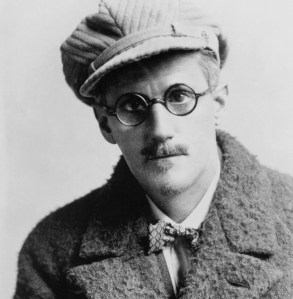
Bloomsday is a commemoration and celebration of the life of Irish writer James Joyce, observed annually in Dublin and elsewhere on June 16, the day his novel Ulysses (1922) takes place in 1904, the date of his first outing with his wife-to-be, Nora Barnacle, and named after its protagonist Leopold Bloom.

The first mention of such a celebration is found in a letter by Joyce to Miss Weaver of June 27, 1924, which refers to “a group of people who observe what they call Bloom’s Day – 16 June.”

The day involves a range of cultural activities, including Ulysses readings and dramatisations, pub crawls and other events, some of it hosted by the James Joyce Centre in North Great George’s Street. Enthusiasts often dress in Edwardian costume to celebrate Bloomsday, and retrace Bloom’s route around Dublin via landmarks such as Davy Byrne’s pub. Hard-core devotees have even been known to hold marathon readings of the entire novel, some lasting up to 36 hours.

The James Joyce Tower and Museum at Sandycove, site of the opening chapter of Ulysses, hosts many free activities around Bloomsday including theatrical performances, musical events, tours of the iconic tower and readings from Joyce’s masterpiece.

In 1954, on the 50th anniversary of the events in the novel, artist, critic, publican and founder of Envoy magazine, John Ryan, and the novelist Brian O’Nolan organise what is to be a daylong pilgrimage along the Ulysses route. They are joined by Patrick Kavanagh, Anthony Cronin, Tom Joyce (Joyce’s cousin, representing the family interest) and A. J. Leventhal, a lecturer in French at Trinity College, Dublin. Ryan engages two horse-drawn cabs, of the old-fashioned sort, in which in Ulysses Mr. Bloom and his friends drive to Paddy Dignam’s funeral. The party are assigned roles from the novel. They plan to travel around the city through the day, starting at the Martello tower at Sandycove where the novel begins, visiting in turn the scenes of the novel, ending at night in what had once been the brothel quarter of the city, the area which Joyce called Nighttown. The pilgrimage is abandoned halfway through when the weary pilgrims succumb to inebriation and rancour at the Bailey pub in the city centre, which Ryan owns at the time, and at which in 1967 he installs the door to No. 7 Eccles Street (Leopold Bloom’s front door), having rescued it from demolition. A Bloomsday record of 1954, informally filmed by John Ryan, follows this pilgrimage.

On Bloomsday 1982, the centenary year of Joyce’s birth, Irish state broadcaster RTÉ transmits a continuous 30-hour dramatic performance of the entire text of Ulysses on radio.

A five-month-long festival, ReJoyce Dublin 2004, takes place in Dublin between April 1 and August 31, 2004. On the Sunday before the 100th “anniversary” of the fictional events described in the book, 10,000 people in Dublin are treated to a free, open-air, full Irish breakfast on O’Connell Street consisting of sausages, rashers, toast, beans, and black and white puddings.

The 2006 Bloomsday festivities are cancelled, the day coinciding with the funeral of former Taoiseach Charles Haughey.

(Pictured: Firstbloom (L to R) John Ryan, Anthony Cronin, Brian O’Nolan, Patrick Kavanagh and Tom Joyce (James Joyce’s cousin); Sandymount, 1954)

Leave a comment

Birth of Tony Award Nominated Actor Milo O’Shea

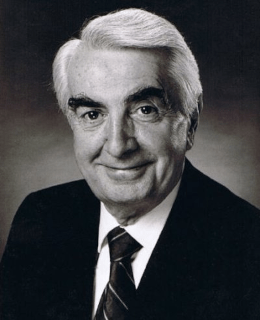
Milo Donal O’Shea, Irish actor twice nominated for the Tony Award for Best Actor in a Play for his performances in Staircase (1968) and Mass Appeal (1982), is born in Dublin on June 2, 1926.

O’Shea is raised in Dublin and educated by the Christian Brothers at Synge Street CBS, along with his friend Donal Donnelly. His father is a singer and his mother a ballet teacher. Because he is bilingual, he performs in English-speaking theatres and in Irish in the Abbey Theatre Company. At age 12, he appears in George Bernard Shaw‘s Caesar and Cleopatra at the Gate Theatre. He later studies music and drama at the Guildhall School of Music and Drama in London and is a skilled pianist.

O’Shea is discovered in the 1950s by Harry Dillon, who runs the 37 Theatre Club on the top floor of his shop, the Swiss Gem Company, 51 Lower O’Connell Street, Dublin. Early in his career he tours with the theatrical company of Anew McMaster.

O’Shea begins acting on the stage, then moves into film in the 1960s. He becomes popular in the United Kingdom, as a result of starring in the BBC sitcom Me Mammy alongside Yootha Joyce. In 1967–68 he appears in the drama Staircase, co-starring Eli Wallach and directed by Barry Morse, which stands as Broadway‘s first depiction of homosexual men in a serious light. For his role in that drama, he is nominated for the Tony Award for Best Actor in a Play in 1968.

O’Shea stars as Leopold Bloom in Joseph Strick‘s 1967 film version of Ulysses. Among his other memorable film roles in the 1960s are the well-intentioned Friar Laurence in Franco Zeffirelli‘s Romeo and Juliet (1968) and the villainous Dr. Durand Durand in Roger Vadim‘s counterculture classic Barbarella (1968). In 1984, he reprises his role as Dr. Durand Durand, credited as Dr. Duran Duran, for the 1985 Duran Duran concert film Arena (An Absurd Notion), since his character inspired the band’s name. He plays Inspector Boot in the 1973 Vincent Price horror/comedy film Theatre of Blood.

O’Shea is active in American films and television, such as his memorable supporting role as the trial judge in the Sidney Lumet-directed movie The Verdict (1982) with Paul Newman, an episode of The Golden Girls in 1987, and portraying Chief Justice of the United States Roy Ashland in the television series The West Wing. In 1992, he guest stars in the season 10 finale of the sitcom Cheers, and, in 1995, in an episode of the show’s spin-off Frasier. He appears in the pilot episode of Early Edition as Sherman.

Other stage appearances include Mass Appeal (1981) in which he originates the role of Father Tim Farley, for which he is nominated for the Tony Award for Best Actor in a Play in 1982, the musical Dear World in which he plays the Sewer Man opposite Angela Lansbury as Countess Aurelia, Corpse! (1986) and a 1994 Broadway revival of Philadelphia, Here I Come!.

O’Shea receives an honorary degree from Quinnipiac University in 2010.

O’Shea’s first wife is Maureen Toal, an Irish actress, with whom he has two sons, Colm and Steven. They divorce in 1974. His second wife is Irish actress Kitty Sullivan, whom he meets in Italy, where he is filming Barbarella and she is auditioning for Man of La Mancha. The couple occasionally act together, such as in a 1981 Broadway revival of My Fair Lady. O’Shea and Sullivan have no children together. They both adopt United States citizenship and reside in New York City, where they both live from 1976.

O’Shea dies on April 2, 2013, in New York City following a short illness at the age of 86. He is buried at Deans Grange Cemetery.


Leave a comment

Original “Ulysses” Manuscript Goes on Display in Dublin

CREATOR: gd-jpeg v1.0 (using IJG JPEG v80), quality = 82

The original manuscript of James Joyce‘s Ulysses arrives in its “spiritual home” for the first time on June 13, 2000 when it goes on display at the Chester Beatty Library on the grounds of Dublin Castle in Dublin, the city that inspired the novel.

Spidery sentences penned on yellowing paper and littered with scribbled alterations make up the first draft of what many scholars consider to be the most influential work of fiction of the 20th century. It is the centerpiece of a Joyce exhibition at the Chester Beatty library which runs through the end of September 2000.

Derick Dreher, director of the Rosenbach Museum and Library in Philadelphia, Pennsylvania, where the manuscript has been kept since 1924, says it marks the homecoming of a work which is “quintessentially Irish.” He adds, “People are amazed that it has never been here before. The novel captures the essence of Dublin and yet was composed entirely on foreign soil and then sold in America.”

Dreher says that Joyce’s handwriting is so bad it is hard to make out what is written on many of the pages. Joyce left Dublin with servant girl, Nora Barnacle, in 1904 and writes Ulysses in Trieste, Zürich and Paris between 1914 and 1921. Ultimately, he marries Barnacle in 1931.

The novel traces the wanderings of a young writer, Stephen Dedalus, and advertisement canvasser, Leopold Bloom, on June 16, 1904, the day on which Joyce first goes out with Barnacle. He sells the manuscript to New York City lawyer and art patron, John Quinn, for $12,000 before its publication in 1921.


2 Comments

Founding of “The Freeman’s Journal”

the-freemans-journal

The Freeman’s Journal, the oldest nationalist newspaper in Dublin, is founded by Charles Lucas on September 10, 1763. It is identified with radical 18th-century Protestant patriot politicians Henry Grattan and Henry Flood. This changes from 1784 when it passes to Francis Higgins and takes a more pro-British and pro-administration view. In fact, Higgins is mentioned in the Secret Service Money Book as having betrayed Lord Edward FitzGerald. Higgins is paid £1,000 for information on FitzGerald’s capture.

In the 19th century The Freeman’s Journal becomes more nationalist in tone, particularly under the control and inspiration of Sir John Gray (1815–75).

The Journal, as it is widely known, is the leading newspaper in Ireland throughout the 19th century. Contemporary sources record it being read to the largely illiterate population by priests and local teachers gathering in homes. It is mentioned in contemporary literature as when James Joyce immortalises The Freeman’s Journal as the place of employment of Leopold Bloom in Ulysses. It is seen as symbolising Irish newspapers for most of its time. By the 1880s it becomes the primary media supporter of Charles Stewart Parnell and the Irish Parliamentary Party (IPP).

The Journal is challenged on all sides by rivals. On the nationalist side some prefer The Nation founded by Thomas Davis while others, including radical supporters of Parnell, read the United Irishman. The Anglo-Irish establishment in contrast reads the historically Irish unionist The Irish Times. With the split in the IPP over Parnell’s relationship with Katharine O’Shea, its readership splits too. While The Journal goes with the majority in 1893 in opposing Parnell, a minority moves to read the Daily Irish Independent. It is also challenged from the turn of the century by William O’Brien‘s The Irish People and the Cork Free Press. With Thomas Sexton becoming Chairman of the Board of Directors (1893–1911), The Journal languishes under his spartanic management.

The collapse of the IPP in 1918, and the electoral success of Sinn Féin, see a more radical nationalism appear that is out of step with the moderation of The Journal. It finds itself overshadowed by the more aggressively marketed Irish Independent, the successor to the Daily Irish Independent. Just prior to the outbreak of the Irish Civil War in March 1922, The Freeman’s Journal printing machinery is destroyed by Anti-Treaty IRA men under Rory O’Connor for its support of the Anglo-Irish Treaty. It does not resume publication until after the outbreak of civil war, when the Irish Free State re-asserts its authority over the country.

The Freeman’s Journal ceases publication in 1924, when it is merged with the Irish Independent. Until the 1990s, the Irish Independent includes the words ‘Incorporating the Freeman’s Journal’ in the masthead over its editorials.


Leave a comment

Birth of Sir Philip Crampton, Surgeon & Anatomist

philip-crampton

Sir Philip Crampton, 1st Baronet, FRS, an eminent Irish surgeon and anatomist, is born in Dublin on June 7, 1777.

Crampton is the son of a dentist. He is a childhood friend of Theobald Wolfe Tone, the United Irishman, and a cousin, on his mother’s side, of Thomas Verner, Grand Master of the Orange Order. He joins the army when young and becomes an assistant surgeon. When he is appointed surgeon to the Meath Hospital in 1798, he is not yet fully qualified and goes on to graduate in Glasgow in 1800. A few years later he also becomes assistant surgeon at the Westmoreland Lock Hospital, Dublin and also builds up a large private practice at his house in Dawson St. He joins Peter Harkan in teaching anatomy in private lectures, forming the first private school of anatomy and surgery in the city.

Crampton becomes a Fellow of the Royal Society (FRS) in Ireland for a treatise on the construction of eyes of birds, written in 1813. This is later published, with other writings, in the Dublin Journal of Medical Science.

In 1821, together with Sir Henry Marsh and Dr. Charles Johnston, Crompton founds the Pitt St. Institution, a children’s hospital in Pitt St. (now Balfe St.). This hospital is the first teaching children’s hospital in Ireland or Great Britain. The main objective of the hospital is to treat sick children in one of the poorest parts of Dublin, The Liberties.

Crompton resigns the chief-surgeoncy of the Westmoreland Lock Hospital when he is appointed surgeon-general to the forces in Ireland. He remains as consulting surgeon to Dr. Steevens’ Hospital and the Dublin Lying-In Hospital. He is three times president of the Dublin College of Surgeons, and he is knighted in 1839.

Crompton is always interested in zoological science and plays an active part in founding the Royal Zoological Society of Ireland and is many times its president. He is also a member of the Royal Irish Academy.

Sir Philip Crampton dies at his residence, 14 Merrion Square, in Dublin on June 10, 1858.

The Crampton Memorial, at the junction of College St. with Pearse St. and D’Olier St., is erected from the design of sculptor John Kirk in 1862. It is of a curious design, consisting of a bust above a fountain and surmounted by a cascade of metal foliage. As it is slowly falling apart, it is removed in 1959. James Joyce references the monument in his novel Ulysses when Leopold Bloom passes the monument and thinks, “Sir Philip Crampton’s memorial fountain bust. Who was he?”


Leave a comment

The Death of James Augustine Aloysius Joyce

james-joyce

James Augustine Aloysius Joyce, considered to be one of the most influential writers in the modernist avant-garde of the early 20th century, dies in Zurich, Switzerland, following surgery for a perforated ulcer on January 13, 1941.

Joyce is born on February 2, 1882, in the wealthy Rathgar suburb of Dublin. The family is initially well off as Dublin merchants with bloodlines that connected them to old Irish nobility in the country. James’ father, John Stanislaus Joyce, is a fierce Irish Catholic patriot and his political and religious influences are most evident in Joyce’s two key works A Portrait of the Artist as a Young Man (1916) and Ulysses (1922).

The Joyce family is repeatedly forced to move to more modest residences due to their steadily diminishing wealth and income. John Joyce’s habitual unemployment as well as his drinking and spending habits make it difficult for the Joyces to retain their social standing. As a young man, Joyce is sent away to the renowned Clongowes Wood College in County Kildare in 1888, a Jesuit institution regarded as the best preparatory school in Ireland. The Clongowes school figures prominently in Joyce’s work, specifically in the story of his recurring character Stephen Dedalus. Joyce earns high marks both at the Clongowes School and at Belvedere College in Dublin where he continues his education. At this point in his life, it seems evident that Joyce is to enter the priesthood, a decision that would please his parents. However, as Joyce makes contact with various members of the Irish Literary Renaissance, his interest in the priesthood wanes. Joyce becomes increasingly critical of Ireland and its conservative elements, especially the Church.

Against his mother’s wishes, Joyce leaves Ireland in 1902 to pursue a medical education in Paris and does not return until the following year upon receiving news of his mother’s debilitation and imminent death. After burying his mother, Joyce continues to stay in Ireland, working as a schoolteacher at a boys’ school, another autobiographical detail that recurs in the story of Stephen Dedalus. After barely spending a year in Dublin, Joyce returns to the Continent, drifting in and out of medical school in Paris before taking up residence in Zurich. It is during this period that Joyce begins writing professionally.

In 1905, Joyce completes a collection of eight stories entitled Dubliners, although it is not actually printed until 1913. During these frustrating and impoverished years, Joyce heavily relies upon the emotional support of Nora Barnacle, his unmarried Irish lover, as well as the financial support of his younger brother, Stanislaus Joyce. Both Nora and Stanislaus remain as protective, supporting figures for the duration of Joyce’s life. During the eight years between Dubliners‘ completion and publication, Joyce and Barnacle have two children, a son named Giorgio, and a daughter named Lucia.

Joyce’s next major work, A Portrait of the Artist as a Young Man, appears in serialized form in 1914 and 1915. Joyce is “discovered” by Ezra Pound and the complete text is printed in New York City in 1916, and in London in 1917. It is with the assistance of Pound, a prominent literary figure of the time, that Joyce comes into contact with Harriet Shaw Weaver, who serves as both editor and patron while Joyce writes Ulysses.

When Ulysses is published in Paris in 1922, many immediately hail the work as genius. With his inventive narrative style and engagement with multiple philosophical themes, Joyce has established himself as a leading Modernist. The novel charts the passage of one day, June 16, 1904, as depicted in the life of an Irish Jew named Leopold Bloom, who plays the role of a Ulysses by wandering through the streets of Dublin. Despite the fact that Joyce is writing in self-imposed exile, living in Paris, Zurich, and Trieste while writing Ulysses, the novel is noted for the incredible amount of accuracy and detail regarding the physical and geographical features of Dublin.

Similar in theme to Joyce’s previous works, Ulysses examines the relationship between the modern man and his myth and history, focusing on contemporary questions of Irish political and cultural independence, the effects of organized religion on the soul, and the cultural and moral decay produced by economic development and heightened urbanization. While Joyce is writing it, there is serious doubt as to whether Ulysses will be completed. Midway through his writing, Joyce undergoes the first of eleven eye operations to salvage his ever-worsening eyesight. At one point, a disappointed Joyce casts the bulk of his manuscript into the fire, but Nora Barnacle immediately rescues it.

While Ulysses is hailed by some, the novel is banned in both the United Kingdom and the United States on obscenity charges. It is not until 1934 that Random House wins a court battle that grants permission to print and distribute Ulysses in the United States. The novel is legalized in Britain two years later.

By this time, Joyce is approaching the end of his public career and has concluded work on his final novel, Finnegan’s Wake (1939). Considered to be far more baffling and convoluted than Ulysses, Finnegan’s Wake is a critical failure. At the outbreak of World War II, Joyce remains in Paris until he is forced to move, first to Vichy, and then to Switzerland. On January 13, 1941, Joyce dies of a stomach ulcer at the age of 58 and is buried in Zurich’s Fluntern Cemetery.