seamus dubhghaill

Promoting Irish Culture and History from Little Rock, Arkansas, USA


6 Comments

Murder of Shane “the Proud” O’Neill

Shane O’Neill, Irish patriot known by the nickname “Shane the Proud,” is murdered in what is now Cushendum, County Antrim, Northern Ireland on June 2, 1567. He is among the most famous of all the O’Neills.

O’Neill, the eldest legitimate son of Conn O’Neill, 1st Earl of Tyrone, is a chieftain whose support the English consider worth gaining. However, he rejects overtures from Thomas Radclyffe, 3rd Earl of Sussex, the Lord Deputy of Ireland, and refuses to help the English against the Scottish settlers on the coast of Antrim. He allies himself instead with the MacDonnells, the most powerful of these immigrants. Nevertheless, Queen Elizabeth I of England is disposed to come to terms with O’Neill who, after his father’s death, is de facto chief of the O’Neill clan. She recognizes his claims to the chieftainship, thus throwing over a kinsman, Brian O’Neill. O’Neill, however, refuses to put himself in the power of Sussex without a guarantee for his safety and his claims are so exacting that Elizabeth determines to restore Brian. An attempt to incite the O’Donnells against him, however, is frustrated.

Elizabeth, who is not prepared to undertake the subjugation of the Irish chieftain, urgently desires peace with O’Neill, especially when the devastation of his territory by Sussex brings him no nearer to submission. Sussex is not supported by the queen, who sends Gerald FitzGerald, 11th Earl of Kildare to arrange terms with O’Neill. The latter agrees to present himself before Elizabeth. Accompanied by Thomas Butler, 10th Earl of Ormond and Kildare, he reaches London on January 4, 1562. Elizabeth temporizes but, finding that O’Neill is in danger of becoming a tool in the hands of Spanish intriguers, permits him to return to Ireland, recognizing him as “the O’Neill,” and chieftain of Tyrone.

There are at this time three powerful contemporary members of the O’Neill family in Ireland — O’Neill, Turlough Lynagh O’Neill, and Matthew Ó Néill, 1st Baron Dungannon. Turlough had schemed to supplant O’Neill during his absence in London. The feud does not long survive O’Neill’s return to Ireland, where he reestablishes his authority and renews his turbulent tribal warfare. Elizabeth at last authorizes Sussex to take the field against O’Neill, but two expeditions fail. O’Neill then lays the entire blame for his lawless conduct on the lord deputy’s repeated alleged attempts on his life. Elizabeth consents to negotiate, and practically all of O’Neill’s demands are conceded.

O’Neill then turns his hand against the MacDonnells, claiming that he is serving the Queen of England in harrying the Scots. He fights an indecisive battle with Sorley Boy MacDonnell near Coleraine in 1564, and in 1565 he routs the MacDonnells and takes Sorley Boy prisoner near Ballycastle. This victory strengthens O’Neill’s position, but the English make preparations for his subjugation.

Failing in an attempt to arrange terms, and also in obtaining the help which he solicited from France, O’Neill is utterly routed by the O’Donnells at the Battle of Farsetmore near Letterkenny and, seeking safety in flight, throws himself on the mercy of his enemies, the MacDonnells. Attended by a small body of gallowglass, and taking his prisoner Sorley Boy with him, he presents himself among the MacDonnells near Cushendun, on the Antrim coast, hoping to propose an alliance. Here, on June 2, 1567, he is killed by the MacDonnells and his headless body is buried at Crosskern Church at Ballyterrim above Cushendun. His body is possibly later moved to Glenarm Abbey. Unbeknownst to O’Neill, The Scots had already come to an agreement with Henry Sidney and William Piers, Seneschal of Clandeboye, commander of the English garrison at Carrickfergus. The English Government tries to pass this off as a “drunken brawl” turned savage. Piers travels to Cushendun to take O’Neill’s head and send it to Dublin Castle.


Leave a comment

Birth of Helen Waddell, Poet & Playwright

helen-waddell

Helen Jane Waddell, Irish poet, translator and playwright, is born in Tokyo, Japan on May 31, 1889.

Waddell is the tenth and youngest child of Hugh Waddell, a Presbyterian minister and missionary who is lecturing in the Imperial University. She spends the first eleven years of her life in Japan before her family returns to Belfast. Her mother dies shortly afterwards, and her father remarries. Hugh Waddell himself dies and leaves his younger children in the care of their stepmother. Following the marriage of her elder sister Meg, she is left at home to care for her stepmother, whose health is deteriorating by this time.

Waddell is educated at Victoria College for Girls and Queen’s University Belfast, where she studies under Professor Gregory Smith, graduating in 1911. She follows her BA with first class honours in English with a master’s degree, and in 1919 enrolls in Somerville College, Oxford, to study for her doctorate. A traveling scholarship from Lady Margaret Hall in 1923 allows her to conduct research in Paris. It is at this time that she meets her life-long friend, Maude Clarke.

Waddell is best known for bringing to light the history of the medieval goliards in her 1927 book The Wandering Scholars and translating their Latin poetry in the companion volume Medieval Latin Lyrics. A second anthology, More Latin Lyrics, is compiled in the 1940s but not published until after her death. Her other works range widely in subject matter. For example, she also writes plays. Her first play is The Spoiled Buddha, which is performed at the Opera House, Belfast, by the Ulster Literary Society. Her The Abbe Prevost is staged in 1935. Her historical novel Peter Abelard is published in 1933. It is critically well received and becomes a bestseller.

Waddell also writes many articles for the Evening Standard, The Manchester Guardian and The Nation, and does lecturing and broadcasting.

Waddell is the assistant editor of The Nineteenth Century magazine. Among her circle of friends in London, where she is vice-president of the Irish Literary Society, are William Butler Yeats, Virginia Woolf, Rose Macaulay, Max Beerbohm and George William Russell. Her personal and professional friendship with Siegfried Sassoon apparently makes the latter’s wife suspicious. Although she never marries, she has a close relationship with her publisher, Otto Kyllmann of Constable & Company.

Waddell receives honorary degrees from Columbia, Belfast, Durham and St. Andrews and wins the Benson Medal of the Royal Society of Literature.

A serious debilitating neurological disease puts an end to her writing career in 1950. She dies in London on March 5, 1965, and is buried in Magherally churchyard, County Down, Northern Ireland. A prize-winning biography of her by the Benedictine nun Dame Felicitas Corrigan is published in 1986.


Leave a comment

Death of Playwright John Brendan Keane

john-brendan-keane

John Brendan Keane, playwright, novelist and essayist, dies in Listowel, County Kerry on May 30, 2002.

Keane is born on Church Street in Listowel on July 21, 1928, the son of a national school teacher, William B. Keane, and his wife Hannah (née Purtill). He is educated at Listowel National School and then at St. Michael’s College, Listowel. He works as a chemist’s assistant for A.H. Jones who dabbles in buying antiques. He has various jobs in the UK between 1951 and 1955 working as a street cleaner and a bartender, living in a variety of places including Northampton and London. It is while he is in Northampton that Keane is first published in an unnamed women’s magazine for which he receives £15.

After returning from the United Kingdom, Keane is a pub owner in Listowel from 1955.

Keane marries Mary O’Connor at Knocknagoshel Church on January 5, 1955 and they have four children: Billy, Conor, John and Joanna. He is an Honorary Life Member of the Royal Dublin Society from 1991, serves as president of Irish PEN and is a founder member of the Society of Irish Playwrights as well as a member of Aosdána. He is named the patron of the Listowel Players after the Listowel Drama Group fractures. He remains a prominent member of the Fine Gael party throughout his life, never being shy of political debate.

Keane cites many literary influences including Bryan MacMahon and George Fitzmaurice, fellow Kerry writers and playwrights. His personal influences are numerous but, most notably he thanks his father and his wife, Mary. He is grateful for his father’s help with early editing, allowing him access to his personal library, and encouraging him to continue his work until he is successful. He is also influenced by the local population and the patrons of his pub from which he bases some of his characters.

Keane dies on May 30, 2002 of complications from prostate cancer, which he had been battling for eight years. His death comes on the eve of the annual Listowel Writers’ Festival, a week-long event at which he had long been a dominating and avuncular presence.

Keane’s nephew is the investigative journalist Fergal Keane. His son John is a journalist with the Kilkenny People while his son Billy regularly writes a column for the Irish Independent.


Leave a comment

Birth of Thomas Moore, Poet, Satirist & Composer

thomas-moore

Thomas Moore, poet, satirist, composer, and political propagandist, is born in Dublin on May 28, 1779. He is best remembered for the lyrics of “The Minstrel Boy” and “The Last Rose of Summer.” He is a close friend of Lord Byron and Percy Bysshe Shelley. As Lord Byron’s named literary executor, along with John Murray, Moore is responsible for burning Lord Byron’s memoirs after his death. In his lifetime he is often referred to as Anacreon Moore.

The son of a Roman Catholic wine merchant, Moore graduates from Trinity College, Dublin, in 1799 and then studies law in London. His major poetic work, Irish Melodies (1807–34), earns him an income of £500 annually for a quarter of a century. It contains such titles as “The Last Rose of Summer” and “Oft in the Stilly Night.” The Melodies, a group of 130 poems set to the music of Moore and of Sir John Stevenson and performed for London’s aristocracy, arouses sympathy and support for the Irish nationalists, among whom Moore is a popular hero.

Lalla-Rookh (1817), a narrative poem set in an atmosphere of Oriental splendour, gives Moore a reputation among his contemporaries rivaling that of Byron and Sir Walter Scott. It is perhaps the most translated poem of its time, and it earns what was until then the highest price paid by an English publisher for a poem (£3,000). His many satirical works, such as The Fudge Family in Paris (1818), portray the politics and manners of the Regency era.

In 1824 Moore becomes a participant in one of the most celebrated episodes of the Romantic era. He is the recipient of Byron’s memoirs, but he and the publisher John Murray burn them, presumably to protect Byron. He later brings out the Letters and Journals of Lord Byron (1830), in which he includes a life of the poet. His lifelong espousal of the Catholic cause leads him to produce such brilliant works as his parody of agrarian insurgency, The Memoirs of Captain Rock (1824), and his courageous biography of the revolutionary leader of the 1798 rebellion, The Life and Death of Lord Edward Fitzgerald (1831).

Moore’s personal life is dogged by tragedy including the deaths of all five of his children within his lifetime and a stroke in later life, which disables him from performances, the activity for which he is most renowned. Moore dies while being cared for by his wife, Elizabeth (nee Dyke), at Sloperton Cottage, Bromham, Wiltshire, England on February 26, 1852. His remains are in a vault at St. Nicholas churchyard, Bromham, within view of his cottage-home and beside his daughter Anastasia.

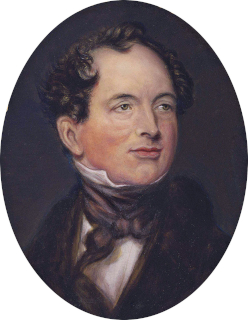
(Pictured: Thomas Moore, after a painting by Thomas Lawrence)


Leave a comment

Birth of Creighton Hale, Irish American Actor

creighton-hale

Creighton Hale, Irish American theatre, film, and television actor, is born Patrick Fitzgerald on May 24, 1882, in County Cork. His career extends more than a half-century, from the early 1900s to the end of the 1950s.

Hale is educated in Dublin and London, and later attends Ardingly College in Sussex. He immigrates to the United States in his early twenties, traveling with a troupe of actors. While starring in Charles Frohman‘s Broadway theatre production of Indian Summer, he is spotted by a representative of the Pathé film company. He eventually becomes known professionally as Creighton Hale, although the derivation of those names remains unknown. His first movie is The Exploits of Elaine in 1914. He stars in hit films such as Way Down East, Orphans of the Storm, and The Cat and the Canary.

Some believe that in 1923 Hale stars in an early pornographic “stag” film On the Beach (a.k.a. Getting His Goat and The Goat Man). In the film, three nude women agree to have sex with him, but only through a hole in a fence. Photographs of the scene clearly show that the man in the film is not Hale but is another actor who also wears glasses.

When talkies come about, Hale’s career declines. He makes several appearances in Hal Roach‘s Our Gang series including School’s Out, Big Ears and Free Wheeling, and also plays uncredited bits in major talking films such as Larceny, Inc., The Maltese Falcon, and Casablanca.

Hale’s two sons, Creighton Hale, Jr. and Robert Lowe Hale, from his first marriage to Victoire Lowe, are adopted by Lowe’s second husband, actor John Miljan. After his divorce, Hale marries Kathleen Bering in Los Angeles in 1931.

Creighton Hale dies in South Pasadena at the age of 83 on August 9, 1965. He is buried at Duncans Mills Cemetery in Duncan Mills, Sonoma County, California.


Leave a comment

Real IRA Designated Foreign Terrorist Organization

real-irish-republican-army

On May 16, 2001, the United States Department of State designates the Real Irish Republican Army, a splinter group of the Irish Republican Army (IRA) charged with killing 29 people in the August 1998 Omagh bombing, as a “foreign terrorist organisation,” a legal term that brings financial and other sanctions. Under U.S. law, any assets the Real IRA has in the United States are frozen, it is illegal to support the organization, and Real IRA members are not eligible for U.S. visas.

The Real IRA broke off from the main Irish Republican Army and its political wing Sinn Féin in 1998 to oppose the decision by Sinn Féin to support the Northern Ireland peace process and work to end 30 years of fighting in Northern Ireland.

As a result of the FTO designation many activities, including fund-raising, of the Real IRA or its two so-called “front groups” or “political pressure groups” — the “32 County Sovereignty Movement” and the “Irish Republican Prisoner Welfare Association” — are now illegal.

A senior State Department official notes that this is the first time a group with “heavy ties” to the United States, with sympathizers and supporters coming from the United States, has been designated as a terrorist organization. But, in the words of this official, the “British and Irish government publicly asked us to look into this.” The “rigorous” review, begun in the fall of 2000, included volumes of evidence and was an inner-agency process that required the signature of the Secretary of the Treasury, the Attorney General and the Secretary of State.

A second State Department official points out that Irish nationalists have typically received the most support from South Boston, New York City and Chicago, where there are heavy concentrations of Irish Americans.

According to the State Department Patterns of Global Terrorism report in 2000, the Real IRA was formed in February-March 1998, has between 150-200 hard-line members and is dedicated to removing British forces from Northern Ireland and unifying Ireland.

The State Department report goes on to accuse the Real IRA of carrying out the bombing of Hammersmith Bridge and a rocket attack against Secret Intelligence Service (MI-6) headquarters in London in 2000.

State Department officials say they absolutely anticipate the Real IRA to challenge the FTO designation in court. The designation comes as the Irish Republic prepares to prosecute Michael McKevitt, the Real IRA’s alleged leader.

Other designated FTOs include 29 organizations: the Abu Nidal Organization, the Abu Sayyaf group, the Palestinian Liberation Front, Al-Qaeda and Tupac Amaru Revolutionary Movement, to name a few.


Leave a comment

Charles II Proclaimed King of Ireland

charles-ii

King Charles II is proclaimed king in Dublin on May 14, 1660, six days after London, thus ending Oliver Cromwell’s reign as Lord Protector and beginning a brief and limited Catholic Restoration.

The Restoration of the monarchy begins in 1660. The Commonwealth of England, Scotland and Ireland (1649–60) result from the Wars of the Three Kingdoms but collapse in 1659. Politicians such as General George Monck try to ensure a peaceful transition of government from the “Commonwealth” republic back to monarchy. From May 1, 1660 the English, Scottish and Irish monarchies are all restored under King Charles II. The term Restoration may apply both to the actual event by which the monarchy was restored, and to the period immediately before and after the event.

With the collapse of The Protectorate in England during May 1659 the republic which had been forced upon Ireland by Oliver Cromwell quickly begins to unravel.

Royalists plan an uprising in Ireland and seek to turn Henry Cromwell and Lord Broghill, who is in contact with the King’s court in the summer of 1659, towards the cause but the plan comes to aught. Henry Cromwell leaves Ireland in June 1659. Broghill shows reluctance to declare for the King, but nevertheless republicans are suspicious of him following George Booth‘s revolt in England in 1659.

Sir Theophilus Jones, a former soldier under Charles I of Ireland and governor of Dublin during the republic, seizes Dublin Castle with a group of officers and declares for Parliament. Acting in Charles II’s interest, Sir Charles Coote seizes Galway while Lord Broghill holds firm in Munster. On January 9, 1660 a council of officers declare Edmund Ludlow a traitor and he flees to England. The regicide Hardress Waller re-takes Dublin Castle in February 1660 but with little support he surrenders to Sir Charles Coote. Waller along with fellow regicide John Cook is arrested and sent to England. The officers in Dublin support General Monck.

The army is purged of radicals and a Convention Parliament is called. Coote seeks to move the Convention Parliament towards restoration, but his rival Broghill does not openly declare for the King until May 1660.

In February 1660 Coote sends a representative to King Charles II in the Netherlands and invites him to make an attempt on Ireland, but the King regards it as inexpedient to try to reclaim Ireland before England. At the same time Broghill sends his brother to invite the King to land at Cork. In March 1660 a document is published asking for the King’s return, “begged for his forgiveness, but stipulated for a general indemnity and the payment of army arrears.”

Following events in England, Charles is proclaimed King of Ireland in Dublin on May 14 without any dissent. The Irish Royal Army is reestablished.

After 1660, the commonwealth parliamentary union is treated as null and void. As in England the republic is deemed constitutionally never to have occurred. The Convention Parliament is dissolved by Charles II in January 1661, and he summons his first parliament in Ireland in May 1661.

(Pictured: Charles II in Garter robes by John Michael Wright or studio, c. 1660–1665)


Leave a comment

Birth of Gabriel Byrne, Actor, Director & Producer

gabriel-james-byrne

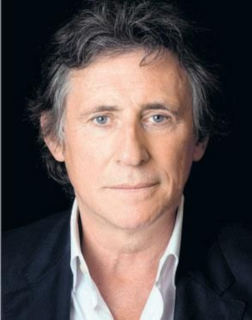
Gabriel James Byrne, internationally acclaimed actor, film director, film producer, writer, cultural ambassador and audiobook narrator, is born in Dublin on May 12, 1950.

Byrne is the first of six children. His father is a cooper and his mother a hospital worker. He is raised Catholic and educated by the Irish Christian Brothers. He spends five years of his childhood in a seminary training to be a Catholic priest. He later says, “I spent five years in the seminary, and I suppose it was assumed that you had a vocation. I have realized subsequently that I didn’t have one at all. I don’t believe in God. But I did believe at the time in this notion that you were being called.” He attends University College Dublin (UCD), where he studies archeology and linguistics, and becomes proficient in the Irish language. He plays football in Dublin with the Stella Maris Football Club.

Byrne works in archeology after he leaves UCD but maintains his love of his language, writing Draíocht (Magic), the first drama in Irish on Ireland’s national Irish television station, TG4, in 1996.

He discovers his acting ability as a young adult. Before that he works at several occupations which include being an archaeologist, a cook, a bullfighter, and a Spanish schoolteacher. He begins acting when he is 29 years old. He begins on stage at the Focus Theatre and the Abbey Theatre in Dublin, later joining the Royal Court Theatre and the Royal National Theatre in London.

Byrne comes to prominence on the final season of the Irish television show The Riordans, later starring in the spin-off series, Bracken. He makes his film début in 1981 as Lord Uther Pendragon in John Boorman‘s King Arthur epic, Excalibur.

Byrne does not visit the United States until he is 37 years old. In 1988, he married actress Ellen Barkin with whom he has two children. The couple separates amicably in 1993 and divorce in 1999.

In November 2004, Byrne is appointed a UNICEF Ireland Ambassador. In 2007 he is presented with the first of the newly created Volta awards at the 5th Jameson Dublin International Film Festival for his lifetime achievement in acting. He also receives the Honorary Patronage of the University Philosophical Society, of Trinity College Dublin on February 20, 2007. He is awarded an honorary degree in late 2007 by the National University of Ireland, Galway, in recognition of his “outstanding contribution to Irish and international film.”

Byrne is featured as therapist Dr. Paul Weston in the critically acclaimed HBO series In Treatment (2008). In his return to theater in 2008, Byrne appears as King Arthur in Alan Lerner and Frederick Loewe‘s Camelot with the New York Philharmonic which is featured in a PBS broadcast in the Live From Lincoln Center series in May of 2008.

Byrne currently resides in Manhattan, New York.

(From IMDb Mini Biography by Bernie Corrigan)


Leave a comment

Death of Joe Heaney, Traditional Irish Singer

joe-heaney

Joe Heaney, traditional Irish singer also known as Joe Éinniú or Seosamh Ó hÉanaí, dies in Seattle, Washington on May 1, 1984. He spends most of his adult life abroad, living in England, Scotland and New York City, in the course of which he records hundreds of songs.

Heaney is born Carna, a remote village in the Irish-speaking district of Connemara, County Galway, along the west coast of Ireland on October 15, 1919. He starts singing at the age of five, but his shyness keeps him from singing in public until he is 20. He learns English at school in Carna. When he is 16 years old, he wins a scholarship to attend school in Dublin. While there he wins first and second prizes at a national singing competition. Most of his repertoire, estimated to exceed 500 songs, is learned while growing up in Carna.

In 1949, Heaney goes to London where he works on building sites and becomes involved in the folk-music scene. He records for the Topic Records and Gael Linn Records labels. He is married for six years until his wife dies of tuberculosis.

Heaney is recorded by Pádraic Ó Raghallaigh for Raidió Teilifís Éireann, and by Peter Kennedy for the BBC in 1959. The BBC recordings are assembled on a BBC LP, not commercially issued, as BBC LP 22570.

Heaney comes to the United States in 1965 at the invitation of the Newport Folk Festival. After singing at Newport, he decides to move to America and settles in New York City. From 1982 until 1984, Heaney is an artist-in-residence at the University of Washington in Seattle after previously having taught at Wesleyan University in Middletown, Connecticut.

Joe Heaney dies of emphysema in Seattle on May 1, 1984. The Joe Heaney Collection of the University of Washington Ethnomusicology Archives is established after his death. The Féile Chomórtha Joe Éinniú (Joe Heaney Commemorative Festival) is held every year in Carna. An Irish-language biography of him has been written by Liam Mac Con Iomaire, and a biography that discusses his work in the larger context of Ireland and the United States was published in 2011 by Sean Williams and Lillis Ó Laoire.


2 Comments

The Suicide of Reverend William Jackson

william-jackson

The Reverend William Jackson, noted Irish preacher, journalist, playwright, radical, and spy, commits suicide on April 30, 1795, after being found guilty of high treason.

Jackson was born in Newtownards, County Down, in 1737. Much is unclear about his early life. He studies at Oxford and becomes an Anglican curate. In the 1760s, he moves to London, where he preaches at the Tavistock Chapel and St. Mary-le-Strand. Although he gains some popularity as a preacher, he remains unbeneficed and eventually turns to journalism to support himself.

In 1766, Jackson becomes the editor of The Public Ledger. Under his editorship, the London paper becomes increasingly strident and oppositional in its politics. He is forced to flee to France in April 1777 to avoid a trial for libel that the popular actor and playwright Samuel Foote had initiated. He does not have to stay long in exile because Foote dies on October 21 of that same year.

After Foote’s death, Jackson returns to England. He resumes his political activities by publishing The Constitutions of the Several Independent States of America in 1783, with a dedication to the opposition leader, William Bentinck, 4th Duke of Portland. But the following year, he is secretly hired by the Prime Minister, William Pitt the Younger, to support the government in The Morning Post. Publishing anonymously, he attacks his former allies with his usual vehemence until he is discovered and is soundly damned for his apostasy and finds himself generally excluded from English politics.

Jackson’s next appearance in the public results in yet another scandal. In 1787 he joins forces with “Gentleman” John Palmer. Their goal is to build a new theatre in London. Jackson and Palmer persuade investors to sink more than eighteen thousand pounds into the construction of the Royalty Theatre. However, while there is no law against building a theatre in London, there is a law against operating one without the Lord Chamberlain‘s authorisation. Jackson and Palmer have no such authorisation so the theatre is shut down after just one night. The duped investors initiated legal action. Jackson again flees to France, where he arrives on the eve of revolution.

During his stay in Paris, Jackson is swept up in the revolutionary fervour and becomes involved with the radical British expatriate set there. Swept up in the general arrest of British subjects in 1793, he is released from prison on the strength of his radical commitments. Upon his release, he becomes inspector of horses for Meaux and later in 1793 is commissioned as a spy for the French. Nicholas Madgett, an Irishman who works in the Marine Ministry, recruits Jackson to go to England and Ireland to assess the public’s inclination towards armed revolution.

Jackson arrives in London in early 1794 and becomes reacquainted with John Cockayne, a lawyer he had met two decades earlier. He reveals his mission to Cockayne, who promptly reveals it to the Prime Minister out of fear of being tried for treason himself. When Jackson leaves London for Dublin, he is accompanied by Cockayne. In Ireland they meet with several radical leaders of the Society of United Irishmen, including Theobald Wolfe Tone, James Reynolds and Archibald Hamilton Rowan. Hamilton Rowan, in particular, is tempted by Jackson’s talk of French assistance, and persuades Tone to write up a report for the French, indicating Irish willingness to rise up. Jackson makes the fatal mistake of placing Tone’s report and other letters in the public mail, where they are seized by the authorities. This seizure leads to Jackson’s arrest on April 28, 1794.

Jackson remains in prison for a year before his trial takes place. The delays are at his request, allowing him time to assemble a defence and procure witnesses. During his imprisonment, he writes his last work, Observations in Answer to Mr. Paine’s Age of Reason (1795). His trial takes place in Dublin on April 23, 1795, and he is found guilty. One week later, on the morning of his sentencing hearing Jackson steps into the dock looking terribly ill. As his lawyers make drawn out speeches, hoping to avoid judgment on the technicality of an improperly filed indictment, Jackson’s condition steadily worsens. The judges order that a chair be provided for him and ask that a doctor attend him. He then collapses and dies. An autopsy finds that Jackson had ingested a large quantity of a “metallic poison.” This is likely administered by his second wife, but the inquest pointedly refuses to assign blame.

The effect of Jackson’s suicide is that he had not actually been pronounced guilty of treason by the court, and so his family can inherit his goods and a pension.