seamus dubhghaill

Promoting Irish Culture and History from Little Rock, Arkansas, USA


Leave a comment

Death of Sir Horace Curzon Plunkett

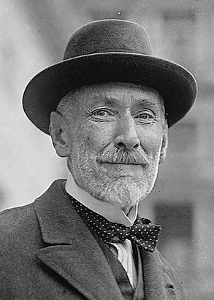
Sir Horace Curzon Plunkett, Anglo-Irish agricultural reformer, pioneer of agricultural cooperatives, Unionist Member of Parliament (MP), supporter of Home Rule, Irish Senator and author, dies in Weybridge, Surrey, England on March 26, 1932.

Plunkett, the third son of Admiral the 16th Baron of Dunsany, of Dunsany Castle, Dunsany, near Dunshaughlin, County Meath, and the Honourable Anne Constance Dutton, daughter of John Dutton, 2nd Baron Sherborne, is born on October 24, 1854. He is educated at Eton College and University College, Oxford, of which he becomes an honorary fellow in 1909.

Threatened by lung trouble in 1879, Plunkett goes to the United States and spends ten years as a cattle rancher in the Bighorn Mountains of Wyoming. He returns to Ireland in 1889 and devotes himself to the agricultural cooperative movement, first organizing creameries and then, in 1894, the Irish Agricultural Organisation Society, a forerunner of similar societies in England, Wales, and Scotland. A moderate Unionist member of Parliament for South County Dublin from 1892 to 1900, he becomes vice president (1899–1907) of the new Department of Agriculture and Technical Instruction for Ireland, which he has been instrumental in creating.

Plunkett’s later experience convinces him of the need for the independence of an Ireland without partition inside the Commonwealth, and he fights strongly for this goal, as chairman of the Irish Convention (1917–18) and, in 1919, as founder of the Irish Dominion League and of the Plunkett Foundation for Cooperative Studies, an agricultural research and information centre. He is appointed to the first Senate of the Irish Free State (1922–23). His house in Dublin is bombed and burned during in the Irish Civil War and he lives in England thereafter. In 1924 the Plunkett Foundation also moves to England. In 1924 he presides over a conference in London on agricultural co-operation in the British Commonwealth and in 1925 he visits South Africa to help the movement there.

Plunkett is made a Fellow of the Royal Society in 1902 and Knight Commander of the Royal Victorian Order in 1903. His writings include Ireland in the New Century (1904) and The Rural Life Problem of the United States (1910).

Sir Horace Plunkett dies at Weybridge, Surrey, England on March 26, 1932.


Leave a comment

Birth of James Agar, 1st Viscount Clifden

agar-ellis-arms

James Agar, 1st Viscount Clifden, Irish peer and politician, is born on March 25, 1734. He holds the office of one of the joint Postmasters General of Ireland.

Agar is the second son of Henry Agar, a former MP for Gowran, and Anne Ellis, and is probably born at Gowran Castle in County Kilkenny. On March 20, 1760, he marries Lucia Martin, widow of Henry Boyle-Walsingham. Together they have three children: Henry-Welbore Agar-Ellis (b. January 22, 1761), John Ellis (b. December 31, 1763), and Charles-Bagnell (b. August 13, 1765).

Agar is made a Baron Clifden on July 27, 1776, and Viscount Clifden on January 12, 1781, and on August 13, 1794, becomes Baron Mendip. His younger brother is Charles Agar, first Earl of Normanton (1736–1809), who becomes the Church of Ireland Archbishop of Dublin.

In addition to being a Member of Parliament (MP) for Gowran, for which he sits three times, from 1753 to 1761, again from 1768 to 1769 and finally from 1776 to 1777, Agar controls three other borough seats through the strength of his family holdings. He represents Kilkenny County between 1761 and 1776 and Thomastown between 1768 and 1769. He holds the post of joint Postmaster General of Ireland with William Ponsonby, 1st Baron Ponsonby between 1784 and 1789.

James Agar dies on January 1, 1789. His eldest son, Henry-Welbore Agar-Ellis, becomes 2nd Viscount Clifden and Baron Mendip.

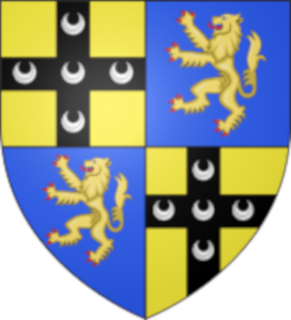
(Pictured: Arms of Agar-Ellis: 1st and 4th quarter: a cross sable charged with five crescents argent for Ellis; 2nd and 3rd quarter: azure with a lion rampant for Agar)


Leave a comment

Birth of Lady Gregory, Writer & Playwright

lady-gregory

Isabella Augusta, Lady Gregory (née Isabella Augusta), Irish playwright, folklorist and theatre manager, is born on March 15, 1852, at Roxborough, County Galway. Her translations of Irish legends, her peasant comedies and fantasies based on folklore, and her work for the Abbey Theatre, play a considerable part in the late 19th-century Irish Literary Revival.

Augusta is the youngest daughter of the Anglo-Irish gentry family Persse. Her mother, Frances Barry, is related to Standish O’Grady, 1st Viscount Guillamore, and her family home, Roxborough, is a 6,000-acre estate located between Gort and Loughrea, the main house of which is later burned down during the Irish Civil War. She is educated at home, and her future career is strongly influenced by the family nanny, Mary Sheridan, a Catholic and a native speaker of the Irish language, who introduces the young Augusta to the history and legends of the local area.

In 1880 Augusta marries Sir William Henry Gregory, a neighbouring landowner who had previously served as a Member of Parliament and as governor of Ceylon. He is a well-educated man with many literary and artistic interests, and his estate at Coole Park houses a large library and extensive art collection, both of which Lady Gregory is eager to explore. He also has a house in London, where the couple spends a considerable amount of time.

Lady Gregory’s literary career does not begin until after Sir Gregory’s death in 1892. In 1896 she meets William Butler Yeats and becomes his lifelong friend and patron. She takes part in the foundation of the Irish Literary Theatre in 1899 and becomes a director of the Abbey Theatre in 1904, which owes much of its success to her skill at smoothing the disputes among its highly individualistic Irish nationalist founders. As a playwright, she writes pleasant comedies based on Irish folkways and picturesque peasant speech, offsetting the more tragic tones of the dramas of Yeats and John Millington Synge.

Lady Gregory writes or translates nearly forty plays. Seven Short Plays (1909), her first dramatic works, are among her best, vivid in dialogue and characterization. The longer comedies, The Image and Damer’s Gold, are published in 1910 and 1913 and her strange realistic fantasies, The Golden Apple and The Dragon, in 1916 and 1920. She also arranges and makes continuous narratives out of the various versions of Irish sagas, translating them into an Anglo-Irish peasant dialect that she labels “Kiltartan.” These are published as Cuchulain of Muirthemne (1902) and Gods and Fighting Men (1904).

Lady Gregory returns to live in Galway after ill health forces her retirement from the Abbey Theatre board in 1928, although she continues to visit Dublin regularly. The house and demesne at Coole Park are sold to the Irish Forestry Commission in 1927, with Lady Gregory retaining life tenancy. Her Galway home had long been a focal point for the writers associated with the Irish Literary Revival, and this continues after her retirement. On a tree in what were the grounds of the house, one can still see the carved initials of Synge, Æ, Yeats and his artist brother Jack, George Moore, Seán O’Casey, George Bernard Shaw, Katharine Tynan and Violet Martin.

Lady Gregory, whom Shaw once described as “the greatest living Irishwoman,” dies at the age of 80 on May 22, 1932, at home from breast cancer. She is buried in the New Cemetery in Bohermore, County Galway. The entire contents of Coole Park are auctioned three months after her death, and the house is demolished in 1941.


Leave a comment

First Clash of the Tithe War

battle-at-carrickshock

The first clash of the Tithe War takes place on March 3, 1831, in Graiguenamanagh, County Kilkenny, when a force of 120 yeomanry attempts to enforce seizure orders on cattle belonging to a Roman Catholic priest. Encouraged by his bishop, he has organised people to resist tithe collection by placing their stock under his ownership prior to sale.

The Tithe War is a campaign of mainly nonviolent civil disobedience, punctuated by sporadic violent episodes, in Ireland between 1830 and 1836 in reaction to the enforcement of tithes on the Roman Catholic majority for the upkeep of the established state church – the Church of Ireland. Tithes are payable in cash or kind and payment is compulsory, irrespective of an individual’s religious adherence.

After Emancipation in 1829, an organized campaign of resistance to collection begins. It is sufficiently successful to have a serious financial effect on the welfare of established church clergy. In 1831, the government compiles lists of defaulters and issues collection orders for the seizure of goods and chattels. Spasmodic violence breaks out in various parts of Ireland, particularly in counties Kilkenny, Tipperary and Wexford. The Royal Irish Constabulary, which had been established in 1822, attempts to enforce the orders of seizures. At markets and fairs, the constabulary often seize stock and produce, which often results in violent resistance.

A campaign of passive resistance is proposed by Patrick “Patt” Lalor, a farmer of Tenakill, Queen’s County (now County Laois), who later serves as a repeal MP. He declares at a public meeting in February 1831 in Maryborough that he would never again pay tithes and, although the tithe men might take his property and offer it for sale, his countrymen would not buy or bid for it if offered for sale. Lalor holds true to his word and does not resist the confiscation of 20 sheep from his farm but is able to ensure no buyers appear at subsequent auctions.

Following the clash at Graiguenamanagh, the revolt soon spreads. On June 18, 1831, in Bunclody, County Wexford, people resisting the seizure of cattle are fired upon by the Royal Irish Constabulary, who kill twelve and wound twenty. One yeoman is shot dead in retaliation. This massacre causes objectors to organise and use warnings such as church bells to signal the community to round up the cattle and stock. On December 14, 1831, resisters use such warnings to ambush a detachment of 40 Constabulary at Carrickshock, County Kilkenny. Twelve constables, including the Chief Constable, are killed and more wounded.

Regular clashes causing fatalities continue over the next two years. On December 18, 1834, the conflict comes to a head at Rathcormac, County Cork, when armed Constabulary reinforced by the regular British Army kill twelve and wound forty-two during several hours of fighting when trying to enforce a tithe order reputedly to the value of 40 shillings.

Finding and collecting livestock chattels and the associated mayhem creates public outrage and proves an increasing strain on police relations. The government suspends collections. In 1838, parliament introduces a Tithe Commutation Act. This reduces the amount payable directly by about a quarter and makes the remainder payable in rent to landlords. They in turn are to pass payment to the authorities. Tithes are thus effectively added to a tenant’s rent payment. This partial relief and elimination of the confrontational collections ends the violent aspect of the Tithe War.

Full relief from the tax is not achieved until the Irish Church Act 1869, which disestablishes the Church of Ireland, by the William Ewart Gladstone government.

(Pictured: The battle at Carrickshock, from Cassell’s Illustrated History of England’, volume VII – 1895.)


Leave a comment

Birth of Stephen Lucius Gwynn, Writer & Politician

stephen-lucius-gwynn

Stephen Lucius Gwynn, journalist, biographer, author, poet, Protestant Nationalist politician, and Member of Parliament (MP) in the House of Commons of the United Kingdom of Great Britain and Ireland, is born on February 13, 1864, in St. Columba’s College, Rathfarnham, Dublin, where his father John Gwynn, a biblical scholar and Church of Ireland clergyman, is a warden.

Gwynn spends his early childhood in rural County Donegal, which shapes his later view of Ireland. He is educated at St. Columba’s College and goes on to Brasenose College, Oxford, where, as scholar, in 1884 he is awarded first-class honours in classical moderations and in 1886 literae humaniores. During term holidays he returns to Dublin, where he meets several of the political and literary figures of the day.

After graduating Gwynn moves to France where he works as a schoolmaster for ten years. In December 1889 he marries his cousin Mary Louisa Gwynn. They have four sons and two daughters. Having dabbled in journalism since his student days, he moves to London in 1896 to pursue a career as a writer. He soon becomes a prominent figure in literary and journalistic circles.

In 1904 the Gwynns return to Ireland to live in Raheny, County Dublin. In November 1906 he wins a seat for Galway Borough, which he represents as a member of the Irish Parliamentary Party until 1918. During this time, he also becomes active with the Gaelic League and the Irish Literary Revival.

At the outbreak of World War I, Gwynn gives his support to John Redmond that Irishmen should enlist in the British forces. At the age of fifty-one he enlists as a private in the 7th Leinster Regiment and is later commissioned lieutenant in the 6th Battalion Connaught Rangers, attached to the 16th (Irish) Division. He is promoted to captain in 1915 and serves with his battalion at the battles of Ginchy and Guillemont during the Somme offensive and also at Messines in 1917, leaving the front line shortly afterwards.

Gwynn is appointed to the Dardanelles Commission in 1916, an investigation into the unsuccessful 1915 Gallipoli Campaign.

After the war Gwynn continues with his writing and political life. He receives honorary doctorates from the National University of Ireland in 1940 and the University of Dublin in 1945. He dies on June 11, 1950, at his home in Terenure, Dublin and is buried at Tallaght cemetery.


Leave a comment

Death of Robert Hobart, 4th Earl of Buckinghamshire

robert-hobart-4th-earl-of-buckinghamshire

Robert Hobart, 4th Earl of Buckinghamshire and former Member of Parliament (MP) for Portarlington and Armagh Borough, dies from a fall from his horse in St. James’s Park, London on February 4, 1816. He is styled Lord Hobart from 1793 to 1804.

Hobart is born at Hampden House on May 6, 1760, the son of George Hobart, 3rd Earl of Buckinghamshire and Albinia, daughter of Lord Vere Bertie, younger son of Robert Bertie, 1st Duke of Ancaster and Kesteven. He is educated at Westminster School, London, and later serves in the American Revolutionary War. He acts as aide-de-camp to successive lord lieutenants of Ireland from 1784 onwards.

Hobart is a Member of Parliament (MP) in the Irish House of Commons for Portarlington from 1784 to 1790 and thereafter for Armagh Borough from 1790 to 1797. He sits also in the House of Commons of the United Kingdom for the rotten borough of Bramber in 1788, a seat he holds until 1790, and then for Lincoln from 1790 to 1796. In 1793 he is invested a member of the Privy Council, and appointed Governor of Madras. In 1798 he is recalled to England by the President of the Board of Control responsible for Indian affairs, Henry Dundas, and summoned to the House of Lords through a writ of acceleration in his father’s junior title of Baron Hobart.

Hobart later serves as Secretary of State for War and the Colonies from 1801 to 1804 when it is said he had “a better grasp of the local or colonial conditions, and a more active spirit than did some of his successors.” He is Chancellor of the Duchy of Lancaster in 1805 and again in 1812, Postmaster General from 1806 to 1807 and President of the Board of Control from 1812 to 1816. Hobart, the capital of Tasmania, is named after him.

Hobart marries firstly Margaretta, daughter of Edmund Bourke, in 1792. They have one son, who dies in infancy, and a daughter, Lady Sarah, who marries Prime Minister Lord Goderich and is the mother of George Robinson, 1st Marquess of Ripon. After Margaretta’s death in 1796 he marries secondly the Hon. Eleanor Agnes, daughter of William Eden, 1st Baron Auckland, in 1799. There are no children from this marriage.

Robert Hobart dies at Hamilton Place, London, on February 4, 1816 at the age of 55, after falling from his horse. He is succeeded in the earldom by his nephew, George. Lady Buckinghamshire dies in October 1851, at the age of 74.


Leave a comment

Laying of the Foundation Stone of Parliament House

parliament-house

The foundation stone of Parliament House in College Green is laid on February 3, 1729, by Thomas Wyndham, 1st Baron Wyndham, the Lord Chancellor of Ireland. Parliament House is initially home to the Parliament of Ireland and later houses the Bank of Ireland. It is the world’s first purpose-built bicameral parliament house. The current parliament building is Leinster House.

The building is home to the two Houses of Parliament, serving as the seat of both chambers, the House of Lords and House of Commons, of the Parliament of the Kingdom of Ireland for most of the 18th century until that parliament is abolished by the Acts of Union 1800, when Ireland becomes part of the United Kingdom of Great Britain and Ireland.

In the 17th century, parliament settles at Chichester House, a town house in Hoggen Green (later College Green) formerly owned by Sir George Carew, Lord President of Munster and Lord High Treasurer of Ireland, which had been built on the site of a nunnery disbanded by King Henry VIII at the time of the dissolution of the monasteries. Carew’s house, named Chichester House after its later owner Sir Arthur Chichester, is a building of sufficient importance to have become the temporary home of the Kingdom of Ireland’s law courts during the Michaelmas law term in 1605. Most famously, the legal documentation facilitating the Plantation of Ulster is signed there on November 16, 1612.

Chichester House is in a dilapidated state, allegedly haunted and unfit for official use. In 1727 parliament votes to spend £6,000 on a new building on the site. It is to be the world’s first purpose-built two-chamber parliament building.

The then ancient Palace of Westminster, the seat of the English before 1707 and, later, British Parliament, is a converted building. The House of Commons‘s odd seating arrangements is due to the chamber’s previous existence as a chapel. Hence MPs face each other from former pews.

The design of the new building, one of two purpose-built Irish parliamentary buildings (along with Parliament Buildings, Stormont), is entrusted to an architect, Edward Lovett Pearce, who is a member of parliament and a protégé of the Speaker of the Irish House of Commons, William Conolly of Castletown House. During construction, Parliament moves into the Blue Coat Hospital on Dublin‘s Northside.

The original, domed House of Commons chamber is destroyed by fire in the 1790s, and a less elaborate new chamber, without a dome, is rebuilt in the same location and opened in 1796, four years before the Parliament’s ultimate abolition.

Pearce’s designs come to be studied and copied both at home and abroad. The Viceregal Apartments in Dublin Castle imitate his top-lit corridors. The British Museum in Bloomsbury in London copies his colonnaded main entrance. His impact reaches Washington, D.C., where his building, and in particular his octagonal House of Commons chamber, is studied as plans are made for the United States Capitol building. While the shape of the chamber is not replicated, some of its decorative motifs are, with the ceiling structure in the Old Senate Chamber and old House of Representatives chamber (now the National Statuary Hall) bearing a striking resemblance to Pearce’s ceiling in the House of Commons.

(Pictured: Architectural drawing of the front of Parliament House by Peter Mazell based on the drawing by Rowland Omer, 1767)


1 Comment

Birth of Sir Arthur Philip du Cros

arthur-du-cros

Sir Arthur Philip du Cros, British industrialist and politician, is born in Dublin on January 26, 1871.

Du Cros is the third of seven sons of Harvey du Cros. He is brought up in modest circumstances. His father, later a well-known manufacturer, is at the time only a bookkeeper with an income of £170 a year. He attends a national school in Dublin and then enters the civil service at the lowest grade. In 1892 he joins the Pneumatic Tyre and Booth’s Cycle Agency Ltd, of which his father is now the chairman, and is made a joint managing director in 1896 when it is floated as a public company.

In 1895 du Cros marries Maude Gooding, the daughter of a Coventry watch manufacturer. They have two sons and two daughters before a divorce in 1923.

In 1901 du Cros founds the Dunlop Rubber Company, converting 400 acres of land in Birmingham to produce and manufacture tires, with the area henceforth being known as Fort Dunlop. The firm eventually diversifies into making other rubber products as well as tires, and du Cros selects plantations in Malaya and Sri Lanka for the company, which by 1917 owns 60,000 acres of rubber-producing land.

In 1906 du Cros enters politics, unsuccessfully contesting the seat of Bow & Bromley as a Conservative Party candidate, a seat his brother is elected to in 1910. In 1908 he is elected Member of Parliament for Hastings, a position his father had held immediately before.

In 1909 du Cros forms, and is director of, the Parliamentary Aerial Defence Committee to ensure funding for military aeronautical development, of which he is a strong proponent. During World War I he works for the Ministry of Munitions on an honorary basis, buying two motorised ambulance convoys out of his own money and helping raise an infantry battalion, being a former captain of the Royal Warwickshires and for some years being the honorary colonel of the 8th battalion of the Royal Warwickshire Regiment. In 1916 he is created a baronet. He continues to represent Hastings until 1918, when he is elected as a Member of Parliament for Clapham, a position he resigns four years later.

His later career is awash with financial impropriety. He finds it difficult to distinguish between personal and company assets, using company funds to sponsor family investments and appointing family members to senior position with no regard for merit. He also participates in financial manipulation, being a close associate of James White, a financial expert who specialises in share rigging and whose actions leave Dunlop, had already lost influence within the company, close to collapse in 1921. He is quietly removed after the 1921 crash.

Arthur du Cros dies at home near Watford, Hertfordshire on October 28, 1955, at the age of 84. He is interred in Finstock, Oxfordshire.


1 Comment

Birth of William Lewery Blackley, Divine & Social Reformer

william-lewery-blackley

William Lewery Blackley, divine and social reformer, is born at Dundalk, County Louth on December 30, 1830.

Blackley is the second son of Travers Robert Blackley of Ashtown Lodge, County Dublin and Eliza, daughter of Colonel Lewery, who is taken prisoner by the French at Verdun. His maternal grandfather is Travers Hartley, MP for Dublin (1776-1790) and governor of the Bank of Ireland.

In boyhood Blackley is sent with his brother John to a school at Brussels kept by Dr. Carl Martin Friedlander, a Polish political refugee, whose daughter, Amelia Jeanne Josephine, he subsequently marries on July 24, 1855. There he acquires proficiency in French, German, and other foreign languages. In 1847 he returns to Ireland, entered Trinity College, Dublin, graduating B.A. in 1850, M.A. in 1854, and takes holy orders. In 1854 he becomes curate of St. Peter’s, Southwark, but an attack of cholera compels his retirement from London. From 1855 to 1867 he has charge of two churches at Frensham, near Farnham, Surrey. He is rector of North Waltham, Hampshire (1867-1883), and King’s Somborne (1883-1889). In 1883 he is made honorary canon of Winchester.

Blackley, who is an energetic parish priest and is keenly interested in social questions, carefully elaborates a scheme for the cure of pauperism by a statutory enforcement of thrift which has far-reaching results at home and abroad. In November 1878 he contributes to the Nineteenth Century an essay entitled National Insurance a Cheap, Practical, and Popular Way of Preventing Pauperism, and thenceforth strenuously advocates a scheme of compulsory insurance, which the National Providence League, with the Earl of Shaftesbury as president, is formed in 1880 to carry into effect. At the same time he recommends temperance as a means of social regeneration. His views reach a wide public through his writings, which include How to teach Domestic Economy (1879), Collected Essays on the Prevention of Pauperism (1880), Social Economy Reading Book, adapted to the New Code (1881), Thrift and Independence; a Word for Working-men (1884).

Blackley’s scheme provides that all persons between eighteen and twenty should subscribe to a national fund, and should receive in return a week in time of sickness, and a week after the age of seventy. The plan is urged on the House of Lords by the Earl of Carnarvon in 1880, and is the subject of inquiry by a select committee of the House of Commons from 1885 to 1887. The majority of the boards of guardians in England and Wales support the proposals, but the commons’ committee, while acknowledging Blackley’s ingenuity and knowledge, reports adversely on administrative and actuarial grounds. At the same time the friendly societies, which Blackley has censured in his Thrift and Independence, regards the principle of compulsion as a menace to their own growth, and their historian and champion, the Rev. John Frome Wilkinson, sharply criticises Blackley’s plan in The Blackley National Providence Insurance Scheme; a Protest and Appeal (1887). Blackley’s plan, although rejected for the time, stimulates kindred movements in the colonies and in foreign countries, and leads directly to the adoption of old age pensions in England by legislation in 1908, while the national insurance scheme which receives parliamentary sanction in 1911 bears some trace of Blackley’s persistent agitation.

In 1887 Blackley, who is director of the Clergy Mutual Insurance Company, makes proposals to the church congress which lead to the formation of the “Clergy Pension Scheme” and of a society for ecclesiastical fire insurance. In the autumn of 1889 Blackley, whose active propagandism brings him constantly to London, becomes vicar of St. James the Less, Vauxhall Bridge Road. There he enlarges the schools and builds a parish hall and a vicarage.

William Lewery Blackley dies after a brief illness at 79 St. George’s Square, on July 25, 1902. Brasses are put up in Blackley’s memory in the churches of St. James the Less, North Waltham, and Frensham.


Leave a comment

Birth of Charles Monck, 1st Governor General of Canada

charles-stanley-monck

Charles Stanley Monck, 4th Viscount Monck GCMG PC, the last Governor-General of the Province of Canada and the first Governor General of Canada after Canadian Confederation, is born on October 10, 1819 in Templemore, County Tipperary. Prior to Confederation he is concurrently Lieutenant Governor of both Canada West and Canada East. He is the son of Charles Monck, 3rd Viscount Monck, and his wife Bridget née Willington.

Monck obtains a law degree from Trinity College, Dublin. He marries his first cousin Lady Elizabeth Louise Mary Monck on July 24, 1844, and in 1849 he inherits his father’s title of Viscount Monck. In 1852 he is elected MP for Portsmouth, and from 1855 to 1858 he serves as Lord of the Treasury under Henry John Temple, 3rd Viscount Palmerston.

In 1861 Monck is appointed Governor General of British North America as well as Governor of the Province of Canada. During this time, the Canadian colonies are beginning to organise themselves into a confederation. The American Civil War has just broken out, and the Trent Affair causes diplomatic tension between the United States and Britain. The Canadian government is eager to gain some measure of independence during this turbulent period. The Quebec Conference, the Charlottetown Conference, and the London Conference, at which the details of confederation are discussed, all take place during Monck’s time as governor. Monck supports the idea, and works closely with John A. Macdonald, George Brown, George-Étienne Cartier, and Étienne-Paschal Taché, who form the “Great Coalition” in 1864.

In 1866 Monck becomes a peer with the title Baron Monck. When the Canadian colonies become a semi-independent confederation the next year, he becomes the country’s first Governor General. He is also responsible for establishing Rideau Hall as the residence of the Governor General in Ottawa.

In 1869 Monck is succeeded by John Young, 1st Baron Lisgar. He returns home to Ireland, where he becomes Lord Lieutenant of Dublin in 1874. He dies in Enniskerry, County Wicklow on November 29, 1894.