seamus dubhghaill

Promoting Irish Culture and History from Little Rock, Arkansas, USA


Leave a comment

Birth of David Ford, Northern Irish Politician

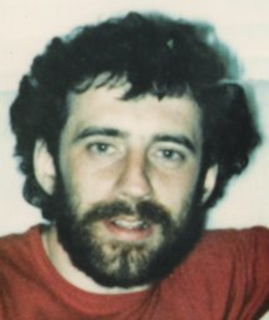
David Ford, former Northern Irish politician, is born on February 24, 1951, to Irish and Welsh parents in Orpington, Kent, England. He serves as leader of the Alliance Party of Northern Ireland from October 2001 until October 2016 and is Northern Ireland Minister of Justice from April 2010 until May 2016. He is a Member of the Northern Ireland Assembly (MLA) for South Antrim from 1998 to 2018.

Ford is educated at Warren Road Primary School, Orpington, and Dulwich College, London. He spends summer holidays on his uncle’s farm in Gortin, County Tyrone, and moves to Northern Ireland permanently in 1969 when he goes to study Economics at Queen’s University Belfast (QUB). There he joins the university’s student Alliance Party grouping. After graduating, he takes a year out to work as a volunteer at the ecumenical Corrymeela Community in Ballycastle, County Antrim, before starting work as a social worker in 1973.

Ford stands unsuccessfully for Antrim Borough Council in 1989 and enters politics full-time when he becomes general secretary of the Alliance Party. In that role, he is best known as a strong supporter of the then-leader John Alderdice and an advocate of better political organisation and community politics. He is elected to Antrim Borough Council in 1993, 1997 and – after leaving the Council in 2001 to concentrate on Assembly business – again in 2005.

In 1996, Ford stands unsuccessfully for election to the Northern Ireland Forum in South Antrim. In 1997, he obtains 12% of the vote in the general election in South Antrim, and in 1998 is elected to the Northern Ireland Assembly in the constituency of the same name. He sought South Antrim again in the 2000 South Antrim by-election and in the 2001 and 2005 United Kingdom general elections.

In 2001, Seán Neeson resigns from the Party leadership following poor election results. Ford wins the leadership election on October 6 by 86 votes to 45, ahead of Eileen Bell.

Ford gives Alliance a stability which it has lacked since the departure of John Alderdice, but the Party has declined seriously in the late 1990s and all he can do is stabilise the situation. Within a month of taking over the leadership, however, he has a chance to establish Alliance’s relevancy in the post-Good Friday Agreement environment. On November 6, 2001, the Northern Ireland Executive is to be re-established. Due to defections within his own Ulster Unionist Party (UUP), First Minister David Trimble has insufficient support within the Unionist bloc in the Assembly to be re-elected to his post. Ford and two of his five colleagues re-designate as Unionist for just 22 minutes in order to secure Trimble’s position and thereby enable the devolved institutions to operate for another year. However, Alliance fails to make any political gains from their move, and the UUP and Sinn Féin fail to reach agreement on the decommissioning issue, ensuring that the institutions collapse again in October 2002.

In the 2003 Northern Ireland Assembly election, Ford’s seat in the Assembly is perceived to be under severe threat from Sinn Féin’s Martin Meehan, with many commentators expecting him to lose it. However, his expertise in nuts-and-bolts electioneering stands him in good stead. Although Alliance’s vote almost halved, his own vote in South Antrim increases from 8.6% to 9.1%. Meehan’s vote increases dramatically, from 7.3% to 11.5%, and he starts the election count ahead. Ford has much greater transfer appeal and finishes 180 votes ahead of Meehan at the end of a dramatic three-way fight for the last two seats, with Thomas Burns of the Social Democratic and Labour Party (SDLP) just 14 votes ahead of Ford. Despite the dramatic fall in vote, Alliance holds on to its six seats in the Assembly, which remains suspended.

In 2004, Ford makes good his leadership election pledge to work with other parties, as Alliance joins with the Workers’ Party, Northern Ireland Conservatives and elements of the Northern Ireland Women’s Coalition to support Independent candidate John Gilliland in the European elections, achieving the best result for the centre ground for 25 years.

Ford’s greatest triumph comes in the 2007 Northern Ireland Assembly election, when the party achieves its highest vote share since Alderdice’s departure and picks up a seat in what is an otherwise poor election for the moderates. Despite media predictions once again of his demise, Ford himself is elected third in South Antrim, with over 13% of the poll.

On April 12, 2010, Ford is chosen by the Assembly to become Northern Ireland’s first Justice Minister in 38 years. He is supported in the Assembly by the Democratic Unionist Party (DUP), Sinn Féin, the Alliance Party, the Green Party and the Progressive Unionist Party (PUP). Separate candidates for the position are put forward by both the UUP and the SDLP, being Danny Kennedy and Alban Maginness respectively.

In the 2011 Northern Ireland Assembly election, the Alliance Party manages to increase their vote by 50% gaining an extra seat in Belfast East and surpassing the UUP in Belfast.

Ford announces his resignation as Leader in October 2016 on the fifteenth anniversary of his election as leader noting, “The team is working well, and I think it’s an appropriate time to hand over to a new leader who will lead the party forward in the next stage of its development and growth.”

Ford and his wife Anne have four grown children and live in rural County Antrim. Until the spring of 2013, he is an elder in the Second Donegore congregation of the Presbyterian Church in Ireland. He is removed from his role as a ruling elder over differences with fellow congregants on the subject of same-sex marriage. In a 2016 interview he says he is still hurt by the decision by his fellow elders who chose not to work with him because of his support for equal marriage. “It saddened me that there was, if I may put it, a lack of understanding from some people about the role I had as a legislator, compared to the role I have within the church.”


Leave a comment

Birth of Jake Burns, Frontman of Stiff Little Fingers

John “Jake” Burns, singer and guitarist best known as the frontman of Stiff Little Fingers, is born on February 21, 1958, in Belfast, Northern Ireland. He also records with Jake Burns and the Big Wheel, 3 Men + Black, and as a solo artist.

Burns grows up in Joanmount in Ballysillan. His mother is a seamstress, and his father is a machinist in a textile machinery factory/steel foundry, where he is a shop steward, and his socialist views are an influence on his son. Prior to punk, Burns’s musical influences include Rory Gallagher, Dr. Feelgood, Graham Parker, and Bob Marley.

Burns starts off his career at Belfast Boys’ Model School with a rock covers band, Highway Star, which consists of Burns, Gordon Blair, Henry Cluney, and Brian Faloon. Blair subsequently leaves the group to join Rudi, and Ali McMordie joins at about the time the band discovers punk.

The band is briefly named the Fast, but as there is already a group of that name, they change it to Stiff Little Fingers, taken from the song of the same name that had appeared on Pure Mania, the 1977 album by the Vibrators. Apart from a five-year gap from 1983 to 1987, Stiff Little Fingers has been active since 1977 to the present day and have released ten studio albums.

In 1981, Burns makes his acting debut in an episode of the BBC‘s Play for Today series entitled Iris in the Traffic, Ruby in the Rain, written by Belfast-born poet and playwright Stewart Parker, which also features the rest of Stiff Little Fingers effectively playing themselves as “The Band.”

After the breakup of Stiff Little Fingers in 1983, Burns forms Jake Burns and the Big Wheel. The band consists of Burns on vocals and guitar, Steve Grantley on drums, Sean Martin on bass guitar, and Pete Saunders on keyboards. Big Wheel records a total of three singles, “On Fortune Street,” “She Grew Up” and “Breathless.” A compilation album, also called On Fortune Street, is released in 2002 after the band’s demise.

In 1987, Burns disbands Big Wheel, and Stiff Little Fingers reforms, because they are “skint and wanted to make a bit of cash to get back to Ireland for Christmas.”

From about 2001 to 2005, Burns is involved in a side project with Pauline Black of the Selecter, called 3 Men and Black. This involves Black touring with three male artists from the late 1970s and early 1980s doing acoustic versions of songs they are famous for and talking a little about how they came to write the songs. The lineup for the concerts is fairly fluid, and includes such people as Bruce Foxton, Jean-Jacques Burnel, Eric Faulkner and Nick Welsh.

On March 27, 2006, Burns releases a solo album titled Drinkin’ Again.

In 2009, Burns forms a Chicago punk rock supergroup called the Nefarious Fat Cats to raise money for local charities. Notable members include John Haggerty (Pegboy, Naked Raygun), Joe Haggerty (Pegboy), Joe Principe (Rise Against), Scott Lucas (Local H), Herb Rosen (Beer Nuts, Right of the Accused) and Mark DeRosa (Dummy). Burns also contributes guitar and vocals on a track of the Black Sheep Band charity record for Children’s Memorial Hospital, A Chicago Punk Rock Collaboration for the Kids, Vol 1.

In 2016, Burns joins an acoustic “supergroup” formed by Kirk Brandon of Spear of Destiny, called Dead Men Walking which also includes David Ruffy and John “Segs” Jennings, both of Ruts DC.

Burns lives in London for over ten years from 1978 after Stiff Little Fingers relocates there. His first wife lives in Newcastle upon Tyne, and after their marriage, he moves to Newcastle, where he lives for 16 years, becoming a supporter of Newcastle United F.C. He is also an avid supporter of the Northern Ireland national football team.

Burns’s second wife, Shirley, is American and they have lived in Chicago since 2004. Burns eventually becomes a U.S. citizen, partially so he can help vote out Donald Trump.

(Pictured: Jake Burns, performing with Stiff Little Fingers in 2019)


Leave a comment

The Tandragee Killings

The Tandragee killings take place in the early hours of Saturday, February 19, 2000, on an isolated country road outside Tandragee, County Armagh, Northern Ireland. Two young Protestant men, Andrew Robb and David McIlwaine, are beaten and repeatedly stabbed to death in what is part of a Loyalist feud between the Ulster Volunteer Force (UVF) and their rivals, the breakaway Loyalist Volunteer Force (LVF). The men are not members of any loyalist paramilitary organisation. It later emerges in court hearings that Robb had made disparaging remarks about the killing of UVF Mid-Ulster Brigade leader Richard Jameson by an LVF gunman the previous month. This had angered the killers, themselves members of the Mid-Ulster UVF, and in retaliation they lure the two men to the remote lane on the outskirts of town, where they kill and mutilate them. The UVF’s Brigade Staff (Belfast leadership) does not sanction the killings.

The origins of the lethal 2000–01 loyalist feud which erupts between the UVF and the LVF begins when a brawl breaks out in the Portadown F.C. Society Club on December 27, 1999. The leader of the UVF Mid-Ulster Brigade, Richard Jameson, is jostled and insulted by members of the LVF who are holding a celebration at the club to commemorate the second anniversary of the shooting death of their former leader and founder, Billy Wright, inside the Maze Prison by the Irish National Liberation Army (INLA).

Shortly after Jameson leaves the club, he returns with a number of UVF men armed with baseball bats and pickaxe handles. A violent altercation breaks out in which 12 people are seriously injured including three LVF prisoners out on Christmas parole. The LVF decides to retaliate and sends a gunman to assassinate Jameson in the driveway outside his home on January 10, 2000. The UVF’s Brigade Staff in Belfast immediately convenes a “war council” at “the Eagle,” their headquarters over a chip shop on the Shankill Road, where they discuss plans to avenge Jameson’s killing. The LVF’s leader, Mark “Swinger” Fulton, who is imprisoned at the time, claims to no avail that his organisation is not involved in the shooting.

At 1:30 a.m. on Saturday, February 19, 2000, Protestant acquaintances, Andrew Robb, a 19-year-old unmarried father, and David McIlwaine, an 18-year-old graphic design student at Lurgan Tech, both of Portadown, leave “The Spot” nightclub in Tandragee together with three others after spending Friday night out. The club is managed by Willie Frazer, well known as a loyalist victims’ advocate and political activist, who has since suggested that the killings were linked to a threat posed to him by the UVF. Billy Wright had reportedly frequented the nightclub before his imprisonment and death.

The group of three men and two women attempt to enter a taxi, but regulations stipulate that no more than four passengers can travel together. Robb and McIlwaine get out of the vehicle and head in search of a house party. The pair knocks on the door of a house in Sinton Park belonging to Mid-Ulster UVF member Stephen Leslie Brown, 19, also known as “Stephen Leslie Revels.” They are invited inside where other UVF members Noel Dillon and Mark Burcombe are also present. Alcoholic beverages are consumed at the party.

The atmosphere inside the house suddenly turns ugly when Dillon asks the teenagers how they feel about the LVF killing of UVF Mid-Ulster brigadier Richard Jameson. McIlwaine remains silent, however Robb replies, “So fucking what, it’s got fuck all to do with me,” to which Dillon takes exception. When he informs Robb that Jameson had been his good friend, Robb makes further disparaging comments which also anger Brown. Brown, out of earshot of the teenagers, decides to assault Robb in retaliation, saying he will “punch the head off Andrew.” Neither Robb nor McIlwaine has been a member of any loyalist paramilitary organisation, although Robb has tenuous links to the LVF having been an associate of Billy Wright and even photographed in 1996 at a march led by Wright. Writers Henry McDonald and Ian S. Wood allege that, unknown to the teenagers, a UVF unit had gone to “The Spot” to seek out two known LVF individuals rumoured to have been involved in Jameson’s killing; however, they had already left the nightclub by the time the UVF arrived. The UVF men encounter Robb and McIlwaine instead and target them as LVF members implicated in Jameson’s death.

Under the pretense of another party elsewhere, Brown lures Robb and McIlwaine into his car along with Dillon and Burcombe. Brown drives off toward Druminure Road where he stops the car at a gate leading to a field and orders the passengers to get out. Burcombe leads McIlwaine away from the vehicle. As they are walking downhill, Burcombe informs McIlwaine that the other two men are going to “give Andrew Robb a beating for slabbering about Richard Jameson. Don’t worry about it, it’s nothing to do with you.” Brown and Dillon proceed to attack Robb with a series of savage kicks. He is then stabbed deeply in the abdomen and throat and dies instantly. He also sustains wounds and gashes to his face and head.

The two perpetrators return, both “walking with a swagger” to where McIlwaine waits downhill from the parked car with Burcombe. McIlwaine makes an attempt to run away but Brown, Dillon, and Burcombe catch up with him as he falls to the ground. Brown gives him a severe kicking, mostly in the head. Dillon produces a butcher’s knife and cuts McIlwaine’s throat while Brown shouts encouragement and Burcombe overlooks the scene from about five feet away. Brown and Dillon leave McIlwaine still breathing on the ground. Once they are back inside the car, Brown proposes to drive the car over his head, but Dillon dissuades him. Brown halts the vehicle, takes the knife and walks back over to where McIlwaine is lying on the road making a “wheezing” sound. Brown stabs McIlwaine repeatedly in the face and chest. When he notices that McIlwaine appears to be looking up at him, Brown stabs him deeply in his left eye, the wound penetrating his brain, killing him. According to Burcombe’s later testimony, Brown appears “crazed” as he hands the knife back to Dillon and says he is “buzzing.” He subsequently goes on to recount stabbing McIlwaine in the eye. He threatens to cut Burcombe’s throat or kill a member of his family if he tells anyone what happened.

Several hours later, at 9:30 a.m., the mutilated bodies of Robb and McIlwaine are discovered lying in pools of blood on the roadside 100 metres apart from one another by a woman taking her children to dancing lessons. Because of the devastating stab wounds inflicted upon the teenagers, the Royal Ulster Constabulary (RUC) assumes that McIlwaine had received a shotgun blast to his face. Both of their throats are slashed so deeply that the teenagers are nearly decapitated. The RUC immediately sets up an inquiry into the killings. Postmortems reveal that Robb had sustained a severe cut to the neck and three penetrating wounds to the abdomen. There are no defence injuries. McIlwaine received a severe throat injury, seven penetrating wounds to the chest and penetrating wounds to the face and to the left eye. Both teenagers were intoxicated at the time of their deaths.

The killings deeply shock the community and are strongly condemned by local politicians. The young men’s funerals attract hundreds of mourners. They are buried in adjacent graves at Kernan Cemetery in Portadown.

After the attacks Adair brands the UVF “Protestant killers” and even produces a newssheet in which he lists McIlwaine and Robb as Protestant victims of the UVF along with the likes of the murdered Frankie Curry and regular targets Jackie Mahood, Kenny McClinton and Clifford Peeples. The UVF Brigade Staff in Belfast does not sanction the killings of Robb and McIlwaine. The LVF leadership, however, maintains that the blame for the killings lies with the UVF and threatens to strike back against carefully selected targets in the Belfast UVF.

The day after the homicides, a number of people are arrested in connection with the crime, including Noel Dillon. The arrests are not made under anti-terrorist legislation, and the suspects are all released unconditionally the same evening. On February 27, 2000, Stephen Brown is brought before the Armagh magistrate’s court after he is charged with both murders. The police tell the court they have plenty of forensic evidence connecting him to the homicides. Ten months later, Brown is released on bail after the court is told the prosecution has expressed doubts about their principal witness and the forensic evidence is not sufficient to secure a conviction. On February 6, 2001, the charges against Brown are unexpectedly dropped by the Director of Public Prosecutions. In April 2001, Mark Burcombe is arrested under the Prevention of Terrorism Acts in relation to his UVF activities but is released without charge.

David McIlwaine’s father, Paul, campaigns for nine years to obtain justice for his son. He enlists the aid of a nationalist human rights group and sets up his own online support group, “Justice for David McIlwaine.”

On November 2, 2005, the Tandragee double killing is reconstructed and featured on the BBC One programme Crimewatch in which a £10,000 award is offered. After viewing the programme, Mark Burcombe consults a clergyman and solicitor and subsequently presents himself to police outside Hillsborough Castle to give them information regarding the events which took place on February 19, 2000. He is interviewed about the killings over a period of four days and admits to having known both Robb and McIlwaine. He is arrested and charged with the murders along with Stephen Brown, who had also been arrested on November 7, 2005, in connection with the double killing. Noel Dillon had committed suicide in January of that same year. When Detective Chief Inspector Tim Hanley charges Brown with the murders, the latter pleads not guilty to each charge. In January 2008, shortly before his trial is due to start, Burcombe decides to turn “Queen’s evidence.” He formally agrees to admit to and give a full account of his own role in the murders and to give evidence against Stephen Brown. He signs an Agreement under the Serious Organised Crime and Police Act 2005 to receive a reduced sentence in return for giving evidence against his co-defendant.

Burcombe pleads guilty to the offence of conspiracy to cause grievous bodily harm to Andrew Robb and is sentenced to 28 months’ imprisonment with two months consecutive for an unrelated suspended sentence. The Robb and McIlwaine families are outraged and disappointed at the leniency shown to Burcombe. Sinn Féin president Gerry Adams asks Patricia Scotland, Baroness Scotland of Asthal, the Attorney General for Northern Ireland, to review the case and consider an appeal to impose a heavier sentence, writing that “all records before the courts on this crime verify it was a barbaric act.” Adams also goes on to affirm that he shares the McIlwaine family’s belief that a state agent was involved in the homicides and was being protected. Lady Scotland, however, backs the plea bargain deal.

Stephen Brown is found guilty of the murders on March 3, 2009. The trial, which commences on November 25, 2008, is held at the Belfast Crown Court without a jury. The prosecution relies upon three pieces of evidence to prove Brown’s culpability. These are the testimony of Mark Burcombe, the forensic material found by the RUC at the crime scene, and the hearsay evidence of Brown’s former girlfriend who claims he had admitted to her that he had killed McIlwaine. Burcombe declares that McIlwaine was murdered because he had witnessed Robb’s killing.

One month later, April 3, Brown is sentenced to 35 years in prison for each count of murder. The trial judge, who had passed sentence on Brown, declares that the murders are “among the most gruesome of the past 40 years.” He goes on to add, “they represent unbridled mindless violence and a total disregard for the value and dignity of human life.” Brown makes an unsuccessful appeal to have his murder conviction overturned on May 24, 2011.


Leave a comment

Death of Carl Hardebeck, Traditional Music Composer & Arranger

Carl Gilbert Hardebeck, or Carl G. Hardebec, British-born Irish composer and arranger of traditional music, dies in Dublin on February 10, 1945.

Hardebeck is born on December 10, 1869, in Clerkenwell, London, to a German father and Welsh mother. He loses his sight when he is a baby. He attends the Royal Normal School for the Blind in London (1880–92) where, under his teacher Frederick Corder, a professor from the Royal Academy of Music, he shows a marked aptitude for music.

In 1893, at the age of twenty-four, Hardebeck moves to Belfast, where he opens a music store, but the venture fails, and he becomes the organist of a small parish in the city, the Holy Family Church, Wellington Place. He enters an anthem, O God of My Salvation, for contralto and chorus, for the 1897 Dublin Feis Ceoil and wins. On this occasion he hears folk song arrangements of Charles Villiers Stanford and others for the first time. At the 1901 Feis Ceoil, he again wins a prize, this time for a large cantata, The Red Hand of Ulster. In 1914, his wife, Mary Reavy, dies.

In 1919, Hardebeck becomes the director of the music school in Cork and becomes the first professor of Irish music at University College Cork (UCC) in 1922. Ill-suited for administrative tasks, he relinquishes the post after one year and returns to Belfast, which after the Irish Civil War has become the capital of Northern Ireland. In 1932, he finally settles in Dublin, where he works for An Gúm, the Irish government publisher, as arranger of Irish traditional songs for piano and choirs, many of which become teaching material at schools in the nascent Republic of Ireland. He also teaches Irish and traditional music in the Dublin Municipal School of Music for two years. On many occasions he acts as adjudicator in singing and musical competitions across Ireland.

Despite Hardebeck’s mixed German/Welsh/English background, the events of the 1913 Dublin lock-out, the outbreak of World War I, and the 1916 Easter Rising radicalise him, turning him into an Irish nationalist. He is quoted as saying, “I believe in God, Beethoven and Patrick Pearse.” He studies the Irish language and collects folk songs from around the country, making some unique arrangements that bridge the gap between traditional and art song.

At home in Dublin, Hardebeck plays his excellent arrangements of Irish melodies on a Schiedmayer harmonium. The instrument has a “percussion” stop, which he uses to great effect. He also owns a Knauss piano but plays the harmonium by choice. He is quite an authority on plainchant. The noted Irish harpsichord maker Cathal Gannon is a close friend of his for many years. Hardebeck teaches him how to appreciate the structure of the classical symphony and concerto and passes on his enthusiasm and love of Irish melodies.

Following Hardebeck’s death at his home, 14 St. Vincent Street, Berkeley Road, Dublin, on February 10, 1945, a Radio Éireann-sponsored symphony concert, held in the Capitol Theatre in Dublin, begins with a sympathetic performance of his orchestral variations upon Seoithín Seó. A state funeral is held in Saint Joseph’s Church, Berkeley Road, Dublin. The church is packed; various government ministers, the Lord Mayor and representatives of President Douglas Hyde and of Éamon de Valera are there. Hardebeck’s own Kyrie and Agnus Dei are performed at the Requiem Mass. He is interred in Glasnevin Cemetery, where a Benedictus is chanted by the clergy present. A vote of sympathy is issued by the Irish National League of the Blind to Hardebeck’s widow and relatives, in which the hope is expressed “that the nation as a whole would not be unmindful of the important contribution which the late Dr. Hardebeck had made to Irish culture, music and art.”

Unfortunately, very little attention has been given to Hardebeck, who is one of the instigators in the revival of Irish music. Indeed, he is largely forgotten after his death. This is possibly due to his mixed origins and place of birth. His arrangement for orchestra of The Lark in the Clear Air is a fine piece of music, but he is content to sell it to the music publishers Boosey & Hawkes for just six guineas.

In June 2013, a plaque to Hardebeck’s memory is installed at Holy Family Church, Belfast.

(Pictured: “Carl Hardebeck (1869-1945),” oil on canvas, National Museums NI)


Leave a comment

Death of J. J. Walsh, Politician & Businessman

James Joseph Walsh, generally referred to as J. J. Walsh, Postmaster General (later Minister for Posts and Telegraphs) of the Irish Free State from 1922 to 1927, dies in Dublin on February 3, 1948. He is also a senior Gaelic Athletic Association (GAA) organiser and Cumann na nGaedheal politician. Later, he has heavy connections with fascism, including his association with Ailtirí na hAiséirghe.

Walsh is born in the townland of Rathroon, near Bandon, County Cork, on February 20, 1880. His family comes from a farming background, “working a substantial holding of medium but well-cultivated land.” Until the age of fifteen, he attends a local school in Bandon, but by his own account “as far as learning went, I may as well have been at home.” Together with his school friend P. S. O’Hegarty, he passes the Civil Service exams for the Postal service. He later works locally as a clerk in the Post Office. Like O’Hegarty, he spends three years in London at King’s College, studying for the Secretary’s Office “a syllabus (which) differed little from the Indian Civil Service.” While O’Hegarty succeeds in his studies, Walsh does not, and returns to Cork where a friend, Sir Edward Fitzgerald, arranges work for him on the Entertainments Committee of the Cork International Exhibition.

Walsh is active in the GAA, promoting Gaelic games in many areas, but particularly in Cork city and county. His interest in organised sports has a strong political dimension.

“I happened to be one of those who realised the potentialities of the GAA as a training ground for Physical Force. Contamination with the alien and all his works was taboo. I gathered around me a force of youthful enthusiasts from the University, Civil Service and Business. With this intensely organised instrument, war was declared on foreign games which were made to feel the shock so heavily that one by one, Soccer and Rugby Clubs began to disappear.”

Walsh is also instrumental in establishing the “revived” Tailteann Games. He is Chairman of the Cork County Council GAA and is involved in the founding of the Cork City Irish Volunteers.

Walsh participates in the Easter Rising in 1916 in the General Post Office (GPO). He claims he is responsible for mobilising 20 members of the Hibernian Rifles and takes them to the GPO. However, Rifles commandant John J. Scollan contradicts this account. He is promoted from Rifleman to Vice-Commandant of the Hibernian Rifles in 1915.

Walsh is arrested following the general surrender and sentenced to death after a court-martial at Richmond Barracks. This is almost immediately commuted to life imprisonment, but he is released the following year under a general amnesty.

In later 1917 Walsh is arrested and imprisoned after making a speech declaring “the only way to address John Bull is through the barrel of a rifle.”

In the autumn of 1919 Walsh is involved in a failed assassination attempt on John French, 1st Earl of Ypres.

Walsh is elected as a Sinn Féin Member of Parliament (MP) in the 1918 United Kingdom general election for the Cork City constituency. As a member of the First Dáil he is arrested for partaking in an illegal government. He is released in 1921 and supports the Anglo-Irish Treaty and goes on to become a founding member of the new political party, Cumann na nGaedheal. He serves as Postmaster General from 1922 until 1924 and joins the cabinet of W. T. Cosgrave between 1924 and 1927, after the office is reconstituted as the Department of Posts and Telegraphs. He is elected at every election for the Cork Borough constituency until 1927 when he retires from government.

In August 1922 Walsh is part of a government committee which is intended to consider what the Irish Free State’s policy towards north-east Ulster will be.

During World War II, known at the time in Ireland as “the Emergency,” Walsh’s connections with fascism, including his association with Ailtirí na hAiséirghe, bring him to the attention of the Directorate of Military Intelligence, the Intelligence branch of the Irish Army. Their request to the Minister for Justice, Gerald Boland, to place a tap on Walsh’s phone is, however, refused. He is closely associated with Irish-based pro-Nazi initiatives through his association with Ailtirí na hAiséirghe, frequently expressing his views with anti-semitic rhetoric.

After leaving politics Walsh founds a bus company which operates with great success between the city centre and south Dublin. When private bus services are bought out by the Dublin Tramway Co., he invests his profits in other Irish companies including Clondalkin Paper Mills, Solus Teoranta and Benbulben Barytes. He is also a director of Killeen and Newbrook Paper Mills, timber exporters Dinan Dowds, the Moore Clothing Co., and Fancy Goods. In 1937 he is elected president of the Federation of Irish Manufacturers, having previously held the vice-presidency. His businesses benefit greatly from the protectionist measures introduced by Fianna Fáil after 1932. Nonetheless, he complains that not enough has been done to make capital available to native entrepreneurs, and that “alien” interests are allowed too much scope to penetrate the Irish market.

In 1944 Walsh publishes a short memoir, Recollections of a Rebel. In his later years he suffers from deteriorating health, leading to his resignation from the presidency of the Federation of Irish Manufacturers in 1946. He dies in Dublin on February 3, 1948. He is buried in St. Finbarr’s Cemetery, Cork, County Cork.

On April 24, 2016, a plaque commemorating Walsh is unveiled in Kilbrittain, County Cork.


Leave a comment

Death of D. P. Moran, Journalist, Activist & Theorist

David Patrick Moran (Irish: Dáithí Pádraig Ó Móráin), better known as simply D. P. Moran, Irish journalist, activist and cultural-political theorist, dies on January 31, 1936. He is known as the principal advocate of a specifically Gaelic Catholic Irish nationalism during the early 20th century. Associated with the wider Celtic Revival, he promotes his ideas primarily through his journal, The Leader, and compilations of his articles such as the book The Philosophy of Irish Ireland.

Moran is born in Manor, a townland in Waterford, the youngest of twenty children born to James Moran, a builder, and Elizabeth Moran (née Casey). One of his brothers goes on to serve on the defense team of Patrick O’Donnell.

Moran is educated at Castleknock College, near Dublin, before working as a journalist in London, where he is a member of the Irish Literary Society. His brand of nationalism and concept of the decolonisation of Ireland is of a homogeneous Irish-speaking and Roman Catholic nation, promoting the revival of the Irish language and of Gaelic games in Irish cultural life. He often employes disparaging terms (West Brits, shoneens, sourfaces) in reference to Unionists and/or non-Catholics.

Despite the failure of the 1893 Home Rule Bill and the division of the Irish Parliamentary Party (IPP) in 1891, nationalists take heart from Douglas Hyde‘s 1892 speech, entitled “The Necessity for De-anglicising Ireland.” Moran builds upon this thesis and provides a wider ideology for enthusiasts, particularly after the re-unification of most of the nationalist parties from 1900.

In his 1905 text The Philosophy of Irish-Ireland, Moran argues that to be Irish requires:

  • the use of the Irish language
  • membership in the Roman Catholic Church
  • an anti-materialist outlook on life
  • the playing of only Gaelic games

Though a sponsor of the use of Irish, he never becomes fluent in the language himself. He emphasises the use of English in 1908–09 as “an active, vigilant, and merciless propaganda in the English language.” In the longer term, when Irish becomes again the language of the people, its use enables a de facto censorship of any foreign and unwelcome ideas written in English.

While Moran argues that the idea of “the Gael” is one that can assimilate others, he also feels that it will be hard if not impossible for members of the Church of Ireland who support the British Empire to ever qualify as Irish, being “resident aliens.” This extends to Anglo-Irish literature. He rejects the Abbey Theatre and questions Yeats‘ genius. He once speaks out against the influence Britain has over Irish Universities, stating, “We are all Palemen now.” In the matter of religious differences, Daniel O’Connell had said in 1826 that “the [Roman] Catholics of Ireland are a nation.” Moran moves beyond that, affirming in 1901 that “…the Irish Nation is de facto a Catholic nation.” He is virulent in his opposition to female suffrage.

Moran’s articles frequently contrast “Belfast” with “Ireland,” yet hope that Belfast can eventually change and assimilate. He feels that Ulster unionists should “… be grateful to the Irish nation for being willing to adopt them.” His paper publishes numerous articles by the future TD Arthur Clery (writing under the pen name “Chanel”), who advocates partition on the grounds that Ulster unionists are a separate nation, but Moran himself disagrees and refuses to concede the legitimacy of a northern Protestant identity.

When Irish republicans initiate the Irish War of Independence in 1919, widescale anti-Catholic rioting breaks out in Belfast in 1920 and 1922. Moran identifies this as being caused by Orangeism, which he describes as “a sore and a cancer” in Ireland. He also alleges that “bigotry on the part of Catholics in the Six Counties is immediately due to Orange bigotry.”

Moran is initially a supporter of the Irish Parliamentary Party, believing that the separatism advocated by Arthur Griffith‘s Sinn Féin is impracticable; however, he opposes John Redmond‘s support of the British World War I effort.

Moran supports the Anglo-Irish Treaty agreed in 1921–22 and sees the partition of Ireland as beneficial for a truly Irish culture in the Irish Free State. This causes a sea-change in his opinions; from now on Northern Ireland can be safely ignored, along with what he sees as the English evils of “free thought, free trade, and free literature.” He claims Irish life and culture has to be protected from foreign influences, including the twin evils of the music hall and the English press. The new jazz music of the 1920s and other imported cultural elements are deprecated as “imported debasement and rot.”

On January 9, 1901, Moran marries Theresa Catherine, daughter of Thomas Francis O’Toole, a former Parnellite mayor of Waterford. They have four sons and one daughter.

Moran dies suddenly at his home in Skerries, Dublin, on January 31, 1936. His daughter, Nuala, who has written for the paper since the early 1920s, generally on artistic and social matters, takes over the running of the paper on his death, though it is then much diminished in size and influence. Nuala, who never marries, retains control of The Leader until it ceases publication in 1971.


Leave a comment

Plantation Agreement Between the Crown & the Irish Society of London

The agreement on January 28, 1610, between the Crown and the Irish Society of London to carry out the plantation of Derry, Coleraine, and part of Tyrone refers to a significant historical event known as the Plantation of Ulster. This event takes place in the early 17th century and is part of the broader policy of the English and later British colonization of Ireland.

The Plantation of Ulster is a process initiated by the English Crown, primarily under King James I, to colonize the province of Ulster in the north of Ireland with English and Scottish Protestant settlers to defend against a future attack from within or without. This follows the Flight of the Earls in 1607, when several Gaelic Irish lords leave Ireland, leading to the confiscation of their lands by the Crown.

In his survey, James I finds that the town of Derry (renamed Londonderry) can become either a great asset as a control over the River Foyle and Lough Swilly, or it can become an inviting back door if the people of the area are against him. He pressures the guilds of the City of London to fund the resettlement of the area, including the building of a new walled city.

The Irish Society is formed by the City of London in response to James I’s royal request to participate in the plantation. The Society is a consortium of London livery companies, which are trade associations and guilds.

The Crown grants the Irish Society lands in Ulster, particularly in modern-day County Londonderry (then including what is now County Tyrone), to establish new settlements. The key areas are the city of Derry and the town of Coleraine.

The primary objective is to settle Ulster with loyal Protestant subjects, thus consolidating English influence in Ireland. The plantation aims to bring about economic development and to establish control over what is considered a rebellious and unruly region.

The livery companies of London undertake the establishment of new towns, fortifications, and the settlement of the land with tenants. However, the implementation faces various challenges, including resistance from the native Irish population, logistical difficulties, and issues of mismanagement.

The Plantation of Ulster has profound and lasting demographic, social, and political impacts. It leads to significant changes in land ownership and contributes to the religious and cultural diversification of the region. The plantation is also a root cause of the sectarian divide in Northern Ireland, contributing to centuries of conflict between the Protestant and Catholic communities.

The agreement between the Crown and the Irish Society of London to carry out the Plantation of Ulster is a pivotal event in Irish history. It plays a crucial role in shaping the historical trajectory of Ireland, particularly Northern Ireland, and its effects are still felt in the region’s complex socio-political landscape.

The Plantation of Ulster remains a subject of historical analysis and debate, reflecting the complex interplay of colonization, cultural identity, and conflict in Irish history.

(From: “The Crown and the Irish Society of London, Agree to Carry Out the Plantation of Derry, Coleraine and Part of Tyrone,” McManus Family History, http://www.mcmanusfamilyhistory.com | Pictured: The crest of the Irish Society of London)


Leave a comment

Death of Gordon Lambert, Businessman, Senator & Art Collector

Charles Gordon Lambert, Irish businessman, senator and art collector, dies in a Dublin hospital on January 27, 2005.

Lambert is born on April 9, 1919, in the family home at Highfield Road, Rathmines, Dublin, the youngest of four sons of Robert James Hamilton Lambert, a veterinarian and renowned cricketer, and his wife Nora (née Mitchell). His eldest brother, Noel Hamilton “Ham” Lambert, is a versatile sportsman and noted veterinary practitioner.

Lambert is educated at Sandford Park School, Dublin, and at Rossall School, Lancashire. He is steered by his mother toward a career in accountancy for which he prepares by studying commerce at Trinity College Dublin (TCD). Graduating in 1940, he joins the accounting firm Stokes Brothers and Pim, qualifying Associate Chartered Accountant in 1943. In 1944, after auditing biscuit manufacturers W. & R. Jacob and Co. Ltd, one of Ireland’s largest and most prestigious industrial companies, he is offered and accepts a £300 a year job at Jacob’s as assistant accountant.

In 1953, Lambert becomes Jacob’s chief accountant as the management grooms him for an executive career. During 1948–56, Jacob’s suffers from profit and price controls, lack of capital investment and complacency brought about by the absence of competition. The entry of Boland’s Bakery into the Irish biscuit market in 1957 is exploited by Lambert who urges the alarmed board, which has long regarded advertising as vulgar, to market its products more vigorously. This assertiveness yields his advancement to the position of commercial manager in 1958. A year later he becomes the first non-member of the Bewley and Jacob families to be appointed to the board.

Between 1959 and 1970, biscuit consumption in Ireland doubles for which Lambert can claim much credit. Recognising that the advent of self-service stores means that manufacturers can no longer rely on retailers to sell their products, he pioneers advanced promotional techniques in Ireland, particularly the use of marketing surveys and of mass advertising in newspapers, on radio and on the emerging medium of television. To further accord with retailers’ preferences, Jacob’s drives the widespread packaging of biscuits in airtight packets rather than tins and also introduces a striking red flash logo for its packets. His interest in contemporary art enables him to contribute directly to Jacob’s packaging designs.

Lambert is appointed to the board of the Electricity Supply Board (ESB) in 1964, a position he holds until 1977, and serves as president of the National Agricultural and Industrial Development Association (NAIDA) in 1964–65, spearheading a “Buy Irish” campaign. His involvement with NAIDA dates to the mid-1950s and leads to his friendship with Jack Lynch, Minister for Industry and Commerce. This relationship and his admiration for Seán Lemass incline him toward Fianna Fáil. He also believes the party is the one most likely to deliver economic growth.

In 1977, Lambert is appointed to Seanad Éireann by Taoiseach Jack Lynch. He sits as an independent but assures Lynch he will broadly support the government. Dismayed by Ireland’s economic uncompetitiveness, he uses this platform to bemoan the state’s financial profligacy and failure to control inflation, and the indifference of Irish politicians towards the business community, contending that Irish industrialists suffer and need to learn from the expert lobbying of the indigenous agricultural sector and of large multi-national companies based in Ireland. He also articulates his social liberalism, desire for peaceful reconciliation in Northern Ireland and support for cultural and environmental causes. But his commitment to the Seanad wanes as he grasps its irrelevance. When Lynch resigns in December 1979, Lambert joins the Fianna Fáil party in a futile bid to preserve his political influence.

Following Jacob’s takeover of Boland’s Bakery in 1966, Lambert becomes joint managing director of a new entity, Irish Biscuits Ltd, the manufacturing and trading company for the Boland’s and Jacob’s biscuits operations. W. & R. Jacob and Co. Ltd becomes a holding company. In 1968, he becomes the sole managing director. From 1977 he begins withdrawing from the active administration of the company, relinquishing his managing directorship in 1979 to become chairman.

Initially, Lambert views art as a hobby but he comes to see it as a calling, drawing inspiration from Sir William Basil Goulding, his predecessor as Ireland’s leading collector and advocate of modern art. From the late 1970s he serves as head of the Contemporary Irish Art Society (CIAS) and on the Arts Council of Northern Ireland, the advisory committee of the Dublin Municipal Gallery, the board of the National Gallery of Ireland, the editorial board of the Irish Arts Review and the international council of the Museum of Modern Art (MoMA) in New York City.

The Irish Museum of Modern Art (IMMA) opens in 1991 and receives through the medium of the Gordon Lambert Trust some 212 works, which form the centerpiece of its collection. Thereafter Lambert gifts another 100 works to IMMA. He sits on IMMA’s board from 1991, and the west wing of the museum is named after him in 1999.

Despite being diagnosed with Parkinson’s disease in 1988, Lambert remains relatively active and plays golf into his 80s. In 1999 he receives an honorary LLD from TCD. From 1997, he relies increasingly on Anthony Lyons, an acquaintance of longstanding, to care for him. His last years are overshadowed by the collapse in autumn 2002 of his close but complex relationship with his family. Thereafter he shuns his relations and changes his will, granting Lyons a substantial portion of his estate while curtailing the amount to be received by his family. He dies in a Dublin hospital on January 27, 2005. Relatives challenge his final will in the High Court in 2009, but it is upheld.

(Pictured: Photograph of director of Jacob’s Biscuits, Gordon Lambert, speaking from a podium at the first Jacob’s Television Awards. The Lord Mayor of Dublin, James O’Keefe, is sitting behind Lambert. The awards ceremony takes place at the Bishop Street factory, Dublin.)


Leave a comment

Birth of David Cook, Northern Ireland Solicitor & Politician

David Somerville Cook, English-born solicitor and politician, is born on January 25, 1944. He is a founding member of the nonsectarian, liberal-centre Alliance Party of Northern Ireland (APNI). He serves on Belfast City Council from 1973 to 1986, and in 1978 he becomes the first non-Unionist Lord Mayor of Belfast since 1898. He is elected as a member of the Northern Ireland Assembly of 1982 and serves on that body until its abolishment in 1986. He is appointed Chair of the Police Authority of Northern Ireland in 1994 and holds that position until his resignation from the role in 1996.

Cook is born to Francis John Granville Cook and Jocelyn McKay (née Stewart) in Leicester, England. As a child, he moves to Northern Ireland with his parents and sisters after his father is appointed headmaster of Campbell College in 1954.

Cook works as a solicitor, eventually becoming a senior partner at Sheldon and Stewart Solicitors.

In 1970, Cook is a founder member of the Alliance Party of Northern Ireland, a nonsectarian party, while he is elected to the party’s Central Executive in 1971.

Cook is elected to Belfast City Council in 1973, a position he holds until 1985. In 1978, he becomes the first non-Unionist Lord Mayor of Belfast since William James Pirrie, a Home Rule Liberal, in 1896–1898.

Cook stands for APNI in Belfast South in the February 1974 United Kingdom general election, taking just under 10% of the vote. He is able to improve to 27% of the vote at the 1982 Belfast South by-election. Following this, he wins a seat on the Northern Ireland Assembly representing Belfast South.

In the 1983 United Kingdom general election, 1986 Belfast South by-election and 1987 United Kingdom general election, Cook consistently wins over 20% of the votes cast in Belfast South. He also stands for Alliance in the 1984 European Parliament election but takes only 4% of the vote. From 1980 to 1984, he serves as the Deputy Leader of APNI.

In 1994, Cook becomes the Chairman of the Police Authority of Northern Ireland, but he is sacked from this role in 1996 after losing a vote of confidence. After a critical account of his role in an internal row in that authority appears in newspapers in 1998, he undertakes a lengthy libel case which is ultimately settled out of court. He subsequently sits on the Craigavon Health and Social Services Trust.

On September 20, 2020, it is announced that Cook has died after being diagnosed with COVID-19 during the pandemic. According to his family, he dies on September 19, 2020, at Craigavon Area Hospital. He had had a stroke two years earlier. He is survived by his wife Fionnuala, his sisters Alison and Nora, his daughter Barbary, his sons John, Patrick, Julius, and Dominic, and his granddaughters Romy and Imogen.


Leave a comment

The Killing of Richard Jameson, Businessman & Loyalist

Richard Jameson, Northern Irish businessman and loyalist, who serves as the leader of the paramilitary Ulster Volunteer Force‘s (UVF) Mid-Ulster Brigade, is killed on January 10, 2000, outside his home in Portadown, County Armagh, Northern Ireland, during a feud with the rival Loyalist Volunteer Force (LVF). Following his death, the feud between the UVF and LVF escalates into a series of retaliatory killings. These go on intermittently until the LVF disbands in 2005.

Jameson is born in Portadown to a Protestant Church of Ireland family in about 1953, one of five sons. He has a twin brother, Stuart. A former reservist in the Royal Ulster Constabulary (RUC) (1973-81), he works as a manager in the Jameson Group, a building firm which is a family-owned business. The building firm is regularly awarded government contracts to carry out work for the security forces and it is for this reason that his brother David loses a leg in a 1991 Provisional Irish Republican Army bombing attack. He is a member of the Orange Order‘s Drumherriff Star of Erin LOL 8 Portadown district.

It is not known exactly when Jameson becomes a member of the Ulster Volunteer Force (UVF) nor the leader of its Mid-Ulster Brigade. The Portadown unit of the Mid-Ulster Brigade had been officially stood down by the Brigade Staff in Belfast in August 1996 when it carried out an unauthorised sectarian killing while the UVF were on ceasefire. The Mid-Ulster Brigade’s commander at the time, Billy Wright, was expelled from the UVF. Wright brazenly defies a Combined Loyalist Military Command (CLMC) order to leave Northern Ireland or face execution by establishing the breakaway Loyalist Volunteer Force (LVF), taking most of the Portadown Mid-Ulster UVF with him. The units of the Mid-Ulster Brigade that remain loyal to the Brigade Staff continue to operate and Jameson becomes commander. He is said by The Guardian to be a “staunch supporter of the Good Friday Agreement.”

In the weeks prior to his killing, Jameson is in a violent street altercation with LVF member Muriel Gibson, whom he accuses of involvement in drugs and slaps forcefully in the face. This is followed by a fracas at the Portadown F.C. Social Club on December 27, 1999, where LVF members are commemorating the death of their comrade Billy Wright, shot and killed inside the Maze Prison by the Irish National Liberation Army (INLA) exactly two years previously. When he enters the club, several LVF men begin to push and jostle him and challenge him to a fight, telling him to hit them instead of women. Deeply offended, he leaves and soon returns with a UVF gang armed with pickaxe handles and baseball bats. In the violent brawl that ensues, twelve people, including three LVF prisoners out on Christmas parole, receive severe injuries. The LVF leaders subsequently make the decision that Jameson is to pay for the attack with his life.

One of the LVF members, who lives near Dungannon, gets in touch with a family of north Belfast loyalists who had been members of the UVF but who had left after Wright’s expulsion. From these former UVF members the LVF obtains the gun with which to shoot Jameson. On the evening of January 10, 2000, Jameson returns from work and drives his Isuzu Trooper jeep into the driveway outside his home on the Derrylettiff Road near Portadown. Waiting in ambush, a single gunman suddenly approaches from the passenger side of the parked jeep. Before Jameson can emerge from the vehicle and with the engine still running, the gunman opens fire through the window with a 9mm semi-automatic pistol, shooting Jameson five times in the head and chest. His assassin escapes to a nearby getaway car. He is rushed to Craigavon Area Hospital but dies of his wounds minutes after his arrival. The RUC immediately begins a murder inquiry. Within hours of the killing, the UVF Brigade Staff convene an emergency meeting at “the Eagle,” their headquarters on the Shankill Road, where they compile a list of all those they believe to be involved in Jameson’s death and plan their retaliation against the LVF.

Among those who condemn the killing is Northern Ireland’s First Minister David Trimble who releases the following statement: “This is exactly the sort of thing we thought we had finally put behind us. I’m shocked by the news.”

Jameson’s funeral is held on January 13 at the Tartaraghan Parish Church and attended by several thousand mourners including Progressive Unionist Party (PUP) leaders David Ervine and Billy Hutchinson. Drumcree Orangeman Harold Gracey and Gary McMichael, the son of slain Ulster Defence Association (UDA) brigadier John McMichael, also attend as does local politicians representing the Ulster Unionist Party (UUP) and Democratic Unionist Party (DUP). The service is officiated by Reverend David Hilliard who speaks out against vengeance and describes Jameson as a “man admired and loved by many” and who “had been so cruelly murdered.” He is buried in the adjacent churchyard.

Despite Reverend Hilliard’s pleas and LVF leader Mark “Swinger” Fulton‘s claim that his organisation had nothing to do with Jameson’s shooting, the UVF/LVF feud intensifies. In the immediate aftermath members of Jameson’s family are filmed angrily defacing LVF murals in Portadown. A month after his killing, two Protestant teenagers, Andrew Robb (19) and David McIlwaine (18), are savagely beaten and repeatedly stabbed to death in a country lane outside Tandragee, County Armagh by a local UVF gang. The young men, believed to have been LVF members, are targeted by their UVF killers after they leave a nightclub together in search of a party. However, neither teenager is part of any paramilitary organisation and only Robb had tenuous links to the LVF. It is reported in the Belfast Telegraph that according to court hearings Robb had made disparaging remarks about Jameson’s death. Two of the UVF men, Stephen Leslie Brown and Noel Dillon, are infuriated by the comments and afterward Brown drives the victims to Druminure Road where he, Dillon and another man carry out the double killing. One of Jameson’s brothers, Bobby, is among the mourners at David McIlwaine’s funeral. The West Belfast Brigade of the Ulster Defence Association, whose brigadier Johnny Adair is close to the LVF, briefly becomes involved in the feud after Adair attends Andrew Robb’s funeral and joins LVF members at the Drumcree conflict. After the UVF track down Jameson’s killer to the Oldpark area of Belfast and attempt to shoot him, he is taken away under the protection of the West Belfast Brigade. The tit-for-tat killings continue intermittently until 2005 when the UVF makes a final assault against the LVF, leaving four members dead and the LVF leadership with no alternative but to order its military units to permanently disband.

Jameson’s family has persistently denied that he was a UVF member. They maintain that he was a vigilante who was murdered in retaliation for the firm stand he had taken against drug dealing in the Portadown area. The late PUP leader David Ervine expressed the same opinion the day after the killing by stating, “Mr. Jameson had been murdered by drug dealers masquerading as loyalists because he had been a bulwark in his community against dealers.” Ervine also described him as having been a “fine and honourable man, widely respected in the community.” Northern Ireland security sources, however, have repeatedly named Jameson as the Mid-Ulster UVF commander. He is listed as a UVF member in the CAIN: Sutton Index of Deaths, an online University of Ulster-sponsored project which chronicles the Northern Ireland conflict. It also emerges that for several days prior to his killing, he had been working at the Ballykinler British Army base. Immediately after his murder by the LVF, his family begins an anti-drug campaign in Portadown by putting up posters and handing out leaflets to passing motorists.