seamus dubhghaill

Promoting Irish Culture and History from Little Rock, Arkansas, USA


Leave a comment

Birth of Irish Novelist Anna Maria Hall

anna-maria-hall

Anna Maria Hall (nee Fielding), Irish novelist who often publishes as “Mrs. S. C. Hall,” is born in Dublin on January 6, 1800. She lives with her mother, a widow named Sarah Elizabeth Fielding, and stepfather, George Carr of Graigie, Wexford, until 1815. She goes to England with her mother in 1815, and on September 20, 1824, marries Samuel Carter Hall. Her mother lives with her in London until she dies.

Hall’s first recorded contribution to literature is an Irish sketch called “Master Ben,” which appears in The Spirit and Manners of the Age, January 1829. Other tales follow. Eventually they are collected into a volume entitled Sketches of Irish Character (1829), and henceforth she becomes “an author by profession.” The following year she issues a little volume for children, Chronicles of a School-Room, consisting of a series of simple tales.

In 1831, she publishes a second series of Sketches of Irish Character fully equal to the first, which is well received. The first of her nine novels, The Buccaneer (1832), is a story of the time of The Protectorate, and Oliver Cromwell is among the characters. To The New Monthly Magazine, which her husband is editing, she contributes Lights and Shadows of Irish Life, articles which are republished in three volumes in 1838. The principal tale in this collection, “The Groves of Blarney,” is dramatised with considerable success by the author with the object of supplying a character for Tyrone Power and runs for a whole season at the Adelphi Theatre in 1838. Hall also writes “The French Refugee,” produced at the St. James’s Theatre in 1836, where it runs ninety nights, and for the same theatre Mabel’s Curse, in which John Pritt Harley sustains the leading part.

Another of her dramas, of which she has neglected to keep a copy, is Who’s Who? which is in the possession of Tyrone Power when he is lost in the President in April 1841. In 1840, she issues what has been called the best of her novels, Marian, or a Young Maid’s Fortunes, in which her knowledge of Irish character is again displayed in a style equal to anything written by Maria Edgeworth. Her next work is a series of “Stories of the Irish Peasantry,” contributed to Chambers’s Edinburgh Journal, and afterwards published in a collected form. In 1840 she aids her husband in a book chiefly composed by him, “Ireland, its Scenery, Characters, &c.” She edits the St. James’s Magazine from 1862 to 1863.

In the Art Journal, edited by her husband, she brings out Pilgrimages to English Shrines in 1849, and here the most beautiful of all her books, Midsummer Eve, a Fairy Tale of Love, first appears. One of her last works, Boons and Blessings (1875), dedicated to the Earl of Shaftesbury, is a collection of temperance tales, illustrated by the best artists.

Hall’s sketches of her native land bear a closer resemblance to the tales of Miss Mitford than to the Irish stories of John Banim or Gerald Griffin. They contain fine rural descriptions and are animated by a healthy tone of moral feeling and a vein of delicate humour. Her books are never popular in Ireland, as she sees in each party much to praise and much to blame, so that she fails to please either the Orange Order or the Roman Catholics.

On December 10, 1868, she is granted a civil list pension of £100 a year. She is instrumental in founding the Hospital for Consumption at Brompton, the Governesses’ Institute, the Home for Decayed Gentlewomen, and the Nightingale Fund. Her benevolence is of the most practical nature. She works for the temperance cause, for women’s rights, and for the friendless and fallen. She is a friend to street musicians, and a thorough believer in spiritualism, but this belief does not prevent her from remaining, as she ever was, a devout Christian. She dies at Devon Lodge, East Moulsey, January 30, 1881, and is buried in Addlestone churchyard on February 5.


Leave a comment

Accused Witch Ann Glover is Hanged in Boston

ann-glover

Goodwife “Goody” Ann Glover is hanged by the Puritans in Boston on November 16, 1688. She is the last person to be hanged in Boston as a witch, although the Salem witch trials in nearby Salem, Massachusetts, occur primarily in 1692.

Glover is born in Ireland as a Roman Catholic although her birth date and much of her background information is unknown. During Oliver Cromwell‘s invasion of Ireland where he rounds up thousands of Irish and Scots, Glover and her husband are transported as indentured servants to Barbados to work on the sugar plantations. Her husband is executed in Barbados for refusing to renounce his Catholic faith. Historians do not know the context but, at his death, he says that his wife is a witch.

By 1680, Glover and her daughter are living in Boston where they work as housekeepers for John Goodwin. In the summer of 1688, 13-year-old Martha Goodwin accuses Glover’s daughter of stealing laundry. This causes Glover to have a fierce argument with Martha and the Goodwin children which then supposedly causes them to become ill and start acting strange. The doctor that is called suggests it is caused by witchcraft because he could not diagnose or heal the children.

Glover is arrested and tried for witchcraft. It is unclear whether she cannot speak English or just refuses to speak it. It is more likely that she simply does not know English. Instead, she speaks her native language, Irish, and Latin. Reverend Cotton Mather writes that Glover is “a scandalous old Irishwoman, very poor, a Roman Catholic and obstinate in idolatry.” At her trial it is demanded of her to say the Lord’s Prayer. She recites it in Irish and broken Latin, but since she has never learned it in English, she cannot recite it in English. There is a belief that if someone cannot recite the Lord’s Prayer then they are a witch. Her house is searched and “small images” or doll-like figures are found. When Mather is interrogating her, she supposedly says that she prays to a host of spirits and Mather takes this to mean that these spirits are demons. Two Puritan men who supposedly speak Irish say that she confessed to using them for witchcraft. The identity of these men and whether they actually speak Irish is unknown. Many of the accusations against Glover use spectral evidence, which cannot be proven. Cotton Mather visits Glover in prison where he says she supposedly engages in nighttime trysts with the devil and other evil spirits. It is considered that Glover might not be of sound mind and could possibly be mentally ill. Five of six physicians examine her and find her to be competent, so she is then pronounced guilty and put to death by hanging.

On November 16, 1688, Glover is hanged in Boston amid mocking shouts from the crowd. When she is taken out to be hanged, she says that her death will not relieve the children of their malady. There are several testaments of what her final words are. According to some, she says that the children will keep suffering because there are other witches besides her who have been involved with bewitching the children and when asked to name the other witches, she refuses. Another account says that Glover says that killing her will be useless because it is someone else that has bewitched the children. Either way, Ann Glover does believe in witches. A Boston merchant who knows her, Robert Calef, says that “Goody Glover was a despised, crazy, poor old woman, an Irish Catholic who was tried for afflicting the Goodwin children. Her behavior at her trial was like that of one distracted. They did her cruel. The proof against her was wholly deficient. The jury brought her guilty. She was hung. She died a Catholic.”

Three hundred years later in 1988, the Boston City Council proclaims November 16 as Goody Glover Day. She is the only victim of the witchcraft hysteria in the Massachusetts Bay Colony to receive such a tribute. Although Ann Glover’s accusations and death take place before the commonly known Salem Witch Trials, she is the first Catholic martyr in Massachusetts and becomes the basis for many of the cases in the 1692 Salem witch trials.


Leave a comment

The Sack of Wexford

sack-of-wexford

The Sack of Wexford takes place on October 11, 1649, during the Cromwellian conquest of Ireland, when the New Model Army under Oliver Cromwell takes Wexford town in southeastern Ireland. The English Parliamentarian troops break into the town while the commander of the garrison, David Synnot, is trying to negotiate a surrender, massacring soldiers and civilians alike. Much of the town is burned and its harbour is destroyed. Along with the Siege of Drogheda, the sack of Wexford is still remembered in Ireland as an infamous atrocity.

Wexford is held by Irish Catholic forces throughout the Irish Confederate Wars. In the Irish Rebellion of 1641, over 1,500 local men muster in the town for the rebels. In 1642, Lord Mountgarret, the local Commander of the Confederate Catholic regime, orders Protestants to leave Wexford.

Wexford is also the base for a fleet of Confederate privateers, who raid English Parliamentary shipping and contribute 10% of their plunder to the Confederate government based in Kilkenny. In 1642, Parliamentary ships begin throwing captured Wexford sailors overboard with their hands tied. In reprisal, 150–170 English prisoners are kept in Wexford and threatened with death if such killing continued.

In 1648, the Confederates and Royalists in Ireland sign a treaty joining forces against the English Parliament. After Cromwell’s landing in Ireland in August 1649, therefore, Wexford is a key target for the Parliamentarians, being an important port for the Royalist alliance and a base for the privateers.

Cromwell arrives at Wexford on October 2, 1649 with about 6,000 men, eight heavy siege guns, and two mortars. The town’s garrison initially consists of 1,500 Confederate soldiers under David Synnot. However, the morale of the town is low and many of the civilians in Wexford want to surrender. Synnot, however, strings out surrender negotiations with Cromwell insisting on several conditions for surrender that Cromwell does not countenance, including the free practice of the Catholic religion, the evacuation of the garrison with their arms, and the free passage of the privateer fleet to a friendly port.

Negotiations are reopened when Cromwell’s guns blast two breaches in the walls of Wexford castle, opening the prospect of an assault on the town. However, while negotiations are still ongoing, the town is unexpectedly stormed and sacked on October 11, 1649.

Stafford, the English Royalist captain of Wexford Castle, surrenders the castle for reasons that have never been determined. The troops of the New Model Army, on their own initiative, immediately assault the walls of the town, causing the Confederate troops to flee in panic from their positions. The Parliamentarians pursue them into the streets of Wexford, killing many of the town’s defenders. Several hundred, including David Synnot, the town governor, are shot or drowned as they try to cross the River Slaney. Estimates of the death toll vary. Cromwell himself believes that over 2,000 of the town’s defenders have been killed compared with only 20 of his troops. Several Catholic priests, including seven Franciscans are killed by the Roundheads. Much of the town, including its harbour, is burned and looted. As many as 1,500 civilians are also killed in the sacking. This figure is difficult to corroborate but most historians accept that many civilians are killed in the chaos surrounding the fall of Wexford.

The destruction of Wexford is so severe that it can not be used either as a port or as winter quarters for the Parliamentarian forces. One Parliamentarian source therefore describes the sack as “incommodious to ourselves.” Cromwell reports that the remaining civilians have “run off” and asks for soldiers to be sent from England to repopulate the town and reopen its port.


Leave a comment

Birth of Actor Richard Harris

richard-harris

Richard St. John Harris, actor, singer, songwriter, producer, director, and writer, is born in Limerick, County Limerick, on October 1, 1930. He is brought up in a middle class and staunchly Roman Catholic family.

Harris is schooled by the Jesuits at Crescent College. He is a talented rugby player; however, his athletic career is cut short when he comes down with tuberculosis in his teens. After recovering from tuberculosis, Harris moves to Britain, wanting to become a director. Unable to find any suitable training courses, he enrolls in the London Academy of Music and Dramatic Art (LAMDA) to learn acting.

Harris makes his film debut in 1958 in the film Alive and Kicking and plays the lead role in The Ginger Man in the West End in 1959. Harris’ first starring role is in the film This Sporting Life (1963), as a bitter young coal miner, Frank Machin, who becomes an acclaimed rugby league football player. For his role, Harris wins Best Actor in 1963 at the Cannes Film Festival and an Academy Award nomination. He also wins notice for his role in Sam Peckinpah‘s Major Dundee (1965), as an Irish immigrant who becomes a Confederate cavalryman during the American Civil War.

Harris performs the role of King Arthur in the film adaptation of the musical play Camelot (1967). He continues to appear on stage in this role for many years, including a successful Broadway run in 1981–1982. In 1970 British exhibitors vote him the 9th most popular star at the UK box office.

Other film performances follow, among them a role as a reluctant police informant in the coal-mining tale The Molly Maguires (1970), also starring Sean Connery. Harris stars in Cromwell (1970), a film based on the life of Oliver Cromwell who leads the Parliamentary forces during the English Civil War and, as Lord Protector, ruled Great Britain and Ireland in the 1650s.

Harris’ film career collapses after the late 1970s and in the next decade he is rarely seen on screen, although he continues to act on stage. During his career Harris appears in two films which win the Academy Award for Best Picture. First, as the gunfighter “English Bob” in the Western Unforgiven (1992); second, as the Roman Emperor Marcus Aurelius in Ridley Scott‘s Gladiator (2000).

Harris is diagnosed with Hodgkin’s disease in August 2002, reportedly after being hospitalised with pneumonia. He dies at University College Hospital in Fitzrovia, London on October 25, 2002, at the age of 72. He was in a coma in his final three days. Harris’ body is cremated, and his ashes are scattered in the Bahamas, where he had owned a home.


Leave a comment

Death of Poet Laureate Nahum Tate

nahum-tate

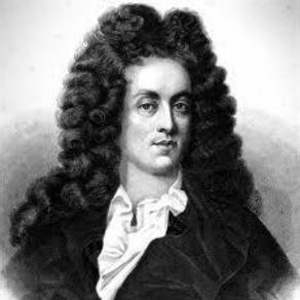
Nahum Tate, Irish poet, hymnist, and lyricist, who becomes Poet Laureate of the United Kingdom in 1692,  dies on July 30, 1715. Tate is best known for The History of King Lear, his 1681 adaptation of William Shakespeare‘s King Lear.

Tate is born in Dublin in 1652 and comes from a family of Puritan clergymen. He is the son of Faithful Teate, an Irish clergyman who was rector of Castleterra, Ballyhaise, until his house is burned and his family attacked after he passes on information to the government about plans for the Irish Rebellion of 1641. After living at the provost’s lodgings in Trinity College, Dublin, Faithful Teate moves to England. He becomes the incumbent at East Greenwich around 1650, and “preacher of the gospel” at Sudbury from 1654 to 1658 before returning to Dublin by 1660. He publishes a poem on the Trinity entitled Ter Tria, as well as some sermons, two of which he dedicates to Oliver and Henry Cromwell.

Nahum Teate follows his father to Trinity College, Dublin in 1668, and graduates BA in 1672. By 1676 he moves to London and is writing for a living. He publishes a volume of poems in London in 1677 and becomes a regular writer for the stage. He also adopts the spelling Tate, which remains until his death.

Tate then turns to make a series of adaptations from Elizabethan dramas. His version of William Shakespeare’s Richard II alters the names of the characters and changes the text so that every scene, to use his own words, is “full of respect to Majesty and the dignity of courts.” In spite of these precautions The Sicilian Usurper (1681), as his rewrite is called, is suppressed on the third performance on account of a possible political interpretation.

In 1682, Tate collaborates with John Dryden to complete the second half of his epic poem Absalom and Achitophel. Tate also writes the libretto for Henry Purcell‘s opera Dido and Aeneas, which is given its first known performance in 1689. Tate’s name is also connected with the famous New Version of the Psalms of David (1696), for which he collaborates with Nicholas Brady.

Nahum Tate dies in Southwark, London, England, on July 30, 1715, and is buried at St. George Southwark on August 1, 1715.


Leave a comment

The Barebone’s Parliament of 1653

Oliver Cromwell

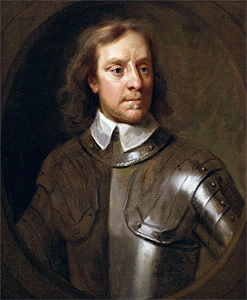
The Barebone’s Parliament, also known as the Little Parliament, the Nominated Assembly, and the Parliament of Saints, comes into being on July 4, 1653, and is the last attempt of the English Commonwealth to find a stable political form before the installation of Oliver Cromwell (pictured) as Lord Protector. It is an assembly entirely nominated by Oliver Cromwell and the New Model Army‘s Council of Officers. It acquires its name from the nominee for the City of London, Praise-God Barebone. The Speaker of the House is Francis Rous. There are a total of 140 nominees – 129 from England, five from Scotland, and six from Ireland. The Barebone’s Parliament is preceded by the Rump Parliament and succeeded by the First Protectorate Parliament.

The assembly, inspired by the Jewish Sanhedrin, meets for the first time on July 4 in the council chamber at Whitehall. Cromwell opens proceedings with a speech around two hours long. He begins by summing up the “series of Providences” that have brought them to this point, starting with the Short Parliament and singling out 1648 as the “most memorable year that ever this nation saw.”

The assembly then adjourns before sitting in full on the following day. On that day they elect Francis Rous, initially as chairman. He is not known as Speaker until a month later. Henry Scobell is appointed as Clerk. On July 12, the assembly publishes a declaration declaring itself to be the parliament of the Commonwealth of England. This is the first time that it has been formally described as a parliament.

By early September, Cromwell is said to be growing frustrated with the assembly’s in-fighting between different groups. Attendance also begins to fall. Over one hundred members are present at most votes in July, dropping to an average turnout of 70 by October. Various bills inflame conflict between the radical and moderate members – bills to abolish the Court of Chancery, regulate legal fees, tithes, and speeding up the settlement of cases in the Court of Admiralty all become bogged down in conflict. At this point, however, radical members are still mainly outnumbered in votes by moderate and conservative members.

This changes during November and December when debate returns to the question of tithes. On December 6, the committee appointed to consider the question presents their report, covering the question of how unfit ministers are to be ejected, naming commissioners who will have the job of enacting this, and retaining support for tithes in prescribed circumstances. In a defeat for the moderates, the first clause is voted down 56 to 54. Two days later, moderates come to the House and demand that the assembly abdicate its powers, criticising radical members for threatening the well being of the Commonwealth by fomenting disagreement. Rous and around 40 members walk out and go to Cromwell at Whitehall, presenting a document signed by nearly 80 members that declares: “Upon a Motion this day made in the House, that the sitting of this Parliament any longer as now constituted, will not be for the good of the Commonwealth.” Those left in the house are soon confronted by troops requesting that they leave. On December 12, 1653, the members of the assembly vote to dissolve it.


Leave a comment

Creation of The Honourable The Irish Society

irish-society-coat-of-arms

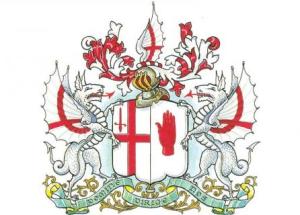
On January 28, 1613, The Honourable The Irish Society, a consortium of livery companies of the City of London, is created by Royal Charter of James I of England to undertake the Plantation in the North West of Ulster that is then being driven by the English Crown.

Following the Gaelic defeat in the Nine Years’ War in 1603 and the Flight of the Earls in 1607, northwest Ulster is left open to colonisation. James I sets out to defend against a future attack from within or without. He finds that the town of Derry can become either a great asset as a control over the River Foyle and Lough Swilly, or it can become an inviting back door should the people of the area turn against him. He pressures the guilds of the City of London to fund the resettlement of the area, including the building of a new walled city. This results in the creation of the Society.

The city of Derry is renamed Londonderry in recognition of the London origin of the Irish Society. County Coleraine is enlarged and renamed County Londonderry after its new county town. The rural area of the county is subdivided between the Great Twelve livery companies, while the towns and environs of Londonderry and Coleraine are retained by the Irish Society.

In January 1635, the Irish Society, as well as the City of London, are found guilty of mismanagement and neglect of Derry plantation. They are sentenced to a fine of £70,000 and forfeiture of Derry property. The Society is suppressed in 1637 but is revived by Oliver Cromwell in 1650 and again after the Restoration by Londonderry’s 1662 royal charter.

The Society is involved in several controversies over the years including a dispute over fishing rights with the Church of Ireland and Bishop of Derry and a lawsuit brought by The Skinners’ Company in 1832 over the distribution of profits. The Society also has some disputes with the corporations over ownership and development of property. During the 17th and 18th centuries, four of the twelve livery companies sell their estates, with the Irish Society requiring a bond of indemnity in each case. Leases to middlemen granted by the remaining companies expire at various times during the nineteenth century, after which the companies “enormously increased the rental.”

The Society finances the building of the Guildhall in Derry. Construction begins in 1887 and it is opened in July 1890, at a cost of £19,000.

The Society remains in existence today as a relatively small grant-giving charitable body. Its educational grants are funded by its remaining property, including the Walls of Derry, a tourist attraction and heritage site, and fisheries on the River Bann. The Society is based in London, but maintains a “representative” resident in County Londonderry.