Born in Dublin on November 10, 1879, Pearse joins the Irish Republican Brotherhood (IRB) in September 1913, becoming Director of Military Organisation of the Irish Volunteers in 1914 and is later co-opted into the IRB’s secretive Military Council, which infiltrates the Volunteers for the Easter Rising.
A writer and Irish language enthusiast long before he becomes a revolutionary, Pearse first comes to Ros Muc in 1903 as a 23-year-old handpicked by Conradh na Gaeilge to act as an Irish examiner.
Pearse develops a strong affinity with the area, buying land on Loch Eileabhrach in 1905, upon which he builds a cottage in 1909. Unusually for a professional at the time, he has it thatched in the style of poor country dwellings and on his regular visits between 1903 and 1915, spends time in the cabins of the poor, soaking up the folklore which finds its way into his writings.
Pearse has a rival for the affections of the locals in the shape of the Lord Lieutenant of Ireland, the Queen’s representative in Ireland. William Ward, 2nd Earl of Dudley also spends summers in the area, where he organises hunts with gentry and children’s fetes.
In response, Pearse organises an evening of Irish festivities for Ros Muc. Pearse gives scholarships to local gaeilgeoiri boys to his St. Enda’s School in Dublin.
Pearse’s last visit to the cottage is in 1915, when he composes the rousing oration for the funeral of Jeremiah O’Donovan Rossa. The following April, he goes one step further, declaring a Republic on the steps of the General Post Office (GPO) in Dublin.
After Pearse’s execution on May 3, 1916, his cottage passes to his mother Margaret. In 1921 it is burned down by the “Black and Tans” and Auxiliaries. Restored by Ó Conghaile and then again by Criostóir Mac Aonghusa, by 1943 Pearse’s sisters Senator Margaret Mary Pearse and Mary Brigid Pearse hand the cottage to the State.
Opened in 2016, a new visitor centre next to Pearse’s Cottage provides an introduction to the Irish language, Gaeltacht culture, and Pearse’s connection to Ros Muc.
(From: “Patrick Pearse’s cottage: a cultural visit to Ros Muc,” Darragh Murphy, The Irish Times, January 13, 2016)
Goulet’s involvement in Breton nationalism leads to accusations that he had orchestrated the destruction of the Monument to the Breton-Angevin Federation at Pontivy on December 18, 1938, by Gwenn ha du, the nationalist terrorist group. He is detained, but then released.
In 1939, he is sent to Strasbourg to study the art of sabotage. He participates in the beginning of World War II fighting for France, and is captured by the Germans on June 11, 1940, while blowing up a bridge on the Aisne with friends from a French corps.
Later in the war, Goulet joins the assault section of Bagadou Stourm, Breton nationalist stormtroopers allied to the Germans. He also collaborates with the pro-Nazi nationalist newspaper L’Heure Bretonne. In 1941 in Paris, he becomes head of Bagadou Stourm and the “Youth Organizations” of the Breton National Party. The promotion of Bagadou Stourm officers is named “Patrick Pearse” to commemorate the 25th anniversary of the 1916 Easter Rising against British rule in Ireland.
After the liberation of France, Goulet travels with his wife and children to Ireland, and is sentenced to death as a Collaborationist by a French court in his absence. He acquires Irish citizenship in 1952 and becomes an art professor.
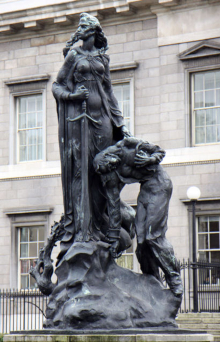
Goulet is commissioned to create public works commemorating the Irish Republican Army (IRA) and other republicans, including the Custom House Memorial (Dublin), the East Mayo Brigade IRA Memorial, the Republican Memorial (Crossmaglen), and the Ballyseedy Memorial (Kerry). He exhibits regularly at the Royal Hibernian Academy, eventually becoming the RHA Professor of Sculpture. He is also made a member of Aosdána in 1982.
Towards the end of the 1960s, Goulet claims to have taken the reins of the Breton Liberation Front (Front de Libération de la Bretagne, or FLB) and to have been behind all their attacks.
In 1969 Goulet becomes secretary general and chair of the Comité National de la Bretagne Libre and publishes the communiques of the FLB. In 1968, the head of police in Bray congratulate him on organising the previous day’s attack on the CRS barracks in Saint-Brieuc.
Goulet died at Bray, County Wicklow, on August 22, 1999, two days after his 85th birthday.
(Pictured: Custom House Memorial in Dublin by Yann Renard-Goulet, 1957)
McDonnell is born on Slate Street in the lower Falls Road of Belfast, Northern Ireland on September 14, 1951, as one of ten children. He attends a nearby Roman Catholic school. He marries Goretti in 1970 and moves into her sister’s house in Lenadoon. There are only two Catholic houses in this predominantly Ulster Protestanthousing estate, and their house is attacked on numerous occasions.
McDonnell agrees with the goals of the Irish hunger strike, namely: the right not to wear a prison uniform; the right not to do prison work; the right of free association with other prisoners; the right to organise their own educational and recreational facilities and the right to one visit, one letter and one parcel per week.
Although McDonnell is not involved in the first hunger strike in 1980, he joins Bobby Sands and the others in the second hunger strike the following year. During the strike he fights the general election in the Republic of Ireland, and only narrowly misses election in the Sligo–Leitrim constituency. He goes 61 days without food before dying on July 8, 1981. He has two children. His wife takes an active part in the campaign in support of the hunger strikers.
McDonnell is buried in the grave next to Bobby Sands at Milltown Cemetery in west Belfast. John Joe McGirl, McDonnell’s election agent in Sligo–Leitrim, gives the oration at his funeral. Quoting Patrick Pearse, he states, “He may seem the fool who has given his all, by the wise men of the world; but it was the apparent fools who changed the course of Irish history.”
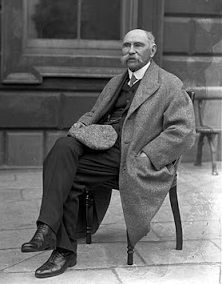
Hyde is born at Longford House in Castlerea, County Roscommon, on January 17, 1860. In 1867, his father is appointed prebendary and rector of Tibohine, and the family moves to neighbouring Frenchpark, in County Roscommon. He is home schooled by his father and his aunt due to a childhood illness. While a young man, he becomes fascinated with hearing the old people in the locality speak the Irish language.
Rejecting family pressure to follow previous generations with a career in the Church, Hyde instead becomes an academic. He enters Trinity College, Dublin, where he gains a great facility for languages, learning Latin, Greek, Hebrew, French, and German, but his great passion in life is the preservation of the Irish language.
After spending a year teaching modern languages in Canada, Hyde returns to Ireland. For much of the rest of his life he writes and collects hundreds of stories, poems, and folktales in Irish, and translates others. His work in Irish helps to inspire many other literary writers, such as W.B. Yeats and Lady Gregory.
In 1892, Hyde helps establish the Gaelic Journal and in November of that year writes a manifesto called The necessity for de-anglicising the Irish nation, arguing that Ireland should follow her own traditions in language, literature, and even in dress.
In 1893, Hyde founds the Gaelic League (Conradh na Gaeilge) along with Eoin MacNeill and Fr. Eugene O’Growney and serves as its first president. Many of the new generation of Irish leaders who play a central role in the fight for Irish independence in the early twentieth century, including Patrick Pearse, Éamon de Valera, Michael Collins, and Ernest Blythe first become politicised and passionate about Irish independence through their involvement in the Gaelic League. Hyde does not want the Gaelic League to be a political entity, so when the surge of Irish nationalism that the Gaelic League helps to foster begins to take control of many in the League and politicize it in 1915, Hyde resigns as president.
In 1938, Hyde is unanimously elected to the newly created position of President of Ireland, a post he holds until 1945. He is inaugurated on June 26, 1938, in the first inaugural ceremony in the nation’s history. He sets a precedent by reciting the Presidential Declaration of Office in Irish. His recitation, in Roscommon Irish, is one of a few recordings of a dialect of which Hyde is one of the last speakers. Upon inauguration, he moves into the long vacant Viceregal Lodge in Phoenix Park, since known as Áras an Uachtaráin.
Despite being placed in a position to shape the office of the presidency via precedent, Hyde by and large opts for a quiet, conservative interpretation of the office.
In April 1940 Hyde suffers a massive stroke and plans are made for his lying-in-state and state funeral, but to the surprise of everyone he survives, albeit paralysed and confined to a wheelchair. One of Hyde’s last presidential acts is a visit to the German ambassador Eduard Hempel on May 3, 1945, to offer his condolences on the death of Adolf Hitler, a visit which remains a secret until 2005.
Hyde leaves office on June 25, 1945, opting not to nominate himself for a second term. He opts not return to his Roscommon home due to his ill-health but rather moves into the former Secretary to the Lord Lieutenant’s residence in the grounds of Áras an Uachtaráin, where he lived out the remaining four years of his life.
Hyde dies in Dublin on July 12, 1949, at age 89. As a former President of Ireland, he is accorded a state funeral which, as a member of the Church of Ireland, takes place in Dublin’s Church of Ireland St. Patrick’s Cathedral. Since contemporary rules of the Roman Catholic Church in Ireland at the time prohibit Roman Catholics from attending services in non-Catholic churches, all but one member of the Catholic cabinet remains outside the cathedral grounds while Hyde’s funeral takes place. Hyde is buried in Frenchpark, County Roscommon at Portahard Church.
Edwards, known to his friends as Robin and his students as Dudley, is the son of Walter Dudley Edwards, a journalist who comes to Ireland with his wife, Bridget Teresa MacInerney from Clare, and becomes a civil servant. His mother is a supporter of women’s rights and Edwards recalls that he had a ‘Votes for Women’ flag on his pram. His mother is a suffragette and a member of Cumann na mBan, a women’s organisation designed to support the Irish Volunteers. Members of Cumann na mBan gather intelligence, transport arms, nurse wounded men, provide safe houses, and organise support for Irish Republican Army (IRA) men in prison.
Also in 1933, Edwards marries Sheila O’Sullivan, a folklorist and teacher. They have three children, Mary Dudley Edwards a teacher and rights activist, Ruth Dudley Edwards, a historian, crime novelist, journalist and broadcaster, and Owen Dudley Edwards, a historian at the University of Edinburgh.
Along with Theodore William Moody, Edwards founds the Irish Historical Society in 1936, and its journal Irish Historical Studies is first published in 1938.
In 1937 Edwards is awarded a D.Litt by the National University of Ireland and in 1939 is appointed to a statutory lectureship in Modern Irish History at University College Dublin. He succeeds Mary Hayden to the Chair of Modern Irish History in 1944, which he holds until he retires in 1979. His contribution to the discipline of History in Ireland is substantial and includes the setting up of University College Dublin Archives Department, now part of the School of History.
The introduction to Edwards’ book Age of Atrocity records how the leading Irish history journal, Irish Historical Studies, edited by Edwards and Moody, for the first half-century and more of its existence, systematically avoids the theme of violence, killing and atrocity during the 16th and 17th centuries.
Following his wife’s death in April 1985, Robert Dudley Edwards dies on June 5, 1988, in St. Vincent’s Hospital in Dublin after a short illness.
(Pictured: Robert Walter Dudley Edwards (left) and Theodore William Moody (right).)
Hayden is educated initially at the Dominican College, Eccles Street and then at Alexandra College in Dublin. She attends the Royal University of Ireland where she graduates with a BA in 1885 and an MA in 1887 in Modern Languages. With Agnes O’Farrelly she campaigns for women’s rights in the university.
Hayden helps to form the Women’s Social and Progressive League as a political party committed to opposing the 1937 constitution of Ireland and any regressive consequences it would entail. She opposes articles 40, 41, and 45 concerning the status of women.
Myles is the third of eleven children born to John Myles (1807-1871), a wealthy corn merchant, and his second wife Prudence, daughter of William Bradshaw of Kylebeg, County Tipperary. The Myles family has been prominent merchants in and around Limerick city since Oliver Cromwell‘s time.
A prominent sportsman from an early age, Myles graduates in medicine at Trinity College Dublin in 1881. One of his duties in his first job as resident surgeon at Dr. Steevens’ Hospital is to render medical assistance to the victims of the Phoenix Park murders on May 6, 1882.
Myles is also an active Home Ruler. He owns a yacht, the Chotah. In 1914, he is recruited by James Creed Meredith to help in the importation of guns for the Irish Volunteers with Erskine Childers, Edward Conor Marshall O’Brien and others. Childers lands his part of the consignment from the Asgard at Howth on July 26, 1914. Myles’s cargo is landed by the Chotah at Kilcoole, County Wicklow a week later. Meredith himself helps out aboard the Chotah during the operation. On August 1, 1914, 600 Mauser rifles and 20,000 rounds of ammunition are landed at the beach in Kilcoole. Once the arms are landed, they are taken away by Volunteers on bicycles and in vehicles. The arms are taken to Patrick Pearse‘s St. Enda’s School, in Rathfarnham, County Dublin.
Myles is appointed temporary Lieutenant Colonel in the Royal Army Medical Corps on November 21, 1914, and also becomes Honorary Surgeon in Ireland to the King. He is appointed to be an Additional Member of the Military Division of the Third Class, or Companion, of the Most Honourable Order of the Bath, for services rendered in connection with the war, the appointment to date from January 1, 1917.
Sir Thomas Myles dies at the St. Lawrence’s Hospital in Dublin on July 14, 1937, and is buried at Deansgrange Cemetery in Dublin. Every year at the University of Limerick, the Sir Thomas Myles lecture is delivered as part of the Sylvester O’Halloran Surgical Meeting in honour of this remarkable surgeon and son of Limerick.
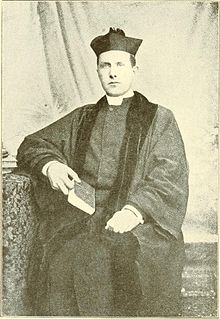
O’Hickey’s mother dies at an early age and his father remarries. He has an older brother Martin, and a younger half-brother Maurice. He studies for the priesthood in St. John’s College, Waterford, and is ordained a priest in 1884. He is an active member of the Conradh na Gaeilge and studies under the noted Irish scholar Sean Plemion.
In 1896 O’Hickey is appointed Professor of Irish in Maynooth College, succeeding Fr. Eugene O’Growney. After clashing with the bishops and establishment, he is dismissed in 1909 from his position as Professor of Irish, for his conduct in the controversy over Irish as a matriculation subject for the new National University of Ireland.
O’Hickey receives support from many Irish nationalists (including Patrick Pearse whom he earlier had disagreements with), Irish language activists, and some of his colleagues including Maynooth’s Theology Professor, Walter McDonald. He appeals his dismissal to the Vatican, but his appeal is refused.
Michael O’Hickey dies in Portlaw, County Waterford on November 19, 1916, and is buried in the Hickey family plot in the Friary Cemetery in Carrickbeg, County Waterford.
Irish Press Ltd. is officially registered on September 4, 1928, three years before the paper is first published, to create a newspaper independent of the existing media where the Independent Newspapers group is seen as supporting Cumann na nGaedheal/Fine Gael, and The Irish Times being pro-union, and with a mainly middle-class or Protestant readership.
The paper’s first issue is published on the eve of the 1931 All-Ireland Senior Hurling Championship Final between Cork and Kilkenny. Other newspapers do not cover GAA sports in any detail at the time. Margaret Pearse, the mother of Patrick and Willie Pearse, presses the button to start the printing presses. The initial aim of its publisher is to achieve a circulation of 100,000 which it quickly accomplishes. It goes on to list 200,000 subscribers at its peak.
The money to launch the Irish Press is raised in the United States during the Irish War of Independence by a bond drive to finance the First Dáil. Five million dollars is raised; however, 60 percent of this money is left in various banks in New York City. No one knows why de Valera ordered the bulk of the money to be left in New York when he returned to Ireland in late 1920.
In 1927, as a result of legal action between the Irish Free State government and de Valera, a court in New York orders that the bond holders be paid back outstanding money due to them. However, de Valera’s legal team has anticipated the ruling and has prepared for the outcome. A number of circulars are sent to the bond holders asking them to sign over their holdings to de Valera. The bond holders are paid 58 cents to the dollar. This money is then used as startup capital to launch the Irish Press. Following the 1933 Irish General Election, de Valera uses his Dáil Éireann majority to pass a measure allowing the bond holders to be paid the remaining 42 percent of the money still owed.
In December 1931, editor Frank Gallagher is prosecuted by an Irish Free State military tribunal for publishing articles alleging that Garda Síochána had mistreated the Anti-Treaty republicans of the Irish Free State government. This is facilitated by Amendment 17 of the Constitution of the Irish Free State and Gallagher is convicted and fined £50. An example of animosity from those who support Independent Newspapers and the Free State government is that the Irish Press is excluded from the special train which delivers newspapers from Dublin to the countryside. As a result, it is circulated throughout Ireland by a specially rented train.
The Irish Press sustains itself with its own resources until The Sunday Press is founded in 1949. In its heyday, the Irish Press has a number of first-rate reporters and columnists. One notable section, New Irish Writing is edited by David Marcus.
In the 1970s, the Minister for Posts and Telegraphs, Conor Cruise O’Brien, tries to use and amend The Emergency Powers Act and Section 31 of the Broadcasting Authority Act, to censor coverage of the Troubles in Northern Ireland. The Irish Press editor, Tim Pat Coogan, publishes editorials attacking the Bill. The Fine Gael/Labour Coalition Government tries to prosecute the Irish Press for its coverage of the maltreatment of republican prisoners by the Garda “Heavy Gang,” with the paper winning the case.
The Irish Press starts two further newspapers, the Evening Press (1954), and The Sunday Press. The Evening Press is aimed at an urban readership and achieves a daily circulation of 100,000. The new newspapers subsidise the Irish Press when its circulation sags. Its adoption of a tabloid format does not rescue its declining circulation.
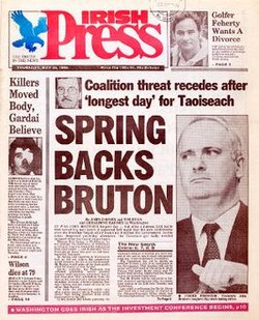
The final issue of the Irish Press and Evening Press is on Thursday, May 25, 1995. The newspapers close because of a bizarre industrial dispute over the sacking of the group business editor, Colm Rapple. The group has not been in a healthy financial state for several years. When it eventually closes, with indebtedness of £20 million, 600 people lose their jobs.
(Pictured: Cover of last ever edition of the Irish Press from May 25, 1995)
Mary Colum (née Maguire), literary critic and author, is born in Collooney, County Sligo on June 14, 1884, the daughter of Charles Maguire and Catherine Gunning. She is the author of several books, including the autobiographical Life and the Dream (1947), and From These Roots: The Ideas that Have Made Modern Literature (1937), a collection of her criticism.
Maguire’s mother dies in 1895, leaving her to be reared by her grandmother, Catherine, in Ballysadare, County Sligo. She attends boarding school in St. Louis’ Convent in Monaghan, County Monaghan.
Educated at Royal University of Ireland Maguire is founder of the Twilight Literary Society which leads her to meet William Butler Yeats. She regularly attends the Abbey Theatre and is a frequent visitor amongst the salons, readings and debates there. After graduation in 1909 she teaches with Louise Gavan Duffy at St. Ita’s, a companion school to Patrick Pearse‘s St. Enda’s School. She is active with Thomas MacDonagh and others in national and cultural causes and co-founds The Irish Review (1911–14) with David Houston, MacDonagh and others. She, along with her husband, Padraic Colum, whom she marries in July 1912, edit the magazine for some months of its four-year run. She is encouraged by Yeats to specialise in French literary criticism and to translate Paul Claudel.
Colum associates with James Joyce in Paris and discourages him from duping enquirers about the origins of the interior monologue in the example of Édouard Dujardin. She accepts Joyce’s very ill daughter, Lucia, for a week in their Paris flat at the height of her “hebephrenic” attack, while herself preparing for an operation in May 1932. She serves as the literary editor of The Forum magazine from 1933–1941 and commences teaching comparative literature with Padraic at Columbia University in 1941.
She rebuts Oliver St. John Gogarty‘s intemperate remarks about Joyce in The Saturday Review of Literature in 1941.
Colum’s publications become increasingly sparse in the 1950s as her arthritis and neuralgia grow more and more severe. She dies in New York City on October 22, 1957. At the time of her death, she is working on Our Friend James Joyce with her husband, each writing various chapters. It is assembled posthumously by Padraic Colum and is published by Doubleday on August 22, 1958.






 seamus dubhghaill