seamus dubhghaill

Promoting Irish Culture and History from Little Rock, Arkansas, USA


Leave a comment

Birth of Biblical Scholar James Henthorn Todd

james-henthorn-todd

James Henthorn Todd, biblical scholar, educator, and Irish historian, is born in Rathfarnham, a Southside suburb of Dublin, on April 23, 1805. He is noted for his efforts to place religious disagreements on a rational historical footing, for his advocacy of a liberal form of Protestantism, and for his endeavours as an educator, librarian, and scholar in Irish history.

Todd is the son of Charles Hawkes Todd, a professor of surgery, and Eliza Bentley, and is the oldest of fifteen children. Noted physician Robert Bentley Todd is among his younger brothers. His father dies a year after he receives a B.A. from Trinity College, Dublin in 1825, diminishing his prospects for success. However, he is able to remain at the college by tutoring and editing a church periodical.

Todd obtains a premium in 1829, and two years later is elected Fellow, taking deacon’s orders in the same year. From that time until 1850, when he becomes a Senior Fellow, he is among the most popular tutors in Trinity College.

Todd takes priest’s orders in 1832. He begins publishing in earnest, including papers on John Wycliffe, church history, and the religious questions of his day. He is Donnellan Lecturer in 1838 and 1839, publishing works related to the Antichrist in which he opposes the views of the more extreme of his co-religionists who apply this term to the Roman Catholicism and the Pope. In 1840 he graduates Doctor of Divinity.

In 1837 Todd is installed Treasurer at St. Patrick’s Cathedral in Dublin and becomes Precentor in 1864. His style of preaching is described as simple and lucid, and his sermons interesting. He co-founds Saint Columba’s College in 1843, a school which promotes the Irish language for those who intend to take orders, as well as promoting the principles of the Church of Ireland.

In 1849 Todd is made Regius Professor of Hebrew at Trinity, and a Senior Fellow the following year. In 1852 he is appointed Librarian, and working alongside John O’Donovan and Eugene O’Curry, he classifies and arranges the collection of manuscripts. When his office receives money, he spends it on the acquisition of manuscripts and rare books, and he deserves much credit for the library’s high ranking as one of the chief libraries of Europe.

Todd’s secular achievements are no less remarkable. In 1840 he co-founds the Irish Archaeological Society and acts as its honorary secretary. He is elected a member of the Royal Irish Academy and strives actively to acquire transcripts and accurate accounts of Irish manuscripts from foreign libraries. He is honorary secretary from 1847 to 1855, and president from 1856 to 1861. In 1860 he is given an ad eundem degree at the University of Oxford.

Todd is a notable person among notable people. His work is widely respected and cited. Among his friends and acquaintances are lawyer and poet Sir Samuel Ferguson, Conservative Member of Parliament (MP) and Roman Catholic convert Edwin Wyndham-Quin, fellow historian William Reeves, artist Sir George Petrie, and the Stokes family (physician father William, future lawyer and Celticist son Whitley, and future antiquarian daughter Margaret).

James Henthorn Todd dies at his house in Rathfarnham on June 28, 1869, and is buried in the churchyard of St. Patrick’s Cathedral.


Leave a comment

The Siege of Derry Begins

siege-of-derry

The Siege of Derry, the first major event in the Williamite War in Ireland, begins on April 18, 1689. The siege lasts nearly three and a half months, ending on July 30, 1689, when relief ships bringing the English Army sail down Lough Foyle.

The Glorious Revolution of 1688 is a relatively bloodless revolution in which James II, King of England, Ireland and Scotland and a Roman Catholic convert, is ousted from power by the Parliament of England. The English throne is then offered to his Protestant daughter Mary and her husband William III of England, also known as William of Orange. In Scotland, the privy council asks William III to assume responsibility for the government in January 1689, and he and Mary are formally offered the Scottish throne in March. The situation is different in Ireland where most of the population are Catholics. Irish Catholics are hoping that James will re-grant them lands, which had been seized from them after the Cromwellian conquest of Ireland (1649–53). James thus looks to Ireland to muster support in regaining his kingdoms just as his father, Charles I, had done in the English Civil War of the 1640s.

On December 10, James flees London. He is caught but flees a second time on December 23 and makes his way to France. On March 12, James I lands in Kinsale with 6,000 French soldiers. He takes Dublin and marches north with an army of Irish and French Catholics.

In April 1689 reinforcements from England arrive under the command of Colonel John Cunningham, who is a native of the city. He is under instructions to take his orders from the Derry City Governor, Lieutenant Colonel Robert Lundy. Lundy advises Colonel Cunningham to leave as arrangements have been made for the city to be surrendered. Lundy calls a meeting with several of his most loyal supporters to discuss surrender. News of the meeting spread, angering many of the citizens. That night, Lundy and many others leave the city aboard a ship to Scotland. The city’s defence is overseen by Major Henry Baker, Colonel Adam Murray, and Major George Walker, also an Anglican priest. Their slogan is “No Surrender.”

As the Jacobite army nears, all the buildings outside the city walls are set alight by the defenders to prevent them being used as cover by the besiegers.

The Jacobite army reaches Derry on April 18. James and his retinue ride to within 300 yards of Bishop’s Gate and demand the surrender of the city. He is rebuffed with shouts of “No surrender!” and some of the city’s defenders fire at him. James asks for surrender three more times but is refused each time. This marks the beginning of the siege. Cannon and mortar fire are exchanged, and disease takes hold within the city. James returns to Dublin and leaves his forces under the command of Richard Hamilton.

Royal Navy warships under Admiral George Rooke arrive in Lough Foyle on June 11 but initially decline to ram through the heavily defended defensive boom across the River Foyle at Culmore.

On July 28, two armed merchant ships, Mountjoy and Phoenix, sail toward the boom, protected by the frigate HMS Dartmouth under Captain John Leake. Mountjoy rams and breaches the boom, and the ships move in, unloading many tons of food to relieve the siege. The city had endured 105 days of siege during which some 4,000 Protestants of a population of 8,000 are said to have died.

The siege is commemorated yearly by the Protestant Apprentice Boys of Derry who stage the week-long Maiden City Festival culminating in a parade around the walls of the city by local members, followed by a parade of the city by the full Association. Although violence has attended these parades in the past, those in recent years have been largely peaceful.

The song “Derry’s Walls” is written to commemorate the siege.


Leave a comment

Assassination of Senator Billy Fox

senator-billy-fox

Billy Fox, Protestant Irish politician and a Fine Gael member of Dáil Éireann from 1969 to 1973, and of Seanad Éireann from 1973 until his death, is assassinated on March 12, 1974, by Irish Republican Army (IRA) gunmen who are carrying out a raid on his girlfriend’s farmhouse. Five members of the Provisional IRA are convicted of involvement in his murder.

Late on the night of Monday, March 11, 1974, about a dozen gunmen arrive at the home of Fox’s girlfriend, Marjorie Coulson. She lives there with her parents and brother, and Fox regularly visits on Monday evenings. The farmhouse is in the rural townland of Tircooney in County Monaghan, near the border with Northern Ireland. The gunmen search the farmhouse and demand the occupants hand over weapons. Shortly after midnight, as this is taking place, Fox drives down the laneway and is stopped by some of the gunmen who are outside. He runs but is shot and killed by a single gunshot through the upper torso. The gunmen then order everyone out of the house, set it on fire, and escape.

The next day, the Ulster Freedom Fighters claim that it had killed Fox because he had links to the Provisional IRA. The IRA issues a statement saying that it is not involved. However, shortly after the shooting, five men from County Monaghan are charged with Fox’s murder and IRA membership. They are convicted in May 1974 and sentenced to penal servitude for life. One of those convicted tells the court they had raided the farm because they received a tip-off that Ulster Volunteer Force (UVF) weapons were being stored there. He says there was an agreement that no shots were to be fired. His understanding is that Fox had taken some of the men by surprise and they had shot to wound, not recognizing him.

It is reported that the tip-off had come from another local family and was the result of a grudge. IRA members are already suspicious that the UVF is receiving local help, following an incident in November 1973. Loyalist gunmen had bombed a house at nearby Legnakelly and shot one of the occupants, a republican activist. In its statement on Fox’s killing, the IRA says, “We have repeatedly drawn attention to the murderous acts of a group of former B Specials from County Fermanagh…led by serving officers of the British Army.” The author, Tim Pat Coogan, however, suggests that members of the Official IRA are responsible for killing Fox.

The Seanad adjourns for a week as a mark of respect. About 500 people attend Fox’s funeral at Aughnamullen, including Taoiseach Liam Cosgrave and the Irish president, Erskine Childers. Fox is the first member of the Oireachtas to be killed since Minister for Justice Kevin O’Higgins by the anti-Treaty Irish Republican Army in 1927. When John Bruton first becomes a Teachta Dála (TD) in 1969 he shares an office with Fox. He says that he is still angry at the murder. The RTÉ documentary Rumours from Monaghan report in detail on the circumstances of Fox’s killing. Because Fox is a Protestant, some suggest that the motive for the killing was sectarian.

One of those convicted for Fox’s killing, Sean Kinsella, later escapes from Portlaoise Prison. He is later convicted of arms offences and attempted murder in England. He is released by the Irish government under the Good Friday Agreement.

The Senator Billy Fox Memorial Park in Aughnamullen is named in his memory.


1 Comment

Death of Arthur Guinness

arthur-guinness

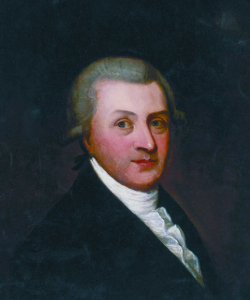
Arthur Guinness, entrepreneur, visionary, philanthropist, brewer, and the founder of the Guinness brewery business, dies at Mountjoy Square, Dublin, on January 23, 1803.

Arthur Guinness is believed to be born in Celbridge, County Kildare on September 25, 1725, into the Protestant Guinness family, part of the Anglo-Irish aristocracy. They claim to descend from the Gaelic Magennis clan of County Down. However, recent DNA evidence suggests descent from the McCartans, another County Down clan, whose spiritual home lay in the townland of “Guiness” near Ballynahinch, County Down.

Guinness’s place and date of birth are the subject of speculation. His gravestone in Oughter Ard, County Kildare, reads that he dies on January 23, 1803, at the age of 78, and that he is born some time in 1724 or very early in 1725. This contradicts the date of September 28, 1725, chosen by the Guinness company in 1991, apparently to end speculation about his birthdate. The place of birth is perhaps his mother’s home at Read homestead at Ardclough, County Kildare.

In 2009 it is claimed that Guinness is born in nearby Celbridge where his parents live in 1725 and where his father later becomes land steward for the Archbishop of Cashel, Dr. Arthur Price. In his will, Dr. Price leaves £100 each to “his servant” Arthur and his father in 1752.

Guinness leases a brewery in Leixlip in 1755, brewing ale. Guinness also purchases a long lease of an adjacent site from George Bryan of Philadelphia in 1756 that is developed as investment property. He leaves his younger brother in charge of the Leixlip enterprise in 1759 and moves on to another at St. James’ Gate, Dublin. He signs a 9,000-year lease for the brewery, effective from December 31, 1759. The lease is presently displayed in the floor at St. James’ Gate. By 1767 he is the master of the Dublin Corporation of Brewers. His first actual sales of porter are listed on tax data from 1778. From the 1780s his second son, Arthur, works at his side and becomes the senior partner in the brewery in 1803.

Guinness’ major achievement is the expansion of his brewery in 1797–1799. Thereafter he brews only porter and employs members of the Purser family who have brewed porter in London from the 1770s. The Pursers become partners in the brewery for most of the 19th century. By the time of his death in 1803, the annual brewery output is over 20,000 barrels. Subsequently Arthur and/or his beer is nicknamed “Uncle Arthur” in Dublin. Guinness’ florid signature is still copied on every label of bottled Guinness.

From 1764, Guinness and his wife Olivia, whom he marries in 1761, live at Beaumont House, which Guinness has built on a 51-acre farm which is now a part of Beaumont Convalescent Home, behind the main part of Beaumont Hospital, between Santry and Raheny in north County Dublin. His landlord is Charles GardinerBeaumont, meaning beautiful hill, is named by Arthur and the later Beaumont parish copies the name. From March 1798 he lives at Mountjoy Square in Dublin, which is then in the process of being built in the style of elegant Georgian architecture. Three of his sons are also brewers, and his other descendants eventually include missionaries, politicians, and authors.

Sir Arthur Guinness dies in Mountjoy Square, Dublin, on January 23, 1803, and is buried in his mother’s family plot at Oughter Ard, County Kildare.

To further honour Arthur Guinness’s legacy, in 2009 Guinness & Co. established the Arthur Guinness Fund (AGF). An internal fund set up by the Company, its aim is to enable and empower individuals with skills and opportunities to deliver a measured benefit to their communities. Guinness has donated more than €7 million to the Fund since its inception. Arthur Guinness is also one of a handful of Irish people commemorated twice on stamps, in 1959 and 2009.


Leave a comment

Birth of Actress Máire O’Neill

maire-oneill

Mary Agnes “Molly” Allgood, actress of stage and film under the stage name of Máire O’Neill, is born at 40 Middle Abbey Street in Dublin on January 12, 1885.

Allgood is one of eight children of compositor George and french polisher Margaret (née Harold) Allgood. Her father is sternly Protestant and against all music, dancing and entertainment, while her mother is a strict Catholic. After her father dies in 1896, she is placed in an orphanage. She is apprenticed to a dressmaker and her brother Tom becomes a Catholic priest.

Maud Gonne sets up Inghinidhe na hÉireann (Daughters of Ireland) in 1900 to educate women about Irish history, language and the arts, and Allgood and her sister Sara join the association’s drama classes around 1903. Their acting teacher, William “Willie” Fay, enrolls them in the National Theatre Society, later known as the Abbey Theatre. Allgood is part of the Abbey Theatre from 1906-1918 where she appears in many productions. In 1904 she is cast in a play by Irish playwright Teresa Deevy called Katie Roche where she plays the part of Margaret Drybone. There are 38 performances in this production.

In 1905 Allgood meets Irish playwright John Millington Synge, and they fall in love, a relationship regarded as scandalous because it crosses the class barriers of the time. In September 1907 he has surgery for the removal of troublesome neck glands, but a later tumour is found to be inoperable. They become engaged before his death in March 1909. Synge writes the plays The Playboy of the Western World and Deirdre of the Sorrows for Allgood.

In June 1911 Allgood marries G. H. Mair, drama critic of the Manchester Guardian, and later Assistant Secretary of the British Department of Information, Assistant Director of the League of Nations Secretariat in Geneva, and head of the League of Nations office in London, with whom she has two children. He dies suddenly on January 3, 1926. Six months later she marries Arthur Sinclair, an Abbey actor. They have two children, but the marriage ends in divorce.

Under her professional name Maire O’Neill, Allgood appears in films from 1930-53, including Alfred Hitchcock‘s film version of Seán O’Casey‘s play Juno and the Paycock (1930). She makes her American debut in New York City in 1914 in the play General John Regan at the Hudson Theatre.

Allgood dies at the age of 66 in Park Prewett Hospital, Basingstoke, England, on November 2, 1952, where she is receiving treatment after being badly burned in a fire at her London home.

Joseph O’Connor‘s 2010 novel, Ghost Light, is loosely based on Allgood’s relationship with Synge.


Leave a comment

Death of Author Violet Florence Martin

violet-florence-martin

Violet Florence Martin, Irish author, dies in Drishane, County Cork, on December 21, 1915. She is the co-author of a series of novels with her cousin Edith Somerville under the pen name of Martin Ross in the late nineteenth and early twentieth centuries.

Martin is born at Ross House in Connemara, County Galway, the youngest of sixteen children of James Martin of Ross (1804–1872). The Martin family, a branch of the Martyn family – one of the Tribes of Galway – had settled at Ross by the early seventeenth century, having previously inhabited the town of Galway for some three hundred years. Her father is a Protestant, his grandfather having converted from the Catholic faith in order to retain the family estates under the Penal Laws. Nevertheless, each child of the family is secretly ‘baptised’ by the family servants.

Martin is a kinswoman of Richard Martin and her contemporary, Edward Martyn, two other notable members of the tribe. Her older brother, Robert Jasper Martin, is a noted songwriter and a well-regarded member of the Tory party in London. She shares a great-grandmother with the writer Maria Edgeworth, whose use of Irish vernacular speech she follows in her work.

Martin’s father manages to save both his estate and his tenants during the Great Famine boasting that not one of his people died during the disaster, but at the cost of bankruptcy. Following his death in 1872, the family moves to Dublin and only returns to Ross in 1888 following revelations of financial fraud of the estate by their agent.

Violet Martin and Edith Somerville are second cousins. They originally meet on January 17, 1886, at Castletownshend, after which they become lifelong companions and literary partners. They come to share a home in Drishane, County Cork. In 1889, Violet adopts the pseudonym Martin Ross, which comprises her surname and the name of her ancestral home. Thus, the authors are called Somerville and Ross. Their works include The Real Charlotte (1889), Some Reminiscences of an Irish R.M. and In the Vine Country.

Martin is a convinced Irish Unionist, in opposition to Somerville’s open nationalism. Both she and her brother Robert are well-regarded members of the literary circle in Irish unionism. However, unlike her brother, Martin is a convinced suffragette, becoming vice-president of the Munster Women’s Franchise League. While on friendly terms with the leading members of the Gaelic literary revival such as W.B. Yeats and Lady Gregory, she objects to their romantic version of Irish peasantry. She is on good terms with Edward Martyn, partner of Gregory and Yeats – and her kinsman – and shares his love of the Irish language and culture.

Martin is seriously injured in a riding accident in November 1898, from which she never fully recovers. This is a contributing factor to her death in Drishane, County Cork, on December 21, 1915. Edith Somerville continues to write under their joint literary names, claiming that they are still in contact. The two women leave thousands of letters and 116 volumes of diaries, detailing their lives, much of them yet unpublished. Edith dies at Castletownshend in October 1949, aged 91, and is buried alongside Violet Florence Martin at Saint Barrahane’s Church, Castletownsend, County Cork, Ireland.


2 Comments

The Balmoral Furniture Company Bombing

balmoral-furniture-showroom-bombing

The Balmoral Furniture Company bombing, a paramilitary attack, takes place on December 11, 1971, in Belfast, Northern Ireland. The bomb explodes without warning outside a furniture showroom on the Shankill Road in a predominantly unionist area, killing four civilians, two of them babies.

At 12:25 PM on December 11, 1971, when the Shankill Road is packed with Saturday shoppers, a green car pulls up outside the Balmoral Furniture Company at the corner of Carlow Street and Shankill Road. The shop is locally known as “Moffat’s” although Balmoral Furniture Company is its official name. One of the occupants gets out of the car and leaves a box containing a bomb on the step outside the front door. The person gets back into the car, and it speeds away. The bomb explodes moments later, bringing down most of the building on top of those inside the shop and on passersby outside.

Four people are killed as a result of the massive blast, including two babies, Tracey Munn (age 2 years) and Colin Nichol (age 17 months), who both die instantly when part of the wall crashes down upon the pram they are sharing. Two employees working inside the shop are also killed, Hugh Bruce (age 70 years) and Harold King (age 29 years). Unlike the other three victims, who are Protestant, King is a Catholic. Bruce, a former soldier and a Corps of Commissionaires member, is the shop’s doorman and is nearest to the bomb when it explodes. Nineteen people are injured in the bombing, including Tracey’s mother. The building, which was built in the Victorian era, has load-bearing walls supporting upper floors on joists. It is unable to withstand the blast and collapses, adding to the devastation and injury count.

The bombing causes bedlam in the crowded street. Hundreds of people rush to the scene where they form human chains to help the British Army and Royal Ulster Constabulary (RUC) free those trapped beneath the rubble by digging with their bare hands. Peter Taylor describes the scene as “reminiscent of the London Blitz” in World War II.

It is widely believed that the bombing is carried out by members of the Provisional Irish Republican Army (IRA) in retaliation for the McGurk’s bar bombing one week earlier, which killed 15 Catholic civilians. The Ulster Volunteer Force (UVF) had carried out the McGurk’s bombing.

The Balmoral Furniture Company bombing is one of the catalysts that spark the series of tit-for-tat bombings and shootings by loyalists, republicans and the security forces that make the 1970s the bloodiest decade in the 30-year history of The Troubles.

(Pictured: Fireman is shown removing the body of one of the victims of the bombing at the Balmoral Furniture Showroom, December 11, 1971)


Leave a comment

Execution of John Atherton, Anglican Bishop of Waterford & Lismore

john-atherton-execution-pamphlet

John Atherton, Anglican Bishop of Waterford and Lismore in the Church of Ireland, is executed on December 5, 1640, on a charge of immorality.

Atherton is born in 1598 in Somerset, England. He studies at Oxford University and joins the ranks of the Anglican clergy. In 1634 he becomes Bishop of Waterford and Lismore in the Church of Ireland. In 1640 he is accused of buggery with a man, John Childe, his steward and tithe proctor. They are tried under a law that Atherton himself had helped to institute. They are both condemned to death, and Atherton is executed in St. Stephen’s Green, Dublin. Reportedly, he confesses to the crime immediately before his execution, although he had proclaimed his innocence before that.

More recently, some historical evidence has been developed that shows Atherton might have been a victim of a conspiracy to discredit him and his patrons. This is attributable to Atherton’s status as an astute lawyer, who seeks to recover lost land for the relatively weak Protestant Church of Ireland during the 1630s. Unfortunately for Atherton, this alienates him from large landowners, who then allegedly use his sexuality to discredit him.

English Puritan, Congregationalist and Independent activists, as well as English and Scottish Presbyterian activists, contemporaneously campaign to abolish Episcopacy (bishops) within the embattled Church of England, Church of Scotland and Church of Ireland, notionally expediting the political interest in Atherton’s downfall.

Posthumous accusations of sexual wrongdoing also include allegations of “incest” with his sister-in-law, and infanticide of the resultant child, as well as zoophilia with cattle. However, these allegations begin to be circulated several months after his death in an anonymous pamphlet, and may have been intended to further discredit the bishop’s campaign to restore the finances of the Church of Ireland.

(Pictured: Anonymous pamphlet of the hangings of John Atherton and John Childe, 1641)


Leave a comment

Death of Poet & Revolutionary Denny Lane

Denny Lane, author, poet and member of the revolutionary Young Ireland party, dies in Cork, County Cork, on November 29, 1895.

Lane is born in Riverstown, near Glanmire in County Cork, on December 4, 1818. Although a Catholic, Lane graduates from the mainly Protestant Trinity College, Dublin, where he joins the College Historical Society, becomes a friend of Charles Gavan Duffy and Thomas Davis. He is called to the bar from Inner Temple, but soon becomes involved in the political activities surrounding Daniel O’Connell, joining the Repeal Association.

The young men become increasingly impatient with the slow pace of O’Connell’s repeal campaign and soon begin to contemplate armed insurrection. Davis, along with John Dillon and Charles Duffy, found The Nation, the newspaper of the movement in 1842. In its pages the idea of total separation from England is soon openly suggested, and Lane becomes one of the paper’s contributors. He contributes articles and later poems to the paper, his best known poems being Carrig Dhoun and Kate of Araglen which are written under the pen name “Domhnall na Glanna” or “Domhnall Gleannach.”

Finally, in 1846, the issue of physical force split the Young Irelanders from O’Connell’s Repeal Association. Lane supports the split. Davis, Lane, and small group of their friends soon become known by the name which has survived to this day: the Young Ireland Party.

Lane and his college classmate Michael Joseph Barry are the most prominent Young Irelanders in Cork, and are interned in Cork City Gaol after the Young Ireland Rebellion of 1848. Lane spends four months in prison. After his release, he returns to Cork and does not appear to have much political involvement thereafter.

Lane takes over his father’s distillery in Cork and later starts several industrial businesses near the city, with mixed success. He takes an interest in technology and industrial innovation. He is on the boards of the Macroom Railway Company and the Blackrock and Passage Railway Company, and also involved in Cork’s School of Art, School of Music, and Literary & Scientific and Historical & Archaeological societies. He stands for Parliament in the 1876 Cork City by-election, but the Home Rule vote is split with John Daly, so that unionist William Goulding is elected.

(Pictured: An 1889 bust of Denny Lane sculpted by John Lawlor)


Leave a comment

Execution of Robert Erskine Childers

During the Irish Civil War, British writer and Irish republican Robert Erskine Childers is executed by the Irish Free State government at the Beggars Bush Barracks in Dublin on November 24, 1922.

The London-born son of a British scholar and an Irish mother, Childers is a lifelong Protestant, itself an anomaly since Irish nationalism maps strongly to Catholicism. In his early years his loyalty was with the British Empire. In his twenties, Childers volunteers for the Second Boer War, and he later says the rank savagery and underlying injustice of England’s war “changed the whole current of my life and made me a Liberal and a Nationalist.”

Laying down the sword, Childers takes up the pen and writes several books of military history. He also writes a novel, The Riddle of the Sands, that has a claim of being the first spy novel. The Riddle of the Sands has never gone out of print since it was published in 1903.

Both in fiction and nonfiction, Childers’ warnings against the German challenge to British hegemony are prophetic, but he is himself becoming a man divided. In 1914 he runs German guns to Irish nationalists aboard his yacht Asgard and then signs up for the royal navy when World War I erupts. The British crackdown on the Easter Rising during the war completes his radicalization. He moves to Dublin and turns his eloquence against the British.

Childers is swept into the tragedy of the Irish War of Independence and the Irish Civil War that follows. Although both he and Michael Collins are in the delegation that produces the contentious Anglo-Irish Treaty, Childers breaks with Collins over it and backs the Irish Republican Army (IRA) nationalists who fight the Irish Free State.

After Collins’s assassination, emergency laws promulgate the death sentence for anyone caught armed without authorization. Childers is a writer, not a partisan, but he is arrested in early November with a small sidearm, a gift Collins had given him back when they were on the same side. It is a time of bloody justice, and they throw the book at him.

Childers knows as well as Collins had that the internecine conflict would have to end. He faces his execution with awe-inspiring forgiveness. Summoning his 16-year-old son to prison the night before his execution, Childers extracts a promise from the boy that he will find everyone who signed his death warrant and shake their hands. This son, young Erskine Hamilton Childers, eventually becomes President of Ireland.

Childers himself likewise shakes the hands of his own firing squad, one by one. His last words, reported in a number of slightly different variations, are lightheartedly addressed to them: “Take a step or two forwards, lads. It will be easier that way.”